

b2ap3_thumbnail_expecations_from_cloud_computing_400.jpg

Is Your Cloud Provider Meeting Your Expectations?

b2ap3_thumbnail_expecations_from_cloud_computing_400.jpgWhen cloud computing was first introduced to the consumer market, the technology required a fair amount of explaining. Today, the cloud is widely utilized by consumers, despite the fact that 51 percent of the public believe that actual clouds are somehow involved. Due to so many people using the cloud, consumers are now approaching computing much differently.

Even though most consumers may not know exactly how the cloud works, they have changed their expectations about computing because of their exposure to it. Namely, consumers expect whatever cloud service they use to be reliable and accessible. When it comes down to it, these expectations about the cloud actually trump all other expectations for computing technology.

Think about it, there was a time when consumers put a lot of stock into getting the most powerful home PC they could afford. Today, the average consumer has multiple devices of varying quality, spread out between their home and office. Thanks to the cloud, users are able to access their needed files on each one of these devices, meaning that the specs of the hardware take a backseat to the reliability of the device’s cloud software.

Additionally, the development of cloud services has gone in the direction of making the technology ultra-convenient for consumers to use. This too has influenced the expectations that consumers have regarding their cloud software, making it so that users expect installs, upgrades, and issues be resolved with just a few clicks. This is quite a leap from the days of purchasing software on CD-ROM and transporting files via USB thumb drive.

One tech blogger who does a good job articulating the high demands of today’s consumers is ZDNet’s David Gewirtz. Speaking on behalf of the consumer, Gewirtz compiles an accurate list of what today’s consumer looks for in a cloud service offering:

  • Some cloud services are free, but we expect premium upgrades.
  • If paid services are involved, we expect to easily and smoothly add or remove services merely with a mouse-click and a credit card.
  • As soon as a service plan’s capacity is reached (or just before), we expect the service to offer us an upgrade, not require us to go hunting to make things work.
  • We also expect fees to be tiered, so that each new tier provides more value than the last, with an incremental fee or jump.
  • Fees are usually all-you-can-eat for a year or smoothly scalable as soon as more capacity is needed.
  • We expect to be able to use the service on any compatible machine.
  • And we generally expect the service to work on pretty much anything.
  • We expect all our service-related data to just be there, wherever we are. How that happens is not our problem.
  • Installation is a click or a login. That’s it. It’s just there. There are no longer installers, updaters, zip files or other things to download and run on the desktop. Just click and run.

Does your company’s current cloud solution meet these expectations? If it doesn’t, then there is likely another cloud solution available that does. NuTech Services can provide you with the cloud services your business needs to succeed. In the same way that the cloud has completely improved utility computing, we feel like revolutionizing your IT infrastructure is a reasonable expectation to ask of your IT company. Call us at 810.230.9455 to learn more.


b2ap3_thumbnail_drive_for_business_400.jpg

Tip of the Week: See What’s Taking Up All of Your Google Drive Storage

b2ap3_thumbnail_drive_for_business_400.jpgHeavy users of Google Drive may experience the issue of running low on storage space. The easiest way to resolve this problem is to give Google money and upgrade your account. Before taking this step, there are a few tricks you can do to free up Google Drive space by locating and getting rid of unneeded files.

One reason why it’s possible to miscalculate how much storage space is being used by your Google Drive account is due to the fact that the 15GB every Google user gets isn’t a full 15GB of storage space. Of this 15GB of Drive space, Google allots this space for its various services, like Gmail and Google+.

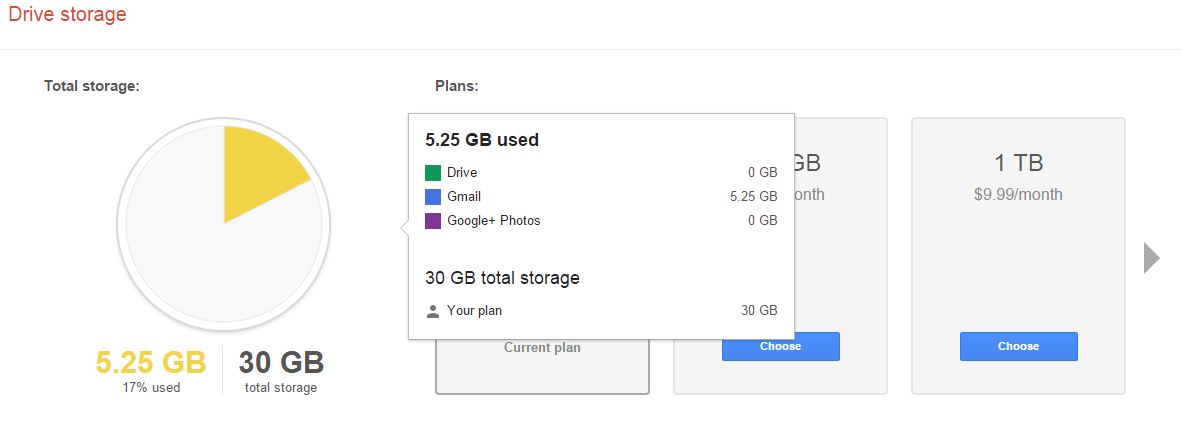
To find out exactly what’s taking up space in your Drive account, go to your Drive’s storage page. This will provide you with a handy-dandy pie chart that lays everything out for you.

drive_in_blog_1.jpg

This chart displays how much storage space is being used and what the space is being used for. From here, you can spot the unneeded files that are taking up space. For example, the email attachments in Gmail end up in your Drive account, as well as all of your photos from Google+. You might want to sift through your Drive and delete these files if you don’t need them.

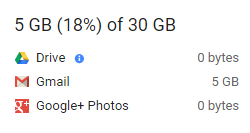
On your Drive storage page, you will find below the graph a section displaying specific information about space usage. Be sure to reference this if you’re on the hunt to free up space.

drive_in_blog_2.jpg

As is the nature of computer data, you will notice that the bulk of your space is likely to be taken up by media-rich files, like photos, music, and videos. Users of Google Apps that take advantage of Docs, Sheets, Slides, etc., will notice that these files don’t take up nearly the amount of space as does the large media files.

Therefore, if you’re looking to purge your Drive account and free up the most space possible, it’s best practice to start deleting the largest files first. To figure this out, go to the lower left-hand side of the screen in Drive, right above the link that says “Buy more storage.” From here, you’ll see your current storage use. Hover over it and a box will appear with more specific numbers. Click Drive.

drive_in_blog_3.jpg

This sorts your files by Quota used. From here, you can most efficiently manage your files.

Keep in mind that if you delete email files all willy-nilly, you may end up deleting something important that you’ll regret. Therefore, it’s best practice to archive your emails with a secure email solution. NuTech Services can provide this for you.

Got an Android device? If your device is linked to your Google Drive, then it may be adding some rather large files to your storage, especially if you use your Drive account to back up your Android device’s photos and videos. One way that you take control of this is to adjust the size of pictures stored from your device to Drive. To do this, go to Settings > Auto Backup > Photo Size, then select Standard size. Keep in mind that there may be instances when you don’t want Google to change the size of your images, so keep this file path in mind.

By following these steps, you will free up space on your Google Drive account and not have to upgrade. To learn more data storage tips and best practices, call NuTech Services at 810.230.9455.

b2ap3_thumbnail_caffeine_fix_400.jpg

Too Much Coffee Can Give Your Work Performance The Jitters

b2ap3_thumbnail_caffeine_fix_400.jpgThe road down entrepreneurialism is a long and twisted path, full of pitfalls that can lead you astray. However, there’s one companion who will never forsake you, and that’s your morning cup of coffee. While you might feel like you can’t get anything done without your morning caffeine fix, it can be holding you back from achieving your maximum productivity.

Giving up on caffeine can be a life-changing experience, but some are more reliant on it than others. It might seem like caffeine’s benefits vastly outweigh its negatives, but when it comes down to it, caffeine’s benefits are only temporary, saddled with side-effects.

What Exactly Does Caffeine Do to Your Body?
A study performed by the John Hopkins Medical School has proven that, despite caffeine’s negative side-effects, it has been proven to increase task performance and cognitive ability, but only temporarily. The main issue with caffeine is that there’s no way to reap the benefits of that cup of coffee without experiencing caffeine withdrawal almost immediately afterward. Because of this, the user goes straight for the coffee pot time after time. This eventually links performance to the amount of caffeine ingested, which limits cognitive function when without it.

To make matters worse, caffeine induces an adrenaline rush, not unlike the response you receive from a life-threatening situation. This is what’s known as the “fight or flight” syndrome, which triggers emotional responses to defend the self from harm. Naturally, you can imagine how horribly wrong this can go when responding to critical emails at a time where you lack sleep and are thriving off of caffeine.

By the end of the day, you’ll feel exhausted and ready for bed; but despite how tired you are, you’ll find it difficult to sleep. This is because caffeine has a six-hour half life. According to Inc:

Have a cup of joe at 8 a.m., and you’ll still have 25 percent of the caffeine in your body at 8 p.m. Anything you drink after noon will still be at 50 percent strength at bedtime. Any caffeine in your bloodstream–with the negative effects increasing with the dose–makes it harder to fall asleep.

This makes it extraordinarily difficult to get good, quality sleep, and even harder for the brain to catch up and restore its energy. When you wake up exhausted, you naturally go right for the cup of coffee, leading to even more withdrawal later in the afternoon.

Caffeine’s Side Effects
Caffeine is well known to produce several adverse side effects when users are going through withdrawal, all of which can be harmful to your cognitive ability and health. According to Inc, they are:

  • Irritability
  • Anxiety
  • Headaches
  • Insomnia
  • Sleep deprivation

The side effects of prolonged caffeine use aren’t limited to just these, though. These are simply those that affect the cognitive ability to function, which is arguably the most important part of the workday. It’s well known that caffeine can induce uncomfortable problems like frequent urination and gastrointestinal anomalies, as well.

Caffeine addiction might seem innocent enough, but like any other drug out there, too much can be a bad thing. Millions of people around the world suffer from caffeine addiction, whether they admit to it or not. Cutting yourself off from caffeinated beverages might seem impossible, but it can change your life.

b2ap3_thumbnail_boss_monitoring_400.jpg

How to Monitor Employee Communications Without Taking What’s Said Personally

b2ap3_thumbnail_boss_monitoring_400.jpgThere seems to be some confusion in the workplace regarding the privacy of digital communications made over a company network. Can an employer read an employee email or record a phone call without employee consent? Is instant messaging a safe place for employees to complain about their jobs? The answer to these questions may surprise workers and business owners alike.

The Need For Everyone to Understand Company Policy
Technically, you as a business owner can legally comb through and read all of your employees’ internal emails and instant messages. However, just because it can be done, doesn’t mean that it’s a good idea. If you do, you’re going to have a bad day and potentially be exposed to messages that will make you look at an employee in a different light. This isn’t fair to the employee, especially if they wrongly believed that their messages were private.

If you know that one day you may go through your company’s IM archives, then you should notify your staff that their messages aren’t private and that they’re subject to investigation. It’s only fair to make this disclosure, and it will help to keep the peace in the workplace.

Employers Must Use Objectivity When Performing Internal Investigations
Here’s a possible scenario to consider: Let’s say you have a problem employee on your hands that uses the company’s instant messaging app to talk trash about you and your business. You suspect them of saying some damaging things, so you decide to investigate their archived messages. Upon doing so, it turns out that this problem employee messaged everybody, including your thought-to-be good employees, in the company and was spreading rumors about you.

What’s worse, the good employee may have been hesitant to engage the problem employee over instant messaging in the first place. The good employee may have only responded to the initial IM from the disgruntled employee as a way of being nice. Take for example this hypothetical IM conversation between two employees; a loyal employee (LE), and a disgruntled employee (DE).

DE: I’m so sick of this policy, it’s unfair and the boss is a tyrant with a bad hairpiece!
LE: There are some policies here that can be improved upon.
DE: This isn’t the first time the boss has messed with me like this, he’s a jerk and I’m sick of everything.
LE: The boss can be strict.

A manager that’s taken personal offense at DE will read this transcript and think that LE shares the views of the troublesome employee. However, a careful reading of the transcript will show that LE didn’t say anything problematic. LE was simply replying to DE in such a way as to appease their feelings, participate in the conversation, and not escalate things by “stirring the pot.” A manager that’s felt personally betrayed by DE will have an almost impossible time seeing LE’s subtle peacekeeping strategies.

For LE, being pulled into a documented conversation like this is a lose-lose situation. If they agree too much with DE, they’ll look like they too are disgruntled. If they stand up for their boss and the company and put DE in their place and even tattle on DE, then they run the risk of being viewed as a brown-noser or a goody two shoes by their co-workers–an influential group that they spend a significant amount of time with.

Every Office Needs a Microphone-Free Water Cooler
This is why employees need an avenue to communicate where they can blow off steam about the workday and speak freely about their jobs, without running the risk of their bosses finding out what was said. At one time, this was the water cooler, but with our society becoming more comfortable expressing themselves digitally, instant messaging may be viewed as today’s water cooler.

Only, an employee might wrongly assume that, since they’re using the same IM tools that they use in their personal lives, that what they say online is private. When messages are relayed internally over the company network, this isn’t the case, and for the health and harmony of yourself and your business, this needs to be communicated to all levels of the organization. Obviously you don’t want to cultivate a poisonous atmosphere where people just stand around and complain about their jobs, but sometimes people that are under a lot of stress need an outlet to vent in order to calm themselves.

Communication is Key
At NuTech Services, we can equip your business with a secure instant messaging and email solution, as well as a digital telephone service with VoIP that will fit the communication needs of your company. We can also help you set up permissions so that you and the network administrator can have complete control and access to all archived messages. Reach out to us at 810.230.9455 to learn more.

b2ap3_thumbnail_mouse_wheel_click_400.jpg

Tip of the Week: 3 New Tricks to Teach Your Old Computer Mouse

b2ap3_thumbnail_mouse_wheel_click_400.jpgThe computer mouse has been a staple in the modern office for many years. Despite its proven usefulness, it’s now threatened by the growing adaptation of touchscreen devices in the workplace. Are you considering trading in your trusty mouse? Before you do, consider these three mouse scroll wheel tricks that make your boring old mouse more useful.

Who said you can’t teach an old mouse new wheel tricks?

tip-scroll-wheel-fun

Click a Link With the Scroll Wheel Button to Open it In a New Tab
What’s that you say, a mouse scroll wheel button? If this is the first you’ve heard about the scroll wheel also being a third button on your mouse, then you’re getting your money’s worth with this blog article because we just opened up for you a whole new and click-tastic world.

To execute this first trick, all you have to do is move the cursor over a hyperlink and click the mouse scroll wheel button. This will automatically open the link in a new browser tab, which is easier than having to right-click the hyperlink and then go to “Open link in new tab.”

Close the Browser Tab By Clicking it With the Mouse Scroll Wheel Button
When you’re done with your browser’s tab, you can close it just as easily using the mouse scroll wheel button. All you have to do is move your cursor anywhere on the tab and then select the mouse scroll wheel button.

Granted, this isn’t a major upgrade from selecting the red X with the left mouse button, but it does give you a little bit more room to work with. Additionally, once you get in the habit of using the mouse scroll wheel button, you’ll find yourself closing tabs in this manner more often.

Ctrl+Scroll Up to Zoom In/Ctrl+Scroll Down to Zoom Out
For our third trick, try using the mouse scroll wheel in conjunction with the Ctrl key for easy zooming in and out of your web browser, as well as most other applications too. As you hold down the Ctrl key, your page will zoom in as you push the mouse forward, and zoom out as you push the wheel in the opposite direction.

Ultimately, this is the fastest and easiest way to zoom in and zoom out, especially in comparison to locating the view tab and manually selecting “zoom in” or “zoom out.”

Bonus Tip: One of the handiest uses for this zoom-in feature is when you’re browsing a web page with annoying ads on the side of the page. Simply perform this new scroll wheel trick and zoom in just enough to where you no longer see the ads. Problem solved. You’re welcome.

It turns out that your old computer mouse can do more than what you previously thought. Pretty cool, huh? Perhaps now you’ll think twice about trading in your mouse and workstation for a fancy new touchscreen device. Or, maybe not.

Can you teach an old mouse any more new tricks? If so, share them with us in the comments.

b2ap3_thumbnail_unlimited_paid_time_off_400.jpg

Do You Trust Your Employees Enough to Offer Unlimited Vacation Time?

b2ap3_thumbnail_unlimited_paid_time_off_400.jpgAs a business owner, you know how difficult establishing a paid time off policy is. Providing too little can make your business seem unfair, but giving away too much might make you feel like you’re losing money. Therefore, it might come as a shock to even suggest the idea of unlimited PTO. Some business owners, on the other hand, find it completely effective, and that it can even improve the quality of work.

The current state of PTO in the workplace is pretty standard, regardless of where you look. Employees are either given a set amount of hours at the beginning of the year which they use at their leisure, or they accrue them on a monthly or yearly basis. These employees put in a two-week notice of their designated time off, and they’re all set, so long as their absence is approved for that time. This puts a limit on recuperation time. While this might seem like it doesn’t matter, proper rest can help your team push above and beyond, to their maximum productivity.

Zach Ferres, CEO of Coplex, is a big advocate of unlimited paid time off, and for good reason. He claims that it offers a unique return on investment that’s beneficial to your business’s operation:

Employers who offer unlimited PTO report increased employee satisfaction, improved work-life balance and greater productivity. Plus, unlimited PTO can be a huge selling point when you’re recruiting, and it will actually save your HR department an average of 52 hours per year.

One popular company that has implemented this policy with great success is the video streaming service Netflix. Last year, Virgin founder Richard Branson followed suit, as reported by Business Insider:

Virgin founder Richard Branson recently declared that the company’s employees can take as many vacation days as they want, provided that “their absence will not in any way damage the business — or, for that matter, their careers!” Branson said that he got the idea from Netflix.

Of course, one of the greatest benefits that an unlimited PTO policy has is that it can make your team feel like you care about them and their personal lives. This can drastically improve operations and inter-office relationships. According to Feres, here’s how it’s done.

Trust Is Key
Before you even consider integrating an unlimited PTO policy, it’s important that you ask yourself whether or not you can trust your employees to not abuse the privilege. If they start to take days off willy-nilly, it might be time to reconsider your policy. If you take the leap of faith, however, it also shows your team that you trust them; a valuable asset that can make working for you that much better.

Create a Mandatory Minimum PTO Policy
Some employees work too much and don’t take time off, even when they do have it available. This can be harmful, especially if they get burned out from working too hard. Mistakes happen when employees are tired or overworked, so the best way to avoid this is by making them take time off once in a while. This lowers stress and keeps your employees happy.

Use a Time-Off Request Process…
Naturally, employees should have to go through a certain process in order to use their PTO. People can’t randomly be coming and going as they see fit. Generally, you should know at least a few weeks ahead of time when someone wants to take time off. You can use this time to divvy up urgent tasks to others who will be in the office.

… And Keep Track of the Requests
This is primarily so you know who is taking the most time off and why. This helps you keep track of your employees and whether or not they’re taking advantage of your PTO policy. On the other hand, you’ll also know who isn’t taking enough time off, which will make it easier to encourage them to do so.

What are your thoughts on unlimited PTO? Is this leap of faith something you’re willing to try? Let us know in the comments.

b2ap3_thumbnail_email_no_more_400.jpg

Experts Believe Email Will Soon Meet Its End

b2ap3_thumbnail_email_no_more_400.jpgWith email being such a prevalent tool used in the modern office, it might seem silly to think that in just a few short years, email might not be as relevant as it used to be. However, many professionals believe that email is limping along on its last leg, waiting to be put out of its misery by a new solution. Will email be around for much longer? Should the average business prepare for a world without it?

The Future of Email Looks Bleak
John Brandon of Inc thinks that email’s time is just about up. He sees a future where email falls out of favor due to the increase in use of other communication alternatives, both formal and informal. He builds an argument from his personal experiences with email over the past few years:

In my own workday, email has become less and less important. There are entire groups of people (public relations, for one) who contact me primarily on social networks first. Friends never send email anymore. They almost always send a text or chat on Facebook. Even a few of my colleagues tend to use apps like Campfire more than email.

social media kills email

He also discusses how email isn’t a reliable method of communication, explaining that many users ignore their email or simply take forever to respond. This is especially true for the younger generation, many of which don’t even have a personal email for use outside of work or school. Finally, when users do receive email, they can be buried under spam, especially if no measures are taken to protect against it.

Yet, Email is Still Necessary in Today’s Work Environments
Improving your business’s communications is imperative to its success, and despite email’s shortcomings, it’s still one of the most used systems to date. Therefore, you want to do everything in your power to optimize its performance.

Modern managed services have given small and medium-sized organizations enterprise-level solutions designed to augment your current business practices and ensure that mission-critical systems continue operating at maximum efficiency.

NuTech Services understands the best ways to bring these practices into your office. If hosting your Exchange server in-house is an issue, we can remedy it by hosting it for you. We have a multitude of solutions designed to improve security by blocking spam and phishing threats. Instead of wasting precious moments of your day picking through your inbox, you can rest assured that the majority of spam will never reach your inbox in the first place.

Technology is imperative to the proper functionality of the modern office, and yours is no different. We wouldn’t necessarily say that email will be rendered obsolete in the future, but it will certainly evolve and adapt to the future technology environment. We change our strategies to match the most recent and up-to-date best practices. Email is still a valuable asset to your business, so why not let us help you make it easier and less demanding on your business? Give us a call at 810.230.9455 today.

b2ap3_thumbnail_android_battery_400.jpg

Tip of the Week: 3 Tricks to Get the Most Power Out of Your Android Device

b2ap3_thumbnail_android_battery_400.jpgSmartphones are exceptionally useful tools capable of enhancing your productivity, even while out of the office, but this comes at a steep cost. If your phone’s battery isn’t optimized to handle the workload, the multitude of apps will quickly drain it and you’ll be left with a dead device.

Thankfully, there are a ton of ways you can conserve your battery’s charge. To avoid being tethered to an outlet at all times, CNet has several suggestions for cutting down the amount of energy your battery wastes throughout the day.

Disable GPS-Based Services
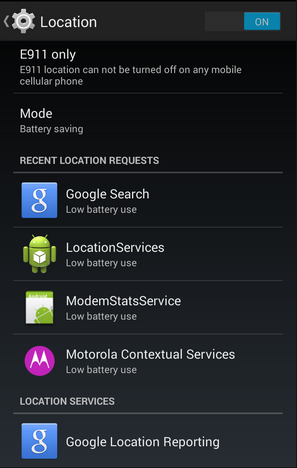
Your phone will have its GPS enabled when you first receive it. This helps it communicate your location to satellites and cell phone towers. Unfortunately, all of this communication with the GPS phone chip eats up your device’s battery. Since many of these GPS features aren’t necessarily required for your device to function properly, you can get by just fine by turning them off.

Do this by going to Location reporting and Location history. These settings use your phone’s GPS alongside other Google applications to enhance your user experience, but they aren’t really necessary. Disable them by going to Settings > Location > Google Location Reporting.

in blog android

Turn Off WiFi Scanning
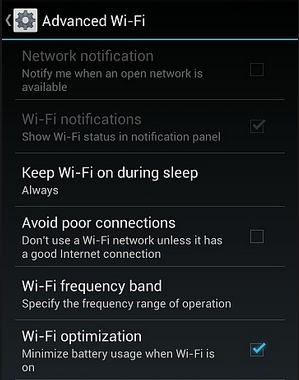
You probably use WiFi the most when you’re in the office or at home, but while you’re out and about, your device continuously scans for a new connection. This scanning constantly drains the battery, and automatically connecting to random WiFi networks while on the go can be a security threat.

To do this, make sure your autoconnect feature is turned off, and turn off WiFi scanning by going to WiFi settings > Advanced. If the WiFi scanning box is unchecked, you’re all set.

in blog android2

Keep Track of Your Data Sync
Android smartphones constantly sync to your Google account. This keeps your device’s data backed up and up to date, but the process of syncing your data might have unintended consequences… like a drained battery. Turning off your sync might solve this problem, but it’s more efficient to choose what data you’d like to sync.

Android allows you to filter the data sync process to certain files, like pictures and videos. Do this by heading to Settings > Accounts. Select the account to access the sync settings. You can then uncheck any items you don’t want synced, or turn it off completely if you want.

While there are plenty of ways to conserve your device’s battery, these are only three of them. For more tips and tricks on how to make your Android device as useful and efficient as possible, give us a call at 810.230.9455.

b2ap3_thumbnail_hosted_voip_solutions_400.jpg

Which VoIP Solution is Best for Your Business, In-House or Hosted?

b2ap3_thumbnail_hosted_voip_solutions_400.jpgProper communication is an imperative part of doing business, and nothing improves this aspect of your company better than a telecommunication system of some sort. Some businesses rely on their legacy telephone system for interoffice communication, but this can be both difficult and expensive to maintain.

A VoIP solution, or Voice over Internet Protocol, is a great way to lose your old phone system and push your business toward a more modern office setting. It takes advantage of your Internet connection to transmit your voice to the recipient, rather than a landline telephone connection. This helps you avoid long distance telephone bills that might build up over time, blasting a hole in your budget.

VoIP might be convenient and easy to integrate, but you need to carefully consider the demands of such a network before committing to it. One thing to pay particular attention to is your bandwidth. Can it sustain the heavy use that VoIP demands? If it can’t, you might experience connectivity issues and poor call quality, both of which can hamper your ability to contact and communicate with others.

If you’re serious about improving communication systems in your office, you should consider switching to VoIP. There are many different kinds of VoIP systems, but the most common choice you’ll have to make is whether or not you want to host your own VoIP system in-house, or if you’d rather outsource the responsibility to a managed service provider like NuTech Services.

The Difference is Real
By allowing an external party to host your VoIP solution, you’ll receive plenty of benefits. Essentially, you’re taking this responsibility and allowing someone else to do it. This means that the third party is monitoring and maintaining your VoIP server for you, which is one less burden you have to deal with. NuTech Services can host your VoIP server off-site and out of your hair, which means you have less on your plate. This makes hosted VoIP well worth the investment.

Because of this shift in responsibility, you don’t need to worry about a thing. We handle the implementation and work with you every step of the way. However, it’s important to note that any outsourcing endeavor requires a certain level of trust. Unless you’re ready to let go of the reigns, hosted VoIP might not be your cup of tea.

What Should You Look For?
As with any outsourcing project, you want to make sure you find quality professionals who know what they’re doing when looking for someone to host your VoIP. Reliability is an important trait to look for. Without a reliable host, your VoIP system will be down more often than it’s up. You also need to make sure you’ve found someone with a history of excellence, particularly in the managed services industry.

This is where NuTech Services truly excels at providing hosted VoIP services. Our services are flexible enough to provide you with just what you need, and we can meet the standards you require for maximum efficiency. Just give us a call at 810.230.9455 for more information.

Social Engineering: Not All Hackers Target Technology

b2ap3_thumbnail_social_engineering_risky_400.jpgThe nature of hacking is to take advantage of weak points and exploit them for some kind of profit. This is usually seen in flaws or vulnerabilities found within the code of a program or operating system, but these flaws can be psychological, too. Hackers are increasingly taking advantage of a concept known as “social engineering” to fool users into handing over sensitive information that can be used against them.

Social engineering hacks are performed against unsuspecting individuals who might be privy to sensitive information within a corporation. These people often have less technical skills and might be more vulnerable to exploitation than others. These attacks often seek out information like passwords, usernames, dates of birth, and other sensitive credentials. The more skilled social engineering hacker can replicate sites to infect systems with malware, or even initiate infected downloads.

The most notorious social engineering method of hacking is called phishing, when emails are sent to a user under the guise of a seemingly harmless institution, like a bank. These messages usually ask the victim to confirm login credentials and other information in a manner that looks legitimate.

Spear phishing attacks are some of the most dangerous hacks out there. These types of phishing threats target specific users with personalized messages that are designed to coerce them into giving up personal or financial information. There have even been accounts reported of hackers posing as the media in order to get access to secure information.

According to HowToGeek.com, this method isn’t limited to being used remotely. Social engineering hackers can also get up close and personal with their attempts:

An attacker could walk into a business, inform the secretary that they’re a repair person, new employee, or fire inspector in an authoritative and convincing tone, and then roam the halls and potentially steal confidential data or plant bugs to perform corporate espionage. This trick depends on the attacker presenting themselves as someone they’re not. If a secretary, doorman, or whoever else is in charge doesn’t ask too many questions or look too closely, the trick will be successful.

How Can You Protect Yourself?
Ultimately, it comes down to educating yourself and your staff on how to identify a social engineering hack from the real deal. Here’s how you can minimize your chances of playing into the hands of a phishing scam.

  • Always be suspicious. Strange messages and phone calls are more than enough reason to be suspicious of the sender. If this is the case, it’s important that you don’t respond until you can confirm the identity of the sender. Contact the organization with the number or email address you have on record to ensure that you’re not being scammed. Some pointers to look for are misspelled words or strange links.
  • Avoid links in emails to websites that gather sensitive information. It’s possible that these links lead to fake sites that are designed to steal your credentials. If you suspect this is the case, try logging into the official site that you accessed outside of your email. You can spot subtle differences in the URL which give it away.
  • Make sure spam and phishing filters are enabled in your email and browser. Some browsers have built-in protection from known phishing sites which should always stay active. One particularly powerful solution is NuTech Services’s Unified Threat Management (UTM) solution. This solution equips your business with everything it needs to keep outside threats from getting into your network, including spam filtering and web content blocking.

When it comes down to it, the only way to maximize your business’s security from phishing attacks is to make sure your team knows how to identify and handle them. For more information on how to keep yourself safe from all manners of threats, give NuTech Services a call at 810.230.9455.

b2ap3_thumbnail_mobile_data_is_expensive_400.jpg

Tip of the Week: 4 Ways to Cut Down On Your Mobile Data Usage

b2ap3_thumbnail_mobile_data_is_expensive_400.jpgAs the world pushes toward a more mobile era, so too does the workplace embrace Bring Your Own Device (BYOD) with open arms. As such, workers will need some type of network connection in order to access mission-critical corporate data. Therefore, if they can’t connect to a WiFi network, they’ll default to their cell provider’s mobile data plan.

Unfortunately, too much strain put on this asset can quickly drain, or even surpass, your maximum monthly data expenditure. Therefore, reducing your mobile data usage can be a great way to cut down on your expenses and potentially improve battery life. Here are four ways to get started.

5six in blog1Monitor Your Current Data Usage
Before jumping too deep into how to limit your data usage, you first need to identify whether or not you’re using too much data. Chances are that if you aren’t having difficulty staying within your monthly data usage, you don’t need to make many changes to the way you use your device. However, if you find yourself constantly violating your maximum data limit, you’ll know you need to change the way you’re using your device.

Use WiFi Whenever Possible
A simple way to lower your use of mobile data is to stop using it whenever WiFi is available. Rather than using up your mobile data plan, you can simply take advantage of any wireless networks in range. While this is convenient, you don’t want to connect to any sketchy wireless hotspots in your vicinity. There’s always the chance that a network can be littered with threats. Therefore, the best way to keep your device secure is to only access connections with passwords and encryption, and to make sure your autoconnect feature is turned off.

Limit Your Media Consumption While Mobile

Though it makes life infinitely more enjoyable to stream music and video entertainment on the go, it can also be putting an enormous strain on your mobile data plan. Instead of streaming music through your 3G or 4G connection, try playing music stored locally on your device. This can prevent your device from consuming too much data too quickly.

Limit Which Apps Update in the Background
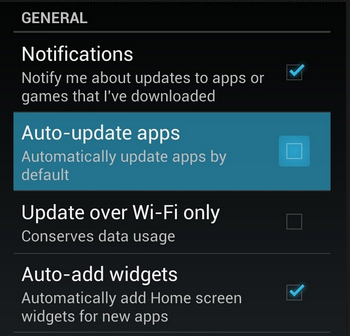
Unless you’ve explicitly configured your device otherwise, your applications will automatically update in the background while you’re going about your daily routine. Unfortunately, this can eat up a ton of data. To prevent this, you can set your device to update automatically when connected to WiFi, or to manually perform the updates yourself.

5six in blog2

If you find that even these four tips can’t stem the flow of your data problem, it might be time to cave in and get an upgrade. This should only be considered as a last resort, since it can help you avoid the overage fees associated with monthly data plans. All it takes is a little awareness of how much data you’re truly using in order to self-police yourself into staying within the confines of your monthly data plan.

b2ap3_thumbnail_rd_d2_droid_400.jpg

Star Wars Has Shaped Our Technology More Than You Know

b2ap3_thumbnail_rd_d2_droid_400.jpgIt’s been a full 38 years since we were introduced to the Skywalker family in the first Star Wars film, “A New Hope.” The science fiction franchise has become such a cultural phenomenon that it even has its own holiday, celebrated galaxy-wide every May 4th (May the 4th be with you).

As an IT company, we’ve always been fascinated with the futuristic technology seen in Star Wars. After watching any one of the six Star Wars movies, viewers can’t help but walk away from the experience with questions like, “How long until we get cool starships and laser blasters?”

Even though we’re still a long ways away from having pod racing replace Formula One, our society has made some great strides over the past four decades to look more and more like Star Wars. In fact, you might remember that, at the height of the Cold War, the United States went so far as to consider using Star Wars-like space lasers.

reagan star wars

The influence of Star Wars can most dramatically be seen in the technology we use every day. Take computers, for example. Every year they become more capable of doing more tasks, especially mobile devices. In fact , if you tried explaining today’s smartphone to someone from 1977, they would probably think it to be straight out of science fiction.

It may be for this very reason why Android nicknamed their product “droid.” In Star Wars, droids act as the ultimate personal device, capable of doing virtually any and all tasks asked of them by their humanoid counterparts. Modern smartphone manufacturers pride themselves with just how many different tasks users can accomplish with their mobile devices, but how close are we to actually having our “droids” be as helpful as the droids from Star Wars?

To get to the bottom of this, let’s take an in-depth look at everyone’s favorite Star Wars droid, R2-D2 (sorry C3PO).

Your-Own-R2-D2

Over the span of six movies, R2-D2 has shown much versatility, surprising fans of the franchise with new tricks in each episode (think how much of a game-changer it would have been if R2-D2 could have used his thrusters in the original trilogy). To get an accurate understanding of what all R2 can do, we turn to the Internet’s authority on all things Star Wars, Wookieepedia:

R2-D2 was a diminutive droid, standing 0.96 meters tall. He rolled on three legs, one of which could retract into his body, and had a silver and blue domed head. His white, blue, and silver body housed many arms, sensors, and other apparatuses, many of which were not readily seen by the typical humanoid eye. This often made the droid seem like a box of tricks, unexpectedly pulling out some previously unseen but very much needed device at a critical moment.

Features of the R2-series astromech droid include (bolded are the tasks that we can do on our modern “droid” devices):

  • Rocket booster
  • Cable gun
  • Oil injector
  • Claw arm
  • Fusion cutter
  • Holoprojector / Recorder
  • Internal comlink
  • Periscope
  • Electric pike
  • Propeller
  • Hidden lightsaber compartment with ejector
  • Fire extinguisher / Smoke Screen
  • Small Saw
  • Air Cannon
  • Crashmat
  • Lariat
  • Submarine Mode
  • Collapsible Umbrella
  • Flea Remover
  • Distracter
  • Headdress Detangler
  • Droid Deactivator
  • Computer Interface Arm
  • Charge Arm (electric shock)
  • Life-form Scanner
  • Breakdance Mode
  • Polarity sink
  • Water pump/hose
  • Inflatable mattress
  • Media copy / storage disc drive
  • Jukebox
  • Small red “tongue” ribbon
  • “Confetti-creation device”
  • Lubricant Application Arm
  • Motorized, all-terrain treads
  • Power recharge coupler

r2_d2_schematics.jpg

As great as the ‘droids are that we carry in our pockets, we’ve still got a long, long way to go before we have personal devices that can do everything that this “extremely well put-together little droid” can do. However, despite this technological shortcoming, it’s still amazing that we’ve come as far as we have over the past 38 years. Who knows, maybe within the next 40 years we’ll finally have lightsabers.

We can’t know for sure what the future of personal technology will look like, but one we do know, if everybody gets their own R2-D2 unit, NuTech Services will be available to provide technical support. May the 4th be with you!

Images courtesy of the Walt Disney corporation.

b2ap3_thumbnail_tether_your_internet_signal_400.jpg

USB vs Wireless vs Bluetooth: Which is the Best for Tethering?

b2ap3_thumbnail_tether_your_internet_signal_400.jpgUsing your smartphone to tether another device like a laptop to the Internet can come in handy when you need to accomplish a task that can’t be done on your phone (which is becoming increasingly rare these days). Most smartphones present the user with three ways to tether their Internet signal. What are they and which is the best?

Connecting with a WiFi Mobile Hotspot

Advantages
Using your smartphone as a mobile hotspot to broadcast a WiFi signal is the easiest way to connect your WiFi-enabled device to the Internet. Additionally, depending on your phone’s reception, today’s smartphone’s are capable of producing signals that are on par strength-wise with a wireless router. In fact, many smartphones are capable of connecting as many as five devices to the Internet from their mobile hotspot.

Disadvantages
Security is one disadvantage of using your phone to create a mobile hotspot. Your phone’s WiFi signal will be vulnerable to any hacker within range. Be sure to take the same WiFi security measures that you do with your office’s wireless routers. Also, using your phone as a mobile hotspot can quickly drain your battery, so plan your battery usage accordingly and have a charger handy.

Tethering with a USB Cable

Advantages
Battery life isn’t an issue when going with USB. Your phone will receive a charge via your device, so you will only have to worry about the battery of one device instead of two. Additionally, the Internet signal is pushed only through your USB cable, making it a more secure option than a mobile hotspot. Plus, in most cases a wired connection yields a faster signal.

Disadvantages
Having to carry an extra cable around can be a bit of an inconvenience, and so is having to keep your smartphone within arm’s reach. Tethering with USB may also require special software and configurations for each device, so there might be a few more hoops to jump through than using mobile hotspot, but if you’ve got a cable handy and you’re planning to work while sitting in one spot, then it’s probably worth it.

Make an Mobile Internet Connection with Bluetooth

Advantages
Similar to WiFi, you can use your phone’s Bluetooth signal to wirelessly broadcast an Internet signal for your device. Thanks to Bluetooth being specifically designed for mobile needs, it uses less battery power, as well as offers better security thanks to Bluetooth not being as common as WiFi.

Disadvantages
The disadvantage to Bluetooth is that it’s not as easy to configure as WiFi. According to Pocketnow:

It’s a little more involved to set up than WiFi, and a little more involved every time you want to use Bluetooth tethering. If power consumption is a concern, Bluetooth is probably the way to go, if you’re willing to configure it.

So which tethering option is the best? It really depends on your needs.

Do you need help with tethering your mobile devices, or want to securely equip your office with mobile technology like cloud computing? Then call NuTech Services at 810.230.9455.