
internet_pros_cons_400.jpg

3 Ways the Internet is Changing Things, for Better AND for Worse

internet_pros_cons_400.jpg

We’ve all become so adapted to the conveniences of the Internet that it’s difficult to remember what society was like before it. This becomes especially obvious when watching old movies. How odd is it to see characters do pre-Internet activities like go to the library to research information and use a phone book? These are just some of the ways that the Internet has dramatically changed society, for better and perhaps for worse.

Consider these three ways that the Internet has changed how we work and live, and then ask yourself truthfully, “Are we better off?”

Increased Productivity
One advantage the Internet affords us is that we can be productive virtually anywhere that we can connect to it. This includes places that were previously thought to be off limits from the reach of productivity, like at the beach while on vacation, on the road for business, we even hear that some users take their favorite devices into the bathroom with them. Looking at this situation from a purely business standpoint, it makes you as a business owner feel good that your staff is spending every waking moment being as productive as possible. However, looking at it from the standpoint of the human experience, it makes one feel like we’ve lost something when we can’t go but a few minutes without stopping to look at our mobile devices.

Yet, Productivity Decreases
While the Internet affords us more opportunities to access the web and get work done, it can also be a major distraction for the times when we actually sit down to, get work done. For example, at the end of the work day, how many tabs does your web browser have open? If you’re like the average modern office worker, your screen is full of interesting news articles, YouTube videos, multiple instant messaging conversations, and more, much more.

The problem here is that all of these little distractions presented by the Internet actually cut into productivity in a major way. In fact, it’s proven that it takes anywhere from 5-to-15 minutes for a worker to refocus on a single task after they’re pulled away from it. Therefore, having the Internet bombard an employee with distractions all day long actually results in getting less work done. But hey, they can always make up for it at home, or even in the bathroom.

Access Any Information Instantly
So far, the future we were promised is disappointing because it lacks flying cars, laser guns, and hoverboards (we don’t count the “Hoverboards” found in today’s retail stores). However, thanks to the Internet, virtually all of the world’s media and information is just a click away, and can even be carried in your pocket. This is a huge advancement for our civilization; one that would make the Jetsons green with envy.

Yet, all of this instant information is killing our attention spans. Consider these two sobering statistics from List25:

  • 50 percent of Internet users quit waiting for a video to load after 10 seconds.
  • The average shot length in an English-language film has decreased from 12 seconds in 1930 to only about 2 seconds in 2015.

Therefore, while the Internet is satisfying our need for instant gratification, it’s making patience much harder for human beings to come by.

In what ways do these benefits and drawbacks of the Internet play out in your office? Is your staff more productive and more distracted? Is work time cutting into leisure time? Are people so impatient that they resort to Googling a question instead of having an actual discussion about it? Are you taking any measures to control online distractions in the workplace? Of course, these are just some of the ways that the Internet is changing everything, both for better and for worse.

Do you have any points to add to this list? Share with us your thoughts in the comments.

google_web_search_400.jpg

Tip of the Week: 10 Google Easter Eggs to Get You Through the Workday

google_web_search_400.jpg

Perhaps one reason why Google is so popular is because the company knows how to have fun and not take themselves too seriously. One way that Google shows us their silly side is with Easter eggs they’ve incorporated into their search engine. Here’s a list of ten of our favorites.


To access these Easter eggs, you first have to go to Google.com, and then enter the following in the search form:

Type “Atari breakout” and click Images
Doing this will transform your screen of images into a playable game of Super Breakout, complete with music and a score counter.

Type “Askew
This will tilt your screen. Don’t worry, your browser isn’t broken. It will return to normal after you leave the page.

Type “Festivus
Festivus is a made up holiday popularized by the television show Seinfeld. Actually, Googling “Festivus” will tell you preciously what the holiday is and what it’s about, as well as display a fun Festivus pole to the left of the search results. A Festivus pole isn’t anything fancy (it’s just an aluminum pole that stands upright), which is why it’s such a fitting symbol of the holiday.

Type “Google in 1998
Doing this acts as a time machine that will transport your Google search back to the way things were in 1998.

Type “Zerg rush
In another nod to video games, Google transforms the search result into an offensive attack by Google letters, characteristic of the Zerg race from the popular game StarCraft. Only you can stop the assault by clicking multiple times on each letter until it disappears, which will only cause more Zerg-like Google letters to appear. For this egg, you’ll also see a handy score counter on the side.

Type “flip a coin,” or “roll a die
Each of these search results will provide an animated coin or die that will give you a random result once the page has completed loading. It’s handy for decision making when you can’t get ahold of the real thing.

Type “[actor’s name] Bacon Number
This is in relation to the game “Six Degrees of Kevin Bacon,” not the food. As you may recall, this game involves trying to figure out how many films separate the actor from another film that Kevin Bacon has acted in. Admittedly, having Google automate this game kind of takes the fun out of it.

Type “fun facts
This will bring up a random fact card with a bit of trivia to boot. This is a stimulating way to satisfy a moment of curiosity, or turn time with friends into a trivia game.

Type “The answer to the ultimate question of life the universe and everything” (no punctuation)
Fans of The Hitchhiker’s Guide to the Galaxy will appreciate this one. The answer, of course, is 42.

Type “Google Pacman
One last Google game for you. Entering this into Google will display a pop-up screen with a playable game of Pac-Man. Google made this as a doodle to celebrate Pac-Man’s 30th anniversary in 2010 (costing the US economy $120 million in lost productivity, or 5 million wasted work hours) and the game has stuck around as fun Easter egg ever since.

These are our top 10 favorite Google Easter eggs, there are actually many more to be found. Can you think of one or two eggs that we didn’t go over? Share them with us in the comments!

Bonus egg: “Do a Barrell Roll!”

moving_your_office_tech_400.jpg

Moving to a New Office Building? Make Sure Your Technology is Good to Go!

moving_your_office_tech_400.jpg

Moving your office is never an easy task. You have to move furniture, personal objects, and above all else, your technology infrastructure. There’s nothing simple about moving your office’s technology, but it’s still nothing to get worried about. That’s why we’re here to help, from suggesting the optimal network cabling, to the proper deployment of new and improved technology solutions.

For example, let’s take a look at your old (or your current) office. You have a certain number of workstations, one for each of your employees. These workstations need to be connected via cable to your business’s network. Otherwise, your team could go without required software, data, and other important resources. Keep in mind that your cabling infrastructure could quickly grow to be uncontrollable, especially if you don’t approach your cabling procedures in an educated and logical manner.

Another issue that you might encounter comes from equipping everyone with the right communications solutions. The most notable problem is setting up phone lines for everyone who needs them. Adding new lines is far from a simple task, and one which can quickly exceed your budget if it’s not planned out in advance. This also makes adjusting for growth much more difficult, considering you have to add and/or remove lines as needed, making for an expensive investment.

Furthermore, how are you going to move all of your physical files? Chances are that you would much rather make the move without lugging unnecessary items; especially extremely heavy and cumbersome objects like large file cabinets. The problem is that your organization might be torn between keeping the files and getting rid of them, especially if there’s mission-critical data stored somewhere. There may be files you’re required to keep around, plus some that you might not need anymore. It makes sense to take inventory before committing to such a move.

NuTech Services offers several services that are designed to help your business make its move much easier. In fact, our services aren’t just convenient for businesses that are relocating; they’re great for most any SMB that wants to maximize productivity.

  • Voice over Internet Protocol (VoIP): With a VoIP solution, your business can take advantage of your Internet connection to make and receive phone calls. Since the only connection you need is to your Internet, you can skip out on the complex cabling required of traditional telephone systems. You still need to keep an eye on your bandwidth, but if you use a NuTech Services-provided solution, we’ll help you ensure that you get the most out of VoIP with minimal incident.
  • Cloud storage and virtualization: If you’re having trouble providing information to your entire infrastructure, you can use cloud computing and cloud storage to provide access to applications, software, and data required by your employees throughout the workday. Doing this helps you avoid unnecessary cabling and allows for similar data access capabilities. As long as your employees have an Internet connection (say, through a WiFi signal), they’ll be able to connect to the cloud and access information. In other words, they can work from anywhere, leading to more productivity.
  • Electronic records storage: If your organization is having trouble with file storage, NuTech Services can equip your business with a solution that’s designed to help you eliminate unnecessary physical file storage systems in the office. Instead, you can store your files in a digital, compliant space, that’s optimized for your file’s security. Since your files will be stored digitally and protected with data backup, you’ll be able to quickly get back up to speed without the frustration of filing cabinets.

A new office means a second chance to start over, so why not do your IT the right way? For more information about how we can help your office relocation progress more smoothly, give NuTech Services a call at 810.230.9455.

how_did_you_break_your_phone_400.jpg

Tip of the Week: The Top 5 Mistakes that Ruin Mobile Devices

how_did_you_break_your_phone_400.jpg

To get the most life out of your smartphone, you’re going to want to properly take care of it. Of course, this is easier said than done for a small device that’s prone to being dropped and subject to the many dangers of being transported. Here are five smartphone practices to avoid if you want your device to last.

Going Without a Case
When purchasing a mobile device, it’s easy to brush off getting a case. Although, if your device goes unprotected, then it can experience some serious damage when (not if) you next drop it. At the end of the day, protective cases are relatively inexpensive and can be easily found, so you really have no excuse… unless you’re this poor bloke.

Plus, if you’re super serious about protection, you can even special order a military-grade case that promises to safeguard your device from the harshest of conditions.

Exposing Your Device to Extreme Temperatures
Both extreme hot and cold weather can devastate a device. At 113 degrees Fahrenheit, a phone will overheat and become damaged, which is easy enough to reach inside a car on a hot summer day. On the opposite side of the thermometer, a smartphone ceases to work when the exterior temperature reaches -40° Fahrenheit. Just be mindful of this and turn your device off if you find yourself either in the desert, Arctic tundra, or even in direct sunlight.

Never Turning Off Your Device
Smartphones are different than PCs. With a PC, you can leave it on all day long without any adverse effects. In fact, some PC users will argue that it’s better to never turn off a PC. However, smartphones need to be turned off every now and then. TechRepublic explains:

At least once a week, reboot that device or (even better) shut it down for 30 minutes or so. Doing this will ensure that caches are cleared and subsystems are properly restarted. Shutting down the device once a week will aid with the longevity of the RAM on the device and allow certain diagnostics to be run at boot.

Keeping Your Phone in Your Pockets
While it certainly is convenient to keep your phone in the pockets of your pants, doing so puts your device at great risk. This is especially the case with your back pockets; forget to remove your phone and you’re in for one expensive sit. Even keeping your smartphone in the front pocket of your pants can cause it to fall out if you bend your legs a certain way. Plus, in some rare occasions, phone batteries have been known to combust.

Also, shirt pockets make for a bad place to store mobile devices. The reason should be obvious. Instead, it’s better to transport a mobile device on a belt clip, or even in a purse or messenger bag.

Ignoring Malware
For many users, mobile security solutions are ignored because they feel like their mobile devices aren’t susceptible to the same risks as PCs. While it’s true that more viruses are designed for desktops, there are many attacks exclusive to mobile platforms, and the number of threats continues to rise as mobile computing becomes ever more popular. At the very least, you should have an antivirus solution for your phone and perform regular scans, and you need to be careful of the mobile apps you install.

By avoiding these smartphone blunders, your phone should last for years to come, and the risk of something happening to it will decrease dramatically. For more tips and best practices, contact NuTech Services and subscribe to our blog.

ransomware_petya_400.jpg

Alert: New Petya Ransomware Spreads via Fake Online Resumes

ransomware_petya_400.jpg

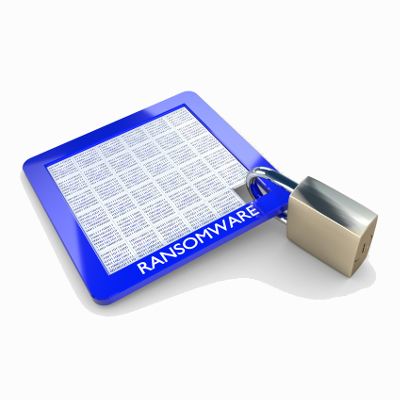
Next time you see an unsolicited resume in your email, it’s worth scrutinizing before you just click on it. It could be a nasty new ransomware called Petya.

Petya is a particularly mean-spirited ransomware that hackers use to extort money from their victims. Infection begins with a Windows error, followed by the typical “blue screen of death” reboot, and displays a red skull and crossbones. As the computer restarts, a fraudulent “system check” allows the infection to encrypt the master file table (MFT), so the computer more or less “forgets” where, or even which, files it has.

In addition to doing this, instead of barring access from particular files, Petya locks the user out of their system entirely by overwriting their computer’s master boot record. Once this happens, the computer is rendered useless (you can’t even log in), only displaying a list of demands, an online address to appease those demands in Bitcoin, and finally, a decryption code to regain access to the files.

When the user accesses the payment page, they learn that they have a limited amount of time to purchase their key before the price is doubled–from around an initial cost of .99 Bitcoins, which is equivalent to about $430. While many websites claim that there are commands that will allow the user to skip the lock screen, the MFT will still be encrypted, and the files still useless. Additionally, there’s no guarantee that the decryption key provided upon payment will even solve the problem, potentially leaving the user short $430 and all of their digital files.

Business owners and human resource representatives need to be particularly alert, considering that the preferred method of disbursement for Petya is via email, specifically disguised as what would appear to be a message from someone seeking a job. The message contains a hyperlink that directs to a Dropbox containing a “resume” (an antivirus program-blinding Trojan containing Petya) and a stock photo. With these tactics, Petya had been plaguing German businesses, with no telling when it may spread.

Fortunately, a programmer has come up with a fix to remove Petya without paying any ransom after his father-in-law’s system was targeted. Thanks to some purported carelessness by the authors of this malware, the encryption is crackable. To do so, however, isn’t such a simple task – it requires a second, uninfected hard drive, for starters. So while Petya has been cracked, it is still better to not be a target in the first place.

So how does one avoid such an attack? Mainly vigilance, assisted by NuTech Services’s security solutions that help detect and block questionable sources. Call 810.230.9455 for more information about products to keep your company safe from the cyber pirates flying a digital skull and bones.

microsoft_sql_eos_date_passed_400.jpg

It’s the End of the Line for Microsoft SQL Server 2005 – Are You Prepared?

microsoft_sql_eos_date_passed_400.jpg

Do you know which database management system is used by your company’s servers? Obviously your end users aren’t expected to know the answer to this question, but this is something that you, as a business owner, need to be aware of. If you don’t keep track of which database software you’re using, you might accidentally wait too long and wind up running an unsupported piece of software. For example, you need to move away from SQL Server 2005 (which is now unsupported) as soon as possible.

For those unaware, the end of life for SQL Server 2005 was just last week, April 12th. This means that if you haven’t upgraded away from it yet, you could be in serious trouble. Plus, 10 years is far too long a time to use any dated software.

Your best chance is to upgrade to a more recent version of database software that’s supported by Microsoft’s security patches and updates. SQL Server 2014 or Azure SQL Database are two great options that will last your business for years to come. The skilled technicians at NuTech Services can assist you with such an important upgrade. Let’s face it; unless you’re an experienced technician in your own right, your best chance of switching to a new database software solution with minimal complication is by letting professionals do it. This helps you avoid a lack of compatibility with mission-critical applications. Errors like these can lead to huge operational inefficiencies, which inevitably leads to downtime. Plus, if you are upgrading your SQL Server, you may need to reconfigure or upgrade certain apps, which is significantly more challenging than installing a new version of SQL Server.

Tim Hegedus, senior manager of the analyst team with Miro Consulting, explains to CIO: “The biggest risk stems from continuing to use the product when there is any kind of uncontrolled or external access to that database. Any security breach can be damaging not just monetarily but also reputationally.”

Organizations that utilize sensitive data need to be especially careful of this type of upgrade. If you’re using SQL Server 2005 (or any other unsupported software), what would happen if your systems were hacked and you lost access to important data? Or worse, what would happen if this data was stolen by hackers looking to sell it on the black market? Your business could be subject to hefty fines, many of which could number in the thousands of dollars per record.

Businesses that want to upgrade have a great opportunity to try out Microsoft Azure. Azure SQL VM is a legitimate option to consider, especially if you don’t want to buy and maintain a new server unit. Keep in mind that doing so requires the migration of software solutions and all of your data; something that NuTech Services can help you with. We can also help you weigh the pros and cons of the many options available to you.

For assistance upgrading away from SQL Server 2005, or any of your other unsupported software, contact NuTech Services at 810.230.9455.

future_of_it_400.jpg

3 Solid Ways to Approach Your Company’s Technology

future_of_it_400.jpg

Technology is always changing and evolving to suit the needs of modern society and business. Organizations that fully understand technology’s impact on business are always trying to make the most of their technology. Here are three ways that your company can better leverage its technological investments to meet your organization’s needs.

Think for the Future and Appreciate Your Technology
The most difficult challenge that your business has to deal with is admitting that you’re not thinking about the future of your IT infrastructure. This is especially true for business owners who aren’t specializing in tracking their technological assets. In many cases, business owners forsake their technology to focus on other aspects of running their organization, and operations can suffer because of it.

Even if you’re focused on ensuring that the administrative side of your business functions without a hitch, you’re still responsible for paying attention to your technology and making sure that it gets replaced in an orderly manner. If you don’t make sure that you’re proactively replacing your technology, you’ll one day find yourself surrounded by old IT equipment that’s practically impossible to manage in a productive manner. Todd Nashville explains to IT Knowledge Exchange:

Don’t get into a rut and get too comfortable. The IT field is forever changing and changing faster than ever before. It’s easier to stay current with technology than trying to play catch up after many years of being stagnant. That learning curve can be hard to overcome.

Have the Proper Equipment for Future IT Trends
Keeping up with the current IT trends is great and all, but only if you can predict your company’s own growth and IT requirements. If you can understand where your business will be in one, two, or even five years from now, you can make an educated decision concerning what technology you’ll need to accommodate these shifts in your business model before the future even arrives.

One good example of how to predict the future of your business will be to consider how many users and devices your business will need to manage five years from now. Even if you can make a guesstimate, you can plan to implement the technology needed for this growth today, while ensuring that the growth you experience won’t negatively impact your IT infrastructure. If you don’t take a proactive approach to this, you’ll find yourself forced to upgrade at the worst possible time, which could lead to wasted time and resources. NuTech Services offers IT consulting to companies just like yours in order to best prepare you for future growth and IT trends.

Keep Security On Your Mind
Technology grows more complex every day, but so do the security threats that undermine businesses utilizing it. You need to prepare for dangerous new security threats that will attempt to compromise your business’s security measures. If you don’t stay on top of these threats, you could be putting your business at risk.

Take for example one of the hottest IT trends for businesses, the Internet of Things. In order to take full advantage of dozens, hundreds, or even thousands of new devices accessing your network, you’re first going to want to have in place every network security measure possible. Todd Nashville explains:

Without strong authentication, firewalls, and other measures, we are heading for a heap of trouble. The more devices we add, the more vulnerable we become. To support all the various types of devices, we should have some standards. Modifying our connections so each new device will work is a major obstacle.

To future-proof your IT infrastructure, give NuTech Services a call at 810.230.9455.

drive_tips_400.jpg

Tip of the Week: 3 Ways to Take Full Advantage of Google Drive

drive_tips_400.jpg

Google Drive is a great way to get work done. It provides several applications that are similar in nature to Microsoft Office, like a word processor, spreadsheet software, and a presentation maker. Just like any other type of software, Drive has keyboard shortcuts and other tricks that can be leveraged for more productivity. Here are some of our favorites.

Share Larger Files That Can’t Utilize Your Email Solution
In addition to being a productivity suite, Google Drive is a solid cloud storage option. If you’re using all of these solutions for your business, chances are that you’re also using Gmail for Business as your preferred email client. Gmail has a 25MB size cap for its attachments, which might make it difficult to send and receive large documents. Thankfully, if you’re integrating Gmail with your Google Drive, you can accomplish much larger file-sharing sizes (up to 10GB). All you have to do is upload your file to Google Drive and share it out with Gmail.

Google Drive Keyboard Shortcuts
Many of the standard keyboard shortcuts work with Google Drive, but there are also several specific shortcuts that allow for exclusive functionality within Drive. Here are some of the best keyboard shortcuts available with Google Drive. Just keep in mind that these shortcuts are for Drive itself, not the apps that you might create a file with.

  • Shift + t: Create a new Google Docs document. This is great if you need a quick way to open a new document, but don’t want to go through the process of doing it manually. The document will be made in the current folder you’re viewing in Drive.
  • Shift + p: Create a new presentation with Google Slides. This works in exactly the same way as the above shortcut for Google Docs.
  • Shift + s: Create a new spreadsheet in Google Sheets. Again, this works like the above two shortcuts.
  • / (backslash): Search through your Drive folder. This is a good alternative to manually clicking on the Search form at the top of the page.
  • i: Show or hide the activity panel. This will show you the most recent activity on all documents in your current folder.
  • n: Rename your selected item. This can be handy for cutting out several clicks in the renaming process, or opening the file only to rename it.

Keep An Eye on Revision History
Google Docs and your other files in Drive allow you to view their revision history. This helps to keep users accountable for the edits and changes that they make to documents, but this also presents a unique ability to look at what has been changed from previous versions of the document. To view your revision history, click on File > See Revision History. You’ll be shown a color-coded rendition of the document which correlates to changes made, by whom, on specific dates and times. The right panel displays the various revisions, which you can restore if you so desire.

For more great tips and tricks, be sure to subscribe to NuTech Services’s blog.

windows_10_automatic_update_400.jpg

Some Microsoft Users are Getting Windows 10 Upgrades Against Their Will

windows_10_automatic_update_400.jpg

Windows 10 might be the latest operating system from Microsoft, but despite its great new business-friendly features, many are still hesitant to upgrade. For those who don’t want Windows 10, there are reports of unwanted (and unexpected) Windows 10 updates. Now, here’s the big question: would you want your business’s software upgraded without your consent?

The biggest concern about Windows 10’s automatic installations is that businesses are still in the process of testing their compatibility with the operating system. Many organizations rely on legacy software that may be incompatible with Windows 10, and in a worst-case scenario, an unexpected upgrade could completely shut down operations. Your business could experience crippling downtime and headaches that are easily preventable through proactive maintenance.

ComputerWorld discusses some of the many concerning claims of Windows 10’s automatic updates and installations, with several of them seemingly due to users choosing automatic installation of Windows Updates. Ordinarily this wouldn’t be a problem, but the unique way that Windows 10’s installation launcher is distributed also plays a role in this. There’s another setting that users have checked off where recommended updates are installed as critical updates. Since Windows 10 is a recommended update, it will be set up and installed, for no other reason than the fact that the user’s machine is set to do so by default.

Additionally, a supposed inability to refuse the update also plays a major part in updating to the operating system. Some users are stuck in an upgrade loop which won’t allow them to decline the update. Some are even claiming that Microsoft has tampered with their settings to distribute Windows 10 to as many people as possible, but we’re not going to buy into this train of thought. Instead, we see this as an opportunity to remind you to be prepared for unintended upgrades. Depending on your business’s needs, you might even be able to prevent Windows 10 from installing indefinitely, but you want to consult a professional IT technician before doing so. In general, you should always consult tech professionals before making significant changes to your computing infrastructure.

If you don’t want to update to a new version of Windows, perhaps you should consider why you are having reservations. Do you have legacy applications, or are you simply worried that you’ll be changing operations too much in a short time? Consulting a professional technician is the best way to effectively make a significant change to your business’s infrastructure, and while you’re at it, you can ask about all of the great opportunities that managed IT offers. In particular, virtualization services can be valuable assets to help your organization use legacy applications in the most convenient way possible.

The most important part about upgrading your business’s operating system is to make sure that it happens on your own terms; not accidentally due to Windows 10’s installation settings. Regardless of whether or not you think Windows 10 could automatically install on your infrastructure, you need to prepare for the worst. You will want to take every precaution possible to make sure that Windows 10 won’t leave you without vital operational assets for an extended period of time. It’s recommended that you contact NuTech Services for your IT questions or concerns. Our team can help make your Windows 10 adoption as painless as possible. We can examine your network for potential problems, so you can approach Windows 10 in an educated and informed manner.

For more information, give us a call at 810.230.9455.

garage_hackers_400.jpg

It Only Takes 8 Seconds for a Hacker to Open Your Garage Door

garage_hackers_400.jpg

Hackers have proven to be a crafty and suspicious lot, and can take advantage of even the most benign technology to infiltrate networks. However, we don’t often associate them with objects in the physical world. Now, even something as simple as a decade-old communications device can be used to open the right garage doors.

The device in question was built from a discontinued toy from 2007 called the IM ME. Manufactured by Mattel, it’s a device that was advertised as a secure wireless instant messaging system, sort of like an archaic mobile phone that allows for texting. It stores an address book of other users of the IM ME system, and allows for communications between devices so long as the device had an Internet connection. Looking at it now, you wouldn’t be surprised to hear that it’s no longer supported or even remotely useful these days, especially since smartphones are so much more dynamic and effective for communication.

Last year, it was discovered that this toy could be altered to hack into any garage door that’s equipped with an insecure fixed code transmitted from a remote, rather than one that uses a “rolling code” that’s constantly changing with every button press. The flaw was discovered and exploited by Samy Kamkar, who works as an independant developer and technology consultant. He reportedly built the device out of the IM ME, adding only an antennae and a simple open-source hardware attachment.

Kamkar explains that his device, which he dubs the OpenSesame, works in a different fashion from what are known as “code grabbers.” Ordinarily, code grabbers are devices that capture the code from the garage door button when it’s pressed, and can then reuse the code at a later time. This requires the presence of the hacker when the button is pressed. OpenSesame can accomplish this without being anywhere near the user, which makes it significantly more versatile and dangerous.

The most dangerous part of this hacking experiment is the fact that any hacker can walk up to a vulnerable garage door and have it open in around eight seconds. As reported by WIRED:

Using a straightforward cracking technique, it still would have taken Kamkar’s program 29 minutes to try every possible code. But Kamkar improved his attack by taking out wait periods between code guesses, removing redundant transmissions, and finally using a clever optimization that transmitted overlapped codes, what’s known as a De Bruijn sequence. With all those tweaks, he was able to reduce the attack time from 1,771 seconds to a mere eight seconds.

If you want to know how OpenSesame works, you can watch this video. If you’re unsure of whether or not your garage door is vulnerable to this particular issue, you can watch this video released by Kamkar:

This just goes to show how dangerous and unpredictable some of the things on the Internet of Things can be. With so many devices capable of communicating with each other through near-field and Bluetooth communications, in a worst-case scenario, it becomes a liability that can quickly spiral out of control. Concepts like these should make your business question if it’s prepared to handle the dangers that are approaching in the form of unregulated Internet of Things devices. Considering how much your business stands to lose, you shouldn’t be putting your organization at this kind of risk.

We can give your business’s network a quality assessment to ensure that it’s not vulnerable to other Internet of Things devices and emerging technologies. To learn more, give us a call at 810.230.9455.

reputation_management_400.jpg

Tip of the Week: You Need to Manage Your Company’s Online Reputation–Here’s How to Get Started!

reputation_management_400.jpg

Two things are true today: 1) having a good reputation is critical to the success of any organization, and 2) the Internet is a vast network where seemingly anything goes. How then can you make sure that what’s said online about your organization isn’t hurting your reputation? By taking some basic online reputation management actions, you can stay one step ahead of the virtual haters and keep your reputation intact.

Before we walk you through how to do this, let’s start by establishing the fact that every modern business owner needs to know what Internet users are saying about their company to some degree. For example, what if an unhappy customer or former employee was so upset that they took the time to spread rumors about your business? Neglecting this virtual world is like shooting yourself in the foot, especially if something ugly said about you goes unchecked. Or, you could be missing out on a golden marketing opportunity if people online are singing your praises and you fail to capitalize on their goodwill.

Start With Google
Taking advantage of Google Search is a great place to start. If you’ve never searched for your business on Google Search before, then you may be surprised at what you find. For the most part, a general Google Search will yield basic information about your business, like your website, your location on Google Maps, your Google Plus account, along with your company’s information listed on various business listing services (like Yellow Pages). Depending on how active your company is on social media, you may also see your various social media accounts appear on the first or second page of your Google search.

While knowing these basic Google search results is a great place to start, and it may even yield some reputation management issues, you’ll most likely have to dig deeper in order to find out, specifically, what people are saying about your business. You can do this by refining your search. Instead of searching Google just for the name of your business, get more specific by including the name of your city. You can also try searching for your company’s name plus whatever product or service you specialize in. This might land you on some review websites that you previously did not know about.

It can also be helpful to get even more specific with the timeframe of your search. For example, in Google Search, go to Search Tools > Any time. From here, you can narrow down your search to include results from the past hour, or all the way up to the past year. You can even go to Custom range… to narrow down your search to specific dates. By being more specific with your search, you’ll be shown results that would have otherwise been buried dozens and dozens of pages in with a generalized search.

Additionally, you can take advantage of Google’s email option where Google notifies you every time they index a new search result for whatever it is you’re searching for, like your company’s name or what your business specializes in. You can do this by going to https://www.google.com/alerts, entering what you want to be alerted about in the form, and then confirming your email address. Taking advantage of Google Alerts is a great way to manage your company’s reputation by catching and responding to issues early on.

Pro tip: one way to narrow down your search is to focus on past times that your company gave reason for people on the Internet to talk about you. Relevant time periods to search for include; after a major sale, during your company’s “busy season” (if you have one), while you had a major promotion take place, after your business got covered by the local news, after you parted ways with a problem employee, etc.

Be Sure to Monitor Your Social Media Accounts
Social media is designed to get people to interact with your brand. If you’re not paying close attention to social media activity regarding your company, then your reputation might be taking a hit without you even realizing it. In addition to monitoring the activity of your social media accounts (like people commenting on your posts), you can search social media platforms for content related to your business, much the same way you would perform a Google search.

Remember, in the social media realm, it’s natural to come across users who don’t much care for your company. However, one benefit about social media is that it gives you a public stage to reply to these comments. If the complaints against you are fair and you respond reasonably, then the public will see this, appreciate your quick action and genuine concern, and your reputation will remain intact. Although, be careful to not engage with “trolls.” These are Internet users who love creating rumors and chaos just for kicks. In some cases, you’re able to report trolls, which could lead to them getting their accounts blocked.

Additional Online Reputation Management Tips
Utilizing Google and social media can go a long way in protecting your company’s online reputation, but the suggestions we shared are just the tip of the iceberg. Online reputation management is actually a big business in an of itself, which means that there are many more tools, tips, and best practices that you can take advantage of. If you want to know more about online reputation management, here are 7 tips from Sprout Social to point you in the right direction.

1. Get customers to share positive reviews & experiences.
2. Connect with consumers and solve problems.
3. Find creative ways to tell your company’s story.
4. Monitor your presence and direct the conversation.
5. Give your employees an avenue to share content.
6. Rethink how you use social media.
7. Remember the power of social media.

One last tool that you can take advantage of to boost your company’s online reputation is positive comments left on your website. Speaking of that, we encourage you to share your thoughts about this article, or your experiences with NuTech Services in the comments below. And remember, the best way to improve your company’s online reputation is to get the word out on the Internet about how great you are. If you believe in what you’re doing, then this simple task should come naturally!

steam_malware_problems_400.jpg

Do You Use Steam for PC Gaming? Watch Out for this New Malware!

steam_malware_problems_400.jpg

Malware has traditionally targeted industries that are exceptionally profitable. For example, hackers like to target retailers for their wealth of financial credentials. One of the most profitable industries, entertainment, is also subject to similar torment, including Steam, the PC gamer’s most valuable tool for gaming binges.


Steam is a web-based distribution platform developed by Valve Corporation, which provides multiplayer gaming, among various other services, to gamers. In a way, it can be compared to cloud computing. With over 140 million active users, Steam is one of the most prominent online gaming retailers out there. In October 2013, it was estimated that 75 percent of all games purchased online were through Steam. If nothing else, Steam is a valid online computing outlet that hackers want to take advantage of.

Over time, gamers’ accounts can accrue a “value” of sorts, be it through a collection of purchased game titles, virtual items, or currency, all of which can potentially be stolen by hackers. These items might seem trivial, but they’re giving rise to a new type of hacker on the Steam scene; those who take advantage of Steam Stealer, a new type of malware that helps both experienced hackers and would-be chumps steal in-game items, currency, and other “valuable” assets from other users. This entrance to cybercrime could be seen as a slippery slope. If users find that they can steal in-game items and other valuables, they might one day decide to see if they can exploit other aspects of their rivals’ accounts, like their real-world wallets.

The most dangerous part of Steam Stealer is how easy and affordable it is to take advantage of. People who have no knowledge of malware can easily use Steam Stealer thanks to its included specializations, user manuals, APIs, and its price tag of $15. Other malware-as-a-service offerings are much more expensive and complicated to get involved with, while Steam Stealer makes it exceptionally easy to get a taste of the cyber crime scene. And once they get a taste of the proverbial slice of the Steam-pie, what’s stopping them from eating the whole thing?

In the end, these hackers won’t be satisfied until they hit the real goldmine: the wealth of financial information stored from purchasing games, and other products, through Steam’s online interface. Steam experiences its fair share of account takeovers (around 77 thousand accounts suffer from this every month), so it’s logical to assume that many hackers are after the lucrative information stored within these accounts.

As is to be expected, the best way to keep Steam safe from hackers is to practice a combination of two-factor authentication, and to remain vigilant for potential phishing scams. Changing passwords regularly also helps to keep your security in top order, and keeping a close eye on URLs can prevent potential account compromisation before it occurs.

Do these tips sound familiar? They are all, more or less, valuable tips to help you stay safe online, whether at work or at play. Just because Steam is a gaming platform doesn’t mean that there aren’t valuable lessons in cybersecurity that can be learned from it. Gamers see their precious inventories as valuable assets that cannot be replaced, much in the same way that a business owner must protect their organization’s network infrastructure and the data stored within.

If you’re concerned about the status of your data security, reach out to us at 810.230.9455. While we might not be able to help secure your Steam library, we can most certainly help with your business’s data security practices.

b2ap3_thumbnail_applications_and_pranks_400.jpg

Is the “Send Me to Heaven” App the Best Technology Prank Ever? [VIDEO]

b2ap3_thumbnail_applications_and_pranks_400.jpgIf someone asked you to throw your expensive smartphone high up into the air and risk dropping it, just for the fun of it, you would probably say no. However, for the hundreds of thousands of smartphone users who have downloaded an app designed to do just that, they may have fallen for one of the best (or dumbest) technology pranks of all time.

The app we’re referring to is S.M.T.H. (Send Me to Heaven) and it’s found on Google Play. However, unlike Google, Apple isn’t falling for it. Apple actually banned the game from their App Store, claiming that it was “encouraging behavior that could result in damage to the user’s device.”

To Apple’s credit, they’re not wrong, as evidenced by a WIRED interview of the app’s creator, Petr Svarovsky. In the interview, Svarovsky admitted that he had “hoped to have people shatter as many iPhones as possible.” Why would someone want to do such a thing?

Unlike your average mischief-maker who wants to watch the world burn just for the fun of it, Svarosky’s motivation is to get back at people who buy expensive devices as a status symbol. He admitted as much to WIRED, “The original idea was to have very expensive gadgets, which people in certain societies buy just to show off, and to get them to throw it.” One can only imagine the devastation Svarsoky could unleash upon the world if he designed the S.M.T.H. app for smart TVs.

How Does the S.M.T.H. Work?
Like all great mobile gaming apps, S.M.T.H. is ridiculously simple. With the app activated, you simply chuck your smartphone into the air and catch it. After it lands safely in your hands, you’ll then check the screen to see how high your throw was. As seen in this tutorial video:

To give you the motivation to keep throwing your smartphone and putting it at further risk, the app registers the throw’s height and uploads the result to leaderboards such as; World Top 10, Week Top 10, Day Top 10, Local Top 10 (national) and Facebook Friends lists.

Safe to say, there has been many phones destroyed because of this game, earning it the infamous title, “the last game your phone will ever play.” However, for those who aren’t all that concerned about breaking their phone, S.M.T.H. actually makes for a fun and competitive gaming experience where you have to get creative in order to break your old record. Take it from these guys using rubber bands to launch their phones and a blanket to catch it:

What do you think about S.M.T.H.? Does it seem like a fun and exhilarating way to do something new with your smartphone? Are you going to give it a try, or perhaps recommend it to a friend as a practical joke? Share with us your thoughts and high score (well, maybe not) in the comments!