do_not_completely_unplug_on_your_vacations_400.jpg

Taking a Vacation From Your Technology While On Vacation Can Actually Make Things Worse

do_not_completely_unplug_on_your_vacations_400.jpg

Everyone loves a good vacation, especially if you have the good fortune of having a reliable staff on-hand that can handle the administration of your office while you’re away. Although, it might be tempting to just cut yourself off from technology and enjoy your time off, doing so might cause problems down the line that could easily be prevented by simply checking your email or calling home-base once in a while.

The reasoning for this is simple: you want to make sure that operations are proceeding as intended, even if you’re not there. If you completely check out from the workplace every time you leave, you could return from your vacation to a complete and total disaster that may have been prevented with your intervention or insight. In order to keep this from happening, here are three tips that will help you enjoy your vacation, without completely forgetting about the life’s blood of your existence: your business.

  • Check your email once a day. While you’re in the office, how many times do you check your email every day? While it’s recommended that you check your email once every couple of hours while you’re at the office, you shouldn’t be doing it this often while on vacation. The problem with this practice is that your inbox will quickly fill up and be overwhelming upon your return. Instead, you should check your email as often as you might check your personal email inbox– maybe once a day. Address major questions or problems, and leave the less important inquiries for later. Doing so can make your return to the office easier and less stressful.
  • Set boundaries for your availability. You can’t have your employees calling you left and right with supposed emergencies. Instead of having uncontrolled chaos, you should implement a time where you will be available to discuss issues. It shouldn’t be very long; maybe an hour in the morning or afternoon, depending on how large your role is within your organization. Use this time to check in with the office and see how operations are running. If everything is fine, you can go back to your vacation without a care in the world.
  • Establish a clear chain of command in your absence. People need leadership, and as the business owner, it’s your responsibility to ensure that they have someone they can turn to while you’re out of the office. In general, it’s a good idea to have a clear chain of command even when you are in the office. This helps your team understand who is in charge, and where they need to bring issues to. Doing so can alleviate some of the pressure that you might feel when out of the office; plus, you’ll have more time to relax if you’re certain that your office is in good hands during your absence.

By taking advantage of these three tips, you can make it easier than ever to come back from an extended vacation, without leaving your office grasping for straws. For more great tips, tricks, and technology management best practices, give us a call at 810.230.9455.

move_to_the_cloud_400.jpg

Now I Get it: Breaking Down Cloud Computing

move_to_the_cloud_400.jpg

The cloud is deeply-seated in the way that the modern business handles its day-to-day operations. It’s great for managing access to critical data and applications, making it vastly easier for businesses to optimize operations. With so many great technology innovations revolving around the cloud, how does your business plan on implementing the cloud in 2016?

Types of Cloud Solutions
Implementing the cloud into your existing business model can be complicated, especially if you’re unsure of what you’re looking for in a cloud computing platform. One thing is clear; you need to take all of your options into consideration, and make an educated decision that will benefit the future development of your business. We’ve outlined some basic information about the different types of cloud solutions, as well as why your business may be drawn to them.

  • Public cloud: The public cloud is a solution that’s designed to maximize efficiency for the user. The management and maintenance of the public cloud is handled by the provider. This is great for businesses that want a hands-off cloud experience at the expense of control over data.
  • Private cloud: The private cloud is often hosted either in-house or by an outsourced IT provider. As such, they require the proper management and maintenance to ensure functionality. The private cloud is preferred by companies that want to maximize data security and want the most control over their data.
  • Hybrid cloud: The hybrid cloud is a solid middle ground for users who don’t want to exchange data security for operational efficiency.

What to Consider
Now that you’re familiar with the various types of cloud solutions, you need to decide which one will work best for your organization. Here are some aspects to take into account with your business’s unique cloud needs.

  • Data security: Businesses that want to maximize data security will appreciate the private cloud. The private cloud allows for additional measures, like secondary hardware-based security solutions, that can maximize the protection of your data.
  • Access control: If you don’t want that much control over your data, the public cloud is a good choice. However, users who want to maximize access control and role-based user access will want to invest in a private or hybrid cloud.
  • Management responsibility: Just like other computing hardware and software, a cloud solution requires a certain expertise that should be administered by a qualified IT technician. If you don’t want this responsibility, the public cloud is right for you; though it should be mentioned that a hybrid cloud allows your business to take advantage of the many benefits of both private and public clouds.

If your business wants to fully leverage all that the cloud has to offer, your best chance is to contact NuTech Services at 810.230.9455. We can assist your business with every aspect of your cloud, from implementation to management.

no_windows_ads_400.jpg

Tip of the Week: Get Rid of Those Pesky Ads on Your Windows 10 Lock Screen

no_windows_ads_400.jpg

Do you have Windows 10 on your workstation or PC? You’ve probably realized that it’s a pretty sweet operating system. Still, there’s a reason why so many people have been bothered by it, and it’s because of its practically omnipresent attempts to advertise to consumers.

One of the ways that Windows 10 will do this is by displaying ads on your lock screen. This is done through the Windows Spotlight feature found in your Personalization settings. Chances are that if you are using the default settings for your Windows 10 PC, these ads are enabled. Thankfully, it’s very easy to switch them off for good.

To start, open up the Settings app. You can do this through either the Start menu or by typing Settings into the search bar/Cortana at the bottom of your screen. Next, click on Personalization. This opens up several options for your background image, colors for the operating system, themes, and your Start menu. You want to click on Lock screen.

Once you’ve clicked on Lock screen, you’ll see a preview for what your lock screen will look like, as well as options for what Windows will display as your lock screen. You can select the Windows spotlight, which is showing the ads, or if you’d rather have something more personal and ad-free, you can pick Picture or Slideshow.

If you choose Pictures or Slideshow, Microsoft won’t be able to bother you with shameless ad-pushing to your lock screen, which nobody appreciates. When you’re choosing your new background, we recommend that you choose pictures of a sunny, tropic locale that you dream of visiting on your next vacation. Or, better yet, a slideshow of something that you’re particularly passionate about.

One other feature that you should consider switching off is the Get fun facts, tips, tricks, and more on your lock screen slider. This helps you avoid frustrating and annoying ads that may still find their way to your lock screen. Or, if you don’t mind the ads, you can provide feedback to Microsoft so that they can better serve your interests. Click the top-right icon to inform Microsoft of what you want to see more of, as well as what you don’t want to see.

For more great tips and tricks to help you get the most out of your operating system, give us a call at 810.230.9455 and subscribe to our blog.

no_ie_support_400.jpg

Any Version of Internet Explorer Prior to 11 Can’t Be Trusted

no_ie_support_400.jpg

We often talk about how important it is that your business use the most recent and up-to-date versions of your software solutions, but it’s not often that we get to say that people using Internet Explorer 11 have the right idea. As it turns out, nearly a quarter of all Windows PCs are still using unsupported versions of Internet Explorer, with half of them being found on computers still running Windows XP. What has this world come to?

Researchers at Duo Security came to this conclusion following an analysis of over two million devices. In particular, those who were using Windows XP were likely to be running older versions of Internet Explorer, and were most susceptible to hacking attacks and infections from viruses and malware. This past January, Microsoft stopped supporting all versions of Internet Explorer that aren’t the current version (Internet Explorer 11), which means that there are plenty of active web browsers that are vulnerable. Among those included are Internet Explorer 7, 8, 9, and 10. In fact, half of the PCs running Windows XP are still running Internet Explorer 7 and 8.

Duo Security also found that 72 percent of versions of Java and 60 percent of versions of Flash are out of date on user devices, both of which are huge statistics that speak volumes about how end-users handle their technology. It’s an accident just waiting to happen, especially in conjunction with outdated web browsers and operating systems. As a business owner, it’s your responsibility to ensure that your technology is in proper working order, and that your workstations aren’t putting your company at risk.

Keeping your business’s mission-critical technology up to date with the latest security patches and updates is a crucial part of managing your IT infrastructure. Considering the fact that all it takes is a single workstation that’s out of date to put your business at risk, you shouldn’t be willing to compromise your organization’s security just to keep using the same old technology. Therefore, you need to take proactive measures to upgrade your technology before it reaches its end of support date.

Upgrading your technology can be a challenge, but with NuTech Services by your side, it’s much easier. We can thoroughly assess your organization’s specific needs, and consult you on how best to move forward with your chosen technology upgrade. The last thing that you want is to go forward with an upgrade and find that you no longer have access to your mission-critical legacy applications.

Or, if you’re simply having trouble keeping up with your technology’s patches and security updates, we have a solution for that too. NuTech Services can remotely monitor and distribute patches and security updates for all of your software solutions, including your operating systems! You’ll never have to worry about running unsupported software again, and your infrastructure can maintain maximum security at all times.

To learn more, reach out to NuTech Services at 810.230.9455.

innocent_mistakes_400.jpg

How an End User Might Accidentally Undermine Your Security: 10 Innocent Mistakes

innocent_mistakes_400.jpg

If you’re like every other small business out there, you know that the more employees you hire, the more technology that you have to procure. However, when you have more end-users, you provide more avenues for threats to slip into your network infrastructure unnoticed. When all it takes is one simple mistake from a single end-user, how can you minimize the chances of falling victim to an untimely hacking attack?

We’ve put together ten honest mistakes that any end-user can make, and how they can be prevented.

  • Clicking on malicious links: With so much information on the Internet, it’s easy for an employee to search through countless pages without any regard to the sites and links that they’re clicking on. You need to emphasize the importance of safe browsing, including double-checking the destination of a link before clicking on it. You can do so by hovering over the link and looking in the bottom-left corner of your browser.
  • Using weak passwords: Employees frequently use passwords that aren’t strong enough to keep hackers out. Often times, they’ll simply use something of personal significance, like the name of their pet or a specific date. This isn’t the right way to approach password security. Instead, users should attempt to put together passwords that are private, randomized strings of numbers, letters, and symbols.
  • Ignoring mobile security: Even if your company has the latest and greatest security solutions installed on its desktops, you should also be thinking of your mobile devices, like smartphones and tablets. It’s arguably more important that your mobile devices have solid security solutions implemented on them, as they are often on the road, connecting to potentially dangerous hotspots. You need to make sure that security is a top priority in your Bring Your Own Device (BYOD) policy.
  • Accessing sensitive data through unsecured connections: If your employees are using the local café’s free wireless Internet to get some work done on their lunch break, it could be a dangerous gambit. Public Wi-Fi hotspots are notorious for being cesspools of online threats. Implementing a virtual private network (VPN) can be a handy investment that can encrypt data while it’s in transit, mitigating this risk somewhat.
  • Losing unencrypted devices: It’s not unheard of for an employee to use company devices in public places. If they accidentally leave their smartphone on the bus, or their tablet on a park bench, there’s always the risk that it can be stolen. Unless you practice proper encryption protocol, any information available on the device can be accessed by the person who finds it, be it a good samaritan or a tech-savvy thief.
  • Implementing unapproved solutions: Some employees simply prefer to use solutions that aren’t provided by the company to get their work done. The problem here is that the employee is moving forward without consulting IT about it, and that your data is being used in a solution that you can’t control. Plus, if the employee is using free or open-source software, these often come bundled with unwanted malware that can put your data in even greater peril.
  • Targeted business email scams: Phishing and spear-phishing attacks are growing more common. One example of this is an HR employee checking their inbox to find what looks like a job application or employment inquiry. All of the right information is there and nothing appears out of the ordinary; that is, until a malicious link contained within it starts to download malware or other nasty threats to your infrastructure. Other types of phishing attacks will ask end-users to confirm personally identifiable information or sensitive account credentials. Educating your team on how best to identify phony email messages is imperative to keeping your network secure.
  • Personal email use: It’s one thing to check your personal email account while at work, but another entirely to use your personal email account to perform work purposes. As the recent debacle with Hillary Clinton shows, people don’t take kindly to sensitive information being leaked via an unsecured email server that their organization has no control over. Add in the fact that personal email accounts are often not as secure as those in a professional productivity suite, and you have a recipe for disaster. You need to reinforce that your team should keep their work and personal email separate.
  • Leaving workstations unattended: Besides the fact that some tech-savvy employees are practical jokers, it’s a security risk to leave a workstation unlocked and unattended for long periods of time. Imagine if someone from outside of your organization walked into your office and accessed confidential files without authorization; that’s on the employee who got up and left the device unattended. Encourage your employees to always log off of their workstations, or at least lock them, before stepping away from their computer.
  • Using external storage devices: Your organization should only be using IT-provided USB devices and external storage. Otherwise, anyone with a random flash drive can connect it to your network, unleashing a horde of who-knows-what into your infrastructure.

User error is a primary cause for concern among businesses, but it can be mostly avoided by providing your staff with the training required to do their jobs properly. For more information about IT best practices, give us a call at 810.230.9455.

dial_up_and_other_90s_tech_400.jpg

Tip of the Week: 5 Tips From the 90s That You’ve Completely Forgot

dial_up_and_other_90s_tech_400.jpg

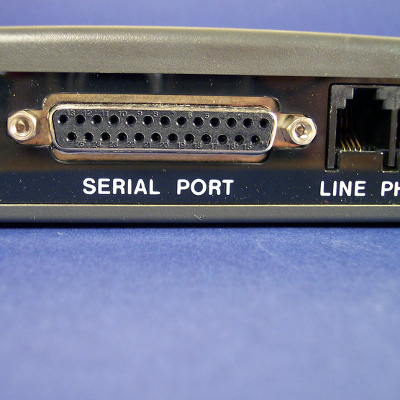
The 1990s were dominated by all sorts of great technology: VHS, floppy disks, and grossly oversized computer hardware. Learning new technology shortcuts was once all the rage, but when looked at now, these tech tips are rendered obsolete. However, that doesn’t stop them from hitting us right in the nostalgia. Here are some of our favorite tech tips from the 1990s.

Keep the Phone Line Open
Do you remember the good old days of only having one phone line per household? Only one person could use the phone at a given time. This meant that people had to use their imagination to keep the phone available for an important call. For example, one way to do this was to call an automated phone service, like a local movie theater for showtimes, which would repeat itself over and over again. The idea was to wait until the phone would notify you that your call was coming in. If someone were to pick up another phone, they wouldn’t hear the dial tone, keeping your plot a secret.

Use Collect Calls for Quick Messages
In the ‘90s, collect phone calls were popularized with dozens of collect call services, like 1-800-COLLECT. These calls worked by providing a brief moment to relay your name so that the person you were calling could accept the charges. Rather than actually pay for these calls, people would simply record short messages during this brief window and hang up before the charges could be accepted. Think of it like a primitive version of text-messaging. While it may not have been the most ethical practice, it sure was convenient.

Blow On Video Game Cartridges to Make Them Work
Classic gaming consoles that used cartridges, like the Nintendo Entertainment System or the Super Nintendo, were always subject to occasional hiccups. Somehow, blowing on the game’s innards seemed like a good idea to resolve the issue. Oddly enough, most of the time it worked, even though science has proven that doing so can actually corrode the cartridge’s connectors. It’s more likely that the success wasn’t a result of blowing on the cartridge, and instead it was simply from plugging in the game a second time.

Store a Disposable Camera in Your Car’s Glove Compartment
Having a camera phone today is considered commonplace rather than a luxury. The people of the ‘90s weren’t nearly as privileged, and instead had to rely on disposable cameras in their times of need. By keeping one in your car’s glove compartment, you always had a way to record events, particularly in case of a car accident. Well… after you wait several hours for the photos to develop at the drugstore, that is.

Keep Extra AA Batteries for Your Portable CD Player
Pretty much any modern portable music device runs with a rechargeable battery. Before this innovation, however, portable CD players were all the rage, and they required that you lug around your CD collection, just to have some variety in your playlist. If you wanted to go all-in with your music-listening, you had to bring extra batteries with you, just in case your CD player ran out of battery life. How’s that for inconvenience?

While these tips might not seem so special now, for many, they are remembered fondly, and are a cause to celebrate just how far technology has come in recent times. What are some of your favorite technology tips for long-obsolete devices? Let us know in the comments.

history_of_it_in_finance_400.jpg

In the Midst of Chaotic Financial Markets, Technology Remains a Constant

history_of_it_in_finance_400.jpg

Not that long ago, the trading floor of the New York Stock Exchange was filled with business-tie clad gladiators, climbing over each other in what looked like a capitalism-induced mosh pit. The Open outcry pit had its language, its own weather, its own smell. Nowadays, these pits are more subdued. They still are populated with people, and some are gesturing to buy and sell, but most of the transactions are done digitally. It is this role where the computer has changed the way financial markets work; from the ground up.

The Street Before the Internet
The first thing you should know is that computation of some sort has been utilized by traders and brokers for decades. With that truth out of the way, today’s Wall Street doesn’t resemble the Wall Street of old at all. Long gone are the days where traders would make trades out the window, stand in the street during a snowstorm to buy and sell securities, and even later, sit in their offices and read stock prices off a ticker tape, or later, a teleregister (or quotation board).

These technologies all supercede the technologies of today, and go a long way toward paving the way for the instantaneous trading you see in hedge funds and brokerage houses today. In fact, once the personal ticker was invented during the second half of the twentieth century, and traders could get nearly instantaneous updates at their home or office, the stage was set for dynamic investor growth. In the 1980s the Quotron used more modern computing tactics to produce the same effect: providing individuals with up-to-the-minute trading information. These technologies, while all cutting-edge for their times, don’t have the enormous effect that today’s technologies have for investors.

The Street and the Internet
In order to monetize, commercialize, and totally legitimize the new Internet, there first needed to be capital in place to build the necessary infrastructure required in order to process and send all the data that people send via the Internet. Many people take this infrastructure for granted today, but there was a time, in the infancy of the Internet where Wall Street was trying to get a hold on all of the available new technologies. After all, brokerages had been using something called Electronic Communications Networks (ECNs) to create efficiencies for brokerages since the early 1970s. Like most of western society, brokers were wholly unprepared for the speed in which these new networking technologies would change the market.

The big shift began in 1994 when two economists, William Christie and Paul Schultz, published a paper titled, “Why do NASDAQ Market Makers Avoid Odd-Eighth Quotes?” where they outlined a deliberate anomaly where these market makers were manipulating the spread (the difference between the buy and sell prices of NASDAQ securities) to secure these individuals a higher profit margin. This led to a full scale investigation and, eventually, rule changes by the Security and Exchange Commission (SEC) to protect smaller investors. The demand fueled by more attractive (and fair) investment tools led to online brokerages such as ETrade and Ameritrade being created. These organizations offered flexibility to any individual investor and led to traditional brokerages, such as Charles Schwab and TD Waterhouse, moving much of their trading to the web.

A few years later with more and more retail outlets popping up, Wall Street seemed to be in a spending frenzy over the next big Internet sensation. This led to what is known as the dot com bubble. Its explosion 1999 and 2000 paved the way for recession in many major western nations. As the economies in the EU and US rebounded, the improvement was largely driven by consumer and investor confidence that the Internet was here to stay, and that companies that had a viable business plan could find success by using the Internet as their sales base.

The Street at High Speed
After the housing market collapsed in 2008, the global economy hit the skids quickly. As a result, many of the strategies that were implemented to keep the world from sinking into a terrible depression were to add stimulus capital, without any real regulations about where the money was going to go. This has produced a wilder, less transparent, and overall fast stock market. With the use of today’s most dynamic Internet speeds, traders are now able to execute trades in incredibly short intervals; millions of times faster than the human mind can make a decision. Quantitative trading uses complex algorithms to do trades so fast that a half a cent here and a half a cent there can lead to millions of dollars changing hands over millions of trades.

This technology-driven trend is difficult for Wall Street regulators. Despite having state of the art solutions for monitoring these transactions, so many are made each day that it is practically impossible for people to keep their finger on the pulse of the market any longer. Regulators now rely heavily on automated systems that look for fraudulent activity in what seems to be a futile effort to keep investors, traders, brokers, and anyone else involved in this system, honest.

Nowadays, any major volatility of the market is largely the result of these micro-traders. Take the “Flash Crash” of May 6, 2010. The DOW, which had been losing ground all morning suddenly dropped 600 points, with Procter & Gamble losing 25 percent off its starting stock price. There was true frenzy on Wall Street, with the fear that we were looking into the abyss prevalent throughout the pundits and money managers all throughout the financial industry. In a matter of moments almost $1 trillion in shareholder value was erased.

The silver lining is that the market rebounded almost as fast as it fell and the DOW only finished down three points, but it took regulators over four months to determine what made the “Flash Crash” happen. It turned out that the problem stemmed from one of these algorithms being triggered by a very large sale of stock, along with the same-day announcement that Greece was bankrupt. When millions of trades can be made every minute, and are made every minute, there just isn’t the infrastructure there to provide entities the proper oversight the markets need to be thought of as “controlled”.

What do you think about the role of technology in the stock market? Do we need better oversight to ensure that fortunes are not lost in a blink of an eye, or that automation can’t take down the world economy? Or, do you believe that the market itself will dictate the end-game for technology in the financial sector?

To relate all of this back to your business, how has technology changed you? Has it made you faster, more automated, and more effective?

Leave your thoughts below in the comments.

lost_deleted_data_400.jpg

Find Out What REALLY Happens When You Delete Your Data

lost_deleted_data_400.jpg

You understand that the Recycle Bin is the place where deleted files go, and you know that emptying the Recycle Bin is how you dispose of files that you no longer need. What you might not know is that emptying your Recycle Bin does not guarantee that your files are gone at all, and that they’re probably still available on your PC.

The problem here is that you have to go through an extraordinarily complex process in order to truly “delete” files from your devices or hardware. Deleted files can still be accessed if someone knows where to look. This usually happens in the form of law enforcement personnel, like detectives, digging through a suspect’s computer. Even if these criminals deleted files from their computers, law enforcement knows that deleted data isn’t necessarily “deleted.”

When you drag your files from one location to another, like when you move your files to the Recycle Bin, you aren’t moving every single piece of data associated with that file. Instead, it’s just redirecting your computer to where to access the data, which could be in several places scattered across the hard drive.

TechQuickie explains how this works: “The way your operating system knows where to find all the pieces [of your data] is… through the reference to it on the Master File Table. So back to deleting stuff, removing a file from the Recycle Bin, only removes the Master File Table reference that points to the pieces that make up that file puzzle, and registers that space that it used to take up as ‘empty.’ This gives the operating system permission to write over it, but that does not mean that, right after you clean out your Recycle Bin, that the file is gone. Not by a long shot.”

If a criminal were to delete incriminating files from their PC and they didn’t take the opportunity to perform any additional activity on their PC, this information hasn’t been overwritten and can still be pieced together by law enforcement. Detectives and law enforcement agencies are in possession of special programs that help them perform such feats, accessing deleted information that’s scattered across hard drives to piece together the entire file.

By this same logic, it’s imperative that you contact a trusted IT professional, like those at NuTech Services, before you assume that data is deleted from your hard drive. This is especially important following a data loss disaster, like a hardware failure. Depending on how severe the disaster is, we might be able to use the same tools that detectives use in order to put your files back together, but of course, we can’t make any guarantees.

The best way to approach data recovery is to revert to a recently backed-up copy. This is why it’s so important to routinely back up your company’s data. We recommend that organizations back up their files with a backup and disaster recovery (BDR) solution. It’s the best way to guarantee your data’s recovery, even if it’s deleted. One of the best parts of BDR is that it works equally as well for both accidental and intentional data loss caused by user error or hacking attacks.

Now that we’ve let you know about what happens when you delete a file, how are you going to approach data loss and disaster recovery? For more information about how to recover deleted information, give us a call at 810.230.9455. We can also show you how to wipe your hard drive so you can know the deleted data is gone forever.

social_network_security_400.jpg

Tip of the Week: How to Avoid Oversharing on Social Media

social_network_security_400.jpg

Social media, as wonderful a tool for connecting and communicating as it is, does have its dangers. Fortunately, these risks may be mitigated through careful deliberation and pragmatic posting habits, but only if you know what they are. What follows are some easy habits to encourage a heightened state of security both digitally and in the physical world.


  • Share with Caution: There are some pieces of information that really have no business on a social network, as they could be used to the benefit of identity thieves. One really obvious example is the unique-to-the-individual Social Security Number, but it isn’t totally wise to share your home address or phone number, either. Birthday information and other personal details should only be shared if the site offers private profiles – but even then, think twice and be sure to triple-check your privacy settings frequently, and only add those who you know personally. If all a thief needs to verify that they are you is your date of birth or your dog’s name, you might be opening yourself up.

A side note: Even if you trust your privacy settings and your list of contacts, never post your address and/or a post sharing your agenda until after the fact. Announcing that your home will be empty on social media for a given amount of time is inviting criminal activity into your residence.

  • Limit Employment Details Online: Sites like LinkedIn, while phenomenally helpful with professional networking, can also provide identity thieves with a blueprint of your life thus far to exploit. Unless actively seeking employment for a time, leave just enough to entice those who view your profile to contact you directly to seek more information. Take advantage of privacy settings on those sites as well.
  • Do an Online Audit: The online world is vast. Your information could be in more places than you think. Friends and contacts of yours could post information about your real-time whereabouts that others could exploit, or your information could exist outside of the real-time social media sphere, in cached browsers and the like. Do a quick search for yourself online and remove anything you can. Google Street View will reveal details about your life that can easily implicate your financial situation, a quick request through their “Report a Problem” feature will solve that with a blurred image, rather than your home and belongings.
  • Continue with a Social Audit: How well do you know all of your personal social media contacts? Would you welcome them into your home? Share intimate details about your life with them? Call them friends? If any of the corresponding answers are negative, these people probably don’t need access to your full account and information. Limit access to your info (with certain exceptions, if you must) or ideally remove people from your social media sphere.

Social media can be both a fun personal venture as well as a valuable professional networking resource, but like any other tool, it must be handled with care. For more information, tips, and best practices to apply to your social media habits, read more of our posts or call NuTech Services at 810.230.9455.

wireless_retina_implants_400.jpg

Can Technology Cure Blindness? We’ll See!

wireless_retina_implants_400.jpg

Wireless technology is a staple in the office, but it’s making leaps and bounds in the medical industry, too. With innovations like wireless sensors, pumps, and other Internet of Things devices that can communicate with each other, medical care can be provided in unprecedented ways. But what would you say if we told you that wireless technology can give the blind back their sight?

Well, these patients may not have perfect sight, but they can regain their ability to see to a certain degree. While there are several retinal implants that help victims of degenerative eye diseases, the Argus device by Second Sight is mostly used to help patients suffering from retinitis pigmentosa– a hereditary condition in which the light-sensitive cells in the retina depreciate. In other words, the disease gradually erodes the vision of the victim until they’re unable to see anything but the brightest of lights. The Argus can give victims of this crippling condition another chance at living a normal life.

The Argus is a small device that is designed to take the place of some functions of the retina, aiding in sight. It sits on the patient’s retina and receives images wirelessly from a camera mounted on a special pair of glasses. The Argus then converts the images received into electromagnetic pulses, which communicate with the brain via the optic nerve much like a normal retina does. Though the images seen by patients aren’t necessarily full-color, perfect visions of the outside world; patients describe seeing rough black and white renditions, which certainly beats seeing nothing but darkness.

Of course, the inside of the human body isn’t a very hospitable environment for technology, even under the best conditions. Considering the body is full of salt, electronics can corrode and deteriorate over time. The main challenge is creating a device that is capable of withstanding the conditions inside the human body, while making it small enough to not be obtrusive to the human eye.

At first, the Argus only had 16 electrodes, which offered a limited amount of vision for the patient. The modern versions of Argus use 60 electrodes, which allow patients to “see” much better. As time goes on, Second Sight hopes that Argus can provide even better vision for its patients, as well as color vision. If there’s any question of whether the Argus is effective, watch this video.

In the future, these types of eye implants could be used to treat many different kinds of blindness, including optic nerve damage, diabetic retinopathies, glaucoma, and more. However, this might not be for quite some time, considering how the technology would have to imitate the function of the optic nerve, which demands a direct connection to the brain.

With so many great new technologies coming into existence, it’s only a matter of time before technology can be used to help even more people eliminate their physical handicaps. What are your thoughts on using bionic technology to help those in need? Do you think that someday science will have the power to restore vision completely? Let us know in the comments, and be sure to subscribe to our blog for more great tech news.

automation_driving_business_400.jpg

Prepare for a Future of More Jobs Being Automated

automation_driving_business_400.jpg

Eliminating unnecessary costs is a natural part of doing business. By “trimming the fat,” so to speak, organizations can optimize operations and profits. Automation technology is instrumental to this plight, but as these systems grow more advanced and capable, even professional employees are finding themselves at risk of losing their jobs to cheaper, more efficient automated systems.

You can see this in many forms throughout the manufacturing and retail industries. For example, the self-checkout systems at major retail stores allow for shoppers to get their wares and get out. Manufacturing plants use automated assembly machines to aid in some mundane tasks. The goal is to eliminate payroll and optimize operations, but let’s face it; these trends put people out of work. Yet, despite the various advantages of automation, their performance is often variable, and they require a certain amount of oversight in order to be effective. Shopping centers will often have a staff member on-hand for times when the self-checkout machines don’t work, and someone has to fix malfunctioning technology when it’s not assembling parts correctly. Thus, humans still have a vital role in ensuring the success of automated systems.

In light of this fact, rather than replacing workers, a solution could be to use automated technology to augment the capabilities of human workers. For example, there are programs that write articles for news aggregates. These systems are capable of writing much faster than a human ever could, but they also lack the emotion required to appeal to readers in a way a human author can. There are still plenty of jobs that automation systems can’t touch, but how long will this remain the case?

While we’re not necessarily declaring that technological advancement is bad, we want to raise awareness of how technology advancement affects the economy and job market. If a technology is putting skilled people out of work, can it really be called “advancement?” This is a question that you have to answer for yourself.

Even if automated solutions are taking jobs, they can still be somewhat useful. Take, for example, your business’s IT infrastructure. You can now outsource your business’s IT needs to a managed service provider, allowing for an “automated” process of managing and maintaining your business’s technology solutions. In a way, you would be augmenting your business by bringing valuable technical expertise into the fold, allowing for more efficient management and maintenance of your systems.

The beauty of working with NuTech Services is that we aren’t like other automated solutions, like those that want to replace your workers. Instead, we want to work with your internal IT department (if you have one) to help your business reach its greatest potential. If your team is having trouble keeping up with critical updates, we can handle this responsibility for them. Or, if you want to implement new solutions and innovate for a better future, we can recommend and implement solutions based on your team’s unique needs. Regardless of whether your team has the training and expertise to handle your IT solutions, our team can offer a way to improve your business’ operations.

Our professional IT staff will prove more valuable than any automated solution ever could be. To learn more, give us a call at 810.230.9455.

iphone_storage_trick_400.jpg

Tip of the Week: Try This Weird Trick to Free Up Space on Your iPhone

iphone_storage_trick_400.jpg

It’s a situation that’s all too familiar to an iPhone user: after taking a gorgeous picture, or trying to download a new app, the device flashes up a warning that there is not enough storage to complete the download. So what do you do?

Most people would do either of two things, depending on how badly they wanted to complete what they had first attempted. They would either start cleaning out the apps on their phone, deleting the ones they no longer used, or give up and not download the app. However, what if there was another option? One that would allow a user to free up storage space without sacrificing other files and applications that they would rather keep?

According to Reddit user eavesdroppingyou, there is a trick that has been verified by dozens of other users and quite a few technology websites since the original thread was started. All one has to do is try to rent a movie from the iTunes store. Not just any movie, however; one with a file size larger than the amount of available space left on the phone.

The trick works like this: a user enters the Settings on their phone and checks how much space is left available in the device’s memory. They then enter the iTunes store and attempt to rent a movie with a file size larger than the allotted space remaining. The phone will notify the user that there is not enough available storage to download their selection, giving the user the option to either accept the notification or travel back to Settings. If the user returns to Settings to reevaluate their available storage space, it will have increased since they attempted their futile download.

This is apparently because the iPhone will try to make room for the file by clearing out extraneous data from the apps you already have, like cookies and histories, which take up extra space while serving no real purpose. This process can be repeated, as the memory gains will most likely be incremental. After a few attempts, however, a user can accumulate a considerable amount of extra space. Commenters and posters on the Reddit thread and the various websites publicizing the find have reported memory gains ranging from a few hundred megabytes to a few gigabytes.

What makes the process even nicer is that, since the rental is unable to complete its download, the user is not charged for it and receives data space at essentially no cost. As long as, that is, they remember to check their available storage between attempts, so that they don’t inadvertently rent a movie by clearing up enough space to host it on their device.

Furthermore, this in no way voids any warranty and requires no jailbreaking of the device. The riskiest aspect of this method is the possibility of the trick adding a few megabytes of data to the phone (as has been reported by a few commenters), or perhaps renting a movie that there was no interest in watching. Regarding that, who knows – the rented movie just might become a new favorite.

How would you make use of the newly freed-up space on your phone? Leave a comment below and let us know what your next download will be!

congress_to_hear_arguments_for_ecpa_reform_400.jpg

A Law From 1986 Shouldn’t Govern Email Privacy in 2016

congress_to_hear_arguments_for_ecpa_reform_400.jpg

Are you familiar with the protections in place that ensure that your digital communications remain private? What’s keeping an entity like the government from going through your emails? In the United States, the government uses a loophole in an outdated law to access the digital information they want from its citizens. If you’re concerned about privacy, you need to be informed about such laws and loopholes.

For the US government, this loophole is found in the Electronic Communications Privacy Act (ECPA). Key to this discussion is the fact that the law was originally passed in 1986. We don’t have to tell you how different the technological landscape was in 1986, much less digital communications like email. The loophole to ECPA is that it considers any stored electronic communications over 180 days old to be “abandoned,” and thus, law enforcement agencies can access it after the 180-day mark without a warrant. Obviously, the original version of ECPA was passed without having any idea how dependent the world would become on sharing and storing digital communications 30 years into the future.

Recently, legislative action has taken place to try and close this loophole. CompTIA reports:

On April 13th, the House Judiciary Committee unanimously passed an amended version of the Email Privacy Act (H.R. 699)… The Email Privacy Act would put an end to this outdated 180 day rule and require a warrant for law enforcement to access the content of all stored communications. While the current iteration of the bill is not perfect, we were happy to see that it does not contain a carve out to the warrant requirement for civil agencies, nor does it alter ECPA’s emergency exception procedures.

The idea here is to protect users of email and cloud services, along with the service providers themselves. As society continues to become more dependant upon digital communications, having discussions like this and knowing who has access to your data is increasingly important.

Were you aware of this loophole before reading this article? Do you feel this is cause for concern, or do you not care if the government reads your emails? Share your opinion with us in the comments.