119686351_400.jpg

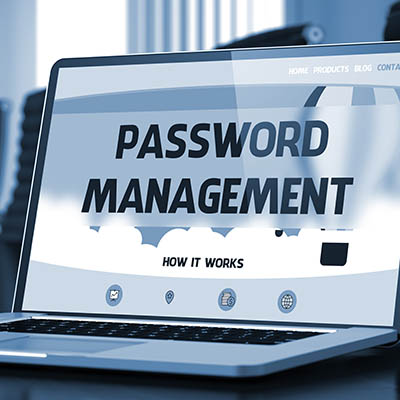
How You Should Judge Potential Password Management Programs

119686351_400.jpg

Passwords are hard to remember – there’s no denying that. However, there is also no denying how important it is to use different ones for each account, all sufficiently complex, and all the rest. The point is, a lot of people use bad password practices because (to be frank) good password practices are too intimidating. There has to be some kind of acceptable middle ground… right?

Fortunately, there is: password management systems.

What Are Password Management Systems?

A password manager is effectively what it says on the box: it’s a program that keeps track of your passwords for you. While these are available for individual users, we are more concerned with those that are meant for businesses to leverage.

These solutions have a reputation for being complicated and time-intensive to set up. However, this no longer has to be the case, and it is now more important that you find a solution that offers the features that every business needs to prioritize.

What to Look for from a Password Manager

During your search, you will want to make sure your chosen password management system offers the following features:

Security

While this may seem obvious, not all of your password management options will necessarily offer the same protections or follow the same practices. For instance, standalone password managers are inherently more secure than those tied to another solution, like a built-in one in your browser of choice.

These separate solutions usually have additional features to assist your security as you use them. Good password managers will remind you of best practices if too many saved passwords are the same or too weak and will require multi-factor authentication to be accessed in the first place. It also wouldn’t hurt to find one that also notifies you when you’re due to update some of the passwords you have saved.

It should also never save one password: the master password used to access the solution itself. That is still the user’s responsibility.

As far as behind-the-scenes security is concerned, you should find a password manager that is itself protected by a variety of security features, like encryption, role-based access, and secure cloud storage.

Storage Considerations

Determining where your credentials are kept by the password manager is another important detail to keep in mind, largely as an extension of your security considerations. Does your password manager save your passwords to the cloud, or are they kept natively on the device? Either approach has its pros and cons.

If the cloud is leveraged, your credentials will be available to you on any of your devices… but this does put your credentials in the crosshairs if that cloud solution was ever breached. If you keep your credentials stored locally, you won’t risk losing them in a cloud storage breach, but they are still vulnerable. For instance, if that device fails, there go your passwords.

Generally, this won’t have much impact on the solution you choose, as most enable either option, if not a combination of both.

User Friendliness

As difficult as your password manager should make things for cybercriminals, it should make simple for your legitimate users – starting with adding and removing them to the business’ accounts. They should find it easy to change their password as needed, and your password manager should automatically log a user into a website or application. If it senses that there are not currently credentials for that site, it should offer to save them.

NuTech Services has plenty of experience dealing with password security, which means we’re familiar with password managers and maintaining them. If you’d like assistance with selecting, implementing, and utilizing one in your business, let us know! We’re just a call to 810.230.9455 away.

68870104_400.jpg

Tip of the Week: How to Get the Most from Your IT Budget

68870104_400.jpg

As any business owner knows too well, a budget is a very finite thing – and this can seem to be doubly the case when trying to budget for your business’ technology. Fortunately, there are also a few ways that technology can help you save some capital. Here, we’re offering some tips to help you reduce the financial toll of your business’ IT.

Leverage Automation

Answer me this: would you rather pay your staff to accomplish their responsibilities, or pay the same amount to have them work just as hard but only accomplish half as much?

That’s what I thought.

Automated solutions and processes can make your business far more efficient than it would be otherwise, simply because it makes it so your staff doesn’t have to take care of rote responsibilities and can instead focus on capital-generating endeavors. As a result, you can streamline how your dollars are spent, making more for a relatively small investment.

Ditch the Landline

Let’s face facts… all technology follows the same trajectory: it starts as an invention, is innovated upon, becomes the established norm, and is eventually phased out by the next invention. Alexander Graham Bell’s patent for the telephone is almost 150 years old – suggesting that it is high time for the next innovation to step into the fold.

In a large way, it already has, with Voice over Internet Protocol. VoIP leverages your business’ Internet connection to place calls, meaning you no longer have to pay the telephone company for service. Furthermore, it is far easier (and cheaper) to expand a VoIP solution, making it an even better option for a growing business.

Invest Wisely

When selecting a solution, there’s a lot to be said about seeking out a bargain. However, you need to lean more towards frugality, and less towards being miserly. A solution that you may have gotten for a considerable discount, but ultimately costs you three times its worth in maintenance and repairs can barely be called a solution at all. Furthermore, cheaper devices are often cheaper because the manufacturers skimped on key aspects, like performance, security, and durability. The same can often be said of emerging technologies – it is better to be late jumping on the bandwagon than it is to be in the front row when the whole thing crashes.

NuTech Services is here to guide you as you outfit your business with the technology solutions it needs for success. Give us a call at 810.230.9455 to talk to our seasoned professionals.

119527560_400.jpg

Employee Burnout Can, and Should, Be Avoided

119527560_400.jpg

Your employees are your greatest asset, which means that they need to be carefully managed and maintained, just like any of your other productivity-boosting assets. The difference is, your employees aren’t just another solution – they’re human beings, and as such, they aren’t tirelessly motivated. In fact, if your employees aren’t treated properly, they could… burn out.

Burn out? 

Oh, no! That certainly wouldn’t be a good thing… but how can you prevent such a thing from happening in the workplace, when you really can’t tell if workplace stress has worn them down, or if it was a more personal issue? You can’t keep things from influencing their personal lives, after all. 

Maybe they just need to get more sleep, or something.

Besides, what if you just happen to work in an industry that creates more stress upon its workers by nature of the work? It isn’t as though you can help that, either.

Sure, that’s fair.

You can’t be expected to be in control of your employees’ personal lives… but you should be in control of their professional environment.

What Leads to Employee Burnout?

While general stress can contribute to burnout, certain job factors and features can create “special” kinds of stress that contribute specifically to burnout tendencies. Let’s consider these factors briefly.

Non-Stop High Stress

Look, I’m not saying that a business should be a stress-free area. That just isn’t realistic.

However, businesses typically experience busy, stressful times and once those times are over, there is usually a period of time that employees get the chance to recover. Bookending stress with these low-stress times (and adequately compensating your team for their stress) can make employees feel better – but keeping them in a constant pressure-cooker certainly won’t.

Unclear and Unreasonable Tasks

How frustrating would a puzzle be without a picture on the box to reference?

Each and every time an employee is given an unclear task, they feel that same frustration. They’re just trying to do their job, but they can’t if it is unclear what that job is. It only gets worse if the tasks that they are assigned literally (yes, in the literal sense) can’t be done.

The more stress and frustration that builds up with tasks like these, the more likely burnout becomes.

Huge Consequences for Failure…

Some workplaces have higher stakes than others. For instance, you have those who work for child services, whose work frequently takes them into risky and heartbreaking situations.

People in positions like that have a much more stressful job than, say, a fortune cookie writer or the greeter at a superstore. It probably wouldn’t surprise you to hear that high-stakes workplaces frequently see higher rates of burnout.

…With No Recognition for Success

How would you feel if your considerable efforts were, day-in and day-out, overlooked? If you went above and beyond in everything you did, and not one word was said to you?

Chances are, you’d probably feel unappreciated, demoralized, and unmotivated. Workplaces like this can have a severe morale problem. 

Welcome to burnout.

Communication is Neither Efficient nor Effective

Without proper communication, any of the other problems your business is experiencing will only get much, much worse. Unclear and incomplete statements will make issues more complicated, especially if you are trying to deal with an employee’s issue.

As a result, demoralization and burnout become very real risks.

Lacking Leadership

Finally, if a strong, fair, and supportive leader isn’t present in the business, employees could be accelerated on their way to burnout by the lack of guidance the missing leader should be providing. Employees may feel like they aren’t getting something out of their employment – be it recognition, support, or job security – and swiftly lose the drive to perform well.

Clearly, there is no shortage of ways for an employee to reach the point of burnout… but how can you tell when one really has?

The Symptoms of Burnout

There are quite a few signs that can indicate if an employee is truly burning out, or if one is simply having an “off” day. I’m pretty confident that we’ve all felt and exhibited some of these signs – maybe even all of them – at one point at least.

How many of these symptoms have you seen among your employees?

  • They feel distant from their work, cynical about what they do and who they do it with.
  • They may be suffering from a variety of symptoms, including headaches, sour stomach, and intestinal issues.
  • They have slipped in their tasks at work, but their home life is unaffected.
  • They may keep themselves emotionally distant from their coworkers.
  • They may lack creativity, and will have trouble concentrating.
  • They are low energy, feel drained, and feel that they can’t cope.
  • They are visibly frustrated and stressed.

Again, we’ve all had an “off” day, where these kinds of things are almost to be expected. It’s just a part of life.

It is when these symptoms have become chronic, stretching out beyond hours or days to weeks, that your employees may be suffering from burnout. Thanks to these symptoms, burned-out employees may appear depressed, and are actually at a higher risk of developing depression later on.

Why This Really Matters to You

So, why should you care?

Well, basic human decency aside, burnout can have some significant impacts upon your business itself. For instance, sick leave is much more commonly taken among employees who are burned-out, and they are also far more motivated to find another job.

If they are successful in the latter, you will need to spend the significant costs associated with hiring a new employee to replace them.

You also need to consider the “typical” state of your employees. They might actually be some of your top performers, simply struggling through a hard time. What impact on their productivity will your business be able to just absorb?

A burned-out employee in the wrong position can exacerbate the problem, too, as a burned-out manager can easily create a burned-out team… killing productivity and morale on a wider scale. 

You also need to consider the optics that burnout can produce – what business or potential employee would want anything to do with a business that has what is really a very visible issue?

(I certainly wouldn’t.)

Bringing basic human decency back into consideration, this condition can actually do a number on a human being. Not only can the influence of burnout impact an employee’s personal life and relationships, it makes them slightly more likely to visit the emergency room.

What You Can Do to Help a Burned-Out Employee

Keeping these warning signs in mind can help you to better spot when one of your employees is clearly going through a rough patch. While you may not see it as your job as their boss, it is your job as a fellow human being to offer them some support.

The easiest way to start this process? An honest conversation.

Discuss It with the Employee

Have an informal sit-down with this employee and just talk to them about it. Express your sincere worry for them as a person and offer your support with whatever they have been going through.

This support itself could help greatly, and if it is another personal issue, some personal time may be all it takes to help.

Redistribute the Workload

Even the most competent employee you have could potentially bite off more than they could chew. Whether they overstuff their schedules, offer to help with anything they can, or both… before long, this employee is going to fall behind schedule. 

You should go through that schedule with them, organizing it and trimming some of the fat to make sure it is humanly possible to accomplish, redistributing some tasks if need be, if not pausing them.

If your business has any collaboration tools, they can certainly come in handy here.

Teamwork makes the dream work, as some say, so if you can leverage your collaboration platform to help the task-redistribution process, it just makes sense to. You can make use of your platform as you manage your team, assigning them certain responsibilities and sharing the weight of their tasks between multiple resources, not just the one. 

Email is a great collaboration tool, but many employees can find the amount of emails they receive overwhelming, which (among other things) makes them less productive. You can help them out by introducing them to the different tools that email solutions can offer, like filters and rules to help organize incoming messages, and snoozing, to give them some uninterrupted time. 

Switch It Up

If you had an employee that was particularly good at Task A, it only makes sense that you would want them covering Task A as much as possible, right? 

However, designating that employee to Task A will likely make that employee pretty sick of Task A before long… and all the employees who always get Task B, or Task C will likely feel a similar way. Try rotating the responsibilities of your team on occasion, taking their preferences and goals into consideration.

Preventing Burnout in the First Place

As we’ve alluded to here, there are many warning signs of impending burnout issues, and we’ve barely scratched the surface here. Doing everything you can to keep burnout from happening at all is a reasonable strategy. 

Fix your company culture to focus on self-care. Try bringing in external experts to keep your employees happy and healthy, whether that’s a yoga instructor or accounting services. Remember that your employees have lives outside the workplace to live, and encourage them to enjoy them. 

These, and/or many, many other behaviors will help keep your employees engaged, motivated, and happy.

One great way to keep burnout from taking hold is to allow your employees to work how (and when and where) they work best. Remote working solutions can allow you to give your employees the freedom to shape their work habits around their lives.

While this may sound like a way to let employees slack off on work time, many employers have found the effects to productivity more than worth it… and employees have certainly shown their appreciation for the flexibility.

At the end of the day, your employees are going to feel a certain way – you can only try and help them feel more positively about their workplace by giving them better technology, more initiative, and an ear to turn to when needed.

We can help where the technology is concerned.

For solutions to help your employees be more productive, more communicative, and more successful, reach out to NuTech Services at 810.230.9455.
CUT_COST_222104952_400.jpg

Are You Bogged Down by Vendor Relationships?

CUT_COST_222104952_400.jpg

Small business owners have a lot on their minds and a ton of responsibilities that the average employee doesn’t have. Small businesses often force business owners into taking on various roles that may or may not fit their specific skill set, including CIO or CTO. Of course, the Chief Information Officer and Chief Technology Officer are responsible for technology-related decisions, but the reality of the matter is that you only want technology professionals in these roles… not just professionals who happen to be the most knowledgeable folks in your office.

We’re not trying to talk smack about organizations that are forced into this position. Small businesses have it tough, especially with the more technical aspects of infrastructure management and the finer details of computing. It takes more than a passable amount of knowledge to manage an infrastructure filled with the IT needed for your employees to complete their duties on a daily basis.

Vendors are there to sell you the products and services that your company needs to thrive, including the processes of building, delivering, and supporting these products and services. If you want to be successful in the business world, it’s your prerogative to create a solid relationship with your vendors. Unfortunately, vendor representatives can eat up a considerable amount of the time you should be spending managing your business.

One particular study suggests that IT vendors can take up over 13 percent of a CIO’s time; that’s time that your business simply can’t get back. We recommend taking action now to change the way your organization handles vendor management. Here are some tips to keep in mind:

  • Consolidate vendors: Often times businesses will test products by working with multiple vendors. If they are comparable, you should consider moving to one vendor rather than several, making the process of handling all of your products much easier as a whole.
  • Measure vendor performance: It can take time to measure vendor performance, but the time you spend will easily be made up when you eliminate vendors that aren’t providing adequate services.
  • Implement a vendor management service: When you have a single point of contact for all of your vendors, you’ll find that it’s easier and more effective to work with them. Outsourcing this to NuTech Services can help you save time and resources. We can handle your contracts, performance analyses, relationship management, and vendor risk to keep your technology working as intended.

Don’t let vendors hold you back from being successful–that’s not what they’re there for. To find out how you can better manage your vendors and resources, give us a call at 810.230.9455.

POS-System-_-Restaurant-_-Fotolia_127939065_S_400.jpg

Tip of the Week: How to Keep Your POS from Being a PITA

POS-System-_-Restaurant-_-Fotolia_127939065_S_400.jpg

If your business is in retail, you’re going to need a Point-of-Sale (also known as a POS) system. This is a common device in businesses that directly sell to their clients and customers, as it can do a lot to assist these businesses as they manage their processes. As you seek out a POS system for your business, you’ll likely be looking for (and avoiding) certain features.

The first considerations you need to make are fairly straightforward.

Cost

You really do get what you pay for. Rather than settling for a cheaper system with plans of replacing it later, make sure you select a system that can be upgraded and expanded (yes, there is a difference). That way, you can avoid doubling your costs by eliminating the need to procure more than one system. It also helps to seek out a vendor that can supply all the needs your business has – like additional hardware for your POS, or enhanced software to power it – to simplify your processes.

Integration and Implementation

As mentioned before, your POS system should have the ability to grow as your needs of it do. For instance, while you may want to implement customer pagers at some point, it is probably wiser to focus on the essentials – like receipt printers and cash drawers. However, you will also want to make sure that your POS system has the capability to be upgraded to incorporate more advanced features as your business grows.

Tracking

Although this isn’t too far off from integration, you may want your POS to integrate with your inventory system, your quoting system, your CRM software, or any other business app on your network. Depending on your needs, you might even want your security cameras to pull a feed from your POS system to record purchases.

Support

Let’s face facts… you don’t want to find your POS system experiencing technical difficulties without anyone available to help you resolve them. Whether its complications with the software itself or a hardware issue, you need to be sure that support is always available to you.

When running a business, it is crucial that you have the technology to properly take payments. NuTech Services can help ensure that you are prepared to do business with reliable solutions. Give us a call at 810.230.9455 to get started.

business-people-and-architects-collaborating-on-TFP643Y_collaboration_400.jpg

Collaboration Tools for SMBs

business-people-and-architects-collaborating-on-TFP643Y_collaboration_400.jpg

Useful collaboration tools can alter a business significantly by enabling cooperation that is impossible without them. How exactly these tools fit into your business is a whole other matter.  Today, we’re going to talk about how you can integrate some pretty great collaboration tools without turning your business upside down. 

Cloud Productivity

One option a business can take is by adding in a cloud productivity suite. Options like Google’s G Suite and Microsoft’s Office 365 can bring a business a lot of value, without the typically massive capital outlay the yearly software license would command. Besides, you probably already need licenses for a word processor and spreadsheet app anyway. Inside the software there are integrated collaboration options that allow your team to work on documents, spreadsheets, and presentations together in real time.

Communication

Efficient collaboration is not possible without strong communications. Today, there are options out there where an organization doesn’t necessarily need to invest huge sums in replacing their normal communications strategy to get the benefits that innovations made in the solutions can bring. By utilizing instant messaging, web-based conferencing, and cloud-based email companies can improve their top-to-bottom communication without taking on a lot of extra cost.

Collaboration Apps

New innovations in communication software are now available that provide advanced collaboration options. Developed like a forum, but with direct communication options, and integrations with third-party applications, collaboration apps like Slack and Microsoft Teams have a lot of options to help drive team productivity forward.

If you are looking for ways to improve your organizational productivity, call the IT experts at NuTech Services today at 810.230.9455. 

R5AFCM_400.jpg

Help Desk Makes IT Support Easier

R5AFCM_400.jpg

Downtime is a killer for any business. When a business is forced into confronting its technology support deficits, it usually means that they’ve been dealing with too much broken technology and downtime, and the costs associated with it. One way your business can avoid losing huge chunks of time to broken technology is to add a professional help desk to support your IT administrator. 

For many smaller businesses the IT administrator’s position is not one held by a certified IT professional. It is held by whomever is most knowledgeable about computers; or, even worse, the person who most uses a particular machine. This can lead to complete catastrophe.

A help desk, either as a standalone service, or as a part of a larger managed services platform, can provide the kind of comprehensive IT support every organization is looking for. It doesn’t just battle broken technology, either. It also reduces downtime that comes from human error, whether it be from IT related issues or situational incompetence. If your staff can’t do their jobs efficiently because they encounter technology-induced roadblocks, having IT experts available around-the-clock to look into and fix most of the problems your staff could have is a huge benefit. 

Additionally, if you do have a dedicated IT administrator or outsource your IT management to a firm that doesn’t offer help desk, having remote technicians at the ready can help an IT department that is stretched thin. Augmenting your IT staff by instituting a help desk can keep their attention on the projects that will help the organization move forward more successfully. 

If your business finds itself falling short in terms of help desk support, look no further. NuTech Services can help your business get the support it needs to maintain operational efficiency. To learn more, reach out to us at 810.230.9455.
280644088_S_400.jpg

Know Your Tech: Virtual Machine

280644088_S_400.jpg

Businesses use servers and servers are very expensive. They are expensive to build and to maintain. Since most servers have top-of-the-line hardware inside them, and are only used for one purpose, a lot of a server’s available resources are left dormant, essentially wasted. The virtual machine allows expensive server hardware to host multiple virtual servers, allowing any business to get more out of its IT investments. Let’s take a look at the virtual machine and its uses.

Before we do that, let’s start you with some terminology that you should know:

  • Virtualization – Virtualization is the process where information that is found on physical hardware (or the physical hardware itself) is transferred into a virtual environment. 
  • Hypervisor – The process that takes hardware resources and combines them in a way where they can be delivered into a virtual environment. 
  • P2V – Short for “physical-to-virtual”, which is the act of migrating resources from a physical server to a virtual one. 
  • Snapshot – An image of the state of a virtual machine at any specific point. In a snapshot you can see all of the data, configurations, and programs that are open at the time, in effect saving all the work that has been done on that system.
  • Clone – An exact copy of a virtual machine that can be transferred to another VM. 

Host and Guest

When committing to using virtualized resources, you need to understand that your VM is the guest of a host machine. The host machine is typically a high-powered server that you would have normally used to host your computing resources, while each virtual machine, whether it is a virtualized server or a virtualized desktop (or something else), are guests on the hosted machine. By being able to fit several guest machines on one host machine, you can save a substantial amount of money. 

Uses of Virtual Machines

Typically, a virtual machine is used for less-critical processes, but it can handle about any type of computing that you need it to. Virtual machines are often used in resource testing. Some more popular uses include:

  • Try out a new operating system (OS) – Running a new OS on a virtual machine can provide technicians and administrators with the perspective needed to determine if the new OS is right for their business.
  • Use Desktop as thin client – By running a virtual machine on your typical computer, the new computing construct notably becomes a guest system. 
  • Testing software – One of the most prevalent uses is to test new software before installing it on a larger computing infrastructure. 
  • Consolidation – These days, virtual machines are being created to do more than ever before. Today virtual server technology can allow organizations to roll out one server and use it to host several. This presents the opportunity for major cost savings.

Has your organization looked into using virtual machines to cut down on your physical IT infrastructure? Call NuTech Services’s experts today to discuss your virtualization options at 810.230.9455.

170245913_phishing_400.jpg

Think Before You Click: Spotting a Phishing Attempt

170245913_phishing_400.jpg

We’ve all caught the obvious spam email, like the message that is clearly bogus, or the offer that is definitely too good to be true.

We’re going to confidently assume none of our readers are getting tricked by Nigerian Princes or getting roped into order virility drugs from an unsolicited email. The real threat comes from the more clever phishing attacks. Let’s take a look.

Give Me the Short Answer – What’s Phishing?

Phishing is where you get an email that looks like an actual legit email. The goal that a cybercriminal has is to trick you into giving them a password or access to an account (like to PayPal, Facebook, or your bank) or to get you to download malware.

The problem with phishing emails is how real they can seem. A phishing attempt for your PayPal information can look just like an everyday email from PayPal.

Even worse, often phishing emails try to sound urgent. They make you feel like you have to take action quickly, or that a bill is overdue, or that your password has been stolen. This can lower the user’s guard, and force them into a sticky situation.

How to Spot a Phishing Attack

Like I said, it’s not always going to be obvious when you get phished. Even careful, security-minded, technical people can fall victim because phishing is just as much of a psychological attack as it is a technical one.

Still, there are some practices you and your staff should use:

Always Use Strong, Unique Passwords

This can solve a lot of problems from the get-go. If your PayPal account gets hacked, and it uses the same password as your email or your bank account, then you may as well assume that your email and bank account are infiltrated too. Never use the same password across multiple sites.

Check the From Email Address in the Header

You’d expect emails from Facebook to come from something@facebook.com, right? Well, if you get an email about your password or telling you to log into your account and it’s from something@faecbook.com, you’ll know something is up.

Cybercriminals will try to make it subtle. Amazon emails might come from something@amazn.com or emails from PayPal might come from something@paypalsupport.com. It’s going to pay off to be skeptical, especially if the email is trying to get you to go somewhere and sign in, or submit sensitive information.

Don’t Just Open Attachments

This is nothing new, but most malware found on business networks still comes from email attachments, so it’s still a huge problem. If you didn’t request or expect an email attachment, don’t click on it. Scrutinize the email, or even reach out to the recipient to confirm that it is safe. I know it sounds silly, but being security-minded might build security-mindfulness habits in others too, so you could inadvertently save them from an issue if they follow your lead!

Look Before You Click

If the email has a link in it, hover your mouse over it to see where it is leading. Don’t click on it right away.

For example, if the email is about your PayPal account, check the domain for any obvious signs of danger. Here are some examples:

  • Paypal.com – This is safe. That’s PayPal’s domain name.
  • Paypal.com/activatecard – This is safe. It’s just a subpage on PayPal’s site.
  • Business.paypal.com – This is safe. A website can put letters and numbers before a dot in their domain name to lead to a specific area of their site. This is called a subdomain.
  • Business.paypal.com/retail – This is safe. This is a subpage on PayPal’s subdomain.
  • Paypal.com.activecard.net – Uh oh, this is sketchy. Notice the dot after the .com in PayPal’s domain? That means this domain is actually activecard.net, and it has the subdomain paypal.com. They are trying to trick you.
  • Paypal.com.activecardsecure.net/secure – This is still sketchy. The domain name is activecardsecure.net, and like the above example, they are trying to trick you because they made a subdomain called paypal.com. They are just driving you to a subpage that they called secure. This is pretty suspicious.
  • Paypal.com/activatecard.tinyurl.com/retail – This is really tricky! The hacker is using a URL shortening service called TinyURL. Notice how there is a .com later in the URL after PayPal’s domain? That means it’s not PayPal. Tread carefully!

Keep in mind, everyone handles their domains a little differently, but you can use this as a general rule of thumb. Don’t trust dots after the domain that you expect the link to be.

Training and Testing Go a Long Way!

Want help teaching your staff how to spot phishing emails? Be sure to reach out to the IT security experts at NuTech Services. We can help equip your company with solutions to mitigate and decrease phishing attempts, and help educate and test your employees to prepare them for when they are threatened by cybercriminals.

279676523_Office_400.jpg

Microsoft is Constantly Improving Office 365

279676523_Office_400.jpg

Microsoft Office is the most common productivity suite in the world, and it’s for a good reason. One of the biggest reasons for this is that they routinely update the applications with great features. Office 2019 is one of the biggest improvements that Microsoft has made, and it features several apps that make the modern office work.

The following apps are included in Office 2019:

  • Outlook
  • Word
  • Excel
  • PowerPoint

Here are some changes that have been brought to these applications.

Outlook

Most people use Outlook for email, but it’s more of a personal information manager, since it can be used as a calendar, task manager, and contact manager. Changes to Outlook 2019 include:

  • One-click fixes for accessibility issues – Enhanced accessibility options are updated to new international standards.
  • Focused inbox – Outlook now features more options to keep you focused on the information you need and less on the glut of email that you may get. 
  • Outlook reads your emails to you – Outlook now offers a text to voice option that will read your emails to you. 

Word

Microsoft Word is the Office suite’s word processor, and Word 2019 is looking to be a great upgrade from Word 2016. Here are some of the best changes:

  • Real time collaboration – Work side-by-side with others to collaborate on documents in real time.  
  • Integrated translation – Microsoft translator gives workers the ability to translate words, phrases, and sentences in many languages.
  • Enhanced reading options – Instead of straining your eyes, choose options to help make it easier on them, including page color, column width, text spacing, or have Word read your document to you.
  • Easier navigation – You can now flip through documents quickly with side-by-side view.

Excel

Excel is a spreadsheet software that comes bundled with Microsoft Office. The latest version gives users plenty of opportunities to take advantage of new and interesting features, several of which give Excel the ability to act as a database. Here are just a few of the new features:

  • New Charts – Users can now create a series of new charts, including map charts, funnel charts, and more. 
  • Precision selecting – Now users can deselect cells that aren’t relevant to their query without having to frustratingly start over.  
  • New and improved connectors – Now there are integrations that allow Excel to be front and center on any of your organization’s analytics initiatives.

PowerPoint

PowerPoint is Microsoft’s presentation-creator app. The software has hundreds of other functions, of course, and PowerPoint 2019 expands PowerPoint’s effectiveness in the long run. Some functions include:

  • Zoom for PowerPoint – Provides custom navigation inside a presentation for more presenter-friendly interaction.
  • SVG image compatibility – You can now insert and edit scalable vector graphics (SVG) images for clearer, more defined imagery. 
  • Export to 4K – Now you can export your presentation to 4K format, slightly better than Ultra High Definition. 

Other software

Office 2019 is also built with a much-improved Microsoft Teams collaboration app–and SharePoint–the industry standard in project management and coordination. Additionally, the ever-popular Microsoft Office 365 now uses Office 2019 as a base for their cloud-delivered products. 

Microsoft lists OneNote as a part of their Microsoft Office platform, but the software giant is starting to move away from OneNote as a part of the productivity suite, building it instead as a part of Windows 10. 

If you would like to talk about what Microsoft products are right for your business and/or personal computing needs, the IT professionals at NuTech Services are available to answer your questions and give you suggestions. To speak to one of our certified consultants call us today at 810.230.9455.
187502498_Windows_400.jpg

Tip of the Week: Adding More Utility to the Windows Taskbar

187502498_Windows_400.jpg

The Windows Taskbar is meant to assist the user in opening and managing the programs they need to accomplish their goals. Did you know that you can tweak the Taskbar to add to the utility it already has? For this week’s tip, we’ll go over a couple of the things you can do with the Taskbar – specifically, things that make navigating your computer a little easier.

Using the Taskbar to Highlight Folders

If you’re like most users today, a large amount of the work you are responsible for only requires you to access certain areas of the company’s storage, which can quickly make navigating there a frustrating inconvenience. Fortunately, there is a Taskbar feature that can streamline this process considerably.

You can add direct links to folders (and their contents) to the Taskbar.

Here’s how it’s done:

  • Right-click any unused space in the Taskbar to open a menu of options
  • Hover over Toolbars and select New toolbar…
  • Find your desired folder in the directory that appears, select it, and click Select Folder

That folder should now appear in your Taskbar, with a list of its contents quickly and easily accessible to you.

Using the Taskbar to Quickly Access Websites

If your responsibilities more frequently require you to be on the Internet, you might find it useful to have a quick-access URL field in your Taskbar, enabling you to skip the step where you have to open a browser before beginning to navigate to a site.

  • Again, access your Taskbar options by right-clicking in any unused space
  • Again, hover over Toolbars, this time selecting Address

A URL field will have appeared in your Taskbar. Typing a URL into it and pressing Enter will open that website in your default browser.

Would you like to learn more about what the Taskbar can do? Let us know in the comments!

193972626_Communication_400.jpg

Business Communication Tools Your Business Could Use

193972626_Communication_400.jpg

All businesses need some type of communication infrastructure, especially considering how connected today’s workplace is. Today we will look at some of the best communications solutions out there for businesses of all sizes and industries, including many that you may (or may not) have already implemented for yourself. You can use this knowledge to fuel improvements to your own communications infrastructure.

Video Conferencing

Video conferencing can help business owners accomplish a plethora of tasks in the workplace. For one, video conferencing gives you the power to directly communicate with other parties, like vendors, customers, regulators, etc., without being in the same physical location. You also have the option to share screens, documents, presentations, and more through a video conferencing setup.

Chat Platforms

A chat platform will give users the ability to communicate both in and out of the office, whether it’s providing assistance to your clients or acting as a communication infrastructure for your employees. Some organizations have even taken to automating chat platforms to provide a more effective service to their clients. In fact, these services are often more cost-effective, and they come with a high level of customizability to provide an alternative to having a traditional support line.

Voice over Internet Protocol

Voice over IP has been around for quite some time, and it’s so popular that even cable companies are providing it these days. The biggest component of a successful VoIP platform is ensuring that you’re not overpaying for bandwidth. Your business’ phone system will run over your organization’s Internet connection, so it’s crucial that you’re not buying more than needed. A VoIP solution, when implemented correctly, can save you time and resources better spent elsewhere. VoIP systems can integrate well with other services, as well.

Mobile Devices and BYOD

Everyone has a mobile device of some sort, so businesses are beginning to leverage this to their advantage through the use of Bring Your Own Device. Organizations that have employees who often travel for work will find it beneficial for them to bring their own devices into the workplace so as to offset the cost of purchasing work devices for them… as long as there are limits in place, of course.

Of course, securing these devices is also of the utmost importance, which is why solutions such as mobile device management exist. These solutions give administrators the chance to limit a device’s data access based on user privileges, limit the kinds of software installed on them, and more. Mobile device management might be hard to implement for certain businesses with outspoken employees, so address these issues accordingly.

Intranet

Intranet solutions consist of a data system that can be used for file sharing. A company intranet can be used in various ways; they can be hosted on-site, in a private cloud solution, or implemented in a hybrid solution. An intranet hosted on your local area network can give any computer that’s connected to the network the ability to access the intranet. Given the right permissions, an intranet can enable collaboration utilizing this single point of storage.

A cloud-based solution can be hosted on private hardware, but it will depend on the integration and whether or not you’ve set up access control and authorization. Cloud systems are generally hosted outside the confines of your physical network, yet they offer a considerable amount of flexibility with access to data and applications.

Cloud Services

There are countless cloud services out there that your organization can use to establish lines of communication, including email, instant messaging, collaboration software, and more.

Unified Communications

If you can unify your business’ communications, you will see quite a lot of benefits. Centralized software gives you the opportunity to host all of your applications in one location, like VoIP, Instant Messaging, Video Conferencing, etc., and it all reports back to one location where it can be tracked. Unified communications are a great way to monitor transparency and increase the value of your solution.

NuTech Services’s IT experts can present you with the best communications solutions for your organization. To learn more, reach out to us at 810.230.9455.

276677721_tips_400.jpg

Tip of the Week: Simple Windows 10 Tips

276677721_tips_400.jpg

Windows 10 is the benchmark in PC operating systems at this juncture. It offers users all types of great options from previous versions of Windows, while integrating some of today’s most dynamic technology to provide users with the very best in organization and ease-of-use. Today we will talk about five very simple tips that will get you started getting the full function of Windows 10.

Shake to Minimize

Sometimes when you are working in any Windows platform, you will have too many windows open and you just want everything out of your face except the thing you are currently viewing. Well in Windows 10 there is a cool little feature you can use to make that happen very quickly. Just take your mouse (or your finger if you have a touchscreen) and click-and-hold the title bar of the app you are working in and shake it back and forth. This will minimize all other open applications. To get them back, simply repeat the action.

Choose Folders on Start Menu

The start menu is extremely useful in Windows 10, but sometimes it can get cluttered. To choose which folders you want to see on your Start Menu go to Settings > Personalization > Start then click on the “Choose which folders appear on Start” link at the bottom of the screen. From there you can toggle the folders you want to see in your Start menu. 

Find the Original Control Panel

The settings options in Windows 10 are far and away easier to use, but if you are one of those people that likes working with tools they know, the old Control Panel is still available in Windows 10 as it is still the go-to option for customizing advanced options. The easiest way to access the control panel is by clicking on the Cortana icon on the taskbar and typing in “control panel”. It will give you immediate access to all user settings. 

Selectively Sync Folders with OneDrive

One of the best parts of using Windows 10 is the integration with OneDrive cloud storage. Windows 10’s OneDrive integration provides users a lot of flexibility. To sync folders with data stored in OneDrive, make sure OneDrive is running and right-click on the OneDrive icon in the notification area. Select Settings and then navigate to the Account tab. Under the Account tab you will see the option to “Choose folders”. Click on choose folders and you will see a list of the folders you have in OneDrive, select the ones that you would like access to through Windows 10 and select OK. Now you have access to this data through your File Explorer in Windows 10.

Customize Your Application Notifications

Having too many notifications is one of the most frustrating parts of modern technology. To keep from being bogged down with too many notifications, you can customize which notifications you see in Windows 10. To do so, click on Start > Settings > System > Notifications & action. Once there all you have to do is scroll down and select the notifications you want on, and which ones would be better served not notifying you.

Windows 10 has hundreds of options for any user to customize their experience. Check back next week when we provide some more advanced tips on how to best experience the OS.