
mobileNotification_295894631_400.jpg

Avoid MFA Fatigue Attacks by Minimizing Notifications

mobileNotification_295894631_400.jpg

While we strongly recommend that you put the security safeguard known as multi-factor authentication in place wherever it is available, it is important that we acknowledge that cybercriminals are frustratingly inventive. So much so, in fact, that a new form of attack has been developed to take advantage of MFA, referred to as MFA fatigue.

Let’s go over what an MFA fatigue attack is, and what you can do to fight back.

MFA Fatigue is a Very Specific Form of Social Engineering

Let me ask you a question: if one of the applications on your mobile device prompted you to log in once again, would you hesitate to do so? What if a notification appeared, asking you to confirm a two-factor authentication prompt? What if that notification kept appearing until you did, assuming that the system was just glitching?

This is precisely how MFA fatigue works.

The purpose behind MFA is to help keep your account secure even if your password has been compromised. By adding an additional proof to the required authentication process, MFA is supposed to make it harder for the person who compromised your password to actually access the account. However, when a cybercriminal puts in your credentials, you’ll still receive the prompt to confirm the login. Some of these threats even come in the form of SMS messages and voice calls to confuse the user further.

This brings us back to our initial question: would you question an authentication prompt, particularly if you were trying to do something else, especially if it kept popping back up again and again?

The cybercriminals responsible are betting that you won’t.

How to Spot MFA Fatigue

There are a few clear and unmistakable warning signs that an MFA fatigue attack is afoot:

  • If you receive approval requests without attempting to log into an application.
  • If you receive multiple requests from a single application.
  • If you receive authentication request notifications at odd hours.

How to Take the Teeth Out of MFA Fatigue

Fortunately, there are a few things you can do to help limit the efficacy of MFA attacks. A strong password is a great starting point, so long as you keep it secure. You and your team also need to be more cognizant of when you are receiving an MFA prompt and whether or not you requested it, denying all of those that are unidentified.

Limiting the number of attempts you can make through your MFA solution of choice within a predetermined time is also a helpful precaution.

Turn to Us for Assistance with Your Business’ Security

We’ll help you implement the protections and precautions that will help you keep your business secure. Give us a call at 810.230.9455 today!
secureFileSharing_386993807_400.jpg

Tip of the Week: Making Sure Your File Sharing Remains Secure

secureFileSharing_386993807_400.jpg

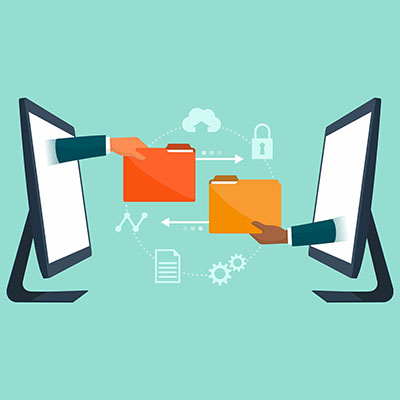
Nowadays, file sharing is so ubiquitous that most people in the office likely take it for granted. However, this is not a luxury that you have, as you need to ensure the file sharing that takes part is sufficiently secure—otherwise, you could find yourself in a tight spot. That’s why we want to devote this week’s tip to a few practical steps to making sure your files get where they’re going safely.

When Remote, Make Use of a VPN

When it comes to securing your data, a virtual private network—or VPN—is an indispensable asset. Public Wi-Fi is questionable at best in terms of security, potentially exposing users to threats and otherwise putting your data at risk. The VPN, however, provides an encrypted portal through which to transmit data to and from the office with minimal risk of it being intercepted on the way.

Prioritize Password Management

We could go on and on about the importance of secure passwords and acceptable password practices…the fact of the matter is that the only way to really be sure that your users are sticking to these policies is to make compliance the easiest option. A password manager is a key tool to doing so, as it securely stores passwords in a protected digital vault (out of a hacker’s reach) for your team’s convenience. Not only does it mean you and your team no longer need to come up with and remember the increasingly complicated passwords needed for security, it can also be used to help entire departments make use of shared accounts and thereby save you money. NuTech Services and our consultants are here to help you make the right choice for you.

Require Multi-Factor Authentication (MFA)

Multi-factor authentication (sometimes called two-factor authentication, or 2FA) is a security step that puts more requirements on the user trying to prove their identity as a part of the login process. Rather than accepting the username-password combination, MFA uses any of three additional methods to verify the user is who they say they are:

  • Authentication through knowledge (Something you know) – This form of authentication requires the user to provide an additional password or PIN, presumably that only the user would know.
  • Authentication through possession (Something you have) – This method of authentication requires the user to have a key of some sort, either as a physical token or as a code sent to a specific mobile device.
  • Authentication through existence (Something you are) – This version of authentication relies on biometric data, often using thumbprint scans or voice recognition to confirm a user’s identity.

Requiring that your team members prove themselves in such a way can greatly enhance your data security, but you also need to be careful not to put too many hurdles in between your users and the work they need to do.

Manage Your File Sharing

Your file sharing is critically important to your collaborative processes, but without the proper security or the ability to integrate with your existing protections, it can quickly become a major liability. Various options are currently available, but you need to ensure that your selection fits into your comprehensive security strategy. Just consider a few features of a standard file sharing program that have heavy security connotations:

  • Emailing encrypted attachments
  • Sharing public or private cloud file links
  • Creating shared and collaborative folders accessible online, or via syncing information between spaces.

Control Access Permissions

This is one of the most effective means of securing your files. After all, if only so many people are able to access certain folders or files (or even file types), that’s a considerably smaller window for mistakes or abuse to take place. By establishing permissions based on department or even custom user groups, you can have much greater control over who can see what.

Staff Training

At the end of the day, it makes no difference how secure you’ve managed to make your file storage and overall business infrastructure if your staff members aren’t aware of how to use your technology in a way that preserves its security. Your staff is almost assuredly going to need some time to get acclimated to today’s hosted platforms, which means it benefits you to provide the training that will expedite this process. The more knowledgeable they are about practical business security, the more secure your files will ultimately be.

We’re no strangers to the needs that Michigan companies have of their IT, and we can help support it so it delivers the security and efficiency their success relies on. To learn more about any of the processes we will assist you with, including file sharing, give us a call at 810.230.9455.

documentManagement_480004182_400.jpg

File Access and Security Improves with Document Management

documentManagement_480004182_400.jpg

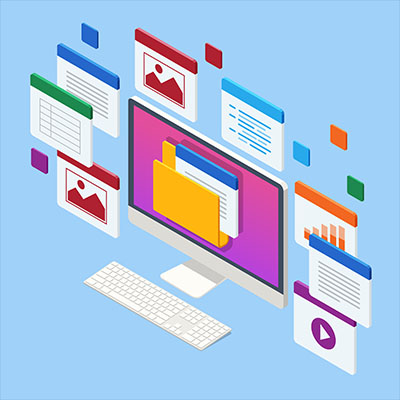
When it comes to storing your business’ documents, you have a couple of options available to you. Some professionals enjoy the chaos of having documents strewn about their office, while others prefer the organization that a system of filing cabinets can bring with it. However, both of these options pale in comparison to the document management system, a technological innovation that could allow your organization to go paperless and improve efficiency in ways you might not have guessed.

What is a Document Management System?

A document management system is essentially a repository of your business’ documents that are stored in a searchable database. Since the files are stored in a digital space rather than a physical one, there are many benefits to using a document management system that you simply don’t get with filing cabinets or folders. Consider how much space a filing cabinet takes up—physically—in the workplace. You might have rooms filled with paper documents, and even when they are stored in an organized way, digging one out whenever it’s needed is a time-consuming task. Plus, printing out documents is horrible for both the environment and your printing costs.

Using a document management system makes your documents more accessible, more secure, and more redundant. There is simply no reason not to use one.

Easy Access and Sharing Capabilities

Since your documents will be stored in the cloud, you can easily access them on approved devices and share them with your coworkers as needed. It certainly beats digging through a filing cabinet and making copies of the documents, right?

Secure Storage and Archiving

Paper documents are not secure, period. They can be lost—or worse, stolen—quite easily. It’s more difficult to lose digital files, and even more impressive is the ability to securely store them in encrypted databases. It’s one thing for a criminal to take a pair of bolt cutters to a locked filing cabinet, but another entirely for them to crack military-grade encryption on your database.

Disaster-Proof with Data Backup Systems

Imagine your office building was to catch fire, including the room where you keep your filing cabinets. They likely won’t survive the disaster, leaving you high and dry. While a digital document management system does come with its fair share of challenges related to disasters, like cybersecurity and hacking attacks, data is much easier to back up than, say, five filing cabinets filled with paper documents.

Get Started with Document Management Systems Today!

NuTech Services can equip your business with a document management system that aids your organization’s efforts at going paperless while making your documents more accessible than ever before. You’ll find that the enhanced productivity gleaned from your document management systems will make all the difference.

To learn more and get started with document management systems today, contact us at 810.230.9455.

wifiSecurity_277131135_400.jpg

Improve the Security of Your Wireless Network with these 4 Actions

wifiSecurity_277131135_400.jpg

It’s not always easy to build a network that is both robust and secure, but this doesn’t make it any less necessary, not with so many of your critical business functions relying on connectivity. With so many devices accessing your network at any given time, you need to have a concrete understanding of how to keep your network secure while still keeping your network running efficiently.

Your Wireless is Not Simply About Wi-Fi Connectivity

Your business’ wireless connection is much different from your home connection, and this extends far beyond just the data it sends. Start thinking about it not as a tool but as a part of your business’ foundation, something that it stands on and relies on. This is a far cry from how some organizations view their wireless networks with many viewing them as a secondary network, sidelining it in favor of the actual company network. This practice can be fatal.

Even if you have yet to experience a true data breach, this doesn’t mean that there aren’t currently threats out there who have set their sights on you. Most employees will have smartphones allowing them to access your company’s data or Wi-Fi during the workday, and most important of all, they expect your network to be secure, as they don’t want to put their personal devices or data at risk. To help you build a network that is secure and reliable, we’ve put together the following actions you can take today to protect your network:

Keep Guests on Their Own Network

If you want to keep your network as secure as possible, start by isolating your guest network into a subnet. Subnets are partitioned off from the rest of your network, allowing you to keep them secure through different settings or access controls. Some companies keep their guest networks open so people can use them as they see fit, and while this is certainly a fine practice, be sure that it’s not operating too close to your employees’ network. You never know who could be using your network for nefarious deeds.

Secure Your Routers

If you want to secure your wireless network, you need to make sure that the hardware powering it is in an appropriate location that is safe and secure from just anyone. Businesses opt for commercial Access Point (AP) technology instead of the over-the-counter router, as they provide better coverage and are often placed out of reach, attached to the ceiling or elsewhere. If your business still opts for the router, however, just make sure that people can’t mess with it while they are walking around your place of business.

Reign In Your Signal

You’ll want to have total coverage for your entire office if you can, but you also need to keep in mind that if your network extends beyond your walls, an unauthorized user could be sitting in the parking lot or across the road, ready to use your wireless network for their own purposes. You can manage your signal’s strength by placing them in locations where you are comfortable with letting your wireless signal reach.

Keep Software Updated

Routers have their own operating systems that are updated periodically by software developers, and as such, they also come with their fair share of vulnerability patches and updates. You’ll want to make sure that the firmware is updated for all of your wireless technology so that it is kept safe as can be.

NuTech Services can help you make any and all necessary adjustments to the way you utilize wireless technology. To learn more about what we can do for your business, contact us today at 810.230.9455.

overcomeChallenge_215804358_400.jpg

Prevalent IT Challenges You Need to Consider

overcomeChallenge_215804358_400.jpg

Managing business technology is a challenge that many small businesses have difficulty overcoming, and this is largely in part due to the fact that managing technology is not the focus of these small businesses. The inability to overcome IT challenges can hold businesses back that otherwise would flourish. Let’s discuss some of the biggest issues that companies have for IT and how they could potentially be addressed.

Digital Transformation is Here to Stay

The pandemic forced the hands of businesses all over the world, forcing them to adopt new technology solutions in response to the rapidly changing global situation. There are no signs which indicate that this digital transformation is slowing down, as businesses are more focused than ever on optimizing their processes with what was previously seen as a taboo working environment, i.e. remote technology.

Cybersecurity is More Important Than Ever

You can’t go on the Internet or turn on the news without seeing a new devastating cyberattack against a major business or government entity. A 2022 study from Evanta found that cybersecurity is the number one priority for CIOs, and considering the number of remote and hybrid workers out there, we’re not surprised.

Taking Full Advantage of the Cloud

The cloud is the second largest growing spending category for businesses, at least according to the Evanta study; 54 percent of businesses are investing in cloud solutions. Businesses want the freedom and agility that comes with cloud infrastructure, making it one of the highest priorities and biggest challenges facing organizations today.

Supply Chain Problems Linger

Hardware and other technical components are harder than ever to get, particularly because of disrupted supply chains as a result of the pandemic and conflict between Russia and Ukraine. We like to recommend that businesses plan ahead with their technology acquisition by planning out a hardware refresh cycle and IT roadmap.

Talent Acquisition is Difficult

Paying to hire in-house IT workers can be expensive, especially if you want IT workers who know what they are doing and have the skills required to keep your business technology running. Unfortunately, many small businesses don’t have the resources to pay top dollar for IT talent.

Managed Services Can Solve a Lot of These Issues

The closest thing you can get to a silver bullet for all of your technology problems is to work with a managed service provider like NuTech Services. Our trusted technicians have the know-how to help your organization overcome any technology-related obstacle, from technology acquisition to management to maintenance and beyond. To learn more about what we can do for your business, contact us at 810.230.9455 today.

357669662_remote-team_400.jpg

Solid Practices to Improve Your Remote Team Management

357669662_remote-team_400.jpg

After this prolonged pandemic, remote work has established itself as a key component of many organizations’ operational policies and infrastructures. However, it has added new levels of complexity that make managing a workforce more important than ever. Let’s discuss some ways management can improve the work experience for remote employees.

Establishing Best Practices for Remote Workers

Here are several opportunities you have to make work better and more efficient for your remote workers:

Implement Communication Standards

Clear and open communications are required if you want your remote employees to stay in the loop. You need to establish clear expectations for how often they need to communicate and collaborate with others within your organization, and be sure to encourage them to interact with your staff whenever possible.

Delegate Tasks and Responsibilities

It doesn’t matter whether your team is in-house or remote; the only real difference is where they are working. Naturally, this means that you shouldn’t have different expectations with responsibilities for remote employees compared to in-house ones by virtue of where they are working alone. Be sure to delegate larger tasks that might be challenging to pull off in a remote setting into smaller, more manageable work while providing team members with appropriate processes for how to go about the work.

Provide Appropriate Tools

Thankfully, many businesses have already made adjustments to their infrastructures to accommodate remote work, including the tools needed, like cloud-based software, storage, and mobile devices. We always like to recommend that businesses implement a unified communications and collaboration platform to provide you with one unified tool to aid in communication.

Understand that Overworking and Isolation Are Rampant

There’s a common misconception that people working remotely aren’t getting as much done throughout the workday, but this assumption is flat-out wrong in most cases. Remote workers might be subject to pressure according to the expectation that they need to work harder, and this can lead to negative feelings and burnout. You need to acknowledge this and clear the air to keep your team happy.

Support Your Team However You Can

Your team will need support to stay positive, even under the best circumstances possible. This also applies to your remote staff. Make sure they have access to both support that enables them to do their jobs properly, like IT support, but also emotional and mental health support. Remember, employees who feel well will be more productive, so it’s in your best interest to ensure your team feels supported in all they do.

Receive and Act on Feedback

To make sure you are approaching remote working conditions in an effective way, be sure to collect feedback from your remote workers to see what you are doing well and what can be improved upon. Asking them for their opinions is one of the best ways you can improve your operations. If you are scared they won’t answer honestly, you can use anonymous polling or one-on-one check-ins to get an idea of how you are doing.

Let Us Help You Get the Most Out of Your Remote Operations

To help your remote workers be as effective as possible, we offer technology services and solutions that can help your business flourish under this “new normal.” It doesn’t matter if your employees are in-house or remote—we’ve got solutions for you.

To learn more, reach out to us at 810.230.9455.

416046837_notifications_400.jpg

Tip of the Week: Get Your Dismissed Notifications Back in Android

416046837_notifications_400.jpg

Picture this scenario: you’re going about your day and get an important notification, only for that notification to, well, get cleared. You want to go back and check it so you don’t miss it. This is thankfully quite easy to do by viewing your Android notification history.

First, you’ll have to take a couple of steps to set it up.

Turn On Your Notification History for Android

Android has a feature for notification history which is hidden away in the settings. This feature gives you the ability to see a list of your notifications. It’s not active by default, so it’s time to turn it on. Follow this simple process:

  • Access your Settings either by swiping down on your homescreen to get to the integrated shortcut, or by navigating through your applications to find them.
  • Once there, access your Notification settings, and from there, Advanced settings.
  • You’ll then see Notification history. Tap it to access it.
  • Once you do, you’ll be presented with a deactivated switch. Turn the switch to On, and you’ll have a list of the notifications you recently dismissed!

What About Apple Devices?

Apple does not have an equivalent feature; once your Apple notifications have been acknowledged, they are cleared and gone for good.

Have Any Other Ideas for Tips?

You use technology every day to be productive, and we want to help you get the most out of it. To learn more about what we can do for your business, contact us today at 810.230.9455.

476051890_tech_support_400.jpg

Technology Support is Crucial when IT is Everywhere

476051890_tech_support_400.jpg

Most things in your office depend on technology in some way. That’s just the simple fact of life these days. Let’s examine just how much of your business depends on the technology that powers it and how companies increasingly depend on IT to manage the countless devices that have permeated the office environment.

IT Makes the Workday Go Round

Let’s start from the beginning. After grabbing your morning cup of coffee, you sit down in front of your computer and power it on.

Yes, that is in the realm of IT.

While most of your workday will be spent sticking to your job description, i.e. what you were hired to do for the business, the way that you go about this work will likely include some kind of technology tools.

Those are also IT.

Following a busy and successful workday, you might need to submit a timesheet for review and for payroll.

This is also IT.

A shocking amount of your business’ operations and workflows depend on functional technology solutions, so we ask you now, how well is your IT infrastructure managed?

Make Sure You Are Taking Care of Your Important Technology Assets

Since your business relies on IT to get the job done, it’s incredibly important that you manage it appropriately. NuTech Services can help you make the most of your solutions. To learn more, reach out to us at 810.230.9455.

iot_376226617_400.jpg

Make the IoT Work for Your Business

iot_376226617_400.jpg

By now you’ve probably heard the term Internet of Things (IoT). You may not completely understand what it is, but you know it has something to do with all those “smart” devices that you see popping up everywhere. Today, we’d thought we’d get into what types of things are on the IoT and how they can have an impact on your business. 

What Is the Internet of Things?

The Internet of Things started growing a decade or so ago as “smart” technologies were being developed to present people with technology that they can use to make their lives easier. This concept is what technology is all about, after all, and it quickly became a business opportunity for OEM (original equipment manufacturers) and other companies. This has led to a massive explosion of “smart” devices designed to unburden the lives of their users. 

Of course, the more businesses that are developing this technology, the more tools will be aimed to transform business. There are now 14 billion IoT devices (including smartphones) connected to the Internet, so there is a breadth of options for businesses to choose from. It’s also one of the more funded technology markets by venture capital firms with close to $5 billion being invested annually, as the practical use of IoT is just now scratching the surface.

The IoT Is Everywhere

The IoT can be used in multiple ways in and around your business; and, each adds its own unique variables to the way you go about integrating them. Obviously, a large portion of your employees have smartphones, that is an added consideration because you need to ensure that all those mobile devices are working with the applications that you use; or, if you don’t go that far, at least that they don’t bring unwanted passengers along on to your network. 

More complex industrial IoT (IIoT) platforms can really alter the way a business operates, so training will have to be considered to help your employees understand how they work. There is a lot of good that the IoT can do, but it also comes with some challenges. Not only do you need to set up your IoT platform from the ground up, you need to make sure that it integrates with your back-end software systems and any other applications that would provide the benefits needed to implement them. 

Set up and Security Questions for the Implementation of Business IoT

For most businesses looking to implement IoT to help automate some things will first start by using it in the ways that your average home consumer might. You get systems that can help save you on utility costs and help you save time (smart thermostats, smart lights, voice-driven personal assistant hubs, etc.). 

More complex systems like asset tracking and inventory management allow for pinpoint control over supply chain issues. This can get pretty complicated, pretty quickly, but that’s the point. The IoT helps humans do things humans couldn’t do without these tools. It is the perfect confluence of human-made tools (hardware and applications) and constant data streaming that can help businesses automate more and collect more data to help them make better business decisions. 

Businesses need their technology to be scalable and secure. This is where the IoT hits a snag a lot of the time. There are serious security questions with any number of devices, but that part of it is improving. For the business, however, “improving” could mean “still too expensive/risky”.  The truth is that any business can utilize some form of IoT to help them cut costs, improve efficiency, and improve decision making. You just need to know how.

At NuTech Services, we understand where and how the IoT fits into a business. If you would like to learn more about the Internet of Things and how it can help your organization grow, give us a call today at 810.230.9455.

redeyeHacker_250874815_400.jpg

We Think You Should Know What Social Engineering Is

redeyeHacker_250874815_400.jpg

Social engineering is a dangerous threat that could derail even the most prepared business. Even if you implement the best security solutions on the market, they mean nothing if a cybercriminal tricks you into acting impulsively. Let’s go over specific methods of social engineering that hackers might use to trick you.

Let’s start with a look at what social engineering is and why it works so well on users.

Social Engineering Targets the Human Part of Your Brain

Social engineering is designed to get you to act impulsively. In other words, it’s the manipulation of your emotions and thought processes. If we hear that something needs to be done, and it comes from someone whom we believe and respect, then we will naturally want to perform the task, even if it might not necessarily make sense in the moment.

In regards to business and social engineering, the stakes are considerably higher than if someone were to play a prank or a trick on you. In these cases, social engineering tactics prey on the fears and anxieties associated with the workplace. All of this takes some preparation on the hacker’s part. Here are some of the steps involved in this process, from the hacker’s perspective.

The Steps Involved in a Social Engineering Attack

Depending on the target and the victim, the social engineering attack might go through various stages. More often than not, the attacker will plan out their attack through the use of research. Let’s get in the mindset of an attacker to see it from their perspective.

If you wanted to attack a company, for example, you might first collect as much data as you could. The Internet can be a treasure trove of information on its employees thanks to its open nature, and you might be able to find information publicly on social media and networking sites like LinkedIn, Facebook, and others. You might discover some of the likes and dislikes of these employees. Afterward, it is just a matter of using this information in a way that gets the user to act a certain way.

There are other ways of going about an attack, too, like fear tactics. Employees don’t want to get in trouble in the workplace, and if they get a message from someone claiming to be their boss, they will likely act to keep their integrity and job in check.

A resourceful attacker might use a combination of both to get their way. If someone posts a picture on social media with their webcam in the background, the attacker could use this to instill fear in the user’s heart that they have been caught doing incriminating things. The attacker might then threaten to release the footage to personal or professional contacts, and then they might demand a ransom in exchange for not doing so.

How Can Your Team Avoid Social Engineering Attacks?

If you want to help your team avoid social engineering attacks, it starts with helping them spot some of the dead giveaway signs:

  • Messaging and tone that incites fear or makes a threat
  • Links that were not requested and don’t match their apparent destination when you hover over them
  • Close-but-not-quite email addresses and domain names
  • Malicious email attachments

It also never hurts to confirm the identity of the message’s sender through secondary means. You might go check on your boss to make sure that the message came from them, or you might contact the third party that the message claims to be through a number you might have on record. As long as your employees are aware that social engineering exists and that they can become the target of attacks, then you can’t go wrong here.

Let Us Help You Get Ready for These Threats

We want to help you ensure that your team is ready to tackle important security problems in a way that doesn’t put your organization at risk. To learn more, reach out to us at 810.230.9455.

Employee_health_409236073_400.jpg

How You Can Help Keep Your Employees Healthy in the Workplace?

Employee_health_409236073_400.jpg

Looking back at the past few years, it’s little wonder that many people have become more concerned about their health—particularly when it comes to the workplace and spending extended amounts of time in the vicinity of other people. This makes it important that you do everything you can to make your workplace a healthier and safer-feeling place to work… but how?

Fortunately, the technology available today gives you a few different options. Let’s touch on them to see what would work effectively for your needs.

What Can I Do to Help Ensure My Employees Remain Healthy?

Depending on the processes you’ve established for your workplace procedures, the right technology can facilitate more health-conscious practices. For instance, the fewer the number of people actually in the office, the less likely it is that a pathogen will be carried in and spread.

Remote/Hybrid Work Offers Health Advantages

Like we said, the fewer people that are in the office at any one time, the less likely it is that a germ is being carried inside. Remote and hybrid work allows your team to remain productive while spending at least some of their work time outside the office—so, while you’re keeping a germ from spreading through your workforce, you aren’t necessarily losing valuable time. Honestly, it’s a win-win.

Taking advantage of this win-win situation, however, will require some preparation. Namely, you need to ensure that your team members and business have access to the technology that remote work relies on, and that you have policies that address these options specifically.

Refurnish Your Office (and Reconsider How You Use It)

Changing workplace conditions is nothing new—it’s why computer mice are increasingly molded to better fit in one’s hand, and more and more focus has gone into break rooms and other amenities. Lately, people have been questioning how healthy it is to spend so much time seated at a desk, or seated in general. Studies have shown that remaining seated for such long periods can increase the chance of a heart attack… yikes.

Nowadays, standing and convertible desks are available to help encourage employees to stand every now and again. Likewise, you can also change the way that you carry out certain business functions. Maybe that regular meeting you have with one or two people can transition into a walking meeting.

Mental Health is Health, Too

It isn’t uncommon for people to focus on physical health—the size of their gut or the pain in their backs—over the needs of their mental health, despite the latter being a major aspect of their health overall. Having safeguards in place to ensure that your employees’ mental health is well taken care of is therefore a wise investment. Develop a positively-charged workplace and give them the support they need (seeking out feedback so you can do so effectively) to see some real benefits in their work and work lives.

Health and Safety Leads to Productivity

If you were able to improve your business’ success through simply making it a safer and healthier place to work, why wouldn’t you? NuTech Services can help you ensure your team remains healthy in any form by providing the technology that enables their operations either in the office or remotely. Find out more about our managed services by calling 810.230.9455.

vacationComputing_343347375_400.jpg

Don’t Let Your Guard Down While You Travel

vacationComputing_343347375_400.jpg

With so many workers constantly connected to screens and other technology, it is a good idea to disconnect every so often by taking a vacation somewhere. However, it’s not always this easy, especially for a business owner who is still minimally connected to the office even while technically on vacation. We’ve got a couple of tips for how you can make the most of your technology while on your vacation without putting your company at risk in the process.

Use Your Mobile Hotspot Over Public Wi-Fi

It is safer to use your smartphone as a mobile hotspot than using public wireless connections, and it is well worth paying a little bit extra. You’re not going anywhere without your phone, so it makes sense that you use your mobile hotspot to connect your laptop, tablet, or other device to it rather than use a potentially unsecured wireless network. As long as you have decent cell service, it’s guaranteed to work, unlike a public Wi-Fi connection.

Connect to Public Wi-Fi Only When Necessary

We think it’s safe enough to pull up directions or to look at your flight itinerary while using public Wi-Fi, but you should be a little more careful with checking your email, logging into your social media, or anything else involving sensitive information. The longer you remain on the network, the longer you are at risk of having your data stolen.

If you have a virtual private network, however, you can use that to create a secure connection for work-related information. Your business should be using one of these anyway, especially in the wake of a pandemic which forced countless employees to work remotely.

Be Careful of What You Share on Social Media

If people know you aren’t home, then who’s to say that they won’t try to break in? The automated outdoor lights are not going to be enough to stop someone who is intent on breaking and entering. It’s better to just not advertise online that your home will be empty for a week. We aren’t saying that you will be robbed while on your vacation, but it’s certainly not out of the realm of possibility.

People could even come up with elaborate schemes to make your life more difficult, too. Imagine some hacker or scammer sees that you are on vacation for a couple of weeks, then uses your identity to get the help of a random Facebook friend with some nonsensical story about how you lost your wallet and need help getting home. When you consider how often accounts are hijacked, it’s not a stretch to think it could happen to you.

Make Sure Your Traveling Accounts are Secured

Traveling often means that you are creating new accounts, whether you are flying on an airline for the first time, using a ride-sharing service, staying at a hotel, or even something as simple as ordering food. Make sure that you aren’t getting too lax with your personal information, and ensure that you are always using complex, secure passwords for your accounts, stored in a password manager rather than your web browser. It can sometimes be easier to plan ahead so you don’t have to worry about it at the moment.

Let Us Take Care of Your Technology

If you are going on vacation, we hope you get as much rest and relaxation out of it as possible. The past couple of years have not been kind, and we could all use a break–especially now. Take some of the worrying out of your vacation by trusting your IT management to NuTech Services. We’ll make sure things run smoothly while you’re gone. To learn more, reach out to us at 810.230.9455.

PointOfSaleSystem_287592925_400.jpg

The Modern Point of Sale System Can Bring Massive Benefits

PointOfSaleSystem_287592925_400.jpg

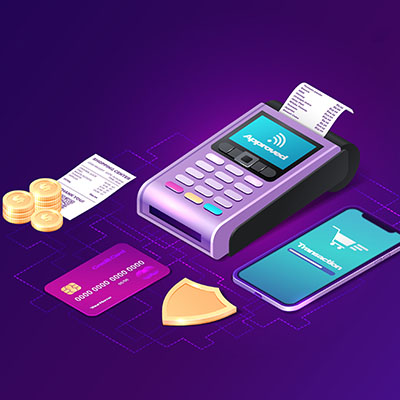
Many businesses make their profits from selling products, goods, or services to their consumer base, requiring that they have a way to process these transactions in place. The point of sale system is a business’ preferred method of handling these transactions, especially in retail. How can you know which features you might need for a point of sale system?

Explaining Your Point of Sale System

Simply put, a point of sale system is a combination of hardware and software that works together to give you a solution for managing your sales. For example, the standard cash register could be considered a point of sale system, as it provides the barebones necessities for handling transactions. Point of sale systems have evolved well beyond the cash register, though, and if you want to make the most of them, you’ll have to look a little deeper and think more ambitious with your point of sale system.

The Hardware Involved

Depending on the type of business, the hardware you choose to use for your point of sale system will vary. You’ve seen various types of point of sale systems throughout your day-to-day life, and many of them might look like computers with touch-screen capabilities and cash registers and card readers built right into them.

Small businesses generally have low-tech hardware implemented for their point of sale systems, though, at least compared to large retailers and enterprises. Most small businesses don’t need the type of hardware that these larger organizations use and can get away with using a simple plug-and-play card reader for a smartphone or tablet connected to a point of sale application. At the end of the day, your business’ needs will vary, so you should not buy into what is expected of a point of sale system without first assessing your own individual needs.

The Software Involved

The terminal you choose will also, to an extent, dictate which type of software you’ll use. These types of software are generally cloud-based systems that are quite dynamic in their capabilities and come at a low up-front cost. However, these types of systems may not be as customizable as you might want them to be. There are better and more robust systems out there that can either be hosted in the cloud or run on-site to give you more flexibility in control in how you manage your point of sale systems.

Some systems have features such as loyalty programs, employee scheduling software, inventory tracking and management, workflow management, and so on. Ultimately, you’ll make your decision based on your company’s specific needs and what is available to you.

Start Using Point of Sale Systems Today

If you are in the business of selling products or services, you could potentially benefit from a strategic implementation of a point of sale system. Technology like this is often best handled by professionals, which is why we recommend you work with NuTech Services for the deployment of any new solutions.

To learn more about how we can help you fulfill your company’s needs through the use of business technology solutions like a point of sale system, reach out to us at 810.230.9455.

CRM_464970537_400.jpg

How a Small Business Can Benefit from a Customer Relationship Management Platform

CRM_464970537_400.jpg

While it can be too easy to assume that specialized software, like customer relationship management (CRM) software is reserved exclusively for massive companies, there are a lot of benefits that small businesses can see from using it. Let’s take a look at some of these benefits now.

A CRM Helps You Track (and Increase!) Your Profitability

Bet you weren’t expecting that to be the first benefit we brought up!  Not only do many CRM programs feature bookkeeping functions and automated costs and discounts, which allow your financial department to spend more time on other tasks, they can help you identify points of failure in your sales process that you can then adjust for success. 

Can you close a sale effectively, but your follow-through falls short enough to dissuade repeat customers? Your CRM can not only identify this, it can also help you fix the problem through automated reminders and outreach steps.

A CRM Makes Data Management Easier

How long does it take each employee to manually put in the data that you include in your customer profiles? A CRM makes this process far simpler and faster through automation, as well as making it easier for your sales and customer service teams to access this data as it is needed.

A CRM Helps You Narrow Down and Specify Your Customer Base

It’s important that you focus your business and its efforts on the right people—the ones who need your services and are a good fit for your delivery of them. A CRM can help you segment your prospects into different groups based on a variety of categories, whether it’s the industry they serve, their position in their company, or where they are located. Going further, your CRM can be used to build a profile of each prospect and client, enabling you to meet their needs more precisely than you could otherwise… at least, at the ease that the CRM provides.

A CRM Helps to Expedite Your Sales

Sales quotas are critical for any business’ success, and the CRM clearly provides the tools that make the process more efficient. As an added bonus, the CRM also works the other way in the supply chain by allowing your business to keep track of your own vendors and contacts. As a result, using a customer relationship management platform assists your sales processes as both vendor and customer.

We’re Here to Help You Make the Most of Your CRM…

…and the rest of your business’ IT, for that matter. Give us a call at 810.230.9455 to put the professionals of NuTech Services to work for you.