chipShortage_469347889_400.jpg

Microprocessor Shortages Hindering the Hardware Market

chipShortage_469347889_400.jpg

When it comes to procuring new technology solutions for your business, what is your preferred method of doing so? If you haven’t thought about it, perhaps you should start. Gartner predicts a major decrease in PC shipments for the remainder of 2022. This has significant implications for any technology user, but this is especially true for business owners who might need to consider hardware refreshes in the near future.

Fewer Devices Available Across the Board

The global PC market is expected to see a decrease in shipping of about 9.5 percent in 2022. The market for smartphones and tablets is also in decline with expected decreases of 7 percent and 9 percent, respectively.

“A perfect storm of geopolitics upheaval, high inflation, currency fluctuations and supply chain disruptions have lowered business and consumer demand for devices across the world and is set to impact the PC market the hardest in 2022,” reports Ranjit Atwal, a senior data analyst at Gartner

It is thought that the collapse of the 5G smartphone market in China is one of the major contributing factors to this problem, as well as the ongoing conflict in Ukraine and inflation across the board. Furthermore, it’s expected that chip makers will likely be influenced by the issues associated with such a decrease in demand for products. This will only serve to make devices more difficult to get ahold of for businesses and individuals that do plan on purchasing them.

These kinds of numbers could have a considerable impact on the way your business acquires technology. If you’re unprepared to handle the changes in the supply chain, you might have difficulty finding the right technology when you need it.

Are You Ready?

Acquiring technology can be challenging for small businesses for a number of reasons, chief among them being the costs associated with acquisition and deployment. If your organization is one which has historically struggled with acquiring technology, we urge you to contact NuTech Services to start a conversation about how we might be of service in your business efforts.

Especially considering the decrease in sales due to anticipated shortages in the supply chain and geopolitics, you must think ahead and plan for the worst. If you don’t know what technology you need a couple of years from now, consider putting together a hardware refresh timeline that outlines when and how you plan to replace aging or failing hardware. We also like to recommend that our clients keep an extra workstation/laptop or two on hand on the off-chance a hardware failure occurs when they least expect it.

In times like these, it’s also incredibly important to maintain the infrastructure you currently have so as not to suffer from unexpected technological hiccups that could derail your business’ operations. We recommend that you take a proactive approach with comprehensive monitoring to keep a lookout for warning signs associated with hardware failure. Really, the big thing is that you want to prevent operational inefficiencies from impeding your workflow whenever possible, so start taking action now before it’s too late.

Whether you need to acquire new hardware, build a refresh timeline, or maintain your existing infrastructure to prolong its lifespan, NuTech Services’s got you covered. To learn more about our services and what we can do for your business, reach out to us at 810.230.9455.

phishing_263452084_400.jpg

Hackers Circumvent Traditional Cybersecurity with Phishing

phishing_263452084_400.jpg

Business owners often get unsolicited emails from individuals who want to sell them goods, services, or products. Depending on the message, they might even come across as a bit suspicious, prompting you to question the authenticity of the email. If you’re not careful, you might accidentally expose your organization by clicking on the wrong link in the wrong email, thus falling victim to the oldest trick in the book: the phishing attack.

The greatest threat from phishing attacks often comes from the fact that you might not expect a particular type of phishing scam. Phishing attacks are growing increasingly more common, and it’s for a very good reason: they work. Cybersecurity professionals have their work cut out for them, as hackers are frequently trying to overcome the latest security measures out there by utilizing a stagnant part of most companies’ security infrastructures: their employees.

Phishing attacks can come in countless different forms, and they all target the human element of your company’s security infrastructure. Whether it’s an unsolicited email, a phone call asking for sensitive information, a physical mailer asking you to pay a fine or fee, or even text messages asking you to click on links to confirm shipping details for an order you can’t recall placing, they all circumvent your most carefully placed security measures by leveraging your employees.

Furthermore, some phishing messages are so convincing and well thought out that spam filters might not even catch them in the process. If a hacker invests time into researching your business—including the recipient of the email—they could be so personalized that they can circumvent the spam filter entirely. These are very real threats to your organization, and if users don’t know what to look for, they could make a mistake that is hard to walk away from unscathed.

At the end of the day, the best way to combat phishing messages is not to implement the best security solutions on the market (although they do go a long way); it’s to train your employees on how to identify and respond to security threats like phishing messages so they don’t fall for social engineering tactics.

We always encourage businesses to use an enterprise-grade spam filter, but we also want them to train their employees to address threats in a way that minimizes risk. These are preventative measures that address issues before they become significant problems or detriments. They aren’t going to solve all of your problems, but they will prevent most of them from evolving into bigger and more dangerous ones. As per usual, your security is only going to be effective if people are aware of your solutions and policies.

While we cannot guarantee that you’ll never encounter a phishing attack again, acknowledging that these issues will appear from time to time can go a long way toward preparing to handle them effectively. NuTech Services can help your business acquire the IT resources and training needed to take the fight to phishing attacks. To learn more, contact us today at 810.230.9455.

download_448199231_400.jpg

Tip of the Week: Alter Your Download Location in Chrome

download_448199231_400.jpg

Normally when you download a file from the Internet, it can be found in the Downloads folder. There are ways you can adjust this setting, though. You might not mind them going to Downloads for a short while, but there are other locations you might consider sending your files, like where they might actually belong. You can change the default location of your downloaded files to take one small step out of the process. We’ll show you how to do it with your Google Chrome web browser.

Change Your Downloads Location for Google Chrome

The first step is to open your Chrome web browser. Next, you’ll select the three-dot menu up in the top right corner of the screen. You can then select Settings.

The Settings window will open up in a new tab. From the left side of the screen, you should see an option for Advanced settings. Expanding this setting will reveal your Downloads options.

You’ll see some different options to play around with, including the ability to create a new folder to send your downloads to. You can also ask the browser to send new downloads to a preexisting folder, or have your web browser ask you where to send the new download whenever you initiate one. If you select this option, you’ll get the Save As dialog box whenever you start a download.

Once you have figured out where you want to send your downloads, you can open the folder location to see all your downloads as they occur. You can then move them around to wherever they might need to be by dragging and dropping them.

We cover all kinds of technology tips and tricks, so what are some interesting ones you’d like to see us discuss in the future? Make sure your opinion is heard in the comments.

productivity_201344528_400.jpg

Technology Can Fuel a Much More Productive Business

productivity_201344528_400.jpg

Would you describe your business as “productive?” Without setting a specific standard for productivity, you can’t answer this question. A basic way to measure productivity for your business is how effectively your employees use the tools at their disposal in conjunction with each individual’s capacity to get work done. Let’s take a look at some technology built specifically for your employees to be more productive throughout the workday.

The Different Levels of Business Technology

The technology solutions your business implements all have various uses that directly tie into its levels of productivity. Here are three notable categories for any kind of digital transformation you implement for your business:

  • Operational – This includes all business management applications, productivity, and communications. 
  • Supply Chain – This technology improves business through data collection based on your business’ procurement, processing, and distribution processes.
  • Digital Platforms – This technology is implemented to promote or sell goods and services and provides a lot of actionable information. 

Let’s examine how each of these contributes to a productive business environment.

Operational Technology

Your workforce will be more productive if they are using effective technology. You’ll likely have to add new technology to your infrastructure in the process, and with careful planning and consideration, you can use it to improve productivity. Solutions like customer relationship management (CRM) software can help you keep track of tasks, time, progress, and customer interactions, while communication tools like VoIP, email, and video conferencing all go a long way to help your team collaborate. Productivity tools like Microsoft Office and Google Workspace can also provide exceptional productivity apps with built-in communication tools. There are even specialized collaboration suites that you can use to give your team all the tools they need in one effective package.

Supply Chain Technology

Your business’ supply chain will undoubtedly remain an important part of its operations and productivity. Whether your organization provides products or components or not, there is no question that your company is at the mercy of the supply chain—even when it comes to procuring new equipment for your own business’ operational needs. Technology brings transparency to the supply chain, whether it’s through inventory management, Internet of Things devices, shipping and management of goods, etc. These interconnected systems give businesses the ability to be more productive and transparent with their resources.

Digital Platform Technology

Doing business involves an online presence in most, if not all circumstances. Most businesses have implemented online applications that allow their team and their customers to do business more efficiently, whether it’s through a CRM, file sharing, digital collaboration platforms, or even something as simple as a webpage or social media presence. All of these digital platforms give businesses the ability to be more productive, provided they are used appropriately.

How does your business handle technology solutions? Could you use a hand with the management and upkeep of your IT systems? Outsourcing this responsibility is one big way you can improve operations and productivity for your organization. To learn more, contact us today at 810.230.9455.

hybridWorkIIsolation_516204876_400.jpg

Hybrid Work Practices Can Stifle Inclusivity, If You Aren’t Careful

hybridWorkIIsolation_516204876_400.jpg

With plenty of benefits to be had from both in-house and remote operations, many companies have been working to take advantage of a hybrid approach to business. While this approach has proven greatly beneficial to businesses in assorted ways, there are a few drawbacks that need to be addressed. One major one: a lack of inclusivity.

Let’s dig into how this happens, and why it matters.

While Hybrid Work Has Proved Helpful, It Has Also Created Rifts

Don’t get us wrong—there are plenty of ways that hybrid work can and has proven helpful to businesses. Not only can it allow more flexibility in productive work processes, but it should also be able to create more equity in the work environment removing the in-person element that many (unfortunately common) microaggressions rely on.

However, the situation is far from perfect, due to a nasty little phenomenon known as proximity bias. What is proximity bias, you ask? Simply put, it’s the tendency for an employer or manager to show preference or favoritism to those employees who are closer to them physically.

Let’s consider it in a hypothetical situation. Let’s say that a company, we’ll call it “Horror Services, Inc.,” adopted remote operations in order to protect its employees at the beginning of the COVID-19 pandemic. As of late, some people have come back into the office to work, while some have continued to work remotely.

Now, when CEO Count von Dracula starts to consider whom to promote, give raises to, or otherwise professionally reward, who is he most likely to consider? Is he going to first think of Dr. Frankenstein and his monster, or Jekyll/Hyde, who are all present in the office during the workday, or is his mind going to turn to the Invisible Man, doubly unseen as he works from his apartment? Since proximity bias exists, chances are that the Invisible Man will be passed over, even if his quality of work far outpaces the rest of his coworkers’.

There’s also the lack of trust in remote workers that many managers just can’t seem to shake. So, even though the Invisible Man’s results speak for themselves, old Dracula might still feel some doubts that he’s working as diligently as expected.

Now, even though our example has been filled with creepy-crawlies from classic horror, the realities of these rifts are much more sinister in reality.

Certain Groups are Hit Harder by Hybrid Work’s Proximity Bias

When it comes to who is working in-house (and who therefore benefits from proximity bias) and who is working remotely, there are some very telling tendencies that need to be acknowledged.

Generally speaking, recent research has shown that those returning to the office are more likely to be executives or knowledge workers who are white, male, and non-parents, while those who work remotely tend to be more diverse in terms of: 

  • Sex
  • Race
  • Gender
  • Disability

On top of these factors, those who choose to work remotely often do so in order to simplify the balance between their work responsibilities and the demands of child care.

This all leads to a highly imbalanced workplace dynamic…but with the right level of awareness and technology in place, these kinds of issues can be more effectively avoided. This is particularly true of collaborative technologies, ones that your more remote team members can use to maintain a presence in the office without sacrificing the benefits that motivate them to work remotely.

NuTech Services is here to help you acquire and maintain the information technologies that enable productive work to be done, including those to help make your hybrid workplace more successful and equitable through open communication and collaboration. Give us a call at 810.230.9455 to learn more.

burnoutStress_525727621_400.jpg

Burnout Needs to Be Addressed Seriously…4 Essential Steps

burnoutStress_525727621_400.jpg

There are struggles that the workplace inherently presents to most people (whether that workplace is in the traditional office space or in the home) that can lead to the too-familiar-to-some feelings of burnout. As these struggles aren’t likely going to go away at any point (never mind anytime soon), it is important that you have strategies to help minimize their impacts.

Let’s go over a few things you can encourage your team members to do so they can accomplish this for themselves.

How to Help Minimize Burnout

There are a few ways that you can reduce the amount of burnout that you and your team experience. For instance:

Take a Moment and Refocus Yourself

Mounting pressure can easily take you off your game, which should be seen as a signal that it is time for a break. However, not all breaks are as beneficial as others. Rather than pulling up your social media feeds and mindlessly scrolling, try taking some slow, deep breaths and clearing your mind for a few minutes until you’re ready to return to full productivity. Properly recovering from these moments will help.

Build Communications Between Teams

You know the old saying, “no man is an island,” that refers to the fact that each and every person relies on the network of people around them? While it’s a pretty safe bet that John Donne wasn’t thinking of the modern workplace when he wrote those words back in the 17th century, the same concept holds true. It is important that your different employees and even departments have the confidence that they can rely on one another as needed, so establishing the precedent of communication is crucial.

Basically, you want to take it upon yourself to encourage your employees to work with one another at every available opportunity. Not only will this help to lighten the workload on the team as a whole, but it will help form bonds between your team members that will help to reduce the likelihood of burnout.

Pick Up a Low-Pressure Hobby

A major contributor to feelings of burnout is the tendency many have to take the pressures associated with work into personal time—after all, if you never get any relief from stress, that stress is going to wear down on you faster.

To resolve that, recommend that your team members pick up personal hobbies or pursue interests—anything that gets their mind off of work, really—as these kinds of hobbies can help you recharge your batteries.

Establish Procedures to Reduce Stress

One of the nice things about workplace processes is that they tend to largely be the same each time you carry them out. This means that these processes can be streamlined and ideally automated, taking pressure off of your team members and simplifying their workflows. Both of these effects can benefit workplace engagement and slow down the “burn” of burnout.

Fighting Burnout is a Prescient Business Need

If you aren’t actively working to keep your team engaged, burnout will almost certainly start to creep in and negatively impact your operations. In addition to the above efforts, the right IT can help to keep your team engaged and effective—and we’ll help you put them in place. Give us a call at 810.230.9455 to learn more about the business solutions we have to offer.

techUpdate_519500816_400.jpg

Boost Your Business’ Confidence with Iron-Clad IT

techUpdate_519500816_400.jpg

Businesses have a lot of troubles to manage, one of which is their technology breaking down and interrupting their operations. You have options to ensure these circumstances do not influence your operations to the degree they once may have. Let’s discuss some of the ways you can address malfunctioning IT before it impacts your productivity.

Technology Should Work for You, Not Against You

Technology malfunctions are not uncommon in the business world, and one poll goes so far as to suggest that the average United States office worker wastes around 20 minutes a day with some technology issue or another. Much of that time could be associated with social media, the Internet, and phones, while some of it can be attributed to their technology not working correctly.

To make sure your staff isn’t dealing with issues related to their technology, you should work to make sure your IT is managed in a proactive and appropriate way. You’ll need to monitor your systems so you can catch issues and inconsistencies before they become major problems.

Update and Manage Your Software

Your business lives and dies by its software solutions, and if you can’t access it, then you’ll have issues with operations. The problem is that businesses tend to use a lot of different software solutions, between 20 and 800 at a time, and most of them need to be patched and updated to stay effective and secure.

The reason for this is cybersecurity, as hackers and other threats are quick to leverage vulnerabilities to their advantage. If you don’t shore up defenses for your business in an appropriate way, you could be leaving a critical flaw unaddressed on your network. NuTech Services can use software management tools to help you with procurement, managing licenses, updates, patches, and so much more.

Redundancy is the Opposite of Waste (in Business)

Redundancy often has a negative connotation, i.e. doing the same thing over and over again, or having more than what you need. This is a good thing for businesses in most cases, as you want your data infrastructure and backup systems to be redundant. It means you are protected and that you are prepared to handle negative circumstances your organization might be thrust into.

With so many issues that could arise, not limited to cybercrime, component failure, natural disasters, and so much more, you need to be ready to tackle these issues as they occur. With a comprehensive data backup and recovery system in place, you can ensure operations are uninterrupted, or at least interrupted as little as possible, by potential technology issues you might face.

To learn more, contact us at 810.230.9455 today.

ITsupport_504691993_400.jpg

Your Choice of IT Support Makes a Huge Difference

ITsupport_504691993_400.jpg

Your business’ technology is critical to its productivity, but unfortunately, this technology can (and at some point, likely will) break. So, what do you do if and when it does?

Let’s go over some of the options that you have to consider.

Generally Speaking, Businesses Have Three Options for their IT Support

A business in need of maintenance and support services for its information technology systems can approach this need in three different ways:

An In-House Team

If your business has a team member or a department that works on the technology that your operations rely on, you rely on in-house IT resources. 

A Break/Fix Provider

These IT companies are those that are called upon to resolve existing IT issues and repair needs.

A Managed Service Provider

These IT companies work with businesses on an ongoing basis to assist them with their IT, proactively dealing with potential issues rather than waiting for them to arise.

In terms of these options, a business that utilizes an in-house team isn’t restricted to using just those resources, either. Many businesses supplement their internal resources by outsourcing some of their IT responsibilities to one of the other options. Otherwise, outsourcing all of the IT needs that a business has is a common tactic for businesses (particularly those too small to dedicate an employee to their technology maintenance).

However, the aforementioned options for outsourcing aren’t exactly equal. There are a variety of reasons that working with a managed service provider (MSP for short) is the better call. Now, are we biased in saying that? Slightly—but that doesn’t mean we’re wrong.

Why Working with an MSP is the Better Business Decision for Your Technology

Let’s run through the scenarios surrounding break/fix IT services and the experience to be had working with an MSP when a critical piece of business technology goes on the fritz.

Business A relies on a break/fix provider for its IT needs. One day, a few of the business’ workstations suddenly can’t connect to the server, leaving many of Business A’s employees stranded. To solve the problem, Business A reaches out to its provider. Unfortunately, their IT provider isn’t able to send someone out to their location for a few hours—or potentially, days—and when the technician does arrive, it takes a few additional hours to diagnose and correct the issue. Meanwhile, money goes out the door every hour Business A’s IT is unavailable, both in terms of lost productivity and in payroll. Business A is then on the hook for the repair costs which, depending on how long the issue takes to resolve, could be quite substantial.

Business B, on the other hand, relies on an MSP like NuTech Services for assistance with its technology, paying each month for services scaled to its needs. By utilizing modern remote monitoring and maintenance tools, the MSP is able to remotely keep an eye on Business B’s infrastructure. As a result, issues are caught early or are mitigated proactively through these remote capabilities, before they create the expenses that accompany downtime. Business B can therefore keep their IT in line while still maintaining their budget while helping to ensure their profitability.

Which would you rather be, Business A or B?

Working with us can help ensure that you’re more like the latter. Find out more about our services by giving us a call at 810.230.9455 today.

excelSpreadsheet_399797193_400.jpg

Tip of the Week: Explaining Excel Formulas
excelSpreadsheet_399797193_400.jpg

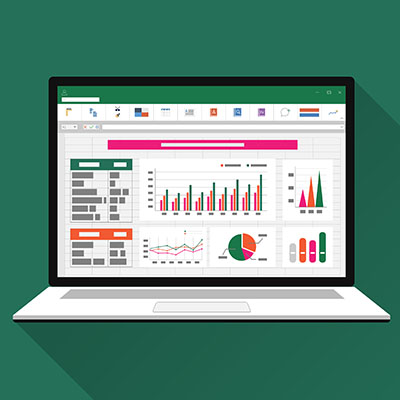
Just under its surface, Microsoft Excel offers a massive variety of functions and features…far more than we could ever realistically cover in this blog. However, there are a few that stand out as relatively essential, particularly to businesses. Let’s go through these functions, starting with how to use them.

How Excel Formulas Work

Once you have a cell selected, you can type one of these formulas into the cell or the formula bar. Keep in mind that all Excel formulas begin with an equals sign, before the type of formula is specified and the appropriate data points are identified. If properly formatted, your spreadsheet can thereby be automated to do a huge variety of tasks based on the data you’ve input.

Here are some common formulas that you could find useful in your business’ operations.

=SUM()

This allows you to total up the value of the cells you’ve selected, making it far simpler to add up long lists of numbers. Let’s say you had a list made up in Column B, beginning at Row 2 and ending with Row 46. To total these numbers, you’d type up =SUM(B2:B46), and that cell would display the total as a result.

=AVERAGE()

In the same vein, =AVERAGE does the same thing, except it produces the average amongst those selected cells. =AVERAGE(X1,Y2,Z3) would give you the average of X1, Y2, and Z3.

=CEILING() and =FLOOR()

These functions allow you to round numbers to the nearest multiple of significance that you’ve established. Dictating =CEILING(F2,5) with F2 being populated with 368 would round up to 370. On the other end of the spectrum, =FLOOR(F2,5) would round down to 365.

=CONCATENATE()

Excel can also track changes in text too, with =CONCATENATE allowing you to tie different text strings together. For instance, if G7 read The 3-2-1 Backup Rule and K12 read helps to ensure your data backup is safe, entering =CONCATENATE(G7,” “,K12) would tie the phrases together and give you The 3-2-1 Backup Rule helps to ensure your data backup is safe. You can also format the formula as =CONCATENATE(G7&” “&K12) for the same results.

=NOW()

This formula will populate a cell with the current date and time, which helps you keep track of when your data was put into the spreadsheet.

=TODAY(), et alia.

There are a number of functions that do a similar thing to =NOW(), such as:

  • =TODAY(), which populates a cell with the current date
  • =DAY(TODAY()), which populates a cell with the current day of the month
  • =MONTH(TODAY()), which populates a cell with the current month, represented as a numerical value between 1 and 12

=TIME(), et alia.

In a similar vein, various functions allow you to track the exact time that data has been added to your spreadsheet.

  • =TIME() inserts a set time, so long as you format it as a serial number with the hours, minutes, and seconds, which will be converted into a standard format. So, =TIME(13,41,28) would produce 1:41 PM.
  • =HOUR(NOW()) populates a cell with the current hour as a value between 0 and 23 (12 AM to 11 PM).
  • =MINUTE(NOW()) does the same with the current minute, between 0 to 59.
  • =SECOND(NOW()) does the same with the current second, again, between 0 to 59.

=VLOOKUP() and =HLOOKUP()

Vertical lookup and horizontal lookup enable you to seek out a specific value in one column or row and produce the data that is associated with it. Let’s say that you have a table that outlines your business’ assorted costs, perhaps giving you the total, how much is invested into different aspects, and such. These Excel functions allow you to select certain data points as a reference so you can ascertain the relationship between different values.

=IF()

Using =IF() gives you a quick and easy reference to check whether a set condition is true or false in reference to your data. Let’s say you’ve calculated out the returns on investment that some of your business initiatives have produced. Using =IF(), you can generate a clear yes or no answer to whether or not an initiative has seen the returns you wanted it to. Maybe you wanted to weed out any initiatives that saw less than 2% ROI, with the ROI of each occupying a cell in Column E. Using =IF(E1>0.02,”Yes”,”No”) and dragging that formula down to match the cells in Column E will give you an at-a-glance reference of whether or not one of your efforts was worth it.

=COUNTIF() and =SUMIF()

The more data you have, the more challenging even simple tasks—like taking a tally or adding up the values—can be. =COUNTIF and =SUMIF simplify this process for you.

  • =COUNTIF() allows you to set conditions by which selected cells will be counted. For instance, if you wanted to count how many months you had sold widgets out of the data present in Column J of the sheet, =COUNTIF(J1:J12, “widget”) would give you that total.
  • =SUMIF() operates in a similar way, although it adds any numbers that match the conditions you’ve set, rather than just counting the instances. So, we could determine the total number of widgets sold during our established timeframe by using =SUMIF(J1:J12, “widget”, K1:K12), provided that Column K was populated with total widget sales for each month.

Excel Can Do a Lot, Lot More Than This

What are some of your go-to Excel functions? Are there any you’ve heard about that you’d like to learn how to use? Let us know in the comments, or give us a call at 810.230.9455!

mobileRansomware_355601290_400.jpg

Ransomware Has Gone Mobile

mobileRansomware_355601290_400.jpg

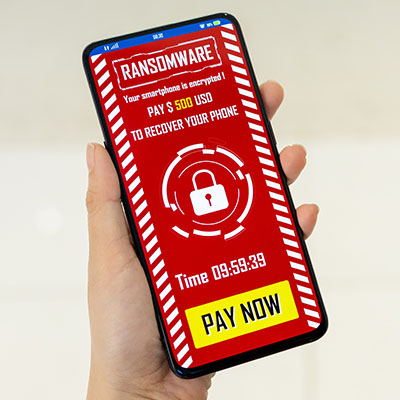
Smartphones have managed to hold out against ransomware a bit longer than other hardware and operating systems, but those days are coming to an end. It’s important to remember that the average smartphone is not protected with antivirus software and thus remains threatened by your standard ransomware attacks. It is absolutely critical that your business doubles down on its protection against ransomware, especially in the mobile market.

Defining Mobile Ransomware

Ransomware is defined as a malware that gives a hacker the ability to control a computer or network and hold it for a ransom. Users lose access to the controls and data that allows the system to function, and the only reprieve in most cases is to restore a backup of said data. Users have to decide whether they want to lose access to that data, restore the data from a backup, or pay the ransom in hopes that the hacker will honor their word and restore access.

Think about the number of smartphones which exist in the world today and the fact that most computing these days happens from mobile devices. With so much data to steal and devices to tap, it makes total sense for hackers to focus their efforts on mobile devices.

Phishing Plays an Important Part in Ransomware Infections

When it comes to malware dissemination, phishing attacks are hackers’ go-to methods of infection. When you think about how easy it is to slip up and click on the wrong link, you’ll realize that phishing is a very real threat to your organization and your data. Phishing can come in many different forms, too, adding to the stress. Will the hacker call you on the phone, send you an email, text you a link, contact you through social media, or even send you a physical mailer? It can be quite overwhelming.

How Does Mobile Ransomware Work?

Most mobile platforms remain remarkably secure even against the potent threat that is ransomware. Most scams resort to targeting the device’s cloud storage, locking it down, and demanding a ransom in the process. One particular iPhone scam uses the Find My Phone feature that allows the user to remotely lock the device. Scammers only wanted $100 to unlock the device, and with such a low asking price, people are of course going to pay up rather than go through the hassle of involving the authorities or other professionals. Hackers who gain access to an iOS account can even use the information to create new iCloud accounts and move all data into these new accounts until the ransom is paid.

Threats which target Android are similarly problematic, and they all start with phishing. The most dangerous one was called ScarePackage that targeted 900,000 Android smartphones over the course of 30 days. It was deployed through a fake app that could lock down the device and threaten that the FBI was the one responsible for doing so with the only solution being to pay a ransom. The FBI isn’t in the business of extortion, so this is a simple case of coercion and fear manipulation by hackers.

How You Can Protect Your Devices

Let’s examine some things you need to know about mobile phishing schemes.

  1. The first warning sign is that the message will make you do a double-take. Phishing scams can come through a variety of mediums, including email, telephone, social media, and so on, be it for work or personal use. Mobile phishing messages can come through text messages asking you to click on links. These messages will seem random and out of place, so that is the first hint that something is out of the ordinary here.
  2. Look for spelling and grammar errors. Professional correspondence has a certain look and sound to it, like the sender has taken some time to proofread and edit it. If you receive sloppy messages from strange senders, be wary of the message.
  3. The messages might seem a bit aggressive. It’s one thing for a message to come off as frustrated, but another entirely when the person on the other end of the message demands immediate action. This is often a telltale sign of phishing messages; they urge people to make fast, irrational decisions through fear tactics and threats.

NuTech Services knows how to combat the countless types of cyberthreats out there, phishing and ransomware included. We can use our knowledge to implement high-quality technology tools and to educate your team on how to make the best decisions possible with their technology. To learn more about what we can do for your business, call us today at 810.230.9455.

SSDhdD_255217955_400.jpg

Solid State Drives Sport Plenty of Benefits

SSDhdD_255217955_400.jpg

The hard drive is an essential component of every computer. When you start looking at new computers you may notice that there are two different types of hard drives available. There are the HDD (hard disk drive) or the SSD (solid state drive). Today, we’ll go through what the difference is and what benefits you may get from outfitting your hardware with solid state drives. 

What is the Difference Between SSD and HDD? 

The HDD, which is the type of hard drive that most of us are familiar with, has been used for quite some time. They have rotating metal platters that spin at high rates of speed, and feature mechanisms for reading and writing data on these disks. Every time something is saved to disk, the computer needs to get these wheels spinning. 

On the other hand, SSDs have no moving parts whatsoever. They use flash memory to store that information. Since they aren’t dependent on fast-moving physical components, they can write and read data at much higher speeds.

When is an SSD Better than an HDD?

You won’t be too surprised to learn that there are plenty of reasons to choose an SSD over an HDD. Here are four:

  • Improved boot times – If you store your operating system on an SSD (and most of us do), it will load faster.
  • Quicker application access – Your applications will load much faster if they are stored on an SSD.
  • They’re quiet – SSDs make much less noise because they don’t have moving parts on the inside, and they are much more efficient.
  • The increased speed is worth the money – SSDs are still much more expensive than your average HDD, but with the increase in speed, you can get more done. The devices tend to pay for themselves pretty quickly. 

Is an SSD the Answer for Your Next Computer?

Solid state drives are a great innovation that any user should consider. If you are looking to refresh your business’ computing infrastructure, or you just want a faster computer, the technicians at NuTech Services can help. Give us a call at 810.230.9455 today for more information. 

mobileNotification_295894631_400.jpg

Avoid MFA Fatigue Attacks by Minimizing Notifications

mobileNotification_295894631_400.jpg

While we strongly recommend that you put the security safeguard known as multi-factor authentication in place wherever it is available, it is important that we acknowledge that cybercriminals are frustratingly inventive. So much so, in fact, that a new form of attack has been developed to take advantage of MFA, referred to as MFA fatigue.

Let’s go over what an MFA fatigue attack is, and what you can do to fight back.

MFA Fatigue is a Very Specific Form of Social Engineering

Let me ask you a question: if one of the applications on your mobile device prompted you to log in once again, would you hesitate to do so? What if a notification appeared, asking you to confirm a two-factor authentication prompt? What if that notification kept appearing until you did, assuming that the system was just glitching?

This is precisely how MFA fatigue works.

The purpose behind MFA is to help keep your account secure even if your password has been compromised. By adding an additional proof to the required authentication process, MFA is supposed to make it harder for the person who compromised your password to actually access the account. However, when a cybercriminal puts in your credentials, you’ll still receive the prompt to confirm the login. Some of these threats even come in the form of SMS messages and voice calls to confuse the user further.

This brings us back to our initial question: would you question an authentication prompt, particularly if you were trying to do something else, especially if it kept popping back up again and again?

The cybercriminals responsible are betting that you won’t.

How to Spot MFA Fatigue

There are a few clear and unmistakable warning signs that an MFA fatigue attack is afoot:

  • If you receive approval requests without attempting to log into an application.
  • If you receive multiple requests from a single application.
  • If you receive authentication request notifications at odd hours.

How to Take the Teeth Out of MFA Fatigue

Fortunately, there are a few things you can do to help limit the efficacy of MFA attacks. A strong password is a great starting point, so long as you keep it secure. You and your team also need to be more cognizant of when you are receiving an MFA prompt and whether or not you requested it, denying all of those that are unidentified.

Limiting the number of attempts you can make through your MFA solution of choice within a predetermined time is also a helpful precaution.

Turn to Us for Assistance with Your Business’ Security

We’ll help you implement the protections and precautions that will help you keep your business secure. Give us a call at 810.230.9455 today!

secureFileSharing_386993807_400.jpg

Tip of the Week: Making Sure Your File Sharing Remains Secure

secureFileSharing_386993807_400.jpg

Nowadays, file sharing is so ubiquitous that most people in the office likely take it for granted. However, this is not a luxury that you have, as you need to ensure the file sharing that takes part is sufficiently secure—otherwise, you could find yourself in a tight spot. That’s why we want to devote this week’s tip to a few practical steps to making sure your files get where they’re going safely.

When Remote, Make Use of a VPN

When it comes to securing your data, a virtual private network—or VPN—is an indispensable asset. Public Wi-Fi is questionable at best in terms of security, potentially exposing users to threats and otherwise putting your data at risk. The VPN, however, provides an encrypted portal through which to transmit data to and from the office with minimal risk of it being intercepted on the way.

Prioritize Password Management

We could go on and on about the importance of secure passwords and acceptable password practices…the fact of the matter is that the only way to really be sure that your users are sticking to these policies is to make compliance the easiest option. A password manager is a key tool to doing so, as it securely stores passwords in a protected digital vault (out of a hacker’s reach) for your team’s convenience. Not only does it mean you and your team no longer need to come up with and remember the increasingly complicated passwords needed for security, it can also be used to help entire departments make use of shared accounts and thereby save you money. NuTech Services and our consultants are here to help you make the right choice for you.

Require Multi-Factor Authentication (MFA)

Multi-factor authentication (sometimes called two-factor authentication, or 2FA) is a security step that puts more requirements on the user trying to prove their identity as a part of the login process. Rather than accepting the username-password combination, MFA uses any of three additional methods to verify the user is who they say they are:

  • Authentication through knowledge (Something you know) – This form of authentication requires the user to provide an additional password or PIN, presumably that only the user would know.
  • Authentication through possession (Something you have) – This method of authentication requires the user to have a key of some sort, either as a physical token or as a code sent to a specific mobile device.
  • Authentication through existence (Something you are) – This version of authentication relies on biometric data, often using thumbprint scans or voice recognition to confirm a user’s identity.

Requiring that your team members prove themselves in such a way can greatly enhance your data security, but you also need to be careful not to put too many hurdles in between your users and the work they need to do.

Manage Your File Sharing

Your file sharing is critically important to your collaborative processes, but without the proper security or the ability to integrate with your existing protections, it can quickly become a major liability. Various options are currently available, but you need to ensure that your selection fits into your comprehensive security strategy. Just consider a few features of a standard file sharing program that have heavy security connotations:

  • Emailing encrypted attachments
  • Sharing public or private cloud file links
  • Creating shared and collaborative folders accessible online, or via syncing information between spaces.

Control Access Permissions

This is one of the most effective means of securing your files. After all, if only so many people are able to access certain folders or files (or even file types), that’s a considerably smaller window for mistakes or abuse to take place. By establishing permissions based on department or even custom user groups, you can have much greater control over who can see what.

Staff Training

At the end of the day, it makes no difference how secure you’ve managed to make your file storage and overall business infrastructure if your staff members aren’t aware of how to use your technology in a way that preserves its security. Your staff is almost assuredly going to need some time to get acclimated to today’s hosted platforms, which means it benefits you to provide the training that will expedite this process. The more knowledgeable they are about practical business security, the more secure your files will ultimately be.

We’re no strangers to the needs that Michigan companies have of their IT, and we can help support it so it delivers the security and efficiency their success relies on. To learn more about any of the processes we will assist you with, including file sharing, give us a call at 810.230.9455.

documentManagement_480004182_400.jpg

File Access and Security Improves with Document Management

documentManagement_480004182_400.jpg

When it comes to storing your business’ documents, you have a couple of options available to you. Some professionals enjoy the chaos of having documents strewn about their office, while others prefer the organization that a system of filing cabinets can bring with it. However, both of these options pale in comparison to the document management system, a technological innovation that could allow your organization to go paperless and improve efficiency in ways you might not have guessed.

What is a Document Management System?

A document management system is essentially a repository of your business’ documents that are stored in a searchable database. Since the files are stored in a digital space rather than a physical one, there are many benefits to using a document management system that you simply don’t get with filing cabinets or folders. Consider how much space a filing cabinet takes up—physically—in the workplace. You might have rooms filled with paper documents, and even when they are stored in an organized way, digging one out whenever it’s needed is a time-consuming task. Plus, printing out documents is horrible for both the environment and your printing costs.

Using a document management system makes your documents more accessible, more secure, and more redundant. There is simply no reason not to use one.

Easy Access and Sharing Capabilities

Since your documents will be stored in the cloud, you can easily access them on approved devices and share them with your coworkers as needed. It certainly beats digging through a filing cabinet and making copies of the documents, right?

Secure Storage and Archiving

Paper documents are not secure, period. They can be lost—or worse, stolen—quite easily. It’s more difficult to lose digital files, and even more impressive is the ability to securely store them in encrypted databases. It’s one thing for a criminal to take a pair of bolt cutters to a locked filing cabinet, but another entirely for them to crack military-grade encryption on your database.

Disaster-Proof with Data Backup Systems

Imagine your office building was to catch fire, including the room where you keep your filing cabinets. They likely won’t survive the disaster, leaving you high and dry. While a digital document management system does come with its fair share of challenges related to disasters, like cybersecurity and hacking attacks, data is much easier to back up than, say, five filing cabinets filled with paper documents.

Get Started with Document Management Systems Today!

NuTech Services can equip your business with a document management system that aids your organization’s efforts at going paperless while making your documents more accessible than ever before. You’ll find that the enhanced productivity gleaned from your document management systems will make all the difference.

To learn more and get started with document management systems today, contact us at 810.230.9455.

wifiSecurity_277131135_400.jpg

Improve the Security of Your Wireless Network with these 4 Actions

wifiSecurity_277131135_400.jpg

It’s not always easy to build a network that is both robust and secure, but this doesn’t make it any less necessary, not with so many of your critical business functions relying on connectivity. With so many devices accessing your network at any given time, you need to have a concrete understanding of how to keep your network secure while still keeping your network running efficiently.

Your Wireless is Not Simply About Wi-Fi Connectivity

Your business’ wireless connection is much different from your home connection, and this extends far beyond just the data it sends. Start thinking about it not as a tool but as a part of your business’ foundation, something that it stands on and relies on. This is a far cry from how some organizations view their wireless networks with many viewing them as a secondary network, sidelining it in favor of the actual company network. This practice can be fatal.

Even if you have yet to experience a true data breach, this doesn’t mean that there aren’t currently threats out there who have set their sights on you. Most employees will have smartphones allowing them to access your company’s data or Wi-Fi during the workday, and most important of all, they expect your network to be secure, as they don’t want to put their personal devices or data at risk. To help you build a network that is secure and reliable, we’ve put together the following actions you can take today to protect your network:

Keep Guests on Their Own Network

If you want to keep your network as secure as possible, start by isolating your guest network into a subnet. Subnets are partitioned off from the rest of your network, allowing you to keep them secure through different settings or access controls. Some companies keep their guest networks open so people can use them as they see fit, and while this is certainly a fine practice, be sure that it’s not operating too close to your employees’ network. You never know who could be using your network for nefarious deeds.

Secure Your Routers

If you want to secure your wireless network, you need to make sure that the hardware powering it is in an appropriate location that is safe and secure from just anyone. Businesses opt for commercial Access Point (AP) technology instead of the over-the-counter router, as they provide better coverage and are often placed out of reach, attached to the ceiling or elsewhere. If your business still opts for the router, however, just make sure that people can’t mess with it while they are walking around your place of business.

Reign In Your Signal

You’ll want to have total coverage for your entire office if you can, but you also need to keep in mind that if your network extends beyond your walls, an unauthorized user could be sitting in the parking lot or across the road, ready to use your wireless network for their own purposes. You can manage your signal’s strength by placing them in locations where you are comfortable with letting your wireless signal reach.

Keep Software Updated

Routers have their own operating systems that are updated periodically by software developers, and as such, they also come with their fair share of vulnerability patches and updates. You’ll want to make sure that the firmware is updated for all of your wireless technology so that it is kept safe as can be.

NuTech Services can help you make any and all necessary adjustments to the way you utilize wireless technology. To learn more about what we can do for your business, contact us today at 810.230.9455.

overcomeChallenge_215804358_400.jpg

Prevalent IT Challenges You Need to Consider

overcomeChallenge_215804358_400.jpg

Managing business technology is a challenge that many small businesses have difficulty overcoming, and this is largely in part due to the fact that managing technology is not the focus of these small businesses. The inability to overcome IT challenges can hold businesses back that otherwise would flourish. Let’s discuss some of the biggest issues that companies have for IT and how they could potentially be addressed.

Digital Transformation is Here to Stay

The pandemic forced the hands of businesses all over the world, forcing them to adopt new technology solutions in response to the rapidly changing global situation. There are no signs which indicate that this digital transformation is slowing down, as businesses are more focused than ever on optimizing their processes with what was previously seen as a taboo working environment, i.e. remote technology.

Cybersecurity is More Important Than Ever

You can’t go on the Internet or turn on the news without seeing a new devastating cyberattack against a major business or government entity. A 2022 study from Evanta found that cybersecurity is the number one priority for CIOs, and considering the number of remote and hybrid workers out there, we’re not surprised.

Taking Full Advantage of the Cloud

The cloud is the second largest growing spending category for businesses, at least according to the Evanta study; 54 percent of businesses are investing in cloud solutions. Businesses want the freedom and agility that comes with cloud infrastructure, making it one of the highest priorities and biggest challenges facing organizations today.

Supply Chain Problems Linger

Hardware and other technical components are harder than ever to get, particularly because of disrupted supply chains as a result of the pandemic and conflict between Russia and Ukraine. We like to recommend that businesses plan ahead with their technology acquisition by planning out a hardware refresh cycle and IT roadmap.

Talent Acquisition is Difficult

Paying to hire in-house IT workers can be expensive, especially if you want IT workers who know what they are doing and have the skills required to keep your business technology running. Unfortunately, many small businesses don’t have the resources to pay top dollar for IT talent.

Managed Services Can Solve a Lot of These Issues

The closest thing you can get to a silver bullet for all of your technology problems is to work with a managed service provider like NuTech Services. Our trusted technicians have the know-how to help your organization overcome any technology-related obstacle, from technology acquisition to management to maintenance and beyond. To learn more about what we can do for your business, contact us at 810.230.9455 today.

357669662_remote-team_400.jpg

Solid Practices to Improve Your Remote Team Management

357669662_remote-team_400.jpg

After this prolonged pandemic, remote work has established itself as a key component of many organizations’ operational policies and infrastructures. However, it has added new levels of complexity that make managing a workforce more important than ever. Let’s discuss some ways management can improve the work experience for remote employees.

Establishing Best Practices for Remote Workers

Here are several opportunities you have to make work better and more efficient for your remote workers:

Implement Communication Standards

Clear and open communications are required if you want your remote employees to stay in the loop. You need to establish clear expectations for how often they need to communicate and collaborate with others within your organization, and be sure to encourage them to interact with your staff whenever possible.

Delegate Tasks and Responsibilities

It doesn’t matter whether your team is in-house or remote; the only real difference is where they are working. Naturally, this means that you shouldn’t have different expectations with responsibilities for remote employees compared to in-house ones by virtue of where they are working alone. Be sure to delegate larger tasks that might be challenging to pull off in a remote setting into smaller, more manageable work while providing team members with appropriate processes for how to go about the work.

Provide Appropriate Tools

Thankfully, many businesses have already made adjustments to their infrastructures to accommodate remote work, including the tools needed, like cloud-based software, storage, and mobile devices. We always like to recommend that businesses implement a unified communications and collaboration platform to provide you with one unified tool to aid in communication.

Understand that Overworking and Isolation Are Rampant

There’s a common misconception that people working remotely aren’t getting as much done throughout the workday, but this assumption is flat-out wrong in most cases. Remote workers might be subject to pressure according to the expectation that they need to work harder, and this can lead to negative feelings and burnout. You need to acknowledge this and clear the air to keep your team happy.

Support Your Team However You Can

Your team will need support to stay positive, even under the best circumstances possible. This also applies to your remote staff. Make sure they have access to both support that enables them to do their jobs properly, like IT support, but also emotional and mental health support. Remember, employees who feel well will be more productive, so it’s in your best interest to ensure your team feels supported in all they do.

Receive and Act on Feedback

To make sure you are approaching remote working conditions in an effective way, be sure to collect feedback from your remote workers to see what you are doing well and what can be improved upon. Asking them for their opinions is one of the best ways you can improve your operations. If you are scared they won’t answer honestly, you can use anonymous polling or one-on-one check-ins to get an idea of how you are doing.

Let Us Help You Get the Most Out of Your Remote Operations

To help your remote workers be as effective as possible, we offer technology services and solutions that can help your business flourish under this “new normal.” It doesn’t matter if your employees are in-house or remote—we’ve got solutions for you.

To learn more, reach out to us at 810.230.9455.

416046837_notifications_400.jpg

Tip of the Week: Get Your Dismissed Notifications Back in Android

416046837_notifications_400.jpg

Picture this scenario: you’re going about your day and get an important notification, only for that notification to, well, get cleared. You want to go back and check it so you don’t miss it. This is thankfully quite easy to do by viewing your Android notification history.

First, you’ll have to take a couple of steps to set it up.

Turn On Your Notification History for Android

Android has a feature for notification history which is hidden away in the settings. This feature gives you the ability to see a list of your notifications. It’s not active by default, so it’s time to turn it on. Follow this simple process:

  • Access your Settings either by swiping down on your homescreen to get to the integrated shortcut, or by navigating through your applications to find them.
  • Once there, access your Notification settings, and from there, Advanced settings.
  • You’ll then see Notification history. Tap it to access it.
  • Once you do, you’ll be presented with a deactivated switch. Turn the switch to On, and you’ll have a list of the notifications you recently dismissed!

What About Apple Devices?

Apple does not have an equivalent feature; once your Apple notifications have been acknowledged, they are cleared and gone for good.

Have Any Other Ideas for Tips?

You use technology every day to be productive, and we want to help you get the most out of it. To learn more about what we can do for your business, contact us today at 810.230.9455.

476051890_tech_support_400.jpg

Technology Support is Crucial when IT is Everywhere

476051890_tech_support_400.jpg

Most things in your office depend on technology in some way. That’s just the simple fact of life these days. Let’s examine just how much of your business depends on the technology that powers it and how companies increasingly depend on IT to manage the countless devices that have permeated the office environment.

IT Makes the Workday Go Round

Let’s start from the beginning. After grabbing your morning cup of coffee, you sit down in front of your computer and power it on.

Yes, that is in the realm of IT.

While most of your workday will be spent sticking to your job description, i.e. what you were hired to do for the business, the way that you go about this work will likely include some kind of technology tools.

Those are also IT.

Following a busy and successful workday, you might need to submit a timesheet for review and for payroll.

This is also IT.

A shocking amount of your business’ operations and workflows depend on functional technology solutions, so we ask you now, how well is your IT infrastructure managed?

Make Sure You Are Taking Care of Your Important Technology Assets

Since your business relies on IT to get the job done, it’s incredibly important that you manage it appropriately. NuTech Services can help you make the most of your solutions. To learn more, reach out to us at 810.230.9455.

iot_376226617_400.jpg

Make the IoT Work for Your Business

iot_376226617_400.jpg

By now you’ve probably heard the term Internet of Things (IoT). You may not completely understand what it is, but you know it has something to do with all those “smart” devices that you see popping up everywhere. Today, we’d thought we’d get into what types of things are on the IoT and how they can have an impact on your business. 

What Is the Internet of Things?

The Internet of Things started growing a decade or so ago as “smart” technologies were being developed to present people with technology that they can use to make their lives easier. This concept is what technology is all about, after all, and it quickly became a business opportunity for OEM (original equipment manufacturers) and other companies. This has led to a massive explosion of “smart” devices designed to unburden the lives of their users. 

Of course, the more businesses that are developing this technology, the more tools will be aimed to transform business. There are now 14 billion IoT devices (including smartphones) connected to the Internet, so there is a breadth of options for businesses to choose from. It’s also one of the more funded technology markets by venture capital firms with close to $5 billion being invested annually, as the practical use of IoT is just now scratching the surface.

The IoT Is Everywhere

The IoT can be used in multiple ways in and around your business; and, each adds its own unique variables to the way you go about integrating them. Obviously, a large portion of your employees have smartphones, that is an added consideration because you need to ensure that all those mobile devices are working with the applications that you use; or, if you don’t go that far, at least that they don’t bring unwanted passengers along on to your network. 

More complex industrial IoT (IIoT) platforms can really alter the way a business operates, so training will have to be considered to help your employees understand how they work. There is a lot of good that the IoT can do, but it also comes with some challenges. Not only do you need to set up your IoT platform from the ground up, you need to make sure that it integrates with your back-end software systems and any other applications that would provide the benefits needed to implement them. 

Set up and Security Questions for the Implementation of Business IoT

For most businesses looking to implement IoT to help automate some things will first start by using it in the ways that your average home consumer might. You get systems that can help save you on utility costs and help you save time (smart thermostats, smart lights, voice-driven personal assistant hubs, etc.). 

More complex systems like asset tracking and inventory management allow for pinpoint control over supply chain issues. This can get pretty complicated, pretty quickly, but that’s the point. The IoT helps humans do things humans couldn’t do without these tools. It is the perfect confluence of human-made tools (hardware and applications) and constant data streaming that can help businesses automate more and collect more data to help them make better business decisions. 

Businesses need their technology to be scalable and secure. This is where the IoT hits a snag a lot of the time. There are serious security questions with any number of devices, but that part of it is improving. For the business, however, “improving” could mean “still too expensive/risky”.  The truth is that any business can utilize some form of IoT to help them cut costs, improve efficiency, and improve decision making. You just need to know how.

At NuTech Services, we understand where and how the IoT fits into a business. If you would like to learn more about the Internet of Things and how it can help your organization grow, give us a call today at 810.230.9455.