secure_ai_210746532_400.jpg

Companies Are Using AI to Shield Their Network from Outside Threats

secure_ai_210746532_400.jpg

Businesses need all of the advantages they can get against threats, especially considering the fact that many of them adapt and evolve in response to advances in security measures. Some security researchers are seeing great success with artificial intelligence measures, a concept that could eventually become the future of network security in the business world.

How Does AI Security Work?

AI security consists of tools that can automatically identify and respond to perceived threats. This activity is guided by previous or similar activity, meaning that the AI security solution is capable of learning and growing in response to threats to improve its ability to fight them off. Since AI is always learning more about threats, you can expect a large number of false positives and false negatives throughout this process, but due to its autonomous nature, it will generally involve much less activity on your part compared to having someone actively monitor everything manually. AI security can also discover trends and piece together suspicious activity based on those trends, making for a remarkably sophisticated solution to have on your side.

What are the Benefits?

Let’s face it; for small businesses, hiring qualified security experts can be difficult, especially when it comes to finding the talent. AI can help you get around these challenges by automating your security system to identify threats over time. AI is capable of actually decreasing the amount of time you spend discovering threats on your infrastructure, cutting costs over time. Of course, all of this is dependent on whether you have people to manage your AI solution; otherwise, it’s going to be difficult to manage and maintain it.

Is AI Security the Future?

There is a downward trend in cybersecurity employment, making an autonomous solution seem like it would rise in popularity and usefulness. It’s already projected that this unfilled labor gap could increase to 3.5 million cybersecurity positions by the end of 2021. AI seems like it could be a simple-to-implement solution that addresses these hiring and training concerns, but it’s more likely that it will improve workflows and procedures of existing security employees rather than solve this gap in skilled labor.

How Can Your Business Use AI Security?

Contrary to popular belief, AI security is relatively accessible to small businesses. There are solutions out there that can be implemented by small businesses in accordance with their specific needs and goals. If you can implement AI security that coincides with your business’ operational goals, you can successfully work toward improving operations and workflows for your existing employees.

If you want to stay ahead of the trends and your competitors, as well as the threats that flood the Internet on a daily basis, NuTech Services can help you by implementing the best security measures, including AI security. To learn more, reach out to us at 810.230.9455.

AI_tech_422714232_400.jpg

It’s Possible to Change Your Bad Habits. Today, We Explain

AI_tech_422714232_400.jpg

Have you ever wondered how it is that people can build up bad habits over time, yet break them and establish better ones? Have you also noticed how difficult it can be to break habits that have been ingrained into the very fibers of our being over an extended period of time? Believe it or not, people can change, and the science behind it—neuroplasticity—can provide some valuable insights into how to make it happen.

Neuroplasticity is an umbrella term which refers to the brain’s ability to change and adapt in response to various stimuli. This is not a simple reframing of mindset or something of the sort—this is physical, neural change which occurs in the brain. Such is the power of our experiences; they literally shape the way we see the world, view opportunities, and adapt to change. The neural networks within the brain actively rewire themselves in response to what you experience throughout life.

The idea of a growth mindset is grounded in the concept of neuroplasticity, that things are not as set-in-stone as you might think. Dr. Carol Dweck, a Professor of Psychology at Stanford University, speaks of the concept of a growth mindset in her TED Talk on the topic, making the case for how such a mindset shift is critical for today’s youth in learning environments.

In essence, Dweck claims that the growth mindset levels the playing field and makes knowledge infinitely more accessible. This concept of “not yet” versus “not good enough” or “failure” is incredibly empowering, as it implies a trajectory for growth rather than the static trajectory implied by the fixed mindset, where your skills remain the same and you have to simply learn to deal with your shortcomings.

You can see how this mindset shift can impact business operations as well as personal habit-building or learning. By simply saying “not yet,” you suddenly have a goal and a means to meet that goal. With an action plan in place, you can move forward with purpose, which is better than saying “I can’t do this” or “I’m not good enough.”

The thing about neuroplasticity that you must keep in mind is that the brain cannot rewrite habits and restructure tendencies overnight—this is a gradual process that can take place over a long span of time. Therefore, if you truly mean to use the concept of neuroplasticity to change the way you look at various parts of your life or business model, it is going to take time. You must be patient to see real change occur.

As for immediate change, we might recommend that you implement technology solutions designed to enhance productivity. You might find that your shifted mindset will allow you to leverage your new and improved technology in the most meaningful way. NuTech Services can help with the acquisition of new technology, from conception to reality and beyond. To learn more, reach out to us at 810.230.9455.

267291228_hacked_400.jpg

Three Signs Your Computer Has Been Hacked

267291228_hacked_400.jpg

Dealing with a hacked computer can be scary, but depending on the severity of the hack, you might not even know your infrastructure has been breached until it’s too late to stop it, putting you in a reactionary position. Let’s go over some of the telltale signs of a computer hack and what you should do about it.

Increased Network Traffic

Over time you will grow accustomed to a certain level of network traffic on your company’s infrastructure, including the devices connected to it, the devices communicating with it, the endpoints utilizing your Internet connection, and so on. The second you have an increase in your network traffic should be your first clue that something is wrong. Oftentimes, an increase in network traffic could mean that a trojan or backdoor has installed itself on your network, meaning that some hacker somewhere is using your network for some nefarious purpose.

Computer Slowdown

Similar to the previous point is any noticeable difference in your computer or network’s operational functioning. While a slowdown does not necessarily mean that you have been hacked, it is a telltale sign that something is not working as intended and should be looked into anyway. It just so happens that one of the more common slowdown causes is malware and other threats installing themselves on your device or network, so be sure to investigate slowdowns accordingly.

Pop-ups and Other Annoyances

Perhaps one of the most obvious signs of a hacking attack on your computer is a plethora of obtrusive and sometimes downright disturbing ads, as well as other unexplained phenomena. Malware will often install ads that contain malicious links, leading to even deeper-rooted problems than those currently in place on your computer. Furthermore, some malware will install files, delete files, move them, or otherwise create inconsistencies that cannot be explained otherwise.

Basically, when it comes to the more low-profile hacks on your computer (you know, the ones that aren’t blasting you with ads every five seconds), most telltale signs of a hacking attack involve noticing inconsistencies and acting to find the source of them.

The scary thing about many of these signs is that they could also be caused by other things on your infrastructure, so it is generally a best practice to contact your IT provider if you suspect that your network or device has been infected by malware or other threats. It’s also a best practice to actively monitor your network for these issues so as to prevent major data breaches or to mitigate damage.

NuTech Services can equip your business with the tools necessary to take these precautions. To learn more, reach out to us at 810.230.9455.

314858006_hosting_apps_cloud_400.jpg

Hosting Your Applications in the Cloud Can Have Major Benefits

314858006_hosting_apps_cloud_400.jpg

You may already be familiar with the concept of hosting your business’ technology on your own in-house network, like a server unit, but some businesses struggle to manage hardware like this effectively. In all honesty, you can get largely the same benefits of an in-house server through a hosted solution. Nowadays, the cloud makes utilizing cloud services easier than ever.

Traditional Hosting

Small businesses often have trouble with more traditional methods of application hosting, mostly because many do not have the space to dedicate to traditional hosting. They also may run into issues related to more limited budgets or device procurement; even if they do get the right technology in place, maintaining it properly can be the last straw.

Managed service providers give small businesses access to professionals they may not be able to hire outright, meaning that they can also host your business’ hardware and applications effectively. NuTech Services is one such provider; with our cloud services, your small business can get the technology you need without having to spend large chunks of capital. Whether you want us to host your email service, your line-of-business applications, or even your VoIP system, we’ve got you covered. You might be surprised by how much a cloud hosting service can improve your operations and workflows!

Cloud Hosting

Cloud hosting is something that can only really be discussed after complaining a bit about the limitations of traditional hosting. It used to be the case that you could only host your applications on your own infrastructure, but now you can host applications and infrastructures right in the cloud using virtual hardware. This type of anytime-anywhere access is a particularly good investment for businesses.

You might be surprised to learn that most services your business implements can be deployed or accessed through the cloud, as long as you are working with a cloud provider to handle the responsibilities of managing and maintaining the infrastructure. Outsourcing these responsibilities can lead to your organization investing more of its time and energy into other endeavors, including some that can yield a greater profitability.

NuTech Services can be your business’ go-to resource for anything cloud-related. To learn more about what we can do for your business, reach out to us at 810.230.9455.

325656030_privacy_settings_400.jpg

Browser Privacy Settings that You Should Know

325656030_privacy_settings_400.jpg

You’d be hard-pressed to find a business that doesn’t rely on the Internet in some way, and everyone uses web browsers as a method of interfacing with the Internet. These browsers, however, are not necessarily the most secure applications by default. With some adjustments to the features, you too can optimize security and privacy when using your preferred web browser.

Optimizing Chrome’s Security

Chrome might be one of the most popular browsers out there, but it’s also one that needs to use certain extensions to optimize security and privacy. Consult your IT resource to install extensions from the Chrome Web Store. These extensions can be added or removed by using the three-dot menu and following this pathway: More > More Tools > Extensions.

In Privacy and security, you can also see the Cookies and other site data. Click on the option to Block third-party cookies, just so you don’t wind up storing passwords that shouldn’t be stored.

Optimizing Firefox’s Security

Firefox actually has some decent built-in security standards which you can adjust by going through Preferences > Privacy & Security. There are options for Standard, Strict, or Custom settings.

  • The Standard option, the default, blocks trackers in private browsing, cryptominers, and third-party cookies.
  • Strict takes everything included in Standard and blocks trackers and fingerprints.
  • Custom allows the user to adjust how these trackers are blocked.

These settings can be applied to all active tabs just by reloading them with the Reload All Tabs button.

Optimizing Edge’s Security

Edge also tries to keep security as basic as possible, though there are some features that include Tracker prevention, as well as built-in Basic, Balanced, and Strict settings.

  • Basic blocks the trackers utilized for fingerprinting and cryptomining.
  • Balanced, the default setting, blocks trackers from unvisited sites while allowing those that can help speed up browsing.
  • Strict blocks the most trackers, potentially interfering with the functionality of some sites.

Optimizing Safari’s Security

Safari has several built-in features that allow it to stop ad tracking present on websites, as well as a list of trackers that you have sent traffic to over the past 30 days. Safari provides this feature through the Preferences and Privacy settings. Just make sure that Prevent cross-site tracking is selected and delete your cookies manually. This information can also be managed in the Manage Website Data setting. Furthermore, Safari also allows you to Block all cookies, so use this feature if you want to do so.

NuTech Services can help your organization optimize its security and privacy settings in all aspects of your operations. To learn more, reach out to us at 810.230.9455.

111590202_return_to_office_400.jpg

Employers and Employees are Split on Returning to the Office

111590202_return_to_office_400.jpg

Let me ask you a question: if you haven’t already gone back to the office full-time, are you looking forward to the opportunity? Research has shown that your answer probably depends quite strongly on whether you are the boss or the employee. Let’s explore this phenomenon.

Executives Want Back to the Office About Three Times as Much as Their Employees Do

This statement—based on research conducted by surveying 10,000 knowledge workers across Australia, France, Germany, Japan, the United Kingdom, and the United States—is just the tip of the iceberg. Looking into the numbers, 76 percent of employees indicated that they didn’t want to return to full-time office hours. The executives included in the survey held the opposite opinion, as 68 percent want in-office work to once again become the norm. 59 percent of bosses indicated that they plan to pull employees in for at least the majority of the workweek.

For context, another survey reported that 62 percent of US employees will be returning to the office at least some of the time… 34 percent being displeased with this fact. What’s more, a not insignificant 17 percent of workers are at least likely to seek out alternative employment should they be forced to come back into the office.

What Employees Really Want

According to the first set of research we’ve cited, workers want to see some increased flexibility in where (and when) they work… at rates of 76 percent and 93 percent, respectively.

This is for a variety of reasons. In addition to understandable health considerations, there are other life concerns that working from home can help alleviate. Child care costs are more or less eliminated, in terms of supervision, and the hassle and expenses associated with the daily commute are gone as well. There are a lot of ways that working from home helps the worker save money.

Plus, there are the obvious personal benefits to consider as well. Less time spent either at the office or commuting to and from work means that there is more time left to be spent with family or on personal endeavors. Not many people are expected to happily give these things up.

What Can an Employer Do?

One option: give all employees raises for returning to the office, as this will help offset the costs that working from home helped alleviate. Of course, not every company is in the position to do that, so there are alternative options that an employer can adopt.

For instance, instead of making the black-and-white choice of in-house or remote operations, modern businesses can adopt a hybrid strategy. By enabling employees to work from home so many days out of each week, you can confirm your employees are engaged while also allowing them to choose the work pattern that works best for them. This is the approach that many major companies are taking, and it is one that the right technology can make very accessible. We can help you put the needed infrastructure and solutions in place to take this more hybridized approach as well. Give us a call at 810.230.9455 today to learn more about what goes into such a strategy.

462322582_zip_400.jpg

Tip of the Week: Zipping and Unzipping Files

462322582_zip_400.jpg

Large files like videos aren’t exactly the ideal attachments for something like an email. There are also cases where you have to send multiple files, some of which may be large, attached to an email, but when the files are too large, this just won’t work. Thankfully, there are some ways around this, one of which is to compress files into a .zip file with a tool found in Windows 10.

There are tools besides the ones built into Windows 10, like the free and open-source 7-ZIP, which allow you to compress and decompress files; for the purposes of this blog, however, we want to focus on the built-in functionality of Windows 10.

First, let’s explain what compression and decompression actually does to the files; please note that we will use the terms “zip” and “unzip” files when referring to these processes moving forward. When you compress a file, it becomes a more compact format that can easily be transferred. This process helps to reduce the file size of the files. A ZIP folder is one which stores these compressed folders or files.

Windows 10 has made great strides in terms of transparency and accessibility of compression/decompression. Windows now allows you to view the contents of a zipped folder just by opening it like any other folder (it used to be the case that you would have to decompress it first). You can then use this information to determine whether or not you want to extract (or unzip) the contents of the folder to your PC. Any edits made to these files will not be permanent until you extract them.

Zipped files are easily identifiable by the zipper that runs up and down the icon, as well as the file type being .ZIP. To unzip a specific file, click and drag the file to the extraction location. Alternatively, if you would rather just unzip all contents of the folder, you can right-click the .ZIP file and click Extract All. If you are in the folder already, you can click the button from within the folder. You will have to choose an extraction location next. In the end, all extracted files will go to your desired location.

As for the extraction location, click on the Browse option and find the folder you want to extract your files to. Once you have the destination selected, click on the Extract button. Depending on how large the files are, it might take some time, but the process is simple enough and quick enough that it shouldn’t take too long before you see the unzipped folder in your desired location.

Did you find this trick helpful? Let us know in the comments below.

245024402_IT_400.jpg

Managed IT Makes Technology Maintenance a Priority

245024402_IT_400.jpg

You should never settle for less than the best, especially with your business’ technology solutions. Unfortunately, this part of any company’s operations can be so stressful to manage that people often push IT maintenance to the wayside. So, if your company is not performing maintenance on its technology, how can it remain functional? It’s all about finding someone with the right skill set to manage your technology, something that is easier said than done.

For IT management, you have two choices: hire someone in-house to manage your technology or outsource the responsibilities to a third party. How can you know which one is the best for you?

If you hire an in-house department of IT technicians to work on your technology, you can bet that it will be a lengthy and time-consuming process. You have to put together job descriptions, duties and responsibilities, preferred requirements, and so much more, including advertisement, putting together a search committee, collecting hiring documents like resumes and applications, and interviewing successful candidates. By the time you get to the onboarding process, you better hope that all the time you have invested in this process was worth it, because it’s time wasted if not.

For businesses that need help now and want to outsource their entire IT department, there are many resources available and benefits to doing so. Most IT maintenance and management can be done remotely without the need for an on-site visit, meaning that there are no limits in terms of physical or geographical barriers. If it suits your needs, you could work with someone on the other side of the country, and you should never have to settle for anything less than the best for your business.

The biggest difference between the two is that an in-house IT department is dependent on other peoples’ qualifications rather than what your business needs. This is unacceptable, as any resources you implement for your business should improve its operations, not hold it back from reaching its full potential. You should always search for the solution that best fits your company.

An IT audit is the perfect way to start your journey toward solution implementation. It gives you a bird’s eye view of your business’ technology so you can better see where your IT infrastructure is versus where it needs to be. We can provide you with an audit, then provide recommendations based on our findings, as well as implement them according to your specific needs.

The other option you have is to hire an in-house group of technicians, which is perfectly fine if that’s what you need, but we can also help in this situation! You hire your technicians to handle tough technology problems specific to your business, so why not let us tackle some of the everyday inconveniences, like help desk support and day-to-day maintenance? You might find that it is easier to focus on improving your business when you have someone handling these smaller tasks behind the scenes.

If your company wants to prioritize technology maintenance and management, reach out to NuTech Services at 810.230.9455.

367884031_network_security_400.jpg

It May Be Time to Upgrade Your Remote Network Security
367884031_network_security_400.jpg

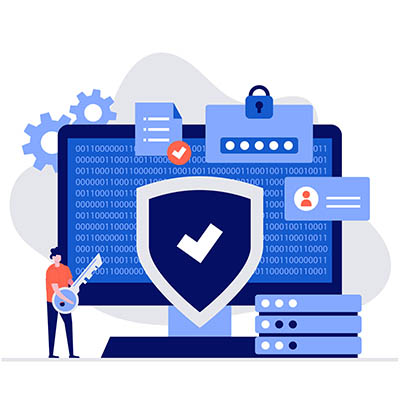
Today’s cybersecurity landscape is dangerous, to say the least, prompting many organizations to adopt what is called a zero-trust policy for their security standards. Is a zero-trust policy the best solution for your company’s cybersecurity woes, and how effective is it toward preventing security issues? Let’s take a look.

What Does Zero-Trust Actually Mean?

According to the United Kingdom’s National Cyber Security Centre, the official definition of zero-trust is “the idea of removing inherent trust from the network. Just because a device is within the internal “trusted” side of a firewall or VPN, it should not be trusted by default.” 

Basically, this applies to just about all devices on your network, including the ones that are supposed to be there. No devices should be trusted by default.

How Effective is It, Really?

As you might have guessed, not all businesses can subject their networks to this great of scrutiny, so you will want to make sure that your company’s policy reflects its needs. The NCSC makes special note that this is more of a guidance rather than a hard rule, and it should be used in terms of network design rather than as a solution you implement to solve your problems. In fact, some businesses might not even be able to pull off a zero-trust policy.

Think of companies with large computing infrastructures. The sheer number of devices on the network and the costs of implementing such a policy could be staggering, and the policy itself could take years to fully flesh out and develop before it starts to show any true return on investment. Businesses might also have to acquire new hardware and train technicians, as well as frequently update this technology to maintain security standards. In particular, organizations with a BYOD policy will have a difficult time with zero-trust.

Even with these issues, however, there remain many reasons to consider zero-trust as a model for your business. Here are a few:

  • Greater control over data means delegation to the appropriate users.
  • Stronger authentication and authorization
  • Better user experience (consider single sign-on as an example)
  • Every action or device is subject to some form of policy, meaning every attempt at accessing data is verified.
  • Detailed access logs

Start Securing Your Systems Today

You don’t necessarily have to implement a zero-trust policy to enhance your network security, but what you should do is call NuTech Services! Our technicians can give you the strongest fighting chance at stopping any and all threats out there. To learn more, reach out to us at 810.230.9455.

459811394_shortcut_400.jpg

Tip of the Week: A Short Guide to Microsoft Word Shortcuts

459811394_shortcut_400.jpg

Most companies utilize a word processor of some sort, and one of the most powerful and dynamic (not to mention commonplace) is Microsoft Word. If you want to get the most out of this great solution, we’ve got your back. Stay tuned for a quick look at some of the most commonly used keyboard shortcuts that we think you will find helpful during your business’ day-to-day operations.

We recommend that you print out this blog article and use it as a quick reference for certain shortcuts that you might use frequently, at least until you memorize how to use them.

  • Cut: Ctrl + X
  • Copy: Ctrl + C
  • Paste: Ctrl + V
  • Undo: Ctrl + Z
  • Redo: Ctrl + Y
  • Open a document: Ctrl + O
  • Close a document: Ctrl + W
  • Save current document: Ctrl + S
  • Create new document: Ctrl + N
  • Select all content: Ctrl + A
  • Bold: Ctrl + B
  • Italic: Ctrl + I
  • Underline: Ctrl + U
  • Align center: Ctrl + E
  • Align left: Ctrl + L
  • Align right: Ctrl + R

Navigating Your Word Document

The above keyboard shortcuts are mostly for formatting, but the following are mostly used for navigating your Microsoft Word document.

  • Move cursor to beginning of document: Ctrl + Home
  • Move cursor to end of document: Ctrl + End
  • Move cursor to top of next page: Ctrl + Page down
  • Move cursor to top of previous page: Ctrl + Page up
  • Move cursor to location of last revision: Ctrl + F5
  • Open the navigation pane for search features: Ctrl + F

As always, it is impossible for us to list all keyboard shortcuts for Microsoft Word, so if you want a more comprehensive list, be sure to check out the keyboard shortcut charts over on Microsoft’s official support website here.

What are some other programs that you would like to see us cover in future tip articles? Let us know in the comments, and be sure to subscribe so you don’t miss out on them!

378736467_vcio_400.jpg

How a Virtual CIO Can Change Your Business for the Better

378736467_vcio_400.jpg

We often talk about how some businesses do not have the budget to hire technicians to perform regular maintenance on their IT infrastructures, but what about the one behind the scenes calling all the shots? If companies cannot hire technicians, then it stands to reason that they also cannot afford someone at the executive level who manages their workload. The concept of the virtual chief information officer, or virtual CIO, challenges this notion by providing access to technology leadership for small businesses.

What is a Virtual CIO?

A virtual CIO is, in essence, the same as your traditional CIO, just in a virtual capacity. By this we mean that the virtual CIO is an outsourced IT resource, usually a contact at a managed service provider or company, who handles duties related to your organization’s IT strategy.

The biggest difference, but also one of the largest benefits, is that a virtual CIO takes a more holistic look at your organization’s IT strategy and how to align it with your business goals. This ensures that each and every decision made in regards to your technology also works toward your specific business needs.

To emphasize the difference between the virtual CIO and your average technician, consider this; technicians are generally responsible for addressing technology issues that interfere with day-to-day operations, and while the CIO might be involved in this in some capacity, their general duties consist of taking the big-picture view of your IT rather than the smaller moments. The virtual CIO might put together a technology roadmap or focus their efforts on new technology implementation to ensure that your company stays on the path toward its business goals.

What are the Benefits of a Virtual CIO?

The first and most notable benefit is the price associated with a virtual CIO. By virtue of the position, the traditional CIO is a C-suite executive, so by virtue of the position will require more compensation. Small businesses cannot always afford such an investment. A virtual CIO makes these skill sets more accessible to small businesses through the use of more affordable monthly payments. Similarly, the cost of searching for an in-house CIO is eliminated, further increasing the value of outsourcing these responsibilities.

There is also a level of objectivity that you get when you outsource your virtual CIO needs. Just think if you gave the role to someone within your organization; they would naturally have a subjective view of your company that is influenced by their own perceptions and biases associated with it. Someone from outside the organization will be more likely not to let their own opinions influence what is best for your company. It’s the big reason why many companies will hire external auditors and consultants–so they are not influenced by their own personal attachments within the company.

If your organization does not have someone helming its IT strategy, then NuTech Services would be happy to step into this role. We can help you make intentional decisions with how you implement technology solutions, utilize data, and handle infrastructure growth. To learn more, reach out to us at 810.230.9455.

458659124_best_practices_400.jpg

5 Useful Technology Tips Your Business Should Consider

458659124_best_practices_400.jpg

In order to get the most value out of your business technology, it’s important to understand best practices and how they can figure into your business operations. Let’s examine some of the most effective practices that you should include in your day-to-day operations and how they can benefit your organization.

Emphasize Security

Security should be a top priority for your company. Considering the fact that you can rarely turn on the news without seeing headlines of some major cybersecurity breach, you simply cannot underestimate hackers. Hackers consider data to be incredibly valuable, so you should treat it with the same value by protecting it as best you can. Plus, hackers who want to steal your data can do so from anywhere in the world under the right circumstances.

Your company absolutely needs to have sufficient IT protections in place to keep threats away, and your team should also be security-minded if you want to have any hopes of challenging these hackers. This is especially important as the world moves forward with remote and hybrid workplace policies.

Adopt Cloud Computing

Cloud-based options further augment your organization’s ability to handle remote work. Cloud-based options give you the ability to access data, solutions to process and utilize it, collaboration tools to stay in touch while out of the office, and so much more. The cloud can even help with business continuity through the use of cloud-based backups. There is no shortage of benefits to using the cloud in everyday business.

You would think that these options would cost a premium, but you can take advantage of the cloud with little-to-no maintenance needs for a small monthly fee that is easy to fit in any budget.

Automate What You Can

In terms of productivity, nothing helps more than automating specific processes so that they can occur more quickly and more accurately. Automation gives your business the ability to take many traditionally rote responsibilities and remove the human resource aspect of them, replacing them with computing resources.

Unfortunately, the term “automation” is often associated with downsizing and replacing workers with machines. We urge you to shift your mindset and instead consider it as an opportunity to free valuable human resources for other, more valuable tasks. In other words, you are using non-human resources to give people more opportunities to flourish within your organization.

Communicate

Whether you are streaming a video online or using your business’ Voice over IP phone system, your organization is using bandwidth, meaning that this resource will be incredibly valuable for you as you move forward. That said, bandwidth-demanding communication applications are notorious for eating up too much unless you take action to stop them from doing so. You must work with an IT provider like NuTech Services to ensure that your business’ bandwidth needs are being met.

Don’t Sacrifice Quality for Costs’ Sake

The most important takeaway for this blog is the following: make sure you get value out of your technology investments. This does not mean sacrificing quality for the sake of cutting costs. What we’re trying to say is that IT can be expensive, so you want to make sure that any new investments in hardware or other external resources will yield a return on your investment. Instead of cutting costs and settling for less-than-stellar resources, choose to identify inefficiencies and redundancies that can be addressed through implementation of new IT resources.

You can rest assured that NuTech Services is the best value out there for your business’s IT needs. To learn more about what we can do to help your business establish the above best practices, reach out to us at 810.230.9455.

233944854_email_400.jpg

Tip of the Week: The Best Practices of Adding People to Emails

233944854_email_400.jpg

Whenever you go to send an email, you might glance at the CC and BCC fields and wonder what they are used for, or perhaps you are an avid user of both. Well, let’s take a look at what CC and BCC are supposed to be used for and whether or not you actually use them for their intended purpose.

Where Do CC and BCC Come From?

CC and BCC are remnants from when paper communication ruled the roost. CC stands for carbon copy, a practice in which a document was copied by layering a carbon sheet between two pieces of paper. Writing utensils would then put pressure on the top sheet of paper with the carbon beneath it applying pressure to the second, creating what is essentially a perfect copy of the message.

In the context of email, CC is sending a copy of a message to another recipient. BCC (or blind carbon copy), on the other hand, allows you to send a copy of a message without the recipients seeing others on the email chain.

When Should You Use CC and BCC?

At first glance, there doesn’t appear to be a major difference between CCing someone and sending a regular email, but there is a bigger one than you might think—especially in terms of proper manners and etiquette. The “To” field and the “CC” field have two different uses. “To” is the field you use to send an email to its main recipients. “CC” is meant to be used when the recipient isn’t directly involved with the conversation, but still wants to be kept in the loop. You can think of CCing someone on an email as providing them with a copy of the email for reference.

BCC is best used when you don’t want other recipients to see who the email was sent to. It’s useful for when you want to respect the privacy of those involved or if you have a long list of recipients that does not necessarily require a mail merge.

Hopefully, this will help you use your email more effectively as a communication tool.

We can help your business learn more about communication solutions and understand how the many technology services you use work toward improving your business. To learn more, reach out to us at 810.230.9455.

280836698_voip_400.jpg

Voice over Internet Protocol May Sound Complicated, but It Can Save You Money

280836698_voip_400.jpg

Good communication is more important than ever, especially today when margins are thinner and remote collaboration is a staple for many organizations. Today, we want to share with you four benefits that come from utilizing a hosted VoIP solution.

Benefit #1 – Cost Reduction

It’s often the case that small businesses struggle to pay the bills necessary for services from high-profile, big-name companies, leading them to instead invest in cloud-based solutions that can save them money and fit neatly into their budgets. Hosted VoIP is managed and maintained by the provider, meaning that the costs are vastly reduced. Plus, companies who use VoIP don’t have to spend money to run additional phone cables throughout their site of business; VoIP uses your Internet connection, and since VoIP-enabled phones can plug right into your workstation or other hardware, they are incredibly easy to add to an existing infrastructure.

Benefit #2 – Flexibility

One huge benefit of VoIP is that it gives businesses flexibility. You pay for the services on a month-to-month basis, and since you are essentially using an application rather than true hardware, you can choose the device you want to use it on, be it Android or iOS or even your desktop. Yes, that means no more long contracts or large up-front costs associated with them. Plus, if you need to add a new user, all you have to do is add an account and set up the software on the phone.

Benefit #3 – Mobility

VoIP accounts come with the ability to sync a mobile device to the number, allowing users to use their own personal mobile device for business calls from the same number as their office phone. Some businesses might pay a premium to get their employees on their preferred mobile platform, a process which can include buying mobile devices, paying for services and data plans, and more. Through VoIP and a Bring Your Own Device (BYOD) policy, you get all the benefits of a built-in mobile platform without adding further costs to your budget.

Benefit #4 – Options

One of the biggest benefits that a VoIP system provides for businesses is the sheer number of options available for communication and collaboration. Today, these options are absolutely critical and one of the biggest reasons that organizations have managed to stay afloat. Through the use of video conferencing systems and other great features, employees can stay connected even while out of the office.

NuTech Services can help your business thrive with a VoIP solution. To learn more about how we can get you set up with an enterprise-grade VoIP system at a fraction of the cost of your traditional phone system, reach out to us at 810.230.9455.

267524919_software_400.jpg

Mission-Critical Software for Small Businesses

267524919_software_400.jpg

With so many types of business software solutions out there, you might not immediately know what you should aim to use and why. Thankfully, while there are countless types of businesses and organizations out there, some staple applications make their way into most offices, giving your company a decent starting point. Let’s take a look at what some of these software programs are and why you might want them.

Productivity Suites

Nothing beats a good productivity suite that includes a word processor, spreadsheet program, presentation software, email client, and calendar management platform. A productivity suite is practically a necessity in today’s workplace. Some of the most common ones include Microsoft 365 and Google Workspace, but other more specialized positions may also make use of others, like the Adobe Creative Cloud.

Voice over Internet Protocol (VoIP)

Unlike the antiquated telephone systems of old, Voice over IP technology allows companies to use their Internet connection as a voice communication tool. VoIP also helps by reducing costs and setup time. Many VoIP solutions can simply exist as an application that is downloaded to your chosen hardware, be it a desktop, laptop, or smart device, and its ease of implementation means that you can cut back on unnecessary infrastructure additions while still getting the tools you need to thrive.

Password Management

As the first line of defense against threats, the password is an incredibly important tool. While it has been going out of style with the use of multi-factor authentication, this does not diminish its importance. Password management tools allow your company to leverage complex passwords without the annoyance of having to remember them all. Password management tools store your passwords in a protected vault, calling them only when needed.

Antivirus and Other Security Solutions

You cannot gloss over your company’s security. This is much more involved than simply implementing a firewall—rather, you need to implement solutions that can protect your network and all endpoints connected to it. Both small businesses and large enterprises fall victim to hacking attacks every day, so take extra care to ensure that your business is protected from viruses, malware, and other nasty entities that make their home on the Internet.

Virtual Private Network (VPN)

Encryption is a powerful tool to help your business keep data and privacy intact, particularly in today’s remote workplace setting. A VPN encrypts data sent to and from a device, improving security while on unsecured networks. This is great for keeping your data private while on unsecured Wi-Fi connections while traveling or while away from the safety of your office.

Does your business need a hand with implementing software solutions? NuTech Services can help. To learn more, reach out to us at 810.230.9455.

172453146_quick_tip_400.jpg

Tip of the Week: Take a Screenshot in Windows 10

172453146_quick_tip_400.jpg

There is one key on the keyboard that might seem a little odd: PrtSc. It’s not immediately obvious what this key does or why you would want to use it, but we assure you that it is an extremely helpful keyboard shortcut once you understand how it works and why you might want to try it out. In reality, the PrtSc key is important for taking screenshots on your Windows device.

Windows has a lot of keyboard shortcuts, but PrtSc is perhaps one of the easiest to carry out. When you hit the PrtSc key, Windows will take a screenshot of your computer’s monitor, allowing you to save it as an image.

There are many practical reasons for taking screenshots, many of which you might not have considered. Let’s go over your options for taking screenshots on your Windows device.

Why Take Screenshots?

Screenshots are incredibly helpful for a variety of reasons, one of which is to help IT support determine what the root cause of your technology troubles is. Basically, it lets them see what you see on the screen so they can check off boxes for more common fixes before diving into more technical issues. Screenshots are also helpful for documentation purposes, allowing you to put together guides for workflows and processes for more visual learners.

The PrtSc Key

When you hit the PrtSc key, you might notice that there are no pop-ups or anything that appears on-screen to show that you have taken a screenshot. Basically, the PrtSc key captures an image of your desktop screen and copies it to the clipboard as an image. You can then paste it like you would if it were copied or cut text. The problem with this is that it takes a screenshot of the whole screen, not just one part of it, so for more focused screenshots, you have to get a little more creative.

Snip & Sketch

This solution is built right into Windows 10 and allows you to snip specific parts of your screen for a screenshot. To use Snip & Sketch, use the keyboard shortcut Shift + Windows Key + S. There are some options here: Rectangular Snip, Freeform Snip, Window Snip, and Fullscreen Snip. Pick whichever you think best suits your needs. Your selection will then be saved to the clipboard in the same way as PrtSc, allowing you to paste it into an application or edit it in the Snip & Sketch tool.

Third-Party Services, Applications, and Extensions

There are some third-party tools and applications that you can use to take screenshots that let you capture specific parts of your screen in much the same way Snip & Sketch allows. These other solutions may be perfectly effective for taking screenshots, but you should clear any of them with IT first just to make sure that the solution is one that is allowed on your network. Plus, you might already have better tools available to you, so it never hurts to confirm with IT before going all-in on a screenshot tool; and, of course, you have us to fall back on as well!

So, how are you going to use screenshots to take your business to the next level? Let us know in the comments, and be sure to subscribe for more great tips and tricks.

191230366_wi_fi_400.jpg

The Correct Wi-Fi Setup Can Really Enhance Your Business

191230366_wi_fi_400.jpg

Just about all modern businesses rely on the Internet—especially the wireless kind—for at least part of their day-to-day operations. This means that there is a direct correlation between the strength and speed of their connection and the amount of productivity they can experience as a result of this connection. As your business grows, it is incredibly important to think about your Wi-Fi setup and how you can support its continued growth. Let’s go over the process for properly scaling your wireless network to accommodate its growth.

Identify What Your Needs Are

Your business needs to scale its Wi-Fi solution in the way that best addresses its current shortcomings and limitations. Therefore, you must make a concerted effort to understand your current needs and goals. Consider factors such as how many users will need the network at any given time, how the traffic will be dispersed throughout the office space and across the network, and how much bandwidth these processes will take up.

Once you have these details ironed out, you will be in a much better position to make the appropriate changes to your network. This might include access points, bandwidth, or connectivity.

Establish Your Current Capabilities

Before making any other changes to your Wi-Fi network or adding any access points, you should first determine what you can accomplish with your current setup. A site survey should give you a decent idea of where you stand in this regard, and with this baseline for your existing technology’s performance, you can move forward with intention. You should have information on how many devices you can expect to host at maximum capacity, as well as where the dead zones in your office are located.

While adding access points can help address dead zones, it is considered a best practice to minimize the number of access points your business’ Wi-Fi connection has. This is done for the simple fact that it cuts down on interference and decreases the security risks. A Wi-Fi analyzer can help you place your access points in a way that maximizes coverage without interference.

Furthermore, if you can use wired connections, it might be worth doing so to further minimize your bandwidth challenges.

Adjust Your Existing Connections

You can also adjust the range that your access points can reach, providing your business with enough signal without extending it into the surrounding areas. Proper use of these features can keep unauthorized users from accessing your wireless network. You can also slightly extend your wireless signals just beyond your location’s walls, such as into your parking lot, a secondary building, or other locations as needed.

Do you have any questions about extending your wireless network? NuTech Services can help. Just give us a call at 810.230.9455 to learn more.

453804245_alert_attack_400.jpg

The OnePercent Group: A Slightly Different Approach to Ransomware

453804245_alert_attack_400.jpg

A recent trend even amongst ransomware threats is that the FBI is issuing warnings regarding how dangerous it is or how difficult certain variants are. This particular threat—the OnePercent ransomware gang—is no exception. Let’s break down what you need to know about the OnePercent Group and how you can prepare to handle attacks not just from this threat, but most ransomware threats.

What is the OnePercent Group?

The OnePercent Group is a ransomware gang that has been targeting companies since November of 2020. The gang sends out emails in an attempt to convince users to download an infected Word document in a ZIP file. These types of social engineering tactics are surprisingly effective, as people often impulsively download files sent to them via email without thinking to check the sender or the source.

How Does the Threat Work?

Instead of encrypting data found on the infected device, this threat uses macros embedded in the Word document to install a Trojan horse threat on the user’s device. This threat, known as IcedID, is used to steal financial information or login credentials for banking institutions. Furthermore, IcedID can download other types of malware onto the user’s device.

Of particular note is that it can install another type of threat called Cobalt Strike, which is a penetration testing tool. Why would a hacker want this, you ask? It’s simple; it can be used to make a hacking attack that much easier and more efficient by identifying potential pathways for threats on the user’s device.

What’s the Timeline for the Attack?

Using the threats outlined above, OnePercent Group can get a lot of dirt on your business in a relatively short amount of time. After they have collected this information, they issue a ransom note demanding that the victim pay up within a week or risk their data being released online. If the victim refuses to pay up, the group pesters the victims through email and phone calls to pressure them into taking action. If the victim still refuses to pay, they release 1% of the data on the Dark Web. Further resistance leads to the group selling the data to other data brokers on the Dark Web to be sold to the highest bidder.

It just goes to show that as soon as you think you know a threat, they switch things up and try something new. While it can be stressful keeping up with the countless threats found in the online world, it sure is never boring.

Secure Your Business Today

Don’t let the fear of ransomware keep your business from functioning the way it’s supposed to. NuTech Services can help your organization secure its infrastructure and other critical data. To learn more, reach out to us at 810.230.9455.

374847019_technology_business_400.jpg

Read This to Learn How Technology Can Help You Build a Better Business

374847019_technology_business_400.jpg

With so much competition in business today, it’s no surprise that companies are always looking for the next big thing to get ahead. One way these companies can improve operations and kick their businesses up a notch is through the use of the right technology. With the right IT on your side, you can make a significant difference between yourself and others in your chosen industry.

Improved Potential for Productivity

When you implement a new solution or upgrade to a new technology, there needs to be some sort of benefit to doing so. Otherwise, there is no point in implementing it. The technology implemented to improve productivity might vary by industry or business type, but the productivity benefits are universal. To start taking advantage of these benefits, consider your company’s weak points and think about products that you can implement to solve them.

Enhanced Communication Options

If you can improve communications, then you can effectively improve your business. Whether it is the internal communications you use between departments or the external ones used to contact customers and vendors, the right communication tools are incredibly valuable. If you can make these processes easier, the experience on both the employee and consumer sides can be improved dramatically.

Better Opportunities to Satisfy Customers

Customer service is another major part of running your business that technology can aid with. Fulfillment can be made much smoother and more efficient, and with the right tools, organizations can provide customers with even greater support options. For example, chatbots, service portals, ticketing systems, automated phone systems, and so on can all improve the customer experience.

Decreased Capital Expenses

Technology provides businesses with the opportunity to convert capital expenses, which are generally unpredictable in nature, into predictable and stable operational expenses. This means that you won’t be dropping huge amounts of cash at a time and instead are taking advantage of smaller, more manageable payments, freeing up money in the budget for other opportunities.

If you can effectively leverage the right technology tools, your business will surely see improvements in its operations. NuTech Services can help you with every stage of the technology implementation process, from conception to procurement to management. To learn more, reach out to us at 810.230.9455.

163296888_secure_data_400.jpg

4 Simple Tips to Secure the Data on a Lost or Stolen Device

163296888_secure_data_400.jpg

With remote work still widely in place, the idea of lost or stolen devices has many companies terrified. Due to this security issue, you must consider what you might do should someone lose track of one of your company’s devices. Here are four ways that you can take preventative measures to ensure that lost or stolen devices don’t become a major security risk for your business.

Utilize Multi-Factor Authentication

First, you want to make sure that whoever finds your device cannot access any of the data found on it. Multi-factor authentication is valuable in this regard, and regardless, it just makes sense to have it enabled. With multiple measures keeping your device secure, like a PIN and a biometric authentication, you should have little trouble with security. Some multi-factor authentication methods also use a secondary device or account that can be just as effective for securing your device.

Turn On Location Services

Most devices have access to location services within their settings, so it’s important that you have these enabled. If you ever lose the device, the enabled location services settings should allow you to locate them, or at least give you an idea of where the device might be. Oftentimes this ballpark estimate is enough to help you figure things out, or at least narrow down the possibilities for where the device could be.

Back Up Your Data

In the event that you cannot locate or recover your device, you will want to know with certainty that your data is safe, even if you have to remotely wipe the device to keep said data safe. This is why we recommend that you always back up your data, even on a mobile device. The last thing you need when dealing with a device that is lost or stolen is data loss, too.

Utilize a Mobile Device Management Tool

We understand that you don’t want to think about what would happen in the event you lose a device, but it’s still something that you must consider. We can help you prepare for such an event through the implementation of a Unified Threat Management tool from NuTech Services. With our comprehensive mobile device management platform, you get all of the features above, plus some. It’s a great opportunity to optimize your odds of success should you lose a device.

If you take nothing else away from this article, we hope that you at least remember that the best way to combat a lost or stolen device is to adequately prepare for it. To learn more about how you can do so, reach out to NuTech Services at 810.230.9455.