229508639_ssd_400.jpg

Solid State Is the Way to Go

229508639_ssd_400.jpg

Whenever you ponder the purchase of a new computer, one important specification that you likely consider is its data storage. This was especially the case when you considered a new machine for family use—there are a lot of documents and photos to store, and any kids you have will want to fill it with games and other apps. Nowadays, it’s a little different. Rather than focusing on storage, you’ll want to focus on the computer’s speed. Let’s get into it a little further.

Storage (Typically) Isn’t a Concern Anymore

For most users, the PC or laptop they’ll purchase will have a decent capacity in its storage drives, for a very simple reason: it costs the factory about the same amount to produce hard drives that hold 256GB, as it does to produce 512GB drives. In this situation, providing more storage just makes more sense… especially once you factor in the exponential increase in demand for storage.

The sheer amount of data that the human race produces is staggering. Estimates say that, as of 2020, each human being on Earth is creating 1.7MB each second. Remember the 3.5-inch floppy disks? One of those could hold about 1.4MB. So, crunching the numbers, humanity is filling the equivalent of eight billion of them every second.

So, how is it that storage isn’t the issue? Simple—we’ve moved beyond these kinds of storage solutions.

Modern drives can now hold exponentially more data and run faster and more efficiently to a similar scale. Taking an average new PC off the shelf, its built-in storage capacity would exceed that of around 750,000 floppy disks. Besides, most data storage happening nowadays takes place in the cloud. Google, Amazon, Facebook, and countless web hosts, businesses, and others now collect and store it on the user’s behalf.

To come back to our point, with all of this taken into consideration, the 1TB drive that was built into your PC really is a lot. Unless you’re using it for specific things—photography, video editing, 3D modeling, or gaming—you’re likely not going to need any more.

If a PC is in the office, this is even more the case. All a workstation’s data should really be stored in a centralized location, whether that’s a server on your network, or in the cloud. Your business’ purposes will dictate which is the better option for you—give us a call at 810.230.9455 to work that out with us.

The point remains: capacity shouldn’t be your final metric for determining the PC you’ll use, unless you know for a fact you’re going to need a lot.

Performance Matters

At the end of the day, your hard drive’s efficiency is really the defining factor. Modern PCs have considerable processing power, with 8-to-16 gigs of RAM being pretty standard. This leaves plenty to run office applications and other daily software titles. As a result, the speed of your hard drive could easily cause the biggest bottleneck in your operations.

For our purposes, there are two different kinds of hard drives.

Hard Disk Drive (HDDs)

Also known as mechanical hard drives, HDDs contain an array of shiny, spinning magnetic platters that are used to store your data. Seen as the standard for decades now, they are generally the most affordable option when comparing price by storage capacity. Capable of storing high capacities of data, they are often used in servers or backup devices nowadays.

Solid State Drives (SSDs)

SSDs use electronic data storage to work, and therefore have no moving parts. Reading and writing this data is much faster as a result, an outcome that impacts all a computer’s processes. These drives are expensive, but as prices have decreased they have become a much more reasonable purchase… especially when you consider the performance, reliability, and stability benefits you see from them.

We always recommend that any new workstation purchased should rely on an SSD as its main hard drive. Most desktops can have secondary drives added after the fact, and centralized storage and/or the cloud can also be considered viable solutions.

If you need more assistance in choosing the technology right for your business and its needs, give NuTech Services a call at 810.230.9455. We’ll help you make the best choice.

264546480_paperless_400.jpg

Is Going Paperless Cost Effective?

264546480_paperless_400.jpg

Printing is costly and those costs come from a lot of different directions. They come from paper and ink and the fact that printers seem to need constant maintenance. For some businesses, it’s all too much and they are actively looking for ways to go paperless and cut out their printing and filing costs. Today, we will examine whether or not forsaking the troublesome printer is actually cost effective. 

A Couple Reasons to Go Paperless

Obviously, if your business is looking to cut out its printing costs, you’ve identified printing as being prohibitive to your business’ operational budget in some way. It’s true that your average employee doesn’t consider your business’ paper, ink, and printing costs when they print off every document they work on; or worse yet, three-dozen NCAA brackets. They just figure that you’ve got it worked out. So one reason is to obviously cut costs. 

Another reason is that it’s basically unnecessary. Today, most employees, customers, vendors, etc. have access to machines that can function better (and faster) than traditional business document filing strategies. Smartphones, laptops, and other mobile devices all can access databases filled with content much faster and more efficiently than the fastest file clerk can deliver it. While this also cuts costs, relying on always-available digital systems just makes sense in today’s business climate. 

What is a DMS?

A DMS, or Document Management System, is effectively a digital database of all the paper files your employees would ever need, and it is how businesses cut costs from traditional methods of paper-filing and retrieval. With a DMS, your paper documents are scanned and digitized. They are then filed away in a computer database that can be accessed around the clock so that the people that need access to that information, have it on demand.

Many people may not understand just how expensive filing can be for a business. Not only do you have to pay an entire staff of people to constantly file and retrieve paper files, you also need to have a filing system in place that is secure and makes files readily available. Industry averages are about 7-to-12 cents per page to scan and upload to a DMS. This is substantially lower than the printing, payroll, and storage costs of keeping an onsite paper-filing system. 

So while there are still costs involved, they don’t recur at the same rate once the file is scanned and stored inside the DMS. Anyone with access to the database will be able to access the file. Best yet, securing the file is as simple as managing user account access; something that most businesses already do with their digital resources. 

So, How Does DMS Save My Business Money?

It’s simple. Once your files are stored in the DMS, you never have to worry about paying people to physically find a file. All they need to do is search the DMS and the document in question is available almost immediately. Not only that, file redundancy is there. The system comes with a comprehensive backup. Studies have shown that large organizations basically lose a file every six seconds, a problem you will avoid with a properly-functioning DMS. 

To talk to one of our experts about the possibility of managing your printing costs, and how a document management system helps in keeping those costs down, give our IT professionals a call today at 810.230.9455. 

247512628_IT_challenges_400.jpg

2021 is Poised to Hold Some Big IT Challenges to Overcome

247512628_IT_challenges_400.jpg

Considering that 2020 was… less than great for many businesses, it should come as no surprise that there will likely be difficulties that carry on for some time into 2021. Naturally, these difficulties will require some new ideas and fresh thinking to properly resolve, as well as an openness to adopting innovative technologies. Let’s look ahead to some of the IT challenges we anticipate that 2021 will hold for businesses.

Reconsidering Where Work is Done

Before the events of 2020, the approach that businesses took to remote work (if any) effectively boiled down to enable 20 percent or so of their workforce being capable of working out-of-office while the remaining 80 percent stayed in the office. Once the various issues and events of 2020 came about, however, these trends effectively flipped for many—if not transitioning to remote entirely.

As a result, companies have needed to make various changes to not only enable their team members to work productively from home, but also to do so safely… a need that will not go away throughout 2021.

Depending on the device that a user is working on—and more specifically, who owns the device in question—different security protocols and processes need to be put in place. Remote monitoring and management will be crucial to continue, especially if remote work of any scale remains once the pressing need to work remotely passes.

Ensuring Uptime and Resisting Burnout

Taking the surge in remote work strategies into consideration, the matter of preserving productivity becomes another particularly pertinent topic to discuss. Uptime becomes the key word, as anything less than 100 percent is seen as a shortcoming… after all, if a business can’t provide that for its clients and customers, the trust that they’ve built up is going to diminish considerably. By maintaining their uptime, the business can instead take advantage of that trust in different ways that advance its operations.

With such an uncertain year just behind us, businesses will need to ensure that these clients can trust in their services.

Furthermore, to accomplish this fully, a business also must ensure that its team members are prepared to deliver these services as needed. This makes work fatigue and burnout a serious threat. To help minimize the potential for this outcome as employees are working from home, the solutions that they’re using must be reliable enough to avoid the chance of exacerbating employee frustration.

Reexamining Budget Allocation

Finally, with business finances in flux after the last year, the investments that businesses make into their tools will need to be reconsidered and adjusted to optimize them. This will require an examination of each solution’s return on investment and how well it serves its intended purpose.

This means that 2021 will likely see some shifts in how businesses invest in cloud-based services as compared to locally hosted solutions, and what level of priority is given to advanced technologies like artificial intelligence and other similar solutions.

From where we stand now, 2021 stands to be a year of shifts and shakeups—make sure that your business has the support it needs to make it through. NuTech Services can help. Find out what we can do to assist your operations by calling 810.230.9455.

245723955_reset_password_400.jpg

You Better Update Your Microsoft Password Today

245723955_reset_password_400.jpg

While we would strongly recommend that you update your passwords more than once a year, now is as good a time as any to do so. Reflecting on this, let’s go over how to fully lock down your Microsoft accounts.

We should start with a bit of a warning. In December, a massive cybersecurity attack targeted the US government via (along with other tools) Microsoft Office. As it was revealed, foreign hackers were monitoring the US Treasury Department and the National Telecommunications and Information Administration through their email accounts.

While Microsoft hasn’t identified any specific vulnerabilities within their cloud services or applications (a good sign, for certain), they have shared some practices to help users properly and comprehensively secure their data. These practices are important to keep in mind for both your personal and business accounts.

What is Included in a Microsoft Account?

Your Microsoft account will include many programs under its purview… basically, anything that Microsoft contributes to will be tied to this account, including:

  • Windows
  • Outlook
  • Office
  • Skype
  • OneDrive
  • Xbox Live
  • Bing
  • Microsoft Store
  • MSN

How to Update Your Microsoft Account Password

Microsoft has made the process somewhat simple and straightforward.

  • Visit https://account.microsoft.com/
  • Click Sign In on the top right if you aren’t already signed in. If you are already signed in, the page will display your name with options about your subscriptions and other services. Once you sign in with your email and password, you’ll be taken to this page.
  • Towards the top of the page, on the right-hand side, you’ll see an option that says Change Password. Click it.
  • If you have Two-step verification enabled, it will walk you through verifying your account with a text, an email, or using the Microsoft Authenticator app. If you don’t have that set up, don’t worry, we’re going to get you set up after you change your password.
  • Once prompted, enter your current password, and then come up with a brand-new password.

An important consideration: You need to make sure that every password you create abides by certain best practices, like not being used for more than one account and involving no personal details or identifiable information. If pressed, select four random and unrelated words, switch up some of the capitalization, and substitute numbers and symbols for some letters—the more complicated, the better.

Helpfully, Microsoft has included a feature that will require a password change every 72 days. While this sounds like a pain to deal with, it can help reduce the chance of your password being breached and therefore can keep your account more secure.

Additional Security Features

While we’re changing your password, let’s go ahead and add another layer to your security in the form of Two-Step Verification. Setting this up will require you to provide proof of your authenticity beyond just having the right username and password. Work accounts may need administrator permissions to activate it, but it is worth doing.

Once you change your password, you should be directed to Microsoft’s account security page, where you will find the option to activate two-step verification. You’ll be walked through the process via on-screen instructions that will tell you how to link an authenticator application on your smartphone (like Google Authenticator, LastPass Authenticator, Duo Mobile, and other examples). If you don’t have one, you’ll be instructed how to set up Microsoft Authenticator, or you can opt in to one of these other options.

You’ll be taken through the setup process and asked to verify your contact information.

From that point forward, you’ll need to use your authentication app to log into your Microsoft account on a new device, or anytime you want to make changes like updating your password. You’ll be able to use other programs, like Word or Outlook, as normal. Make sure that you keep an eye on your emails and text messages for any Microsoft may send you.

This process can take mere minutes but deliver lasting benefits to your security. For more assistance with locking down your work accounts, or any other of your IT needs, make sure you reach out to NuTech Services by calling 810.230.9455.

213170870_password_400.jpg

Hey You… Update Your Google Password, Right Now!

213170870_password_400.jpg

If you haven’t taken the time to go through and update your passwords lately, particularly the one protecting your Google account, you should do so… despite it undeniably being a pain. After all, Google serves various purposes and is attached to many accounts for most. Considering the number of data breaches and other cybersecurity issues this potentially contributes to, you will want to ensure your Google account is properly locked down.

What Does a Google Account Involve?

Seeing as Google has grown to include far more than the original search engine, there are a lot of things that the average user has that involve Google in some way. Anyone who owns an Android smartphone, or surfs the Internet via the Chrome browser, or checks their email via Gmail certainly has a Google account, and this is but a small sample from a considerable list of items.

So, if a user’s Google account were to be compromised, a lot of data could potentially be exposed:

  • Google.com (for custom tailored search results)
  • Gmail
  • Google Drive
  • Google Docs/Sheets
  • Google Maps
  • Android
  • Google Workspace
  • Google Chrome
  • YouTube

Again, this is a brief sample. Chances are that—if it has something to do with Android, Chrome, or of course Google—it’ll be tied to your Google account.

Updating a Google Password

Fortunately, the process to change your Google password is quite simple:

  1. Visit https://accounts.google.com/. If you aren’t signed in already, log in with your email/phone number and password.
  2. Click Security on the left-hand side.
  3. Look for Signing in to Google. Click Password.
  4. Google will usually prompt you to provide your current password, and then have you input a new password.

REMINDER: While password security should always be a priority, the password you use to lock down your Google account absolutely must be as secure as you can make it. Use a unique password that is strong, without any personally identifiable information or other password shortcuts involved. Using a password manager can help make this easier, both by storing all your different passwords for you and assisting you in generating ones that are secure.

Once you have updated your Google password, you may have to log back in on some of your devices.

Adding Some Extra Security to Your Google Account

To really protect your Google account and the data it holds, it helps to take your security to the next level by enabling 2-Step Verification/2-Factor Authentication. This will help protect your account, even if your password was somehow stolen.

After changing your password, on the Google Account page:

  1. Click the Security option on the left-hand side of the page.
  2. Click 2-Step Verification.
  3. Google may prompt you to enter your password again, just to make sure it’s you.
  4. Depending on what Google already knows about you, this might go a few different ways—you’ll either be prompted to set up a phone number to get a text message or phone call, or Google might walk you through setting this up on your smartphone. Either way, follow the on-screen instructions.

You have a few options available to you in terms of the verification process. One of the more convenient is the option to be sent an SMS message with a secondary code required before your account can be accessed from a new device. For more security, there’s the Google prompt, which serves up a notification on your mobile to be tapped to confirm login, or Google’s own Authenticator app.

Fair warning—if your workplace uses Google Workspace, you might need the help of an administrator to enable 2-step verification. For more information on securing your accounts (or any other IT question you have), turn to the team at NuTech Services and reach out at 810.230.9455.

252220513_tech_development_IT_400.jpg

Lessons to Learn From Lego’s IT Development

252220513_tech_development_IT_400.jpg

Businesses of all sizes have been able to successfully overcome operational challenges by rethinking and adapting the technology they utilize. Let’s consider a huge example and look at what The Lego Group (as in the building blocks) has done to address some of their technological challenges with improved solutions—as well as how your business can do the same.

The Lego Group’s Situation

Sharing their story at the AWS re:Invent virtual conference, The Lego Group revealed that their online presence and its Direct Shopper Technology team was encountering issues… particularly when their traffic was spiking during sales events and product launches, reaching levels 9.5 times what was typical and with a 200-fold increase in transactions. Back in 2017, the release of the largest building set to date (the Star Wars™ Ultimate Collector Series Millennium Falcon™ set, with 7541 pieces) and the resulting traffic on launch day effectively shut down the back-end of their website and overwhelmed the sales tax functionality that called back to their on-premise infrastructure.

This made it so that visitors would only see the website’s maintenance page.

This event proved to the company that some changes had to be made, as their growth simply couldn’t be supported through their on-premise solutions and the limited scalability they could offer. Furthermore, making these changes could allow the company to focus more on their customers’ experience on the website, rather than focusing on basic upkeep, while also giving them the resources to adapt to such demand spikes and capitalize on innovation.

Lego’s Growth Trajectory

Lego began their transition to cloud services in 2018 with the migration of their sales tax calculator and three additional processing services. Ten months later, the company had a serverless platform that was capable of everything its on-premise infrastructure could do, and soon after, the cloud had overtaken their on-premise capabilities with new records being established each month.

As of July of 2019, The Lego Group has been able to triple the number of engineers under their employ through remote operations and adopt 36 more serverless services, utilizing automation and monitoring to ensure that issues could be identified and addressed promptly. This approach has also allowed Lego to shift their attention from maintenance to developing new features that will help to further improve their service and the customer experience that results from it.

What Does this Have to Do With You?

While admittedly scaled up considerably, Lego’s transition to the cloud serves as an effective case study for any business that is experiencing IT challenges, as it demonstrates how much a company can grow and innovate by simply taking advantage of the technology that is available.

The best part is that this is the case for businesses of effectively any size—from a consumer retail and manufacturing giant such as The Lego Group to the small mom-and-pop shops who sell the construction sets that Lego produces. Of course, these capabilities also expand outside of the retail industry, with the potential to benefit a company that operates in effectively any vertical where its operations are concerned.

NuTech Services is here to help you put the technology that can benefit your business into place, ensuring that any operational issues are addressed and that all opportunities are embraced. To find out more about the solutions we use to accomplish this, make sure you reach out to us by calling 810.230.9455.

378464120_best_practices_400.jpg

Tip of the Week: Essential Information Technology Practices

378464120_best_practices_400.jpg

Information technology is a critical tool for many businesses today, which means \\it is crucial that your IT is compliant to a few key best practices. Let’s go over these practices so that you have a roadmap to ensure that your operations can remain secure and productive.

Keep Your IT Up-to-Date and Maintained

Here’s the thing: you wouldn’t drive a horse and buggy to the office any more than you would type up a business brief on a typewriter or calculate your business’ budget on an abacus. The reasoning for this is simple: technology has gotten better over time and provided us with improved alternatives to what has been used before. These improvements have also come faster and have been more dramatic in scale.

On the other side of this coin, threats to your business technology have seen similar advancements.

As a result, your operational success depends on you keeping up with these changes. In addition to maintaining the operability of your IT solutions, you also need to prioritize updating and upgrading them when the time comes. These activities will both ensure your team can perform their tasks, and that they are also capable of doing so securely.

Back Up Your Data

With data being so important to a business’ successful and productive operations, you need to have insurance that some circumstance won’t cause you to lose your access to it—especially with so many circumstances potentially leading to that outcome. Infrastructure damage, theft, user error, equipment failure, and more can all lead to data loss at any level.

This is precisely why a backup solution is so important for a business to maintain. With no way of accurately predicting how or when data loss may strike, having some means of preserving your data continuity needs to be considered an essential consideration… arguably above any other. To accomplish this, we recommend that your backup strategy incorporate multiple copies of your data, with a minimum of three copies included. First should be the original copy of your data, second should be an onsite backup, and the rest should be hosted offsite—preferably in the cloud. That way, all your bases are covered, whether you need a quick fix for a deleted file or need to reconstruct your entire infrastructure.

Secure Your Data

Finally, data security must be addressed by all businesses, regardless of their size. Cybercrime nets more profit for its perpetrators than the global trade of illicit drugs does, and an average of 75 records are stolen each second. A bank account is currently available for a few dollars, provided you know where to look.

Businesses are often targeted via phishing attacks, which are only made more effective due to many user accounts having more access than is warranted and internal storage lacking the appropriate security protections. If they manage to fool one of a business’ employees into letting them in, a cybercriminal is given considerable power.

To help counter this, there needs to be a combined effort to both better educate business users as well as reinforce the security measures built into the infrastructure itself. Authentication requirements, role-based permissions, and other means could help prevent some data from being leaked that otherwise could be.

Lean on NuTech Services for assistance in putting these measures—and more—in place.

For our help and more information about your business’ technology, give us a call at 810.230.9455.

99522290_update_400.jpg

Why Is It Super Important to Keep Your Software Updated?
99522290_update_400.jpg

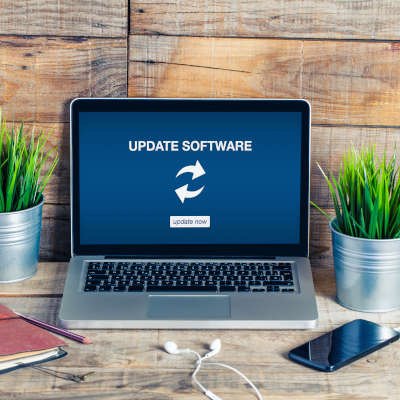
Your business’ software is one of its critical assets, so it really can’t also host many risks to your security and business continuity. Therefore, keeping your software up-to-date and fully patched should be a priority. Let’s go over what patch management entails and why it is so important.

What Causes Software Vulnerabilities?

Many people might incorrectly assume that, once a software is released and paid for, it won’t be the source of any major security issues from that point forward. Unfortunately, this isn’t entirely accurate. As hackers and cybercriminals work to identify vulnerabilities in the code that software developers have created, the software developers will fight back by creating patches to resolve these vulnerabilities.

This pattern continues until the software is eventually abandoned for a new and improved option, much like we’ve seen with the progression of the Windows OS. The reason that we are so adamant that everyone needs to migrate away from the antiquated Windows 7 is because hackers have had years to devise new ways of undermining its security while Microsoft has shifted focus to its later iterations of the operating system.

Regardless, this cat-and-mouse game goes on, with consumers, business owners, and IT admins caught in the crossfire.

Without consistent updates, all software titles can potentially be leveraged against the user—and with so many kinds of software in use within a business, there needs to be a process to ensure that they are all attended to on desktops, laptops, servers, and mobile devices alike. A good rule of thumb: if a software title interacts with the Internet, its software will need to be updated eventually.

Defining Patch Management

Patch management is the process by which a business ensures that updates and patches are applied to all vulnerable pieces of software. Whether it’s a productivity solution, communication and collaboration tool, digital security measure, an operating system, any kind of software under the sun could potentially be a risk that needs to be promptly addressed.

While this makes patch management an essential part of operating securely, it can be notoriously time consuming to dive into. This is why our team at NuTech Services utilizes cutting edge technology to see to our clients’ software solutions and keep them patched and upgraded. As a matter of fact, the technology we use keeps watch over our clients at all hours to ensure that all applicable updates are properly implemented.

Reiterating Why Patch Management Matters

Let’s touch back on Windows 7 once again, as the issues it causes are severe enough to bear repeating. As these words are first being written, almost 20 percent of PC users are still using Windows 7, despite Microsoft abandoning support for it a year ago in January 2020.

This effectively makes Windows 7 a clear and present danger for anyone using it—to the point that the Federal Bureau of Investigation effectively begged users and businesses to abandon it in a press release this past August.

For assistance with your patch management processes and the upkeep of your assorted IT solutions, reach out to the experts we have here at NuTech Services. Our team will be here to assist you behind the scenes, all you need to do is reach out to us at 810.230.9455 for more information.

290218053_phishing_400.jpg

How Not to Teach Your Team About Phishing, Courtesy of GoDaddy

290218053_phishing_400.jpg

GoDaddy—the domain registrar and web-hosting company once famed for its risqué advertisements—is facing some significant backlash for a much different reason. On December 14th, GoDaddy’s employees received an email that appeared to be from the company, promising a holiday bonus. However, while the email was from the company as it appeared to be, it was actually a phishing test that the hosting provider decided to run.

Let’s consider the situation:

GoDaddy’s Phishing Message:

When they checked their email on December 14th, GoDaddy’s employees found an email waiting for them in their inboxes, sent from “Happyholiday@Godaddy-dot-com”. Upon opening it, they found the following message, under a large picture of a snowflake emblazoned with the company’s name and “Holiday Party.” Get ready, it’s a doozy:

Happy Holiday GoDaddy!

2020 has been a record year for GoDaddy, thanks to you!

Though we cannot celebrate together during our annual Holiday Party, we want to show our appreciation and share a $650 one-time Holiday bonus! To ensure that you receive your one-time Bonus in time for the Holidays, please select your location and fill in the details by Friday, December 18th.

US

EMEA

Any submittals after the cutoff will not be accepted and you will not receive the one-time bonus of $650 (free money, claim it now!)

We look forward to celebrating with you again, in person next year!

However, no bonus reportedly awaited the approximately 500 employees who excitedly clicked through the links. Instead, they received an email from the company’s security chief two days later, informing them that they had failed the phishing test and would therefore need to retake the company’s Security Awareness Social Engineering training.

As you can imagine, this did not sit well for many of these employees… especially considering that the “record year” GoDaddy experienced came only after hundreds of employees were either reassigned or laid off entirely. Combining that with the fact that a data breach ultimately exposed 28,000 of GoDaddy customers’ credentials earlier this year, and the comments seem especially ill-advised.

GoDaddy has since released an apology for their mean-spirited bait-and-switch phishing test, releasing a statement. According to a spokesperson, “GoDaddy takes the security of our platform extremely seriously. We understand some employees were upset by the phishing attempt and felt it was insensitive, for which we have apologized.” While the company felt that the lesson was an important one to impart to their team members, there has been some acknowledgement that this was an insensitive means of doing so.

GoDaddy Isn’t the Only Company to Do This

Other companies and organizations have used similar tactics as they have worked to evaluate their internal phishing preparedness. One example came in September, when Tribune Publishing sent out a company email trying to phish employees with the promise of a targeted bonus ranging somewhere between $5,000 and $10,000. The Tribune’s attempt was also derided by the employees affected by it, one reporter tweeting that the level of cruelty was “stunning.” That company also apologized for its use of a “misleading and insensitive” email.

However, Phishing Can’t Just Be Ignored

While these companies certainly took the wrong approach to educating their users, the point still stands that phishing is a very serious risk for businesses today to contend with.

Instead of taking this approach, there are other ways to help educate your team, through seminars or even other internal evaluations. The primary issue really came from the fact that GoDaddy took advantage of a monetary promise to their employees during a time when many people are already financially strapped, with seemingly no intention of giving them this bonus.

Obviously, this is a situation that nobody wants to find their organization in, just as nobody wants their organization to be phished. However, with NuTech Services, there are ways to prevent the latter. Give our team a call at 810.230.9455 to learn more about how we can help you fight back against phishing, without alienating your employees.

93116530_mobile_games_400.jpg

Tip of the Week: Four Tips and Tricks Within the Google Play Store

93116530_mobile_games_400.jpg

The Google Play Store is the Android operating system’s primary source of applications and widgets and can do a lot more than many might first think. Let’s consider a few useful tools and tricks that are incorporated into the Play Store that you should keep in mind.

Using a Password to Restrict Purchases

App store purchases can become notoriously expensive, and fast, so it makes sense to do whatever you can to help prevent any unauthorized purchases from going through. One means of doing so is to restrict the capability to make purchases behind password protection. That way you can avoid unwanted spending on your Android device… particularly if others regularly utilize your device.

Filter Apps Based on their Content

The Play Store has content available meant for a wide variety of age groups, due to the inclusion of gambling, violence, or other adult-themed elements present. While this is certainly a reason to restrict such apps for younger users, it also serves as an excellent reason to restrict what your business users can download—although you should also discourage them from using any apps not intended for business use during work hours anyways.

To filter out inappropriate apps, navigate to the Play Store and access Settings. Once there, tap Content Filtering, and select and deselect the maturity levels that apply to your needs.

View All Application Orders and Purchases

Keeping track of your investments into your applications is much simpler that you might expect, as the Play Store keeps a running record of your purchases. Finding this list is simple: all you must do is visit the web version of the Play Store and, via the Gear icon, access the My orders section.

See All Android Devices

Finally, you can track each device connected to a Google Account and used to access the Play Store, as there is a list in your account that outlines them. Finding this list is also fairly simple: from the online Play Store, click into the Gear icon and from there, Settings.

Have you heard about any other tricks behind the Google Play Store? Share them with us in the comments!

79265714_net_neutrality_400.jpg

Net Neutrality and the Digital Future

79265714_net_neutrality_400.jpg

In the United States, the political atmosphere in 2020 was extremely testy and one element that we typically keep our eyes on is the net neutrality rules that seem to change every few years or so. Today, we thought we’d revisit the issue and tell you what to expect over the first few months of the new administration. 

So, What is Net Neutrality?

Net Neutrality is the theory that the Internet should be viewed as a utility and therefore be regulated in a way where use of it is fair throughout. The debate rages between pro-net neutrality people and pro-business people who believe that by having so many rules in place, innovation of Internet-based technology suffers. Some variables that are part of the argument include how the services are deployed, how telecommunications companies set prices and service packs, and how to get the Internet to everyone who needs it (which is everyone these days).

The Federal Communications Commission, led by FCC director Ajit Pai, successfully oversaw the repeal of the net neutrality regulation in 2017, which effectively re-categorized Internet services from being a utility to an independent service. Of course, this was met with extreme frustration by the masses, who overwhelmingly believe that the Internet should be a universally regulated entity, just as electricity and water services are. 

Where We Stand Now

The Internet has been extraordinarily busy in 2020 as people socially distance because of the COVID-19 pandemic. ISPs, to their credit, did rally to provide some value to customers during the start of the pandemic. Months later they put together a list of how they’ve “Gone Above and Beyond” during the COVID-19 pandemic.

If net neutrality were still in place, who knows what would have happened, but you could bet that the FCC, as a regulatory body would have done what it could to ensure that lines of communication weren’t obstructed because of profitability issues. 

What Will Happen with Net Neutrality in 2021? 

Some people believe that net neutrality will be revisited in 2021; and, while that could happen, with everything that is going on today, and the changes in the FCC mandate, it will be interesting to see if the new administration thinks that it’s a big enough issue to address early on. First thing is first, a new FCC director will be named and that process could take months to iron out. One thing is for sure, the Internet has shown that it is extremely important today and should be protected against any entity that can make it difficult for people to gain access to it. 

What are your thoughts about net neutrality? Are you of the belief that ISPs need oversight to maintain fair practices or do you think that the natural market competition will keep ISPs from taking advantage of their positions? Leave your thoughts in the comments section below.

66905006_alert_breach_400.jpg

What You Need to Know About the Massive Solarwinds Hack

66905006_alert_breach_400.jpg

2020 has been filled to the brim with adversity and just as we’ve mercifully arrived to the end, the largest and most brazen cyberespionage attack ever has been carried out. Today, we’ll tell you what we know about the attack, what problems it caused, and what we should learn from it going forward.

 How Did the Attack Happen?

In short, an IT management company known as SolarWinds was breached back in March, affecting a massive number of organizations—18,000 in all. These organizations include the likes of Microsoft, Cisco, and FireEye, as well as many states and federal organizations, including:

  • The U.S. Department of State
  • The U.S. Department of the Treasury
  • The U.S. Department of Homeland Security
  • The U.S. Department of Energy
  • The U.S. National Telecommunications and Information Administration
  • The National Institutes of Health, of the U.S. Department of Health
  • The U.S. National Nuclear Security Administration

When the attackers gained access to SolarWinds’ network, they were able to use what is known as a supply chain attack to introduce their malware to these departments and organizations by pushing it through the company’s automatic software update system for their Orion products. These kinds of attacks can be particularly effective since the threat is introduced to an environment via a trusted application.

Making this situation worse, many SolarWinds customers had excluded Orion products from their security checks on SolarWinds’ recommendation to prevent their other security products from shutting them down due to the malware signatures that these security products contain.

While (at the time of this writing) it is unclear what the attackers responsible used this access to do, the potential ramifications are truly terrifying. While government departments were targeted, it also needs to be said that this attack could have potentially continued from the major providers like Microsoft and Cisco to their clients, and so on and so forth. That’s why there is still no estimate of this attack’s true scope.

This attack was seemingly only discovered when an employee at FireEye received an alert that their VPN credentials had been used from a new device, and a little digging revealed the much larger situation playing out.

This Wasn’t the Only Attack, Either

Another attack was also discovered on SolarWinds’ network when the company performed an internal audit of its systems. On December 18, a second malware was found to have used the same tactic to infiltrate SolarWinds, but as of this writing does not seem to come from the same source.

What This Needs to Teach Us

Frankly, the most important lessons to be learned here are painfully obvious. First off, cybersecurity needs to be prioritized above all else, and all potential threats should be considered a likelihood. After all, the U.S. government was warned about the viability of exactly this kind of threat back in 2018 by the Government Accountability Office.

Secondly, the concept of your employees being a huge part of your cybersecurity strategy needs to be reinforced. This was only discovered when an employee was alerted of unusual activity and took that alert seriously. Your team needs to know what they are looking out for, and how to proceed if they spot it.

We may not know the scope of these attacks for a while. That shouldn’t stop you from reaching out to the IT professionals at NuTech Services to get an assessment and a consultation. Call us today at 810.230.9455 to get started protecting your network, infrastructure, and data.

158961356_VoIP_400.jpg

Is 2021 the Year Your Business Embraces VoIP? (It Should Be)

158961356_VoIP_400.jpg

Since its widespread adoption, the telephone has proved to be a hugely beneficial tool for businesses of all kinds… despite the considerable costs that it can incur. Fortunately for your business’ budget, however, there is a far more cost-effective means for you to enjoy the benefits of telephony: VoIP, short for Voice over Internet Protocol. Let’s go over some of the reasons why VoIP is just a better option for any business.

What is VoIP?

At first glance, VoIP is almost indistinguishable from the telephone services you are used to using—in fact, you’ve likely used it before.

Basically, instead of using the network of telephone wires that stretches from your service provider to your location, VoIP uses your broadband connection to transmit your call data to and from the recipient. In doing so, you eliminate the need for a pricy telephone service, instead getting double duty from your Internet.

Like we said, you’ve likely used VoIP technology in some form. Skype, Facetime, and Facebook Messenger all operate as VoIP solutions, albeit more for the personal user than an organization. For the organization, many VoIP platforms are available that provide a hefty list of features and options, leading to greater advantages.

The Advantages of Using VoIP in a Business Setting

The benefits of using VoIP are straightforward for the business:

Cost

This is perhaps the most visible (and, for that matter, impactful) benefits that Voice over Internet Protocol offers. A POTS (Plain Old Telephone System) requires a sizable investment for the infrastructure alone, never mind the additional features that aren’t included by default. Comparatively, VoIP needs very little up-front investment, and these additional features are almost always included.

Simplicity

VoIP is a perfect example of a plug-in-and-play solution, with very little else involved in its setup besides signing into your solution and literally plugging in the device. Similarly, starting up and operating the additional features incorporated into VoIP is a very user-friendly experience as well. This ease of use helps to motivate your team to use the platform’s conferencing capabilities and mobile-friendly softphone, and for your part, adding users is a simple enough task.

Function

Finally, these additional features further support your business’ capacity to communicate effectively. Here’s a general idea of what VoIP solutions will offer:

  • Call forwarding
  • Personalized extensions
  • Call routing
  • Call recording
  • Automated receptionist
  • Call queues
  • Instant messaging
  • Text messaging
  • Find me, follow me
  • Audio and video conferencing
  • Integrated voicemail
  • Line-of-business integration

Depending on the VoIP solution implemented, many more features will likely be available in addition to these.

In short, VoIP makes your business communications better, benefitting both your internal collaboration and your outreach efforts. Find out more about what VoIP can do, and what’s involved in implementing it, by calling our professionals at NuTech Services at 810.230.9455.

390064020_malicious_browser_400.jpg

Watch Out for Malicious Browser Extensions

390064020_malicious_browser_400.jpg

Browser extensions are nifty little programs that can be implemented into your web browser itself, adding onto its capabilities and utility… at least, that’s the concept. Unfortunately, these programs also give cybercriminals a means of secretly launching an attack. The security firm Avast recently identified 28 such third-party extensions that have been installed—according to the download numbers, at least—by about three million people on Google Chrome and Microsoft Edge combined.

How Do These Threats Work?

These attacks work similarly to how a phishing attack or a spoofed email would, as a user is promised one thing but winds up receiving something very different. While a malicious application may perform the task it claims to, it also may redirect the user to a phishing website or ad (making the cybercriminal some money) or simply steal some of the user’s information, like their birthday or email address.

In the case of these extensions, the code needed for several different malicious operations was present, including:

  • Redirecting traffic to advertisements (falsely generating revenue)
  • Redirecting traffic to phishing websites
  • Collecting personal data
  • Collecting browsing history
  • Downloading additional malware onto a user’s device

Avast’s researchers believe that only the first code was actively utilized, generating ill-gotten revenue for the creators of these extensions. Regardless, these extensions should be removed from any systems on your business’ network that they may be installed on.

The impacted extensions are as follows:

Chrome

  • App Phone for Instagram
  • Direct Message for Instagram
  • DM for Instagram
  • Downloader for Instagram
  • Invisible mode for Instagram Direct Message
  • Odnoklassniki UnBlock. Works quickly.
  • Spotify Music Downloader
  • Stories for Instagram
  • The New York Times News
  • Universal Video Downloader
  • Upload photo to Instagram™
  • Video Downloader for FaceBook™
  • Vimeo™ Video Downloader
  • VK UnBlock. Works fast.
  • Zoomer for Instagram and Facebook

Edge

  • DM for Instagram
  • Downloader for Instagram
  • Instagram App with Direct Message DM
  • Instagram Download Video & Image
  • Pretty Kitty, The Cat Pet
  • SoundCloud Music Downloader
  • Stories for Instagram
  • Universal Video Downloader
  • Upload photo to Instagram™
  • Video Downloader for FaceBook™
  • Video Downloader for YouTube
  • Vimeo™ Video Downloader
  • Volume Controller

Again, we encourage you to check your company’s network to ensure that these extensions are not installed in any of your users’ browsers, and that you encourage your employees to do the same.

Not sure how to go about doing so? NuTech Services can help. As a managed service provider, our services include remotely monitoring your business’ technology and network for threats while keeping abreast of this kind of news so that we can proactively resolve any issues that may influence your operations. 

Find out more today by reaching out to us at 810.230.9455.

184829173_santas_workshop_400.jpg

Even Santa’s Workshop Can Benefit from Managed Services

184829173_santas_workshop_400.jpg

While some places get to take the holiday season off to some extent, other establishments are at their busiest—and as such, don’t have time for any inefficiencies. Let’s meet an employee from such an establishment, located far up north, to learn about how any workplace might benefit operationally from managed IT services.

Taking a sip of cocoa, Trinket leaned back from his computer and let out a long sigh. Here it was, barely after 9:00 in the morning, and his agenda was already impossibly full. Around him, Santa’s Workshop was in full swing, the other elves frantically working to ensure that all the deliveries were prepped for the Boss before the big day came. 

Opening his Glee-mail, Trinket made a face as three new messages appeared, all labeled “urgent.” From experience, Trinket was sure that they weren’t.

Clicking through them, the Manager of Toy Creation and Assembly was soon proven correct. One of the messages had been sent to the entire North Pole team, despite only being relevant to the Coal Department. Another was an email that he had already responded to days ago but had since deviated from its original purpose and was now debating if the menu for the end-of-season wrap party should include non-dairy milk options and gluten-free cookies.

The only message that had anything to do with Trinket was the request from Sleigh Maintenance and Repair to borrow himself and one of his team members to inspect the sleigh’s wish injector. As it turned out, Trinket’s team was well ahead of schedule this year, so the request could be filled with little issue. He called one of his team members over to him.

“Poppy!”

Poppy jumped up from her seat and bounded over to Trinket’s desk. “Yes, sir?”

“How are you with magical engineering?”

“Pretty good, sir. I interned there for a while before being assigned to Creation and Assembly.”

“Excellent. Come with me, they need a few extra sets of eyes in the garage.”

“Okay!”

Trinket and Poppy set off for the North Pole’s garage, where the Boss kept his famous sleigh and Mrs. Claus kept her less-well-known motorcycle. As they walked over, Trinket couldn’t help but sigh once again.

Poppy glanced at him, concerned. “Everything okay, boss?”

Trinket replied, “Yeah, it’s okay. There’s just a lot piling up on my day that it really doesn’t seem like I should be involved in. I mean, I shouldn’t be venting to you about this, but some of the technology we use just seems to get in the way.”

Poppy nodded. “I know what you mean. I couldn’t figure out why my workstation was running so slowly this morning. Cedar had to come over and help me fix it… and I’m not even sure that it helped all that much.”

They continued walking in silence. Almost hesitantly, Poppy spoke up again.

“You know, I have a cousin who works in a shoe factory, and he says that IT isn’t really a problem for them.”

Trinket snorted. “Yeah, maybe after they’ve invested half of their annual magic into it.”

“That’s just the thing,” Poppy persisted. “They don’t have to. They work with this company called NuTech Services, they’re something called a managed service provider.”

“A managed service provider? What’s that?”

“Well, you know how we usually handle technology issues? We all kind of try to figure it out ourselves, until we need to call someone else in to fix it. Kind of like we’re doing now, for the sleigh?”

“Yeah.”

“Well, a managed service provider handles things a little differently. Instead of us trying to fix problems after they’ve popped up, the MSP keeps an eye on our systems for us, spotting potential issues and fixing them before they interrupt us. According to my cousin, the shoemaking elves managed to up their productivity considerably.

“The MSP has even helped them make their systems more efficient by recommending upgrades and helping them keep up with their updates. My cousin says that the factory is also more secure, to boot.”

Trinket considered it, impressed. “Well, how much does this cost? It sounds expensive.”

“That’s the other thing—it’s a service, so the MSP charges the factory each month. However, that monthly cost covers a lot, so considering what you get, it isn’t so bad.” Poppy shrugged.

“I think I’ll have to bring this up to the bosses. What did you say this company was called?”

“NuTech Services. They’re based in Michigan but since most of their services are delivered remotely, that shouldn’t be a problem. Even if they must make an on-site visit to fix something, their remote operations can save time by giving them a head start.

“They can help prevent viruses and malware, get a better handle on our communications, and help us streamline our processes, too.”

“Not bad, Poppy. I’ll have to bring this up to the Boss before the New Year starts,” Trinket said as they reached the garage. He held the door open for her. “Shall we?”

“Let’s!”

The two elves entered the garage and got to work, as elves do.

Hopefully, this has helped illustrate that everyone needs a little assistance, every now and then. If your business has also seen some IT challenges that it needs addressed and mitigated, give NuTech Services a call at 810.230.9455 to start the new year on the right path.

In the meantime, we hope that your holidays are merry and bright.

238503847_MSP_400.jpg

Where MSP Services Come From

238503847_MSP_400.jpg

For most people, the term tech support is pretty self-explanatory. The terms managed services and MSP… not so much. Let’s go over what makes managed services and what we do as a managed service provider so different from the IT support you may be used to. To start, we’ll review where the idea of an MSP came from, and end with what one like us can do for you.

Defining Managed Services

On a very fundamental level, managed services and tech support are very different due to the way they operate.

Traditional tech support, also referred to as break-fix IT, are those that most people think of. Whenever a piece of technology breaks down or has some other issue, an IT technician is called to fix it. This was the predominant—and really, the only—option to receive any level of IT support for some time, despite the expensive repeat visits and prolonged operational interruptions that came with it. For larger enterprises, hiring full-time IT staff solved this problem. It’s still costly, and often too costly for small businesses, but it does lead to faster turnaround times and ongoing support.

On the other hand, managed services are specifically designed with the small-to-medium-sized business in mind. Instead of waiting around for a company to call with an IT issue, a managed service provider will instead proactively monitor a company’s solutions to ensure nothing goes wrong in the first place. We’ll go a little deeper into how this is particularly beneficial later on, after we review how managed services came to be.

The Development of IT Support Services

Back when computers were first made available to businesses, small regional providers known as system builders that would construct generic computers for companies to use began to pop up. Large companies soon followed suit, and as a result, the high price of personal computers was reduced significantly.

In response to this change, system builders shifted away from the labor-intensive creation of computers to simply reselling those that the larger companies made. This gave them the title of systems reseller and proved to be a lucrative approach… especially without the Internet to facilitate direct-to-consumer computer sales.

Despite this, resellers discovered that they could generate higher profits by adding to what the manufacturers were providing. This led to the development of value-added resellers, or VARs. These VARs would sell the machines to consumers, as well as help install them and add them to existing computer networks. These networks and their needed infrastructure grew in importance as the Internet became a viable tool for businesses to use in the 1990s.

It was then that the VARs became systems integrators, and commonly provided break-fix repair services.

As the 1990s approached the 2000s, IT services were common enough for providers to start to act as advisors to their clients, recommending tools and introducing best practices into the clients’ networks. It was then that the term IT consultant was used.

Finally, with businesses relying on their technology more than ever before, it was no longer sustainable to solve problems after they happened. This helped drive the idea of proactive monitoring, remote maintenance, and online service delivery forward. At this point, the managed service provider was a reality, with the security of proactive support delivered in return for a set monthly fee.

What Can an MSP Do for My Business?

Today, managed services are the right choice for a business that wants to improve its operations while managing their time and budget more effectively. With a single provider taking care of all its IT management and maintenance needs, a business subscribed to these services gets to enjoy clear operational benefits with the confidence that their technology is reliable.

NuTech Services is proud to be known as an MSP, delivering top-notch solutions and services to businesses in a sustainable and beneficial way. To learn more about how we can assist you in your operations, give us a call at 810.230.9455.

343860455_VPN_400.jpg

What Exactly Is a VPN?

343860455_VPN_400.jpg

One of the major shifts we’ve seen in business in 2020 is the establishment of the remote workforce. Stay-at-home orders brought on by the COVID-19 pandemic made it necessary for businesses to find solutions on how to securely transfer information from what could be unprotected networks. The virtual private network is a solution to this problem. Today, we will describe what a VPN is, what its primary use is, and how secure it really is for secure file transmission. 

Defining VPN

The virtual private network is a tool designed specifically to protect data as it is transferred over the Internet. The best way to describe it is as an encrypted tunnel that protects the interception of data that is being sent from one place to another. 

For the remote worker, it can be difficult to get access to the files you need from your company’s central computing infrastructure. This is a big problem when the resources you need to do your job are located on these servers. The VPN gives you a simple means to that end, as it provides the secure environment in which to send and receive data. 

How is a VPN Used?

Traditionally, the VPN is used to set up a secure and reliable network connection between an endpoint and a central server.

Let’s say you were working remotely, where you ordinarily wouldn’t have access to the company’s servers, as we established earlier. Without a VPN, this would severely hinder your capability to be productive—but making this connection under normal circumstances could potentially expose the data you’re working on to external threats.

How the VPN Boosts Data Privacy and Security

The encrypted nature of the VPN is what helps resolve this. Thanks to the encryption, the data that is sent via the VPN is shielded from anyone trying to peek at it while it is traveling. If a cybercriminal does manage to glance at it, it is scrambled and distorted—rendering it effectively useless.

Hence the name virtual private network.

While it isn’t a panacea for your cybersecurity needs, it does allow you to securely communicate from a device to your business’ network from an otherwise insecure network, or one you don’t control.

Want to learn more about VPNs, or other important elements to your business’ information technology? Turn to us for the answers! NuTech Services and our managed services can be reached by calling 810.230.9455.

224417229_managed_service_400.jpg

How Managed Services Developed into What They Are

224417229_managed_service_400.jpg

When you see that we offer tech support, you almost certainly have an idea of what that means. However, upon hearing about our typical service delivery for the first time, many people are really surprised by how different our services—as a managed service provider—are. These differences are not an accident. Let’s go back in time a little while to explore how managed services came about, and what difference they could make for you.

What are Managed Services?

Let’s start off with a very basic description of what “managed services” are, as compared to the common impression of “tech support.” Whenever one thinks about “tech support” or “IT,” they’re likely thinking of the break-fix version: some piece of information technology breaks or malfunctions, so IT is called in to fix it. While this proved effective enough, it also led to a lot of repeat visits… oftentimes for things that were relatively simple to fix.

Managed services are a different approach, tailored particularly for small to medium-sized businesses. Instead of waiting for something to go wrong, a company will enlist a managed service provider—or MSP—to proactively monitor their IT to help prevent issues from impacting it. This brings a variety of benefits that we’ll touch upon later. Right now, we wanted to look back and consider how this approach was first devised and deployed.

The History of Computer Support and Services

As computers were first introduced into the business landscape, so-called system builders—small regional businesses that offered “white box”, or generic computers—would offer other businesses their services. Large companies soon joined in, and this resulted in the prices of personal computers plummeting.

To adapt, system builders quickly shifted from constructing labor-intensive computer systems to reselling what the large companies would offer, making the systems reseller a lucrative thing to be. After all, before the Internet helped link the manufacturer to the end user, these manufacturers needed a go-between to get these devices into a customer’s hands. However, as time passed, these resellers realized that they needed to do more. As a result, systems resellers phased into “VARs”, or value-added resellers.

Basically, VARs were computer resellers who would not only sell the machines but would also assist with the installation and networking of these systems. As the Internet became more applicable to business needs and challenges in the early 1990s, this networking (and the additional equipment needed to support it) only became more crucial.

At this point, the VARs became known as the systems integrators, as this more accurately described their function. This point in time was also the high point for break/fix IT repair services.

As the late ‘90s rolled around, IT services were commonplace enough that providers were frequently stepping into advisory roles for their clients, making recommendations and implementing best practices. With this shift, systems integrators adopted the title of IT consultants.

Of course, as the technology used by businesses became more advanced and capable, repairing issues as they arose became less feasible. This, paired with the remote capabilities that the Internet was able to support, made the idea of proactive maintenance and online solution delivery a workable possibility.

Thus, managed services were born, with service providers delivering up-to-date and optimized solutions in exchange for a set monthly rate.

What Do Managed Services Entail?

Nowadays, managed services have risen to become the preferred choice for businesses in the know, thanks to the improvements that these businesses see to their productivity and operations. With a single provider attending to all a business’ IT-related needs, working with a managed service provider has shown to have clear operational benefits.

At NuTech Services, our team of professionals is proud to provide the best managed services that businesses could ask for at a reasonable, all-inclusive rate. Interested in learning more about our services? Reach out to our team by calling 810.230.9455 today.

244341955_chrome_actions_400.jpg

Tip of the Week: Making Use of Chrome Actions

244341955_chrome_actions_400.jpg

As the most common Internet browser, Google Chrome is in a position where they always need to be coming up with new draws to maintain their hold on the market. Their latest efforts may help them to do so. Let’s take a moment and examine what Chrome is implementing, and how you can use it to your advantage.

Introducing Chrome Actions

Chrome Actions take the familiar address bar of the Chrome Internet browser and add some extra utility to it. Rather than specifying a webpage or network location to visit in the address bar (known as the “omnibar” to very few of us), Chrome now accepts very basic commands as input, and will follow these commands when they are entered.

For instance, opening a window in Incognito mode is as easy as simply typing “incognito” into the address bar.

As of yet, there are a few Chrome Actions that have been implemented:

  • Clear Browsing Data – type ‘delete history’, ‘clear cache ‘ or ‘wipe cookies’
  • Manage Payment Methods – type ‘edit credit card’ or ‘update card info’
  • Open Incognito Window – type ‘launch incognito mode‘ or ‘incognito’
  • Manage Passwords – type ‘edit passwords’ or ‘update credentials’
  • Update Chrome – type ‘update browser’ or ‘update google chrome’
  • Translate Page – type ‘ translate this’ or ‘ translate this page’

Of course, they come with the promise of more being added in future updates.

Is This Something You See Yourself Using?

Leave your thoughts in the comments and tell us why or why not. For more information and assistance pertaining to your business’ IT, give us a call at 810.230.9455.

278522324_backup_400.jpg

Improving Your Backup Strategy Doesn’t Have to Hurt the Bottom Line

278522324_backup_400.jpg

If you are a regular visitor to our blog, you know just how important we think data backup is for any business that relies on data. If your business stores and creates data, you need to have a backup strategy in place. It’s that simple. Today, we want to discuss how to improve your data backup strategies with a BDR.

Why Do You Need Data Backup?

This is pretty self-explanatory. Your business is constantly under threat. You may not realize it because you’ve been fortunate enough not to have any threat be bad enough where your operational and financial data is actively at risk. That may not always be the case, however. Consider how important your data is and think about all the things that could happen where you would have to deal with data loss. Situations that stem from natural disasters, scams and hackers, hardware failure, and human error can all trigger data loss. That’s a lot of variables to cover to keep hoping that nothing will happen. 

The health of your business depends on that data. There is employee data, financial data, vendor and customer data, and most importantly operational data that needs protection. At NuTech Services, we have seen a lot of different solutions to the data redundancy problem. We’ve seen people use tape backups, we’ve seen people back their data up to a network attached hard drive, we’ve even seen businesses neglect the process altogether. Today, there is a better way.

Get BDR From NuTech Services

We take data backup extremely seriously because it makes protecting our clients’ digital assets that much easier. It’s good for us, but it’s really great for our clients. The Backup and Disaster Recovery service we provide works several ways to protect a business’ digital assets. They include:

  • Complete customization of backup – A company has full control over their backed up data. They can choose what data they need to protect and our technicians will build a solution to those standards. This allows businesses to keep costs low if they only have certain data to back up and also allows them to backup everything if they so choose. 
  • Following best practices – In the IT support industry there is something called the 3-2-1 rule. It is considered a best practice because it protects an organization’s data in multiple ways. With our BDR service, we follow this best practice. It means that we keep at least three copies of your data, with two being stored onsite, and one offsite. This means that if your business is hit by a disaster your organization will still have a working copy of your data that you can restore from the cloud, but if you just have to restore data because someone accidentally deleted something that you needed, you can restore it from your network-attached device.
  • Incremental updates – One of the best features of our BDR service is that you don’t have to run your backups after work hours. Once your data is uploaded to the BDR and the cloud, it then can incrementally back up data frequently. This provides an organization the ability to lose less data if something were to go wrong. 
  • Professional support – As with any of our services, the solutions are tested, maintained, and managed consistently to provide the best possible situation for your business. Our expert technicians know that investing in technology can sometimes be a hard decision, but with the BDR, it is an extremely safe investment. 

If you would like to learn more about data backup, data recovery or how it fits into your disaster recovery and business continuity plans, call our knowledgeable consultants today at 810.230.9455.