
315663473_remote_work_400.jpg

People Have Been Working From Home Longer than You Think

315663473_remote_work_400.jpg

Working from home isn’t new, but with the COVID-19 pandemic sparking public health fears many businesses decided to move their operations offsite. For much of the past decade remote work was an available strategy for business, but many business owners feared it would give them a lack of control over their workforce, and therefore was largely ignored. This was despite remote work being a strategy people have embraced for a long, long time. Today, we take a look at the history and progression of working from home.  

For Much of History People Worked From Home

In medieval times people predominantly worked at their place of residence. Many people of this era in Europe lived in what are known now as longhouses. They lived a subsistence life, looking after their crops and livestock. Individuals that lived in these communal buildings typically found a way to justify their inclusion by gaining a trade that would help the rest of the people out. In fact, it wasn’t until the mid-18th century where people started going outside their immediate community to go to work; and even then, the people that ran the factories lived and operated out of small buildings adjacent to the main factory.

Office Work In the 20th Century

As industrialization took hold, there was demand for clerical workers and salesmen that necessitated building an office. Inventions such as electric motors, telegraphy (and eventually telephony), and the typewriter facilitated a major change for business. 

Only a few decades later, much of the job market was represented by clerical work. The workers that still worked in production were made to hold fast to management’s new standards for productivity. The standard that kept increasing. Managers of the time began to keep detailed figures of how long a task should take. According to a productivity field guide from 1960, swiveling in your seat should have taken .009 minutes. At this juncture, the cubicle was invented, bringing unparalleled distraction prevention to the modern office.

Technology Helped Encourage Remote Practices

As computing became more commonplace, so did remote working. Factories, the base for the 20th century American economy, started to close as the price of labor started to be prohibitive for business. Service jobs filled the gap and a new level of productivity was established. Major innovations such as the personal computer, home Internet service, and ultimately cloud computing have expanded the availability for a worker to have access to everything he/she needs from anywhere.

What better place than home?

Remote work had been growing pretty rapidly as the COVID-19 pandemic hit. In mid-May, 66 percent of people that could work from home, were working from home. That number is sure to go down as businesses reopen, but it may be that enough has been learned from this situation that employers will offer more flexibility to their staff than they had previously.

Remote work can provide your business some serious benefits. To talk to our professional consultants, call NuTech Services today at 810.230.9455.
343103339_covid_scam_400.jpg

Don’t Let Scammers Scare You with COVID-19

343103339_covid_scam_400.jpg

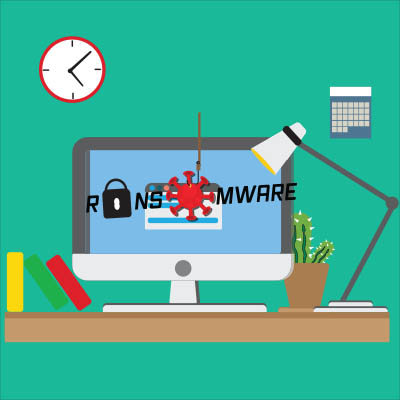
The COVID-19 pandemic has resulted in a great number of people working from home. While this is good for the public health, it may unfortunately lead your employees toward a laxer view of cybersecurity. Cybercriminals are sure to take advantage of this if you aren’t careful, so it is important to be particularly aware of your cybersecurity right now.

The Advantage COVID-19 Gives Hackers

To put it bluntly, diversion. With so much attention rightly given to COVID-19 right now, there are many who are remaining in their homes as much as possible to try and prevent the pathogen from propagating. This approach makes the Internet even more important to so many people. Not only are many businesses operating remotely, many rely on support services and other online functions for their in-house processes. Otherwise, people who cannot work remotely are seeking ways to pass the time, turning to social media and other online services for that.

As a result, a huge number of people are online.

This creates the perfect storm for a scammer or hacker to take advantage of, as they now have a larger pool of potential victims. On top of that, the COVID-19 situation also gives them another opportunity to fool people into handing over their access credentials to personal and business accounts.

Between March 9th and April 26th, a total of 1.2 million domains were created that have something to do with COVID-19. 86,600 of these domains lead to malicious websites, 80 percent of which distribute malware to anyone unlucky enough to interact with them.

As far as phishing attacks and spam go, more of these are also popping up. COVID-19-themed scams are popping up in the form of fake emails, spoofed to look like they come from the IRS, the CDC, healthcare organizations, and various other companies.

Preventing the Influence of Scams

With so many scams and threats out there, vigilance is crucial… especially when you and your team may be working remotely. Any of the security best practices that people should be following in the office need to be particularly focused upon when you’re in the home. For instance:

  • Phishing awareness – Phishing can strike through a variety of outlets, from email, instant messaging, social media, and even telephone calls. Being able to spot these attempts is needed if your business is going to remain secure.
  • Maintain password standards – Many people have separate standards for their home passwords and their business passwords. You need to discourage this by reinforcing the importance of good password hygiene in all environments.
  • Back up your data – Data is important, regardless of where it is accessed. Maintaining a backup and securing it with antivirus and firewall is important.

At NuTech Services, we have the professionals with the experience needed to properly secure your network as you continue your operations. To learn more about what we can offer, give us a call at 810.230.9455.

274607542_project_management_400.jpg

Tip of the Week: 3 Crucial Considerations when Managing Projects

274607542_project_management_400.jpg

In the workplace, projects are used to push operations forward. This makes your ability to manage your business’ projects truly important as the global economy turns back on. To help, we’re sharing three tips that will help you most effectively do so.

1.  Communicate, communicate, communicate.

Even in the best of times, clear and comprehensive communications are necessary to the success of any business initiative. Without them, a team simply cannot function as they should, leading to delays, redundancy, and missed steps.

To avoid these ramifications, you need to set a precedent that encourages your team to communicate with one another. In addition to frequently reinforcing the importance of their collaboration, give your team the opportunity to do so in various settings. Regular meetings are a must to keep everyone on the same page. You should also provide your team with the solutions that facilitate communication (like VoIP, messaging, and good old email) and set an example by using them yourself.

2.  Identify and address risks.

Murphy’s Law clearly states that, “Anything that can go wrong, will go wrong.” This is important to keep in mind, especially regarding your business. Acknowledging the risks that you’ll face and determining how to address them proactively will prove to be exceptionally useful, as you can figure out which is the most likely to impact you and your operations and prepare for them accordingly.

One of these risks could involve scope creep, where your project expands beyond its original limitations and deadlines. Make sure that you’re accounting for these kinds of delays as you plan it ahead of time.

3.  Clarify responsibilities.

When multiple people are working together on a project, it is critically important to establish who is to see to which task. Otherwise, you encounter the same issues that a lack of communication will cause.

As your project progresses, you need to firmly establish each team member’s role and the responsibilities that they need to uphold. Not only will each member have a clearer idea of their part in a project, they will better understand the process and be able to contribute to it in a more productive way. Make sure that you work with the members of the team to distribute these tasks to the best available person for each one. This will help contribute to the team having ownership of the project and inspire them to contribute their best efforts.

For the IT tools and solutions to assist you in your project management, or the other processes your business relies upon, reach out to NuTech Services! Give us a call at 810.230.9455 to learn more.

246442495_cybersecurity_400.jpg

Is Your Business Being Attacked From the Inside?

246442495_cybersecurity_400.jpg

With cyberthreats the way that they are, a lot of industry professionals go on and on about the importance of deploying technologies designed to reduce the potential threats that a business has to confront. This technology isn’t cheap and while they absolutely do help you protect your technology and data; today’s hackers know that. Unfortunately for small business owners, that shift has left your staff on the front lines of cybersecurity; a place they really shouldn’t be. Let’s discuss cybersecurity from an employer’s perspective.

Today, there are literally billions of phishing emails sent each day. Inevitably, you are going to confront this problem, and depending on your staff’s preparedness (or intentions), you will either deal with them or they will likely deal with you. 

The first thing that you should know is that you have to train up your staff about phishing and other issues surrounding your organization’s security. They have to understand social engineering tactics used by scammers to infiltrate networks, steal data, and deliver malware. If they are left in the dark about these issues, you will likely see a plethora of cybersecurity problems in your immediate future. It’s good to be lucky, but you’d rather be good.

Once you’ve committed to a cybersecurity training regimen for your staff, you then have to understand that there are three manners of attack that come from inside your network. Let’s take a look at them:

Mistakes 

The first type of attack is brought on by mistakes. Those are instances where you have trained your people and they are committed to help you protect your business’ IT but made a mistake and it has caused problems. Most mistakes are only a mouse click made in error. Mistakes do happen and since there is absolutely no malice behind it, harsh reprimand of that employee, while probably warranted, will surely bring out the water works. You don’t want to alienate your staff (or your entire workforce) so if someone makes a cybersecurity mistake, and it is remediated quickly, there’s no real harm done. You will want to re-train this person and test them, so you know they understand what your policies are. 

Negligence

An employee that continues to make mistakes isn’t just a doofus, they are neglecting their responsibilities. Negligent behavior is at the center of a large percentage of the security breaches seen in business today. It can be characterized by an ambivalence to your business’ stated goals that is shown by repeat offenses that put your network and data in jeopardy. It may start with a simple mistake, but if an employee continues to make careless mistakes, it could really put the business behind the eight ball. Cybersecurity negligence is just like negligence in other aspects of the business and can’t be allowed to continue.

Sabotage

The employer-employee relationship isn’t always easy. In many businesses, there is a direct conflict of interest. Employers are known to overstep boundaries in the name of productivity and employees are known to get fed up with it. People get disgruntled, people are fired, people quit. There are rare occurrences where the relationship gets so bad that current or former employees will use their access to your company’s systems to try and sabotage an element of it, or the entire thing. In the rare cases where this does happen, it can lead to complete destruction of a business. If you have had to let someone go, or they have quit, you will want to immediately remove any and all of their credentials so that they have absolutely no access to your business’ digital resources. If the saboteur still works for you however, there may not be much you can do until their dastardly plan unfolds. It’s important, then, to treat your employees with the same respect as you expect from them. A fair employer won’t run into sabotage very often.

Keeping your technology systems running and working for your company is imperative for today’s businesses. If you would like help with security strategy or with deploying tools call the IT professionals at NuTech Services today at 810.230.9455.

118204795_chrome_colored_tabs_400.jpg

Chrome Adds Color Coded Tabs and We’re So Thankful

118204795_chrome_colored_tabs_400.jpg

Google Chrome is adding a cool feature over the next week or so (it may already have been released for you). The next feature is sure to make a big difference for some and will be non-descript for others. Let’s unpack colorful tabs in Google Chrome.

Adding More Organization Into Your Chrome Browser

Admit it, you have a tendency to use too many browser tabs. At any given time, you may have 5-10-20 browser tabs open. If you use more than one screen, it could be more. Way more. Most users use their Chrome browser for so much of your online life that you hardly pay attention. Then you wonder why your PC is running slow. The truth is people use a lot of browser tabs, and they are better off for it. 

Google, knowing their users’ behavior better than most companies has come up with a new feature that will allow you to assign a certain color to a browser tab and then group them together with like-colored tabs. This feature will be rolled out to users in this update

The update should be coming this week, but it will hit everyone at different times (Google is deliberate about their updates). You may already have the feature in your Chrome browser. When it does come it will be as a default browser update, and will be a change for all Chrome users. All you will need to do is right-click on tabs, group them together, and assign a color.

Are you a tab-hoarder, or a tab-minimalist? Is this feature going to help you? Leave your comments below and be sure to return to our blog for more great information about technology.

120234781_keyboard_shortcut_400.jpg

Tip of the Week: Keyboard Shortcuts for Convenient Browsing

120234781_keyboard_shortcut_400.jpg

With its all-purpose functionality really coming to the forefront in the office, your Internet browser is likely one of your most used computer programs. Considering that so much of your time is spent using the Internet, we thought it would make sense to share a few shortcuts to make it more efficient for you.

If you want to try them out as you read along, make sure you open a new browser window… we don’t want you leaving this page before you read all of them!

Jump to Address Bar: Ctrl+L

Let’s say that it’s the beginning of your day, so you are checking your email for the first time. Afterwards, you know that you need to go to a particular website. Windows offers a quick shortcut that selects and clears the address bar so you don’t have to even stop typing before you move along. To make the jump, simply press Ctrl+L.

Quickly Add the Dot Com: Ctrl+Enter

Let’s use an easy example for this one, like the official website of the 1996 movie Space Jam. Visiting this website is as easy as typing in “www-dot-spacejam-dot-com,” but this shortcut allows you to just type in “spacejam” instead. Pressing Ctrl+Enter will automatically add the “www-dot” and “dot-com” in for you.

Open a Search in a New Tab: Alt+Enter

Of course, a lot of searches come about as something else is being done online, and that something isn’t always something you can navigate away from. If you’re trying to open a new website up or perform a search in a new tab, pressing Alt+Enter rather than just the latter will open what you typed in a new tab.

These two shortcuts also work together, so pressing Ctrl+Alt+Enter after typing “spacejam” would add the missing domain information and navigate to it in a new tab.

Open Clear Browsing Data: Ctrl+Shift+Delete

Finally, when you’re all done browsing the Space Jam website (or whatever else you may have used these tips to do), you can more conveniently open your option to clear your browsing data.  Pressing Ctrl+Shift+Delete will bring you to the requisite screen for you to press the button.

Before you navigate away from this page, make sure you subscribe to our blog for more useful tips and time-saving best practices!

198032116_business_security_400.jpg

Three Facets of Security to Focus On

198032116_business_security_400.jpg

When it comes to a business’ cybersecurity, there is no magic bullet to solve every problem. No miracle cure, no panacea, no Staples “that was easy” button. Instead, you need to deploy various means of protecting your operations. Let’s discuss how your business’ security needs to be shaped in three different environments: your physical infrastructure, your cybersecurity solutions, and your employees’ security habits.

Physical Security

First on our list is the oldest kind of business security, the (sometimes literal) gun behind the counter that helps to dissuade potential attacks. It is only too easy to overlook the fact that data theft can be as simple as someone taking a hard drive, rather than hacking into it. Of course, we aren’t suggesting that all businesses should have an arsenal at the ready. Instead, technology provides assorted alternatives that should be implemented to deter attempted intrusion.

Maintaining your access controls, installing surveillance, and otherwise keeping a closer account of who is present in your business can all be considered ways to improve this security. This not only helps to keep sensitive materials safe from unauthorized access within your business, it will also help protect your investments and assets if your business is vacant for any length of time.

Cybersecurity

Of course, we can’t neglect to mention your business’ cybersecurity protections. With over one billion malicious programs out there (as of this writing) poised to attack, there are far more threats than you could handle without technological assistance. Make sure that you have this assistance protecting every aspect of your business’ technology:

  • Updates and patches serve to resolve security issues inherent in your software solutions.
  • Spam blockers help to filter incoming messages to stop threats from exploiting your email.
  • Firewalls allow you to secure your Internet connections, and web filters prevent your users from accessing risky or time-wasting websites.
  • Password requirements and multi-factor authentication enable you to keep access to various accounts secure against various threats and social engineering efforts.
  • If work is to be done outside of the office, a virtual private network can help protect your data as you communicate with the office outside of the defenses installed in the workplace’s infrastructure.
  • Turn to an external resource to perform a comprehensive security audit. Not only will they be able to determine your weaknesses, they can help you implement the tools to remediate them.

Security Awareness

Finally, it is extremely important to remember that your biggest vulnerability can easily be your employees themselves, as human beings are the most prone to mistakes and are the easiest to fool out of your business’ operational resources. Make sure that you are training your entire team on the security practices and awareness that everyone involved needs to maintain, continuing via evaluations and repeated education as needed.

Emphasize the importance of certain concerns, like:

  • Password Hygiene
  • Data Security Practices
  • Secure Processes
  • Access Control Standards
  • Social Media Use
  • Conformity to Policies

For assistance with all of this, turn to NuTech Services. We have the solutions to support your security efforts, as well as the rest of your operations. To learn more—or to get started—reach out to our team by calling 810.230.9455.

121480080_managed_services_400.jpg

Managed Services Have Never Been So Beneficial for Businesses Before

121480080_managed_services_400.jpg

With less than half of 2020 behind us, many of us would already like a re-do of this year. With a global emergency impacting the personal and professional lives of so many, businesses are struggling right now. For these organizations to survive, they will need to get the most out of every business investment. When it comes to their essential technology, we recommend investing in managed IT services.

Why Managed IT Services

COVID-19 has managed to close wide swaths of businesses and organizations as people try to stem its spread by avoiding as much contact with others as possible. Any small business owner would understandably be hesitant to make any large shifts in their operations, but it also needs to be understood that the shift to managed services can help relieve many of the challenges that businesses are currently facing—as well as those that may pop up afterwards.

Businesses Can’t Operate if Their Employees Aren’t There

While many businesses truly need to have their employees physically present to function, there are a great many that feasibly could operate on a primarily remote basis, provided they had the right tools. This approach would work well for those who are labelled essential right now, as it could help minimize the number of people present at the workplace and drastically improve social distancing efforts.

By working with a managed service provider, businesses have a resource to help them reach the safest working conditions for their teams. Any personnel who don’t explicitly need to be onsite could be provided the means to remote in, with these solutions managed by the provider for maximum uptime.

Proper Support Services Introduce Additional Risks

That leads us into the next benefit that managed services offer: the support that a managed service provider delivers is primarily using remote monitoring and management tools. This means that if an issue should arise for one of your remote team members, there is a very good chance it can be resolved without either your users or the technician even getting up from their seat.

Managed services will even help you avoid these kinds of issues in the first place with the same remote capabilities. By proactively monitoring for threats and other problems, your provider can spot many of them before they realize, taking the steps to prevent your employees from having any difficulties. As an MSP, NuTech Services does this kind of thing every day, and while we can’t catch everything, you can be sure that we will catch the vast majority.

Support Services are Expensive, Especially Now

You may be thinking: so, you’re proposing that I make another investment into managed services when my business is clearly going to experience some tough times?

In some ways, yes, but in the given context, consider it more of insurance instead of an investment.

Let’s say you continue to use the same IT services that you always have, essentially paying per incident to keep your business operational. Doing so gives you no consistency, and therefore is impossible to predict and budget for with any accuracy.

Managed services take a different approach: extensive coverage under an all-encompassing subscription fee. Out of fairness, we should mention that there may be an occasional out-of-scope need, potentially creating the need to adjust these fees slightly. Accepting this relatively rare circumstance, working with an MSP allows a business to accurately budget for their information technology services.

There are many more reasons that a business should strongly consider the services of a managed service provider, especially in these challenging and disconcerting times. If you have any more questions to ask, we are here for you. Reach out to us at 810.230.9455.
304702255_laptop_unplugged_400.jpg

Tip of the Week: What Happens when a Laptop is Left Plugged In?

304702255_laptop_unplugged_400.jpg

Laptops have proven to be one of the more useful gadgets for businesses and business users. Not only do they hold their own in performance against a desktop, their portability is another consideration that cannot be ignored. However, this portability means that they are at least somewhat reliant on their battery, which begs the question: can they be left plugged in otherwise?

For this week’s tip, we’ll dig into this exact question.

How Working from Home Has Impacted the Use of Mobile Devices

Here’s the thing: with stay-at-home orders and other measures being put into place across the country, a lot of people aren’t as mobile as they once were. As a result, the mobile devices that would travel with them back and forth to the office have effectively become temporary desktops in their homes… and as such, are spending more time plugged in than not.

So, Is This a Problem?

That depends on a variety of circumstances, the first of which being the age of your device. Not all that long ago, leaving your laptop plugged in could overload and damage the battery (which was not a good thing by any means). Today’s batteries, made of either a lithium-polymer or lithium-ion, won’t behave that way. Instead, once a device’s battery reaches full power, any additional power brought in will instead power the laptop itself.

However, this doesn’t mean that there aren’t some concerns to doing this.

Any laptop user has likely noticed that, after their device has been charging for so long, the bottom will get hot. While this is to be expected, too high heat for too long can damage the device, impacting the battery’s performance. One study, performed by Battery University, indicated that leaving a laptop that’s fully charged plugged in at different temperatures can bring down the battery’s capacity over time.

Therefore, to answer whether it is safe to always leave your laptop plugged in, the verdict is now yes… so long as it is in a cool and well-ventilated area. Otherwise, you’re apt to run into problems.

NuTech Services is here to offer you other useful advice for managing your technology properly, even while your team is working remotely. To learn more about the services and solutions we can provide, reach out to us at NuTech Services.

192256964_cloud_business_400.jpg

How to Move to the Cloud in a Hurry

192256964_cloud_business_400.jpg

The cloud has long demonstrated its many benefits to a business’ operations, but perhaps never so much as it has now. With so many people remaining in their homes, the only way that any business (essential or not) can get anything done is to adjust to remote operations—something the cloud is especially useful in. If ever there was a time to take advantage of the cloud’s capabilities, it would be now.

After all, by leveraging the cloud, a company can take advantage of up-to-date and reliable solutions and resources with no added maintenance needs, and the cloud’s flexibility is extremely well-known. Whether your employees are working in the office or from home, the cloud allows them to access and collaborate upon the same documents with the same resources.

Here, we’ll go over the steps you need to take to adopt these capabilities in a hurry, with the help of an MSP like NuTech Services.

Planning and Identifying Priorities

Unfortunately, the cloud implementation process typically isn’t known for its speed, as there are many considerations that must go into its planning. If certain processes aren’t followed, steps are missed, and the entire thing can be delayed. Therefore, it is best to have a resource by your side to assist you through the process.

This means that it only becomes more crucial that your implementation is well-thought-out and planned, starting with identifying and prioritizing what is to be moved. Take the time to consider this and make these calls with the help of your technology resource.

Our advice: start with your most important transitions (naturally) and that which will be simplest to migrate, and then focus on the remaining workloads afterwards. Working in phases like this make it more important to lean on a trusted resource for assistance, as it will make it more complicated to do.

There also needs to be a dedicated effort into training a staff to prepare them for the capabilities that cloud solutions deliver and the complications that may arise.

NuTech Services can help deliver all of this, and so much more. Talk to us about it by calling 810.230.9455.

276930609_business_tools_400.jpg

Nine Tools Every Business Should Have Invested in Today

276930609_business_tools_400.jpg

Over time, technology has developed to make processes more efficient and more productive for businesses of any size, offering greater benefits to those that put them to use. Let’s go over three critical needs that businesses have, and three technologies that can serve each.

Business Communications

With so much relying today on shared information and collaboration, the capability to communicate internally and externally is something that any business needs to have. Small businesses especially have greater access to the tools that can provide this capability, such as: 

  • VoIP – A Voice over Internet Protocol solution is a great way for a business to acquire comprehensive phone services and features for a much more sustainable cost that the traditional means of telephone services.
  • Messaging – Messaging can take many forms, from email to instant messages, and plays a vital role in keeping a business in touch with its various internal parts and with other entities outside of it.
  • Cloud collaboration – Cloud technology can provide a variety of business utilities, including the collaborative benefits of sharing documents and cooperatively working on them in real-time.

Productivity

Most businesses would rank the ability to produce more in less time as their ultimate goal, making solutions that facilitate this extremely useful for them to adopt. If this is one of your priorities, consider the following:

  • Cloud storage and applications – This benefit of the cloud allows your employees to access the documents, data, and other cloud-based tools from anywhere they can access the Internet, freeing them to be productive as they operate remotely.
  • Remote access – If you have elected to maintain an on-site infrastructure, remote access tools can give your employees remote access to the hardware they need to stay productive. 
  • Automation – Rather than relying on your employees to handle each step of your processes, automation enables your employees to focus on those aspects that require the human touch, while rote steps are handled much more efficiently by your solutions. As a result, more can be accomplished in less time.

Security

We’ve mentioned the operational aspects of how technology can assist your business, but perhaps one of the biggest benefits is how helpful IT can be in protecting your business from various threats. Here is just a small sample of what can be accomplished:

  • Access management – Both your infrastructure and the data it holds are valuable, so the fact that the right IT solutions can prevent unauthorized parties from accessing either is a big benefit to any size of business’ continuity.
  • Password management – While best practices dictate that users have a different password to protect each account, this advice is often undermined by the number of accounts that modern users have. Using a password management solution can help prevent this from impacting your business.
  • Firewall and antivirus – While your users need to be able to spot potential threats, it is advisable that you support them by implementing firewall and antivirus to prevent most threats from reaching them at all.

Remember, this has just been a brief list. NuTech Services can help you put technology into place to help you overcome a great many more of your challenges. To learn more, call us at 810.230.9455 today!

187695875_email_400.jpg

Tip of the Week: Three Simple Measures for More Productive Email

187695875_email_400.jpg

Email is a great tool for businesses to use, but if mismanaged, it can quickly become a major time sink. That’s why we wanted to go over a few ways that you can use your email solution to boost your overall productivity (rather than squander it) in the form of some handy tips.

#1: Interact with it less.

As we established from the very start, email can very rapidly shift from an asset to a considerable time commitment, often multiple times throughout the workday. If possible, avoid getting drawn in by reducing the total amount of time you spend in your mailbox. There are a few ways to accomplish this:

#2: Organize yourself, by organizing it.

Without the proper maintenance, your inbox can quickly become bogged down with messages and make it impossible to find important messages later. Therefore, it is useful to add additional rules and features to your email client, such as:

  • When you’re dealing with a ton of emails, it can be annoying to have to bounce back to your inbox each time you delete, move, or act on one of your incoming messages. Fortunately, there is a way to mitigate this issue through a simple change in your settings.
    • In Gmail, there is a feature called Auto Advance. With it activated, deleting, moving, or archiving a message will no longer send you back to your inbox, and will instead move you to your next message. You can also activate the Send & Archive button, which will give you the option to do both things in one click.
    • When using Outlook, you can change your settings to also advance you to your next message after acting upon its predecessor. Call up your Options (under the File menu option) and select Mail. On that page, you’ll find a section labelled Other, and the specification to complete an action “After moving or deleting an open item.” Select open the next item from the dropdown.
  • Whether you’re dealing with communications referencing different projects or simply receive many kinds of correspondence, it can be difficult to keep them all straight. Sorting these messages out automatically can save quite a bit of time and frustration.
    • In Gmail, you can create Labels, which effectively help you manage different emails from different senders or that reference different topics. By creating Filters via the drop-down option in the Search bar, you can also set certain emails to have these labels applied based on preset criteria. These can even be used to sort through different email addresses you receive in the Gmail client.
    • Outlook also offers a similar function with its capability to create Folders and generate Rules to direct certain messages to them automatically, once again. When an existing inbox message is right-clicked, suggested rules will display, along with the opportunity to create one or to manage the ones you have already created.

#3: Prepare Ahead of Time

We all have those messages that we find ourselves sending time and time again, with minimal details changed between them. Shave the time you spend drafting these messages down by creating a template to start off with.

  • In Gmail, as your message composer is open, click the triple-dot menu at the bottom and navigate to Templates. From there, you have the option to either insert a template you have already created or save what you have drafted as a new template to use later. If you no longer need a template, you can also delete it from this menu.
  • In Outlook, you can create a new template from a message by navigating to File and Save As, then switching the file type to Outlook Template. To use them, select New Items as you are drafting your email and from there, More Items and then Choose Form. From there, select User Templates in File System in the Look In box. Find your template, and select Open.

What other ways do you know to speed up your use of your email? Share them in the comments! For more handy tips, make sure you subscribe to our blog.

99257205_secure_wifi_400.jpg

How to Safely Use Wireless Internet to Work from Home

99257205_secure_wifi_400.jpg

While remote work has gained an understandable boost in popularity, many business owners and technology specialists may still be concerned about how secure the Wi-Fi connections that workers are using in the home are. To waylay those fears, you need to be sure that your employees are using their networks as securely as they can.

To help, we’ll be going over a few best practices that you and your team can implement to improve the security of your remote work when using a wireless connection.

Password Best Practices are a Must

Whether at home or in the office, everyone who works within your business needs to subscribe to good password standards. For instance:

  • Don’t rely on easy-to-guess passwords, passwords that rely on predictable patterns, or other passwords that might be found on “insecure password” summaries.
  • Use a passphrase, or a combination of unrelated, randomly chosen words, instead of a password. Not only are these more secure, they are often easy to remember.
  • Update your passwords regularly, including your network access password. Don’t give out the password to your network if you can help it.

Optimize and Update

While many are in the habit of postponing updates until the performance of their tools begins to suffer, remote access requires the use of secure and effective solutions. 

Here are a few tips:

  • Each employee needs to have a sufficiently secure suite of solutions to protect the devices they are using, as well as their network as a whole. This should include a firewall, antivirus, and a virtual private network (VPN) connection.
  • Each employee should also take additional steps to protect their solutions, such as adjusting and updating their networking hardware and changing the SSID it is known by.
  • Furthermore, all devices themselves should have the latest security updates and patches installed.

Making sure that your entire team is aware of these guidelines–and abides by them–is crucial to your security, regardless of whether they are operating in-house or remotely. For more assistance with your business’ technology and the security that protects it, reach out to NuTech Services by calling 810.230.9455.

334145770_internet_pandemic_400.jpg

The State of the Internet in a Pandemic

334145770_internet_pandemic_400.jpg

Millions of Americans are suddenly working from home. Students are now learning online. We’re all surviving the quarantine by binge watching our favorite shows on Netflix and Zooming with our friends and family. How does this bode for the Internet, and security in general? Let’s discuss some recent findings.

A Look at the Numbers

Before the pandemic hit, it was believed that roughly 5.2 percent of Americans worked out of their home. That’s about 8 million people, and that number is fairly recent, from 2017. By the end of 2019, we can estimate it was maybe between 5.5 percent to 6 percent.

We can simplify this and say one out of every 20 American workers worked from home before the pandemic.

According to the Bureau of Labor Statistics, only a mere 29% of Americans can actually work from home. That takes into consideration jobs that simply require a person to be at the workplace, like many in the food industry, delivery, construction and many more.

At the time of writing this, I have yet to find solid statistics for the number of Americans working from home right now, but there is a general consensus that it’s somewhere around one in five to one in three. 

That falls right in line with what the Bureau of Labor Statistics shows, and we’re talking about the whole of the United States – things are going to feel different in different states and different areas.

How is the Internet Holding Up?

Back on topic, up to a third of all workers are now doing their jobs from home, plus kids of all ages are taking classes and doing their homework online, on top of the normal traffic that we see everyday. I’m talking about Netflix and other streaming services, online video games, YouTube and social media; all of these services are seeing a huge swing in traffic as more people are stuck at home.

Netflix’s usage, which is normally about 15% of all global Internet traffic, has hit all-time highs, and ISPs are seeing record-breaking amounts of Internet traffic all in all. Thankfully, many ISPs and mobile carriers have loosened or temporarily lifted data caps that would have otherwise caused massive expenses for users trying to work from home (Interestingly, these data caps were supposedly in place to ensure the service functions well. It turns out that in general, the service can still work as intended without them. Let’s hope service providers don’t revert back to the old ways after all this is over).

All that said, it’s not perfect for everyone. Rural users with limited access to broadband are still struggling, and in larger, more populated areas where the infrastructure might be a little older have been bumping into frustrating downtime. Still, all in all, a large part of our workforce is able to get things done effectively while maintaining quarantine, and that’s huge.

Cybersecurity is More Important Than Ever

Here’s the thing; being able to stay in business and keep your customers happy and your employees safe during this trying time is a big deal. That said, you can’t do all of that without also understanding the additional risks you might be opening up to. This isn’t meant to sound like doom and gloom – I want businesses to survive and strive. I want to hear success stories. I want business owners coming out of this with a new perspective on how they operate their business, trust their employees, and bolster their bottom line.

This could be a renaissance for the modern office, shifting the paradigm to normalize a remote workforce. Suddenly, you have fewer expenses, happier employees, and everyone can wear comfy pants more often. Or, maybe we’ll all decide we miss working together in the office so much and never look back. Either way, I digress…

Your business might not be able to see how this all turns out if you don’t secure all those new endpoints. Everyone who is working from home on a personal device just opened up a new weakness in your IT’s armor, especially if you aren’t providing the proper means of accessing company data and applications.

Ensuring that your users are able to work securely is going to be critical, because the last thing you need to deal with is additional downtime or data breaches.

NuTech Services can help review your needs and provide the right solutions to ensure your remote workforce can effectively do their jobs without risking your data. If you need help or advice, give us a call at 810.230.9455 to get started.

162878390_disaster_strikes_400.jpg

Tip of the Week: Stay Positive When Disaster Strikes

162878390_disaster_strikes_400.jpg

In uncertain times, one of the most important things for any business to do is to stay the course—albeit in an adjusted fashion. To help, we’ve put together a few key practices to work positively to achieve this end.

Involve Your Team

In a crisis event, you need to have your team at your side (even if they must physically stay home) and supporting you. Here are a few ways to encourage this:

  • Keep your team in the loop. Make sure that everyone has the information that they should, as withholding as much as possible will only distract from the goals you are trying to accomplish and make effective communications more difficult. Of course, don’t share information that they shouldn’t hear.
  • Set the tone. As much as you can, maintain control of the situation at hand and make sure everything that you need to complete is still completed. Your employees will probably follow your example, making progress and recovery much simpler.
  • Trust who you’ve hired. There is a reason that you haven’t fired your employees: they can contribute to the business. Allow them to make these contributions, rather than taking on too much yourself.

Evaluate the Situation and Adjust

Of course, a disaster is going to require some deviation from your standard operating procedures. Considering this, you need to be prepared to do a few things:

  • Take stock of your situation. Try to get a comprehensive understanding of how things have been impacted by the disaster, and what is likely to happen as a result. Once you do this, you will be more prepared to shift your strategy as need be.
  • Make the hard calls ahead of time. As you are anticipating the future, figure out what you will need to do to potentially deal with your predicted scenario. Start with the smaller stuff, like how your business hours might be influenced, and move on to the major ones, like how long of a shutdown your business could survive.
  • Adjust to continue operations. Use the technologies available today to figure out alternative methods of completing your usual workflows. Give remote work a try, or open an online store to sell merchandise.

Keep Your Chin Up

Finally, it is important that you and your team maintain a healthy frame of mind as you make these adjustments, never mind deal with a disaster’s other ramifications.

  • Find some normal. Keep yourself grounded and thinking clearly by finding something that helps you disconnect from the influence of a disaster. This can be something as simple as a new hobby, fostering an animal in need, anything that keeps you occupied and engaged.
  • Help. If you have any free time, spend it doing something that can help someone else, even if it’s just writing a card. Even the smallest gesture can make a big difference.
  • Stay informed via reliable sources. With the low barrier for entry that today’s technology provides, it is too easy to find and share incorrect and inflammatory information out there, not to mention opportunistic scams. Make sure you only trust news sources with a lengthy and proven history of reliability… even if it doesn’t make you feel better, at least you’ll know the information is trustworthy.

A big part of what NuTech Services does as a managed service provider is to help make sure that our clients are able to use the tools we give them to make it through scenarios like this. Call 810.230.9455 today to learn more about how we can help, and make sure you are staying safe.

176044788_IT_Service_400.jpg

Six Things You Need from Your IT Service Provider Right Now

176044788_IT_Service_400.jpg

While managed services have made more sense for businesses to utilize for some time now, current events have made it even more apparent that this model of IT support is the only feasible option for businesses going forward. However, it has also never been clearer that you need to be selective in who you choose to provide this support.

To help you out, we wanted to go over a few of an MSP’s capabilities, particularly the ones that will assist your business the most during tough times.

Fast Response Times

In this (or any) business disaster, downtime is the enemy. If there is some technical issue that is preventing work from being done efficiently, your business is going to feel the ramifications. Depending on how severe the downtime is, it could impact the likelihood of your business lasting in the long-term. 

Therefore, you need a provider who can return your IT to an acceptable standard of working order as quickly as possible should something happen to it. This means that you need a provider that guarantees that they will respond within a given timeframe and abides by that guarantee.

Disaster Recovery

While many descriptions of disaster recovery focus on disasters like data loss or infrastructure damage, there is no denying that a global pandemic and widespread stay-at-home orders could result in substantial business interruptions. Determine if your IT provider has contingency measures that enable your business to shorten these interruptions as much as possible so that you can resume your operations to an acceptable degree as dictated by the disaster. 

What solutions need to be prepared ahead of time, and what processes will be put in place to mitigate the impacts of a disaster? These are all considerations that your IT provider needs to make and act upon on your behalf.

Employee Support

Many employees are currently finding themselves stuck at home (or reluctant to spend time in a relatively crowded office). With the remote capabilities that are available today, this doesn’t mean that they can’t accomplish things for your business, just as it doesn’t mean that they are left on their own to deal with issues.

While your employees work from home, an MSP can still attend to their IT issues and concerns using the same remote access tools they would in the office setting. As a result, your employees can maintain similar levels of productivity while working remotely. 

Proactive Maintenance

While we’re on the topic, why allow your employees to experience issues at all as they work in what is already a different situation for them? With an MSP providing proactive maintenance for your IT infrastructure and solutions, the likelihood of your processes being interrupted decreases sharply. Many potential obstacles can be nipped in the bud while an MSP is keeping watch.

Budget Planning

Finally, we come to what every business is concerned about right now: their finances. Granted, most of every business’ financial projections have been thrown completely out of whack because of this situation, but even under ideal circumstances there is just no accounting for costly technology issues before they happen. With managed services, budgeting for your IT support—and making any necessary adjustments to that budget—is a much simpler prospect. With inclusive services priced on a predictable scale, NuTech Services ensures that setting up IT services that your business can afford throughout the year is possible. 

The Result: (Relative) Peace of Mind

The fact of the matter is this: you have a lot to worry about right now. If your IT provider or their services are currently on that list, they shouldn’t be. Working with an MSP like NuTech Services allows you to focus on the operations of your business, without worrying about what is going on behind the scenes. Take a major source of stress off your plate by enlisting our services to help you get through the crisis at hand, and to better operations beyond that.

While it is a challenging time for any business to consider making any kind of fundamental changes, a switch to managed IT services is the one to consider. Let NuTech Services help your business. Give us a call at 810.230.9455 to discuss your options.

200304342_business_continuity_plan_400.jpg

Keep Your Business Going with Strong Continuity Planning

200304342_business_continuity_plan_400.jpg

Much is made about business continuity planning, but there is a knowledge deficit about what exactly business continuity planning entails. Today, we will talk about the basics of the business continuity plan (BCP) and how today’s most successful businesses go about reading their contingency plans. 

A BCP is a plan that will be enacted in any situation that causes the business’ operation to be interrupted. This could be as simple as a deleted file, but it could also be enacted in situations where the health of the business is in grave danger. Having a comprehensive BCP in place helps eliminate the confusion that could further hurt your business when the going gets rough. 

What Should Your Plan Include?

In most cases, people would consider that a BCP is for major, business-killing events. As we mentioned before, however, it’s just not so. The BCP has to be thought out, implemented, and tested regularly to ensure that when operations are interrupted, whether by broken hardware or terrorist attack, that there is a plan in place to get the business back up and running profitably as soon as possible. As a result every situation that could threaten your business’ operational integrity needs to be planned for, even if the downtime you experience is measured in minutes rather than hours or days.

Here are some important elements your business continuity plan should include:

  • Organizational lists – A list of names, addresses, and contact information of people who have access to the continuity plan. This includes making up primary and secondary contact lists for all affected areas of your business. 
  • Staff responsibilities – Each primary and secondary contact will have a set of responsibilities that they need to carry out.
  • Any off-site recovery locations – You’ll need to include the address, equipment inventory, and any other relevant information.
  • Your action plan – This is an in-depth process for returning every element of your business to satisfactory functionality. You need plans for the first hour, the first day, the first week, and for long-term disruption.
  • Primary and alternate suppliers – This is a list of all your current and backup suppliers. Vendors typically play a big role in returning your business to normal. 
  • Customer data – You’ll need a process to inform clients that have personal, financial, or other sensitive information stored with you. This plan will go a long way toward helping you retain your clientele once continuity is restored. 
  • All relevant documentation and insurance policy information – Keeping accurate records will help the insurance process if a claim needs to be filed. 
  • Technology inventory – What technology requirements does your company need in order to retain continuity? Here you will want to create contingencies for remote work, failover, and more. 
  • Data redundancy – You will need to identify the details of your data backup system to ensure that all of your digital assets are backed up and can quickly be restored. 

This may be a basic list of what every business should have in their BCP, businesses with more moving parts will definitely need to have more specific and overarching continuity plans. It is important that no matter how large or small your organization is, that you consistently revisit the plan to update it as necessary. Typically, if a business carries out a BCP autif twice every year, their plan will work the way it was intended to work. Keeping on top of important changes to your business will make this process much simpler and less time consuming. 

Additionally, you will definitely want to test the new parts (and the ones that need it) as much as you can to get a good read on how your business would react if they were ever to enact their BCP in earnest. Ensuring your backup system is working as intended and making sure you have a complete inventory of your hardware and software needs are two critical aspects of a well-implemented plan. 

Operational downtime can happen in any part of your business. It can happen as a result of faulty IT, interruptions in your supply chain, or situations where your human resources are unavailable. Call us today at 810.230.9455 to help you put together a business continuity plan that will keep you in the game even when the chips are down. 

200059364_IT_Monitoring_400.jpg

Tip of the Week: Keep an Eye on Your IT While You Aren’t There

200059364_IT_Monitoring_400.jpg

As the workers that power many businesses are remaining at home, remote solutions have proven to be a significant tool in keeping productivity moving. However, with nobody going into the office, monitoring your IT environment is necessary to make sure that the infrastructure you depend on is still in the right conditions. For this week’s tip, we’ll discuss some best practices to help you do so.

First, we’ll define what “infrastructure monitoring” refers to:

Understanding IT Infrastructure Monitoring

Infrastructure monitoring covers a few different considerations, all critically important to the continued productivity of your business. These considerations include things like the physical condition of your infrastructure’s hardware, how your operating systems are being utilized, how much of your network’s bandwidth is being consumed and how many errors are occurring, or the performance and availability of your applications.

Naturally, hardware failures are a considerably sizable issue, even among the issues that infrastructure monitoring can help detect. This is especially the case when you consider that your remote workers will be especially reliant on your hardware to deliver the solutions they need. This means that you need to be particularly concerned about the possibility of issues happening within your server room and impacting your physical infrastructure itself.

In order to avoid the disastrous results this could have upon your data, productivity, budget, and business continuity, it is important that you have the proper infrastructure monitoring in place. Considering all that is going on now with a largely absent workforce, you especially need to abide by a few best practices considering your infrastructure monitoring solutions.

How to Make the Most of Infrastructure Monitoring

Here, we’ve assembled a few of the most important considerations you need to take into account–especially if your team is operating remotely.

Identify your most critical pieces of infrastructure for remote work capabilities.

While the entirety of your infrastructure is important, there are bound to be some components that a remote team is going to rely on more frequently. Regardless, since your business likely relies on each piece of equipment in your setup to some degree, you will want to make sure that the conditions are ideal for them all to operate. Consider adding backups of your climate control systems to take over if your primary ones should fail, and devices that allow for unresponsive components to be rebooted remotely to ensure that your in-house tools are available to your remote team.

Make sure your alert settings are up-to-date.

It’s one thing to have alerts set up for detected issues… it’s quite another to have alerts set up to inform the right people about these detected issues. If James needs to know about something, it doesn’t make much sense to alert Sarah. As the balance of your team shifts and responsibilities move around to new people, you need to make sure that your alerts are shifted accordingly. 

Confirm your system is in working order.

If a technician ever must go into the office to attend to something, have them check around your infrastructure for issues with your monitoring system. After all, it won’t do you any good if it isn’t functional itself and something were to happen. Have them check connections and ensure that the sensors are clean.

While we all try to keep ourselves safe, we must remember to do something to keep our business technology operational. Monitoring its environment is a great way to accomplish this.

To learn more about implementing the tools that protect your business during a wide array of circumstances, reach out to the team at NuTech Services today by calling 810.230.9455, and subscribe to our blog for more IT information and updates.

124497990_helpful_tips_400.jpg

Tip of the Week: Streamline Your IT with These 4 Tips

124497990_helpful_tips_400.jpg

The world has been turned on its head recently and it has forced the hands of many business owners to make a complete digital transformation of their business. Many businesses have made this transformation previously, but haven’t completely worked out the logistics of it when the stay-at-home orders came down due to the COVID-19 pandemic. Today we will look at four elements of a digital transformation that are extremely useful for your business.

Real-Time Analysis

It’s been said that knowledge is the best weapon. For the small and medium-sized business looking to navigate this situation, this couldn’t ring more true. To be able to make the best financial and operational decisions possible, SMBs are turning to data analysis, in real time. By being able to look at the data that is coming in and going out in real time, a decision maker can swiftly make educated decisions. This can help businesses stay afloat in times where they are at their most vulnerable.

When decision makers can get insights as they happen, they can take action quicker. Additionally, many of today’s most dynamic analytics platforms can be deployed near the edge of their company’s computing infrastructure, meaning that data coming represents the flow of information in and out of a business. 

Some other benefits include:

  • Managing location data – Helps decision makers determine the relevant data for multiple locations.
  • Anomaly detection – Quickly detects outlying data sets to avoid impulsive decision making. 
  • Improved marketing – With a lot of the information coming in, decision makers can make decisions based on demand when it otherwise wouldn’t be noticed.

Online Sales

Many businesses feature ecommerce platforms already, but since all non-essential store locations are closed as lawmakers try to stymie the spread of the Novel Coronavirus, businesses are quickly ramping up their online sales capabilities. In fact, in the retail sector, some businesses are now seeing two-to-three times the amount of online orders than they would typically. It may not be the same as it was when foot traffic was allowed, but by having a strong online sales platform in place, businesses can stay in operation until the stay-at-home orders are lifted, and they are allowed to resume business as usual.

VoIP

It seems that Voice over Internet Protocol (VoIP) phone systems are the single most useful tool during this entire situation. VoIP provides businesses with strong and reliable telephone systems, with options that you would expect out of an enterprise phone system, for a fraction of the cost of what a business would normally pay for a comparable system from a telecom. 

Additionally, VoIP has a lot of optional features that a business can add when remote work is necessary. Solutions like instant messaging, text messaging, and audio and video conferencing can be major benefits for the remote workforce. Many businesses have taken advantage of their VoIP system’s more dynamic features during the stay-at-home period to ensure that communication and productivity isn’t stymied. 

Automate

Cutting costs during an economic downturn is an art form. Many businesses looked at their pre-coronavirus operations as efficient until they were forced to embrace a digital workforce and cut additional line-items from their budgets. If there is one element that will help any business streamline their operations it is finding ways to deploy automated tools. 

For the business that is looking to enhance their automated processes, they will first need to identify which of them they can effectively automate. These typically include:

  • Tasks that involve moving information around
  • Frequent and mundane, but necessary tasks
  • Tasks that frequently interrupt focus on business critical tasks

Investing in ways to automate tasks like these can go a long way toward streamlining your operations now when it’s most necessary. Best yet, these automated processes will be in place when business returns to some semblance of normalcy.

This is an unprecedented time for the small business, and we would like to help see you through it. Call us today at 810.230.9455 to find out more how we can help you streamline your business processes.

175553460_cloud_collaboration_400.jpg

The Cloud Can Contribute to Company Collaboration

175553460_cloud_collaboration_400.jpg

Collaboration has always been key to the success of businesses, and with the cloud technologies now available, collaboration is possible in more ways than ever. COVID-19 has made business connectivity more important than ever, so we saw it fitting to recognize some of the cloud’s collaboration options. They come in a few distinct flavors:

Communication Solutions

Many, many solutions devoted to keeping people in touch and in the loop are now commonly hosted in, and delivered through, the cloud. This method only makes sense, as it enables your team to fully collaborate whenever an Internet connection is available. Take extra steps to foster these habits in your organization at every possible opportunity.

Software

As with communication solutions, other kinds of software can become more collaborative when they are hosted in the cloud. This is because the cloud eliminates the need for work to all be done in the same location, or the same time of day. With each team member contributing what they can, when they can, teamwork is just more convenient. There is also the added advantage of an entire team having access to the same tools as one another, another factor that the cloud can guarantee with the ability to push updates out.

Documentation and File Sharing

Notes and other forms of documentation quickly become a workplace asset, as they offer a time capsule of sorts to be referenced later when the data is needed once again. Due to the number of people who may need access to this data at some point, the cloud makes this level of collaboration the most convenient option for your team to make use of as they compile a repository of important information.

Project and Customer Relationship Management

Similarly to a cloud-based notebook, a project management or CRM solution that is accessed via the cloud enables your entire team access to the important data contained within, making cooperative work a much more feasible prospect. With the same information at their disposal, your entire team appears to act as one to your clients and customers. On the same path, cloud-based project management offers the same benefits to your team members as they work together towards a shared goal.

Data Visualization

A final key facet that we must discuss is the use of data to help create predictive models that further streamline your operations. Using a cloud platform to consolidate the data generated and collected by your users, you can aggregate it and call attention to previously unnoticed trends and patterns. A cloud solution is best to use in order to do this, as the data sets involved in these operations are of massive proportions. Doing so enables you to combine the efforts of your entire team into contributing to a single goal.

As the modern work environment has developed, it has done so with an increased focus on collaborative work and cooperation. The cloud is simply the latest result of this development.

For more information on how you can use the cloud as a collaborative asset for your business, give us a call at 810.230.9455.