
disasterPlan_71505135_400.jpg

The Right Backup Practices Could Be What Saves Your Business

disasterPlan_71505135_400.jpg

How seriously does your business take data backup and disaster recovery? You might not be able to predict the future or what might occur, but you can at least prepare for it to mitigate the damage it could potentially bring about. Today, we want to share some of the best practices you can implement to combat even the worst disaster scenarios your organization might encounter.

Use the 3-2-1 Method

The 3-2-1 rule focuses on the number of backups you have stored at any given time, as well as how they are stored and accessed in a pinch. This rule argues that you should maintain at least three copies of your data, two of which are on-site for easy access and one in a secure off-site data center, accessible through the cloud. You want so many copies of your data so that you aren’t completely ruined if one or more copies of it are corrupted or destroyed. You’ll always have a working copy of your data that you can rely on in a worst-case scenario.

Consider RPO and RTO

Two of the most important metrics to consider for your backup system are RPO and RTO, or recovery point objective and recovery time objective. RPO examines how much data you need to get your operations back to an acceptable level, whereas RTO concerns itself with how long it takes to get back to that point. If you can identify these metrics, you can optimize your chances of recovering from a disaster.

Utilize a BDR System

With a comprehensive BDR system in place, you will have access to all the tools you need to keep your operations running even under the worst possible circumstances. The traditional method of taking data backups using tapes was a manual nightmare that pales in comparison to the more modern and effective BDR systems which can be automated to save time and resources. You can take snapshots of your data for more frequent backups, ultimately resulting in less data loss and prioritizing business continuity. A good BDR system can also act as a temporary server in the event your infrastructure is damaged, minimizing downtime while you search for replacement hardware.

Get Us On Your Side!

If you want to ensure your business doesn’t suffer needlessly from data loss or downtime, NuTech Services can equip your organization with a high-quality backup and disaster recovery solution. We can protect your business from all of the issues that involve business continuity. To learn more, reach out to us at 810.230.9455.

prePare_68576996_400.jpg

Planning for the Worst is Key to Achieving the Best Outcome

prePare_68576996_400.jpg

Look, nobody likes picturing the worst-case scenario that could befall their business—even doing so might feel a bit like memorizing a divorce attorney’s number as you write your wedding vows. However, failing to have some strategy in place could very well lead to your business’ downfall. What does it take to properly plan and prepare for the possibility of a disaster, and the associated recovery you’ll have to undergo?

Begin By Establishing the Worst-Case Scenario

To begin, it is important to have an idea of what a disaster—any disaster—might look like for your business. Put some thought to it: what is the absolute worst thing that could realistically happen to your business? Might the office be flooded? Maybe some poor workmanship in the electricals sparks a fire, or the old, neglected building next door finally collapses and takes out part of your office, where you just so happened to keep your business’ servers?

Let’s amp up the trouble a bit and assume that whatever disaster struck (flood, fire, or falling building) left your office a total loss and, to make matters worse, took a key manager or other high-level employee with it. In addition to the personal loss, this would likely create some challenges for your business moving forward.

Whatever the Scale, You Need to Be Prepared to Deal with Disasters

Whether the loss is of a single spreadsheet or a key member of your business or your business’ physical location, you need to have the means to bounce back. For this, we always recommend that a business prepare a business continuity plan.

What is a Business Continuity Plan?

You should consider a business continuity plan to be your business’ saving grace in any disaster scenario. Its entire goal is to help ensure your company has a future, that you can resume operations if and when the chips are down.

To do so, your business continuity plan will need to cover a few different aspects of your company. There are your operational aspects, of course, including your technology and your other resources, as well as your human resources to consider.

All things considered, the baseline business continuity plan will cover:

  • Data required to facilitate operations
  • Technology needed to access that data
  • An office location or contingency plan for hosting operations
  • A chain of command in the event of a disaster
  • A strategy that is accessible to all employees involved in the restoration process

We Can Help You Get Started!

We’ll help you put together a strategy that will ensure that you can make it, regardless of the disaster your business faces, assisting you with the planning process and implementing the technology required to enact it. To get started, give us a call at 810.230.9455.

412270538_3_2_1_backup_400.jpg

Taking a Close-Up Look at the 3-2-1 Backup Rule

412270538_3_2_1_backup_400.jpg

Data, at least nowadays, effectively makes the world go ‘round. Data is responsible for powering the operations that a business needs to undergo if it is to survive. This—as you may imagine—makes data incredibly important for businesses of all sizes to protect.

There’s a good chance that you’ve heard of a concept known as the 3-2-1 Rule of data backup. Let’s go over what this means in some more direct detail—and why this strategy is the one we recommend.

Why is a Good Backup Essential?

In a word: survival.

My apologies for sounding so distinctly melodramatic there, but it’s really true: today’s businesses rely on the data they collect, produce, and store in order to remain in operation. Losing this data would spell catastrophe for any organization.

Therefore, the smart business tactic to follow is to ensure that your data remains safe by backing it up—and more than just that, backing it up properly. We frequently recommend that businesses follow the 3-2-1 Rule when it comes to their data backup preparations.

Breaking Down the 3-2-1 Backup Rule

The 3-2-1 Rule boils down to this: your backup should consist of at least three versions of your data, in two different mediums, with at least one copy stored offsite.

Why three versions? Simple—so that you can be sure that, if something is accidentally included with one of your backups that shouldn’t be, you are more likely to have also retained an untouched copy to go back to. (We also recommend that you retain as many as possible, just three a bare minimum, by the way.)

Why two different mediums? Equally simple—the whole idea of a backup is to have another copy of your data to fall back on if it is ever needed. However, keeping all of your backed-up data on the same device as your original copy means that the backup will almost certainly be impacted byl whatever happens to your prime copy.

Why one offsite? For just as simple a reason as the other two tenets: increased redundancy. Let’s say that the worst possible scenario happens, and your business’ location is wiped off the map by some disaster. An off-site backup copy of your data is less likely to be influenced by this event, better ensuring you retain your access to your data.

Understanding the Concept of an “Air Gap”

Let’s discuss another important idea in terms of your data’s safety: air gapping.

An air gap is a basic security measure that helps to protect data from various threats, simply because there is no persistent connection between different points on your network. This kind of broken connection effectively eliminates the risk of many threats short of a physical attack.

Air gapping at least one of your data backups helps to ensure that whatever disaster may befall your local data storage will not also influence the copy you have stored there—although this approach can create other challenges.

NuTech Services is here to help you address these challenges, as we will face any of the obstacles your business and its technology encounters on your behalf. Find out more about what we can do by calling 810.230.9455 today.

404102483_redudant_400.jpg

Why Redundancy is EVERYTHING for Data Backups

404102483_redudant_400.jpg

With a business’ data being such a priority nowadays, protecting it against all circumstances needs to be appropriately attended to. One fundamental component of this protection is the implementation of a proper backup strategy. Let’s go over the most foundational element of a successful backup, and how we recommend businesses to accomplish it: redundancy.

Redundancy Isn’t Always a Bad Thing

First, we need to address the stigma around the concept of “redundancy” in general. While often associated with waste, redundancy effectively boils down to having more than you need to operate. As a result, redundancy can be seen as either good or bad depending on the circumstances.

For instance, having more supplies and equipment than you need (or can manage) isn’t good, as you likely have spent more than you needed to out of a finite budget, and might experience some challenges in storing these resources. Having excessive funds left in your budget means that you’re underutilizing what you have available. The list could go on and on, in terms of how redundancy could prove to be a detriment.

That being said, there are a few cases where redundancy can—quite literally—be the thing that keeps a business from going under. A redundant data backup is the prime example of this.

What a Redundant Data Backup Looks Like

All in all, a redundant data backup is one that involves multiple copies—just in case something happens to one, you have another copy waiting in the wings to step in.

Let’s consider a scenario, while tweaking a detail here and there to consider why a data backup is so important, particularly those designed to be redundant in nature:

Scenarios

In your business, you have…

  • A. no means of backing up your data.
  • B. a small backup device hosted onsite
  • C. a cloud-based data backup
  • D. both an onsite backup and one hosted in the cloud

As you go about your operations, you happen to be successfully targeted by ransomware via a clever phishing attack. In each of these scenarios, a different outcome is likely.

In Scenario A, your business is up the creek. Without any data backup, a successful ransomware infection is guaranteed to encrypt some—if not all—of your data, which is effectively the same as it being deleted. This is, of course, assuming you follow best practices and refrain from paying up, as this offers no guarantee that your data will be returned to you.

In Scenario B, there’s a good chance that your backup may be encrypted along with the data it is meant to be backing up. I hope I don’t have to go into detail about why this is a bad thing that should be avoided, especially when it effectively destroys your data, as happened in Scenario A.

In Scenario C, a cloud-based backup is one way to address the situation, as the encrypted data can simply be wiped and the backed-up data replicated back from the cloud. 

Scenario D goes a little further, by both ensuring that your data is backed up in the cloud while also providing you with an on-site backup for quick and easy restoration if possible. Ideally, even the cloud provider storing your data has some redundancy in place, keeping your data in multiple locations to mitigate the impact any equipment failures on their end could cause.

This Redundancy is What Makes the 3-2-1 Rule

The 3-2-1 Rule is a concept that we often recommend to businesses, as it is a simple way to ensure that your data will be safe. It boils down to keeping (at least) three copies of your data, including the original, in two types of storage media, one of which being offsite and ideally in the cloud. This strategy is a great way to ensure your business has the access it needs to its essential data, regardless of the circumstances.

While NuTech Services can help you ensure that your backups are redundant. Not only will we help your business survive a data disaster, but we can also help you avoid them in the first place through our comprehensive managed services. To learn more about what we offer, explore the rest of our website and reach out to us at 810.230.9455.

200304342_business_continuity_plan_400.jpg

Keep Your Business Going with Strong Continuity Planning

200304342_business_continuity_plan_400.jpg

Much is made about business continuity planning, but there is a knowledge deficit about what exactly business continuity planning entails. Today, we will talk about the basics of the business continuity plan (BCP) and how today’s most successful businesses go about reading their contingency plans. 

A BCP is a plan that will be enacted in any situation that causes the business’ operation to be interrupted. This could be as simple as a deleted file, but it could also be enacted in situations where the health of the business is in grave danger. Having a comprehensive BCP in place helps eliminate the confusion that could further hurt your business when the going gets rough. 

What Should Your Plan Include?

In most cases, people would consider that a BCP is for major, business-killing events. As we mentioned before, however, it’s just not so. The BCP has to be thought out, implemented, and tested regularly to ensure that when operations are interrupted, whether by broken hardware or terrorist attack, that there is a plan in place to get the business back up and running profitably as soon as possible. As a result every situation that could threaten your business’ operational integrity needs to be planned for, even if the downtime you experience is measured in minutes rather than hours or days.

Here are some important elements your business continuity plan should include:

  • Organizational lists – A list of names, addresses, and contact information of people who have access to the continuity plan. This includes making up primary and secondary contact lists for all affected areas of your business. 
  • Staff responsibilities – Each primary and secondary contact will have a set of responsibilities that they need to carry out.
  • Any off-site recovery locations – You’ll need to include the address, equipment inventory, and any other relevant information.
  • Your action plan – This is an in-depth process for returning every element of your business to satisfactory functionality. You need plans for the first hour, the first day, the first week, and for long-term disruption.
  • Primary and alternate suppliers – This is a list of all your current and backup suppliers. Vendors typically play a big role in returning your business to normal. 
  • Customer data – You’ll need a process to inform clients that have personal, financial, or other sensitive information stored with you. This plan will go a long way toward helping you retain your clientele once continuity is restored. 
  • All relevant documentation and insurance policy information – Keeping accurate records will help the insurance process if a claim needs to be filed. 
  • Technology inventory – What technology requirements does your company need in order to retain continuity? Here you will want to create contingencies for remote work, failover, and more. 
  • Data redundancy – You will need to identify the details of your data backup system to ensure that all of your digital assets are backed up and can quickly be restored. 

This may be a basic list of what every business should have in their BCP, businesses with more moving parts will definitely need to have more specific and overarching continuity plans. It is important that no matter how large or small your organization is, that you consistently revisit the plan to update it as necessary. Typically, if a business carries out a BCP autif twice every year, their plan will work the way it was intended to work. Keeping on top of important changes to your business will make this process much simpler and less time consuming. 

Additionally, you will definitely want to test the new parts (and the ones that need it) as much as you can to get a good read on how your business would react if they were ever to enact their BCP in earnest. Ensuring your backup system is working as intended and making sure you have a complete inventory of your hardware and software needs are two critical aspects of a well-implemented plan. 

Operational downtime can happen in any part of your business. It can happen as a result of faulty IT, interruptions in your supply chain, or situations where your human resources are unavailable. Call us today at 810.230.9455 to help you put together a business continuity plan that will keep you in the game even when the chips are down. 

229953787_backup_bdr_400.jpg

You Need to Backup Your Data

229953787_backup_bdr_400.jpg

When we start working with a new client, we’re often left surprised at their data backup and recovery strategy. It’s not always that they don’t really have a strategy for it (although this happens more than we’d like to admit), it’s just how sure many of them are that they don’t need to spend a lot of time and effort on it. This ambivalence is a major mistake that often leads to hardship. Today, we will talk a little bit about why backup is such a big deal.

Data Is a Big Deal

Your company’s data is one of its major assets, and you take quite a bit of effort to protect it. You deploy antivirus, firewalls, intrusion detection, and other security tools designed to mitigate exposure to malware, hackers, and other deplorable situations like:

  • Human error (negligence and mistakes)
  • Sabotage and theft
  • Hardware malfunction
  • Power surges
  • Software corruption

The minute something gets through your network’s defenses, you are in deep trouble. If disaster hits your business and you don’t have a reliable backup, you could not only lose continuity, you could lose it all. This wouldn’t be so dire if you have a comprehensive business continuity strategy in place. Business continuity plans are just potential solutions to problems that threaten to take the business down. 

There are hundreds of different situations that could result in substantial data loss, but irregardless of the situation your business is in, having a strong backup and recovery plan lets you be prepared for any eventuality. 

Today, there are a lot of different ways that you can back up your data and applications, but there really is only one that offers onsite and offsite backup, incremental backups, and the ability to recover data on demand. This solution is what we call a BDR. Short for backup and disaster recovery, our backup service allows you to configure the backup solution to fit your company’s demands, while also providing all the high-end redundancy features that any business could need. 

If your business is looking to protect its data from the litany of ways it can be corrupted or lost, the BDR is right for you. Call NuTech Services today at 810.230.9455 for more information.

malware_175043095_400.jpg

The Three Key Steps to Stop Malware

malware_175043095_400.jpg

Malware is a bad thing. It’s right there in the name, as the prefix mal– comes from the Latin malus, which literally translates to “bad.” So, it only makes sense to try to keep it out of your business. Let’s discuss a few basics to form the foundation of your greater cybersecurity strategy.

Lock. Everything. Down.

Did you know there are entire websites out there, devoted to providing the default factory passwords for different devices? They aren’t on the Dark Web, either – this is on the visible, indexed Internet. Imagine if I were to come in with some idea of what brand of routers you had… if I had the right default credentials with me, I could easily access your router and wreak havoc in your business.

You need to consider every potential access point into your business and ensure it is properly secured. The same goes for any online accounts associated with your business, like cloud storage. Take the time to make sure that everything is secured with a password that meets best practices, and if memories are an issue, use a reputable password manager to simplify the task for your employees.

This also goes for your physical location. Many access control solutions exist that enable you to keep track of who accesses a certain area, and when, with the added benefit of keeping those without authorization out.

Keep Your Antivirus Updated

Many people may assume that, once they’ve installed an antivirus/antimalware solution, they are all set. The trouble is, more malware is being developed all the time, and there’s a good chance it is being developed to help the malicious software get past your antivirus. As it happens, the developers of the antivirus are aware of this, and frequently add new threat definitions to the software to make it more effective.

However, all the threat definitions in the world will do diddly-squat if your antivirus solution isn’t updated to include them. This is why it is important to keep an eye on your network’s health and take the time to check that you have the latest definitions included.

Keep a Backup

Finally, you have the nuclear option against malware… mutually assured destruction, that only you can recover from. That is, as long as you’ve been maintaining a proper backup.

If you should fall victim to a malware infection, completely wiping your devices and quite literally starting from scratch with them is your best hope of getting rid of it. However, in order to keep yourself from crippling your own business while doing so, you need to maintain an ace in the hole. By keeping a backup that passes best practices, you can be sure to have your data if you have to sacrifice your original copy.

NuTech Services can help you do all of this, and more. Reach out to us at 810.230.9455 to learn more.

managedIT_118394944_400.jpg

There’s Value in Outsourcing Your IT, Part IV

managedIT_118394944_400.jpg

Many businesses are capitalizing on the vast amount of benefits Managed IT services can bring to the table. These service providers are able to assist your business in obtaining, and managing the technology that you rely on. Working with one of these providers can help your business simplify data management practices, as well as make them much more secure. Today we will go over how they are able to do so.

As we have done throughout this series, we will compare the experience that a managed service provider is able to deliver, compared to the alternative.

Cloud Services

Brennan’s business gathers and stores a substantial amount of data, as most businesses do. His business relies heavily on this data, as he runs an organization which depends on client contacts. To store all of this data, Brennan decides to do some research and build his own server. He understands the basics, and begins work. Not only does this take up a large amount of space, it also requires an absurd amount of power to operate. This makes the office unbearably hot. Furthermore, Brennan hooks up connections incorrectly causing equipment failure. This is not covered under warranty, and the initial cost of setting up a server is astronomical. 

On the other side of the town, Dale works in the music industry. His business decides to go with managed services. Dale is quickly connected with a trustworthy, dependable cloud service. He is then able to store all of his data and applications in the space provided by this service. It only costs a minimal monthly fee in comparison to the initial cost a server build would require. 

Backup and Disaster Recovery

Let’s assume both Brennan and Dale are given the same set of circumstances. A flood causes both businesses to be completely under water. How differently will these two business owners handle this disaster?

Brennan, panic stricken, attempts to grab whatever equipment he can salvage. His business relies entirely on the information stored within his computers. He is only able to get a small number of computers operating again, and since all of his data was in-house, nearly all of it is destroyed. Brennan’s business is in some truly dire straits. 

Dale immediately begins his backup and disaster recovery plan. His plan has been tested recently, so he is confident that his entire business can operate off-site. All of his data is stored in the cloud, which means it is all accessible anywhere there is internet. Dale’s cloud service also goes the additional mile of storing his data in an additional place. This ensures that there truly is a backup, and the same disaster that causes a backup plan to be utilized does not destroy the backup data. 

Data Warehousing

The process of combining seeming less unrelated data into a singular platform is data warehousing. This process helps businesses fuel their analytics as well as their business intelligence platforms. These platforms are turning into some of the most important tools a business owner can utilize, as they provide immense value by providing decision makers a thorough knowledge base.

This processing requires a bit of computing power. In fact, it requires more computing power than Brennan’s entire home-made system is able to muster up. Since Dale utilizes managed services, he has no issues accomplishing his goals. His provider’s flexibility ensures he is able to adjust his infrastructure as needed. 

Managed IT Value – Up Next 

In the next part of our series, we will be discussing how a managed service provider can assist with IT procurement. NuTech Services is always available to answer any questions you may have, so give us a call at 810.230.9455 today!

recovery_challenges_400.jpg

Tip of the Week: Prepare for These Disaster Recovery Challenges?

recovery_challenges_400.jpg

While it would be nice, not all troubles concerning your data are resolved once a disaster has passed – even if you have a strategy in place. There’s still the matter of having the right strategy, and having it configured correctly. Here, we’ve listed a few considerations you should take regarding your backup (preferably before you need it) to make sure you’re properly prepared.

1. Compliance Concerns
First, you need to be sure that your data is not only stored securely but is also sent back and forth to your backup solution properly. This is especially true if your industry is subject to any government mandates concerning how data must be handled, as the penalties for non-compliance can be just as severe as the influence of data loss would be.

Whether you manage your own solution or leverage a vendor to keep your data securely backed-up, the same severity applies. The size of your business has no influence, either, despite many smaller organizations having a difficult time keeping up with these regulations. These businesses are especially benefited by the availability of outsourced IT resources, as these providers are better prepared to see to these compliances and minimize any risk.

2. Costs and Scalability
It is also important to recognize your needs, including the costs that fulfilling those needs may incur (like how much a cloud provider charges for you to download your backed-up data). Before you select a particular cloud provider, make sure that you have considered all of these charges.

Furthermore, a backup solution that can only keep you safe from major disasters is one that overlooks a huge percentage of the actual issues you are apt to face. Sure, ransomware attacks and fires happen, but so do hard drive failures and other causes of small-scale data loss. Every strategy you enact needs to be documented properly, with useful information shared clearly, succinctly, and actionably.

3. Lack of Management or Testing
If your company is ever in the position that it needs to lean on a data backup, they’re going to need to lean on a leader to ensure that this process goes without a hitch. In many cases, this role would fall on your shoulders – but what if something goes down while you (or whoever is in charge of managing the recovery process) aren’t there?

This is why you need to keep a comprehensive, up-to-date plan prepared for just this occasion, a hard copy ready to be referenced on-site as well as one digitally stored in your backup files.

In addition to this preparation, you also need to make sure that the backups you’ve prepared actually work in the first place. A backup will do you no good if you can’t recover the data from it, after all. Make sure that, just as you would a fire drill, you practice utilizing the backup on occasion.

How NuTech Services Can Help
We have the expertise and capability to put together just this kind of strategy for you and your employees to leverage. That way, you can be confident that your disaster recovery won’t just be a new disaster to deal with. Reach out to us at 810.230.9455 to learn more today.

what_you_need_backup_400.jpg

How to Be Selective when Picking a Backup Solution

what_you_need_backup_400.jpg

You literally never know when your data may be lost. It may be frightening to consider, but there are so many factors that could lead to you losing your data, ranging from an act of nature to user error. To counter this, you need to make sure your backup solution meets certain requirements. Today, we’ll review those requirements.

What Does Your Company Need from Its Backup?
Your backup, in many ways, should be your company’s saving grace. Whatever the cause of your data loss may be, the loss itself creates a significant issue in and of itself. Buildings can be repaired, equipment can be replaced, but once data is gone, it is practically impossible to retrieve it without some kind of backup in place.

Therefore, it is important for your backup to meet certain benchmarks:

  • How quickly can data be backed up?
  • How quickly can data be restored?
  • How badly could your operations be interrupted in the interim?
  • How protected is my backup against its own disasters, especially the same ones that could influence the data I have stored in-house?

What Kind of Data Backup Best Fits My Needs?
There are a few kinds of backup solutions available, and while it may not be a bad idea to maintain multiple forms of backup in a hybrid approach, we always recommend that your backup strategy revolve around the use of a cloud backup solution. The reasons for this are simple: a cloud solution can be automated, eliminating the risk of user error leading to a backup not being refreshed, and your data is kept in multiple locations, adding the protection of redundancy.

How Can I Get Started with a Backup Solution?
In order to really begin with a backup solution that fits the requirements we’ve reviewed, it is best to go through a reputable vendor. NuTech Services can help with that – not only do we have good working relationships with a variety of reputable vendors, we’ll act as your representative with them, ensuring that you get what you need for your business’ benefit.

For more information about backups and how to go about implementing one, give us a call at 810.230.9455.

continuity_plans_keep_business_alive_400.jpg

Prepping For A Weather Event Needs To Happen In Your Business

continuity_plans_keep_business_alive_400.jpg

Running a business requires the ability to stay in control, especially when others couldn’t. However, there are some situations–like major weather events–that simply will not be controlled. In cases like these, you need to make sure your business is prepared to withstand the worst. A business continuity plan can help you do so.

A business continuity plan is a comprehensive strategy that, when enacted, will allow business operations to continue despite some detrimental circumstance that would have otherwise derailed them. For example, a lightning strike killing the power to your office building, a flood leaving it inaccessible, or a hurricane wiping your place of business off the map–any of these events would severely hinder, if not halt, your ability to do business if you are not prepared.

In short, without a business continuity plan in place, you’re vulnerable to chance–a risk that no business owner should take if they can help it. That is why it is so important to have a plan before it’s needed.

The first step to creating a plan is to establish what that plan needs to address. To do this, you will need to identify where your greatest losses would be if disaster befell your business. What would the costs be if you were to suddenly lose all business function? How would the additional expenses of a disaster influence your cash flow? How long would it take you to recover? This is what is known as a Business Impact Analysis, and it can help you to prioritize your most pressing concerns to ensure they make it into the plan.

Your plan should address the following six considerations:

  1. Establish the plan’s reach
  2. Identify your key business areas
  3. Establish which business functions are critical
  4. Outline which business areas and functions are interdependent
  5. Establish a limit to how much downtime each function can experience
  6. Plan to continue operations

Once your plan is developed and documented, with responsibilities properly distributed, you need to train your staff and test the procedures that were just laid out.

Of course, you also need to be sure that your data is preserved, despite what may happen to your in-house equipment. A reliable backup solution is an integral part of any business continuity strategy. This backup should be incrementally updated throughout the day, and preferably, hosted in the cloud. At the very least, it needs to be in a disparate location than your original data, as a backup that is destroyed along with the original data will do you no good.

Unfortunately, we can’t control the weather. We can, however, control how we prepare for it. NuTech Services can help you put solutions in place to protect your business-essential data. Call 810.230.9455 for more.

drive_backup_400.jpg

Tip of the Week: Google Offers Personal Users A Backup Solution

drive_backup_400.jpg

Let’s say that you are a consumer looking to take advantage of data backup in an affordable way. You want a way to keep your data safe in the event of a disaster. For the average PC user, Google Drive now allows users to take backups of specific files and folders via the Backup and Sync application on their desktop PC.

Keep in mind that we are only discussing the possibility of Google Drive as an adequate backup solution for the average PC user. For businesses that want to ensure minimal downtime and maximum data recovery, your best chance is to implement an enterprise-level backup and disaster recovery solution. If you want a powerful backup solution, be sure to reach out to us and ask about your options.

In essence, Backup and Sync is the latest version of Google Drive, and allows users to back up specific files or folders on their desktop PC, and send them to Google Drive. This is particularly great for consumers who want to keep backups of their photos, videos, and other media. Google understands that this feature is primarily meant for consumer use, and encourages their G-Suite customers to wait patiently until their Drive File Stream feature is available.

In terms of availability, Backup and Sync can be implemented by users using Google Drive for PC, as well as for Mac. Just keep in mind that using Backup and Sync to store your videos and photos will likely result in your exceeding the free Drive space offered by Google.

One thing to think about as a business owner though; you shouldn’t let employees store company data directly on their workstations. Files should be stored centrally on the server where you back it up. If your workstations have a lot of sensitive company data on them, a disgruntled employee could easily set up Google Drive Backup to grab and steal all of your data. It doesn’t hurt to be a little paranoid over your data and where it’s stored.

As always, you can count on NuTech Services to inform you about the latest and greatest business technology solutions for your organization’s needs. If you need help with managing data backup and recovery, you’ll find no one better suited to the task than us. To learn more about your business’s data backup options, reach out to us at 810.230.9455.

world_bdr_400.jpg

Do the Right Thing This World Backup Day and Back it Up Right

world_bdr_400.jpg

In today’s business world, having a reliable way to access your data is key to your company’s success. Everything you do depends on the data you have at your disposal–so what would you do if that data was no longer available to you?

This is a far too common circumstance that creates problems for many businesses. It doesn’t help matters that so many factors can lead to data loss. Malicious programs, hardware failure, even a “whoops” moment from a user, can put your data in peril.

Even worse, events like these have a way of causing businesses to fail, as they no longer have the tools they need for success. However, there are methods to protecting your business from these issues.

One such method is to maintain a comprehensive backup to ensure that, regardless of what may happen, your critical data will be safe. With a solution that takes a snapshot of your data every 15 minutes, you can keep your losses to a minimum should something go down.

Today is World Backup Day. At NuTech Services, we dedicate a lot of time and effort to implementing and managing comprehensive data backup and disaster recovery solutions for Michigan businesses. To that end, we have the solution your business needs to protect and preserve your information, and we can equip you with a backup plan that specializes in your company’s unique data needs.

NuTech Services has the experience you’ll want in a provider of such an important consideration. Give us a call at 810.230.9455 to hear what we can offer you in defense of your data.

backup_and_recovery_400.jpg

4 Options for Backing Up Your Data. Which is Best?

backup_and_recovery_400.jpg

It’s every business owner’s worst nightmare; they wake up to find out that their entire data infrastructure has been wiped out by some unexpected natural disaster or hacking attack. The only way to guarantee that your business’s future remains intact is to have some sort of data backup and recovery system, just in case of the worst.

However, if you’re unfamiliar with data backup solutions, you might not know where to start. We’ve outlined several options that your business has, as well as which ones are the superior choice.

Local Data Backup
Most organizations will immediately think of local data backup as their first option. While it’s a great way to avoid the risks of not having any data backup at all, keep in mind that it’s far from the ideal solution. Two types of local data backup solutions are magnetic tape and external hard drives. These allow you to keep a copy of your business’s data on-site in the event of a disaster, but it’s not a guarantee if you want to ensure the recovery of your data.

Imagine for a moment that your business was struck by a disaster so great that it eliminated pretty much everything that your organization had stored in your office. Fires, earthquakes, tornadoes, or floods all have this destructive capability. If this were to happen, your organization would be left without a trace of data to go off of. Furthermore, you also run the risk of malware infections, user error, or hardware failure when hosting your data backups on-site.

So… what’s the next best thing?

Cloud Backup
The next logical step would be to host your data off-site, and the cloud allows for just that. If your in-house infrastructure were to be rendered obsolete or incapacitated by some sort of disaster, you could restore your data quickly and efficiently through the use of a cloud backup and restoration process. Plus, you can forget about the potential user error that could arise from having to manually set and restore through tape backups.

Multiple Data Center Backups
Before going all-in on a cloud-based backup, you should ask them how many data centers that they use to store your data. Ultimately, you want your organization’s data to be stored in as many different locations as possible, as this improves the odds that your data can be located and restored. Basically, if the data can’t be found in one data center due to some sort of internal problem, you’ll know with certainty that at least one of them has it.

Backup and Disaster Recovery (BDR)
For organizations that are serious about business continuity, an enterprise-level Backup and Disaster Recovery (BDR) solution is the best option to ensure the preservation of your mission-critical assets. BDR works by taking a backup of only files that have been changed since the last backup was taken, which allows it to take multiple backups throughout the workday instead of just one large backup after-hours. These backups are then stored in the cloud for future access.

BDR can also restore directly to a device, or to the BDR hardware itself, depending on just how bad the disaster is. This keeps downtime to a minimum and helps you get back in business as soon as possible following a disaster. If you have nothing to restore your data to, a backup device with all of your data can be sent to your office’s location overnight.

Are you ready to get started with BDR? To learn more, reach out to us at 810.230.9455.
image_based_backup_solution_400.jpg

Save Considerable Time By Automating Your Data Backup Process

image_based_backup_solution_400.jpg

Is your organization still relying on antiquated tape backup to keep your data safe? A more reliable, less time-consuming alternative known as image-based, or “snapshot” backup, could change the way that you look at disaster recovery. In fact, image-based backup has the potential to optimize your business’s data continuity.

Tape backup, though it used to be an industry standard, has simply fallen behind the times for modern businesses. Compared to modern data backup practices, tape falls short of the demands placed on a modern organization’s data infrastructure. They are resource-intensive and often need to be performed after-hours so as not to disturb normal workflow. Plus, since they’re so resource-intensive, tape backups are often only performed once–at the end of the day. This means that in a worst-case scenario you could lose up to 24 hours worth of information and productivity.

The Big Difference
Compared to tape backup, image-based backup is much more efficient and manageable. As its name suggests, image-based backup takes a snapshot of your organization’s data. These snapshots record changes to files that have been altered recently and apply these changes to a backup that’s stored on or off-site in a secure, compliant space. Since these backups only record changes made to files, they are smaller and less resource-intensive, which allows them to be taken multiple times a day–even as often as every 15 minutes.

Perhaps the greatest advantage that image-based backup offers is its autonomy. It’s less prone to user error, since your team doesn’t need to manually set and run the backups at the end of each work day. Granted, you still have to check the backups and make sure that they work properly.

Your business can’t afford to cut corners on backup and disaster recovery. If a problem happens down the road, disasters could render your business dysfunctional for extended periods of time. Even the most common of disasters, like a power outage or a hardware failure, could cause downtime and major data loss. Other disasters like floods, fires, collapsed power lines, and more can even damage the integrity of your company. Replacing hardware can damage your IT budget, and the resulting downtime could push your business into the red even further.

NuTech Services can arm your business with a quality backup and disaster recovery solution designed specifically for your needs. You can back up your data in several off-site locations, including a secure data center in the cloud. This data can then be deployed in a moment’s notice, right to the BDR device. The BDR device can be used as a replacement server while you work on finding a more permanent solution to your woes. This keeps downtime to a minimum and your operations pushing forward even in the face of disaster.

To learn more, reach out to us at 810.230.9455.
disaster_recover_is_important_400.jpg

4 Instances You’ll Be Glad You Had Disaster Recovery

disaster_recover_is_important_400.jpg

Disasters are commonplace in the business environment, especially when you work in a technology-heavy office. It’s not a question of if you’ll ever experience a hardware failure; it’s a question of when you will. Regardless of how your business functions or what sector you fall into, there will always be disasters that you should be prepared for.

In order to best protect your business from crippling downtime and data loss, we’ll go over four situations where you’ll wish you had disaster recovery for your data.

Natural Disasters
Your local weather channel might give you an idea of what the weather will be like throughout the day, but that can change in the blink of an eye. If your location is prone to floods and violent rainstorms, you could lose data due to water damage. Earthquakes can strike when you least expect it, destroying offices and homes and ending lives. Even something as simple as a power outage could bring about the destruction of your data. The point we’re trying to get across is that natural disasters can strike anywhere at any time, and your IT infrastructure needs to be ready to handle them.

Hardware Failures
Another recurring issue for organizations that rely heavily on technology is hardware failure. If you’re not monitoring and maintaining your hardware, it can be easy to let resource-intensive equipment get overworked, which inevitably leads to malfunction. Technology can’t last forever, so an untimely hardware failure could cripple your infrastructure.

User Error
In the same way as hardware failure, user error could cause your organization to lose data or bring down systems. The reason: people aren’t perfect, and you can’t expect them to be. People could accidentally lose track of files or hand over credentials for accounts which hold sensitive data, giving a hacker a clear path toward stealing your information. User error is a primary cause for data destruction, so it’s important that you implement data backup to account for this risk.

Hacking Attacks
Even if you don’t suspect that you’ll become a victim of a hacking attack, you’re a target. Any organization that collects sensitive data–be it financial information or personally identifiable information–needs to consider itself a target for hackers. All it takes is an installation of malware (like ransomware) to put your data at risk. Hackers usually either want to delete data or steal it for themselves, so it’s up to you to keep your systems backed up in the event that something happens.

Basically, the one thing that you have to remember is this: you need a way to recover your data, or you’ll suffer in the event of a disaster. We recommend that SMBs reach out to us at 810.230.9455 and ask about our dynamic backup and disaster recovery solution (BDR). You’ll have all of your bases covered… just in case.

internet_meme_400.jpg

Do Memes Have a Place in the Professional Business Environment?

internet_meme_400.jpg

Whether we like it or not, memes have had a profound effect on how the world’s population views current events and popular culture. In part, this is thanks to the prevalence of the Internet, which has fostered these absurd images and provided them an outlet to flourish. Due to how viral they are, it would be foolish to dismiss them as inconsequential; in fact, when leveraged properly, memes can make a statement about your business and its specific brand.

The term “meme” is actually much different from what we’ve come to know over the past few years. Richard Dawkins, a British evolutionary biologist, coined the term in his 1976 book The Selfish Gene. Its official definition is “an idea, behavior, or style that spreads from person to person within a culture.” It was originally meant to discuss the way that ideas and values are passed on and adopted by people within a society. The evolutionary idea of a meme is based on sporadic and random change, but the Internet meme spreads in a much different way. Basically, what happens is that an Internet meme “hijacks” the original intended purpose of an image or video, and changes it to mean something else.

In other words, the Internet meme takes something popular that was originally used somewhere else, and transforms it. Many memes use images from popular culture. Take, for example, the “Futurama Fry” meme. It uses a funny picture of the show’s protagonist in deep thought, and uses it to explain a situation filled with confusion or indecision.

ib meme 1

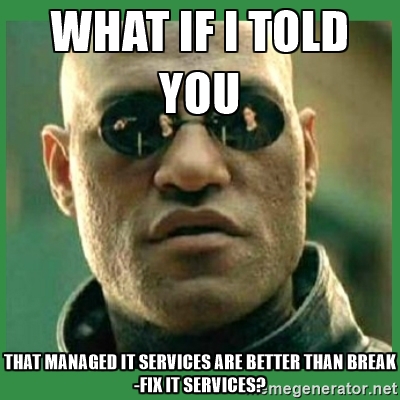
Another classic example is the “Matrix Morpheus” meme, which places text over an image of Morpheus from The Matrix to describe a revelation. According to KnowYourMeme, this meme often “belittles futile or petty behavior.”

ib meme 2

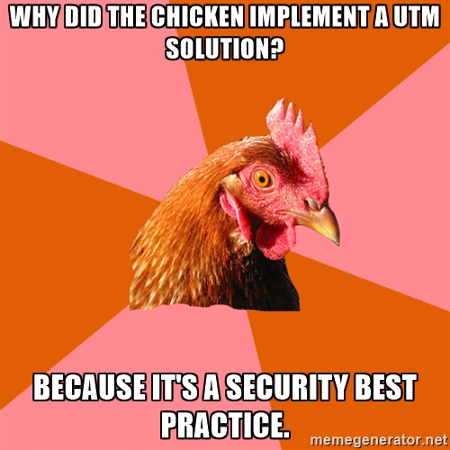
Some memes are often funny simply because they aren’t funny. For example, the “Anti-Joke Chicken” explicitly aims to find humor out of something that’s honestly not all that funny. The beginning text often tells the beginning of a joke, but instead of a hilarious punchline, it regresses into an obvious statement–usually something that makes logical sense, or something unexpected.

ib meme 3

It’s funny because it’s not funny. Or, maybe it’s not funny at all. We’ll let you decide.

Making memes that you can use for your business is easy and free. In fact, it can even be fun, if you’re doing it right. There are plenty of meme generators online that you can use to make silly pictures. However, you should take these thoughts into consideration when making memes to either share on social media, or to send to your coworkers.

Stay Relevant to Your Goods or Services
If you want to use memes for your business, you need to first figure out what theme you want it to follow. It should be aligned with the services that you offer.

Use the Right Image
Once you’ve figured out the theme for your meme, you can proceed to find the right image for it. We recommend doing some research and looking at examples of previously existing memes, but be warned; the Internet has many memes, many of which may be offensive.

Keep the Audience in Mind
Your memes should appeal to your target audience, especially if that audience consists of young people that frequent the Internet.

Be Funny
At their very core, memes are meant to be funny and humorous. If they aren’t, you’re not doing it right.

Share it on Social Media
The point of a meme is to bring light-hearted attention to your brand and to be shared. You can do both by exposing it to many followers on social media.

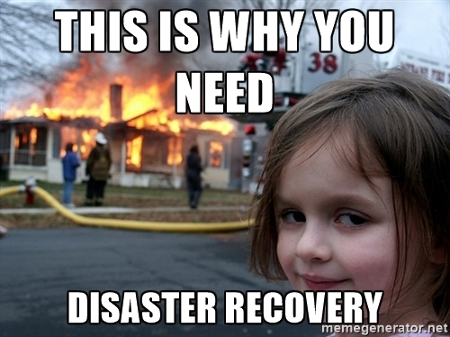
For an example of how you might apply a meme to the real world, we’ve made this one using the “Disaster Girl” meme character:

ib meme 4

Two notes: 1) Get your point across by finding a meme character that’s relevant to your goods and services, and 2) Use a combination of humor and a call to action to inspire action from the viewer. If you found this on your social media news feed, would you laugh at it? We hope so.

So, have we managed to pique your interest in Internet memes? Let us know in the comments, and be sure to subscribe to our blog. Also, leave your favorite memes; we like a good laugh.

no_way_to_backup_400.jpg

How NOT to Maintain a Backup

no_way_to_backup_400.jpg

A data loss incident is considered a major disaster scenario, especially for small and medium-sized businesses. All it takes is one moment to lose your business’s entire data infrastructure. We’ll walk you through a story that should serve as a cautionary tale, one that hopefully teaches you to adhere to data backup and disaster recovery best practices.


Marco Marsala, a hosting provider, posted on a server forum looking for advice on how to deal with a major issue he encountered while trying to delete a few files. He had utilized what’s called the “rm-rf” command with undefined variables, which wound up destroying all data on the system. Like any good hosting provider, he had backups of the files, but, like a dumb-dumb, he had the backups stored on the system that he accidentally wiped. What a mess.

This is actually a similar blunder to one that Pixar experienced, almost deleting Toy Story 2 prior to its release.

As a result of Marsala’s negligence, all of the data that his company had stored was destroyed. This included the data of 1,535 customers, whom he had built and hosted websites for. Without any backups stored off-site, he had no way to recover the data.

As you might expect, the responses that Marsala received from other users of the online forum were quite negative. Many completely dismissed the possibility that his company could recover from such a devastating failure, and others questioned his abilities as a hosting provider. One poster even went as far as recommending that Marsala seek legal counsel, rather than attempt to restore the data, predicting that Marsala was “going out of business.”

The conclusion: Marsala’s best chance of recovering from this major blow was to recruit help from a third-party data recovery firm. Fortunately for him, the company was able to recover his files, but that doesn’t change the fact that his simple mistake was a huge hit to his company’s finances. The company suffered from fees associated with the disaster recovery process, as well as reduced income from the loss of business suffered as a result of his negligence.

The lesson: neglecting to follow best practices got Marsala in some hot water, and his failure basically invited disaster to his doorstep. Following the accepted best practices of data recovery could have easily prevented the situation from escalating as quickly as it did. In fact, Marsala’s reason for distress (user error) is one of the most common reasons to use a backup and disaster recovery solution, a solution that stores your backups off-site on a separate system.

Storing your data off-site allows your organization to avoid the many causes of data loss, including user error, fires, electrical surges, hardware failure, theft, and so much more. This minimizes the risk of these events threatening your business’s operations.

How do you manage your business’s data backups? Are they stored off-site, and do you have a system in place to rapidly deploy them in the event of a major disaster? If you’re uncertain, reach out to NuTech Services at 810.230.9455.

lost_deleted_data_400.jpg

Find Out What REALLY Happens When You Delete Your Data

lost_deleted_data_400.jpg

You understand that the Recycle Bin is the place where deleted files go, and you know that emptying the Recycle Bin is how you dispose of files that you no longer need. What you might not know is that emptying your Recycle Bin does not guarantee that your files are gone at all, and that they’re probably still available on your PC.

The problem here is that you have to go through an extraordinarily complex process in order to truly “delete” files from your devices or hardware. Deleted files can still be accessed if someone knows where to look. This usually happens in the form of law enforcement personnel, like detectives, digging through a suspect’s computer. Even if these criminals deleted files from their computers, law enforcement knows that deleted data isn’t necessarily “deleted.”

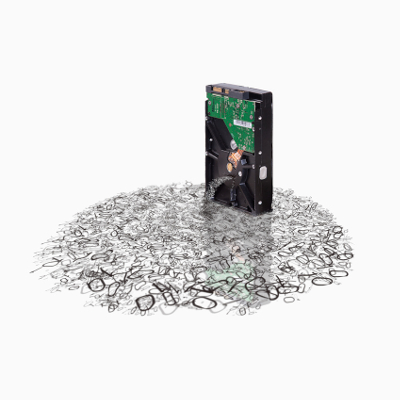
When you drag your files from one location to another, like when you move your files to the Recycle Bin, you aren’t moving every single piece of data associated with that file. Instead, it’s just redirecting your computer to where to access the data, which could be in several places scattered across the hard drive.

TechQuickie explains how this works: “The way your operating system knows where to find all the pieces [of your data] is… through the reference to it on the Master File Table. So back to deleting stuff, removing a file from the Recycle Bin, only removes the Master File Table reference that points to the pieces that make up that file puzzle, and registers that space that it used to take up as ‘empty.’ This gives the operating system permission to write over it, but that does not mean that, right after you clean out your Recycle Bin, that the file is gone. Not by a long shot.”

If a criminal were to delete incriminating files from their PC and they didn’t take the opportunity to perform any additional activity on their PC, this information hasn’t been overwritten and can still be pieced together by law enforcement. Detectives and law enforcement agencies are in possession of special programs that help them perform such feats, accessing deleted information that’s scattered across hard drives to piece together the entire file.

By this same logic, it’s imperative that you contact a trusted IT professional, like those at NuTech Services, before you assume that data is deleted from your hard drive. This is especially important following a data loss disaster, like a hardware failure. Depending on how severe the disaster is, we might be able to use the same tools that detectives use in order to put your files back together, but of course, we can’t make any guarantees.

The best way to approach data recovery is to revert to a recently backed-up copy. This is why it’s so important to routinely back up your company’s data. We recommend that organizations back up their files with a backup and disaster recovery (BDR) solution. It’s the best way to guarantee your data’s recovery, even if it’s deleted. One of the best parts of BDR is that it works equally as well for both accidental and intentional data loss caused by user error or hacking attacks.

Now that we’ve let you know about what happens when you delete a file, how are you going to approach data loss and disaster recovery? For more information about how to recover deleted information, give us a call at 810.230.9455. We can also show you how to wipe your hard drive so you can know the deleted data is gone forever.

b2ap3_thumbnail_how_are_you_storing_data_400.jpg

What’s the Best Way to Store Your Company’s Data? Find Out!

b2ap3_thumbnail_how_are_you_storing_data_400.jpgMarch 31st is World Backup Day! This occasion begs the question, “How much thought have you put into where your data is stored?” If you haven’t thought through your data storage options, then your files may be located in several different places. This could make accessing your data difficult, as well as jeopardize your network’s security. To get you started, let’s take a look at these four data storage options.

Storing Your Data Locally
The most common way for businesses to store their data is over their internal networks, like on in-house server units and workstations. Storing information locally offers companies the most control over their data, and with the right protections in place, it can be a very secure option. However, as is the case with every data storage scenario, if security isn’t given enough attention, then storing data locally can actually put your information at risk. One advantage of utilizing an internal network for data storage is a quick and reliable connection that’s not dependent upon the Internet. Although, this is at the financial expense of having to maintain your own IT infrastructure, which includes workstations, cables, server units, routers, and more.

Storing Your Data in the Cloud
Storing data in the cloud is an option that’s grown tremendously for businesses of all sizes. The advantage of the cloud is that it offers organizations anytime/anywhere access to their data, which is super convenient when dealing with multiple office locations and remote workers. Plus, the fact that you don’t have to maintain your own IT equipment will save you a boatload on your operating budget.

On the control side of things, storing your data in the cloud makes you dependent upon the policies of your cloud service provider. This is why it’s important to find a cloud provider that best suits your company’s data needs, instead of just going with the first provider that comes along. The same can be said of cloud security. If you’re dealing with sensitive information or data that requires strict security protocols, then you’re going to want to work closely with your cloud service provider to cover your bases.

Storing Your Data Off-Site
Off-site data storage is similar to storing your data in the cloud. You can access it from a remote computer, and with a reliable connection, it will be there when you need it. One of the most popular uses for off-site data storage is backing up data. For example, if a disaster strikes your company’s office and damages your in-house IT infrastructure, then you’re going to be glad that your data is off-site and safe.

Backup and Disaster Recovery
One great tool that takes advantage of storing your data both in the cloud and locally is a Backup and Disaster Recovery solution. BDR takes multiple snapshots of the data on your network and sends them to the cloud where they can be quickly retrieved, should you ever need it. Plus, if your server unit stopped working for any reason, BDR can then serve as a temporary replacement while the server issue gets resolved. This kind of convenience is possible thanks to BDR’s ability to securely store your backed up data off-site, and have it be available for when you need it the most.

For more information about data storage, the cloud, and BDR, give NuTech Services a call at 810.230.9455.