354842023_ai_400.jpg

Artificial Intelligence and the Tools Designed to Improve Business

354842023_ai_400.jpg

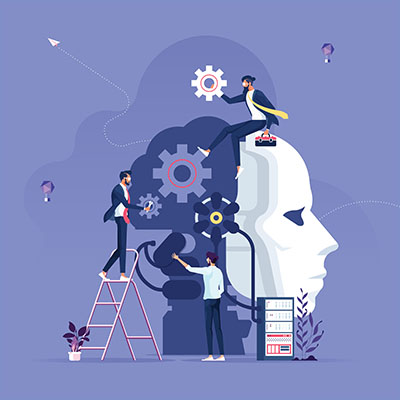
AI has been one of the leading innovative topics to hit the technology world over the past couple of years. At first, people thought that AI was only the process of creating machines that will inevitably destroy the human race, and didn’t understand that algorithmic machine learning could have stark benefits for business and society. Today, AI can be found in all types of different pieces of software. Let’s take a look at a couple of ways AI is currently being used in business.

#1 – Cybersecurity

One of the most important uses of AI is for cybersecurity, most of which is identifying actual threats and eliminating them before they can cause any problems for a business. There are a lot of potential threats out there and today, IT professionals are using AI to avoid spending time on situations that turn out to be non-issues. AI can be used to detect intrusions, identify vulnerabilities in software, and find malicious code that has already been installed on the system. 

#2 – Customer Service

AI’s most noteworthy application has been the incorporation into customer relations. Chatbots and other technologies that are fueled by machine learning can provide a lot of value for most organizations that simply cannot afford to employ a complete product or service support team. Users may not even realize that they are engaging with an AI as many newer solutions learn rapidly to provide customers with a fast, reliable interface in which to get support. 

#3 – Operational Efficiency

For some time, automation has been the name of the game when businesses attempt to streamline operations. Today, AI is beginning to provide a more diverse set of companies the opportunity to leverage more sophisticated tools. Since AI is constantly evolving and developing, more and more businesses are able to build tools around AI/machine learning than ever before. AI allows businesses to automate more of the mundane and repetitive tasks that have hindered productivity and progress, reducing costs, and providing a substantive boost in efficiency.

There may not be AI beings peppered among us yet, but AI is making a big push to be the most important emerging technology of the 21st century. If you would like to learn more about getting the results your business wants from its relationship with technology, return to our blog or give us a call at 810.230.9455 today.
AdobeStock_80613642_400.jpg

Big Data for the Small Business

AdobeStock_80613642_400.jpg

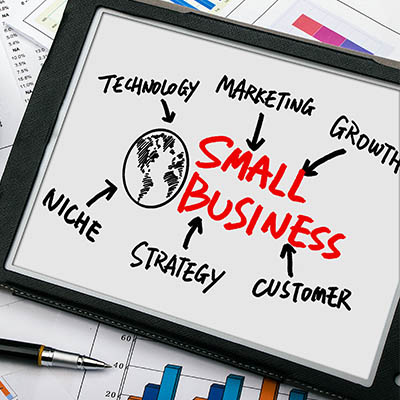
Today, large companies typically use their data to help them make more educated business decisions. This strategy can actually benefit smaller businesses as well. However, they often don’t think they have enough data to facilitate analytics or BI (Business Intelligence) platform. Let’s take a look at how small businesses can use their big data. 

To Identify Trends

The number one thing you need to know about data analysis is that the data you use needs to be structured in a way to allow you to get the most accurate information possible. This isn’t always easy. In order to put your business in the right position you can’t just rely on decision makers to go with their gut reaction, you need a definitive plan fueled by empirical data so that you avoid huge costs to solve small problems. The simplest way to do this is to identify trends inside and outside of your business. You can do this through a dedicated business analytics platform, using your organizational data to help you make sound business decisions. 

Improving Operational Effectiveness

Another part of the business that can be improved through the use of analysis is operations. Traditionally, the more efficient your business is, the more effective it is. This doesn’t change because you have data; but, with the data you can get a better perspective about how your business works, how your customers interact with your company, and a lot more. The better you understand the separate parts of your business the more you can confront its pain points and build effectiveness. 

Shifting Your Revenue Generation Strategies

Since you are in business to make money, it stands to reason that using any resources to help you do that is beneficial for the company. Combing through your operations and marketing data can provide opportunities that you didn’t know were there. It can make all the difference for the small business that needs to transition quickly in order to sustain operations. 

It’s been said that data is the new oil. That may or may not be true, but for the small business, drilling into your data to see the best way forward is a solid practice that will become commonplace before long. To get out in front of it, call the IT professionals at NuTech Services at 810.230.9455 and we will help you get started using your data to benefit your business today.

pyramid_business_intel_400.jpg

Four Major Benefits of Business Intelligence

pyramid_business_intel_400.jpg

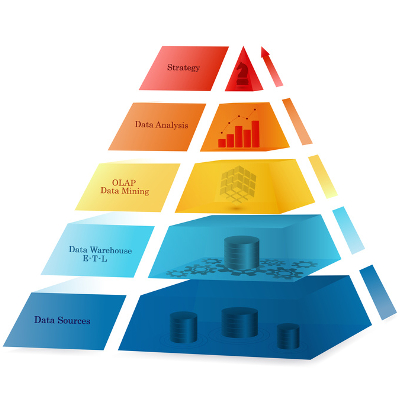
Utilizing the data that you have acquired is a process that is referred to as business intelligence. Regardless of your business’ size, business intelligence solutions can deliver definite benefits. We’ll review a few of these benefits here.

Business Intelligence answers business questions
With the right tools, you can extract and analyze raw data in real-time to inform your business decisions. These tools will also organize this data into a comprehensive and often visual format. This enables any member of a team to potentially make informed decisions as needed, streamlining whatever process that resource is working on.
This data can also be leveraged to improve client profiles and target promising contacts. As a result, profits can be increased through decreasing wasted funds spent on poor fits. On the same token….

Business intelligence provides opportunities to cut costs and time investments
Through the use of metrics and data derived from business intelligence measurements, you can identify where your available funds are most effectively used, and when it may be more effective to allocate them to another effort.

Additionally, business intelligence can enable your business to leverage automation, eliminating the risk of human error while freeing up your staff to work on those tasks that automation isn’t well-suited for.

Business Intelligence delivers valuable insights
Without business intelligence tools, a company could be stuck waiting until the end of a campaign or initiative to discover whether or not it was effective. However, with BI at your disposal, your company can get a head start on tracking satisfaction, profitability, and other key metrics in real time. This allows you to identify and resolve issues in your campaign, so you can take the steps needed to fix them before the campaign is a wash.

Business Intelligence promotes collaboration and cooperation
Another great benefit to business intelligence software is the data sharing and exporting capabilities it usually has. In a business climate that relies on being in-the-know, your team needs to have the ability to access the latest data you have available without issue.

Need help putting business intelligence solutions in place? NuTech Services can help! Give us a call at 810.230.9455 today.
big_data_bestseller_400.jpg

Can an Algorithm Predict the Next Bestselling Novel?

big_data_bestseller_400.jpg

It’s not always easy to identify what will be hip and trendy years from now, but big data is attempting to bridge this gap. In general, due to the unpredictability of human behavior, it can be difficult to spot cultural anomalies before they happen. Despite these challenges, algorithms are being applied to various practices in both the business world and elsewhere. One innovative way in which it’s being used is by attempting to predict the next bestselling novel.

Jodie Archer, author of an upcoming book called The Bestseller Code: Anatomy of the Blockbuster Novel, claims to have found an interesting way to use algorithms and big data to discover what’s hot in the literature department. This particular algorithm, called the “bestseller-ometer”, looks at what particular qualities make for the most successful fiction. As reported by The Atlantic, the algorithm can identify a bestseller more than 80 percent of the time.

This success is attributed to the algorithm’s ability to identify bestselling fiction from the New York Times bestseller list. Basically, this is one of the many attempts that computing systems have made toward predicting the behavior of the human brain, and it could change the way that publishing companies accept and publish manuscripts. After all, if a book doesn’t sell, why publish it?

The biggest question that this algorithm attempts to answer is: “Why do we all read the same book?” It’s compelling, to say the least. Everyone has different tastes in literature. The academic who carries a pocket thesaurus around in his suitcase might find an escape in a good science-fiction short story or another piece of genre fiction. On the other hand, a book that’s destroyed by critics might be surprisingly successful. Thus, readers find different traits to be more valuable than others.

Aided by English professor Matthew L. Jockers, Archer built the algorithm to find out what makes a reader so interested in a certain piece of literature. The Bestseller Code looks at the various processes and strategies used by the algorithm to identify the context and other important parts of popular fiction. The list is quite long, but it includes a plethora of tropes that are generally found in literature, including:

  • Authoritative voice
  • Colloquial (everyday) language
  • Action-oriented characters
  • Cohesion
  • Human closeness

One other major idea that needs to be taken into account is that of the “zeitgeist,” or time-sensitive concepts. Basically, what’s contemporary is what sells. This adds an element of the unknown and makes it difficult to predict what will be popular in the near future. There’s also the interesting notion of the human element, which makes it difficult, if not impossible, to foresee how they will act in the future. In a way, it makes sense that a human should be picking the next bestseller, as the algorithm cannot empathize with characters or be moved by a good story. After all, a computer can analyze semantics as much as it wants, but it’s not the one reading the book. That’s the job of readers all over the globe.

While it’s possible that big data can make strides in the way we understand how humans think, it’s important to understand that humans are unpredictable by nature. Any attempts to predict the future based on statistics or metrics, while seemingly helpful, could mean nothing, as people often behave irrationally or beyond reason. While technology is a great way to bridge this gap, it’s still important to remember that people are people, not machines.

What are your thoughts on using big data to find new audiences and better understand your own market? Let us know in the comments.

b2ap3_thumbnail_big_data_rainforest_400.jpg

Big Data is Saving the Biodiversity of Tropical Rainforests

b2ap3_thumbnail_big_data_rainforest_400.jpgWhen you think about Big Data, thoughts typically turn to how businesses use the technology to collect and analyze massive amounts of information for the purpose of making sweet profit. Although, there’s much more to Big Data than making money; scientists are using the technology to help save the rainforest.

We shouldn’t have to convince you of the importance of the rainforest. It’s estimated that rainforests are responsible for producing 40 percent of the Earth’s oxygen. Therefore, anything that’s done to help preserve the rainforests is helping to preserve all life on the planet. This is why groups like Conservation International (CI) exist.

CI is on a mission to preserve the natural biodiversity of the rainforest. Such a mammoth task can only be accomplished if the scientists of CI first understand the environment of which they have pledged themselves to protect. This requires collecting and processing a vast amount of information directly from the rainforest itself, which is where Big Data comes in.

Making the job of CI difficult is the sheer vastness of the rainforest. In fact, the Amazon rainforest alone covers 2,123,562 square miles. How can a small team of scientists possibly monitor such a large area? Their approach is to turn the ecosystem of the rainforest into an IT system, consisting of more than 1,000 cameras designed to monitor and record information, like activity from animals and even poachers, as well as the effects of climate change and land usage.

According to Sandy Adnelman, chief scientist at CI, this process can be likened to a check up for the planet. For example, when you get a physical from your doctor, they check your body’s most crucial parts and systems. In the same way, scientists like Adnelman are strategically monitoring the most important parts of the rainforest.

To give you an idea of just how helpful Big Data technology is for these scientists, it’s important to remember that the previous way of collecting footage was done manually. CIO explains:

Because the camera traps are located in some of the more remote locations on earth, there’s no infrastructure. Teams have to manually collect the data from the traps and upload it, at which point CI scientists run a series of scripts and models to identify the various species appearing in the images. They then blend that data with climate measurements (precipitation, temperature, humidity, solar radiation, etc.), data on trees (growth, survival, deforestation, etc.) and land use data from public sources to create a model of the health of the animal populations at the sites and how they are changing over time.

The previous process was a huge undertaking that took up vast amounts of the scientists’ time. For these Planeteers, this was a point of frustration because, when it comes to saving the rainforest, time is of the essence. Thanks to Big Data analytics, scientists can now process and analyze the collected rainforest data up to nine times faster than the previous method. Additionally, the results are far more accurate. This allows scientist to make better use of their time and monitor more foliage.

In the same way that Big Data helps improve operations for these scientists, it can improve the workflow of your business. If you’ve got a process that involves collecting and crunching large amounts of information, and it’s eating away at your budget and resources, then check with NuTech Services for a Big Data solution that will make operations easier. In the same way, if you feel like your business would benefit from knowing more information about your target market, we can find a Big Data solution for this too.

Call us today at 810.230.9455 to upgrade the ecosystem of your company’s IT system.

b2ap3_thumbnail_information_is_made_of_data_400.jpg

Does Your Business Understand the Difference Between Data and Information?

b2ap3_thumbnail_information_is_made_of_data_400.jpgIT requires several factors in order to function properly. First of all, it can’t exist without information, and this information can’t exist without data. Technology is what creates data so that your company can take advantage of changes in the industry and business environment. It might seem like a lot to take in, but understanding the flow of data is necessary for a business owner. Otherwise, you won’t be able to take advantage of it to jumpstart sales and profitability.

Granted, the difference between data and information is a bit difficult to understand in technical terms. Most businesses use these terms as if they are one and the same. While this is an acceptable practice in the industry, and it makes more sense to rationalize the two for marketing purposes, there’s still a significant difference between the two of them that should be understood by those who utilize technology.

In technical terms, data looks like a bunch of 1s and 0s in rapid succession. Naturally, this doesn’t make any sense to a human reading it; but to a machine that can interpret it, the data is able to take tangible form and compile the information we know and love that helps business owners make the best decisions for their organization.

This means that the process your business takes to collect data is exceedingly important. If the information isn’t accurate, there’s a chance that it can affect decisions when moving your business forward. The process of turning data into information is complicated, and there’s plenty of room for error. If even one part of this process is disrupted or weakened, the end result will reflect this.

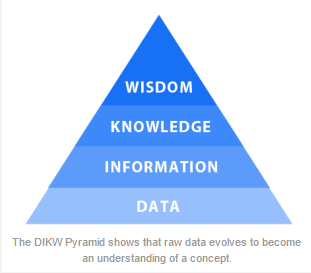
The DIKW Pyramid makes it much easier to analyze and understand the process through which data is transformed.

dikw pyramid

Business 2 Community provides us with a salad metaphor to describe the DIKW pyramid levels:

Data: I have one item. The data displays a 1, not a zero.
Information: It’s a tomato. Now, we understand the item and its characteristics.
Knowledge: A tomato is a fruit. We can identify patterns in the information and apply them to the item.
Wisdom: Tomato is never added to a fruit salad. There is an underlying, commonly understood principle that governs the item’s purpose.

B2C explains further by claiming that “bad data costs time and effort, gives false impressions, results in poor forecasts, and devalues everything else in the continuum.” Therefore, it’s necessary that the data your business collects allows for accurate and efficient analysis. Otherwise, your choices won’t be of the highest quality possible, and they could affect the functionality of your business in the future.

On the other side of the coin, if your technology is operating at maximum efficiency, and your communications are properly planned and managed, the chances of your data being affected by leaks or corruption is significantly reduced. As shown by the DIKW pyramid, data is the foundation for a business. Without it, you cannot hope to continue. NuTech Services can help your business ensure that your data is safe and available when you need it with our Backup and Disaster Recovery solution. Give us a call at 810.230.9455 to learn more.