
disasterRecoveryPlan_89993556_400.jpg

How to Prepare to Outlast a Data Disaster

disasterRecoveryPlan_89993556_400.jpg

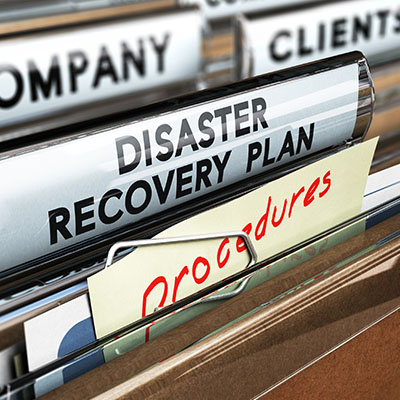
When your business experiences a significant disruption, a disaster recovery plan is critical to getting back to normal. Some disasters are the result of external threats, while others come about from internal problems with your company’s operations. Here are some things you should consider when looking into potential disaster recovery solutions to help you get through a data disaster.

Disaster recovery, as far as IT is concerned, focuses on protecting your data and information systems, but it can also refer to the broad overarching strategy you use to keep your organization operational in difficult times. Companies today handle more data than ever before, and customers are much more cognizant of when companies don’t appropriately manage or protect their data, so it’s more important than ever to have a strategy in place to keep it safe and protected. Here are three things you should properly manage for your disaster recovery plan.

Planning is Imperative

First, we want to dispel the misconception that disaster recovery is a big, complicated process and strategy that needs to be handled before you take care of general, everyday business. This is not true; many small businesses can leverage a comprehensive data backup and recovery plan with relative ease, although larger organizations might require more details to be addressed, specifically how systems are to be recovered, as well as applications and working conditions.

It doesn’t matter what type of company you are–there are certain aspects of data recovery that always need to be addressed. For example, you’ll need to know how your backup system works, who is in charge of it, and what the responsible recovery point objective (RPO), or the amount of data you need to back up, is. Furthermore, knowing these details can dramatically reduce the time it takes to get back in business following a disaster to help you meet your specified recovery time objective (RTO).

Test Your DR

One major problem that organizations have with their disaster recovery processes is that they aren’t routinely testing them. Nearly a quarter of businesses have never tested their disaster recovery plan, and considering the dire consequences of a failed data recovery, this should be a major cause for concern. You should test your platform regularly, whether it’s once a month, once a quarter, or even once a year.

Testing your disaster recovery system can interfere with your business’ operations and potentially even cut into productivity, depending on when it takes place. Whenever you test your systems, you’re bound to find something wrong with it, so you’ll find your DR strategy changing over time as you address these issues. If you can appropriately address these issues during the testing phase, you’ll have a better chance when you actually need to seriously use your DR strategy.

The Human Element

While it might seem like your disaster recovery strategy is governed by your IT infrastructure, remember that your IT infrastructure is governed by people. You’ll want your DR strategy to take human behavior into account. For example, if your company’s location is compromised by a disaster, do you have the ability to get your business’ employees access to the data they need to effectively do their jobs?

The COVID-19 pandemic made it that much more apparent, as organizations that did not have contingencies in place to handle the remote operations struggled to adjust to the new normal. Businesses that did not have the capital to implement the appropriate technologies and accommodations for remote employees had significant problems in the early days of the pandemic, many of which could have been prevented if they had ensured continuity through work-from-home strategies and other possibilities in the event your office is inoperable short or long term.

NuTech Services can help your business implement and test a business continuity solution. To learn more, reach out to us at 810.230.9455.
network_attached_backup_400.jpg

No Business Should Be “Happy” to Lose 24 Hours’ Worth of Data

network_attached_backup_400.jpg

A new study by Disaster Recovery on the state of data backup for enterprises yields some rather disappointing results, particularly when it comes to the percentage of companies not enacting data backup best practices. Companies that fail to continuously backup their data, or fail to even back it up at all, are gambling with their future.

For starters, one of the most shocking finds from the study is how 72 percent of businesses are “happy to lose” more than 24 hours’ worth of data after a cyber-incident. When one looks behind the scenes as to why this is, they may find it in a company’s data backup practices. This is especially the case if a business is utilizing tape backup–a data backup procedure that typically backs up a company’s files once every 24 hours.

Admittedly, a business having tape backup is better than not utilizing any form of backup whatsoever; a category which 13 percent of businesses find themselves in, according to the study. However, being “happy” that your data backup needs are covered vs being “happy” about losing 24 hours’ worth of data should be viewed as two entirely different forms of “happiness.”

To clarify our point, consider your SMB in the following IT scenario: At the end of the work day, a designated employee goes to perform a backup of the day’s work by swapping out the old tapes for new ones. The following day, an employee responds to a spam message by clicking on a malicious URL contained within the message. This dumb move ends up infecting your entire network with ransomware, completely disabling operations. Thankfully, you’re able to deal with the ransomware by pulling out the backup tapes and restoring the data from the previous day. While such a move may make you “happy” that you’re able to resume operations, the inconvenient fact remains that your company just lost an entire day’s worth of data, plus several hours (if not more) to restore the data from a backup.

Now, some businesses may operate in an industry that doesn’t handle a ton of data on a daily basis. For example, think of a small retail storefront that’s operated entirely by the owner and all the business dealings take place on a single PC. A small business like this might not take too hard of a hit by losing 24 hours’ worth of data, but it would nevertheless be a costly inconvenience.

For the modern SMB leaning heavily on technology and utilizing enterprise-level solutions, the amount of data generated in a single day can be significant, and more so for companies whose business model revolves around generating digital content, like marketing firms, schools, hospitals, etc. If such an organization were to lose 24 hours’ worth of data, the consequences could range from very expensive to catastrophic.

It’s not overly complicated to do the math and put numbers to such a data-loss scenario. Consider how many payroll dollars are spent on paying employees to generate and handle data, then factor in how much money is made in a single day thanks to all of the data that’s generated. You’ll also want to consider how much money you’ll lose from having your company’s operations miss out on an entire day’s worth of work. Chances are, you’ll be making up the progress lost from that day over the course of several work days. When all of these calculations are compiled, there’s an extremely high chance that you won’t be “happy” with the results–and hopefully be much more motivated to backup your files multiple times each day.

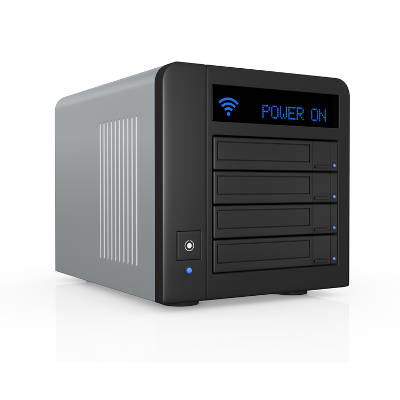
To that end, NuTech Services offers a cloud-based data backup solution that makes copies of your files as often as every 15 minutes. Plus, unlike tape backup, the entire data backup process is automated, meaning that you don’t have to make a nightly task out of swapping out tapes. To equip your business with a backup solution that you can truly be happy with, give NuTech Services a call at 810.230.9455.