
How_Does_the_AI_400.jpg

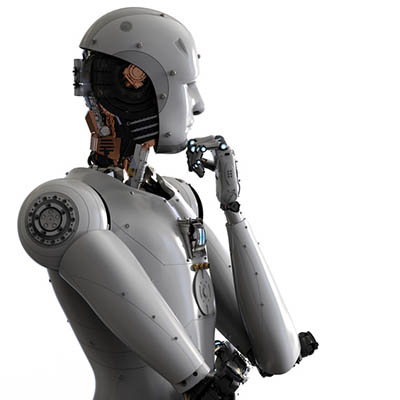
How Does the A.I. in Reality Measure Up to Hollywood’s?

How_Does_the_AI_400.jpg

Figuring out how to utilize platforms that depend on machine learning to boost an organization’s bottom line is one of the biggest puzzles for every modern business owner. After all, seemingly every new technology concept can be leveraged into enhanced profitability if it is rolled out right. In this case, many organizations have found ways to use human-created machines to learn how to do tasks that would be deemed too expensive if humans were to do them.

Over the years, A.I. has been a frequent topic of discussion, and one that fiction authors (especially those in science-fiction) have used for all types of stories. In Hollywood, the artificially intelligent character has been around for a long time, a lot longer than the A.I. businesses are using to enhance their profitability. Today, we are going to look at how A.I. is portrayed in media and how it differs from the reality of modern A.I.

The Start of A.I. in Reality
In 1956, 30-some scientists met at the Hanover Inn on the campus of Dartmouth College in New Hampshire to discuss a “strange new discipline”. The talks were about how to build a machine that could think and went on for weeks. What came to be known as the “Dartmouth workshop” founded a quest for A.I. The discipline almost died off several times, but if you look at the world we live in today, it’d be hard to consider that. These days it seems like every business is using some sort of software platform that features what those at Dartmouth a half-a-century ago could only dream about. Machine learning has seen major innovations in many different industries, and we are closer than ever to deep learning–the innovation needed in machine learning to create machines that think like we do.

The Start of A.I. in Hollywood
In Hollywood, however, deep learning is a thing of the past. Machine sentience is commonplace and stories of A.I. are typically approached as commentary about the tyranny and hubris of human beings. A.I. works for so many different types of story arcs as setting an A.I. up as the hero works, setting them up as the victim works, and setting them up as a villain works. In fact, since humans haven’t mastered the technology, writers do what they do best: use creative license to create A.I. characters that are more like humans than machines. The first robot A.I. was Robby the Robot in 1956’s Forbidden Planet, but 1931’s Frankenstein was the first time an artificial being was brought to life on the big screen. A.I. is often used as a plot device for entertainment’s sake, or as commentary, but media hasn’t been able to completely represent where we are at with the technology today because, thus far, A.I has been created to help humans solve problems, not to actually have artificial consciousness. Here are a few movies that represent different uses of A.I. and how they stack up against modern A.I.:

2001: A Space Odyssey (1968)
Directed by: Stanley Kubrick.
Written by: Stanley Kubrick and Arthur C. Clarke.
Starring: Keir Dullea, Gary Lockwood, Williams Sylvester.
Summary: The sudden appearance of a giant black monolith acts as a portal through time, transporting the view from prehistoric Earth to a future where space exploration is commonplace. On a manned trip to Jupiter, two astronauts are tricked by a crafty mission computer, a HAL 9000 series that claims to be “foolproof and incapable of error.” One of the astronauts is killed by HAL, while the other one risks everything to inflict retribution.
How the A.I. stacks up to modern A.I.: The HAL 9000 is a pretty decent representation of what a future A.I. system is going to be used for. The decision to kill the crew, and its subsequent pleading toward the end of the film show situations in which HAL was more like a malevolent human than as a sentient machine. Today’s A.I. is all about using data to solve organizational problems, but “feelings” is not in the equation at this time.

Blade Runner (1982)
Directed by: Ridley Scott.
Written by: Hampton Fancher and David Webb Peoples from a novel “Do Androids Dream of Electric Sheep?” by Philip K. Dick.
Starring: Harrison Ford, Rutger Hauer, Sean Young, Edward James Olmos, Daryl Hannah.
Summary: Blade Runner is set in 2019 Los Angeles and features former police officer, Rick Deckard (Ford) who works as a Blade Runner, someone who hunts down and retires replicants–artificial beings who seem as human as the humans themselves. In the course of action, it’s hard to determine who is in the right, as the lines are completely blurred between replicants and the people tasked with killing them.

How the A.I. stacks up to modern A.I.: The replicants in Blade Runner were man-made men (and women). From their appearance to the fact that they implanted human-esque memories in the machines told a story about how dangerous it can be when people try to play God. So, while it makes for great cinema, the replicants being indistinguishable from their human counterparts is questionable. There hasn’t been any technology developed to make machines more human, they have to be told to try to do things the way humans do in order to learn as humans do, making the whole premise impossible to implement with today’s limited A.I. technology. However, Google’s most recent new development, called Google Duplex, will allow Google Assistant to make phone calls for you. For example, if you ask Google Assistant to make a haircut appointment for you, it will call your salon, as if it were a person, and negotiate a time to fit your schedule. The results are both really cool, and a little creepy, but in the end, if Duplex can save you a few minutes here or there and not make business think they are getting fake auto calls, we’re all for it.

WarGames (1983)
Directed by: John Badham.
Written by: Lawrence Lasker, Walter F. Parkes.
Starring: Matthew Broderick, Ally Sheedy, John Wood, Dabney Coleman.
Summary: David, a hacker a decade before hacking became commonplace, breaks into NORAD and programs the WOPR, a military strategy computer, to play out war games until it has launch codes and launches hydrogen-bomb-tipped missiles at the Soviet Union. After finding the key to disarm the missiles, David and his friend Jennifer (Sheedy) track down the system’s creator to help keep the U.S. from launching Global Thermonuclear war.
How the A.I. stacks up to modern A.I.: WarGames examines the nature of a machine learning computer and how its role could be critical for the sustainability of the human race. The answer, as hokey as it is, to keeping the WOPR (also called Joshua after the developer’s dead son) from launching missiles is Tic-Tac-Toe. The WOPR learns that nuclear war and tic-tac-toe are pointless. That is the kind of fundamental application that modern A.I. could work out, and while we don’t suppose the U.S. military is looking to integrate A.I. to our national missile defense, the A.I. of WarGames was a pretty good representation of how A.I. could learn what are typically very human lessons.

Her (2013)
Directed by: Spike Jonze.
Written by: Spike Jonze.
Starring: Joaquin Phoenix, Amy Adams, Scarlett Johansson, Rooney Mara, Olivia Wilde.
Summary: Set in the very near future, recently divorced writer, Theodore Twombly (Phoenix) purchases a companion bot named Samantha (Johansson). She is an A.I. assistant but is exactly what Twombly needs and ends up falling in love with it. As their relationship develops, he becomes happier, then stagnates and is forced to break it off when Samantha describes how she can be in love with thousands of people simultaneously. How the A.I. stacks up to modern A.I.: The movie Her provides a fair amount of foresight to where the virtual assistant program is going. If you spend any time thinking about the future of technology it becomes evident that the more engaged you can get with your virtual assistant, the better it will work for you. Samantha has a superior understanding of language, fluidity to “her” voice, reasoning, planning, and most importantly for our purposes, obvious learning capabilities. The fluctuations in its emotional state don’t do the representation of the A.I. justice, but all-in-all Her is an interesting character study about how artificial intelligence could be designed to treat humans down the road.

Ex Machina (2014)
Directed by: Alex Garland.
Written by: Alex Garland.
Starring: Domhnall Gleeson, Oscar Isaac, Alicia Vikander.
Summary: A billionaire, Nathan Bateman (Isaac), fixes a contest to get one of his employees, Caleb (Gleeson) to come to his remote laboratory to take part in a Turing test of a new A.I. that he’s developed. The A.I. is kept in a humanoid android named Ava (Vikander). When she convinces Caleb she is being tortured, and he finds out Bateman’s dirty little secret, he tries to help Ava bust out, only to be duped and left for dead after Ava kills Nathan. She escapes alone on a helicopter.
How the A.I. stacks up to modern A.I.: First, I’ll say that this is one of the coolest of the A.I.-based movies because there is a sense of mystery, much like that inherent with A.I. The solitary genius theory is one of the most used when it comes to A.I. movies (or monster movies) and while the A.I. itself showed well, there is no way that a single person, even one with unlimited resources, could create a functioning A.I. automaton. As far as the deep learning capabilities, the Ava android is what we both aspire to and hope to avoid–which is kind of a good metaphor for the discipline as a whole.

There are dozens of movies with artificially intelligent characters. With people building new A.I.’s every day, the way they are used in reality remains to be seen. In movies, however, they will continue to astound and thrill. Here are some other titles that feature A.I.:

  • Star Wars
  • Short Circuit
  • Alien
  • Terminator 2: Judgement Day
  • The Matrix
  • Bicentennial Man
  • I, Robot
  • Iron Man
  • Transcendence

Do you have a favorite A.I.-fueled film or television show? Are you of the opinion that the A.I. systems we can interact with are close? Are they necessary? Leave your thoughts in the comments below.

entertainment_hacked_400.jpg

Hollywood is Captivated By Fictional Hackers, But Real Hackers aren’t Entertaining

entertainment_hacked_400.jpg

It’s not an understatement to suggest that hackers are a hindrance to business. They take what doesn’t belong to them, and worse than that, they use that stolen information to make off with money, misrepresent individual actions, and ultimately, just cause a degree of added entropy that any business simply doesn’t need. Recently, with the hacker group Anonymous consistently in the news and dozens of corporate hacks resulting in millions of people’s personal information being compromised, hackers have been an increased part of the public consciousness.

On January 10, 2016, television producer Sam Esmail stood on the stage at The Beverly Hilton and accepted the award for Best Dramatic Television Series for the show he serves as showrunner on, “Mr. Robot”. The Hollywood foreign press had chosen the series for this award, despite the show’s non-traditional plot, which centers on an anti-social (and hopelessly schizophrenic) network administrator that spends his nights as a seemingly benevolent hacker. Earlier in the evening the show’s co-star, veteran actor Christian Slater, took home the award for Best Supporting Actor in a Drama Series.

With the success of “Mr. Robot”, and other high-profile films and shows that tell the stories of hackers, there has been a suggestion that the entertainment industry unwillingly romanticizes hacker culture (not that sitting alone in a dark room, having a bad haircut, and wearing giant black army boots are actions that people would normally emulate). Take 2015’s Blackhat, a drama directed by Michael Mann. The movie stars one of the more bankable stars in the world at present, Chris Hemsworth, as a federal inmate (convicted of hacking) that is given a furlough to help his college roommate (and Chinese cyber warfare officer) solve a series of high-profile hacking attacks that cause destruction and chaos. In the movie, Hemsworth plays the role of anti-hero; a character that would be a villain in society, and makes good by doing the very thing he has been incarcerated for.

The representation of hackers as the good guys, or the popular anti-hero, is something that Hollywood has embraced for some time. Hackers are most prominent in movies about hacking, obviously, but they also show up in heist movies, and any other movie in which the story has a computer system standing in the way of resolving their goals. If the villain of the story is a hacker or computer, rest assured that the man or woman coming to save the day is a hacker; one of the only types of characters that can overcome a rogue hacker or computing system.

In reality, however, hackers aren’t as interesting or benevolent. Many of them will break down the barriers guarding your client’s and employee’s most sensitive information if they think they can squeeze a buck out of it. That kind of dedicated opportunism, and, to a lesser extent, schadenfreude, make hackers a deplorable result of computer systems’ prevalence throughout the culture. In Hollywood’s defense, hacking makes for a pretty boring movie, but human oppression or destruction, themes that you’ll find in nearly every good hacker movie, aren’t.

There have been dozens of movies about hackers that have been produced over 30 years. Some of them, like “Tron” and “The Matrix,” are science-fiction films that as a design, play with the concept of reality, while movies like “War Games” and “Hackers” present hackers as cognizant wrong-doers, but again present the act of hacking as a means to a heroic end.

Some of the most noteworthy “hacker” movies include:

  • Tron (1982)
  • War Games (1983)
  • Sneakers (1992)
  • The Net (1995)
  • Hackers (1995)
  • The Matrix (1999)
  • Swordfish (2001)
  • Live Free or Die Hard (2007)
  • The Girl with the Dragon Tattoo (2009)
  • BlackHat (2015)

How many of these titles have you seen? Do you think that hackers have been fairly represented in film, or do you think Hollywood has glorified hacking? Please feel free to leave your thoughts in the comments section beneath the blog.

At NuTech Services, we don’t glorify hackers. We fight them with proactive monitoring and management to ensure that, if someone that doesn’t belong there does try to get into your network, we are there to ensure your network remains safe. For more information about the steps we can take to keep hackers out of your network, call us today at 810.230.9455.

b2ap3_thumbnail_streaming_media_400.jpg

Netflix, Hulu, or Amazon, Which Video Service Makes the Best Gift?

b2ap3_thumbnail_streaming_media_400.jpgSometimes it’s a pain trying to figure out what you’ll be getting your loved ones during the holiday season. Thankfully, there are some relatively fail-safe options for those who love entertainment, like watching television or going to the movies. A subscription to the right video-streaming service might be able to help you save a trip to your local department store and all of the madness that comes with it.

While there are plenty of video-streaming services to choose from, there are three that stand head and shoulders above the rest. Considering how often some people find themselves binge-watching their favorite TV shows on these popular services, it’s a safe bet that your loved ones will appreciate every moment they use the application.

Here’s a quick rundown of what you can expect from the top three online video-streaming services.

netflixNetflix – Starts at $7.99 a Month
Netflix is an exceptionally sought-after service, with well over 65 million subscribers. Though it’s drawn the anger of broadcast television networks, it’s a great alternative, boasting several popular movies and TV shows, as well as some exclusive content. If you want to give Netflix as a gift to someone, you should first make sure that they aren’t already a subscriber. Try mentioning Netflix casually; perhaps ask something like, “Have you checked out that new Netflix original series, Marvel’s Jessica Jones?” Or, if they already have a subscription, you can suggest that you cover the cost of renewal for the existing subscription.

Netflix’s roster shifts periodically, offering new movies or TV shows, while occasionally removing less popular media. This offers a continuous stream of new content to watch; and, to make things better, subscribers have the opportunity to get DVDs mailed to them, if they so desire for an additional fee.

amazon plusAmazon Prime – $99 a Year
Just like Netflix, Amazon Prime is a very popular service, netting around 80 million users at the time of this writing. This means that you should also make sure that your intended recipient isn’t a current subscriber. Prime allows its users to stream entertainment services, like original shows and movies, with an additional benefit; Prime subscribers can rent the latest movies, just like pay-per-view.

Unlike Netflix, however, Amazon Prime comes with a ton of other services that can present more value to your gift’s recipient. Prime offers free, two-day shipping on products from Amazon’s huge web store, which can potentially let subscribers save so much money on shipping that it feels like Prime is paying for itself. Additionally, Prime offers several other membership benefits, including Prime Music, Prime Photos, Prime Pantry, Prime Early Access, Kindle Owner’s Lending Library, and more. Plus, if you actually use Prime to buy physical presents for people, they’ll gift wrap it for a small charge.

hulu plusHulu Plus – Starts at $7.99
Hulu Plus is streaming service that focuses on delivering current television shows shortly after they’re broadcasted, but they also have many TV shows and movies available to view. Just like Netflix, though, Hulu Plus is starting to offer its own original content. At the present moment, Hulu Plus has around 9 million subscribers, and now, users can remove ads for an additional cost. There’s a chance that this number will rise, especially with the holiday season on the horizon.

What are some of your favorite ideas for entertainment and holiday gifts? Let us know in the comments.

b2ap3_thumbnail_the_academy_awards_400.jpg

Perspective Has Changed: 50 Years of Computers in Cinema

b2ap3_thumbnail_the_academy_awards_400.jpgComputers have become essential to our way of life. You can find them in everyone’s job, home, or even the palm of their hand. With this saturation, the computer has become something that people of only 50 short years ago, couldn’t even imagine. One way this shift has been most evident is in the cinema.

Movies capture the imagination of the most creative people on the planet and deliver those thoughts to audiences through images. Some of the most important social commentaries told today are done through film (or more apt, video). The evolution of computing can be seen if you look back on the roles computers played in movies about, you guessed it, computers. Here are four movies that capture just how different the perceptions of computers are today versus. 50 years ago.

2001: A Space Odyssey (1968)
2001: A Space Odyssey has been listed by many filmmakers and movie critics as the quintessential science fiction film. In fact, directors from Steven Spielberg to James Cameron still consider the film to be groundbreaking in cinema. Stemming from Arthur C. Clarke’s short story, The Sentinel, 2001: A Space Odyssey represents a significant step forward in the way movies represented the dreams of “the future.” Directed by the late Stanley Kubrick, the movie takes audiences from the dawn of man to the outer reaches of space and presents some interesting claims about the future of computing.

The computer in the movie, Hal 9000 was the central computer in the Discovery One spacecraft. The artificially intelligent Hal states that, “The 9000 series is the most reliable computer ever made. No 9000 computer has ever made a mistake or distorted information. We are all, by any practical definition of the words, foolproof and incapable of error.” As the mission continues, it becomes evident that Hal has hatched a nefarious plan to succeed without the aid of his human counterparts, and begins to eliminate them.

Astronaut Dr. Dave Bowman then is forced to risk space exposure to ward against Hal’s nefarious attempt on his life and return to the ship. He then ensure’s Hal’s destruction in one of the most memorable moments ever filmed:


Kubrick and Clarke had hit some aspects of future computing on the head, such as the proliferation of tablet computers, the ability to use video communication over a network, and the use of a computer to control missions into deep space. The reality, however, is that these were all projected technologies at the time. The personal computer did not exist in the mid-to-late 1960s, so while AI seemed like a plausible technology in 1968, in 2015 humanity hasn’t been able to properly program a digitally run system to be truly “intelligent’.

WarGames (1983)
About a decade and a half later, the personal computer was a concept many companies were trying to capitalize on. In fact, Compaq, the developer of the first IBM PC clone, set a then-record for business in a single year by a new company. The movie studios were no different in the timing of making movies featuring soon-to-be household devices.

WarGames follows the travails of David Lightman (Matthew Broderick) and his friend Jessica (Ally Sheedy) after David hacks into the NORAD computer looking to play games that, unbeknownst to him, were being used to educate the military supercomputer to think strategically. Along with regular computer games of the times, such as chess, backgammon, and the like, the WOPR (War Operation Plan Response) also had options for “Theaterwide Biotoxic and Chemical Warfare” and “Global Thermonuclear War.” When Lightman sees these he decides to try out the Global Thermonuclear War “game.”

Soon afterwards, Lightman is captured and held for espionage, since his tinkering inside the computer had let to a threat to national security. They decided to hold him until the higher-ups at NORAD can figure out what is going on. Lightman escapes and with help from Jennifer, they go looking for the developer of the software, Dr. Stephen Falken, who had been pronounced dead. They find him at a house in Goose Island, Oregon. David and Jennifer are able to convince him that he needs to go with them to help save the world.

When they get to NORAD, they inform the General in charge (Barry Corbin) that the computer is simulating nuclear war and will launch the nuclear-tipped missiles when it gets the code. In a brilliant move, Lightman and Falken program the computer to play tic-tac-toe which leads it to run the simulations of a no-win scenario in lieu of nuclear war. With the simulations all showing no winner, the WOPR shuts down and asks if they “wouldn’t prefer a nice game of chess.”


In this movie, the personal computer, specifically the IMSAI 8080 microcomputer, plays a key role in the narrative. It is one of the first movies depicting a PC as important and gives credence to what would become a neverending shift in the way society views computers.

The Matrix (1999)
A decade and a half later, computers were in many homes and were being used for recreation as well as business. In fact, there was a time toward the end of 1999 when people were unsure whether the “advanced” society that had been built over the previous two decades would come crashing down, literally overnight (Y2K). The Matrix portrayed the computer as simply a vessel to something bigger. By this time broadband Internet was a relatively new technology, and capabilities for what you could do on the web had begun to grow by the day.

The Matrix is the story of Thomas Anderson (Keanu Reeves), also known as the hacker Neo, who is summoned by his computer to “follow the white rabbit.” This leads to him meeting with a woman named Trinity (Carrie-Anne Moss) at a club. She tells him she can show him the truth. He then is taken into custody by men in suits and is interrogated by one of them called Smith (Hugo Weaving). They tell him that they can help him if he’s agrees to cooperate. He rejects their offer and then is bugged and wakes up at home. He then meets with Morpheus (Laurence Fishburne) and is told that he can find out the truth, but he has to make a choice immediately.

It turns out the choice involves living in the real world, or the fake computer world (the only world Mr. Anderson knows). Basically, the world in which Anderson lives in is a digital one rather than the real world, which has been taken over by machines.

He is then released from the Matrix and joins the crew of the Nebuchadnezzar (those who are free from the rule of machines) and is told that he is “the one” (the person prophesized to free humanity from machine slavery). With the use of computers, the band of hackers is able to gain access to the Matrix and learn about the programming behind the platform. They often encounter sentient programs or what the team call “agents” who protect the integrity of the software from outside threats. Neo accepts his role as “the one” in this fight sequence with Agent Smith:


In our reality, the existence of relatively low-cost Internet access, coupled with the rapidly increasing capabilities of the Internet and computing technology, created a perfect storm for the Wachowskis to create a truly memorable, computer-themed film.

The Social Network (2010)
The Social Network represents the final shift in the evolution of computers in modern cinema. The film, directed by David Fincher and written by Aaron Sorkin, follows Mark Zuckerberg (Jesse Eisenberg) through his odyssey of creating Facebook. Although the movie is distinctly about Mark and Facebook, it signals a shift in cinema that even the creation of a piece of Internet-based software can be source material for a successful feature motion picture.

The film starts with Mark Zuckerberg as an undergraduate at Harvard. He creates facemash.com which presents a comparison of two girls from the college and asks which one is more attractive. He is caught and brought in front of the administrative board. He then gets approached by Tyler and Cameron Winklevoss (Armie Hammer) who are interested in utilizing his coding skills to build a social networking site for the students at Harvard.

From there, things move quickly. Mark develops thefacebook.com with his friend Eduardo Saverin (Andrew Garfield) as a social networking alternative to the more convoluted peer-to-peer sites that were popular at the time.


Mark then meets with Napster founder Sean Parker (Justin Timberlake) and decides to move from Massachusetts to California and start working on Facebook full-time. After a while, Saverin is basically defrauded, creating the narrative of the movie which is Zuckerberg dealing with lawsuits from the Winklevoss’ and their partner Divya Narendra (Max Minghella) as well as a lawsuit by Saverin. The film wraps up with Facebook being a major success and the lawsuits being resolved.

You can see just how far computers in movies have come, from pure guesswork of the future of computing, through the advent of the PC, the birth of the Internet, to the modern day social media. Computers have gone from machines the size of a refrigerator and the cost of a small house to the palm of your hand (and even smaller). You don’t need status to own a computer nowadays; all you need is a smartphone. Movies have done a great job keeping track of the immense growth computers have made, from a “cool” business gadget to an essential part of a person’s day-to-day life.

Do you know of any other computer-themed movies that you think represent the changes in society over the past 50 years? Do you just have a favorite movie moment dealing with computers? Leave your thoughts or YouTube clips in the comments.