
e_waste_management_400.jpg

Why You Shouldn’t Chuck Your E-Waste In the Garbage

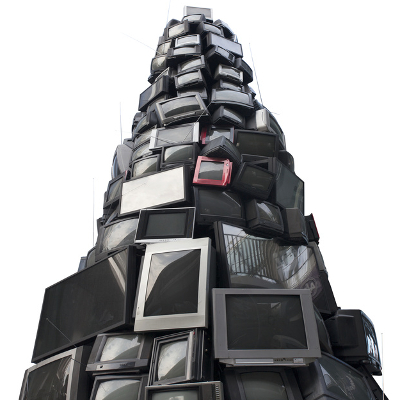
e_waste_management_400.jpgToday’s society practices a policy of upgrading to brand-new devices whenever the next big thing drops. We see this all the time when businesses want to keep up with the latest trends by upgrading to new workstations that utilize recent operating systems, or because their old hardware feels slow. However, this can have a negative effect on the environment in the form of e-waste.

E-waste is defined by ewasteguide.info as:

e-Waste for short – or Waste Electrical and Electronic Equipment (WEEE) – is the term used to describe old, end-of-life or discarded appliances using electricity. It includes computers, consumer electronics, fridges etc which have been disposed of by their original users. On this website – the e-Waste Guide – “e-waste” is used as a generic term embracing all types of waste containing electrically powered components. e-Waste contains both valuable materials as well as hazardous materials which require special handling and recycling methods.

In other words, your computers, servers, network components, and other hardware, all contain valuable metals and other materials that can be potentially hazardous to the environment if left unchecked. This wouldn’t normally be a problem if these materials were properly recycled, but the fact remains that e-waste is an exceptionally prevalent problem in many third-world countries that don’t have a specific workflow for getting rid of these gadgets.

Due to it being vastly cheaper to ship discarded devices overseas (rather than properly recycling them), many countries suffer from exorbitant e-waste, just like Guiyu, China. According to Slate, Guiyu has a population of around 150,000, and is known as the e-waste capital of the world. It houses many businesses that are dedicated to dismantling discarded devices for their valuable components, but their processes are often dangerous to both the inhabitants of Guiyu, and its environment.

For example, Slate explains that “to extract metals from a circuit board, the workers burn each part over an open fire; this process releases large amounts of toxic gas into the air and the town’s water supply.” This practice is naturally a cause for concern, especially considering the fact that the pollution winds up in the bloodstream of the inhabitants in the form of metals like lead, copper, zinc, etc.

The first step toward preventing this pollution from worsening is to take the proper steps when recycling your old technology. First, you should take steps to ensure that all private or sensitive data is removed from the device. NuTech Services can help you through this process. The last thing you want is for some stranger to get ahold of your device and tamper with it for information that’s stored on it. Once you’re sure sure that no information is left on the device, we’ll handle the recycling of the device in an environmentally-friendly manner.

To ensure that you always follow the best practices of replacing and recycling your old technology, contact NuTech Services at 810.230.9455.

b2ap3_thumbnail_big_data_rainforest_400.jpg

Big Data is Saving the Biodiversity of Tropical Rainforests

b2ap3_thumbnail_big_data_rainforest_400.jpgWhen you think about Big Data, thoughts typically turn to how businesses use the technology to collect and analyze massive amounts of information for the purpose of making sweet profit. Although, there’s much more to Big Data than making money; scientists are using the technology to help save the rainforest.

We shouldn’t have to convince you of the importance of the rainforest. It’s estimated that rainforests are responsible for producing 40 percent of the Earth’s oxygen. Therefore, anything that’s done to help preserve the rainforests is helping to preserve all life on the planet. This is why groups like Conservation International (CI) exist.

CI is on a mission to preserve the natural biodiversity of the rainforest. Such a mammoth task can only be accomplished if the scientists of CI first understand the environment of which they have pledged themselves to protect. This requires collecting and processing a vast amount of information directly from the rainforest itself, which is where Big Data comes in.

Making the job of CI difficult is the sheer vastness of the rainforest. In fact, the Amazon rainforest alone covers 2,123,562 square miles. How can a small team of scientists possibly monitor such a large area? Their approach is to turn the ecosystem of the rainforest into an IT system, consisting of more than 1,000 cameras designed to monitor and record information, like activity from animals and even poachers, as well as the effects of climate change and land usage.

According to Sandy Adnelman, chief scientist at CI, this process can be likened to a check up for the planet. For example, when you get a physical from your doctor, they check your body’s most crucial parts and systems. In the same way, scientists like Adnelman are strategically monitoring the most important parts of the rainforest.

To give you an idea of just how helpful Big Data technology is for these scientists, it’s important to remember that the previous way of collecting footage was done manually. CIO explains:

Because the camera traps are located in some of the more remote locations on earth, there’s no infrastructure. Teams have to manually collect the data from the traps and upload it, at which point CI scientists run a series of scripts and models to identify the various species appearing in the images. They then blend that data with climate measurements (precipitation, temperature, humidity, solar radiation, etc.), data on trees (growth, survival, deforestation, etc.) and land use data from public sources to create a model of the health of the animal populations at the sites and how they are changing over time.

The previous process was a huge undertaking that took up vast amounts of the scientists’ time. For these Planeteers, this was a point of frustration because, when it comes to saving the rainforest, time is of the essence. Thanks to Big Data analytics, scientists can now process and analyze the collected rainforest data up to nine times faster than the previous method. Additionally, the results are far more accurate. This allows scientist to make better use of their time and monitor more foliage.

In the same way that Big Data helps improve operations for these scientists, it can improve the workflow of your business. If you’ve got a process that involves collecting and crunching large amounts of information, and it’s eating away at your budget and resources, then check with NuTech Services for a Big Data solution that will make operations easier. In the same way, if you feel like your business would benefit from knowing more information about your target market, we can find a Big Data solution for this too.

Call us today at 810.230.9455 to upgrade the ecosystem of your company’s IT system.