
computer_graveyard_ewaste_400.jpg

Upgrading Your Technology? Be Careful of What You Do with the Old

computer_graveyard_ewaste_400.jpg

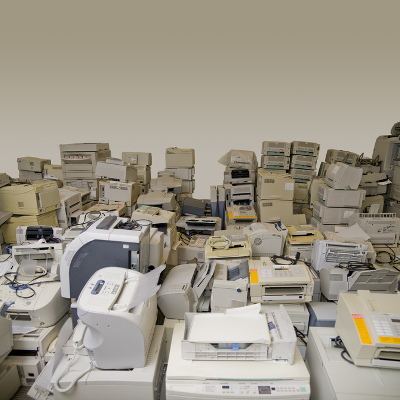
Take a moment to look around you and take in the amount of technology surrounding you. How often do you think this technology is replaced, and what do you think happens to the old tech? There needs to be more thought and effort put into its disposal than just throwing out a hard drive that no longer seems to function. Unfortunately, the amount of e-waste shows that may be the preferred method of disposal.

A discarded device follows the same path as the rest of the contents of your trash bin. Either your discarded piece of technology will find itself in a landfill, or left somewhere in a third-world country. Whichever option, the device is now a complete waste, as the materials used to construct it are now little more than bits of precious metals, glass that has almost certainly been broken by this point, and other bits and pieces.

The statistics surrounding e-waste can be pretty staggering. For example:

  • 2016 alone saw 45 million tons of electronics thrown away.
  • Only 20 percent of e-waste makes it to be documented and recycled.
  • The raw materials in devices that are thrown away value in at about $55 billion, smartphones contributing $9 billion to that total.
  • 76 percent of all e-waste goes unaccounted for.

Of course, as technology advances, there is going to be more and more e-waste produced. However, there is another issue regarding e-waste that your business could be especially affected by if your e-waste isn’t handled properly, and that’s your business’ data security.

Security Concerns
If your devices are discarded with information still on them, that data is at severe risk of being compromised, especially since the devices are no longer in your possession.

What if you got a new smartphone, and just toss out the new one? Sure, it’s dead now, but all it would take for any data it held to be compromised is someone with a charger cable and a basic knowledge of how to break into a phone. Now, any accounts that you used on the device, both business and personal, are at the mercy of your phone’s new owner. They could access your company’s data in the cloud with a discarded external hard drive.

To avoid this, not only do you need to dispose of your old technology properly, you need to also make sure that any information on them is properly wiped and/or destroyed before you do so. While you could destroy the device yourself, the better option is to reach out to the professionals at NuTech Services. We know how to properly see that your devices are destroyed without the risk of leftover data causing your company grief. We’ll even help you to recycle your device, so there’s less of a chance of it landing in a dump somewhere.

To learn more about proper device disposal, give us a call at 810.230.9455.
e_waste_management_400.jpg

Why You Shouldn’t Chuck Your E-Waste In the Garbage

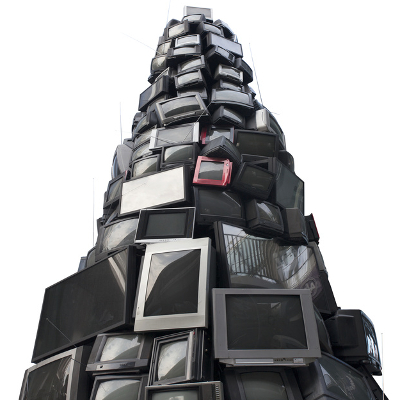
e_waste_management_400.jpgToday’s society practices a policy of upgrading to brand-new devices whenever the next big thing drops. We see this all the time when businesses want to keep up with the latest trends by upgrading to new workstations that utilize recent operating systems, or because their old hardware feels slow. However, this can have a negative effect on the environment in the form of e-waste.

E-waste is defined by ewasteguide.info as:

e-Waste for short – or Waste Electrical and Electronic Equipment (WEEE) – is the term used to describe old, end-of-life or discarded appliances using electricity. It includes computers, consumer electronics, fridges etc which have been disposed of by their original users. On this website – the e-Waste Guide – “e-waste” is used as a generic term embracing all types of waste containing electrically powered components. e-Waste contains both valuable materials as well as hazardous materials which require special handling and recycling methods.

In other words, your computers, servers, network components, and other hardware, all contain valuable metals and other materials that can be potentially hazardous to the environment if left unchecked. This wouldn’t normally be a problem if these materials were properly recycled, but the fact remains that e-waste is an exceptionally prevalent problem in many third-world countries that don’t have a specific workflow for getting rid of these gadgets.

Due to it being vastly cheaper to ship discarded devices overseas (rather than properly recycling them), many countries suffer from exorbitant e-waste, just like Guiyu, China. According to Slate, Guiyu has a population of around 150,000, and is known as the e-waste capital of the world. It houses many businesses that are dedicated to dismantling discarded devices for their valuable components, but their processes are often dangerous to both the inhabitants of Guiyu, and its environment.

For example, Slate explains that “to extract metals from a circuit board, the workers burn each part over an open fire; this process releases large amounts of toxic gas into the air and the town’s water supply.” This practice is naturally a cause for concern, especially considering the fact that the pollution winds up in the bloodstream of the inhabitants in the form of metals like lead, copper, zinc, etc.

The first step toward preventing this pollution from worsening is to take the proper steps when recycling your old technology. First, you should take steps to ensure that all private or sensitive data is removed from the device. NuTech Services can help you through this process. The last thing you want is for some stranger to get ahold of your device and tamper with it for information that’s stored on it. Once you’re sure sure that no information is left on the device, we’ll handle the recycling of the device in an environmentally-friendly manner.

To ensure that you always follow the best practices of replacing and recycling your old technology, contact NuTech Services at 810.230.9455.