
cool_data_262582377_400.jpg

Data Sure is Neat, Part 2

cool_data_262582377_400.jpg

How much information does your typical book hold? If you haven’t read it yet, go back and read our last blog about how much data is stored in the Library of Congress, then come back here to learn more about the everyday applications of data and how much we store on a day-to-day basis.

Examining the Bit

Data is made up of bits, or strings of ones and zeros. There are 7 bits in English characters and 8 bits in a byte.

Data is stored in ones and zeros because that’s the way we have been doing it for the past 70 years. We like to use the example of a machine that has seven lights on it to represent data. If the light is on, then it’s a zero, and if it’s off, it’s a one. The combinations of lights translate into various characters, like letters, numbers, and symbols, and when strung together in large arrays, can represent vast quantities of data to be read by a system.

Magnets use this method to store data, and they are the backbone of the present-day hard drive. With spinning platters that look an awful lot like a stack of  CDs, the hard drive uses magnets to read and write data to the drive. These devices are sensitive and can detect something as tiny as something billions of times smaller than an eyelash cut into a hundred different pieces. Pretty shocking stuff.

Basically, the hard drive was crucial to the development of data storage, and it remains to this day a common staple in the office environment and even for consumer electronics. Solid state drives, or SSDs, are also quite popular, and they run using electrical charges to tiny transistors. Since they don’t rely on mechanical movements or magnets, they are the preferred choice for mobile devices, tablets, and laptops, and they can run a lot faster than your average desktop computer HDD as a result.

How Much Data is Contained On Your Smartphone?

If the US Library of Congress holds 51 Terabytes, how much does the average smartphone hold?

A typical high-end smartphone has about a quarter or half a terabyte, but if your smartphone has a Micro SD card slot, you could potentially expand its storage by an entire terabyte. That is about a 50th of the Library of Congress, or over a million books. It’s pretty shocking, considering how small those little guys are.

Here are just a couple of ways you can use a 1 Terabyte Micro SD card:

  • 200,000 songs
  • 250 full-length movies in full HD
  • 6.5 million pages of PDF documents
  • 250,000 photos taken with a 12 megapixel camera
  • Essentially every video game from the 80s and 90s.
  • Or you could store 10,000 copies of Windows 95 and Microsoft Office 95.

How Much Data Does Humanity Produce?

Humanity has produced 44 zettabytes as of 2020, and this would require 44 billion 1 TB Micro SD cards. This number could double by the end of this year, and by 2025, it could exceed 200 zettabytes. Absolutely mind-blowing.

Considering the fact that more than 62 percent of all people on the planet use social media, send emails, move information from one point to the next, and so on, this isn’t that surprising. With 300 billion emails sent daily and over 500 hours of YouTube content uploaded daily, data generation is not slowing down anytime soon.

Look, Data is Important

We hope that this look at data generation has made you look at your own data in a different light. Yes, new data is created all the time, but you can save a lot of time and energy by protecting the data you already store with data backup and disaster recovery solutions. Failing to do so is like doing the same work twice; there’s no reason for it, so don’t do it.

NuTech Services can be your go-to resource for data backup solutions. To learn more, contact us at 810.230.9455.

dataLibrary_82175447_400.jpg

Data Sure is Neat! Part 1

dataLibrary_82175447_400.jpg

It isn’t a secret that technology has come so, so far as compared to just a short time ago. Take data, for instance. Let’s dive into why something so incredibly small is so incredibly important (and while we’re at it, how much space today’s data would take up in other formats).

What is Data?

To explain data, let’s go back to how data was stored before we had fancy-schmancy computers and smartphones and the like—in books! The typical novel contains somewhere from 60,000 to 110,000 words, with lengthier epics containing more (as you would expect). To get a sense of exactly how much data this translates to, let’s turn our attention to the typical text message, with its maximum of 160 characters, and anywhere from one to three sentences on average. English-language characters are each 7 bits, with each bit represented by a 1 or a 0. 01000001 stands in for “A,” while 01000010 stands in for “B.”

So, what does this matter? I promise, we’re getting there.

A text message can contain a total of 1120 bits of data, 1120 ones and zeroes. With 8 bits in every byte, this translates to 140 bytes per text message. 1,000,000 bytes make one Megabyte.

The average word to be found in our novel is made up of about five characters, meaning it could contain anywhere between 300,000 to 555,000 characters. Multiplying by seven for the bits that make up each character, and dividing by 8 for the bits in each byte, we have 481,250 bytes, or 0.48125 Megabytes, in our book.

Following this logic, a large book could contain about a half a Megabyte of information…then you also have to consider metadata, the cover, and the other assorted information an ebook would contain, which means it’ll be about one Megabyte in size. This is added to further by any images or illustrations.

How Much Data Can Be Found in a Library?

Okay, so because libraries often hold books that are far larger than the average novel—textbooks, reference books, encyclopedias, dictionaries, and the like—some files will be much, much larger than a Megabyte, while others could very well be much smaller. For simplicity, let’s assume that the average book in our hypothetical library equals one Megabyte.

The typical library generally holds between 5,000 and 500,000 books, although some hold millions. The United States Library of Congress, for instance, has over 51 million books, 25 million manuscripts, and millions of other items in its massive collection. Again, to keep things simple, let’s omit everything but the text in each of the 51 million books and calculate the data stored within.

51 million Megabytes equals about 51 thousand Gigabytes, which then converts to 51 Terabytes. Many PCs contain 1 to 2 Terabyte drives, so the entire book collection of the Library of Congress could be contained on about 25 home computers. Crazy, when you think about it.

Of course, we don’t currently have mobile devices with this kind of capacity, but who knows what the future will hold.

It’s also important to acknowledge that we only calculated based on the text alone. If each book was scanned in as images, you could expect the total per book to be closer to 8 Megabytes, with a need for 408 Terabytes to hold the Library of Congress. That would take far more than a room of workstations to contain.

Stay Tuned for the Data Your Organization Handles

Next time around, we’ll discuss how much data the average human being generates, in addition to what is stored in your business each day. Make sure you check back so you don’t miss it!

2023trendDigital_538611465_400.jpg

Let’s Take a Look at 2023’s Business Trends

2023trendDigital_538611465_400.jpg

With 2023 sneaking up on us, you’ll need to consider the many challenges that businesses will face as we move into the new year. Many of these challenges can be remedied simply by implementing the right technology solutions, too!

Inflation and Supply Chain Issues Will Linger

COVID-19 has impacted the global economy on a scale which will continue to impact businesses well into the new year. Many of these issues will be worsened by the ongoing conflict between Ukraine and Russia. Businesses will need to take inflation and supply chain issues into account when implementing new technology, but how can you do this effectively?

Whenever a certain level of risk is involved with your business, you need to be able to conduct an examination of how likely the risk is to impact your operations. By performing these tests, you’ll be able to mitigate risk more effectively.

Customer Experience and Sustainability Take Front and Center

While customer experience and sustainability have always been important, 2023 will see them become a major priority for businesses. More focus is being placed on social and environmental issues than ever before, and this trend will continue to influence policies and procedures within your organization. This is especially important for your business’ relationship with external groups and even amongst your technology providers.

Similarly, your customers, clients, and prospects all want to know that you are operating with the environment in mind, all while ensuring that they receive an impressive customer experience. This will require that your business invests in the right technology solutions to streamline workflows. Automation, for example, can be used to free up employees to focus on these critical elements of business.

You’ll Need to Invest in Employee Retention

The pandemic has brought many issues with the workplace that have hidden just below the surface for too long, like burnout and other mental health problems that the workplace can create or exacerbate. Whether it’s combating “the Great Resignation” or “quiet quitting,” it’s up to you to ensure that your team is satisfied enough to stick around and perform their duties the way you expect them to.

In other words, you need to make an effort to provide your team with meaningful and fulfilling work. A hybrid workplace can go a long way toward making this happen, but upward mobility and better pay or benefits can also be a good incentive.

Let Us Help You With These Issues

No matter what the next year brings, NuTech Services can help your business with whatever technology it needs to overcome the challenges presented. To learn more, reach out to us at 810.230.9455.

USBCvsHDM_20220923-145104_1.jpg

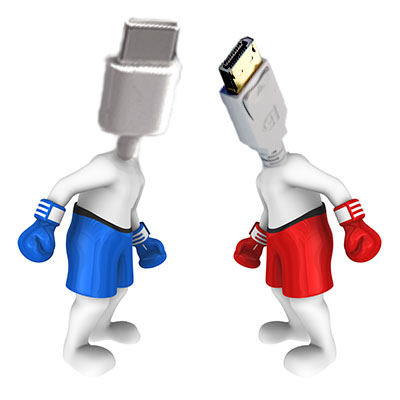
Will USB-C Eventually Replace HDMI Cables?

USBCvsHDM_20220923-145104_1.jpg

The next time you’re near a desktop, take a peek at the back where the motherboard’s various ports offer the opportunity to connect to different cable types. Many of these cables have overlapping functions—like the capabilities of USB and HDMI. Having said that, however, one of these cables will probably outlast its contemporary.

Let’s examine what differentiates these cables and consider which of them is more likely to last.

What Separates USB from HDMI?

Beyond the visually obvious differences between these cables, there are a few things that set them apart in terms of their functionality.

USB-C

From the very beginning, the Universal Serial Bus cable was meant to be, well, universal…and USB-C is the next step towards this goal. First developed in the 1990s, USB was meant to simplify plugging in assorted hardware. USB-C can be used to transfer data, power, video, and audio signals between devices in either direction. Perhaps most appealingly, USB-C can be plugged in either way, which other USB types quite frustratingly couldn’t be.

HDMI

High-Definition Multimedia Interface cables have a more specific purpose, designed to transmit uncompressed A/V data from one device to another. First becoming available to consumers in the early 2000s, HDMI helped to reduce the cables necessary by sharing both audio and video data. Furthermore, less data quality is lost through the uncompressed HDMI cables.

While Both Work, Chances are That USB-C Will Ultimately Phase Out HDMI

And, at some point after that, the next thing will phase out USB-C (but more on that later).

HDMI has been around for about three decades or so at this point, while USB-C is simply the next step in the progression that USB was designed to follow in creating a universal (hence, universal serial bus) cable to replace every other cable type. This is why USB-C can transfer more data and more power than the USB cables that came before it.

This will take a long time to come to fruition… and that’s assuming that something else doesn’t come about to replace USB-C first.

We’re Here to Help Your Business Make the Most of Its Technology

Regardless of what the future may hold, we’re here to ensure that you have the IT you need to maintain your business’ productive operations. Learn more by giving us a call at 810.230.9455 today.

iot_376226617_400.jpg

Make the IoT Work for Your Business

iot_376226617_400.jpg

By now you’ve probably heard the term Internet of Things (IoT). You may not completely understand what it is, but you know it has something to do with all those “smart” devices that you see popping up everywhere. Today, we’d thought we’d get into what types of things are on the IoT and how they can have an impact on your business. 

What Is the Internet of Things?

The Internet of Things started growing a decade or so ago as “smart” technologies were being developed to present people with technology that they can use to make their lives easier. This concept is what technology is all about, after all, and it quickly became a business opportunity for OEM (original equipment manufacturers) and other companies. This has led to a massive explosion of “smart” devices designed to unburden the lives of their users. 

Of course, the more businesses that are developing this technology, the more tools will be aimed to transform business. There are now 14 billion IoT devices (including smartphones) connected to the Internet, so there is a breadth of options for businesses to choose from. It’s also one of the more funded technology markets by venture capital firms with close to $5 billion being invested annually, as the practical use of IoT is just now scratching the surface.

The IoT Is Everywhere

The IoT can be used in multiple ways in and around your business; and, each adds its own unique variables to the way you go about integrating them. Obviously, a large portion of your employees have smartphones, that is an added consideration because you need to ensure that all those mobile devices are working with the applications that you use; or, if you don’t go that far, at least that they don’t bring unwanted passengers along on to your network. 

More complex industrial IoT (IIoT) platforms can really alter the way a business operates, so training will have to be considered to help your employees understand how they work. There is a lot of good that the IoT can do, but it also comes with some challenges. Not only do you need to set up your IoT platform from the ground up, you need to make sure that it integrates with your back-end software systems and any other applications that would provide the benefits needed to implement them. 

Set up and Security Questions for the Implementation of Business IoT

For most businesses looking to implement IoT to help automate some things will first start by using it in the ways that your average home consumer might. You get systems that can help save you on utility costs and help you save time (smart thermostats, smart lights, voice-driven personal assistant hubs, etc.). 

More complex systems like asset tracking and inventory management allow for pinpoint control over supply chain issues. This can get pretty complicated, pretty quickly, but that’s the point. The IoT helps humans do things humans couldn’t do without these tools. It is the perfect confluence of human-made tools (hardware and applications) and constant data streaming that can help businesses automate more and collect more data to help them make better business decisions. 

Businesses need their technology to be scalable and secure. This is where the IoT hits a snag a lot of the time. There are serious security questions with any number of devices, but that part of it is improving. For the business, however, “improving” could mean “still too expensive/risky”.  The truth is that any business can utilize some form of IoT to help them cut costs, improve efficiency, and improve decision making. You just need to know how.

At NuTech Services, we understand where and how the IoT fits into a business. If you would like to learn more about the Internet of Things and how it can help your organization grow, give us a call today at 810.230.9455.

ideaGenerationInnovation_483715593_400.jpg

Is Innovation Slowing to a Point of Concern?

ideaGenerationInnovation_483715593_400.jpg

Innovation is a driving force behind business, and it has been for essentially the entirety of human existence. The pandemic has brought about an era where businesses are producing solutions that have many new features, but these features don’t necessarily enhance or add anything to the customer experience. Let’s examine how this desire to stay profitable flies in the face of true innovation and doesn’t provide useful or practical products to consumers.

First, let’s take a look at what are known as upstream and downstream activities. Upstream activities provide businesses with the ability to create and produce goods or services, and they include gathering staff, resources, and logistics. Downstream activities are those that go into the facilitation of creating a product or service, as well as what goes into selling them.

Upstream Issues Complicate Things

As a result of the global pandemic, many organizations experience shortages and inconsistencies with their supply chains, making it difficult to procure equipment or components to produce quality products. Additionally, “the great resignation,” did not help at all, solidifying many peoples’ decisions to leave their jobs over health and safety concerns, issues of pay, and straight-up burnout. With so many moving parts in place, it’s no wonder some companies struggle to manage operations.

It’s not easy running a profitable business, as building better processes and hiring top talent requires funding that you might not necessarily have. Enterprises have an easier time with this, as they have more resources at their disposal for research and development, but small businesses need to find ways to keep up, or their return on investment suffers.

Marketing Taking the Place of Consistent Innovation

There is always money to develop and research products, especially when compared to the amount of funds typically designated for marketing and advertising. The latter is generally one of the smaller items on the SMB budget list. To stay competitive and to keep things fresh, SMBs have to grow their offerings, but the trick comes in how they do so. Enterprises can make do by spending extra on development and marketing of products, but SMBs often find themselves in the impossible position of spending money they don’t have to develop new products or to focus on what has brought about their current level of success.

With the costs of business increasing ever-higher, SMBs are trying to make up for the lack of innovation through marketing and advertising campaigns. Furthermore, SMBs are spending less on the sales processes and administrative costs of maintaining operations, like IT and HR, something which leads to shortcomings in processes and talent acquisition that is detrimental to their success.

People are Paying More for Less

Ultimately, what these trends lead us to notice is that consumers are paying more for less. Eventually, this trend will lead to products or services no longer being viable for customers purchasing products from SMBs, as the price point increases while the value proposition remains the same. SMBs depend on the customer-first mindset, and without the funds to make sure this happens, their customers and even their workforce might not stick around to see what the future holds.

How We Can Help

You may have noticed that the IT costs for small businesses have started to rise, so now it’s time to ask yourself if you are getting what you pay for. NuTech Services prides itself on reducing your technology costs and expenses, and it’s all thanks to our managed IT service model. We can monitor and maintain your technology so you can focus on operations and providing value to your customers. To learn more, reach out to us at 810.230.9455.

legalIT_286869333_400.jpg

Technology for the Modern Law Practice

legalIT_286869333_400.jpg

It’s important that attorneys have access to the important information and tools needed to enable them to do their jobs. When they can do so easily, they are able to bring in more revenue, take on more clients, and provide better services to their clientele. What kinds of technology do lawyers need to improve their practices?

First, it helps to have a bit of context for how the pandemic has changed operations for lawyers. Legal services are popular, sought-after services, but the pandemic forced many lawyers to go virtual. Now, what started as a trend might be a more permanent shift, and the following technologies are what will enable lawyers to do their work more effectively in a virtual capacity.

Document Management and Automation

Document management is a must-have technology for law offices, as paperwork is an incredibly important part of practicing law. Document management and automation tools can effectively streamline document creation, as it can capture and populate templates utilizing information already provided. It can provide a solution to search, view, and edit documents, and every transaction comes complete with documentation, something which is critical to the law practice. We can help you build a document management system for your law firm so you can always keep the files needed on-hand and available on your devices.

VoIP Enabled Video Conferencing

VoIP has gone from being an emerging technology to a vital one, meaning that it’s silly to not use it in comparison to the other solutions out there. It gives your business one more way to make the most out of its Internet connection, and there are so many other great features available through it too, like video conferencing and other communication tools. Video conferencing is particularly important, as more people are wanting to meet virtually than ever before, and it only provides your law practice with even more flexibility and options. Many video conferencing tools have VoIP built right into them, and the best solutions are those that are secure and easy to use with high-quality video and audio. There are even options that include end-to-end encryption.

Scanners

Data entry is also crucial to the success of any law firm, and those in small practices might struggle to keep their files in order. With a digital repository for these files, it can be easier and more secure to manage the various documents. Scanners can be used to input data in this way. Depending on the solution, you can either go all-out with a flatbed scanner or use handheld scanners that won’t cost your business an arm and a leg. Even modern printing solutions often come with scanning solutions your business can use for this purpose.

Mobile Devices

Mobile devices are quite useful for professionals, but in the law field, they can completely change the dynamic of the profession. They provide access to applications built specifically for attorneys while also providing access to documents, communication, and data storage. Smartphones and tablets are popular tools for modern law firms.

To keep your law firm ahead of the competition, we recommend you reach out to NuTech Services. We can help you assess your current technology practices and suggest ways you can improve them. To learn more, reach out to us at 810.230.9455.
businessAI_230165737_400.jpg

Small Businesses are Starting to Embrace AI

businessAI_230165737_400.jpg

Artificial intelligence has several uses in the business world, many of which utilize machine learning. With greater access to this technology than ever before, small businesses have more opportunities to grow as a result. Let’s go over how SMBs can utilize AI, including how to get started with it.

How Can Today’s Small Businesses Use Artificial Intelligence?

AI is flexible in its design, intending to mimic the cognitive processes of the human brain. Essentially, it is software that can follow patterns and establish its own learning and reasoning processes to solve problems. This is why it’s so useful for small businesses. Here are some ways it can improve operations for SMBs:

Enhancing Cybersecurity

Your employees likely have a routine that they follow, and this routine is what makes their work responsibilities consistent. AI can use data to make predictions, a process which aids in cybersecurity and productivity. AI can take note of a user’s account and showcase when it’s doing something out of the ordinary, like logins at times when the office should be closed or from strange locations around the world. It can also tell if employee behavior is at odds with your security efforts.

Optimizing Customer Service

Businesses prioritize customer service, but the unfortunate fact is that it can be time-consuming. This time is often better spent on other processes and needs. AI systems can aid in customer service through the use of automated chatbots, providing customers ways to get the answers they need, when they need them. This removes some of the burden off your workforce and might just give them time to perform other tasks. Furthermore, it’s a great way to collect data about what your customers want and need.

Finessing Customer Relationships and Marketing Efforts

It takes a lot of effort to sift through the data and insights gathered during the customer relations and marketing aspects of your business, and digging through this data can be an incredibly time-consuming and resource-intensive process without the use of AI. AI can examine this data and make conclusions based on it. You can then use these conclusions to make the most educated decisions possible for your organization moving forward.

Artificial Intelligence is More Accessible Than Ever

If you want to learn more about machine learning and other ways technology can make your business’ operations better, reach out to NuTech Services at 810.230.9455.

Innovative_tech_175461355_400.jpg

A Lot of the Tech We Use Today Was Once Science Fiction

Innovative_tech_175461355_400.jpg

When it comes to innovative new technologies, look no further for inspiration than good-old classic science-fiction and pop culture. You might be surprised by how many concepts first seen in works of fiction have made their way into our day-to-day lives. Let’s take a look at some of the more noteworthy examples.

Mobile Phones/Smart Watches, Inspired by Dick Tracy

Mobile phones are commonplace nowadays, as are the wearables that connect to them. These technologies first appeared in the 1930s and 1940s serialized comic Dick Tracy, in which the series’ namesake detective uses a watch as a two-way communicator to work with the authorities.

There is a modern myth about the USS Enterprise inspiring the idea of the modern cell phone, but the creator of the first mobile phone, Martin Cooper, corrected himself, citing Dick Tracy as the primary source of his inspiration.

3D Printing, Modeled After Star Trek

The replicators used in Star Trek are remarkably reminiscent of the modern 3D printer. While modern 3D printers build materials out of a computed pattern to create an item, the ones in Star Trek used rays of light to shape their objects. One such device does exist, and the creators of this 2019 device cite Star Trek as the clear inspiration for its creation.

Tablets, First Appearing in Star Trek

Remember when the iPad first burst onto the scene in 2010? The device itself was inspired by the PADD from Star Trek, the Personal Access Display Device. It was a handheld device used by the Starfleet crew to access various types of information, just like the modern tablet.

Honorable Mention: 2001: A Space Odyssey

And let’s not forget the device that blocked Apple’s attempted copyright of their tablet’s form factor, the device appearing in Stanley Kubrik’s 2001: A Space Odyssey. Thanks to the existence of this film, Apple’s attempt failed.

Self-Driving Vehicles, As Seen In Total Recall

Douglas Quaid, the main character of 1990’s Total Recall, used an automated taxi cab to run from his pursuers. Though the device had to be manually taken over eventually, the idea for self-driving vehicles was certainly present here.

Digital Audio (Specifically, the MP3) Inspired by Star Trek

MP3 files might not be as popular as they were a decade ago thanks to music streaming services, but when they first appeared in Star Trek: The Next Generation, you can bet people were inspired to make them a reality. The inventor of the MP3 file format, Karlheinz Brandenburg, cites a particular scene as giving him the idea. The scene in question is when an android named Data listens to four tracks written by four composers, then slowly turns off each track in succession.

The Defibrillator, Suggested by Frankenstein

In chapter five of her 1818 work—which many see to be the first piece of modern science fiction—Mary Shelley includes little detail about her fictional scientist’s process, but includes a telling quote in the fifth chapter:

“With an anxiety that almost amounted to agony, I collected the instruments of life around me, that I might infuse a spark of being into the lifeless thing that lay at my feet.“

Is this “spark” a spark of electricity? Who can say? In either case, it may have served as inspiration to create the modern defibrillator, a device which first appeared in 1930.

What other examples can you think of that might have been influenced by science fiction? Let us know in the comments below.

digital_signage_313698243_400.jpg

A Digital Signage Revamp Can Change Your Business’ Optics

digital_signage_313698243_400.jpg

Have you ever considered why the VoIP auto attendant feature is so valuable? When a person is greeted with directions that make their journey easier, it typically improves their general opinion of your business. The VoIP auto attendant feature helps guide you through their telephone system. Now, have you ever been to a place where you walk in and you are confused where to go and it takes a while to navigate because of the lack of predominant signage? Like the auto attendant, digital signage platforms can help guide your visitors and you may be surprised about how affordable they can be and the additional value these systems provide to a growing number of businesses. 

What is Digital Signage?

They are just digital displays that provide customers, visitors, and patients information. It’s that simple. It’s the menu behind the counter at McDonald’s and the LED billboards you see on any major interstate highway. When you want to get a message out, digital signs are the best method. There are several reasons why digital signage is a great investment for any business to make. Let’s take a look at how they can fit into different types of businesses.

Retail

For the retail business, digital signs can be a major benefit. They not only can fuel customer’s purchasing decisions, they can also enhance the amount of foot traffic a business sees, a benefit that can do a lot to justify the admittedly substantial capital costs that come with deploying a comprehensive digital signage system. Digital signs can be placed throughout a retail location to function in different manners. A sign near the entrance can provide information about promotions or sales you have. The ability to broadcast different types of content can also function to provide information to customers that help direct customer to specific products and enhance their experience.

Healthcare

No industry has brick and mortar locations more intimidating to visitors than the healthcare industry. With so many rooms and different functions inside a hospital or other healthcare building having signs that direct people to the place they need to be is imperative. With digital signs, a healthcare facility can not only direct visitors to where they need to go, they can broadcast changes of service, patient check-in information, and provide a digital interface for healthcare professionals to use inside patient rooms. It’s been proven that digital signs are more noticeable than traditional signs and can function as a major benefit for patients and visitors alike. 

The Modern Office

For many businesses, keeping their staff apprised of all the most current organizational information is difficult. The more employees know, the better they can do their jobs. Many businesses have moved to placing digital sign solutions inside the common areas of their business to keep employees informed and engaged with the business. 

The investment in digital signage is in the hardware (TVs or monitors) and the cabling to install these systems in the most effective places inside your business. The computing hardware and software to run a full-scale digital signage system is affordable, and with digital signage software solutions hosted in the cloud, the additional capital costs can be shifted to an operating expense. 

Digital signage is a technology system that many businesses may not consider imperative, but businesses that roll out a comprehensive digital signage system have found that they can increase revenue by as much as 33 percent and reduce the amount of money they spend on traditional signage. 

If you would like to talk to one of our technology professionals about upgrading your business’ look, feel, and function with digital signs, give NuTech Services a call today at 810.230.9455.
OfficetoRemote_483225729_400.jpg

What Could a More Remote Future Potentially Look Like?

OfficetoRemote_483225729_400.jpg

Widespread remote work is a relatively new method of operations for most businesses, but even with the limited amount of time it has been in play, the benefits it contributes have been made abundantly clear. Working on the assumption that remote work won’t be abandoned as quickly as it was adopted and instead may see some growth, let’s hypothesize what impacts it could bring to society as a whole.

To be fully transparent, we will be including both the positive and potentially negative impacts that these societal shifts could bring.

Housing Costs and Availability May Balance Out

We’ve all heard (and potentially felt firsthand) the costs that have become associated with the areas where there are, statistically, the greatest number of jobs available. While big cities have a lot of employment opportunities clustered in (relative to the size of the country) very small areas, the housing costs for these cities have created a housing shortage in many metropolitan areas. Overall, the country is short almost 4 million homes (as of early 2021), with most of this shortage seen where the available jobs are the most valuable.

With remote work, however—particularly if full remote work is ultimately embraced—these jobs could be filled without people needing to cluster in areas where housing costs are so high. Someone working remotely could enjoy the benefits of a job in a valuable market while enjoying the housing costs of a far less expensive area. While experts anticipate this might bring housing prices up in these less expensive suburbs and small towns, it would also greatly decrease the costs associated with big city life… after all, building owners and landlords need someone living there and paying the rent.

Again, if this is to work, there needs to be a balance struck between the increased cost of the more affordable housing and the decreased cost of urban housing. One example of this in action has been the Tulsa Remote program, where Tulsa, Oklahoma offered numerous perks to remote workers who came to live in the city—including a $10,000 grant—for a year. By investing in their local amenities and community-building endeavors, Tulsa has seen success in attracting new, high-earning residents.

How much success? According to the Economic Innovation Group, Tulsa has seen a return on their investment of $13.77 for each dollar spent to incentivize remote workers to relocate there.

The Climate Could Benefit

One might think that, as people migrate from urbanized areas with their public transportation and other, relatively climate-friendly habits, there would be a net deficit to the environment. After all, less public transit and walkable amenities would equal more vehicles on the road and more emissions.

However, that’s under the assumption that the urban ex-pats would leave their habits in the cities. If zoning laws were to shift to allow for more urbanized suburbs, we could see an increase in these walkable amenities—more family restaurants in neighborhoods, for instance, or increased public transportation options where there are currently relatively few.

We also can’t forget one impact we’ve already seen great benefits from, thanks to remote work—business travel, particularly cross-country air travel, can be effectively wiped out. With so few people flying for business, rather than pleasure, there are scenarios where the decreased emissions due to flights can actually balance out and outweigh those that a driven commute to work develops.

Let’s Be Clear—We’re a Long Way from Ubiquitous Remote Work

We’ve touched on some of the obstacles already—like the shift in housing costs, for instance, and the fact that current zoning laws limit the walkability that would make suburbs more desirable—but there are many other reasons that some places just aren’t friendly to remote work. Access to broadband is generally considered a prerequisite to remote work, but large swathes of the country still lack this kind of access.

There are many other obstacles that will need to be addressed before this kind of remote work is normalized fully. In the meantime, we can help set you up with the tools that allow you to take advantage of remote work for whatever reason you wish. Give us a call at 810.230.9455 to get started.

evaluate_risk_477897766_400.jpg

How to Properly Evaluate Your Security

evaluate_risk_477897766_400.jpg

How effective is your cybersecurity? It seems like a simple question, but no less important to consider and determine as the answer could be the difference between a prevented breach and a successful one. In order to keep track of your business’ cybersecurity preparedness, it is important that you regularly evaluate it. Let’s go through the essential steps to performing such an evaluation.

Step One: Figure Out Where Your Weaknesses Lie

The first step to evaluating your cybersecurity is to identify where your biggest shortcomings are—otherwise, what chance will you have to fix them? Threats are always being improved and developed anew. Figuring out which parts of your business’ technology are due for an upgrade is key to shoring up the weaknesses that these upgrades can resolve.

If a simple upgrade or patch isn’t the answer, this will help you figure out what is. Maybe someone needs additional training to reinforce secure processes, or maybe an unreported complication has your team resorting to workarounds that open you up to attack. In essence, you need to know what problems need to be solved before you can solve them.

Step Two: Apply Trusted Methods that Meet Established Standards

When all is said and done, it really isn’t that hard to figure out what you need to do to protect your business. There are assorted organizations that have publicized the best practices that they recommend (or actually, urge) businesses to abide by in order to minimize modern cyberthreats. If you aren’t sure whose recommendations you should be following, don’t hesitate to give us a call and ask. We’re happy to help you figure out what needs to be done.

The same can and should be said of any industry-based regulations and compliances that might apply to your business. Things like the Payment Card Industry Data Security Standard (PCI DSS) apply to most businesses in operation today, and there are some industry-specific guidelines that could severely hinder one’s success if they are not followed. Knowing what applies to your business and abiding by any applicable rules and laws will only help make your security more effective.

Step Three: Figure Out if You Have the Resources You Need

Somewhere along this process, you might have a moment where you feel a little overwhelmed by everything that is expected of you—and that is completely understandable. It is, in a word, a lot. While your cybersecurity is obviously very important, you still have to run the business you’re trying to protect… and unfortunately, fully-credentialed IT professionals don’t come cheap.

There is one glaring exception, though, that can give you the opportunity to enlist the skill of a full team of professionals of this caliber for a manageable monthly cost. This is how the managed service model works. By relying on our team members for however much of your IT-related needs as you wish to use us for, you can rest assured that you have the resources needed to manage your business’ essential tools and technology in a secure fashion. Maybe you have us handle your security while your in-house team maintains your IT, or vice versa. We can scale our services to precisely fit your needs and budget, without shortchanging any security requirements you may have.

Step Four: Plan Your Cybersecurity’s Future

While it may be obvious that planning for cybersecurity after a security incident is the most perfect example of “too little, too late,” more businesses than you’d think still follow that approach. Some of them do so without even realizing it, simply because they haven’t considered how cyberthreats change over time and how easily they could find themselves in the crosshairs someday.

Fixing this requires a proactive approach. Take the time now to devise a security plan and policies for your business to follow—particularly if a security incident were to darken your doors—and train your team to do so automatically. Once you have this plan established, break it out every now and then to review it and adjust it as need be… cyberthreats change over time, after all.

NuTech Services is Here to Help You at Every Step

As a managed service provider, a large part of what we do is centered around the idea of cybersecurity, so we have a lot of experience with fulfilling each step of this process. Find out what we can help your business accomplish by calling 810.230.9455 today.

VR_business_336290563_400.jpg

Can Your Business Find VR Useful?

VR_business_336290563_400.jpg

Virtual reality is pretty neat, and many of today’s applications include it as one of their headlining features. With major companies like Facebook, Sony, HTC, and HP buying into virtual reality, one has to question what VR can offer in a business setting.

Virtual Reality Explained

Some folks believe that VR is nothing more than a gimmick, but there are many applications in development that could provide value for businesses. VR can be used to simulate interactive, three-dimensional virtual worlds for a variety of purposes. In 2018, the VR market was valued at $829 million, but thanks to the COVID-19 pandemic, VR in business is projected to exceed $4.2 billion by 2023. This growth comes about as a result of advances in hardware, software, and more exposure for the technology. This kind of growth is surprising and impressive, especially considering how difficult the software is to develop.

Two Functions VR Can Bring to Your Business

At first glance it doesn’t appear VR is practical for business, but since the price has dropped considerably, there are three specific reasons you might consider it.

Training

Virtual reality might be ideal for organizations that could use a revamp to their training procedures. If organizations can immerse their employees in a lifelike environment and train them on specific processes and procedures, they are more likely to walk away from the experience with the ability to recall them at a later time.

Retail

VR can also help in the retail sector by providing an online shopping experience customized to the consumers’ needs without having to set foot in a store. VR is currently being used to show heat map traffic in stores, too, just to determine where specific products should be placed. It’s just one way that organizations are trying to find a practical use for VR.

Engineering and Realty

Production costs are quite high these days, so one particular use for VR might be in manufacturing and realty industries. Product designers are building VR applications for board members and buyers to sample and demo products before viewing the real product. Architects and interior designers are using VR to create virtual environments of living spaces, offices, convention centers, and more, all to show off their big ideas to their clients.

While virtual reality is a far cry from solving all operational problems, it might show some promise as a resolution to specific issues that plague many organizations. What do you think? Do you have any ideas for how you might implement VR for your business? Let us know in the comments.

152122323_innovation_400.jpg

Technology Can Replace These Office Conventions

152122323_innovation_400.jpg

With so many changes in the office environment over the past several decades, it’s no wonder that some of the staples from way back when are no longer crucial to the success of any organization. Technology has driven many conventions of the old office environment into extinction, rendering them obsolete and, in some cases, pretty much pointless to keep around. Here are just a few ways that technology has replaced some of these conventions.

Filing Cabinets

If you have been in business for a while, chances are that you have accumulated filing cabinets that fill up with paper documents faster than expected. They have traditionally been used to keep files safe and in a convenient storage location, but the truth of the matter is that these cabinets are far from convenient these days.

The cloud has enabled the use of document storage systems that put filing cabinets to shame. These systems offer digital environments to safely store documents, and due to the electronic nature of the files, they do not take up massive amounts of physical space in your office. Furthermore, these systems offer search capabilities that will make you never want to sift through a filing cabinet again.

Conference Room Gatherings

When you have a small workforce, it’s easy to call a meeting for the entire office. When you have a larger workforce, especially if you have remote employees, it’s not easy to fit everyone in the same old conference room you used to use for this purpose. Thankfully, technology has made it easier than ever to schedule meetings, even for those who have crazy schedules and meetings that last for hours on end.

Video conferencing software gives businesses the ability to hold much larger meetings without filling an amphitheater, instead administering meetings virtually from just about anywhere. These video conferencing tools also have schedule and calendar integration that can inform you who can make it to the meeting and who can’t.

Traditional Work Desk Accommodations

Your employees’ daily tasks generally revolve around completing tasks at their work desk. While they may have duties that pull them away from time to time, the majority of their work will be done from the comfort of their desk. At least, that’s how things used to be. Nowadays, the trend is moving in the direction of remote work, or at least a more mobile type of work situation.

Remote technology gives businesses the capabilities to equip employees with technology that allows them to work from any location with the right solutions. The pandemic has proved that businesses do not need their employees in the good ol’ brick and mortar office in order to stay functional.

Landline Telephones

Landlines are a relic of the past in the modern office environment. Adding new handsets can be a pain, especially if your infrastructure is dated and was built for a staff much smaller than your own. It might involve running new wires throughout the office which can be both time-consuming and costly. Modern business technology comes to the rescue here, as well.

Voice over IP systems give organizations another way to eliminate unnecessary costs and outdated technology by letting you use your Internet connection for telephony services rather than traditional telephone lines. Plus, it comes with other features that are expected of business telephone solutions, so you are not leaving any value on the table by implementing these solutions.

Need a Hand with Implementation?

If you would like some assistance with updating your infrastructure for a more modern office feel, NuTech Services can help. We can equip your company with all of the tools you need to take your business to the next level. To learn more, reach out to us at 810.230.9455.

342414352_remote_work_400.jpg

While Useful, Remote Work Isn’t All It’s Cracked Up to Be for the Climate

342414352_remote_work_400.jpg

While we would never suggest that remote work is a bad thing, it wouldn’t be right for us to pretend that it is a perfect solution. It just isn’t. For a few glaring examples, let’s turn to the complicated impact that remote work can have on the environment. While we’ll still acknowledge the benefits of remote solutions, this kind of reflection may just help you to determine how to shape your business’ future: namely, how much of that future will be based on remote operations.

Let’s begin by looking at some of the positives to remote work, in terms of the environment.

Environmental Benefits of Remote Work

Diminished Fuel Demands and Emissions

According to the Environmental Protection Agency, transportation is the largest source of greenhouse gas emissions, and that such emissions increased by a not-inconsequential 3.7 percent from 1990 to 2019. Furthermore, the U.S. Energy Information Administration reported that 2019 also saw 142.71 billion gallons of gas burned.

If you’re reaching for a calculator, that’s an average of around 390.98 million gallons per day.

Consider, for a moment, how much of a difference it would make if we could remove a large portion of that expenditure by adopting widespread remote work. If just 3.9 million people worked from home for half the time, the reduction in greenhouse gases would be akin to taking 600,000 cars off the road for a full year. Back in 2015, Xerox implemented a telework strategy, cutting 41,000 metric tons of emissions and saving 4.6 million gallons of gasoline.

On a related note, a remote workforce also allows a business to decrease their use of energy in terms of climate control and lighting—which often (but not always) means that less energy is being used to control a large space as compared to a smaller one. We’ll dig into this further a little later.

Cleaner Air

On a related note, there are various benefits associated with fewer emissions that remote work can help to promote, reducing the level of air pollution a common thread between them. A study taken in London in the midst of the COVID-19 pandemic revealed that emissions reduced by 25 percent during the morning commute and by 34 percent in the evening.

This is not nothing. Decreasing the amount of air pollution also decreases the amount of acid rain that occurs, makes algae blooms (sudden increases in algae in water systems that kill off the local biome) less likely, and helps to support our own health.

Decreased Waste

Did you know that the average American uses, on average, 680 pounds of paper each year, and that the world produces 300 million tons of plastic in the same span of time? Working from home, however, helps reduce these levels by encouraging the use of paperless solutions, while simultaneously creating an environment that relies less on single-use plastic products and more on sustainable methods.

However, now that we’ve gone over the major environmental benefits, we’d be remiss if we didn’t address the problems that remote work introduces as well.

Environmental Issues in Remote Work

Energy Mismanagement

Okay, so remember how we discussed how a remote workforce allows a business to use less energy to keep its workspace climate under control? Here’s the problem with this: research conducted in the United Kingdom reveals that—at least in the winter—the energy used to heat the office was less than the total it took to heat each remote worker’s home. As a result, working from home could in this way be counter-productive, environmentally speaking. That said, most people keep their homes fairly livable even while they are at work.

Global Inconsistencies

There’s a lot to dig into here, so let’s start by laying out the groundwork: different regions around the world produce and use their energy in very different ways, creating different environmental scenarios to consider. For instance:

  • Some countries have more widely adopted alternative energy sources for their transportation needs, as well as public transit options.
  • Some regions rely on different HVAC settings throughout the year, so any benefits gained in one season of remote work could be canceled out by another.
  • The electricity needed to support remote work is generated in different ways around the world, with different environmental impacts due to the energy production.

In short, there is no easy answer to whether or not remote work is a better option, simply due to the variables involved in calculating its costs and comparing them to its benefits.

How to Improve Your Environmental Impact While Working Remotely

If you and your team have taken to remote work, there are a few things that can be done to help improve your combined environmental impact. One simple place to start is to have your home (or remote workplace) assessed to determine how to make it more energy-efficient. Such assessments can improve energy efficiency by up to 30 percent, which is considerable when compounded with some of the other energy-saving measures we’ve reviewed here.

Otherwise, there are additional ways to cut back on your energy expenditure and environmental impact while at home—cutting back on the electricity you use wherever possible, using the time you save on your commute to prepare more eco-friendly food options, and making sure you recycle as much as you can.

As for the office, share some ideas with us as to how you’ve made your space as environmentally friendly as possible!

33218028_document_management_400.jpg

Why a Document Management System Can Be Advantageous

33218028_document_management_400.jpg

“Paperwork” has long been associated closely with life in the office, but like so many other “classic” workplace elements, it has been replaced by more modern means. In this case, a Document Management System (or DMS) offers a small-to-medium-sized business far more utility than its predecessor, the filing cabinet.

Understanding a Document Management System

Picture, if you will, a magical filing cabinet, imbued with the ability to…

  • Independently organize the files it contains
  • Work with your other business solutions to put these files to their proper use
  • Communicate with a variety of devices
  • Simplify collaboration between you and your coworkers and collaborators
  • Assist you in preparing your business continuity measures
  • Search through your existing files by means of a simple interface
  • Ensure that you remain compliant to industry-based regulations
  • Keep the many files stored in it safe from unauthorized viewers
  • Enable secure access for your remote workers

All this, without being too difficult for the average office worker to use.

What we have described is effectively the Document Management System in a nutshell. More than the average cloud storage solution, the DMS is meant to integrate with your other digital tools to provide more utility than it otherwise would. Cloud-hosted DMS tools also provide you with the means to work on the go while also allowing you to automate the other functions your business requires.

These Features are More Essential Than Ever Before

Now that remote work is more popular than ever and data security is rising in importance each day as a result—not to mention how critical it is that your team can continue collaborating—the precise functions that a DMS supports are more essential than ever.

NuTech Services can help you even further by evaluating your current use of technology and helping you to improve it. To learn more, reach out to us at 810.230.9455 today.

247512628_IT_challenges_400.jpg

2021 is Poised to Hold Some Big IT Challenges to Overcome

247512628_IT_challenges_400.jpg

Considering that 2020 was… less than great for many businesses, it should come as no surprise that there will likely be difficulties that carry on for some time into 2021. Naturally, these difficulties will require some new ideas and fresh thinking to properly resolve, as well as an openness to adopting innovative technologies. Let’s look ahead to some of the IT challenges we anticipate that 2021 will hold for businesses.

Reconsidering Where Work is Done

Before the events of 2020, the approach that businesses took to remote work (if any) effectively boiled down to enable 20 percent or so of their workforce being capable of working out-of-office while the remaining 80 percent stayed in the office. Once the various issues and events of 2020 came about, however, these trends effectively flipped for many—if not transitioning to remote entirely.

As a result, companies have needed to make various changes to not only enable their team members to work productively from home, but also to do so safely… a need that will not go away throughout 2021.

Depending on the device that a user is working on—and more specifically, who owns the device in question—different security protocols and processes need to be put in place. Remote monitoring and management will be crucial to continue, especially if remote work of any scale remains once the pressing need to work remotely passes.

Ensuring Uptime and Resisting Burnout

Taking the surge in remote work strategies into consideration, the matter of preserving productivity becomes another particularly pertinent topic to discuss. Uptime becomes the key word, as anything less than 100 percent is seen as a shortcoming… after all, if a business can’t provide that for its clients and customers, the trust that they’ve built up is going to diminish considerably. By maintaining their uptime, the business can instead take advantage of that trust in different ways that advance its operations.

With such an uncertain year just behind us, businesses will need to ensure that these clients can trust in their services.

Furthermore, to accomplish this fully, a business also must ensure that its team members are prepared to deliver these services as needed. This makes work fatigue and burnout a serious threat. To help minimize the potential for this outcome as employees are working from home, the solutions that they’re using must be reliable enough to avoid the chance of exacerbating employee frustration.

Reexamining Budget Allocation

Finally, with business finances in flux after the last year, the investments that businesses make into their tools will need to be reconsidered and adjusted to optimize them. This will require an examination of each solution’s return on investment and how well it serves its intended purpose.

This means that 2021 will likely see some shifts in how businesses invest in cloud-based services as compared to locally hosted solutions, and what level of priority is given to advanced technologies like artificial intelligence and other similar solutions.

From where we stand now, 2021 stands to be a year of shifts and shakeups—make sure that your business has the support it needs to make it through. NuTech Services can help. Find out what we can do to assist your operations by calling 810.230.9455.
217828046_operational_technology_400.jpg

Are These Technologies Protecting Your Operational Security?

217828046_operational_technology_400.jpg

With businesses slowly resuming their operations, it is effectively guaranteed that this process will be bumpy. However, this in and of itself presents an opportunity for these businesses to improve their operations for long-term benefits. Whether you are actively opening your doors or ramping up to do so, you need to have today’s technology supporting you and your activities.

Let’s review some recommended technologies for you to embrace as you reopen your business.

Updated Hardware and Software Solutions

First things first—while businesses resume their operations, the chaos that will predictably ensue is the perfect time for cybercriminals to take their shot. Therefore, you need to make it a priority that all your hardware and software solutions are fully updated or upgraded as improvements are made available. In doing so, you make sure that the tools your team will use are as secure as they can be against the latest threats.

As a bonus, updated solutions commonly come with other improvements and features that add to your potential productivity. This means that your team will be in the position to accomplish as much as they can in the shortest available time without being distracted by security concerns.

Cloud-based Technology

Cloud-based tools have created the opportunity for businesses of all kinds to successfully adopt specialized solutions for their needs. Telework is also made simpler using cloud-based technology solutions, as your solutions are made accessible from wherever your team happens to be working due to its inherent mobility and operational efficiency that your functionality will require.

Monitoring and Maintenance Services

As your team returns to the workplace, there is likely to be a lot of work necessary before your operations are back to 100 percent. One thing is certain: you won’t be able to afford any downtime that could possibly be avoided. 

For this to be the reality inside your office, you will need to ensure your uptime… something that a relationship with a trusted IT professional can do. Using remote monitoring tools to proactively catch burgeoning issues and fix them before they impact your business, a provider like NuTech Services can potentially identify and mitigate problems without you ever realizing that you had an issue at all.

Telework and Communication Capabilities

With the ongoing risk that businesses may once again need to close their doors, it only makes sense to have the communication and collaboration tools that would enable true business continuity. The right technology can make the shift to remote work almost seamless, especially if the cloud and its many capabilities are leveraged appropriately. With many capabilities now offered as-a-Service, Voice-over-Internet-Protocol coming to the forefront of communications, and so many other business resources now taking advantage of cloud delivery, your team should be just as capable at home as they are in the office.

A word of warning needs to be shared, however, as remote work can potentially give your team the opportunity to expose your data. If you elect to use the cloud, this makes the next section even more important.

Security and Authentication Measures

For your data to remain protected throughout remote work, you need to have the right solutions and procedures in place for your team to use and follow. A VPN (Virtual Private Network) will enable your team to safely access your business’ data while they are working remotely, and the proper protections on their endpoints will help to minimize their risks.

As far as their access controls are concerned, each team member needs to follow authentication practices that meet a high standard. Their passwords need to meet vigorous security benchmarks, used in conjunction with protections like multi-factor authentication, or MFA. 

Your office also needs to be made impervious to as much downtime as possible to permit your team the most productivity as they work.

For assistance in making any of these preparations, or with any IT challenges you are facing, reach out to NuTech Services! Help is only a call to 810.230.9455 away.

306977000_blockchain_400.jpg

More Industries are Seeing Accountability and Security with Blockchain

306977000_blockchain_400.jpg

Blockchain is one of the most dynamic new technologies, but up until recently, there hasn’t been a lot accomplished in the way of creating viable distributed software titles. In fact, the most recognized technology created with blockchain is cryptocurrency. This says quite a bit. Today, we’ll look at blockchain-enhanced software and how it’s only a matter of time until it is a commonplace addition to most businesses.

What is “Blockchain” Anyway?

Blockchain is defined as a distributed ledger system that creates a single encrypted and unalterable file whenever any transaction is made to help preserve its continuity. As every device involved in the blockchain helps to store it, the blockchain itself is unprecedentedly transparent. This allows business systems to be both more accountable, and secure.

Accountability

Let’s return for a moment to how the blockchain works—each time a transaction of any kind is made, be it adding new data or revising some that already existed, a new “node” (think of it as another link in the chain) is created to document the transaction and encrypt it. As a result, you wind up with a running record of reliable data. As you might imagine, this offers itself quite well to many industries.

Banking and Financial Services

With the importance of the record-keeping that these organizations maintain being so apparent, it only makes sense that blockchain is used to automatically keep track of where funds are being moved.

Real Estate

Real estate processes are notoriously intricate and confusing. Blockchain provides an option that could make the entire experience of buying and selling real estate much more transparent.

Wills and Inheritances

Tragically, wills and inheritances can be very hotly contested, and their veracity may be called into question. The transparent and immutable logs of the blockchain could eventually lead to many fights being averted in the future.

Voting

Elections now face more scrutiny than ever before, as votes are counted, recounted, contested, and recounted again. Using the blockchain could help to eliminate most challenges and issues that call the integrity of an election into question.

Supply Chain Management and Logistics

Managing all the moving pieces of a supply chain could be made much simpler by integrating blockchain technology. Goods and resources could be easily tracked and directed where they need to go, with confirmation when they arrive at their destination.

Security

Communications have gone digital, with unprecedented numbers sent and received each day. As more people than ever rely on these communications for a variety of reasons, data sharing needs to be more reliably secure. The blockchain is well suited for this task, as each transfer of data remains fully transparent, while the data contained in the nodes remains undisclosed. This technology can even be safely used to hold parties to their shared agreements by facilitating proper compensation once certain requirements are met. These capabilities will likely lead to advancements in:

Education

Consider how many files any educational institution needs to maintain and verify, and the amount of personal information shared in these records. Blockchain makes it so that these paper files are no longer necessary, while also making it easier to verify registration, management, and financial aid-related data.

Healthcare

Any patient who needs to see multiple physicians knows the frustration of working with providers who operate in different healthcare networks. However, healthcare has a good track record with embracing innovative technology solutions. Introducing blockchain could ultimately lead to self-managed healthcare records.

Stock Trading

There are many ways that stock exchange processes could be made better with the assistance of blockchain technologies. Two clear improvements: convenience, and of course security.

Public Records

Many states are still overly reliant on paper documents, which are very easy to alter and otherwise manipulate (never mind steal). Shifting to digital documents that are supported by blockchain could do a lot to reduce fraud, ensure accountability, and generally improve security.

The Internet of Things

IoT devices are overwhelmingly insecure, but if they were decentralized through the blockchain, some of this insecurity could be resolved.

To learn more about blockchain technology, feel free to call NuTech Services to discuss it, as well as the options you currently have to leverage for your business. Reach out at 810.230.9455 today!

CES_2020_400.jpg

Looking at Business Technology Trends from CES 2020

CES_2020_400.jpg

The Consumer Electronics Show is where people get to see emerging technologies first. Typically thought of as an event where innovations in, well, consumer electronics are put on display, a lot of the technology on display at CES can be big news for businesses as well. Today, we are going to review some trends that CIOs and other business decision makers should be paying attention to.

5G

The first technology that anyone who’s anyone in the technology industry has their eyes on is 5G. If you were to think of a technology that would transform business, 5G might not be on the top of your list, but, rest assured, it will completely alter society, so businesses will be affected. What is 5G? It’s the long-awaited fifth generation of wireless connectivity that is promising ubiquitous gigabit speeds for everyone. While most of the hubbub surrounding 5G has been about sating people’s need for download speeds and autonomous vehicles, the technology will bring big changes for businesses. 

As far as the business goes, 5G will reduce latency to the point where all of the smart devices that have been introduced over the past half-decade can effectively communicate. This presents more dynamic options to use smart technology for business purposes in and out of the office. Since data transmission will see less latency and higher speeds, data and services should be seamless.

At CES, plenty was made of 5G as a mobile-centric technology, but a lot of the technology that was on display at CES shifted past the smartphone and onto devices that are aimed at improving business. Cutting edge computers, apps, networking equipment, and things (a whole lot of things) aimed at impressing CIOs and decision makers with advanced functionality and speed, were on display throughout the event. From supply chain management to transportation to (of course) mobility, the innovators at CES touched on a large cross-section of improvements 5G is going to make for businesses and at home. 

Cloud Analytics, Machine Learning, and Artificial Intelligence

Businesses have been pretty aggressive over the past couple of years implementing tools that claim to have some type of machine learning or artificial intelligence to improve many aspects of their business. The technology has been used liberally to improve customer service, optimize operations and logistics, even to predict customer behavior. Even in its relative infancy, the applications for these technologies seem to be vast.

At CES, visitors got a look at all types of new ways that businesses are going about using these technologies. One of the most impressive uses of these technologies is in new logistics tools. Between the use of autonomous vehicles that speed up businesses and lead to fewer shipping costs, and computer vision that provides transparency in the acquisition and viability of resources, AI is at the center of business-specific applications that will make it to market in 2020. 

Consumerization of IT

At an event called the Consumer Electronics Show, it stands to reason that it would be a treasure trove of new and useful technologies (or in the case of CES 2020, technology-fueled “things”) on display. The consumerization of IT has been ongoing for the past several years, and businesses have reaped the rewards of this. 

At CES, the whole event is dedicated to pushing the consumerization of IT. New solutions to problems, new products incorporating innovative technology, and strategic technology rollouts aimed to take advantage of other innovations were all over CES 2020. New computers, including the first look at some 5G-capable ones, are some of the more noteworthy of the event; and, are definitely aimed to catch the attention of CIOs and other business decision makers. 

With so many prototypes being unveiled at CES, it’s hard to maintain that this technology will even make it to market, let alone be available any time soon. If you want to learn more about CES 2020, visit the event’s website at https://www.ces.tech/. For more great technology-centric articles aimed to help your business, return to our blog soon.