
future_of_it_400.jpg

3 Solid Ways to Approach Your Company’s Technology

future_of_it_400.jpg

Technology is always changing and evolving to suit the needs of modern society and business. Organizations that fully understand technology’s impact on business are always trying to make the most of their technology. Here are three ways that your company can better leverage its technological investments to meet your organization’s needs.

Think for the Future and Appreciate Your Technology
The most difficult challenge that your business has to deal with is admitting that you’re not thinking about the future of your IT infrastructure. This is especially true for business owners who aren’t specializing in tracking their technological assets. In many cases, business owners forsake their technology to focus on other aspects of running their organization, and operations can suffer because of it.

Even if you’re focused on ensuring that the administrative side of your business functions without a hitch, you’re still responsible for paying attention to your technology and making sure that it gets replaced in an orderly manner. If you don’t make sure that you’re proactively replacing your technology, you’ll one day find yourself surrounded by old IT equipment that’s practically impossible to manage in a productive manner. Todd Nashville explains to IT Knowledge Exchange:

Don’t get into a rut and get too comfortable. The IT field is forever changing and changing faster than ever before. It’s easier to stay current with technology than trying to play catch up after many years of being stagnant. That learning curve can be hard to overcome.

Have the Proper Equipment for Future IT Trends
Keeping up with the current IT trends is great and all, but only if you can predict your company’s own growth and IT requirements. If you can understand where your business will be in one, two, or even five years from now, you can make an educated decision concerning what technology you’ll need to accommodate these shifts in your business model before the future even arrives.

One good example of how to predict the future of your business will be to consider how many users and devices your business will need to manage five years from now. Even if you can make a guesstimate, you can plan to implement the technology needed for this growth today, while ensuring that the growth you experience won’t negatively impact your IT infrastructure. If you don’t take a proactive approach to this, you’ll find yourself forced to upgrade at the worst possible time, which could lead to wasted time and resources. NuTech Services offers IT consulting to companies just like yours in order to best prepare you for future growth and IT trends.

Keep Security On Your Mind
Technology grows more complex every day, but so do the security threats that undermine businesses utilizing it. You need to prepare for dangerous new security threats that will attempt to compromise your business’s security measures. If you don’t stay on top of these threats, you could be putting your business at risk.

Take for example one of the hottest IT trends for businesses, the Internet of Things. In order to take full advantage of dozens, hundreds, or even thousands of new devices accessing your network, you’re first going to want to have in place every network security measure possible. Todd Nashville explains:

Without strong authentication, firewalls, and other measures, we are heading for a heap of trouble. The more devices we add, the more vulnerable we become. To support all the various types of devices, we should have some standards. Modifying our connections so each new device will work is a major obstacle.

To future-proof your IT infrastructure, give NuTech Services a call at 810.230.9455.

b2ap3_thumbnail_new_gadgets_of_2016_400.jpg

3 New Gadgets That Will Spice Up the Office in 2016 [VIDEO]

b2ap3_thumbnail_new_gadgets_of_2016_400.jpgTechnology is a staple in the modern office, but with thousands of new devices manufactured each year, it can be difficult to identify what will help your business, and what will ultimately hold it back. While some new gadgets hit the market and fail miserably, others become phenomenal successes. Here are three pieces of upcoming 2016 technology that we believe will help you get the most out of your workday in the near future.

Zcan Mouses
Do you remember the flat-bed scanners that once dominated offices all over the country? You might even still have one sitting inside a closet somewhere, waiting to find purpose in life once more. Or, instead, you might just opt to try out the Zcan mouse, which functions as a two-in-one scanner and mouse. Basically, the Zcan is an ordinary mouse setup, but it comes equipped with scanning capabilities that allow users to capture pictures, documents, notes, and whatever else you might need to scan, and save it locally or share through social media. The Zcan mouse has built-in Evernote integration, so users can keep themselves organized.

Zcan’s latest product, which you can see on display in the above video, is a wireless version of their scanner mouse. This product is great for allowing users to scan on the move, which makes it very valuable for getting work done on the road. The Zcan is currently obtaining funds via Indiegogo, but if you want to learn more about it before it’s released, you can view all you need to know on this website.

Slide N’Joy
How many times have you been disheartened by your laptop’s lack of screen space? If you’re using a typical workstation, it’s likely that you have multiple monitors that you use to get things done. The laptop, unless you feel like lugging around an entirely separate monitor, doesn’t have this luxury. This is why the Slide N’ Joy was created. The Belgium-based Slide N’ Joy was developed with the laptop user in mind, allowing them to immediately achieve more desktop screen space to be productive with. The company is currently active on Kickstarter to gather funding.

The display uses two magnetically-attached screens that connect to your laptop, tripling the amount of display space on your screen. Each is connected with an aluminum hinge, allowing you to share information with others you’re working with, or display them toward yourself for a more private feel. This idea could be a great investment, especially if you’re worried about not having enough space to conduct meetings or work on projects while out and about.

Swiftpoint GThttps://youtu.be/MY6weQACgm4
Mouse technology has continuously evolved to suit the needs of the computer it’s attached to. With more devices than ever before taking advantage of touch screens, the mouse needs a way to communicate with these devices. While using a touch screen has its uses, performing quality work on a mobile device presents new challanges. This is why the Swiftpoint GT is so valuable. It’s a wireless mouse that mimics the controls of a touch screen, making navigating a tablet much easier.

Swiftpoint GT uses two different modes. There’s the traditional point-and-click mode that’s used by your typical mouse, but the other mode allows for use similar to your typical mobile OS. It integrates touchscreen features like zooming and application switching. The mouse is connected via Bluetooth or a USB connection that can be used to charge the mouse. Each 30 second charge is good for an hour of use. In a world dominated by touchscreens, Swiftpoint GT delivers a solution for the mobile professional. Visit their campaign on Kickstarter for more information.

What are some of your favorite new 2016 technologies that you look forward to using? Let us know in the comments.

b2ap3_thumbnail_smartwatch_technology_400.jpg

Wearable Technology is Trending: Is This Good For the Workplace?

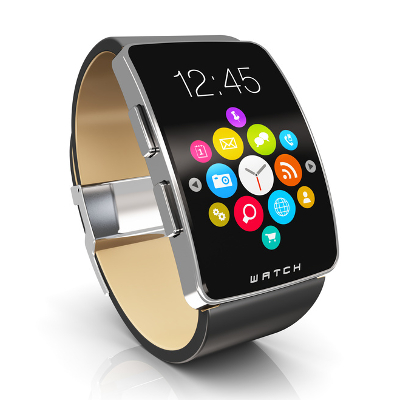
b2ap3_thumbnail_smartwatch_technology_400.jpgYou’ve probably seen the new fancy-schmancy watches that some people wear and wonder to yourself, “What’s so special about them?” Smartwatches like these are considered wearable technology and are typically meant to perform the various functions of a smartphone, minus the phone. Some devices are even used to monitor the body’s physical activity with health apps. They might seem useful now, but what’s the endgame for wearable technology?

What is Wearable Technology?
Technically, just about any device that’s worn on the body (like a headset) can be considered wearable technology. However, most wearable devices that you’ll encounter are designed to do one (or both) of two things: 1) Monitor the body’s physical well-being and track health progress, or 2) provide efficient access to apps that are designed to enhance productivity and efficiency for office employees. While they initially were meant for more of the former, the incredible success of wearable technology inspired developers to improve functionality in other areas.

As explained by CyberTrend:

A 2014 Parks Associates study projected that smart watch sales will reach 121 million units worldwide by 2018. Similar to a smartphone or smart TV, a smart watch can connect a user to the Internet for access to real-time data. Generally, smart watches will offer users some basic features (current weather, music, access to email and texts, etc.), which are also available on smartphones. Depending on the model, some folks can use their smart watches to control their smart TVs, capture pictures, video chat, and run scaled-down versions of common smartphone apps, in addition to using the device as an activity tracker.

While wearable technologies are versatile and can be used for multiple tasks, this doesn’t mean that these devices will be practical in the near future. For example, which would you rather use for your smart technology experience: a smartwatch or your smartphone? Many would probably say the smartphone because it’s vastly more powerful and efficient compared to the smartwatch. A larger screen makes it much more viable to get work done on a smartphone, rather than on a smartwatch.

Another type of wearable gadget consists of smart glasses, like Google’s failed Google Glass product. The main issue here is privacy; having a camera readily available on your glasses is somewhat sketchy and reminiscent of cyber espionage. Thanks to the portability afforded to smart glasses, they were thought to be a threat to both personal privacy and data security, so the idea never really took off.

How Wearables Affect Your Workplace
When workers are using wearable technology in the workplace, you should practice considerable caution. The trend known as Bring Your Own Device (BYOD) coupled with the Internet of Things (IoT) can spell trouble for businesses that aren’t prepared to deal with new devices connecting to their private networks. Any Internet-connected device can be considered a threat to your business if it’s not managed and maintained by your company. This is why it’s so important to keep an eye on devices that your employees are bringing to work with them. One way you can set these fears aside is by implementing a mobile device management solution, which gives you the ability to remotely wipe managed devices, restrict access to information on an app-by-app basis, and so much more.

Don’t let wearables and other Internet of Things devices hold your business back. To find out more information about how NuTech Services can protect your business from these new threats, give us a call at 810.230.9455.

b2ap3_thumbnail_cloud_management_400.jpg

3 Ways to Make Sure that Your Technology Doesn’t Get Stuck In the Past

b2ap3_thumbnail_cloud_management_400.jpgThe purpose of business technology is to propel an enterprise into the future. Yet, too many businesses are reluctant to make major adjustments to their current IT systems, wrongly believing that it’s not worth the investment. The best way to approach upgrading is to use an IT roadmap that lays out a plan for your technology’s future. This way, you won’t be surprised by what the future holds.

Here are three easy ways that you can “future-proof” your IT infrastructure.

Lease Whatever Computer Hardware that You Can
Generally speaking, it’s easier to upgrade when you’re leasing equipment, rather than having to pay for new equipment outright. Often times, a hardware refresh will even be included in the terms of the lease, and at no additional cost. This way, you won’t have to worry about the consequences of hanging on to your old technology for too long because your hardware refresh will already be scheduled and taken care of by your vendor.

At first glance, it may seem like the monthly expense of leasing hardware will end up costing you more than if you paid upfront for the equipment, but the cost-savings of leasing hardware can be seen in that the cost is now an operating expense, instead of a capital expense–which is very advantageous for your company’s future budget.

Layout Your IT Infrastructure to Accommodate Your Company’s Growth
One mistake that a non-future-minded company does with their technology is to set up their IT infrastructure to only accommodate their current computing needs, instead of designing the system to handle their organization’s growth. An IT system that’s designed for the future will have enough open access points to accommodate new users stemming from an increase in staff numbers, as well as enough available hard drive space and computing power to handle the IT trends that consume a lot of network resources, like BYOD (Bring Your Own Device) and The Internet of Things.

By not planning for future growth, you’ll be caught off guard by something that should be simple, like adding a new workstation. Also, you don’t want to get stuck not having enough bandwidth for an important video conferencing meeting with a client, due to too many users participating in the meeting.

Make Sure that Your Cloud Service is Flexible
A business that’s taking advantage of the cloud will often have an outside company host and manage their cloud services, either partially or exclusively. Due to the unpredictability of your company’s future computing needs, you’re going to want to commit to a cloud agreement that’s flexible, instead of locking you into some strict terms. NetworkComputing explains:

Cloud deployments tend to be dynamic — not static — and must grow or shrink depending on the requirements of the client. Any agreement with a managed service provider (MSP) needs to cater to the variability that the consumptive nature of the cloud provides.

Before implementing technology for your business, NuTech Services will take the time to discuss with you the future of your company’s computing needs so that your IT systems will be prepared for anything that the future will throw at you. We can assist you with finding the right hardware, laying out an IT roadmap, managing your cloud services in a way that best suites your current and future needs, and much more.

Call us today at 810.230.9455 to prepare yourself for whatever the future’s got in store for your organization.

b2ap3_thumbnail_technology_innovation_for_business_400.jpg

3 Ways to Make Innovation a Priority For Your Company

b2ap3_thumbnail_technology_innovation_for_business_400.jpgHow difficult is it for your organization to innovate and come up with new ideas? Sometimes it might seem impossible when it feels like all the good ideas are already taken. Normally, advancements in technology are a primary fuel for innovation within a company. If you aren’t feeling inspired, there are several new ways you can approach innovation. Here are three ideas.

If you ever feel that you aren’t making enough of a splash in the market, just remember that you’re not alone. Many organizations often have the same issue when it comes to innovation. Just like inspiration, it comes and goes in cycles. When a business grows, it might lose track of finding better solutions due to their continued success with proven solutions that work. This can hinder their ability to further expand. You’ve heard the saying, “Without risk there is no reward,” and in this case, it’s true.

Innovation and Acquisition
One way you can improve innovation in your company is through acquisition. The downside of innovation via acquisition is that it can be costly and difficult to get used to. There’s the cost of purchasing a company, as well as two different business models that might conflict. You can’t just buy a company and force it to comply with your current strategy right off the bat. Plus, if you’re having trouble with innovation, and you try to impose the same principles upon your purchased company, they’ll also have trouble with innovation, making it even more difficult to get anything done. The innovation will be short-lived or nonexistent, and you’ll be stuck with the same problem you had in the first place, only with a lot less coin in your pocket.

Take, for instance, Dell’s acquisition of certain aspects of IBM servers. This is the proper way to fuel innovation through acquisition. Find the value that you’re looking for in an acquisition, and hold onto it. Protect it and let it transform the way your organization does business. Use your available resources to help the endeavor succeed.

Skunkworks: Groups Focused on Innovation
Another way to enhance innovation is through the concept of skunkworks. This is when you put together a team that specializes in the concept of innovation. By creating a separate firm within your organization dedicated to coming up with game-changing ideas, you clear them to create and implement ideas that aren’t restricted by your corporate policies, effectively allowing the skunkworks group to act as a startup. One example of this is how EMC’s Pivotal Labs functions in order to create new products.

Innovation and Friendly Competition
Sometimes all innovation needs is a gentle push in the right direction from internal competition. In order to foster innovation in this fashion, you can use certain competitions designed to reward workers with bonuses. Or, you can use your local competition to fuel innovation similar to the way Dell does with its annual Innovation Day. It’s a reality show-like program where multiple companies compete for a fully-funded innovation trial. The winning company gets the prize of springboarding into a full-sized company which includes further funding. An incentive like this is sure to motivate your team.

Ultimately, one of the best ways you can boost innovation is by fueling it with technology best practices. NuTech Services can equip your business with the technology to develop new ideas. Give us a call at 810.230.9455 to learn more.

b2ap3_thumbnail_vr_ready_to_take_off_400.jpg

4 Game-Changing Virtual Reality Technologies

b2ap3_thumbnail_vr_ready_to_take_off_400.jpgEntertainment has become such a huge part of technology consumption that nobody can think of a smartphone or the Internet without immediately thinking about it. In fact, entertainment has grown so important that some are trying to create machines that integrate virtual realities into the lives of everyday consumers. What is virtual reality, and is it limited to the entertainment industry; or can it be used in the business sector, as well?

What Defines Virtual Reality?
Everyone has a different opinion on virtual reality. Some might think it’s as complicated as we’ve seen it in various films, but in all actuality, it’s not quite as immersive as moving your entire body into a virtual space. You don’t shift through dimensions. Your consciousness doesn’t detach from your body.

As defined by the Merriam-Webster dictionary, virtual reality is:

[…] an artificial environment which is experienced through sensory stimuli (as sights and sounds) provided by a computer and in which one’s actions partially determine what happens in the environment.

So, a virtual reality isn’t necessarily a reality at all; in essence, virtual reality is tricking your mind through sensory shenanigans into believing that what you see and hear is really there.

Oculus Rift
The Oculus Rift is the virtual reality technology that consumers are most likely to be familiar with. It’s manufactured by Oculus VR, which was acquired by Mark Zuckerberg of Facebook for two billion dollars earlier this year. The device in question, the Oculus Rift, is a headset that allows for sight and hearing stimulation via a heads-up display and headphones. Though a consumer version of the Oculus Rift isn’t slated until later in 2015, it’s sure to primarily be used by gamers; making it somewhat obsolete in the business world.

Google Cardboard
Not to be bested by Facebook’s acquisition of the Oculus Rift, Google created Google Cardboard. Cardboard allows you to turn your smartphone into a virtual reality headset. With Google’s cardboard blueprints, you can cut and fold cardboard into the base. While Cardboard is a neat, thrifty way to get a feel for what’s to come, the material available for download is limited to a handful of games and short movies.

Google Glass
Google’s take on a reality augmentation technology was mostly a bust, but in theory, it was a good idea. Google Glass was a pair of glasses that could act similarly to a smartphone, but hands-free. Some of its features included connecting the Internet, simple voice commands, a camera for both photos and videos, and a touchpad on the side which is used to control the device. It was even capable of using other Google applications, like Gmail, Google+, Google Maps, and more.

Unfortunately, Google Glass failed to take off because of its outrageous consumer price, and its stigmatized reputation due to privacy concerns. For the average consumer, Google Glass boasted a whopping $1,500 price tag. According to Forbes magazine, its parts and assembly should have cost less than $80. Furthermore, with a camera disguised as a spiffy pair of specs, Google Glass was at odds with privacy in general. In a world where organizations are increasingly sensitive to the preservation of their business secrets, it’s no wonder that Google Glass wouldn’t fit in with the business world.

Microsoft HoloLens
The development of Microsoft’s HoloLens was largely kept under wraps until earlier this year, when it was announced that it would follow shortly after the arrival of Windows 10 this July. Designed as a reality augmentation device, it takes elements of the real world and integrates virtual elements into them. It’s designed to work around your surroundings, and unlike the Oculus Rift, you still see your surroundings through the heads-up display.

Unlike the other two examples, Microsoft Hololens presents a unique business advantage. The possibilities are expansive. According to Microsoft’s official HoloLens site page, it’s expected to make leaps and bounds in the construction industry, space exploration, education, and more. However, whether or not the HoloLens will prove to be an efficient use of augmented reality is yet to be seen. It has big shoes to fill, and after the failure of Google Glass, consumers might be more skeptical of it.

What are your thoughts on virtual reality and augmentation in the workplace? Do you foresee a world where it can be efficient enough to accept its drawbacks? Let us know in the comments.