iot_376226617_400.jpg

Make the IoT Work for Your Business

iot_376226617_400.jpg

By now you’ve probably heard the term Internet of Things (IoT). You may not completely understand what it is, but you know it has something to do with all those “smart” devices that you see popping up everywhere. Today, we’d thought we’d get into what types of things are on the IoT and how they can have an impact on your business. 

What Is the Internet of Things?

The Internet of Things started growing a decade or so ago as “smart” technologies were being developed to present people with technology that they can use to make their lives easier. This concept is what technology is all about, after all, and it quickly became a business opportunity for OEM (original equipment manufacturers) and other companies. This has led to a massive explosion of “smart” devices designed to unburden the lives of their users. 

Of course, the more businesses that are developing this technology, the more tools will be aimed to transform business. There are now 14 billion IoT devices (including smartphones) connected to the Internet, so there is a breadth of options for businesses to choose from. It’s also one of the more funded technology markets by venture capital firms with close to $5 billion being invested annually, as the practical use of IoT is just now scratching the surface.

The IoT Is Everywhere

The IoT can be used in multiple ways in and around your business; and, each adds its own unique variables to the way you go about integrating them. Obviously, a large portion of your employees have smartphones, that is an added consideration because you need to ensure that all those mobile devices are working with the applications that you use; or, if you don’t go that far, at least that they don’t bring unwanted passengers along on to your network. 

More complex industrial IoT (IIoT) platforms can really alter the way a business operates, so training will have to be considered to help your employees understand how they work. There is a lot of good that the IoT can do, but it also comes with some challenges. Not only do you need to set up your IoT platform from the ground up, you need to make sure that it integrates with your back-end software systems and any other applications that would provide the benefits needed to implement them. 

Set up and Security Questions for the Implementation of Business IoT

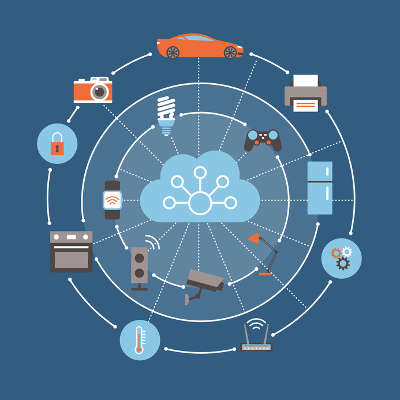
For most businesses looking to implement IoT to help automate some things will first start by using it in the ways that your average home consumer might. You get systems that can help save you on utility costs and help you save time (smart thermostats, smart lights, voice-driven personal assistant hubs, etc.). 

More complex systems like asset tracking and inventory management allow for pinpoint control over supply chain issues. This can get pretty complicated, pretty quickly, but that’s the point. The IoT helps humans do things humans couldn’t do without these tools. It is the perfect confluence of human-made tools (hardware and applications) and constant data streaming that can help businesses automate more and collect more data to help them make better business decisions. 

Businesses need their technology to be scalable and secure. This is where the IoT hits a snag a lot of the time. There are serious security questions with any number of devices, but that part of it is improving. For the business, however, “improving” could mean “still too expensive/risky”.  The truth is that any business can utilize some form of IoT to help them cut costs, improve efficiency, and improve decision making. You just need to know how.

At NuTech Services, we understand where and how the IoT fits into a business. If you would like to learn more about the Internet of Things and how it can help your organization grow, give us a call today at 810.230.9455.

smart_devices_174202822_400.jpg

3 Useful Smart Devices You Can Implement Today

smart_devices_174202822_400.jpg

The Internet of Things is growing rapidly and can be of benefit to your organization if it is deployed correctly. It offers a massive opportunity to automate certain parts of your business, saving money, and ensuring that human error is taken out of the equation. A majority of businesses have not fully taken advantage of the time and money savings a well-positioned IoT device can provide.  Let’s take a look at three of the most useful IoT devices that a small business can implement.

Smart Locks

For small businesses, physical security is a major consideration. Today, there are smart lock mechanisms that increase convenience and security, by giving managers more control and peace of mind over the locks on their organization’s doors. Unlike traditional locks, a smart lock features a computing mechanism inside a deadbolt lock that can be locked and unlocked remotely. The key to the smart lock is that it has administrative tools built in that give administrators the ability to create and revoke digital keys that provide a level of access control that can be added and eliminated in seconds. Additionally, smart locks provide comprehensive logs as to when people opened a lock with their digital key that is assigned to a user’s device, giving administrators control and oversight over every door in your building.

Smart Lighting and HVAC Controls

Another digital tool that can help save plenty of money are smart lights and thermostats. The smart lighting not only provides additional convenience, as it can be set when to turn on/off lights automatically. Administrators can ensure all lighting is handled remotely as well so they don’t have to physically be at a location to ensure that the lights are on or off. 

The smart thermostat operates on the same general principle, but with the cost of heating fuel and electricity, it can literally pay for itself in a matter of months. Admin features allow for temperature control around the clock, so that a company can save plenty of money on heating and cooling bills by setting temperatures for different parts of the building at different times. With smart thermostats, you’ll never have to worry about that employee that cranks the heat and leaves it on for days.

Smart Cameras

These days, every business should have some type of surveillance system. Not only is it a theft deterrent, but it can also help lower insurance premiums. Unfortunately, many businesses don’t have sophisticated enough cameras to help authorities if a theft were to occur. With smart cameras, a business can get the crystal clear, high-resolution cameras they need, and it won’t cost thousands of dollars to implement. Most of today’s smart camera systems come with enough cloud storage to upload the high-definition footage, making reviewing this footage less problematic. 

Overall, the Internet of Things is both a benefit and a problem that every organization has to confront, but by implementing smart tools that are secure and reliable, your organization can save money, be more secure, and save a lot of time. 

What do you think about smart devices? Do you think they are secure enough to use in your business? Leave your thoughts in the comments section below and check back soon for more great technology content.

269763698_IoT_400.jpg

IoT Can Really Make a Difference for Your Business

269763698_IoT_400.jpg

For a couple years leading up to 2020, the Internet of Things was all the rage, but for obvious reasons, IoT hasn’t been at the top of many IT administrator’s minds unless it was in an effort to secure file access for the endpoints of a newly remote workforce. Despite the questions surrounding revenue and budgets, IoT can bring a lot of value to the small business. Let’s take a look at today’s IoT and talk about a few options that you can use for yours.

The IoT

The Internet of Things has been growing incredibly fast over the past five years, but many small business owners don’t know where it fits. That’s because there are tens of millions of devices that could actually serve some purpose for their businesses and basically have buyer’s paralysis or are skeptical that integrating these tools is going to save them money. Here are some ways that the IoT could be used to do just that.

Security

Since physical security is almost certainly a priority for your business, the IoT presents several options that can be used to promote solid security standards. Products such as smart camera systems, smart locks, and other Internet-fueled security solutions can be of great benefit as they will allow a business to have both strong security and deterrents, while also having the ability to manage the system remotely.  

Lighting and HVAC

For many small businesses heating, cooling, and power costs can be prohibitive to their ability to function the way they want. IoT tools are now being developed with the ability to read the situation in your business and adjust the utilities to save capital. The more you save on utilities, the more you can spend on your business. 

RFID Sensors for Inventory Control

RFID sensors have been used for some time. Today, businesses are using them to track their inventories and supply chains. Using IoT devices with inventory control software, a business can now track fast-moving systems such as resource and product procurement and make orders should the inventory get low. The consistency and reliability of these systems can automate large portions of the procurement and inventory management process without a business missing a beat.

Mobile Card Readers

The average small business pays a lot in credit card fees. With mobile card readers, a simple app and dongle can transform a tablet or smartphone into a register. With a fee structure that works to save small businesses money, with card readers they aren’t losing their PCI DSS regulatory compliance; a big deal for the growing business.

As stated above, there are millions of IoT tools out there that can actually help you manage your business or help reduce costs. If you are interested in learning how IoT deployments can help your business, call us today at 810.230.9455 and our knowledgeable consultants will take you through how Internet and cloud-connected technology can help you transfer your costs and provide you with the innovative tools you need to grow your business.

242008881_400.jpg

The Next Phase of the Internet of Things

242008881_400.jpg

The Internet of Things is growing rapidly, and with that growth there will be a stage where thoughts about IoT technology change forever. From RFID sensors to mobile devices to commercial goods, machine-to-machine communications have already made their way into people’s homes and businesses. What can we expect to happen with the IoT in the future? Today, we take a look to answer this very question.

With global spending on IoT research and integration reaching $745 billion in 2019, the IoT is primed to be one of the largest single industries in the world in the future. Individuals, businesses, and governments are looking at the IoT for solutions to their problems. After all, the more information people have, the better decisions can be made. From the outset, it was said that this technology will transform the way we interact with machines and the way they will interact with each other, and only a few short years into a worldwide implementation, that mantra has proven to be true. Let’s look at where the IoT is growing most.

Industry

The huge annual jumps in IoT spending is largely driven by manufacturers, transportation, and utilities. Industrial IoT solutions provide companies and municipalities, alike, the link between their cloud-based software systems and their analysts, salesmen, and decision makers. This relationship is tenuous, however, and is closely monitored as a result. If a huge IoT strategy breaks even once, confidence in the platform is destroyed, leaving it an unreliable solution, regardless of the strengths of the technology. 

Manufacturers and process managers that utilize IoT solutions absolutely need their systems to be as reliable as possible. That means security, which is the number one improvement that the next phase of IoT has to make. For years, IoT was only somewhat trustworthy because of the lack of integrated security many IoT devices were manufactured with. Today, with security an absolute must for the major undertakings it is being used for, security has improved, but only slightly. A dedication to creating IoT devices that have hardware and software systems that are secure and reliable will dictate just the ceiling of IoT effectiveness.

The Smart City

One of the most intriguing places the IoT has been utilized thus far is in the integration of automated utility systems inside what has been termed, “the smart city”. The smart city uses what are known as low power IoT connections. These devices deliver low bandwidth and power saving features that are perfectly suited to asset monitoring. They can be implemented for a variety of uses, including: 

  • Sensors built into city roadways to sense things like the subsistence of traffic congestion and wear and tear of roadways.
  • Sensors built into bridges to sense degradation and the effect of seismic forces caused by geographical and traffic-based events.
  • Sensors built into buildings to measure wind force, foundation subsistence, or seismic activity.
  • Sensors in the interior of buildings to control foot-traffic, lighting, heating and air, and other systems humans rely on. 
  • Sensors on the street or on entryways that will provide facial recognition and reporting.

Unlike IoT-connected consumer goods, every IoT device deployed in a smart city would have a purpose that is beyond convenience. Every device would be placed to achieve a goal, improve the usability, longevity, and management of infrastructure, boosting resident safety and improving their access to services, cutting costs and limiting energy use, improving communications, and more.

One thing is for sure, the next phase of IoT implementation is going to challenge conventional thinking and deliver solutions that only a short time ago, were only imaginary. At NuTech Services we find technology fascinating. For more great technology information about innovative new tech, return to our blog regularly. 

smart_watch_smart_400.jpg

Are Smartwatches Smart Enough?

smart_watch_smart_400.jpg

Smartwatches might be great tools for keeping yourself connected to important information, but they bring with them a considerable amount of security threats. Vulnerabilities can make using smartwatches and other wearable technology dangerous. We’ll examine some of the major features of the modern smartwatch, how hackers can use them to cause trouble, and what you can do about it.

The Smartwatch
The smartwatch market as we know it today has existed for almost a decade, surprisingly enough, but the first smartwatch was developed in the late ‘90s. A smartwatch is seen today as more of a peripheral for a smartphone. They come in several different shapes, sizes, and styles, but they all tend to provide some kind of utility to the user. Here are some of the main benefits of using a smartwatch:

  • Convenience: You can’t beat the convenience of checking your watch and getting access to all kinds of information, like notifications, calendar events, and so much more. Modern smartwatches also give users the ability to search for information, and the processing power of these devices gives smartwatch users the ability to perform several actions that a smartphone can accomplish.
  • Functionality: The latest smartwatches have several features that give users lots of functionality. They can integrate with applications and take advantage of other practical functions, making them as useful as you want them to be. In this way, smartwatch manufacturers continue to push the boundaries of what’s possible with wearable technologies.
  • Discretion: Discretion is probably the most important part of using a smartwatch, as it’s much easier and more discreet to use it than pulling out a smartphone. Most smartphones have the capability to push notifications to your smartwatch, including those from social networks, messages, weather, and so on. More than anything else, it at least keeps you from being rude and checking your smartphone in the middle of a conversation.

Security Issues
The primary issue that comes from wearable technology is that it connects to your mobile device through a Bluetooth connection. Since they also connection to Wi-Fi networks, they are being exposed to two potential ways of being breached. Businesses that prioritize security (read: all businesses should prioritize security) need to be particularly wary of wearables, especially in regard to a Bring Your Own Device policy.

The modern hacker will use any opportunity they can find to hack into a device, and since wearables are particularly vulnerable to this due to the modes of connection they contain, they provide additional access points that create issues for businesses. If a hacker can gain access through an application at the wearable level, it could potentially compromise even the connected device and any network it’s attached to.

Industry experts might agree that the lack of wearable security isn’t a major concern overall, but it’s still something that you should be addressing with your business’ mobile device policy. Here are some ideas to think about:

  • If you are accidentally collecting electronic Protected Health Information (ePHI), you could be putting your organization at risk of breaching healthcare standards set by HIPAA. You should limit your employee’s fitness and wellness data collection on company-owned wearables and devices whenever possible.
  • Be wary of what can happen if you fail to educate your employees about the importance of protecting wearables. Be sure to remind them that they aren’t just putting business data at risk, but also their own individual data. It’s imperative that your employees understand how to best protect these devices.
  • Focus on the management of these devices, as there are no proper anti-malware solutions for IoT devices.

For assistance with planning out a wearable strategy for use with your Bring Your Own Device policy, be sure to reach out to us at 810.230.9455.

smart_city_snag_400.jpg

Attempts to Make Smart Cities Hit a Snag

smart_city_snag_400.jpg

At this point, the concept of the Internet of Things is a fairly familiar one, but that familiarity is to the Internet of Things on the micro scale–appliances with capabilities enhanced by an available connection to the Internet. There is another, more macro application to the Internet of Things: as a way to collect data in a municipal setting. However, like the IoT we are familiar with, these “smart cities” are host to many familiar problems.

The Concept of a Smart City
Like many technological developments, the idea of a smart city is built on good intentions. Through the use of technology (much of it based in the IoT), a smart city leverages collected data to functionally serve the public, embetter the services of government, and improve the quality of life for its citizenry.

That’s the idea, at least.

Unfortunately, like many of the ‘smart’ devices that the populace can interact with, the systems that these cities leverage tend to be susceptible to attack.

What These Attacks Could Do
In order to understand the potential ramifications of these kinds of attacks, it is important to first have an understanding of the kinds of systems that a smart city is built upon.

The true purpose behind creating a smart city is to make it a better place to live, and to do that, certain systems need to be put in place. These systems are powered by the data they collect. With that data, insights into correlated problems can be leveraged to solve them.

The sensors that these cities use to collect this data monitor a wide variety of factors, ranging from traffic conditions to the weather and even health-related factors like air quality and radiation. The data that is collected is then used, through the power of automation, to decide how to approach infrastructural concerns. For instance, if traffic is moving slowly in an area, these systems would deliver that data to decision-makers, allowing them to make the call to reroute traffic a different way to ease the congestion. This system just makes the decisions, too.

The big problem with this is that now, if these systems don’t have sufficient security measures in place, they leave the city’s infrastructure vulnerable to attack. Unfortunately, in an initial study of three companies who provide these kinds of smart city systems, 17 basic vulnerabilities were present in their products. These vulnerabilities included things like easily guessable passwords, bugs that could allow malware to be introduced, and opportunities for authentication requirements to be side-stepped.

Why This Matters
The harsh reality is that developing smart cities with these kinds of vulnerabilities is the geopolitical equivalent of intentionally wearing a “Kick Me” sign each and every time you went out in public. The United States of America have already learned this the hard way, as electoral systems and the energy grid have been hijacked recently. If appearances aren’t deceiving, actions are being taken to reinforce these vulnerabilities in these IoT devices, but it certainly doesn’t help if careless oversights are being made in the security of major metropolitan areas.

We’re not saying that bringing the Internet of Things to cities is a bad thing, but the security needs to be there. The same goes for businesses. If your business relies on devices that connect to the Internet, like physical security devices, smart appliances, and networking infrastructure, locking down these devices and keeping them patched is critical to keep your operations running without a hitch.

Give NuTech Services a call at 810.230.9455 to learn about the security options we have to offer you.

sports_are_training_ground_smart_tech_400.jpg

Sports Are a Training Ground for Smart Technology

sports_are_training_ground_smart_tech_400.jpg

Smart technology and the whole Internet of Things revolution has been underway now for some time. One vertical market that has embraced this shift was that of sports and fitness. Of course, you’ve heard of (and possibly own) a fitness band that is designed to track your steps, your vitals, and some other things to allow you to be the best version of yourself. This technology has been around for years and, while useful, isn’t transforming the face of sports like the technology you are seeing being introduced today. Today, we’ll take a look at how the IoT is transforming the sporting world.

The Games
Sports are important throughout the world. With so many people claiming to be sports fans, and so much money spent on viewing sporting events annually, it stands to reason that one of the biggest technology trends in history hit the sports world (and athletics as a whole). To this point the Internet of Things has been a conceptual strategy in some industries. Not in sports, where athletes, teams, and leagues are using sensors and smart products to help quantify and track elements of an athlete’s performance, while using the immense amount of data that’s produced to formulate plans to make sports safer. The analysis of this data has become big business, and is, in some cases, transforming the games themselves

The National Pastime
One example is happening in baseball. Several years ago, the use of data began to change the way teams value players. Called sabermetrics, it took all the raw data that was collected from the game (and there is an awful large amount of data in every game), plugged it into algorithms that were uses to compare every player to every other player. This provided a map of how to put together a winning team for fewer dollars. Later named “Moneyball”, the strategy began to make its way through the major leagues, into the minor leagues, and beyond. With so much impetus put on the numbers, a lot of teams started finding new algorithmic approaches to try to get an advantage.

When the IoT was in its infancy, the shift toward analysis has only quickened the pace of innovations. Today, so much raw data is taken from a baseball game that all 30 major league teams have come to employ huge analytic departments to sort through and quantify the data. This has not just been used to determine the acquisition (and value) of players, it has been used to determine lineup configuration, defense configuration, pitcher effectiveness, and all in the name of situational advantage.

Once general managers, managers, and players knew what they were looking for, they began to use the newest technologies to track specific parts of a player performance. One way that IoT is working to improve player performance is by introducing technologies like SwingTracker that attaches to the bat and captures a player’s swing in 10,000 separate data points per second, and the mThrow wearable sleeve that pitchers can wear on their arms to measure pitching mechanics. Since millions of dollars are spent on contracts for players, teams are trying to be as diligent as possible as to not waste available capital. Beyond the dollars and cents, these IoT wearables not only help athletes fine-tune their craft, they do it in a way that helps them avoid injury.

Other major sporting leagues including the NFL, MLS, Premier League, NHL, NBA, and PGA all have incorporated IoT devices into the training and reporting strategies trying to both enhance the quality of their product while protecting (as much as they can) their resources (their players).

The Athletes
For the athletes themselves, the IoT has a myriad of potential uses. Today there are smart clothes, including socks, shoes, fabrics, and more designed to help the track and improve performance. Here are some examples of IoT devices that are helping individuals excel in their athletic endeavors:

  • The connected basketball – Ball handling and shooting are two of the most important offensive skills for a basketball player and there are now basketballs on the on the market that can help you improve your ball handling and shooting by incorporating sensors into the ball itself. The corresponding app presents you options to measure your dribbling and shooting.
  • The connected hockey stick – Using tape sensors, a hockey stick can help players measure their shot speed, their blade angle, and a player’s stick work.
  • The connected golf club – Golf has, somewhat ironically, been the one sport that has embraced technology most over the past 50 years. So, it is not really a big surprise that the IoT has already found its way into both clubs, and their grips. Today, there are many options for the tech-savvy golfer to improve their game using IoT technology.
  • Radio Frequency Identification (RFID) for football – By sticking an RFID sensor in a player’s shoulder pad, coaches can now see where the location of a player, the speed, and the direction they’re going. This allows them to put together smarter game plans and improve team performance.

The Internet of Things is changing the world we live in, and it’s not happening slowly. Have you started using IoT-connected devices? Tell us about your IoT experiences today in the comments section below.

smart_technology_changing_fast_400.jpg

These 3 Industries are Being Fundamentally Changed by Smart Technology

smart_technology_changing_fast_400.jpg

Smart technology has seen explosive growth in recent years, leading to an uptick in startups popping up to capitalize on smart tech and the innovative ways it can be leveraged. With demand for such devices increasing exponentially, it’s little wonder that many industries are diving into this technology. Today, we’ll discuss three of them.

Energy and Conservation
It should come as no surprise that a major driving force behind the use of smart technology is for this technology to use energy and natural resources more intelligently. Of course, it also doesn’t hurt that smart technology allows us to save time and money as well, through the automation of processes that once required a human touch to complete. In addition to making homes ‘smarter’ and more accommodating to the needs of those living in them, smart tech has been proven to be a major player in environmental conservation. Automated devices have been able to track and report on various kinds of environmental data, including waterflow, plant health, migration patterns, and many other variables, allowing us to use this data to improve our treatment of our environment.

Fitness and Health
Ever since the first ‘smart’ shoe – the Micropacer – was introduced in 1984 by Adidas, smart technology and fitness have been close companions. In just the past few years, devices like fitness bands and smartwatches have exploded in popularity, and more innovations have followed fast.

As fitness bands and watches have become more intelligent, the technology that powers them and their functions has improved as well. Now, features like application integration, improved functionality, and quicker response times are available in fabric form. These smart fabrics have led to innovations like smart socks and undergarments, fitness rings, shoe inserts, and other activewear and accessories hitting the market en masse. Using these technologies, everyone from the active exerciser to the casual enthusiast will be able to better measure and optimize their workout regimen, even avoiding injury.

Transportation
All over the world, one of the biggest time sinks is the battle to get from point A to point B. In many places, the commute to work can be stretched due to traffic congestion, and in others, impractical traffic patterns extend the amount of time spent sitting behind the wheel. This is one issue that is actively being worked on through smart technology now, as is evident by the aggressive research and development into driverless transportation. After all, with machine learning and AI behind the wheel, traffic as a whole could become a cohesive network, rather than the mass of individual, autonomous bodies all looking out for number one.

This is a concept that has long been considered as a solution for the persistent issues with mass transportation that have been evident since, well, mass transportation became a common thing. We have never been closer to successfully revolutionizing automated transportation in a way that is practical for widespread application. Pittsburgh, Pennsylvania, and other places have experimented with concepts like Uber’s driverless cars. While this initiative didn’t go quite according to plan, it still demonstrated that this technology is on the cusp of market readiness.

What are your opinions on smart technology? Do you see it being adopted in more aspects of life, or do you see it as being a short-lived interest? Talk about it in the comments section!

internet_of_thing_blue_400.jpg

The IoT Can Be Very Useful, but Also Risky

internet_of_thing_blue_400.jpg

You might be surprised to hear how the scope of the Internet of Things has increased over the past few years. These connected devices are all over the place. In order to ensure that your business isn’t affected in a negative way by these IoT devices, you’ll need to consider the many risks and how you will respond to them.

What is an IoT Device?
Essentially, any device that connects directly to the Internet or sends data to and from the Internet through another device is considered an IoT device. A smartwatch that connects to Wi-Fi, or a fitness tracker that shares data fall into this realm. From smart appliances, like Amazon’s Alexa and Google Home, to Internet-connected coffee machines are all Internet of Things devices. While the data they share might not always be extremely sensitive, they could open up other ways for your sensitive data to be reached.

Ask yourself – does this device connect to the Internet or network in some way? If so, it doesn’t mean it is a risk, but it does need attention.

What are You Risking?
When you’re putting together your business’ policies regarding the IoT, you should consider what assets you’re willing to leave vulnerable. It essentially boils down to what you’re willing to let your employees access. If your employees have access to a lot of data, you’re increasing the risk involved with IoT devices in the office. In much the same way, you can control how much data is at risk by limiting which employees can access it. It’s a great way to ensure that the Internet of Things poses a minimal threat to your business and its data.

On the other hand, it’s important to remember that IoT devices will still pose a threat in some way, simply due to the amount of them. There will always be too many factors to take into account to guarantee safety from any and all devices. Therefore, you should consider as many as feasibly possible. The data’s sensitivity is chief among these considerations, as well as the employee’s particular role within your organization. If they are mostly separated from confidential or sensitive data, then perhaps they can use basic IoT capabilities with little consequence. Granted, this assumption varies between industries, so be sure to make it clear what you expect from your staff in your employee handbook.

Train and Prepare Your Staff
Security isn’t something that can only come from one employee–rather, it “takes a village,” so to speak, and everyone must be mindful of security practices. This is incredibly important for the Internet of Things, but everyone needs to be on board–not just management or leadership. All employees need to be aware of the cybersecurity policies used by your company, as well as the various risks associated with the Internet of Things. Plus, it never hurts to be aware of even the most benign warning signs of common security threats.

Lead by Example
If you want your employees to prioritize security for your workplace, start by taking the first steps yourself. After all, you can’t expect your employees to do something that you yourself don’t do. Management should be able to set an example for their workforce, and this is how the IoT is prepared for most effectively.

Is your business utilizing any IoT devices? NuTech Services can help your business prepare for this connected technology revolution. To learn more, reach out to us at 810.230.9455.

internet_of_things_all_connected_400.jpg

Tip of the Week: The Internet of Things Poses Threats to Your Organization’s Network

internet_of_things_all_connected_400.jpg

The Internet of Things has become one of the central parts of connectivity in a tech-centric world. Despite the incredible convenience that these devices offer to users, they come with considerable security risks that absolutely need to be kept in mind. We’re going to discuss some of the ways you can keep the IoT from being a security hazard while optimizing how much you get out of it.

Does the Device Need Connectivity?
The first question you should ask about your IoT device is if it actually needs to be connected or not. The reason for this is simple; the more connected devices on your company’s network, the more risk will be involved with your network. Certain IoT devices could be leveraged by hackers and other dangerous entities to spy on you, steal your data, or track your current location. If the device is worth the risk, you could potentially take advantage of great services that you might otherwise not get. If it’s not worth it, though, perhaps you’re better off not using the device. If the device is that of an employee, you should ask them to leave it disconnected during the day.

Have You Optimized Security?
In any environment where you’re using an IoT device, you need to make sure that security is at the top of its game. Ensure that all of your firmware is updated, as well as any security patches to fix any major vulnerabilities that might be present on your network have been applied. To make things easier, this process can largely be automated. You should also consider investigating your router to make sure that it’s updated properly as well.

It is also worth mentioning that your router may support guest networking, which means that you can use this capability to protect your business network from the risks of the IoT. By relegating IoT devices to the guest network, you can protect the business side of things from potential issues.

Passwords are a great way to make sure that security is at its maximum. You should never reuse passwords for devices or accounts. If these guidelines are followed, you’ll have easier time keeping your accounts from being compromised.

Make Sure Your Devices Are Maintained and Monitored
Your business should have practices put into place that promote transparency with the ongoing use of Internet of Things devices. For example, you should be monitoring user permissions.

Most of your IoT device issues can be resolved just by asking yourself one simple question: Do you even need the devices in the office? If not, they shouldn’t be there.

If your business needs help with managing devices in the workplace, reach out to NuTech Services at 810.230.9455.

b2ap3_thumbnail_dvr_iot_issues_400.jpg

The Super-Creepy Reason Why You’ll Want to Secure Your Surveillance Camera

b2ap3_thumbnail_dvr_iot_issues_400.jpgWith approximately 5.5 million new devices being connected to the Internet everyday, the Internet of Things presents the biggest security challenge to date for IT professionals. Essentially, an IoT device that’s not secured can easily fall prey to hackers, and with so many different devices being connected, it’s easy to overlook a device or two, like your security cameras.

The creepy risk associated with not securing an Internet-connected security camera was recently reported on by Lisa Vaas of Naked Security. In her article, “DVR snaps stills from CCTV surveillance and sends them to China,” she presents findings from researchers at UK-based Pen Test Partners about the security holes found in the Internet of Things.

For the study, Pen Test Partners researchers analyzed data from Shodan, which is essentially a search engine for Internet-connected devices, like buildings, smart appliances, webcams, and much more. In particular, the researchers used Shodan to look at Internet-connected surveillance cameras.

Before we go into the technicalities of what they found, let’s take a step back and warn everybody who uses a webcam or Internet-connected surveillance camera that even a novice PC user can create a free account with Shodan and use it to search for, access, view, and even control unsecured cameras. We were skeptical of this claim when we first heard about it, but the proof is in the pudding. Check out these stills from random surveillance cameras we came across on Shodan:

ib spy1

ib spy2

ib spy3

ib spy4

These cameras are just random ones that we stumbled upon. However, Shodan has been criticized for giving its users easy access to cameras that are sensitive in nature. Vocativ cites findings by Ars Technica:

These webcams show feeds from sensitive locations like schools, banks, marijuana plantations, labs and babies’ rooms. Shodan members who pay the $49 monthly fee can search the full feed at images.shodan.io. A Vocativ search of some of the most recently added images shows offices, school, porches and the interior of people’s homes. Accompanying each of these grabs is a pinned map that shows the location of the device capturing that footage.

If that doesn’t creep you out, then lets go back and take a look at the even-more-in-depth findings of the first study we mentioned by Pen Test Partners. Vass reports:

The device also has no Cross-Site Request Forgery (CSRF) protection, so attackers can trick users into clicking on links to carry out malicious actions; it has no lock-out, so attackers can guess as many passwords as they like; it sends communications without HTTPS that can be intercepted and tampered with; and there’s no firmware updates, so “you’re stuck with these issues,” Pen Test Partners said. But weirdest of all, the thing is capturing still images from video feeds and emailing them to an address that appears to be hosted in China.

As far as why surveillance images were being sent to China, that’s a mystery that Pen Test Partners was unable to get to the bottom of. We could speculate as to what’s going on here, but at the risk of letting our imaginations run wild and sounding like conspiracy nuts, we won’t. Instead of making wild speculations, we want to communicate that we’re here to help your company secure all of its Internet-connected devices from the prying eyes of everyone on the web.

Are you confident that all of your IOT devices are secure enough to keep hackers out of your network? Do you even know if you have IoT devices on your network transmitting data across the web? Or at the very least, are you sure that random Shodan users aren’t making a highlight reel from your surveillance camera footage? To get a grip on the security of every Internet-connected device on your company’s network, give NuTech Services a call at 810.230.9455.