CRM_464970537_400.jpg

How a Small Business Can Benefit from a Customer Relationship Management Platform

CRM_464970537_400.jpg

While it can be too easy to assume that specialized software, like customer relationship management (CRM) software is reserved exclusively for massive companies, there are a lot of benefits that small businesses can see from using it. Let’s take a look at some of these benefits now.

A CRM Helps You Track (and Increase!) Your Profitability

Bet you weren’t expecting that to be the first benefit we brought up!  Not only do many CRM programs feature bookkeeping functions and automated costs and discounts, which allow your financial department to spend more time on other tasks, they can help you identify points of failure in your sales process that you can then adjust for success. 

Can you close a sale effectively, but your follow-through falls short enough to dissuade repeat customers? Your CRM can not only identify this, it can also help you fix the problem through automated reminders and outreach steps.

A CRM Makes Data Management Easier

How long does it take each employee to manually put in the data that you include in your customer profiles? A CRM makes this process far simpler and faster through automation, as well as making it easier for your sales and customer service teams to access this data as it is needed.

A CRM Helps You Narrow Down and Specify Your Customer Base

It’s important that you focus your business and its efforts on the right people—the ones who need your services and are a good fit for your delivery of them. A CRM can help you segment your prospects into different groups based on a variety of categories, whether it’s the industry they serve, their position in their company, or where they are located. Going further, your CRM can be used to build a profile of each prospect and client, enabling you to meet their needs more precisely than you could otherwise… at least, at the ease that the CRM provides.

A CRM Helps to Expedite Your Sales

Sales quotas are critical for any business’ success, and the CRM clearly provides the tools that make the process more efficient. As an added bonus, the CRM also works the other way in the supply chain by allowing your business to keep track of your own vendors and contacts. As a result, using a customer relationship management platform assists your sales processes as both vendor and customer.

We’re Here to Help You Make the Most of Your CRM…

…and the rest of your business’ IT, for that matter. Give us a call at 810.230.9455 to put the professionals of NuTech Services to work for you.

do_you_have_a_data_leak_400.jpg

Alert: 33.7 Millions Records Released to Public Due to Leak of Massive Marketing Database

do_you_have_a_data_leak_400.jpg

In recent news, millions of records containing personal information were made available to the public in a sizable data leak, providing potential scammers with plenty of information to utilize in their schemes. These records were all part of a 53 GB database that was available for purchase from Dun & Bradstreet, a business service firm.

The database contained information that could be of great use to hackers and marketers alike, as it outlined corporate data for businesses within the United States, providing professional details and contact information for members at every level of the businesses included.

Dun & Bradstreet released a statement via email in an attempt to remove the firm from any responsibility. According to the firm, there was no evidence of a breach on their systems. The email also pointed out that the leaked data was sold to “thousands” of other companies, and that the leaked data seemed to be six months old. In essence, Dun & Bradstreet’s position was “not our fault.,” and that there was little cause for worry, as the list only contained “generally publicly available business contact data.”

However, not everyone feels that the responsibility for this event can be passed off so easily, especially considering the nature of the data found on the database.

Troy Hunt manages Have I Been Pwned, a data leak alert site that allows a user to reference one of their accounts to determine if their credentials have been compromised. He offered up his own take after reviewing the database for himself. Hunt’s analysis revealed that the organizations with the most records in the database were:

  • The United States Department Of Defense: 101,013
  • The United States Postal Service: 88,153
  • AT&T Inc.: 67,382
  • Wal-Mart Stores, Inc.: 55,421
  • CVS Health Corporation: 40,739
  • The Ohio State University: 38,705
  • Citigroup Inc.: 35,292
  • Wells Fargo Bank, National Association: 34,928
  • Kaiser Foundation Hospitals: 34,805
  • International Business Machines Corporation: 33,412

If this list alarms you, you have the right idea. In his comments, Hunt brought up a few concerns that he had with the contents of the database out in public.

First of all, this list is essentially a guidebook for someone running a phishing campaign. A resourceful scammer could easily use the information contained in this list (including names, titles, and contact information) to create a very convincing and effective campaign. Furthermore, the most common records in the leaked database were those of government officials and employees. Hunt went so far as to mention which personnel records could be found in the database for the Department of Defense: while “Soldier” was the most common, the list also included “Chemical Engineer” and “Intelligence Analyst” entries.

In his response, Hunt asked a very important question: “How would the U.S. military feel about this data – complete with PII [personally identifiable information] and job title – being circulated?” With the very real threat of state-sponsored hacking and other international cyber threats in mind, Hunt brought up the value this list would have to a foreign power that isn’t fond of the U.S.

Finally, Hunt cited the chances of this data being recovered to be at a firm “zero” percent.

In short, despite the reassurances from Dun & Bradstreet, this database going public could present some very real dangers to any businesses included in it.

If you’re worried that your business may be vulnerable, there are two things you should do. First, you should see if your data has been exposed by checking Hunt’s site, Have I Been Pwned. Second, you should reach out to us at NuTech Services, so we can help keep you secured against threats like this and others. Give us a call at 810.230.9455.

woman_using_email_400.jpg

Tip of the Week: Improve Email Open Rates With an Attention-Grabbing Title

woman_using_email_400.jpg

It’s safe to say that nobody enjoys their email inbox getting clogged with messages. Unfortunately, communicating by email is a standard part of doing business. Of course, in order for these emails to communicate their message, they must first pique the interest of the recipient enough to be opened. Here is a guide to crafting email subject lines that get readers to open them.

\Depending on your audience and context of the email, there are a few different approaches to take. One rule to go by is to keep your subject lines as relatable and personable as possible.

According to Unbounce, a message with the subject line, “Steve, where are you?” achieved a 43 percent open rate, compared to a Mailchimp report citing the industry average to be 24 percent. This is due to both the personalization of the subject line, as well as the perception that, by not reading the email, the recipient will miss out in some way.

Another excellent method to reach an email subscriber is to include some detail about their recent activity with you. Asking them in the subject line what their follow-up experience has been like makes your message appear to be completely customized to them (and not spam). For example, if someone ordered a new product or service from your website, asking them how their experience with it has been can provide a personal connection, and can encourage them to take advantage of your business further.

Offering a special benefit or advantage to reading the email can inspire a great open rate as well. If your email offers to teach your audience some trick or surprising fact, the recipient will receive an instant benefit for opening your message and could quite possibly be convinced to take any action you suggest to gain further benefits.

When an email is used to convey some bad news to the reader, it is best to be honest and authoritative. If a service is experiencing issues, let them know about these problems, as well as the actions you plan to take to resolve them.

Ultimately, each message needs to be tailored to fit the expectations of the intended recipient. Communication is not a one-size-fits-all venture, and if users suspect that you’re not being genuine with them, they will push your message to the back-burner, or perhaps even to the spam folder.

This tailored approach, of course, begins at the subject line. With proper crafting and care, you can hook in your recipient and improve the odds of them actually reading your message and responding promptly.

What are some tips and tricks you use to personalize your emails? Let us know in the comments.

b2ap3_thumbnail_entering_personal_data_online_400.jpg

What Really Happens when Websites Collect Your Personal Data

b2ap3_thumbnail_entering_personal_data_online_400.jpgYou might be aware that some websites collect personal data from you depending on your mobile device’s location, your browsing history, and several other factors. This information is generally used for marketing, but it could have unforeseen effects on the way you browse the Internet. It can be fairly revealing about your personality, or possibly even incriminating. Therefore, you should be aware of how this personal information is gathered from you without you even knowing it.

Here are a few things Forbes magazine suggests you might not know about the gathering of your personal data:

wundermanMarketers Are the New Mom & Pop Store Owners
Remember that man who worked at the old general wares store down the road from you several years ago? He would remember everything about you; your name, your face, your interests, favorite beer, etc. The truth is that he knew most of what you preferred because you visited often and he picked up on patterns in your behavior.

In 1967, Lester Wunderman, the “father of direct marketing,” was able to predict that technology could accomplish this same feat with exponentially larger numbers: “A computer can know and remember as much marketing detail about 200,000,000 customers as did the owner of a crossroads general store about his handful of customers.”

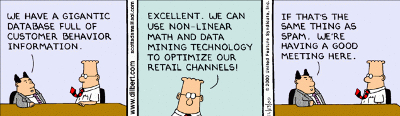
As such, marketers are able to analyze data that computers gather about you and create marketing lists, which includes all types of personal information: religion, political view, marital status, sexual orientation, and more.

Your ZIP Code is Worth a Lot
To a marketer, your ZIP code is an absolute gold mine. You might think nothing of it when you enter your ZIP code at the local grocery store, but you’re giving marketing institutions all of the information they need to find you at a later location for future marketing campaigns. According to a Harvard professor Latanya Sweeney, a company can identify you an alarmingly high 87 percent of the time with only a few of your credentials:

  • ZIP code
  • Date of birth
  • Gender

Even the folks you trust the most with your ZIP code, your local post office, can take advantage of this and sell your information to marketers. The United States Postal Service is continuously validating old addresses and informing marketers when their targets have moved on to another location. According to Forbes, the USPS makes roughly $8 million a year by selling this data.

Facebook: A Goldmine of Information
Everyone’s favorite social media site houses an incredible amount of information about them, and is arguably one of the best marketing tools available on the Internet. Other users can see what pages you have “Liked,” and can even suggest pages or friends to you. Due to this open-minded approach to social media, marketers are generally able to collect this data and use it to formulate the aforementioned lists. Even if you only host the minimal amount of personal data on your Facebook, there’s still a good chance that marketers can put you into a list judging from your liked pages and friends.

Whether we like it or not, companies and merchants are gathering our information and storing it for later use. Your business likely does something similar; collecting information about your own clients and storing it for later consumption.

dilbert spam

By law, these institutions are allowed to collect this information, but there are others out there who seek out private information, like Social Security numbers, to commit identity fraud or steal your money. This begs the question of whether or not your business’s security solutions are up to snuff and able to protect your stored information from hackers.

When you deal with lots of personal information, like Social Security numbers or credit card numbers, you want to use the best security measures available. NuTech Services can equip your business with a Unified Threat Management solution to keep your data safe from being compromised by hackers. This includes a firewall, spam blocking, and web filtering to keep the threats out, compounded by an antivirus to neutralize threats that get in. For more information about our UTM solution, give us a call at 810.230.9455.

b2ap3_thumbnail_coca_cola_spill_400.jpg

Why Coca-Cola’s #MakeItHappy Commercial Fails to Make IT Happy

b2ap3_thumbnail_coca_cola_spill_400.jpgOne of the most memorable Super Bowl XLIX commercials yet again came from Coca-Cola. In classic Coca-Cola fashion (pun intended), they premiered an inspirational video with the message, “Let’s all make the World Wide Web a better place, #MakeItHappy.” We can’t contest to Coke’s feel-good message, but as an IT Company, we must object to one horrifying aspect of this commercial.

To find out what’s got us so hot over here at NuTech Services, watch the commercial for yourself:

There. Right there at 0:16. Did you see it? We’re given an inside look at an absolutely gorgeous data center that seems to house most of the Internet, and who’s in charge of upkeeping this infrastructure? Apparently, it’s some wanna-be technician who thinks it’s okay to bring an open container in a data center container.

In the real world, no self-respecting data center would ever allow this. And not to be too picky, but we feel the need to point out that the volume in a data center of this size would be so loud that the tech wouldn’t be able to hear every beep and boink like he’s on the deck of the Starship Enterprise. In reality, the technician would need ear protection to dampen the noise coming from the thousands of server fans. But we digress.

Adding insult to injury is Coke’s absurd idea that spilling its soft drink inside a server will somehow cause “the happiness found in every bottle” to digitize and transform the Internet into a place of rainbows and participation ribbons. Granted, we’re just as sick of all the negativity on the web as the next user, and this snarky article probably isn’t doing much to #MakeItHappy; however, in all of our years of computer repair and seeing lots of computers fall victim to various spills, it’s our experience that not once has a spilled-drink scenario caused happiness.

In fact, we’ve seen the complete opposite to be the case as users of soaked computers become distraught and frustrated, expressing monitor-smashing and hate-filled-texting-like symptoms, similar to the behavior displayed at the intro of Coke’s commercial. Don’t take our word for it, see for yourself the look on the face of YouTuber Gail as she pleads with the Internet for help after destroying her laptop from having Coca-Cola “spilled all in it.”

It’s safe to say that Gail, aka “Southernstateofmind1,” isn’t happy from her Coca-Cola mishap. In fact, she’s “on the verge of tears,” and dem’ ain’t happy tears either.

After digging a little deeper on YouTube we come to TechRax’s channel and his pointless experiment of dousing a new iPhone 5 with Coca-Cola–shield your eyes, Apple enthusiasts.

Somehow, the iPhone survives its Coke bath. It could be due to the superb engineering on behalf of Apple, but we think it has more to do with the power of Bob Marley’s good vibes. We’re betting that your company’s server units couldn’t survive a Coke spill as well as this iPhone, as pointed out by these four YouTube users commenting on the Coca-Cola commercial.

  • TrevorSpace Animations: Whoever made this commercial clearly doesn’t know how computers work.
  • 0yisaicai0: But seriously though, coming from one who works in a security firm, I cringed a bit when that bottle tipped over. That’s serious network damages, right there.
  • TECGaming: I tried this with my servers, it totally just fried them. Thanks a lot Coke for not brightening my day but costing me 25 Grand on my server.
  • Data Cave (an actual data center company) shares our sentiments: Coke’s Super Bowl commercial definitely had a great message overall, but not exactly the best message for having drinks inside of a data center. Server rooms are Coke-free zones!

We wholeheartedly agree with Data Cave on this one, and any techie that brings a drink into a server room should be #Fired.

Woops. I Really Did Spill Coke on My Computer. What Do I Do Next?
The accidental spilling of drinks on computers is a common occurrence. Hundreds of PCs are needlessly damaged every day due to user negligence and a case of the clumsies. Sometimes a user gets lucky and can salvage their equipment, like with the iPhone user. Unfortunately, Gail’s scenario is more often the case with electronic circuitry being fried and the soaked equipment needing serious repair.

First thing’s first; if you spill liquid on your computer, power off your machine. One thing Coke got right is that a beverage in contact with electrical equipment produces sparks and a sizzly noise. Once the wet machine is turned off, dampen the outside of it with a dry cloth and be sure not to move it too much, or else risk the liquid seeping further into the machine.

If, and only if, you have the technical skills to open the case and dry your equipment out with a cloth and hair dryer, do so. Otherwise, we highly recommend that you take it to a professional so you don’t risk disrupting the insides and worsening the damage. Professional IT technicians will be able to accurately assess the damage and determine if it’s salvageable or not.

Our experience with spilled drinks informs us that there’s only one scenario where Coke spilled inside a server leads to happiness, and that’s after the fact when it’s remembered that the data is backed up and can easily be recovered, thanks to having a solution like our Backup and Disaster Recovery tool in place. #BePreparedForAnything

At the end of the day, we recommend that Coca-Cola stick to making feel-good commercials about singing songs and polar bears and leave the technical stuff to the IT professionals at NuTech Services.