Human ingenuity never ceases to amaze us. This whole information technology revolution has pushed access to information to levels that any person that lived before the advent of the computer could never have imagined. What’s more, the establishment of the Internet of Things has made it so humans even have remote access to the goods they own. So when we first saw the technological marvel that KFC had in store for the Canadian chicken consumers, we weren’t so shocked as excited that we’ve reached the next step in humanity’s trek into the future.
The marketing geniuses at KFC have recently struggled employing an engaging Colonel Sanders, replacing Saturday Night Live veteran Darrell Hammond, with another SNL vet, Norm Macdonald. No matter whom KFC tabs as the southern gentlemen in white, nothing will compare to their Canadian colleagues’ idea to create a piece of marketing material that is sure to stay with consumers. For the diamond anniversary of KFC in Canada, they have created the KFC Memories Bucket.
What is the KFC Memories Bucket? KFC Canada has created a chicken bucket that comes equipped with a color printer. The idea is that you buy a bucket of chicken for your friends, family, or (gulp) yourself, and then you take some pictures of you enjoying the meal, and you can print them out right there and then. Nothing describes a good time like taking pictures on your $500 smartphone after you just plowed through a drumstick and a thigh of Col.’s Original Recipe. This video merely cements the practical (and fulfilling) applications of the Memories Bucket
According to the online technology magazine, The Verge, this is just one in several attempts to use technology to drive their marketing initiatives.
The company’s Japanese chapter raffled off a chicken-themed keyboard, mouse, USB stick, and sets of 3D-printed earrings as part of a social media promotion last fall, and its German outpost gave customers a thin, rechargeable Bluetooth keyboard in place of the usual grease-sopping paper sheet this May. The company’s experimentation goes beyond physical products, too. If you have a minute at lunch, you can play ColonelQuest, an 8-bit romp through Colonel Sanders’ life released in May. The Memories Bucket may raise the bar on ridiculous poultry products.
KFC’s Memory Bucket comes with a photo printer in the bottom, that produces Polaroid-style photos. The printer is accessed by bluetooth, making it probably the weirdest thing on the Internet of Things, but at least it executes its practical use (as a vessel for fried chicken) commendably. Can you think of other bizarre technological roll outs from over the years? Join the conversation below in the comments.
Who remembers seeing Jurassic Park in theaters in 1993? By now, the dinosaur flick is ancient history, but with Jurassic World hitting theaters today, you might have huge lizards on the brain. What does this have to do with technology? Well, researchers in Kenya are using 3D scanning and printing to preserve fossils, so the real ones can be safely removed from hazardous weather conditions in the Turkana Basin.
According to CNet, 3D scanners and printers have been used in many different industries for several purposes. They can be used for construction, making prosthetic limbs, and even recreating crime scenes for forensic specialists. However, one of the more innovative features is using 3D printing technology to create 3D models of fossils. These replicas can be subject to study while the real deals are kept safe and preserved in a museum, where they belong. The scanners in question were created by Artec, the company responsible for the Shapify 3D-printed selfies.
As you might expect, the climate of Kenya, where the fossils were located, isn’t exactly hospitable to relics that are millions of years old. The Turkana Basin is particularly well known for its harsh climate. With sunlight that’s powerful enough to give most electronics a run for their money, the laptops that would normally receive the 3D scans from these handheld scanners were rendered useless. To make matters worse, there wasn’t a nearby power source, limiting the amount of time the researchers could spend with the fossils in any given sitting. With the help of two 3D specialists, the team was able to make the batteries last for a whole two days.
Over the course of two weeks, the excavation team was able to uncover and replicate a crocodile skull, a full crocodile skeleton, a huge tortoise, and an extinct species of elephant. As you might expect, the harsh conditions heavily damaged the fossils, so it was up to the team to get them to safety as quickly as possible. By replicating the fossils with 3D technology, the scientists were able to study the fossils more in-depth without risking their integrity due to the undesirable environmental conditions.
Just like anyone who wants to change the face of the industry, these brave scientists decided to do something differently in order to find a better way to accomplish their goals. People like these innovators are always working toward optimizing the way in which professionals perform their daily functions. This is why NuTech Services provides quality managed IT services. We want to help businesses like yourself better accomplish your goals through the wondrous power of technology.
If your business is ready to let go of your fossil-like technology, give us a call at 810.230.9455. We can help you dust off your business practices so you can get back in the game.
The road down entrepreneurialism is a long and twisted path, full of pitfalls that can lead you astray. However, there’s one companion who will never forsake you, and that’s your morning cup of coffee. While you might feel like you can’t get anything done without your morning caffeine fix, it can be holding you back from achieving your maximum productivity.
Giving up on caffeine can be a life-changing experience, but some are more reliant on it than others. It might seem like caffeine’s benefits vastly outweigh its negatives, but when it comes down to it, caffeine’s benefits are only temporary, saddled with side-effects.
What Exactly Does Caffeine Do to Your Body? A study performed by the John Hopkins Medical School has proven that, despite caffeine’s negative side-effects, it has been proven to increase task performance and cognitive ability, but only temporarily. The main issue with caffeine is that there’s no way to reap the benefits of that cup of coffee without experiencing caffeine withdrawal almost immediately afterward. Because of this, the user goes straight for the coffee pot time after time. This eventually links performance to the amount of caffeine ingested, which limits cognitive function when without it.
To make matters worse, caffeine induces an adrenaline rush, not unlike the response you receive from a life-threatening situation. This is what’s known as the “fight or flight” syndrome, which triggers emotional responses to defend the self from harm. Naturally, you can imagine how horribly wrong this can go when responding to critical emails at a time where you lack sleep and are thriving off of caffeine.
By the end of the day, you’ll feel exhausted and ready for bed; but despite how tired you are, you’ll find it difficult to sleep. This is because caffeine has a six-hour half life. According to Inc:
Have a cup of joe at 8 a.m., and you’ll still have 25 percent of the caffeine in your body at 8 p.m. Anything you drink after noon will still be at 50 percent strength at bedtime. Any caffeine in your bloodstream–with the negative effects increasing with the dose–makes it harder to fall asleep.
This makes it extraordinarily difficult to get good, quality sleep, and even harder for the brain to catch up and restore its energy. When you wake up exhausted, you naturally go right for the cup of coffee, leading to even more withdrawal later in the afternoon.
Caffeine’s Side Effects Caffeine is well known to produce several adverse side effects when users are going through withdrawal, all of which can be harmful to your cognitive ability and health. According to Inc, they are:
Irritability
Anxiety
Headaches
Insomnia
Sleep deprivation
The side effects of prolonged caffeine use aren’t limited to just these, though. These are simply those that affect the cognitive ability to function, which is arguably the most important part of the workday. It’s well known that caffeine can induce uncomfortable problems like frequent urination and gastrointestinal anomalies, as well.
Caffeine addiction might seem innocent enough, but like any other drug out there, too much can be a bad thing. Millions of people around the world suffer from caffeine addiction, whether they admit to it or not. Cutting yourself off from caffeinated beverages might seem impossible, but it can change your life.
It’s been a full 38 years since we were introduced to the Skywalker family in the first Star Wars film, “A New Hope.” The science fiction franchise has become such a cultural phenomenon that it even has its own holiday, celebrated galaxy-wide every May 4th (May the 4th be with you).
As an IT company, we’ve always been fascinated with the futuristic technology seen in Star Wars. After watching any one of the six Star Wars movies, viewers can’t help but walk away from the experience with questions like, “How long until we get cool starships and laser blasters?”
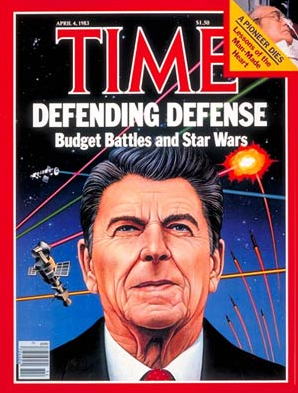
Even though we’re still a long ways away from having pod racing replace Formula One, our society has made some great strides over the past four decades to look more and more like Star Wars. In fact, you might remember that, at the height of the Cold War, the United States went so far as to consider using Star Wars-like space lasers.
The influence of Star Wars can most dramatically be seen in the technology we use every day. Take computers, for example. Every year they become more capable of doing more tasks, especially mobile devices. In fact , if you tried explaining today’s smartphone to someone from 1977, they would probably think it to be straight out of science fiction.
It may be for this very reason why Android nicknamed their product “droid.” In Star Wars, droids act as the ultimate personal device, capable of doing virtually any and all tasks asked of them by their humanoid counterparts. Modern smartphone manufacturers pride themselves with just how many different tasks users can accomplish with their mobile devices, but how close are we to actually having our “droids” be as helpful as the droids from Star Wars?
To get to the bottom of this, let’s take an in-depth look at everyone’s favorite Star Wars droid, R2-D2 (sorry C3PO).
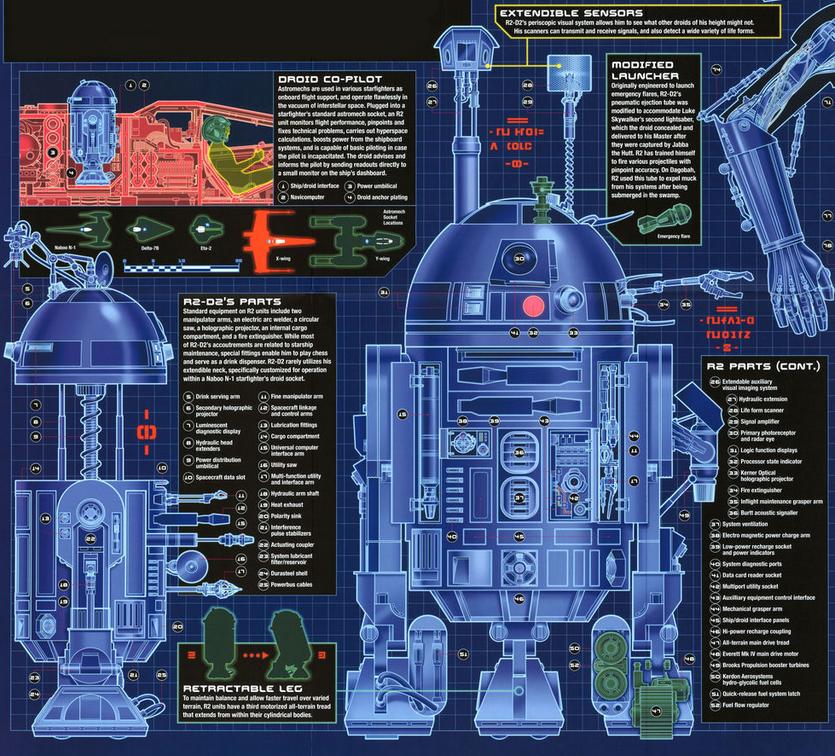
Over the span of six movies, R2-D2 has shown much versatility, surprising fans of the franchise with new tricks in each episode (think how much of a game-changer it would have been if R2-D2 could have used his thrusters in the original trilogy). To get an accurate understanding of what all R2 can do, we turn to the Internet’s authority on all things Star Wars, Wookieepedia:
R2-D2 was a diminutive droid, standing 0.96 meters tall. He rolled on three legs, one of which could retract into his body, and had a silver and blue domed head. His white, blue, and silver body housed many arms, sensors, and other apparatuses, many of which were not readily seen by the typical humanoid eye. This often made the droid seem like a box of tricks, unexpectedly pulling out some previously unseen but very much needed device at a critical moment.
Features of the R2-series astromech droid include (bolded are the tasks that we can do on our modern “droid” devices):
Rocket booster
Cable gun
Oil injector
Claw arm
Fusion cutter
Holoprojector / Recorder
Internal comlink
Periscope
Electric pike
Propeller
Hidden lightsaber compartment with ejector
Fire extinguisher / Smoke Screen
Small Saw
Air Cannon
Crashmat
Lariat
Submarine Mode
Collapsible Umbrella
Flea Remover
Distracter
Headdress Detangler
Droid Deactivator
Computer Interface Arm
Charge Arm (electric shock)
Life-form Scanner
Breakdance Mode
Polarity sink
Water pump/hose
Inflatable mattress
Media copy / storage disc drive
Jukebox
Small red “tongue” ribbon
“Confetti-creation device”
Lubricant Application Arm
Motorized, all-terrain treads
Power recharge coupler
As great as the ‘droids are that we carry in our pockets, we’ve still got a long, long way to go before we have personal devices that can do everything that this “extremely well put-together little droid” can do. However, despite this technological shortcoming, it’s still amazing that we’ve come as far as we have over the past 38 years. Who knows, maybe within the next 40 years we’ll finally have lightsabers.
We can’t know for sure what the future of personal technology will look like, but one we do know, if everybody gets their own R2-D2 unit, NuTech Services will be available to provide technical support. May the 4th be with you!
One of the most memorable Super Bowl XLIX commercials yet again came from Coca-Cola. In classic Coca-Cola fashion (pun intended), they premiered an inspirational video with the message, “Let’s all make the World Wide Web a better place, #MakeItHappy.” We can’t contest to Coke’s feel-good message, but as an IT Company, we must object to one horrifying aspect of this commercial.
To find out what’s got us so hot over here at NuTech Services, watch the commercial for yourself:
There. Right there at 0:16. Did you see it? We’re given an inside look at an absolutely gorgeous data center that seems to house most of the Internet, and who’s in charge of upkeeping this infrastructure? Apparently, it’s some wanna-be technician who thinks it’s okay to bring an open container in a data center container.
In the real world, no self-respecting data center would ever allow this. And not to be too picky, but we feel the need to point out that the volume in a data center of this size would be so loud that the tech wouldn’t be able to hear every beep and boink like he’s on the deck of the Starship Enterprise. In reality, the technician would need ear protection to dampen the noise coming from the thousands of server fans. But we digress.
Adding insult to injury is Coke’s absurd idea that spilling its soft drink inside a server will somehow cause “the happiness found in every bottle” to digitize and transform the Internet into a place of rainbows and participation ribbons. Granted, we’re just as sick of all the negativity on the web as the next user, and this snarky article probably isn’t doing much to #MakeItHappy; however, in all of our years of computer repair and seeing lots of computers fall victim to various spills, it’s our experience that not once has a spilled-drink scenario caused happiness.
In fact, we’ve seen the complete opposite to be the case as users of soaked computers become distraught and frustrated, expressing monitor-smashing and hate-filled-texting-like symptoms, similar to the behavior displayed at the intro of Coke’s commercial. Don’t take our word for it, see for yourself the look on the face of YouTuber Gail as she pleads with the Internet for help after destroying her laptop from having Coca-Cola “spilled all in it.”
It’s safe to say that Gail, aka “Southernstateofmind1,” isn’t happy from her Coca-Cola mishap. In fact, she’s “on the verge of tears,” and dem’ ain’t happy tears either.
After digging a little deeper on YouTube we come to TechRax’s channel and his pointless experiment of dousing a new iPhone 5 with Coca-Cola–shield your eyes, Apple enthusiasts.
Somehow, the iPhone survives its Coke bath. It could be due to the superb engineering on behalf of Apple, but we think it has more to do with the power of Bob Marley’s good vibes. We’re betting that your company’s server units couldn’t survive a Coke spill as well as this iPhone, as pointed out by these four YouTube users commenting on the Coca-Cola commercial.
TrevorSpace Animations: Whoever made this commercial clearly doesn’t know how computers work.
0yisaicai0: But seriously though, coming from one who works in a security firm, I cringed a bit when that bottle tipped over. That’s serious network damages, right there.
TECGaming: I tried this with my servers, it totally just fried them. Thanks a lot Coke for not brightening my day but costing me 25 Grand on my server.
Data Cave (an actual data center company) shares our sentiments: Coke’s Super Bowl commercial definitely had a great message overall, but not exactly the best message for having drinks inside of a data center. Server rooms are Coke-free zones!
We wholeheartedly agree with Data Cave on this one, and any techie that brings a drink into a server room should be #Fired.
Woops. I Really Did Spill Coke on My Computer. What Do I Do Next? The accidental spilling of drinks on computers is a common occurrence. Hundreds of PCs are needlessly damaged every day due to user negligence and a case of the clumsies. Sometimes a user gets lucky and can salvage their equipment, like with the iPhone user. Unfortunately, Gail’s scenario is more often the case with electronic circuitry being fried and the soaked equipment needing serious repair.
First thing’s first; if you spill liquid on your computer, power off your machine. One thing Coke got right is that a beverage in contact with electrical equipment produces sparks and a sizzly noise. Once the wet machine is turned off, dampen the outside of it with a dry cloth and be sure not to move it too much, or else risk the liquid seeping further into the machine.
If, and only if, you have the technical skills to open the case and dry your equipment out with a cloth and hair dryer, do so. Otherwise, we highly recommend that you take it to a professional so you don’t risk disrupting the insides and worsening the damage. Professional IT technicians will be able to accurately assess the damage and determine if it’s salvageable or not.
Our experience with spilled drinks informs us that there’s only one scenario where Coke spilled inside a server leads to happiness, and that’s after the fact when it’s remembered that the data is backed up and can easily be recovered, thanks to having a solution like our Backup and Disaster Recovery tool in place. #BePreparedForAnything
At the end of the day, we recommend that Coca-Cola stick to making feel-good commercials about singing songs and polar bears and leave the technical stuff to the IT professionals at NuTech Services.
Computers have become essential to our way of life. You can find them in everyone’s job, home, or even the palm of their hand. With this saturation, the computer has become something that people of only 50 short years ago, couldn’t even imagine. One way this shift has been most evident is in the cinema.
Movies capture the imagination of the most creative people on the planet and deliver those thoughts to audiences through images. Some of the most important social commentaries told today are done through film (or more apt, video). The evolution of computing can be seen if you look back on the roles computers played in movies about, you guessed it, computers. Here are four movies that capture just how different the perceptions of computers are today versus. 50 years ago.
2001: A Space Odyssey (1968) 2001: A Space Odyssey has been listed by many filmmakers and movie critics as the quintessential science fiction film. In fact, directors from Steven Spielberg to James Cameron still consider the film to be groundbreaking in cinema. Stemming from Arthur C. Clarke’s short story, The Sentinel, 2001: A Space Odyssey represents a significant step forward in the way movies represented the dreams of “the future.” Directed by the late Stanley Kubrick, the movie takes audiences from the dawn of man to the outer reaches of space and presents some interesting claims about the future of computing.
The computer in the movie, Hal 9000 was the central computer in the Discovery One spacecraft. The artificially intelligent Hal states that, “The 9000 series is the most reliable computer ever made. No 9000 computer has ever made a mistake or distorted information. We are all, by any practical definition of the words, foolproof and incapable of error.” As the mission continues, it becomes evident that Hal has hatched a nefarious plan to succeed without the aid of his human counterparts, and begins to eliminate them.
Astronaut Dr. Dave Bowman then is forced to risk space exposure to ward against Hal’s nefarious attempt on his life and return to the ship. He then ensure’s Hal’s destruction in one of the most memorable moments ever filmed:
Kubrick and Clarke had hit some aspects of future computing on the head, such as the proliferation of tablet computers, the ability to use video communication over a network, and the use of a computer to control missions into deep space. The reality, however, is that these were all projected technologies at the time. The personal computer did not exist in the mid-to-late 1960s, so while AI seemed like a plausible technology in 1968, in 2015 humanity hasn’t been able to properly program a digitally run system to be truly “intelligent’.
WarGames (1983) About a decade and a half later, the personal computer was a concept many companies were trying to capitalize on. In fact, Compaq, the developer of the first IBM PC clone, set a then-record for business in a single year by a new company. The movie studios were no different in the timing of making movies featuring soon-to-be household devices.
WarGames follows the travails of David Lightman (Matthew Broderick) and his friend Jessica (Ally Sheedy) after David hacks into the NORAD computer looking to play games that, unbeknownst to him, were being used to educate the military supercomputer to think strategically. Along with regular computer games of the times, such as chess, backgammon, and the like, the WOPR (War Operation Plan Response) also had options for “Theaterwide Biotoxic and Chemical Warfare” and “Global Thermonuclear War.” When Lightman sees these he decides to try out the Global Thermonuclear War “game.”
Soon afterwards, Lightman is captured and held for espionage, since his tinkering inside the computer had let to a threat to national security. They decided to hold him until the higher-ups at NORAD can figure out what is going on. Lightman escapes and with help from Jennifer, they go looking for the developer of the software, Dr. Stephen Falken, who had been pronounced dead. They find him at a house in Goose Island, Oregon. David and Jennifer are able to convince him that he needs to go with them to help save the world.
When they get to NORAD, they inform the General in charge (Barry Corbin) that the computer is simulating nuclear war and will launch the nuclear-tipped missiles when it gets the code. In a brilliant move, Lightman and Falken program the computer to play tic-tac-toe which leads it to run the simulations of a no-win scenario in lieu of nuclear war. With the simulations all showing no winner, the WOPR shuts down and asks if they “wouldn’t prefer a nice game of chess.”
In this movie, the personal computer, specifically the IMSAI 8080 microcomputer, plays a key role in the narrative. It is one of the first movies depicting a PC as important and gives credence to what would become a neverending shift in the way society views computers.
The Matrix (1999) A decade and a half later, computers were in many homes and were being used for recreation as well as business. In fact, there was a time toward the end of 1999 when people were unsure whether the “advanced” society that had been built over the previous two decades would come crashing down, literally overnight (Y2K). The Matrix portrayed the computer as simply a vessel to something bigger. By this time broadband Internet was a relatively new technology, and capabilities for what you could do on the web had begun to grow by the day.
The Matrix is the story of Thomas Anderson (Keanu Reeves), also known as the hacker Neo, who is summoned by his computer to “follow the white rabbit.” This leads to him meeting with a woman named Trinity (Carrie-Anne Moss) at a club. She tells him she can show him the truth. He then is taken into custody by men in suits and is interrogated by one of them called Smith (Hugo Weaving). They tell him that they can help him if he’s agrees to cooperate. He rejects their offer and then is bugged and wakes up at home. He then meets with Morpheus (Laurence Fishburne) and is told that he can find out the truth, but he has to make a choice immediately.
It turns out the choice involves living in the real world, or the fake computer world (the only world Mr. Anderson knows). Basically, the world in which Anderson lives in is a digital one rather than the real world, which has been taken over by machines.
He is then released from the Matrix and joins the crew of the Nebuchadnezzar (those who are free from the rule of machines) and is told that he is “the one” (the person prophesized to free humanity from machine slavery). With the use of computers, the band of hackers is able to gain access to the Matrix and learn about the programming behind the platform. They often encounter sentient programs or what the team call “agents” who protect the integrity of the software from outside threats. Neo accepts his role as “the one” in this fight sequence with Agent Smith:
In our reality, the existence of relatively low-cost Internet access, coupled with the rapidly increasing capabilities of the Internet and computing technology, created a perfect storm for the Wachowskis to create a truly memorable, computer-themed film.
The Social Network (2010) The Social Network represents the final shift in the evolution of computers in modern cinema. The film, directed by David Fincher and written by Aaron Sorkin, follows Mark Zuckerberg (Jesse Eisenberg) through his odyssey of creating Facebook. Although the movie is distinctly about Mark and Facebook, it signals a shift in cinema that even the creation of a piece of Internet-based software can be source material for a successful feature motion picture.
The film starts with Mark Zuckerberg as an undergraduate at Harvard. He creates facemash.com which presents a comparison of two girls from the college and asks which one is more attractive. He is caught and brought in front of the administrative board. He then gets approached by Tyler and Cameron Winklevoss (Armie Hammer) who are interested in utilizing his coding skills to build a social networking site for the students at Harvard.
From there, things move quickly. Mark develops thefacebook.com with his friend Eduardo Saverin (Andrew Garfield) as a social networking alternative to the more convoluted peer-to-peer sites that were popular at the time.
Mark then meets with Napster founder Sean Parker (Justin Timberlake) and decides to move from Massachusetts to California and start working on Facebook full-time. After a while, Saverin is basically defrauded, creating the narrative of the movie which is Zuckerberg dealing with lawsuits from the Winklevoss’ and their partner Divya Narendra (Max Minghella) as well as a lawsuit by Saverin. The film wraps up with Facebook being a major success and the lawsuits being resolved.
You can see just how far computers in movies have come, from pure guesswork of the future of computing, through the advent of the PC, the birth of the Internet, to the modern day social media. Computers have gone from machines the size of a refrigerator and the cost of a small house to the palm of your hand (and even smaller). You don’t need status to own a computer nowadays; all you need is a smartphone. Movies have done a great job keeping track of the immense growth computers have made, from a “cool” business gadget to an essential part of a person’s day-to-day life.
Do you know of any other computer-themed movies that you think represent the changes in society over the past 50 years? Do you just have a favorite movie moment dealing with computers? Leave your thoughts or YouTube clips in the comments.


 Human ingenuity never ceases to amaze us. This whole information technology revolution has pushed access to information to levels that any person that lived before the advent of the computer could never have imagined. What’s more, the establishment of the Internet of Things has made it so humans even have remote access to the goods they own. So when we first saw the technological marvel that KFC had in store for the Canadian chicken consumers, we weren’t so shocked as excited that we’ve reached the next step in humanity’s trek into the future.