recovering_tabs_browser400.jpg

Tip of the Week: Closed A Tab On Accident? Here’s How To Restore It

recovering_tabs_browser400.jpg

Have you ever accidentally closed a tab before you were done with it? It’s a classic case of clicking just a little too close to the X. We’ll walk you through how you can open up Google Chrome tabs, not just on your ordinary desktop web browser, but your Android device as well. It’s a lot easier than searching for the same web pages as before!

For the Chrome web browser, it’s as simple as right-clicking in the space that you would ordinarily click if you were to open a brand new tab. You will then click on Reopen Closed Tab. You can also use the keyboard shortcut for Ctrl+Shift+T.

But what if you want to access any recently closed tabs on your Android device? There’s a very simple way to do this, as well. You can start by opening up the Google Chrome app. Next, tap the three-dot menu in the top right corner of your screen. A couple selections down on the menu, you’ll see the option for Recent tabs. From this screen, you’ll be able to see all of the recent tabs that you have closed out of.

The cool thing about this screen is that you can even see the tabs of your other devices that are synced with your mobile device. To restore a closed tab, all you have to do is tap the title of the page you want reopened.

As for other browsers like Mozilla Firefox, you’ll see the option to restore your last browsing session the next time you open the web browser. All you have to do is click the Restore Previous Session. Right-clicking on the tab in Microsoft Edge will also present a similar function compared to Google Chrome.

For more great tips and tricks, visit NuTech Services’s blog today.

b2ap3_thumbnail_business_continuity_400.jpg

Business Continuity: Prepare For the Worst and Hope For the Best

b2ap3_thumbnail_business_continuity_400.jpgThere are few things more important than the continuity of your business. Your livelihood, and that of your employees, depends on the continued functionality of your organization. Therefore, it becomes necessary to do all that you can to ensure your business is protected from an unexpected downfall, due to data loss, natural disasters, and other means.

Business continuity, despite the fact that it’s hugely important, can often be neglected due to more pressing matters. For example, dealing with small issues that pop up periodically might feel more important than worrying about a huge data loss disaster. In cases like this, it’s always best to be prepared. You should approach business continuity from the viewpoint of Murphy’s Law: “Anything that can go wrong, will go wrong.” Your organization should be prepared to handle anything and everything that the universe throws at it.

Natural Disasters
We all know that floods, fires, and electrical storms are often beyond the control of human action. A freak tornado could strike and level your office at any time, or a bad storm could topple power lines and the impending power outage could cause damage to your technology. A natural disaster doesn’t have to destroy your office; all it has to do is cause enough damage to make getting back to normal operations difficult. This is the most common problem stemming from natural disasters.

You can reduce the pain of this by integrating some relatively common technology solutions, like an uninterruptible power supply (UPS). If your IT infrastructure is suddenly cut off from electricity, the UPS will send a signal to the server, telling it to shut down normally once all work and applications are properly finished and closed.

Succession Planning
This is perhaps the most neglected part of planning for business continuity. Many organizations have important staff members that have been around for what seems like forever, but it won’t always be this way. Making sure that critical personnel remain at the company can seem daunting, especially if you’ve never given a thought to what would happen if they left. When we say “leave,” we usually mean one of three things: 1) The employee quits, 2) The employee is severely ill and away from the office for an extended period of time, and 3) The employee dies.

We don’t want to sound morbid, but again, you should always prepare for the case when important people aren’t available anymore. Establishing a policy for succession beforehand can help to ensure that your organization is prepared for anything. Even something as simple as cross training can contribute to this goal.

Data Loss and Disaster Recovery
Data loss is a primary reason a business fails to continue operations, and as such, making sure that it’s mitigated is a primary function of any good business continuity plan. Organizations that fail to restore their data following a data loss disaster are likely to go out of business within a year, so you know that data loss is no joke.

Thankfully, it’s easy to integrate data backup with help from professionals like NuTech Services. Our data backup and disaster recovery service is designed to help small and medium-sized businesses avoid data loss and get back in the game as quickly as possible, following a data loss incident. Your data backups will be sent to secure, off-site data centers, where they can be quickly recovered in the event of a disaster. The BDR can temporarily act like a server to help your business continue functioning, even while you’re searching for new technology to replace the downed server.

Some folks might think we’re being paranoid, but honestly, preparing for the worst only means that you can move forward with confidence, knowing that even the worst possible circumstances can’t take your business down. If you’re ready to embrace business continuity, give NuTech Services a call at 810.230.9455.

b2ap3_thumbnail_cloud_backup_400.jpg

Introducing the 3-2-1 Formula to Effective Data Backup

b2ap3_thumbnail_cloud_backup_400.jpgWhile there are several options your business has for a backup solution, how much thought have you really put into it? As one of the most mission-critical functions of your IT infrastructure, you need to be sure that you’re getting the best solution for your money. More importantly, you need to know that you can rely on your solution to get you through the most trying times, like after a disaster or data theft.

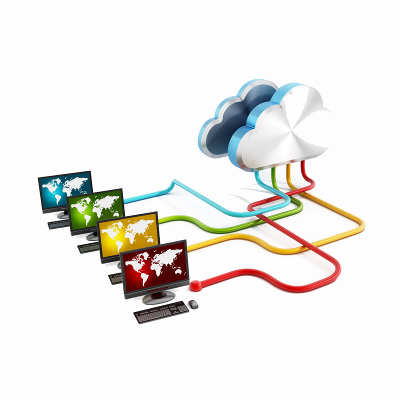
Taking a 3-2-1 approach to your backup policy is a simple way to get comprehensive continuity for your data infrastructure. InfoWorld describes this concept as having three copies overall of your organization’s data, with two of these being in different formats, and one of them being stored off-site. This is difficult, if not impossible, to do with tape backup, which some businesses still run. However, there’s a much easier way to handle data backup in the form of cloud backup.

With cloud backup, your business can take advantage of safety and security that’s on the level of large enterprises. Unlike tape, which is limited due to the time necessary to perform a comprehensive backup, the cloud allows for multiple snapshots of your data taken throughout the workday. This gives you the peace of mind that your information is comprehensive and redundant. The cloud even makes recovery automatic and as easy as can be, making it ideal for both storage and recovery options.

There are two main issues of cloud data backup that most businesses get stuck on: the technical details, and the price of a complete infrastructure overhaul. Many small and medium-sized businesses feel that they can’t afford this solution, or they don’t have the manpower to ensure that all of the mission-critical technology is available. Being able to back up your files on demand is an essential part of today’s online business world, especially with hackers running amok. So, what’s a budget-minded SMB to do?

One solution is to call NuTech Services and let us explain our managed service offerings to you. Our solutions are designed to optimize operations and increase productivity on all fronts. In fact, our Backup and Disaster Recovery solution is one of our most important services, especially today when hacks can happen when you least expect them. It’s designed to take multiple backups of your data throughout the workday, and sending copies to both an off-site data storage, and in the cloud for easy access.

One of the best features of our BDR solution is its practical neutralization of costly downtime. When your server goes down due to a hack or other natural phenomenon, you’ll ordinarily lose access to any data stored on that server. However, a BDR device has the ability to immediately take the place of your server if it goes down for some reason, and it can deploy your backed-up data in a moment’s notice. This keeps your business running, even when your technology isn’t, giving you ample time to find an adequate replacement.

To make backup this easy, all you need to do is call 810.230.9455.