

ebay_password_innovation_400.jpg

These Innovative Technologies are Helping eBay Move Beyond Passwords

ebay_password_innovation_400.jpg

Technology continues to grow more advanced, and with it comes major pain points that need to be resolved. Today’s modern businesses will need to adapt by implementing new solutions for both themselves and their customers or clients. In this fashion, eBay has begun to implement an assortment of new features to assist with the customer experience.

The first of these features is called “One Time Password,” which is an initiative that’s attempting to take the “two” out of two-factor authentication. Rather than requiring users to remember a password, eBay wants to send you a confirmation code via SMS that can keep the user logged in indefinitely. The goal is to keep users logged in regardless of how the code was used–allowing those who logged in via a mobile device or desktop more flexibility with their logins.

eBay is also working to allow account authentication through the use of the Touch ID sensor that’s found on more recent Apple devices. The goal is to eliminate the need to remember a password in the first place so that users of Apple products will be able to more efficiently use eBay’s services.

Of course, these services are bound to bring about questions regarding eBay’s motivation for creating such features. Senior Director for Identity and Member Communication Product Management Dave Comer stated: “One Time Password and Touch ID Authentication eliminate the need to remember your password when you want access to the eBay Marketplace… We all use so many applications that require passwords and login information that it is impossible for users to remember them all. We want to eliminate the friction entirely.”

eBay’s reasoning might make sense, but does the security hold up on its end of the bargain? Consider how easy it would be to accidentally leave eBay open on an unlocked workstation. Users could fall victim to either lighthearted pranks or financially motivated crimes. Passwords might make things more difficult for the user, but this difficulty is for their benefit. Complex passwords are more difficult to guess, which makes things more difficult for hackers.

In addition to these advancements, eBay plans on increased functionality with Android Wear devices. Users will soon be able to receive notifications on their wearable devices that show them items they may be interested in purchasing. Users will also be able to read and respond to messages through their smart device.

Yet, this presents a similar security problem. Wearable devices have consistently shown that they are less secure than other mobile devices, and much less so than desktop solutions. Unless eBay is implementing other serious security measures, these new features may not be worth the risk.

For the small and medium-sized business, eBay’s technological advancements should resonate. SMBs should be using two-factor authentication whenever possible, such as security systems which utilize a user’s smartphone to deliver an access code when logging into a network. This way, hackers will have a much harder time accessing an account–even if they’ve somehow managed to get a hold of legitimate credentials. Plus, new physical security solutions like pin pads and smart door locks can now be unlocked directly with an employee’s smartphone.

If your business is ready to tackle network security, NuTech Services can help. To learn more, reach out to us at 810.230.9455.
b2ap3_thumbnail_smartwatch_technology_400.jpg

Wearable Technology is Trending: Is This Good For the Workplace?

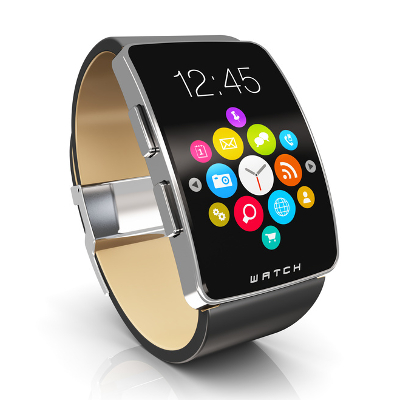
b2ap3_thumbnail_smartwatch_technology_400.jpgYou’ve probably seen the new fancy-schmancy watches that some people wear and wonder to yourself, “What’s so special about them?” Smartwatches like these are considered wearable technology and are typically meant to perform the various functions of a smartphone, minus the phone. Some devices are even used to monitor the body’s physical activity with health apps. They might seem useful now, but what’s the endgame for wearable technology?

What is Wearable Technology?
Technically, just about any device that’s worn on the body (like a headset) can be considered wearable technology. However, most wearable devices that you’ll encounter are designed to do one (or both) of two things: 1) Monitor the body’s physical well-being and track health progress, or 2) provide efficient access to apps that are designed to enhance productivity and efficiency for office employees. While they initially were meant for more of the former, the incredible success of wearable technology inspired developers to improve functionality in other areas.

As explained by CyberTrend:

A 2014 Parks Associates study projected that smart watch sales will reach 121 million units worldwide by 2018. Similar to a smartphone or smart TV, a smart watch can connect a user to the Internet for access to real-time data. Generally, smart watches will offer users some basic features (current weather, music, access to email and texts, etc.), which are also available on smartphones. Depending on the model, some folks can use their smart watches to control their smart TVs, capture pictures, video chat, and run scaled-down versions of common smartphone apps, in addition to using the device as an activity tracker.

While wearable technologies are versatile and can be used for multiple tasks, this doesn’t mean that these devices will be practical in the near future. For example, which would you rather use for your smart technology experience: a smartwatch or your smartphone? Many would probably say the smartphone because it’s vastly more powerful and efficient compared to the smartwatch. A larger screen makes it much more viable to get work done on a smartphone, rather than on a smartwatch.

Another type of wearable gadget consists of smart glasses, like Google’s failed Google Glass product. The main issue here is privacy; having a camera readily available on your glasses is somewhat sketchy and reminiscent of cyber espionage. Thanks to the portability afforded to smart glasses, they were thought to be a threat to both personal privacy and data security, so the idea never really took off.

How Wearables Affect Your Workplace
When workers are using wearable technology in the workplace, you should practice considerable caution. The trend known as Bring Your Own Device (BYOD) coupled with the Internet of Things (IoT) can spell trouble for businesses that aren’t prepared to deal with new devices connecting to their private networks. Any Internet-connected device can be considered a threat to your business if it’s not managed and maintained by your company. This is why it’s so important to keep an eye on devices that your employees are bringing to work with them. One way you can set these fears aside is by implementing a mobile device management solution, which gives you the ability to remotely wipe managed devices, restrict access to information on an app-by-app basis, and so much more.

Don’t let wearables and other Internet of Things devices hold your business back. To find out more information about how NuTech Services can protect your business from these new threats, give us a call at 810.230.9455.