248900505_industry_secure_400.jpeg

Are Utilities as Secure as They Should Be?

248900505_industry_secure_400.jpeg

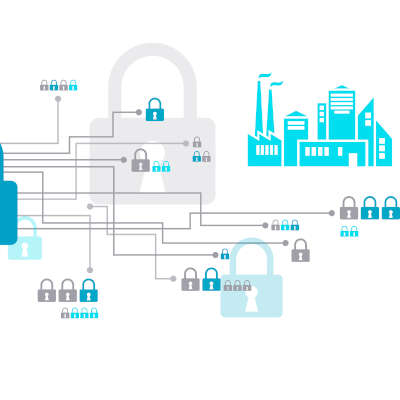
Recently, a story broke in Florida that sounds like something out of a terse action film: a hacker managed to access a water treatment facility and subjected the Pinellas County water supply with increased levels of sodium hydroxide. While onsite operators were able to correct the issue right away and keep the public safe from danger, this event is the latest in a line of cyberattacks directed at public utilities. Let’s consider this unpleasant trend.

Keeping Utilities Safe

Many of today’s systems run via the assistance of computers and are hosted online to embrace remote capabilities. Unfortunately, this nature leaves them vulnerable to hackers—despite the huge investments made into protecting the public infrastructure that runs on these systems.

As the event in Pinellas County proves, it just takes one time to cause great damage. Therefore, we can see why it is so important to keep these systems secure.

How Utilities Have Changed

With more people than ever suddenly working remotely, many jobs that once required on-site staff have shifted to automated solutions—especially in terms of seeking out IT threats and issues. However, with all this “newness”, many people aren’t familiar with the toolkits they are working with.

As a result, more employees are vulnerable to attacks and less aware of how to prevent them.

Infrastructure and Utility Threats are Increasing in Severity

According to a Ponemon Institute report, the level of sophistication that is used in attacks against utilities has increased sharply. 54 percent of utility managers foresee having to contend with at least one cyberattack this year—meaning that half of those that provide electricity, safe water, and other critical resources anticipate a major event.

When you consider how much our society relies on these systems, this is disconcerting to think about.

What Can Be Done?

Unfortunately, this question is where things can get complicated. It isn’t as though utility companies underestimate the importance of security, after all. However, by modeling their approach upon the one undertaken by the average enterprise, they have adopted a lot of the same practices: revising their practices as they go, continuing to innovate, and being increasingly vigilant.

For instance, many providers are integrating options that businesses have had success with. AI has been integrated to help identify potential threats much more efficiently by processing far more data in far less time. The Internet of Things is now used to better track and modulate internal processes and distribution of resources. Even better, these IoT devices (which are usually infamous for their questionable security) have seen the investments necessary to properly maintain their protections thanks to the efforts of the utility companies.

Considering the importance of our utility services, protecting them needs to be a priority… but what do you think? Should more attention be paid to the cybersecurity protecting them? Leave your opinion in the comments.
179946009_email_organization_400.jpeg

Tip of the Week: Keep Track of Your Priority Gmails

179946009_email_organization_400.jpeg

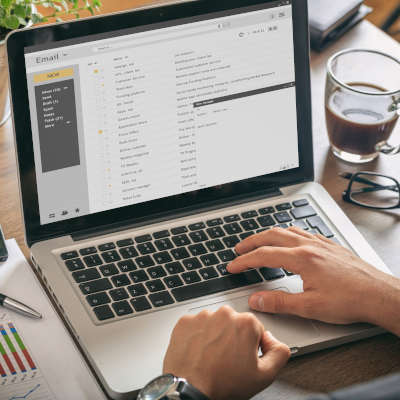
Email is undeniably a useful tool, but it can be a real drag on productivity and a hindrance to manage. Then again, there are some messages that you absolutely need to keep track of as they contain sensitive information. Gmail makes keeping messages under your thumb simple.

Email Can Be Frustrating

Gmail offers a lot of tools to help people organize their email. Features such as filters and labels make dealing with the loads of mail that come in easier, but still some messages might slip through the cracks. Wouldn’t it be useful if your email platform could give you a second chance to be alerted to a direct email? Users can now use a simple trick to reorder messages, so the most urgent ones appear at the top of your inbox. Let’s take you through it. 

Snoozing Your High-Priority Messages

So you’ve identified an important message that you want to return to after you deal with the mountain of other messages. Gmail allows you to do this with the use of the Snooze button.

Unfortunately, it doesn’t really work like your favorite snooze button on your alarm clock. Gmail’s snooze button is simply to resend yourself an email later so that the priority messages are at the top. Here’s how to access this feature:

  • (On a desktop/laptop) selecting the box next to it and clicking the clock-shaped icon at the top of the window.
  • (In the mobile app) tapping on the icon at its left, accessing the three-dot menu, and selecting Snooze.

Once this is done, a prompt will appear that will allow you to set when the message should return. The Pick date & time option allows you to set anytime after now for you to get the message back. Once you send this message, it will come back and sit at the top of your inbox in orange. It is extremely useful for the person who gets a lot of emails, but doesn’t get a lot of important emails. 

For more great tips and tricks, return to our blog regularly. 

203898730_safe_website_400.jpeg

Checking a Website’s Safety from Its Google Result

203898730_safe_website_400.jpeg

Google search is synonymous with searching the internet, but that hasn’t stopped them from constantly innovating the service. One of the most recent updates is to give users more context for the content that returns on search results. This works to protect users from potentially clicking on websites that could contain threats. Today, we discuss this innovation and how it will look to the end-user.

Google’s Page Widget

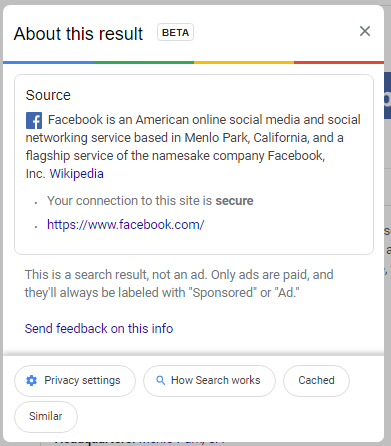
Google rolled out this feature on February 2nd, 2021. They now offer a widget that provides a look at a website before you click on it. You will begin to see three-dot menus appearing next to your search results. When accessed, it will give you the information that clicking on the link will take users to. 

The information includes a blurb about what the website links to, including Wikipedia information, but if that isn’t available it provides Google’s own analysis as the site was last indexed. It also provides information about the website’s security. 

This is what appears when you check the link for Facebook:

In this information, users can see that Google confirms that the website is secured, helps to protect data, and that the link was the result of the user’s search, and not an advertisement. 

As things progress, this utility should be able to help users do a better job of choosing websites that don’t put their data, or your organization’s data, at risk. For more great security information and best practices check back to our blog weekly.

355723052_new_innovation_400.jpeg

Older IT Practices That Still Hold Up

355723052_new_innovation_400.jpeg

While looking to the past isn’t often an idea tied to information technology, there are times when it can play a valuable role in your strategy for it. Let’s look at some modern IT concepts that rely on foundational ideas set back in the day.

Securing Your Business Hardware

Ensuring that your business’ hardware infrastructure and other tools are secured is the opposite of a new idea. Access controls have been utilized on a need-dictated basis ever since door locks were invented.

However, with so much more being handled electronically, the hardware solutions necessary for many standard operations nowadays are just too expensive for many businesses to manage and maintain for themselves. This is where the cloud has shown considerable value, allowing access to the hardware needed to support these processes without the associated costs of maintaining and running them. Furthermore, this makes a business’ resources inherently more secure—if a disaster were to strike its location, the resources aren’t exposed to any risks.

The Motivation Behind Adopting IT Solutions

Many businesses may look at their information technology as tangible proof of their capabilities, not realizing that seeing their IT as evidence of their success is fundamentally misunderstanding the purpose IT solutions have in a business setting.

Any good IT resource will tell you that it is their job to not only maintain functionality for businesses operating with the help of technology, but to identify the best ways to maximize the impact this technology has. Basically, your IT resource should act as a resource to help you do the most with as little as possible.

Handling Threat Management

While threat management was once entirely a responsive action, modern threat management is geared toward a significantly more proactive approach that works to identify and resolve weak points in a network before they’re taken advantage of. With end users still posing significant risks, properly training them to conduct themselves in a secure way will help to greatly reduce the severity of threats that come your way.

While businesses have access to better technology solutions than ever before, a lot still hinges on how well these solutions are used. NuTech Services is here to help implement the tools you need and make sure you get your value out of them. Give us a call at 810.230.9455 to learn more about what we can do for you.

110764836_embedding_video_400.jpeg

Tip of the Week: Embedding a YouTube Video into a PowerPoint Presentation

110764836_embedding_video_400.jpeg

If you’re trying to share an idea in a presentation, adding a brief video clip can make it very simple to communicate with your audience. With this in mind, it is quite helpful that Microsoft PowerPoint makes it simple to embed a YouTube video directly into your presentation, whether you’re using PowerPoint 365 or PowerPoint 2016.

Embedding a YouTube Video in PowerPoint 2016

To embed a video into your presentation:

  1. Navigate to YouTube and find the video you want to include in your presentation.
  2. Find the Share option and select Embed from the menu that appears when you click into it.
  3. You’ll see a preview of your chosen video’s thumbnail, along with a series of code and some other options that allow you to control the point from which the video starts, whether your embedded video will provide viewers with controls, and the ability to enable a privacy-enhanced mode (which pertains more to videos that are posted on a website). Copy this code in its entirety.
  4. Back in PowerPoint, click into the Insert tab and select Video. Select Online Video from the provided drop-down.
  5. A box will appear. Paste the code you copied into the From a Video Embed Code field. Alternatively, you could attempt searching for the video you wanted to use using the YouTube search field.

Embedding a YouTube Video in PowerPoint 365

The process when using PowerPoint 365 is very similar:

  1. Find the video you wish to embed on YouTube. Copy its URL from the address bar.
  2. In PowerPoint, click on the Insert tab. Select Video, then Online video…
  3. Paste the URL into the Online Video dialog box.
  4. You can also add various effects to the video preview (not the video that plays) via the buttons in the Video Format tab.

Regardless of the version you’re using, Microsoft PowerPoint has an excellent reputation amongst those who know how to use it. It, like many other solutions, provides much-needed capabilities that no business can fully go without.

Whatever your needs may be, NuTech Services can help you see to them. Give us a call at 810.230.9455 to find out more about what we have to offer.

280230675_blockchain_400.jpeg

How Blockchain is Changing Health Technology

280230675_blockchain_400.jpeg

You’d think that the healthcare industry would be at the very cutting-edge when it comes to information technology implementation. That isn’t always the case. One technology that developers are really looking to take advantage of in the healthcare space is blockchain. The technology behind cryptocurrency is being used to help patients better control their care. Let’s take a brief look now. 

Decentralizing Health Data

The importance of health data cannot be understated. Known technically as electronic protected health information (ePHI), it covers patient data, insurance information, and other data that makes up an individual’s health care profile. Unfortunately, the rate at which technology is implemented is extremely slow. In fact, hospitals basically function the same way they have for decades. This is a combination of a lack of innovation and a reluctance to invest by health maintenance organizations that already have extremely high overhead. 

Blockchain, an immutable and encrypted ledger technology, is changing this trend. Since each block (node) in a blockchain is secure and bound to actions taken in previous blocks, it can have some serious benefits when used to secure ePHI. Some of the reasons developers are looking to integrate blockchain technology include:

  • Information is decentralized – The data on a blockchain is not owned by a healthcare organization, but is more of a ledger of an individual’s health profile. 
  • Data on the blockchain is encrypted – The data is secured and cannot be altered. If situations change with a patient, another node is created amending previous information, it isn’t changed.
  • The blockchain itself is reliable – Once information is entered as a part of blockchain, it is on the chain in perpetuity. This makes it easy to refer to if there are questions about care or transfer of ePHI.
  • The blockchain improves transparency – This provides patients the ability to track their own health information, rather than relying on insurers or providers to coordinate information if there are questions about it. 

By integrating blockchain into an EHR (electronic health record) system, it in effect provides a level of consistency that has never been seen before in the healthcare industry. A blockchain-run EHR would keep healthcare organizations, or worse yet insurers, from essentially owning a patient’s ePHI. This would revolutionize the entire industry as it would be the basis for a patient information sharing marketplace. It would incentivize the free sharing of relevant patient data to help healthcare organizations provide better care, and get people the care they need as they would have access to all the information tied to a single patient. Some additional benefits would include:

  • Blockchain nodes cannot be altered, and the chain is traceable. Patients will be able to send records to who they choose without the fear of corruption or mishandling. 
  • Blockchain’s encryption will keep all nodes (and information held within) secure until it is shared with the healthcare provider or insurer.
  • Blockchain can incentivize healthy behavior as insurers and providers can set up benchmarks that patients could meet.
  • Blockchain integration could lower healthcare and prescription costs as it would allow and incentivize the tracking of prescribed drugs, lowering supply chain costs.  

Those are only a few benefits that blockchain can bring to healthcare. If you would like to learn more about blockchain or if you run a healthcare practice and would like to talk to one of our experts about this emerging technology, give us a call at 810.230.9455 today.

199361750_lost_mobile_400.jpeg

What to Do Immediately If You’ve Lost Your Phone

199361750_lost_mobile_400.jpeg

In our last blog we gave you some advice on what to do if your phone has gone missing, but if it has been stolen or lost for good, there are more pressing issues than the anger and loss you feel; you need to ensure that you and the people you do business with are protected. Let’s take a look at what you need to do to make that happen.

Step 1: Assume Your Phone is Gone for Good

The first thing you need to be aware of is that you probably won’t be getting your device back. In fact, you should operate like you’ll never see it again. This is unfortunate as you’ll need to fork over hundreds of dollars to replace it, but in order to protect yourself and others and avoid even more cost, you have to take action. 

The truth is that your phone has access to a lot of different accounts. Think about how many apps you consistently use, and how many of them have access to your financial and personal information. Now think about how much data is on there from other people. Instant messages, contact info, social media, and your work profile all are exposed if someone is able to access the contents of your phone. 

Once it’s gone, it’s gone. Forget about that phone and forge ahead. 

Step 2: Remotely Lock and Wipe Your Device

Go ahead and wipe the device. You can do this with Apple’s Find My iPhone setting on iPhone or Google’s Find My Device application on Android. From these hubs you can track the device (if you want) but at this point you should just focus on getting the information off of the device as quickly as possible. 

To do this, Apple users will need to log into their iCloud account, while Android users will need to navigate to Google’s Find My Device page. Either one of these methods will give you the device’s exact location, which can be used in context. If it’s at the restaurant you last ate at, you could just go get it, but if it’s some other place you haven’t been, you will want to wipe it and lock the contents of it down. 

If you haven’t set the tools up, your wireless carrier or phone’s manufacturer may be able to help. Here are some links to information that you will need to get in touch with them:

Step 3: Report It

Now that you’ve come to the conclusion that you’ll never see your device again, you need to report it. If you own the device—not had it provided to you through work—you should contact your mobile carrier. They can block your phone from the network and make it much more difficult for people to siphon information off of it. 

For your convenience, here is some carriers’ contact information:

If your phone was given to you by your workplace, you definitely need to report it to them as well so they can take the steps to protect their company data. This goes for any device used for your work in any way. A lost device is a clear liability, with both your data and company data at real risk. Businesses need to have the capability to revoke access to company data and email remotely, or at least remove the device’s work profile.

Step 4: Change Your Passwords

It won’t be easy, it won’t be fun, but it’s time to fill a pot of coffee and change all of your passwords. You will have to change your passwords for your mobile account, and to be on the safe side, all of the accounts found on your phone. First start with these three, if you have them. 

Obviously, every password needs to be unique and complex. Don’t use the same password twice.

Then you will want to prioritize your next moves. Changing passwords is an extremely lengthy experience. We’ve given you an avenue of attack here, starting with: 

  • Email accounts (if you have others besides your main Apple/Google/Microsoft accounts)
  • Banking/financial accounts (bank accounts, credit cards, PayPal, merchant accounts, etc.)
  • Cloud storage accounts (e.g. Dropbox, Amazon, Box, iCloud, Google Drive, Onedrive, etc.)
  • Hosting/Domain-related accounts (e.g. GoDaddy, Network Solutions, Cloudflare, etc.)
  • Social media (e.g. LinkedIn, Facebook, Twitter, etc.)
  • eCommerce stores (e.g. Amazon, Best Buy, Walmart, ebay, etc.)
  • Services/utilities (e.g. Netflix, Hulu, your electric company, insurance companies, etc.)
  • Games and other apps

Again, this is going to take a long time. Take your time. You’ll feel better when all of your accounts are newly secured.

If You Suspect Your Phone Has Been Stolen, Report It to Authorities

After you are done with this, if it’s obviously been stolen, report it to the police. Why not? It probably won’t have any effect, but it is good to have a police record of the theft. These days, people don’t often steal phones, but it does happen occasionally. Most people today know that you can track a stolen phone, but those brazen enough to lift a smartphone are probably not the type of people you want to go confront over it. 

If You Find a Lost Phone

Now if you come across a phone in your daily jaunt out into the world, you will want to find someone to give it to. Typically if you find a phone it will be on a restaurant or bar room table. Just find the manager and give it over. It won’t take long and it could really help someone else out. 

We hope you never have to experience the loss of a phone, but if it does happen, we sincerely hope this guide helps.

254906239_lost_mobile_phone_400.jpeg

How to Find Your Lost iPhone or Android Smartphone

254906239_lost_mobile_phone_400.jpeg

Imagine for a second you are out to a socially distant dinner date with the friends that you barely get to see. You wrap up dinner and say your goodbyes and when you get to your car you realize that you don’t have your phone. COMPLETE PANIC! Your whole life is on your phone. Now imagine that when you went back to the restaurant to get your phone, it wasn’t anywhere to be found. We’ll talk you through how to proceed. 

Use Google’s Find My Device App to Find an Android Device

Android users have access to a feature called Google Find My Device, that you should definitely set up if you haven’t already. You first need to install it from the Google Play Store.

Once the app is installed, it will ask you to log into your Google account. You will want to set up a strong and unique password just as you would with any other account. When asked, you will want to Allow Find My Device to access this device’s location. Now you will be able to see where your phone is. 

Using Apple’s Find My iPhone to Locate Your Device

Apple provides a similar service to iPhone users. You will need to enable Find My iPhone. Find My iPhone is a built-in service that comes as a part of iCloud. As expected, it allows users to track the whereabouts of a lost or stolen device. If you suspect that your iPhone has been stolen, you probably shouldn’t try and go to the location it is at, for safety’s sake. 

The Find My iPhone feature also allows users to remotely wipe the device. This feature can help you avoid identity theft, a data breach, or any other unfortunate experience that could happen with someone in possession of your phone. You will need to opt-in to these services, but you will be glad you did if the worst becomes reality. Here’s how:

On your iPhone or iPad:

  • Open Settings.
  • Access iCloud.
  • Locate the Find My iPhone/Find My iPad slider and make sure it is switched On.

If you haven’t already set up an iCloud account, you’ll be taken through the steps by a tutorial. You will want to set up your iCloud account with a unique and strong password. We keep harping on this point, but it is an important one. 

Apple will let you track your device through its iCloud service as long as it is still on or not in airplane mode. 

Most iPhone users already have, but if you haven’t you should set up Touch ID or Face ID on your device. That way, it will be extremely difficult to access the contents of your phone. To do this, access Settings under Touch ID & Passcode.

If you are careful, you will probably never need these features, but if you do have to use them you will be thankful they are there. With the increasing price of new mobile devices (and the importance of the data stored on them) they offer a kind of insurance against loss or theft. 

At NuTech Services, we know the importance of technology for businesses and individuals alike and hope that you never have to worry about these features. Contact us today if you have any questions about how to protect your business’ data against theft at 810.230.9455.

75125032_cloud_infrastructure_400.jpeg

Benefits IaaS Can Bring to a Business

75125032_cloud_infrastructure_400.jpeg

Of all the technologies currently used by businesses, the Internet is a strong contender for the most important. Regardless of their size, many businesses invest thousands each month into online Software-as-a-Service solutions as a means of more affordably equipping their users. Let’s talk for a moment about another cloud platform that has seen some advancement: Infrastructure-as-a-Service.

An Intro to Infrastructure-as-a-Service

Infrastructure-as-a-Service essentially boils down to this—rather than purchasing the equipment and dedicating the space to host their critical solutions in-house, IaaS eliminates the need for native servers and transfers their functionality into a cloud environment. With the market for cloud storage and processing at $100 billion and counting fast, this has proven to be a popular option.

Cloud services like hosted desktop, which enables a business user to access specific software solutions, have been around for years. Over time, applications have grown to be much more sophisticated. Pairing this increased sophistication with considerable investments made into these services, it only makes sense that entire computing infrastructures can now be had via the cloud. With big names like Amazon, Google, and Microsoft all contributing, essentially all processes involving computers nowadays can be delivered in such a manner.

With IaaS in place, a company can enjoy its needed access to computing resources on demand without having to worry about the considerable upfront costs that would traditionally come with these capabilities. IaaS also helps prevent a lot of waste via overinvesting in necessary space. Along with its customizable resource allotment, the cloud and IaaS give businesses many additional benefits:

  1. Superior performance – Your business’ IaaS platform is managed and maintained by the service provider, with all the tools needed to keep systems up and secure. 
  2. Powerful security – Security has been a crucial consideration for many years, so today’s cloud providers invest heavily in security. 
  3. Enhanced flexibility – Companies can access effectively unlimited computing resources, and it provides a lot of flexibility and scalability.
  4. Built-in redundancy – Hosted infrastructure includes built-in redundancy, disaster recovery, and continuity options.
  5. Consistent Pricing – Companies that are looking to make a move to IaaS, are normally doing so to avoid huge upfront and maintenance costs. While IaaS isn’t the consistent price that Software-as-a-Service options provide, IaaS does offer a transparent pricing structure and provides businesses that know their underlying traffic the means to successfully predict their computing costs. 

For a business looking for value, IaaS can be a promising option. Call NuTech Services today for a consultation into how you can best acquire the computing resources that support your business at 810.230.9455.

223474600_audit_tech_400.jpg

Why You Need to Do a Security and Compliance Audit

223474600_audit_tech_400.jpg

Businesses that don’t see after their vulnerabilities are just asking to be breached. That’s the consensus view in the IT industry. It’s disconcerting, then, to consider how many businesses don’t actively assess their IT security, especially considering how much these platforms change from year-to-year. Today, we’ll briefly discuss what a security and compliance audit is, and why we think you need one. 

What is a Security and Compliance Audit?

This is pretty straightforward. There are a constant stream of threats that come at your business and the individuals that work in it. In order to keep your business’ assets safe from theft or corruption, you need to do what you can to protect them. That typically includes implementing security software, training your staff about phishing and other scams, and overall just being vigilant about the way you go about things. Most business owners would say that is all they can do and if that doesn’t protect them nothing will. 

In the same breath, these same people will continuously add to their IT infrastructure, implement new technologies, and deploy alternative platforms if they think they can make a dollar and a cent doing so. The integration of these new systems can create holes in your business’ network, and these holes are what hackers use to breach your network and steal your data or corrupt your whole IT platform. 

Furthermore, as a business’ IT gets more complicated, their compliance concerns get more complicated. Most businesses have certain compliance requirements they need to meet in order to keep doing business effectively, with more expected to pop up as privacy concerns get met with more policy. 

The security and compliance audit is a full-blown assessment of the network and infrastructure designed to find potential holes. The security and compliance audit goes beyond your typical vulnerability scan because the results include a specific assessment of your specific IT profile. At NuTech Services, we suggest getting a security and compliance audit done before you make any significant changes to your IT infrastructure. We also suggest getting a penetration test after any changes are complete to ensure that your platforms meet the security and compliance standards your business operates under.

Square Away Your IT Defenses

Getting a comprehensive security and compliance audit and a subsequent penetration test can be all the difference between a litany of potential troubles. On one hand, you may have vulnerabilities remaining in your IT infrastructure that could be exploited, putting your business in peril. On the other, non-compliance with regulatory standards can cause large fines or worse. If you would like to talk to one of our IT professionals about the possibility of getting your network and infrastructure audited and tested to help you close up any holes in your IT, give us a call today at 810.230.9455. 

404102483_redudant_400.jpg

Why Redundancy is EVERYTHING for Data Backups

404102483_redudant_400.jpg

With a business’ data being such a priority nowadays, protecting it against all circumstances needs to be appropriately attended to. One fundamental component of this protection is the implementation of a proper backup strategy. Let’s go over the most foundational element of a successful backup, and how we recommend businesses to accomplish it: redundancy.

Redundancy Isn’t Always a Bad Thing

First, we need to address the stigma around the concept of “redundancy” in general. While often associated with waste, redundancy effectively boils down to having more than you need to operate. As a result, redundancy can be seen as either good or bad depending on the circumstances.

For instance, having more supplies and equipment than you need (or can manage) isn’t good, as you likely have spent more than you needed to out of a finite budget, and might experience some challenges in storing these resources. Having excessive funds left in your budget means that you’re underutilizing what you have available. The list could go on and on, in terms of how redundancy could prove to be a detriment.

That being said, there are a few cases where redundancy can—quite literally—be the thing that keeps a business from going under. A redundant data backup is the prime example of this.

What a Redundant Data Backup Looks Like

All in all, a redundant data backup is one that involves multiple copies—just in case something happens to one, you have another copy waiting in the wings to step in.

Let’s consider a scenario, while tweaking a detail here and there to consider why a data backup is so important, particularly those designed to be redundant in nature:

Scenarios

In your business, you have…

  • A. no means of backing up your data.
  • B. a small backup device hosted onsite
  • C. a cloud-based data backup
  • D. both an onsite backup and one hosted in the cloud

As you go about your operations, you happen to be successfully targeted by ransomware via a clever phishing attack. In each of these scenarios, a different outcome is likely.

In Scenario A, your business is up the creek. Without any data backup, a successful ransomware infection is guaranteed to encrypt some—if not all—of your data, which is effectively the same as it being deleted. This is, of course, assuming you follow best practices and refrain from paying up, as this offers no guarantee that your data will be returned to you.

In Scenario B, there’s a good chance that your backup may be encrypted along with the data it is meant to be backing up. I hope I don’t have to go into detail about why this is a bad thing that should be avoided, especially when it effectively destroys your data, as happened in Scenario A.

In Scenario C, a cloud-based backup is one way to address the situation, as the encrypted data can simply be wiped and the backed-up data replicated back from the cloud. 

Scenario D goes a little further, by both ensuring that your data is backed up in the cloud while also providing you with an on-site backup for quick and easy restoration if possible. Ideally, even the cloud provider storing your data has some redundancy in place, keeping your data in multiple locations to mitigate the impact any equipment failures on their end could cause.

This Redundancy is What Makes the 3-2-1 Rule

The 3-2-1 Rule is a concept that we often recommend to businesses, as it is a simple way to ensure that your data will be safe. It boils down to keeping (at least) three copies of your data, including the original, in two types of storage media, one of which being offsite and ideally in the cloud. This strategy is a great way to ensure your business has the access it needs to its essential data, regardless of the circumstances.

While NuTech Services can help you ensure that your backups are redundant. Not only will we help your business survive a data disaster, but we can also help you avoid them in the first place through our comprehensive managed services. To learn more about what we offer, explore the rest of our website and reach out to us at 810.230.9455.

260693912_consistent_400.jpg

Building Consistency Only Helps Your Business

260693912_consistent_400.jpg

In business, building a strategy that produces results is the goal. If you are looking, you can find all types of stories about entrepreneurs changing the tried-and-true methods and finding abrupt (and sometimes sustainable) success. These stories may even have you questioning the way that you do business, especially if things aren’t going terribly well. Rest assured, that the best thing that can happen is to build processes that promote consistency. 

Being consistent in the way your business functions means that you do the same things when presented with the same situations. You have a set of procedures and a dedicated workflow and you stick to them. This lends the question: Why consistency matters when so much is made of people who succeed with outside-the-box action? Simple. Their success is only noteworthy because they are operating on the margins of sensible business thought. Nobody reports on the massive amount of businesses that fail because their owners or decision makers decided to roam off the beaten path. Let’s take a look at a couple of ways that building consistency can help your business:

Measuring Your Business’ Progress

The easiest way to get a good idea of how your processes are faring is to have reliable data by which to critique it. The only way this happens is to have a consistent approach. Think about it this way: If you have a flashlight that doesn’t work, you aren’t going to replace the housing, the bulb, and the terminals before you test to see if you just need new batteries. You will replace the battery and if it still doesn’t work, you only then investigate further. The same goes for your business processes. Convoluting the way you look at your business can be detrimental and costly. 

Managing Your Resources

A consistent approach to all facets of your business allows for a better understanding of how all of your resources are managed, especially if yours—like many other businesses—needs to do this efficiently. You only have a finite amount of capital to invest in every part of your business, and if you just frivolously spend money, there will be parts of your business that won’t get the resources they need. Having a consistent process of how to budget and how to allocate resources is the only way forward for many small businesses.

Be An Employer Workers Want to Work For

Nobody likes it when the rules constantly change. Sure, there needs to be a reassessment of the rules every so often, but if processes and procedures are constantly in flux, it doesn’t give your staff the ability to settle in. While one could make an argument that this wards against complacency, the only thing that it really accomplishes is to frustrate your staff. 

Customers Appreciate Consistency

Finally, the most important part of the process relies on a consistent approach: your interactions with your client base. Every customer expects that any product or service they purchase will be consistent. This goes from software to sandwiches. A lack of consistency is often viewed by potential customers as confusion. To keep your customers from jumping ship to your competitors or inundating your support staff with complaints, delivering a consistent product or service is the best strategy you have. 

At NuTech Services, we can help your business build consistency through the use of technology. We can deploy tools that can allow your team to have the steadiness they need to deliver on your company’s promises. For more information, or to talk about an assessment, call our IT experts today at 810.230.9455.