174935768_email_400.jpg

Tip of the Week: Rearranging Your Gmail Messages

174935768_email_400.jpg

Email remains a popular tool in the business setting because of its undeniable usefulness in the office—but having said that, it can have its negative impacts on your productivity simply due to how much it can take to manage it appropriately. With so many messages that are crucial for you to keep track of coming through email, let’s go over a fancy trick to help you manage your messages in Gmail.

How Gmail Can Be Hacked to Control Your Message Order

Granted, there are a lot of tools and features that Gmail offers that are intended to help you manage just this. Just consider the filters and labels that can help your sort and contextualize the messages that come in.

While these are undoubtedly useful tools, they don’t always prevent messages from slipping through and being missed. However, with a simple “hack” of sorts, you can effectively reorder your messages so that your most urgent communications can be moved to the top and highlighted for added prominence.

Postponing Messages

Let’s say that you open your inbox to discover an important message that you don’t want to lose track of, but it’s also buried amongst other messages that aren’t nearly as pressing in the moment. Gmail offers a literal Snooze button that allows you to simplify this.

Don’t get too excited—this snooze button won’t let you catch a few extra winks at your desk. Instead, pressing that button allows you to resend yourself an email at a time you dictate so that it reappears at the top of your inbox. Here’s how to use it:

  • (On a desktop/laptop) selecting the box next to an email and clicking the clock-shaped icon at the top of the window.
  • (In the mobile app) tapping on the icon at its left, accessing the three-dot menu, and selecting Snooze.

You will then be prompted to set a time for the message to come back, in the form of the Pick date & time option. Once you’ve sent the message away, it will return at the time you’ve dictated and sit conveniently at the top of your inbox.

What other handy Gmail tricks do you know? Share them in the comments!

63781945_collaboration_400.jpg

Going Over the Basics of Collaboration Solutions

63781945_collaboration_400.jpg

With businesses depending on technology more now than ever, it stands to reason that the collaboration solutions that are available would improve as demand increases. Today’s business needs a collaboration solution that allows them to communicate, manage tasks, and be a reliable solution for teams separated by more than just a wall. Let’s take a look at the modern collaboration tool and how they provide powerful benefits for the modern business.

What Are Collaboration Solutions?

There used to be the phone, then there was email, then instant messaging; the modern business landscape has been formed from the invention and innovation of tools that allow people to communicate through technology.  With many business leaders searching for working solutions for their company’s inefficiencies, developers have created a set of new tools that work to integrate communication with productivity in new ways.

New collaboration solutions don’t just combine tools, they create complete environments where people can work together to complete a common goal from about anywhere. These new tools are a benefit to any organization whether your workers work side-by-side in an office or if they are separated by hundreds or thousands of miles. This is because solid collaboration tools can help your team build solid practices and relationships. This results in better outcomes. 

The Collaboration App

Technically, there are only three types of collaboration software. They are:

  • Communication – VoIP, email, instant messaging keep people in contact and are relatively easy to use and cost efficient. 
  • Conferencing – Video and audio conferencing takes the standard communication and makes it work for larger groups of people. 
  • Coordination – In order to successfully collaborate with others, everyone needs access to the resources to complete the task/job/project. Having the ability to schedule people, send, receive, and store files, and control access to resources are extremely useful variables when working in a collaborative setting. 

Today, there are apps that provide teams (and whole companies) the means to manage their work, communicate in multiple ways, and even integrate useful tools that will make work move that much faster. These collaboration tools are typically set up like a customizable forum, but each new forum feed has the ability to be a central hub to any particular project. Additionally, by allowing for all types of third-party application integrations, these apps build a completely customizable solution that can allow people to communicate through several different means, have the resources they need on hand, and provide the tools needed to build a culture that revolves around efficient teamwork. 

If you would like to talk to one of our certified IT technicians about collaboration software that can change the way your business functions and gives you the tools your business requires to get where it wants to go, give NuTech Services a call today at 810.230.9455.

33218028_document_management_400.jpg

Why a Document Management System Can Be Advantageous

33218028_document_management_400.jpg

“Paperwork” has long been associated closely with life in the office, but like so many other “classic” workplace elements, it has been replaced by more modern means. In this case, a Document Management System (or DMS) offers a small-to-medium-sized business far more utility than its predecessor, the filing cabinet.

Understanding a Document Management System

Picture, if you will, a magical filing cabinet, imbued with the ability to…

  • Independently organize the files it contains
  • Work with your other business solutions to put these files to their proper use
  • Communicate with a variety of devices
  • Simplify collaboration between you and your coworkers and collaborators
  • Assist you in preparing your business continuity measures
  • Search through your existing files by means of a simple interface
  • Ensure that you remain compliant to industry-based regulations
  • Keep the many files stored in it safe from unauthorized viewers
  • Enable secure access for your remote workers

All this, without being too difficult for the average office worker to use.

What we have described is effectively the Document Management System in a nutshell. More than the average cloud storage solution, the DMS is meant to integrate with your other digital tools to provide more utility than it otherwise would. Cloud-hosted DMS tools also provide you with the means to work on the go while also allowing you to automate the other functions your business requires.

These Features are More Essential Than Ever Before

Now that remote work is more popular than ever and data security is rising in importance each day as a result—not to mention how critical it is that your team can continue collaborating—the precise functions that a DMS supports are more essential than ever.

NuTech Services can help you even further by evaluating your current use of technology and helping you to improve it. To learn more, reach out to us at 810.230.9455 today.

264585236_guest_mode_400.jpg

Tip of the Week: Politely Protect Your Data with Android Guest Mode

264585236_guest_mode_400.jpg

For many people, their mobile device contains a mixture of sensitive information and personal details. In some cases, some of the data isn’t even theirs—instead, it belongs to their workplace. Naturally, this makes many people less inclined to share the use of their device, but most people also want to avoid being rude.

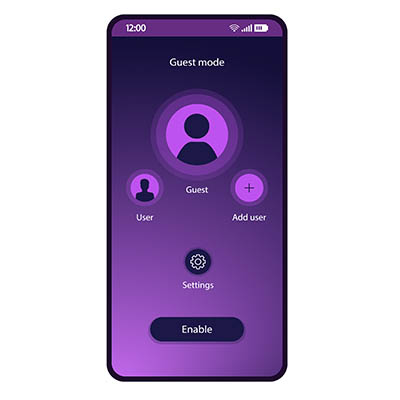
For precisely these circumstances, Android’s Guest Mode feature allows you to be courteous without potentially undermining the security of your device or, more accurately, the data stored on it.

What is Android Guest Mode?

First appearing in 2014 as a part of Android 5.0 Lollipop, Android Guest Mode is a way that your team can more easily fight against a scammer. Unfortunately, firewalls and antivirus aren’t exactly capable of protecting a phone if the user hands it over to someone with malicious intent—something that could easily happen if the scammer sold their story well enough.

Should this play out, the phone immediately becomes a direct threat to your data.

Guest Mode offers you a safe alternative to handing a phone filled with sensitive data over to a potential hacker by allowing you to effectively wipe your device before you share it. If the device’s manufacturer supports the Android feature, you can hide away all your settings, applications, accounts, and other data. Activating Guest Mode allows you to still share the use of your device without sharing access to the data that the borrower has no reason to see.

Unfortunately for Samsung users, the phone manufacturer has removed this feature from their version of Android. Otherwise, an Android user should find the task of enabling and disabling this feature easy to accomplish.

Turning Guest Mode On and Off

Enabling Guest Mode is very simple:

  • Access your device’s Settings.
  • From there, access Advanced and Multiple users. If your manufacturer has changed their menu order, search for “Guest Mode.”
  • Switch the toggle to “On” to enable Guest Mode.

After doing this, the Quick Settings panel and profile it shows can be accessed to Add guest. Reverting to your own settings is as simple as returning to Quick Settings and the user profile. Selecting the option Remove guest and providing verification will restore your device.

Security always needs to remain top of mind, so keep coming back to our blog for regular reminders to help keep your business protected. We can help, too, with our managed services, so give us a call at 810.230.9455 to learn more.

280929582_automation_400.jpg

Automation Can Bring a Your Business Serious Value

280929582_automation_400.jpg

Today’s business is always searching for a leg up, and this often means doing what it can to improve their operational efficiency. Companies can approach this in several ways. They can try to cut out redundancies, they can invest in training, or for many businesses, it means leveraging innovative new technological tools that are designed specifically for this purpose. 

Let’s Define Automation

Automation is the process of utilizing technology to take the repetitive and often mundane tasks off of your workers’ plates. This frees them up to focus on revenue-generating activities. Since technology is getting more sophisticated, it can now do more, thereby making your business more efficient. Businesses that successfully automate certain tasks will often see boosts in productivity as their workers are more engaged as they can do what you’ve hired them for in the first place.

Implementing Automation

When looking to utilize automated tools to cut down on human responsibilities, a business has a lot of places to choose from, but typically it is used as a support structure to improve the efficiency of all those little tasks that up until recently humans were responsible for. This has led many people to claim that automation is the main reason people are being cut out of the workplace. Studies show that there is some truth to this theory, but when applying automation to just handle the tasks that no employee wants to do, it benefits both the company and the workforce. 

Let’s take a look at some of the benefits of employing automation in your business:

Improved Customer Support

One of the most important aspects of your business is how you interact with your customers. Unfortunately, it can be expensive. Using automation to cut down the cost of support is a great plan. Using AI-fueled chatbots for online support and automated menus for your phone support can provide a lot of value, while also providing the support and transparency your customers demand. 

Ensured Compliance

You can always depend on your staff to find better ways to do things. They don’t want to waste their time making tasks harder than they need to be. Unfortunately, as they try to be the most productive and efficient, it can cause problems with any compliance regulations that your business operates under. By deploying automated solutions you can ensure that your operations meet compliance standards every single time. This allows your staff to focus on their job and reduces the chances that they may get creative and hurt your business’ chances of meeting compliance standards. 

Enhanced Business Communications

Much of business is a dance. There are so many parts of it moving at once that all it takes is somebody to miss a step for the whole thing to go horribly wrong. Automating scheduled communications can have a lot of benefits. Not only will it keep people that work in your business on point, it can provide customers a sense of value. This can also help prospects get the information they desire while also working for your sales and marketing teams to be able to schedule appointments without conflicts or follow up after a sale or inquiry. 

Automation will be a big part of business going forward, and the experts at NuTech Services can help you leverage the tools that fit your business. Give us a call at 810.230.9455 today to learn more about how automation can benefit your business.

179843492_remote_IT_support_400.jpeg

Building a Reliable Remote Workforce with Managed IT Services

179843492_remote_IT_support_400.jpeg

Remote work has been a popular topic for a few years, but over the past year, with so many people forced into working from home, a lot has been written about it. Today, we wanted to briefly talk about some of the technology that is suggested for the remote business, and what we can do to help you support remote workers. 

What Tools Do You Need for Remote Work?

If your business is going to effectively (and securely) support remote workers, your IT infrastructure needs to include:

  • Secure, encrypted access to your office network (via a VPN, or Virtual Private Network).
  • Communication tools, such as Voice over IP, video conferencing, and instant messaging.
  • Employees need devices at home that can reliably perform the tasks required of them.
  • Security awareness is still a critical piece, even when working remotely.

What About IT Support? 

Heading into last March the prevailing sentiment around the business world was that businesses were better off operating from a brick and mortar location than having a truly remote workforce. The loss of productivity was the major consideration, but there were (and are) questions about how to support a remote workforce; especially one that is effectively BYOD (Bring Your Own Device). 

Once the pandemic hit, many businesses, afraid as the realities of the time started to kick in, jumped into the remote workforce pool with both feet. Many of these businesses were not prepared to do so. While it is true that a remote workforce demands that a business leans on the IT, many businesses simply weren’t set up for this eventuality and it hindered their ability to do business.

At NuTech Services, our professional technicians were ready to help businesses transition from on-site to remote and we’ll be here to help transition back when our clients decide it’s time. We prioritize flexible and scalable solutions that promote productivity, operational efficiency, and most of all, security.  Without a plan to promote those three ideals, you just have pieces of technology that are constantly in jeopardy of corruption, failure, and misuse. 

Our comprehensive support strategy is deployed in three ways. They are:

  • We Get You the Tools – Not only do we use cutting-edge tools to monitor your existing hardware and remote connections, we also can procure the necessary tools that your business would need to get the most out of its human resources.
  • We Thoroughly Monitor and Manage – Using those cutting-edge tools, we are able to completely monitor and manage your business’ network and infrastructure, ensuring that if something were to gain access to your network, that it is removed before it becomes an operational problem for your business. 
  • We Follow Through – In our business, we realize there is absolutely no room for error. Our team, that is made up of technicians and business consultants, can help put you in the position to actually fit your IT management and support, to your business’ current needs; and, while keeping an eye on the future IT needs of your business. 

Sure, our main purpose is to keep your IT working as intended and eliminate downtime, but we can also provide you with powerful consulting tools, best-in-area technology procurement, and professional installation of IT tools that can absolutely transform your business. If you would like to talk to one of our consultants about getting the IT and the IT support your business needs right now, give us a call today at 810.230.9455. 

415525386_VoIP_400.jpeg

How VoIP Can Help the Business that Adopts It

415525386_VoIP_400.jpeg

For all the communication services and tools available to businesses nowadays, the telephone remains a staple in everyday processes—despite it often being difficult to manage and expensive to maintain. This is largely because today’s technology enables businesses to use a telephone system that exceeds the capabilities once provided by telephony, for a far more manageable investment.

Let’s take a few moments to explore how Voice over Internet Protocol (VoIP) telephony is so useful to businesses.

A Quick Overview of VoIP

Voice over Internet Protocol is a means of delivering a telephone system via the Internet, rather than investing in an additional, dedicated phone service. Available in different tiers, VoIP has proven reliable and responsive to change. This can largely be attributed to the use of cloud-based solutions to support these networks.

By using VoIP, a business can see quite a few perks come its way:

  • Simple management – With the option to host VoIP in-house or in a dedicated cloud server, it becomes much easier to make painless changes to the configuration of your solution.
  • Mobility – As VoIP uses the Internet as its data connection, it doesn’t need to be constrained to a stationary physical infrastructure. While a desktop phone can be made compatible with VoIP, a dedicated application on a mobile device can also be used.
  • Cost efficiency – By its very nature, VoIP enables a business to consolidate its operational expenses where communications are concerned. Rather than dedicating valuable dollars to yet another service, VoIP only requires an Internet connection to operate while offering many features you’d have to pay extra to a phone company for.
  • Business integrations – Many lines of business and office management applications have the capability to cooperate with VoIP services, helping to streamline daily processes.
  • Comprehensive features – As alluded to above, VoIP comes standard with many advanced call features and options for a business to take advantage of, like call waiting, call forwarding, conferencing capabilities, and instant messages.

NuTech Services is here to help you manage your business’ IT so that it can better fulfill your needs. Learn how we can help you take advantage of VoIP and other services by calling 810.230.9455 today.

125307929_internet_400.jpeg

Look How Much the Internet has Changed

125307929_internet_400.jpeg

When the Internet was established, it was a marvel. Now people could move information across the world in a matter of seconds. This is why the term “world wide web” was coined. Nowadays, there are literally billions of users on the Internet and the rules have had to be changed. This has some online services in conflict with government regulations and has an impact on how users are able to use the Internet. Let’s look at a couple of examples. 

Shifting Forces are Dictating Users’ Internet

The Internet has changed a lot due to geopolitical considerations, which admittedly was not the interface that was intended by its creators. With the growth and importance of the Internet today, however, it isn’t a surprise that governments seek to regulate the medium to promote security. Some examples of this include:

  • The United States government has considered blocking TikTok and WeChat, as they are hosted in China.
  • The Indian government has blocked dozens of applications (including these two) for similar reasons and are now looking critically at Twitter.
  • The Australian government was at odds with Facebook over a proposed law, leading to Facebook changing its functionality in the country until an agreement was struck.

These are clear disputes between corporate entities and the countries they do business in. These considerations (and literally thousands more from all over the world) makes “the Internet” different depending on what country you are accessing it from. The recent sweep of nationalism that has been spreading in nations all over the world for the past decade or so is exacerbating these differences. 

Look at What Has Changed

If you consider when Facebook first went global, it brought a swelling of perceived freedom to people that had considered themselves repressed for a long time. Almost immediately, however, some nations including the Democratic People’s Republic of Korea and the People’s Republic of China decided to limit what users in their countries could access. There were other nations that censored the use of the social network, but for the most part Facebook spread around the world fairly rapidly at the turn of the last decade. Today, however, after years of Facebook-cited negative situations, many nations are limiting Facebook and other social media platforms. Now, with leaders of several nations, including the United States, suggesting these companies simply have too much power and influence, you are beginning to see some very public decrees citing Facebook and other social media companies attempting to limit their influence.

The Australian situation is probably the most internetesting of the bunch. Australian government passed a law that’s intent was to require tech firms and platforms like Facebook to pay for the capability to share human-related stories. This has resulted in news organizations, and affiliated companies (including charities) being wrapped up in the situation. The issue was amicably resolved, but it highlights some of the problems with how the Internet is going to be governed going forward. 

The Call for Globalized Regulations

Like any other system that is used throughout the world, there are calls for a standard to be put in place that dictates how the Internet can be used and regulated. Thus far, traction on this has been moving at a snail’s pace. The logistics are difficult with some nations depending more on the Internet than others, and therefore the financial aspect of the situation is going to be a problem in order to get nations to agree on a reasonable standard. 

What are your thoughts? Should there be a worldwide standard to what can and can’t go on on the Internet? Should nations be limited in the amount of control they have over their people’s use of the tool? Leave your thoughts in the comments section below and stop back to our blog for more great commentary.

81574946_internet_400.jpeg

Examining the FCC’s Efforts to Fix Internet Access in the US

81574946_internet_400.jpeg

Internet connectivity is an increasingly important component to a business’ capabilities in this day and age, as well as all the more crucial to an individual’s everyday life. However, with financial difficulties restricting this access for many, the Federal Communications Commission has stepped in. With a $50 subsidy being made available to low-income homes each month, this situation warrants a closer look.

On Thursday, February 25, the FCC unanimously adopted a program that would discount broadband internet service to low-income households by up to $50 each month ($75 for those on tribal lands) and a one-time discount of $100 on a computer or tablet, utilizing $3.2 billion of the $900 billion coronavirus relief package that Congress approved back in December.

This has been shown to be a prescient need, as the average bill for stand-alone broadband service (calculated by the Wall Street Journal) totals about $66 per month. Unfortunately, this fee is too expensive for many, even without the additional challenges presented by the pandemic.

Eligible households include those that are already participating in pandemic relief or low-income Internet programs, households eligible for free or reduced lunch meals, Medicaid and SNAP recipients, Pell Grant recipients, and the recently unemployed. This program is set to be opened sometime in the next few months.

However, there are a few potential issues surrounding this situation—first, the limited funds allotted to a massive pool of eligible households. With 117 million households being made eligible, the $3.2 billion won’t last all that long… and once it dries up, so will the program.

This isn’t the end of the problem by any stretch, either. Millions of families across the country currently lack any form of broadband access, creating a serious problem as the pandemic has forced many schools and workplaces into remote operations. This problem is likely even bigger than figures would suggest.

Here’s why: while the official total released by the Federal Communications Commission estimates that 18 million people lack reliable connections to the Internet from their home, the methods used to count these households can easily skew the data. In order for a ZIP code to be seen as broadband-compatible, just one household within that block has to have Internet service. Considering that remote areas have census blocks that can stretch hundreds of square miles, this measurement seems to be woefully inadequate.

Hopefully, these measures are the first few steps toward a more equitable and accessible quality of Internet service, as the need for it has finally been made clear.

What do you think? Is this the measure that people need right now, or is it too little for too few? Leave your thoughts in the comments.

94903109_highlight_email_400.jpeg

Tip of the Week: Highlighting Certain Outlook Messages

94903109_highlight_email_400.jpeg

While no email platform is immune to mismanagement, Microsoft Outlook can quickly become filled with outdated and redundant messages that detract from the communication that it is meant to provide. Fortunately, there is a bit of a hack that you can use in Outlook to help prioritize your most pressing messages. Let’s dive into it.

Separating the Wheat from the Chaff in Your Inbox

The average inbox will contain a veritable ton of messages, the important ones mixed with promotions, group messages, and those that have been saved for later. After a short time, this can make it challenging to find the important ones as they are pushed down lower.

However, Outlook offers a means of finding these messages more easily through its conditional formatting capabilities. Basically, by switching a few basic settings, you can make the messages you want to focus on stand out a little more in the crowd.

Highlighting Your Messages

Let’s say, for the sake of example, that you often work with your colleague, Sandra, so her messages are some of the most important that you receive on a regular basis. Setting her messages to stand out is a longer process, but that is just due to the many options you have as you do so:

  • In Outlook, locate the View menu at the top of the window. Doing so will give you access to your View Settings. Click into them.
  • From there, click into the Conditional Formatting option. You’ll see a list of preloaded options included with Outlook, along with buttons that say Add, Delete…, Move Up, and Move Down. Click Add.
  • You’ll see a new rule added to the list of options called Untitled. Rename it to whatever works for your purposes. For this example, we’ll call it Sandra.
  • Click the button that says Condition… to establish when this rule comes into play. This can be based on a variety of options: whether a word or phrase is included in specific parts of the message, who it is from, the time it was sent, and even whether the message was directed to you specifically or to a larger group of recipients. Some of these can be disabled by unchecking the appropriate box or leaving the field blank. Let’s stick to simply specifying that these messages are ones sent directly to you, from Sandra.
  • You’ll be brought back to your list of rules in Conditional Formatting. With your Sandra rule still selected, click the Font button.
  • There, you can adjust the way messages that meet your conditions will appear in your inbox. You can change the font, the font style, its size, add strikeout or underline effects, and even change its color. In this example, we’ll simply say that the messages should be highlighted in green.
  • Click OK once you’re satisfied, continuing to do so until all the dialogue boxes are resolved.

Your inbox should now reflect the changes you have made—Sandra’s messages appearing green in the list—to help you quickly identify those she has sent to you. Simply follow the same process for any other messages you want to easily identify, and your inbox will quickly be more manageable for you.

Speaking of your email, did you know that you can receive a notification there whenever we post a new blog? Subscribe for these updates, and don’t hesitate to call NuTech Services for any of your IT-related questions at 810.230.9455.

142775337_improve_business_400.jpeg

How to Improve Your Business with Solid IT Practices

142775337_improve_business_400.jpeg

Technology is important to most small businesses today, especially when looking to improve it affordably. That’s why when making technology decisions, you should consider the following solid practices.

Coordinate Uniform Procedures and Processes

Your business should always try to find technology that works for all (or a majority) of your employees. The reason is that data isn’t always interchangeable and will have problems being transferred in some cases. Take Microsoft Word. If you copy and paste text from Microsoft Word to Google Docs (and vice versa) the formatting is affected in the document. This is a small issue, of course, but if your company depends on this type of technology, selecting one that works for your business will standardize things as well as likely be more affordable than using multiple pieces of software to do the same thing. 

This strategy is also solid for managing your internal data. Having consistency with the way your procedures are created and managed gives your team the best chance of collaborating effectively. 

Prioritize Security

Security has to be a point of emphasis for every business. This means physical as well as virtual security. You need to get the tools to protect your business and its employees, but you also need to train your staff on the best practices to keep your business’ assets secure. This means training them in positive password hygiene and how to avoid being phished, while also deploying the tools that will work to reduce their exposure to threatening situations. Only a combination of solid tools and best practices will work with the amount of active threats there are out there. 

Promote Mobile Solutions

Mobility is a growing consideration for most businesses. A lot can be done from outside the business, but in order to get the most out of available mobile technology, you will need to manage mobile access to company resources. For the SMB, the best way to do that is to build a Bring Your Own Device (BYOD) policy that works to give your staff access to the data and resources they need, but also allows you to manage mobile access to ensure that your data and digital assets aren’t in danger of theft or corruption.

If you would like to learn more about some of the best practices you should be adhering to, visit our blog or give our expert technicians a call at 810.230.9455 today.

227241901_management_software_400.jpeg

How to Find the Right Management Software for Your Business

227241901_management_software_400.jpeg

Software is a major part of doing business nowadays. Not only do you depend on it to manage core functions of your business, that software can be purchased in multiple different methods. When choosing management software, your business needs to choose one that fits your needs, returns long-term benefits, and provides a platform that will help you build your company. Let’s go through some considerations you’ll need to consider when choosing management software.

What Is Your Problem?

There are literally scores of different titles out there that have been created to help companies like yours do business better, but some are better suited to your business than others. Where you should start when attempting to choose a management software is to look at your business’ problems. You need a management software that will help you best solve those problems. 

Typically these problems include: work redundancy, using too much software to keep everything straight, and lack of interdepartmental coordination. By identifying your business’ specific problems, you will be able to whittle down your options. In doing so, the solution you ultimately choose will do a better job of meeting your business’ specific needs.

Workflow Is a Major Consideration

In order to work for your company, your management software will need to support your business’ workflow. It’s important to map out your daily activities, how you track them, and what type of information you would like to collect. Those considerations will drive your decision-making process going forward.

What sets your business apart where you would need the ability to customize your new software? What problems are you constantly having? Which problems would you like to avoid? You’ll need to think about the purchasing of new management software like adding milk to cereal. Once you’ve committed, there’s no going back. The process of migrating your data, training your users, getting used to the new system, ironing out bugs, working around shortcomings, and everything in between can take a lot of time and effort.

Identifying Problems

As mentioned above, your new software will need to solve your business’ biggest problems. Sometimes identifying those problems is the problem. What you will want to do is to rank these issues by priority, with the most crucial issues taking on more weight. This will ensure that you will be making the right decisions when it is time to pull the trigger. Minor annoyances that don’t directly affect revenue streams can be dealt with later, but core issues that require large time and resource commitments need to be addressed here. 

Compliance and Other Qualifications

When choosing a software to run your business, you will need to understand all the requirements that need to be met before the buying process. Does your business operate with certain restrictions due to regulatory requirements? Do you need integrations with management software? Are you considering hosting this solution yourself or are you going to be using a cloud-hosted solution? How will this system help your sales and marketing teams? How will it affect your production teams? How much training will you and your staff need before you/they are proficient with the software? There are a lot of considerations you need to ask yourself before even shopping for the right software to manage your business.

Your Staff and Your Pocketbook 

If your staff is going to have problems with the user experience of a solution, it may be a major headache for your business. This shouldn’t discourage you from getting a solution that is right for your needs, but you should consider their ability to use it before committing. Most developers will provide a free trial of a software, so you should consider taking advantage of that so you aren’t wasting time and money on a solution that won’t be a long-term solution for your business.

That brings us to money. Some businesses would like to have all the bells and whistles that come with an enterprise CRM (Customer Relationship Management) title. The budget may say otherwise. You need to understand that as your business grows, certain software can grow right alongside it, and some are just too much for your budget and your situation at the moment. Be smart and don’t create more problems when trying to find solutions.

Consulting With Experienced Technicians

At NuTech Services, our technicians work day-in and day-out with software that could be right for your business. We can help you ascertain the real problems that are hindering your business’ growth and help you make the right decisions to move past them. We can also give you options that you wouldn’t get if you tried to do this alone. Give us a call at 810.230.9455 and tell us what your goals are and we can help you find solutions to all of your current business problems.

308593867_virtual_desktop_400.jpeg

Tip of the Week: Working with a Virtual Desktop in Windows 10

308593867_virtual_desktop_400.jpeg

With Windows 10, you have no shortage of features and capabilities to take advantage of. One such capability: the use of a virtual desktop. Found near the Start button in your taskbar, the Task View button enables you to create and manage these virtual desktops, which we’ll discuss here.

Understanding the Virtual Desktop

Before we go on, we should clarify that we’re discussing a specific variety of virtual desktop.

Most things you hear called “virtual desktops” are the product provided as part of a Desktop-as-a-Service (DaaS) solution. Here, we’re discussing the feature built into the Windows 10 operating system that effectively opens a separate session of Windows 10 alongside your first one. Doing so can provide some significant benefits to your usage of Windows in terms of task organization and application management, along with other use cases that business and personal users alike could find an advantage in.

How to Use These Virtual Desktops

Opening a virtual desktop in Windows 10 almost couldn’t be simpler.

  • Start by clicking on the Task View button in your taskbar. If the button isn’t there by default, right-click on the taskbar and select the Show Task View button. Alternatively, Task View is accessible through Windows Key + Tab.
  • In Task View, you’ll see the option to add a New Desktop. These desktops are your different instances of Windows 10 and can be switched between by either returning to Task View or using Ctrl + Windows Key + Left/Right Arrow to cycle through your open desktops.

When working in these desktops, you should see no difference in performance. Be warned, some apps can only be opened once in a system, so trying to open another version of these will pull you into the desktop where it is already running. Closing one of these desktops will simply cause any open applications to jump to another open desktop instance.

Hopefully, you have a better idea of what Windows 10’s virtual desktop options have to offer. If you have any other questions about the technology that your business relies on, leave them in the comments or give us a call at 810.230.9455.

341874742_covid_19_scams_400.jpeg

What Can Be Done to Counter COVID-19-Themed Scams?

341874742_covid_19_scams_400.jpeg

As commonly happens with any disaster, COVID-19 has inspired no short supply of scams. While these scams initially focused upon the relief funds that were delivered to people to help sustain the suffering economy, the ongoing vaccine distribution efforts have given those behind these efforts a new means of attack.

Let’s consider how these scams have materialized over the past year.

The Opportunity COVID-19 Gives Scammers

Like most predators, hackers will fully utilize every advantage they have over their intended prey. With COVID-19, this advantage comes in the form of the desperation many still feel for news. As a result, numerous scams have been reported to reference the coronavirus outbreak, adopting a wide variety of methods.

Some of the old tricks that these scammers have adapted include:

  • Phishing – While phishing scams are nothing new, and certainly won’t end with COVID-19, scammers have certainly taken advantage of it during these tumultuous times. By sending emails and other messages (as we’ll get into) that appear to come from a trustworthy source or an authority, a scammer can manipulate their target into compliance.
    • Vishing – This form of verbal phishing is conducted over the telephone but is otherwise identical to your more typical phishing scams.
    • SMiShing – Once again, a basic phishing attack, but carried out through SMS texts.
  • Pretexting – Basically, this is what occurs when someone reaches out to you seeking out your information under the guise of calling from some trustworthy entity looking for verification. As you would imagine, this has not been uncommon as of late.
  • Spoofing – Spoofing is the act of disguising a URL or a profile to appear to link to one location, but take the target to another, generally malicious one.
  • Quid Pro Quo – Just as it sounds, a scammer offers someone something in return for their information, but never holds up their end of the bargain. A longer scam, this usually requires some level of trust to be established but can be quite lucrative for the miscreant who carries it out.

How to Protect Your Business from Scams

Like most things having to do with cybercrime, there isn’t really a surefire way to prevent such scams from appearing, which means that the onus to keep data safe falls to the user that is dealing with these scams firsthand.

The biggest thing that you can do—and that you should encourage your team to do—is to verify everything. Any time anyone requests something of you online—whether it seems to be your boss, your coworker, your parents, or the CDC—you need to make sure you’re talking to who you think you’re talking to.

Verify. Everyone. And. Everything.

With so much of modern life now utilizing the Internet, it is nothing if not irresponsible to not have an appreciation for the severity of today’s biggest threat landscape. Keeping a good perspective about how valuable your personal information is and treating it as such with best practices can very much help protect you and your business from cybercriminals.

NuTech Services is here to help you see to your business’ cybersecurity preparedness and protections. Find out more about what we can offer by calling our team of professionals at 810.230.9455 today.