
343322051_collaborative_tools_400.jpg

Collaborate Better with Microsoft SharePoint

343322051_collaborative_tools_400.jpg

As businesses continue to adapt to the ever-evolving workforce, many are now supporting a variety of environments. Ranging from hybrid, remote, and in-office, the one constant is the need for your team and clients to communicate with each other. Learn how Microsoft SharePoint can help.

Communication is Key to Success

As many business owners are aware, their ability to communicate is critical to their business’ success. They are also mindful that the current business environment has made it more challenging to communicate effectively as they did pre-coronavirus. As face-to-face and word of mouth communication have been significantly reduced, business communication has been transferred to the cloud, particularly when it comes to sharing information.

How the Cloud Helps Small Businesses

A primary benefit of cloud computing is that it allows smaller business access to the same type of technology that was once the larger businesses’ domain. This is accomplished through NuTech Services using cloud technology to provide a range of services while offering significant cost reduction.

By removing the need to maintain your server on your premises physically, you reduce the cost in staff hours and capital to keep your infrastructure up and running. In addition to our Hosted IT solutions, we also offer other cloud solutions such as:

  • Hosted Microsoft Exchange Email
  • Email Filtering/Spam Protection
  • Hosted VoIP
  • Hosted Security and Backup

These solutions are designed to provide your small to medium-sized business access to the tools you need to compete at a price point you can afford. While these tools allow your business to operate at a higher level, it can all be for naught if your team and clients can’t communicate with each other.

Microsoft Services Can Answer the Collaboration Concerns

While most businesses only think of Microsoft cloud services in terms of Word and Excel, and yes, while Microsoft 365 is a reliable option for businesses, the reality is Office 365 offers more than you think, with a wealth of services benefiting a business of any size. Most importantly, the very fact that the services are cloud-based adds to the value Microsoft products can bring to your business. If you’re interested in improving your team’s collaboration, Microsoft SharePoint can help.

Better Collaboration with Microsoft SharePoint

As remote work continues to dominate the business arena, Microsoft SharePoint can empower your staff regardless of their status, remote or in-house, and provide them with the tools to collaborate wherever they are. With SharePoint, your team can create a customized collaboration environment best suited for their needs. Microsoft SharePoint makes sharing, managing, and finding documents more manageable. Its integration into your IT infrastructure can provide your organization with the means to immediately see the benefits of an integrated document management system, including:

  • A central shared platform for storing documents and files that improves efficiency and organization.
  • Clear and concise indexing to allow users to find things faster.
  • An integrated continuity protection system to ensure there is communication between users, so works are not overwritten.
  • A complete revision history that provides roll-back capabilities.

If your team is working in a mixed environment, SharePoint will allow your workflow to be more organized. Additionally, cooperation between users, departments, and clients will be frequent and more comfortable to depend on. Communication is critical for completing the projects that will drive your business forward during these uncertain times.

We are the Michigan SharePoint Experts

Every business is different and needs a unique solution to their communication concerns. Moreover, we realize that the typical small to medium-sized business may not have the resources to implement a fully actualized SharePoint solution. 

Fortunately, NuTech Services offers various virtualized computing environments, virtualization services, and fully hosted SharePoint solutions to give your organization the flexibility it needs to communicate and collaborate with your team. We can assess your organization’s IT and develop a SharePoint interface to suit your needs, whether you want to manage the platform yourself or have NuTech Services manage it for you. To learn more about your options, reach out to us at 810.230.9455.
250877277_wireless_wired_400.jpg

Should You Use Wired or Wireless Connections?

250877277_wireless_wired_400.jpg

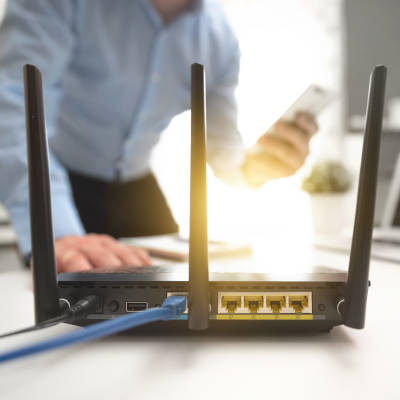
It hasn’t been too long since connectivity required an actual physical connection between the connecting endpoints, making a wired connection the de facto option for businesses. However, now that wireless connectivity is so widely available, businesses now have a choice… but which is the better option? Let’s compare some of the pros of each to make the answer a little clearer.

Why a Hardwired Connection?

Security

The fact is that a direct connection is inherently more secure than one that is broadcast over the airwaves, as these have the potential to be snagged in transit much more easily. Therefore, if security is paramount, a wired connection is the better option by default. That said, there are ways to secure your wireless connection, utilizing a VPN.

Speed

Wired connections are also much faster than a wireless one, whether data is being communicated within your business network or to and from the Internet. In terms of efficiency, the wired connection comes out on top.

Stability

Save for a case of infrastructure failure, the only way you could lose a wired connection would be if the wire were to be unplugged. This stability not only makes them more reliable; it contributes to the consistency of the aforementioned higher speeds.

Why a Wireless Connection?

Convenience

The lack of cables that a wireless connection requires just makes Internet access so much simpler for a business to implement. Without the need to adapt any existing infrastructure to run wires and such things, it is far easier to add, subtract, and move users around as need be.

Mobility

Wi-Fi’s inherent mobility works so well for businesses because a user can pick up what they’re doing and bring it with them if they have the right device. This makes it much more practical to implement in the workplace, especially if collaboration requires meetings to happen in various places in the office.

Scope

Speaking of the right device, a wireless connection enables work to be done on a much wider, and yes, more mobile assortment of solutions. On a related note, businesses that interact with the public regularly can configure their Wi-Fi to offer guest functionality. This enables these businesses to offer their patrons a convenient perk.

Why Hybrid May Be Best

This is the real important takeaway: you don’t have to choose between wired and wireless connectivity.

Embracing both options can effectively negate the shortcomings of either, ultimately improving your business’ capability to get work done—large tasks performed over the wired connections, with communication and collaboration sticking to Wi-Fi. It all comes down to your business’ individual needs and situation.

Whichever option works best for you, you can count on NuTech Services being the best resource you can turn to. Find out what we have to offer in terms of assistance and support by calling 810.230.9455.

299123399_mobility_400.jpg

Is Your Business Taking Advantage of Enhanced Mobility?

299123399_mobility_400.jpg

Mobility has to be one of the most talked about technology trends in business, and for good reason. Consumers use mobile. They use it for shopping, banking, checking the weather, for driving directions; and today, they use it for productivity. Let’s take a look at the rise in mobility and how small businesses can use it to their benefit.

Employee Expectations

Mobility is becoming a critical component for small and medium-sized businesses largely due to the demand brought by employees. Today, where most tasks can be completed with the use of a smartphone, it creates the kind of scenario that gets employees asking, “Why not?” 

For the business, that has more responsibilities, that sentiment can be shared, but only after all elements are considered thoroughly. This mostly has to do with data security. Once data security can be maintained, mobility can certainly become a major asset. 

What You Need to Consider

There are several considerations that a business owner should make before trusting in an enhancement of mobility. Here are three:

Don’t Get Ahead of Yourself

To get the most out of your business’ mobility, you need to set goals; and it will do you good to be as realistic as possible. If you try to implement a whole mobile policy and give people carte blanche with their mobile devices, you could run into problems. The best practice is to look for issues that mobility could help alleviate, and tailor your strategies to them. Most businesses that extend their mobility focus on customer service and collaboration, but with more business tools creating mobile apps than ever before, more is possible today. Start simple so you can ensure that you can maintain control over mobile data flows. 

Maintain Security

When your employees access your network via mobile devices, you need to secure it, preferably with multiple layers. You need to require password authentication, while also placing solutions in place to encrypt the files. More than that, you should find encrypted solutions to protect data from being intercepted as not all mobile networks are as reliable as a business may need.

You will also want to maintain data backup platforms and mobile management systems to ensure that you not only have control over your business’ data, but also to mitigate any negative situations surrounding data mobility you may encounter. 

Make Sure Your Business is Mobile-Ready

It is important that you understand how mobility is being used. Can your staff access locally-hosted data? Do you use cloud systems that need to be set up for multi-factor authentication? Does your IT administrator have the tools in place to address any mobility-related issues? To be able to take advantage of mobility, you need to have a setup that will allow you to. 

The IT professionals at NuTech Services can help outfit your business with the tools and expertise you need to allow for expanded mobility. Call our experts today at 810.230.9455 to learn more.

229224729_drones_400.jpg

Drones Use Up in Several Industries

229224729_drones_400.jpg

Drones are a technology that comes with some controversy, but also some real utility. Known best as an unmanned deterrent measure used by governments, today drones are used for a multitude of different tasks. Today we’ll discuss how drone technology has expanded over the past several years. 

Agriculture

Farms often cover miles and miles of real estate. Traditionally, this makes it more difficult to keep track of everything that is going on around the property. Drones can make monitoring the status of the farm much simpler. With specialized sensors that collect important data, farmers are able to successfully manage irrigation levels, fertilization, and crop spacing, leading to higher agriculture output. Using drones, farmers can also manage livestock much simpler.

Conservation and Environmental Protection

Drones have also been a big benefit to conservationists by expanding the ability to collect crucial data in situations that they weren’t previously able to track. They can help track animal and environmental patterns and report information that is crucial in modern conservation efforts. Drone technology can also help Department of Environmental Conservation officers and park rangers find compliance infractions. 

Construction and Site Surveying

Engineers and construction workers now use drones to not only get a lay of the land, but also inspecting hard to reach places. Using drones in this capacity cuts down on the dangerous situations that human workers are exposed to, mitigating risk. 

Fire Fighting, Policing, and Search and Rescue

One of the most important uses of drone technology today is in emergency situations. It can assist all types of first responders by being able to get an aerial view of the situation. Firefighters are beginning to use drones to fight fires, while still using them in support capacity as well.  

Police have started to use drones for crash investigations as well as to keep officers out of potentially risky situations. 

Law enforcement has also used drones to simplify many of their activities, including crash investigations and search and rescue efforts.

Search and rescue teams have used drones to deliver equipment quickly into situations where people could be at serious risk of bodily harm. 

Insurance

Drones can be of use to insurance companies when they do assessments of claims. Instead of putting people into potentially serious situations, flying a drone keeps risk down and allows people to get the resources they need to rebuild quickly. 

Have you used a drone? How do you think the drone will affect life going forward? Leave your thoughts below in the comments and be sure to return to our blog again next week.

134595765_VoIP_400.jpg

Today’s VoIP Platform is Completely Customizable

134595765_VoIP_400.jpg

A business has to have a telephone system. It is the simplest and most utilized method of communication. Many businesses, however, have to consider many variables before choosing theirs and it adds up to a lot of confusion. They need to take into account the cost, yes, but also the feature set, and the phone system’s ability to support much-needed mobility. Today, we will tell you about an option that checks all the boxes: a hosted VoIP system.

What Exactly is Hosted VoiP?

Hosted VoIP is easily described as a communications platform that utilizes an Internet connection to function. Unlike traditional telephone systems that are purchased through the telephone company and have their own dedicated lines, hosted VoIP is hosted in the cloud and allows a business to build a strong, customized telephone system that meets a lot of a company’s communications needs. 

While there are VoIP options for consumers, businesses need more. They need more control, more features, and more flexibility. A hosted VoIP platform allows businesses to add and remove lines from their system in minutes and provides them the options to customize the whole system to include more dynamic features designed to maximize a business’ ability to communicate and collaborate efficiently. 

The Difference Maker

Most business owners would probably admit to thinking that all telephone systems are the same, but that isn’t the truth. Hosted VoIP can help you control costs, build a more comprehensive communications strategy, and significantly offer solutions to the question of mobility that many businesses have absolutely no answers for.  Let’s look at some of the main benefits of hosted VoIP:

Cost

Obviously, for most businesses the cost of a solution has to be a prime consideration. Hosted VoIP can save even the smallest businesses money in multiple ways. First, since you are using your business’ Internet connection to fuel your phone platform, you can cut the telephone company right out of the equation. Secondly, you can customize your hosted VoIP platform to get the solutions that work for your business, presenting you with very little waste. Lastly, your VoIP platform alternatively serves as your business’ mobile platform, as you can use the solution’s mobile app to make and receive phone calls—from your assigned VoIP phone number—anywhere your mobile device has Internet access. 

Extremely Simple

A Hosted VoIP platform is extremely simple to set up. Working with a vendor, you can have a telephone system configured the way you like it in about a day. Compare that to the weeks of running cables and moving your business’ around to facilitate the installation of a traditional telephone system. For the end user it is even simpler. All you need to do is hook a VoIP-enabled phone into a workstation and you are ready to go. Additionally, you can add and remove lines extremely quickly, so you aren’t stuck paying for more that you need. 

Functionality

One major benefit of VoIP is the customization of the platform. You can literally get dozens of tools if your business needs them. Some of the tools you can get with your VoIP platform include:

  • Audio and video conferencing
  • Call forwarding
  • Personalized extensions
  • Call routing
  • Call recording
  • Automated receptionist
  • Call queues
  • Instant messaging
  • Text messaging
  • Integrated voicemail

…and there are many more.

Hosted VoIP can change the way your business looks at its communications platform. With reliable and crisp-sounding calls, the Hosted VoIP platform can be right for just about any business. To learn more about hosted VoIP, give us a shout at 810.230.9455 today.

355597506_excel_400.jpg

Tip of the Week: Keeping Track of Changes Made in Excel

355597506_excel_400.jpg

With today’s software solutions, the fact that collaboration is possible has helped many business processes move more efficiently. Despite this, there is also the potential for these solutions to contribute to confusion within your business. Take, for instance, changes people make in Microsoft Excel. Fortunately, Excel offers a means for you to track changes made.

Let’s go over how to set up this capability. As a disclaimer, it will require you to edit some of your menu options, so reach out to your IT resource to confirm that it is okay to do so and to assist you if need be.

You should also know that Track Changes won’t work if a spreadsheet contains a table that hasn’t been converted into a range. To make this conversion, select the table, navigate to the Design tab, and click the Convert to Range option. If you want others to be able to collaborate on your workbook, it needs to be saved in a shared location.

Adding the Track Changes Buttons

To access these options, you’ll need to add them to your Ribbon menu (unless your version of Excel includes them by default). Doing so is simple:

  • Right-click on the Ribbon menu. From the options available, select the Customize the Ribbon option.
  • On the resulting dialog screen, find the drop-down menu labelled Choose commands from: and select All Commands. In the other menu, select Main Tabs, and find Review in the list that appears. Click on the + next to Review, and then click the New Group button.
  • Right click on New Group, renaming it to “Track Changes.”
  • With “Track Changes” selected, find Highlight Changes and Accept/Reject Changes in the left-hand list. Click the Add button to add them to your “Track Changes” group.

Once your Highlight Changes button has been added to the Review category of the Ribbon menu, click on the Highlight Changes button. A box will appear, where you should select both Track changes while editing… and Highlight changes on screen. Click Okay once you’ve done so.

Once you’ve done this, any changes made to the spreadsheet will be marked with a small triangle in the corner of the cell to display the most recent change.

Reviewing all Changes

After everyone has contributed their input, you can choose to accept or reject the changes that have been made with the Accept/Reject Changes button. You’ll be asked to Save the Workbook, and once you have, the changes will be highlighted one by one with the option to Select Changes to Accept or Reject.

All changes will be listed so that you can Accept them or Reject them accordingly. The cursor will automatically proceed to the next change for you to repeat the process. If there are multiple instances of a similar change (like all ampersands or percentages written out instead of the symbols used), you can use the Accept All button to mass update them.

With any luck, we’ve helped make collaboration that much easier for you and your team members. For more tips like this, as well as best practices and other IT assistance, make sure you subscribe to our blog. Remember, our team is always available at 810.230.9455 for your IT needs.

261850896_captcha_400.jpg

CAPTCHA and Its Many Challenges

261850896_captcha_400.jpg

We’re all familiar to some degree with the security measure known as CAPTCHA. You know the one—you usually see it when filling out forms or logging into sites online, where you have to prove that you’re a human being by identifying which of a variety of images fit a certain description. You may have noticed that these tests have gotten far more difficult over time. This is because, predictably, computers are getting better at beating them.

Let’s discuss what this signifies, and how this may shape how users authenticate themselves in the future.

Defining CAPTCHA

Short for Completely Automated Public Turing Test to tell Computers and Humans Apart, CAPTCHA has long been the standard tool used by Google to prevent automated spam from polluting the Internet by requiring (in theory) a human being to interact with content in some way before allowing access or a task to successfully be completed.

Back in the early 2000s, CAPTCHA was effective against spambots, being able to bamboozle them by simply requiring images of text to be identified.

The Growing Issues with CAPTCHA

However, once Google gained ownership of CAPTCHA and used it to help digitize Google Books, the text needed to be increasingly distorted to continue to fool optical character recognition. Adding to this was the fact that human beings solving these CAPTCHAs gave optical character recognition the information needed to improve its skills.

This is the downside to CAPTCHA that its creators foresaw from the beginning: at some point, machines would ultimately overtake human capabilities when it came to identifying these images. Furthermore, these tests also need to be universally applicable, working wherever someone is located despite any cultural biases and differences that a user might have.

Since then, CAPTCHA has been replaced by NoCAPTCHA ReCAPTCHA (the one where your user behavior is used to judge your humanity) in 94 percent of websites that use CAPTCHA. Further research and development is in progress to reinforce the security of these tools.

However, automated bots can already bypass CAPTCHA more effectively than most humans can. In fact, in 2014, a machine learning algorithm was made to compete with users to solve distorted text CAPTCHAs and managed to bypass the security measure 99.8 percent of the time, as compared to the humans’ 33 percent. There are also various CAPTCHA-solving programs and services available for use that can effectively access vast amounts of pages for little cost.

What is Being Done to Resecure CAPTCHA

There are many different approaches under consideration to improve the practical efficacy of CAPTCHA—making it simpler for human beings and more difficult for machines as originally intended. To accomplish this, a few different tactics have been explored, some more plausible than others:

  • Rather than identifying text or images, users would be asked to classify images of faces, based on expression, gender, and ethnicity (probably not the best option, in today’s contentious environment).
  • CAPTCHAs based on trivia and regionalized nursery rhymes, with these culturally based questions designed to overcome bots and overseas hackers alike.
  • Image identification that uses cartoons, hidden-image illusions, and other relatively subjective content to outfox automated CAPTCHA-cracking tools.
  • CAPTCHA tools that test users by having them perform basic game-like tasks, with instructions given in symbols or contextual hints.
  • Device cameras and augmented reality being used as a form of physical authentication.

Finally, a lot of consideration is being put to authentication measures that examine a user’s online behaviors and actions to determine whether there’s a real human being at the controls, or if a clever piece of software is trying to gain access—whether the mouse moves, for instance, or how precise it is as it does. Google itself is starting to examine traffic patterns to test “users” on a case-by-case basis.

There’s even a chance that these kinds of Turing tests will only be passable in the future by selecting an incorrect answer.

Regardless of how, it is only going to become more important to secure your accounts and the information they contain as time passes. NuTech Services is here to help you secure your business and its data. Learn more about how we can protect your business with the right IT solutions by calling 810.230.9455 today.

197866824_email_inbox_400.jpg

Become an Email Champion by Spending Less Time Dealing with Email

197866824_email_inbox_400.jpg

Email is important, but it seems to steal so much of your valuable time, doesn’t it?

Conquering your never-ending inbox can seem like a feat all in itself—let alone having it done before lunchtime. There’s an easier way, and when done properly, you’ll be able to spend less time sifting through your email and more time on the more important stuff.

Make Your Inbox Do the Work for You

You’ve got better things to do than organizing and prioritizing your emails manually. Granted, you’ll still need to respond to important emails, but most email clients have everything you need to set up a system that automatically parses and sorts emails based on a whole slew of different factors. It will take a little time, and likely a few rounds of adjustments to get your inbox to work the way you want it to, but we’re going to show you the tools that will help get you there.

Most businesses either use Microsoft Outlook, or Google’s Gmail, so we’re going to cover these two email platforms.

Gmail’s Labels and Filters

If you use Gmail, there are two tools that you’ll want to get familiar with: Labels and Filters.

A label is exactly what it sounds like. Applying a label to an email will essentially categorize it. If you used to use Outlook in the past, think of these as Folders (we’ll get to Outlook next).

You can organize labels based on a wide variety of topics—maybe you have a label for each project you are working on, or a label for different types of correspondence (invoices, reports, employee evals, etc.). Organizing your email into labels makes it easier to pull up specific emails later without having to rely on searching for them. More than one label can be applied to any particular email.

To create a label, just select Create new label in the sidebar (hidden under the More link) in Gmail or select the Tag Icon Box that appears when an email is selected. You’ll be able to select any labels you already have or create a new one. You’ll also be able to color-code each label.

But remember, we want to save time, so instead of having to manually move emails to a label, you can create filters to automatically apply labels to certain types of messages. Once you have some labels created, go to Settings, and click the Filters and Blocked Addresses tab. Once there, select Create a new filter.

You can also start this process by doing a Search from the top of your Gmail. Click the little dropdown arrow in the search box at the top of your email, and you can fill out the form to search for specific emails. You can create filters based on who the email is from, what email address the email is sent to, the subject line, words within the email, and more. 

If I wanted to send all correspondence from Bob to a certain label, I’d just put his email in the To: line and click Create Filter. Then Gmail will allow me to choose what to do to all emails from Bob. I could star it to make it stand out, apply a label, or a variety of other options.

Microsoft Outlook’s Rules and Folders

Microsoft Outlook’s process is pretty similar. Instead of filters and labels, Microsoft calls them rules and folders. Here are the steps to set up new rules:

  • Right-click the message and select Rules, then, select Create Rule.
  • Then you need to select the conditions that activate the rule, and what that means. 
  • Make sure you select Run this new rule now on messages already in the current folder (if you wish) and click OK to finalize your rule.

This means that you will need to have a folder to file these messages in. While the option will be presented to you as you create a rule, you can also set up your folders separately in advance.

  • In the Mail pane, right-click where you want to add your folder and select New Folder… from the menu that appears.
  • Name your folder, and press Enter.

It takes time to build all of the rules (or filters) you need to streamline your inbox, but it will ultimately save you hours of time that would otherwise be wasted sifting through your inbox by hand. It’s all about becoming more efficient!

For more tips and tricks, bookmark our blog, and if you need help with your technology, give us a call at 810.230.9455.

323508379_camera_lens_google_400.jpg

Tip of the Week: What Google Lens Can Do

323508379_camera_lens_google_400.jpg

Not many Android users are aware of the Google Lens application, and the supplemented utility that it can bring to your device’s camera. Let’s fix that by going over what Google Lens is, and how you can use it to your advantage.

Explaining Google Lens

Downloadable from the Google Play Store, Google Lens is a utility app that incorporates artificial intelligence to make your smartphone’s capability to take and store images even more useful. With Google Lens, your phone can identify the elements in an image and give the user in-depth and contextual options based on it. Let’s say you wanted to find out what the flowers were that someone had planted outside their house. Using Google Lens, you could point your camera at the flowers and identify them that way.

Now, just consider how this could be applied to the modern, mobile workplace:

Copy and Paste Real-World Text

The ability to copy and then paste content is one of the most often-used functionalities in the office, so why not bring it to the physical world (sort of)? Using Google Lens, you can capture text with your camera from any media just as though it was content on a website. Simply press on the desired text to select it, press the Copy button at the bottom of the screen, and there you are. This text can then be shared directly to the clipboard of any computer with the same Google account actively logged in.

Extract Contact Information from a Business Card

While business cards are a great way to build business relationships at networking events, they don’t exactly fit in with most of today’s business environment. Lens can fix that by capturing the details printed on the card and giving the user various options. Whether you want to call the contact shared on the card, visit a website printed on it, or send a quick text or email message, Lens makes it simple to do so.

Create a Calendar Event

While calendar events are a great way to keep one’s schedule organized, helping one fulfill their obligations, they can become arduous to input into a mobile device. Google Lens can automate that process, pulling the necessary information from a flyer, an appointment card, or any other media and giving the user the option to Create calendar event.

Of course, this has been but a brief sampling of Google Lens’ capabilities. We encourage you to download it and see how much it helps you. If you’ve used Google Lens before, let us know how it worked out for you in the comments!

279568799_business_technology_400.jpg

Why Business Technology Won’t Change Back

279568799_business_technology_400.jpg

There is no denying that the COVID-19 pandemic has caused some major operational shifts in how most businesses conduct themselves and their processes, with many of these shifts relying on technology solutions. While there’s still no telling for certain how much longer these conditions will persist, we predict that many businesses won’t abandon these solutions once the present danger has passed. Let’s discuss why we have this expectation.

What Does “Normal” Mean?

Let’s just come out and say it: as terrible as the pandemic has been for so many, it has also given businesses some very strong motivations to adapt and innovate. Really, most had no choice if they wanted to remain open in the long-term.

This led to many businesses finally adopting the modern solutions that enabled productive and secure remote work and collaboration.

So, the question remains: what exactly do we expect to happen before we consider ourselves at a “normal” point once more? Does that mean the way things were pre-COVID-19, or some new standard that reflects what we’ve learned? At NuTech Services, we’re firmly in the latter camp, that the most successful businesses will be the ones to carry on with the strategies that have allowed operations to continue safely and securely. Let’s consider some of the larger impacts of these shifts, and why we think these shifts are going to prove permanent.

Improved Productivity

Regardless of what kind of disaster strikes a business, it will become important that the business is able to use what resources they do have to the fullest. With modern IT solutions in place, this benchmark can be attainably pushed higher.

This is due not only to the improvement in technology’s efficiency, it also has to do with its portability. In addition to your team being able to spend more time in the office that isn’t taken up by their repetitive tasks, they are also no longer confined to doing their work while in the office. Thanks to today’s increasingly mobile solutions, productive work can be accomplished from anywhere a secure Internet connection can be established.

As a result, time that once offered no opportunity to be productive to a business can now be used more effectively to help reach the organization’s goals.

Seamless Collaboration

Without the metaphorical water cooler to gather around and chat during the workday, many companies have rolled out the means for their employees to virtually socialize with one another as well as work productively on shared goals and ideas. These efforts have been very successful and have actually shown some improvements in internal company cultures. Because certain people would tend to socialize exclusively with certain coworkers throughout the day, the workplace could become clique-y, biased, and exclusionary.

However, once collaboration and such communications were rendered digital, many of these divides could be bridged, allowing for a more inclusive work process.

Equalized Opportunity through Tech

With more and more jobs opening in the digital space, companies will need to have fingers on the keyboards. As a result, former job requirements like education and proximity to the business will be considerably less important to hiring managers. Really, it’ll be more of a matter of who can deliver upon their responsibilities, regardless of age, race, or any other “unofficial disqualifier.”

So no, it doesn’t seem likely that we’ll ever really go back to the way things were in many industries. After all, the business world is all about progress… it would be a shame to sacrifice all the progress that the pandemic has forced upon us once it is over.

Regardless of how your business is operating, now or in the future, NuTech Services can help ensure it is doing so with reliable and efficient technology. To learn more about the services and solutions we offer, give us a call at 810.230.9455.
363971145_hackers_ahead_400.jpg

What You Need to Know to Stay Ahead of Hackers in 2020

363971145_hackers_ahead_400.jpg

Let’s face it, it is nearly impossible for the modern business to stay ahead of every cyberthreat. It is just too much to proactively ward against. Today’s best practices will try to keep your network from being breached and your data from being stolen, but they may just allow you to understand how your network was breached and how your data was stolen. Unfortunately, cybersecurity is not foolproof, but let’s look at a few strategies you can use to improve your chances of holding onto your data and keeping unwanted actors out of your network. 

Strategy #1 – Know the Value of Your Assets

By knowing the value of the data you hold, you will be able to properly prioritize how to protect it. Since IT experts have to create cybersecurity strategies based on how much harm can be done to your operational integrity and reputation, it’s good practice to know what assets hackers would be after if they were to breach your network defenses. 

Strategy #2 – Stay Proactive

One of the best ways to protect your network and infrastructure from security threats is to be proactive in your efforts to protect them. You’ll want to develop a response plan that is created with the worst-case scenario in mind. That way as soon as there is a cyberattack, you will know how to react and what strategies to take to mitigate the problem. 

Strategy #3 – Train Your People

One thing is certain, a well-trained staff will do more to protect your network and data than any other solution. The “all-hands-on-deck” strategy to cybersecurity will minimize the frequency and severity of cyberthreats by nearly 50 percent, so ensuring that all of your people know how to spot abnormalities (especially phishing attacks) can save your business a lot of time and money. 

Strategy #4 – Keep Innovating

One thing is certain, cybersecurity is as much about staying out in front in terms of tools and strategies as it is about being hyper-aware of potential problems. Sure, knowing how to react to a data breach or successful phishing attack is important, but the more that you understand how these hackers are coming at your business, and putting tools and strategies in place to thwart those attacks, the more secure your data and resources are going to be going forward.

Cybersecurity is a long game and if you want the best team in Michigan helping you come up with strategies and outfitting your business with the tools it needs to keep hackers at bay, give NuTech Services a call today at 810.230.9455.

354073088_back_to_work_400.jpg

Tip of the Week: Minding Your Manners in the Office Again

354073088_back_to_work_400.jpg

In the office, there are certain courtesies that most people follow, simply to make sure that the environment remains a peaceful and effective place to work. Working at home (as many have) makes many of these courtesies redundant. As many return to the office, resuming these manners will be important. Let’s go over some of the biggest shifts that your employees should remember as they head back to the office.

Mobile Device Use

When working from home, the reasonable threshold for mobile device use is significantly different. Theoretically, you could talk to someone on speakerphone with the phone across the room (although you shouldn’t). However, there are other people with you in the office that you could potentially distract.

Take a moment and remind your team of this. Instead of holding long conversations at their desk, make sure they try to keep their calls brief and that they do whatever they can to avoid disturbing others—including leaving the area, if necessary.

Instant Messaging Use

Again, we have the kind of situation where the standards in the office are much different than those for a remote worker. When working remotely, your team needs to be able to communicate and should do so in both a professional and social manner. This is not so much the case in the office.

Allow me to clarify. When a team is working remotely, some socialization via instant messaging can be considered appropriate, so long as it is not interfering with the workday’s processes. This is simply because they are working remotely and can’t socialize with one another face-to-face. In the office, your team can—and almost certainly will—socialize throughout the day amongst themselves. Again, if done in moderation this encourages cooperation, but it can become a hindrance to your productivity if it goes too far. There is also the risk that if your messaging solution is used too much as a stand-up special your team will be less likely to read the important messages that are shared.

Moderation is key, so make sure your team is aware of that as they come back in.

Proper Communications

With so many working from home, remote conferencing solutions have seen a lot of use in recent months. While it may have been out of necessity at first, many users have begun to see the value of the integrated webcam on their laptop when it comes to holding a virtual meeting.

Of course, if these technologies are so helpful to us now, why should that change once people are back in the office? Communications with prospects and clients alike can be improved through a good conferencing solution. Continuing to embrace their options will only help to make the business and its processes more agile.

Whenever it is that people finally get back to the office for the long term, there’s a good chance that some bad habits may have developed by that time. Make sure that you address your expectations in a comprehensive written company policy. Reviewing these policies with your team, along with your privacy and security standards, will help smooth out the transition process and make your expectations clear.

If you’ve already transitioned back, tell us, how has it gone? Are there any challenges that you didn’t expect? Share them in the comments and reach out to NuTech Services for any technical assistance needed. Give us a call at 810.230.9455 to learn how we can help your team remain productive, wherever they’re working.

36314071_IT_400.jpg

How Companies Will Need IT as They Return to Workplaces

36314071_IT_400.jpg

As the pandemic enters its third quarter, many places have the spread of the COVID-19 virus under control and are starting to open up offices and other workplaces. Ultimately, it is the business owners’ and managers’ decision whether or not to demand attendance in an office, as most jobs completed in one can be effectively completed from home. For businesses that are opening their office and inviting their employees back, technology is still going to play a significant role. Let’s take a look at what IT is going to be important for people returning to the office after all this time.

It’s true that there are a lot of businesses that rely on their workforce to show up every day. Many of these businesses were forced to shut down or operate at limited capacity during the pandemic but are just now getting up to speed. Outside of operations, there are a lot of administrative uses of technology, some of which involve protecting employee and customer information. Let’s get into some of the strategies that businesses can use to get the most out of their workforce at this time. 

Remote Operations

Ironically, until this whole COVID-19 mess is over with, the most prudent decisions are going to be made using technology that supports remote work, even if you’ve mandated employees to work at your place of business. Not only does it remove physical interaction of your staff to protect them from contracting potentially dangerous viruses, it protects clients as well.

This strategy includes the use of internet-based tools and substantial training initiatives. According to an IMB survey just over half of remote workers during the pandemic were actually trained to protect work-related resources, so making employee training a priority makes sense. 

Hybrid Operations

There’s a saying, “You have to crawl before you walk.” It means that you have to work up to something. If you already have a remote workforce and you are looking to get them to move back to the office or the workplace, you should start implementing a strategy that gets people in waves. The most important thing is to prioritize employee health during this time, as any COVID-19 outbreak could make it difficult for you to conduct business at all. 

In regards to the IT deployment, this strategy is probably the most resource intensive because you have to both be cognizant of your network security inside your business, while also keeping abreast of how your remote workers are using your computing resources. 

Onsite Operations

Getting back to “business-as-usual” will be nice, and if you can accomplish it now, that’s great. It’s just not a strategy many businesses can support at this juncture, especially if they feature open office spaces and shared bathroom facilities. IT management is simpler for IT administrators when everyone is in one location and on the same page. 

Regardless of what your plans are for your human resources, you need to ensure that everyone understands how to mitigate the numerous types of threats your business faces each day. To talk to one of our security professionals about your business’ situation, call us today at 810.230.9455.
297564473_network_partition_400.jpg

Partition Your Network to Prioritize Network Resources

297564473_network_partition_400.jpg

Wi-Fi can be found in many homes and businesses alike, as it is perhaps the simplest means of connecting your various computers and mobile devices to the Internet without installing networking cables or risking going over any data caps you may deal with. Of course, some devices may take priority in such a setup, so it could be very useful for you to partition your Wi-Fi.

Let’s go over what this means, how you can go about doing so to your business’ benefit.

Your Wireless Network and its Bandwidth

When you sign on for Internet services from your service provider, you’re effectively subscribing to a preset amount of bandwidth—hopefully, enough for your staff to do everything they need to do. However, once some people start a few resource-intensive tasks, they could potentially pull network resources away from your other users… not the ideal situation.

For example, take a point-of-sale system as it collects customer data and efficiently processes payments. If network resources are being expended in other places, the POS system could experience some challenges, and negatively impact the customer experience. Internet-hosted communication systems, like email or VoIP, are also vulnerable to this.

Fortunately, partitioning can help avoid these hold-ups.

Understanding Partitioning

To understand partitioning, it helps to look at your Internet bandwidth as the wait to be seated in a restaurant. Regardless of whether there are ten people waiting to get in, or two, the restaurant can only hold so many people. Bandwidth is like the number of seats available—once it is filled up, some will have to empty before operations move along. When it comes to your data, running out of bandwidth causes a bottleneck.

To continue this comparison, partitioning is a little bit like reserving a table at our metaphorical restaurant. When you place your reservation, a table is set aside for your specific use. When you partition your bandwidth, that section of bandwidth is reserved for a specific use as well. So, returning to reality for a moment, partitioning your bandwidth essentially just means you’re reserving some of your Internet resources for a certain task. In the case of a POS system, whether you partition your network could potentially be the difference between having the necessary reliability for your payment terminals, or not. This is also used often for VoIP systems, offline backup, and other bandwidth-intensive systems.

What Does Partitioning a Network Require?

When you partition a network, the first step is to establish how much of your network could be partitioned for specific tasks without causing an issue for your business.

Then, it’s just establishing what processes should be partitioned. If you were trying to ensure that a VoIP platform would remain functional, you could partition your network at the router, specifying that so much bandwidth is meant for VoIP processes, and protect this bandwidth with an authentication system. As a result, your telephony would remain crisp and clear, as its bandwidth wouldn’t have other processes borrowing from it (or the other way around).

For assistance with partitioning your business network, or with any other aspect of your business’ IT, NuTech Services is here to help. Reach out to us today for predictable and professional managed IT services and support by calling 810.230.9455.

81236505_android_400.jpg

Tip of the Week: Simple Solutions to a Few Android Problems

81236505_android_400.jpg

While the Android platform is a highly capable mobile platform, there are a few oddities baked in that can create some annoyances for the user. To help you out, we’ve assembled a few tips to help you prevent these annoyances from impacting your use of your mobile device.

Screen Rotating Too Much? Lock It in Place!

How often have you been in the middle of doing something, only to shift your phone’s position and have your screen switch orientation as it calibrates to what it assumes is what you are looking for? It doesn’t take long for this to get old, and quick.

Fortunately, Android 9 and later iterations have included a fix for this. In your System Settings, access Display and from there, Advanced. Here is where you’ll find the Auto-rotate screen option and the means to switch it off.

Samsung device users have a bit of a different process. This toggle can instead be found in the Quick Settings menu (the one that emerges from the top of your screen by swiping down twice). It includes an icon labeled Auto rotate, which you will want to switch to Portrait. This effectively disables Landscape mode from switching over unless commanded to in context.

Too Many Notifications? You Have More Options than “Yes” or “No”!

We’ve all been there before, too, and have had those applications that—if given permission to notify you of things—do so seemingly incessantly. Android has now made it very simple to adjust these permissions on the fly. Once you receive one of these annoying notifications, you can press and hold it to access a control panel. This panel can be used to either silence your notifications, or completely turn them off.

Has Your Phone Stopped Charging Well? Clean Up the Charging Port!

Debris that accumulates in your phone’s charging port over time can easily interfere with your device’s ability to charge. So, before you assume the worst and start budgeting for a costly repair job, why not try cleaning out this debris?

With extreme caution, take a toothpick or a cotton swab and try to tease out any junk that the device has collected over time. Then, try charging your device again and see if you have any more success in doing so. You may just find that your issue was little more than pocket lint, and not a problem with the hardware.

For more useful technology information, advice, and tips, subscribe to our blog!

370928450_password_authentication_400.jpg

Are Developers Going to Eliminate the Password?

370928450_password_authentication_400.jpg

A lot is made about data breaches and hackers, but I think you’d be surprised to find out that over 80 percent of cyberattacks are the result of stolen authentication credentials. This has led many security-minded IT administrators to try and find a better way than the old username & password strategy that we’ve all been using for as long as there have been user accounts. One organization that is actively making waves trying to replace the username/password combo is Microsoft. They are at the forefront of the move to passwordless authentication.

What Exactly is Passwordless Authentication?

Instead of using passwords, you would effectively verify your identity through alternative means such as a verification app, a predefined security token, or even biometric information. These forms of authentication aren’t exactly new–most smartphones have a biometric authentication system onboard–but now they are beginning to become the predominant way that IT administrators set up their authentication systems. 

Why Is This Shift Happening?

Reduced Cost

You may be surprised, but passwords actually can cost a business a lot of money. A study by Forrester Research found that each password reset can cost a company $70. By using passwordless authentication, there are no passwords to reset, so these costs are completely eliminated. 

User Experience and Convenience

Every account you have has its own password. With more and more accounts being added each day, managing all the passwords that you need to remember can get difficult. Using methods that don’t require the need to remember passwords removes these challenges. 

Security

The main reason passwords are used is for security, but with so many hackers and scammers trying to get people to mistakenly give over their passwords through phishing attacks and other social engineering attempts, removing that possible vector can immediately make a computing network more secure.

Microsoft’s Approach to Security

For the past few years, Microsoft has been transitioning to a passwordless authentication system. In May, over 150 million users were utilizing some type of passwordless authentication, including 90 percent of the software giant’s 150,000 employees. Microsoft has gone on the record stating that it is saving 80 percent of the support costs that they had seen with password-fueled systems. 

At this point passwordless authentication seems to be a no-brainer. It is more secure, more affordable, better for the user, and far more manageable.

At NuTech Services, our IT experts can assist you in implementing passwordless authentication for your company. Give us a call to learn more at 810.230.9455. Of course, if you do continue to use passwords, be sure you use strong passwords!
217569572_email_template_400.jpg

Gmail Templates Can Speed Up Your Communications

217569572_email_template_400.jpg

Email is one of the most popular business communication tools, with Google’s Gmail service being a popular choice with a market share of around 33.7 percent. It therefore makes sense that a lot of time is spent using Gmail, time that you might like spent on other initiatives. To help reduce the amount of time spent in Gmail on routine correspondence, we’re sharing how you can use Gmail templates to get the job done.

There are multiple add-ons and browser extensions available to help boost your email templates with more dynamic options, but today, we’ll be focusing on the baked-in capabilities that Gmail comes with.

What is a Gmail Template?

A template is Gmail’s digitized version of a form letter—a stock piece of correspondence that doesn’t change much (if at all) each time it is sent. Naturally, by eliminating the time it takes to repeatedly re-type what is essentially the same message over and over, a template can make your more routine correspondences much more efficient.

As a result, you can spend more time on your more important tasks, without short-changing your communications.

Activating Gmail Templates

In Gmail, access your Settings by clicking on the gear-shaped icon. From there, select See All Settings, and then Advanced. On the page that appears, you should find an option for Templates. Enable it and Save Changes.

Now, you’ll have the capability to create whatever template you need for your usual correspondence.

Creating a Gmail Template

Generating a new template is very simple. All you must do is start a new email and write it out the way that your template should replicate. Once your template is written to your liking, click the message’s three-dot menu and navigate to the Templates option. In the sub-menu that appears, you can Save draft as template (which also gives you the option to overwrite your old templates if they need an update). The Templates sub-menu is also where you’ll find all the templates you have saved in the past, when you’re ready to use them, as well as the option to Delete template if one is no longer applicable.

Hopefully, this will help you make much faster use of Gmail in the future. To learn more time-saving technology tricks, make sure you subscribe to our blog!

297842189_wifi_remote_work_400.jpg

Tip of the Week: 2 Wi-Fi Tips for Your Home or Office

297842189_wifi_remote_work_400.jpg

The COVID-19 pandemic has a lot of people spending a lot of time at home. As a result many people are getting more out of their Internet service. With school starting back up and people still working from home, the Internet needs to be available for everyone in the house. One of the best ways to make this happen is through Wi-Fi. Oftentimes, however, setting up a Wi-Fi connection can be troublesome. Today, we thought it would be useful to give you a couple of tips that can help you get the most out of your Wi-Fi network at home or in the office. 

Strategic Placement

Wi-Fi depends on a couple of pieces of hardware and a couple of other factors. Firstly, ensure that your modem is connected correctly and that your router is connected securely to your modem. Nowadays, they are typically found in the same unit for home use. A key factor to setting up your router is that it has as few obstructions between devices as possible. Wi-Fi is just wireless radio waves, so ensuring it has a clear path will help the reliability of the signal that gets to your devices. 

To make this happen, you will want to choose a centralized location in your house or office to install the router. You will also want to elevate it over most obstructions. If your modem is on the floor there are many more obstructions close to the floor than there are near the ceiling. Setting up your router up high will work to keep your coverage relatively consistent throughout the environment. 

Utilize Wi-Fi Extenders Where Necessary

Some places have too much “place” for your Wi-Fi signal to effectively reach all ends of a property. When this happens, installing a Wi-Fi extender may be your best option. Effectively, these devices just repeat the frequency coming from the router to a larger area. If that doesn’t do the trick you could outfit your home or office with additional routers that will do a better job broadcasting Wi-Fi signals. 

If you are having problems setting up your Wi-Fi connection, or you would like to get some expert advice before networking your home or office, call the IT professionals at NuTech Services today at 810.230.9455.
290226005_team_strategy_security_400.jpg

Include Your Staff in Your Security Strategies

290226005_team_strategy_security_400.jpg

When it comes to cybersecurity, your employees are simultaneously your biggest benefit and your most glaring weakness. This can be outlined in the telling of one story that emerged from automaker Tesla. Let’s take a look at the particulars.

Tesla’s Near-Sabotage

In August 2020, a Russian businessman was indicted on charges of conspiracy to intentionally cause damage to a protected computer after he attempted to recruit a current Tesla employee to install malicious software on the automaker’s Gigafactory network. 

According to court documents, the hacker, 27-year-old Egor Igorevich Kriuchkov, contacted an unnamed Tesla employee who he had previously come into contact with in 2016. Using Facebook-owned messaging app WhatsApp, Kriuchkov set a meeting with the employee on August 3, 2020. At this meeting Kriuchkov offered the employee money to help him steal data from the company with the use of malware. 

The attack was to work as follows: they would simulate a Distributed Denial of Service (DDoS) attack and with access provided by the employee, Kriuchkov and his associates would infiltrate the network and steal data, at which point, the hacking team would demand a ransom for the stolen data. 

Court documents suggest that when Kriuchkov attempted to follow up with the employee to smooth out the details, they weren’t alone in the meeting. The employee had reached out to the Federal Bureau of Investigation. The FBI surveyed the meeting, where Kriuchkov repeated the particulars of his proposed scam and admitted that his hacking collective had stolen from other companies, with the help of sitting employees. The employee also received assurances that one of his/her coworkers could be blamed for the breach. 

Ultimately, the FBI collected enough evidence against Kriuchkov to make an arrest. He now faces up to five years in prison.

This outlines just how important your employees are to your business’ data protection and cybersecurity initiatives. 

How to Minimize Insider Threats

Education is a big deal. If you want someone to do something proficiently, they’ll need training. Here are a few suggestions on how to make cybersecurity a priority to your staff. 

Build Your Company Culture Around Cybersecurity

To ensure that you have the best chance to ward off insider threats, make cybersecurity a priority. In doing so, you will unify your team’s efforts to help protect your business.

Educate Your Staff on Emerging Threats

Cybersecurity is a big issue. It’s not as if one thing will protect your network and infrastructure from all the threats it faces. To get help from your employees, you will need to commit to educating them on the threats they could encounter in their day-to-day routines. 

Train Your Staff About Cybercrime

Sure, it is helpful to train your staff on the cybersecurity best practices, but without context chances are it won’t stick. By telling them what could happen as a result of negligence, you can get their attention. The more they understand how their actions could cause major problems for your company, the more they will be diligent to ensure to do the right things.

If you would like some help figuring out your company’s security training platform, or if you need to talk to one of our consultants about getting some security tools designed specifically for your company, we can help. Call us today at 810.230.9455.
111704888_browser_chrome_extension_security_400.jpg

Evaluating the Security of Your Chrome Extensions

111704888_browser_chrome_extension_security_400.jpg

Google Chrome is currently used by 69 percent of global desktop Internet users, as of July of 2020. With such a large amount of people using Chrome, its security becomes even more important… which makes it all the worse that many people are unaware of the permissions that some of its extensions claim.

Let’s go over how you can review how much of your data these Chrome extensions can access, and how you can adjust these permissions more to your liking.

Fair warning: This will naturally require you to change a few settings, so don’t be afraid to reach out to your IT provider to confirm these changes are okay to make and for assistance in doing so.

What Permissions Have Extensions Been Granted?

Here’s the thing—the extensions that you have installed into the Chrome browser, much like the applications that can be installed on a mobile device, will require some of your browsing data in order to function. Many extensions and applications, however, take claim of far greater permissions than their functionality requires in practice. In fact, a recent analysis of extension permissions shows that over a third of all extensions do this!

Here are a few steps that allow you to evaluate your Chrome extension permissions and help you to avoid granting them too much access in the future.

Step One: Evaluate Your Current Permissions

First, you will want to find out how many of your installed extensions currently ask for too much. To do so, you’ll need to type chrome:extensions into the address bar and go through the Details of each extension that appears on the page.

There, you’ll find a line annotated with Site access. There are various access levels that an extension can have once it is installed, including no access at all. What this means is that your web activity isn’t accessible by the extension at all. The other levels include:

  • On click – This means that an extension can access and alter data in your active tab when you click on the extension’s shortcut.
  • On specific sites – This means that only certain websites allow the extension to access and alter what is presented in the browser.
  • On all sites – This means that there are no restrictions on an extension, allowing it to access and alter data at any time.

Certain types of extensions may need this kind of access, while others will not. It is up to you to determine what access is appropriate for each to need, based on what they use to operate.

Step Two: Adjusting Your Current Permissions

If an extension doesn’t need the level of permissions that it demands, do everything you can to address this by adjusting its settings. If the extension allows this, these permissions can be adjusted by simply selecting your preferred option under Site access. Whenever possible, following a principle of least privilege is the safest bet for your data.

Step Three: Keep Permissions in Mind Moving Forward

Once your extensions’ access permissions are in check, you don’t want to just fall back into your old habits with any new extensions you add. Remember, these extensions prompt you with a brief dialog box explaining its default accessibility settings… pay attention to them. Whenever you activate an extension moving forward you need to be sure to keep these permissions in mind. It may be the difference between installing an extension or finding another option.

NuTech Services can help you manage all your business technology through our proactive managed services and support. To find out more about our services, reach out to our team by calling 810.230.9455.