router_can_host_malware_400.jpg

Your Router Can Host Some Pretty Nasty Malware

router_can_host_malware_400.jpg

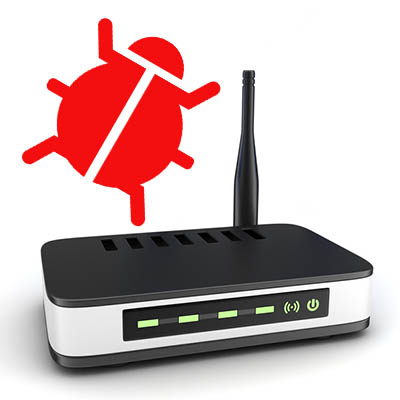
Hundreds of millions of people use wireless Internet connections every day, and as a result, hackers are taking that as a challenge. They are now starting to develop malware that targets people through their routers. Recently, security researchers at Kaspersky Lab have discovered the malware named Slingshot. The code is designed to spy on PCs through a multi-layer attack that targets MikroTik routers. Today we take a look at Slingshot, and other router-based malware and what you can do about it.

Slingshot
Slingshot works by replacing a library file with a malicious version that downloads more malicious components and then eventually launches a two-front attack on the computers connected to it. The first one runs low-level kernel code that gives an intruder free rein of a system, while the other focuses on the user level and includes code to manage the file system and keep the malware alive.

It is a very intricate attack that calls the nefarious code in from an encrypted virtual file system; managing to do so without crashing the host system, a feat not lost on the security experts at Kaspersky Lab, who deemed it a state-sponsored attack because of the quality of the overall attack and the complexity of its components. Reports suggest that the malware can basically steal whatever it wants, including keyboard strokes, passwords, screenshots, and information about network usage and traffic.

MikroTik has announced that they have patched the vulnerability on versions of their routing firmware, but concerns remain as no one is sure if other router manufacturers have been affected. If that were to come to fruition, Slingshot could be a much larger problem than is currently believed.

Other Instances
Slingshot isn’t the first instance of a router turning on its owner. Traditionally, router security is known to be largely unreliable. Much of this is on the manufacturers, which have been known to build many different products without having a strategy in place to keep them working with up-to-date security. It is also up to the user to keep their router’s firmware up-to-date – something that is very easy to not keep top-of-mind. Plus, some routers make firmware updates time-consuming and difficult.

To attack the network, hackers seek to change the DNS server setting on your router. When you try to connect to a secure website, the malicious DNS server tells you to go to an elaborately constructed phishing site instead. By spoofing the domain and rerouting you to a website that is specifically constructed to take advantage of you, you have very little chance of warding off the attack before it’s too late.

Hackers have also been known to inject all types of user hindrances such trying to perform drive-by downloads, or inundating users with advertisements. Many attacks make use of cross-site request forgery attacks where a malicious actor creates a rogue piece of JavaScript that repeatedly tries to load the router’s web-admin page and change the router’s settings.

What to Do If This Happens to You
The first thing you should do is work to ascertain if your router has been compromised. You can do this in several ways, but the most telling is that your DNS server has been changed. You’ll have to access your router’s web-based setup page. Once in, you have to visit the Internet connection screen. If your DNS setting is set to automatic, you are in the clear. If it’s set to “manual”, however, there will be custom DNS servers entered in the space. Many times, this is the first sign of a problem.

If you have been compromised, ensuring your router is set up to your manufacturer’s specifications will help you mitigate damage. To ward against this happening to you, you should always:

  • Install firmware updates: Making sure your router’s firmware is updated to the latest version will definitely help.
  • Disable remote access: Stop remote access to secure against anyone changing settings on your networking equipment.
  • Turn off UPnP: Plug and play can be very convenient, but your router could be affected through UPnP if there is any malware on the network since it is designed to universally trust all requests.
  • Change credentials: Changing your passwords are a simple way of keeping unwanted entities out of your router.

For more information about network and cybersecurity, the expert technicians at NuTech Services are accessible and ready to help you keep your network and infrastructure secure. For help, call us at 810.230.9455.

Know_Your_Tech_Cache_400.jpg

Know Your Tech: Cache

Know_Your_Tech_Cache_400.jpg

If you hang out around technology professionals for any period of time, chances are that you’ve heard the word “cache” used before. The word, pronounced cash, is usually heard in the phrase, “clear the cache,” but if you don’t know what this phrase means, how can you benefit from it? Since this week’s tech term is “cache,” let’s get into the details.

What is a Cache?
Most words used in computing have meanings outside technology, so it’s natural that cache has appeared elsewhere in language before now. A cache is essentially storage that is hidden away from the general public. Maybe you have a stash of goodies in your desk that are meant for “emergencies,” or perhaps you have a cache of pens hidden away because people keep stealing them from you. Either way, it’s a collection of something that you want to keep out of sight, and it has its uses for computing as well.

A cache can also be a hardware or software function that keeps data stored somewhere hidden away for faster processing in the future. This can be anything from a cache allowing your network’s data to travel faster from point A to point B, to a web browser storing information from certain web pages so that they are loaded faster than they otherwise would be. Simply put, the cache makes computing easier and more efficient–or at least, it’s meant to.

So What Does “Clear the Cache” Mean?
Clearing the cache in a web browser is easy. All it takes is the keyboard shortcut, Ctrl+F5. What this does for your device is that it allows the website to update any information that it has stored in the cache. This includes cookies and other website data that it may have stored. How this comes into play is when a website is updated and its appearance needs to be updated in the cache. If you fail to clear it, you might not be looking at the most up-to-date version of the website. Caches are most effective when they are small, so it helps to clear it once in a while to keep it that way.

Before clearing a network cache, however, you’ll want to first make sure that any drastic changes are handled by a networking professional. NuTech Services would be happy to further explain the process of caching and what it means for your business. To learn more, reach out to us at 810.230.9455.

consider_hosted_voip_telephony_400.jpg

Why You’ll Want to Consider Hosted VoIP Telephony

consider_hosted_voip_telephony_400.jpg

Today, communications are an important part of business, and with nearly every organization looking to reduce redundancies, a lot of businesses are starting to take advantage of Voice over Internet Protocol (VoIP) solutions, using the resources they already have in place to avoid paying twice over.

With today’s ISPs delivering faster and faster speeds to businesses, much of the bandwidth a business uses is lost. By choosing to utilize a VoIP telephony solution, your company gets more for less. You are paying for access to massive amounts of bandwidth anyway, why not cut your communications costs while you are at it? Today we will take a look at the various types of VoIP that are available and why the switch may be just the thing your organization needs.

What is VoIP?
Voice over Internet Protocol is just that. The ability to make calls, and have a feature-rich platform that provides all the services that your traditional phone system offers, for a fraction of the cost per user. If this seems too good to be true, consider that the VoIP market is growing rapidly (over 15 percent per year). It works through your organization’s Internet connection rather than through dedicated phone lines. So, instead of having to pay for a separate system or add expensive hardware, VoIP provides an organization the immediate cost reduction without a discernible shift in functionality.

Hosted VoIP technology can be hosted either onsite or in the cloud, but since you won’t have to pay for and maintain hardware with the cloud-based platform, the cloud-hosted version will save you money. It is still a completely managed and maintained PBX server, but instead of having the system in your office, your organization can access it through web-based applications typically available on both desktops and mobile devices.

Benefits of VoIP
We’ve already outlined the cost reduction that’s possible with VoIP, but there are some other benefits as well. They include:

  • Easier to Manage: If anything else, switching to VoIP eliminates a vendor that you have to manage. More than that though, VoIP doesn’t need special hardware, it can use the same wiring and switches as your LAN.
  • Unified Communications: Installing a VoIP platform likely means that you are able to unify your organization’s communications platform, giving your staff the option to communicate multiple ways at the click of a button.
  • Functionality: A VoIP platform can integrate with all types of business-management software to provide easy access to the communication capabilities that often make business run better. VoIP also has innovative features like Voicemail-to-email transcription, interactive voice recognition, and integrated chat.
  • Scalability: When you need another user, it’s as simple as adding a line to your VoIP plan.

VoIP makes a lot of sense for the growing business and the established enterprise, alike. If you would like more information, contact our professional consultants today at 810.230.9455.

may_be-seeing_more_ai_400.jpg

Where You May be Seeing More AI Soon

may_be-seeing_more_ai_400.jpg

The notion of artificial intelligence has played out in fiction, on the silver screen, and on the small screen for decades. Instead of having sentient cyborgs that enslave humanity, people are using A.I for our benefit. Today, we take a look at the A.I. of 2018 and how your business can leverage it for your benefit.

What is Artificial Intelligence
Today’s world is filled with data. All the experiences and thoughts humans have produced over centuries have provided somewhat of a record of what is expected from A.I. After all, if humans are going to replace workers with machines, ensuring they can do the jobs as (or more) efficiently is going to be important. For now, however, A.I. is being utilized in conjunction with people–trying to make our world better by making the applications and services we depend on more intuitive and efficient.

At one time there were the American Titans of Industry. Today we have Titans of Technology, and not one of them isn’t completely fascinated by the practical applications that artificial intelligence (in some fashion) can have for humanity. The thing standing in the way from all this glorious A.I.-fueled innovation, of course, is humanity. It seems every so often there is a report that is written suggesting that millions of workers can now be replaced with machines, and in the interest of shareholder profits, any business that has been able to leverage A.I. and increase its profitability has gone ahead and done so, often against public sentiment.

One study predicted that 47 percent of all jobs could be automated by 2033. That’s only 15 years off. If you’re looking for some current statistics, another report found in 2016 that up to nine percent of all workers are now unnecessary. Yet another suggested that 800+ of the largest businesses in the world, will cut between four and seven percent of their workforce and replace them with more efficient and less costly artificially intelligent machines.

How Your Business Could Use A.I.
You use A.I. every day without even thinking about it. Every time you use Google. Every time you use Uber or Lyft. Every time your email sends an incoming email to spam. Even as people all look forward to an inevitable permanent vacation as a result of A.I., it can be extraordinarily useful for the smaller business. Here are three ways even the smallest of businesses can take advantage of the growing A.I. market.

  • Operations – For small manufacturers or service providers many of the often-redundant parts of the job can now be automated. Since an A.I.-fueled ERP or CRM platform adjusts to the data you enter into it, it increases the level of automation that you can use to make your business more efficient.
  • Marketing – Small businesses rely on very targeted marketing campaigns, and by utilizing A.I.-driven marketing platforms, companies can reduce their marketing costs and target the audience most likely to purchase their products and services.
  • Customer Service – Customer service representatives have a tendency to flame out fairly quickly and actually deteriorate a company’s relationships with its customers. By using A.I. to automate a big portion of the customer service load, customers will get better support, and will tend to become repeat customers.

How has your business been able to utilize artificial intelligence? Do you foresee using A.I. in any capacity going forward? Leave your thoughts below and return to our blog for more great technology-related information.

totw_canned_response_gmail_400.jpg

Tip of the Week: Creating Canned Responses in Gmail

totw_canned_response_gmail_400.jpg

If you’re like most business users, you rely on email quite a bit to stay apprised of what is going on, as do most of the people you are likely in communication with. As such, you most likely understand that, while most emails require some kind of response or confirmation of receipt, not all of these messages require a heartfelt message. This is where Gmail’s Canned Responses come in handy.

This week’s tip will go over how to set up your own canned responses to streamline your repetitive, but necessary, communications.

How to Set Up Canned Responses
First, you’ll need to log in to the browser version of Gmail. Once there, click on the Gear icon in the top right under your profile image and select Settings from the menu. From there, you’ll see a horizontal menu that will display Advanced, click into it. You will see the option to enable Canned Responses. Click the radio button to select enable, and then save your changes. You can now create canned responses to use in your correspondence.

Creating and Using Your Canned Responses
To create a canned response to use, open the message composer and write out what you want your message to say. Once you are satisfied with your return message, access the message window options by clicking the button in the bottom-right corner. That menu should now have a Canned responses option, with a sub-menu that allows you to save a New canned response. You will be prompted to give your new response a name, and then it will be saved for future use in that sub-menu.

What kind of messages would you anticipate using canned responses for? Tell us what you think in the comments!

technology_addiction_very_real_400.jpg

Technology Addiction is a Very Real, Very Scary Thing

technology_addiction_very_real_400.jpg

Technology has become essential to workplace functionality and personal productivity, but while the long hours spent glued to our tech during the workday are a necessity, the time we spend at home with our personal devices is definitely voluntary. However, more and more people – children especially – are finding it harder to let their devices power down.

This is the hallmark of technology addiction, or Internet addiction disorder (IAD). While it isn’t yet officially recognized in the Diagnostic and Statistical Manual of Mental Disorders (DSM), IAD caught the attention of health professionals in the 1990s and 2013 saw the addition of Internet Use Gaming Disorder to the DSM-5.

What Makes IAD a Problem
Many of the features and trends that are widely taken for granted in applications today – autoplay, in-app purchases, and even notifications – are actually undermining our self-control. Instead of being able to set down the device and move on to something else, these tactics have made it so that we feel compelled to compulsively check these devices.

After all, you never know what you may miss if you don’t check right now.

Of course, needing to use technology for work and being addicted to technology are two very different things, but that doesn’t change the fact that children and adults alike have increasingly presented the warning signs of this addiction in their personal lives. That’s right – as much as the attachment to technology has stereotypically been framed as a young person’s problem, it can affect adults just as easily.

In a poll, 66 percent of parents felt that their teens were investing too much time into using their mobile device. No real surprise there, right? However, the same poll measured that 54 percent of children believed that their parents were checking their own devices too frequently as well.

Symptoms of IAD
IAD has a few warning signs and symptoms that present themselves in the behavior and mood of the person affected. Repeatedly checking for incoming text messages or updates and excessive social media use are common behaviors to keep an eye out for in your loved ones, and possibly in yourself.

Those afflicted with IAD also frequently feel euphoric while using their technology, and when they aren’t, often feel restless. IAD sufferers are prone to social withdrawal and experience diminished interest in activities not centered around a gadget. Some schools have even implemented technology fasts, where students have gone without their precious devices for a week. Teachers have noted that these students often exhibit physical symptoms of anxiety while their devices aren’t accessible. Students will reach for a device that isn’t there, all the while shaking and sweating.

How to Reduce Addictive Tactics
Above, we mentioned how many modern applications have features that encourage this kind of pervasive presence and dependence. To avoid these affects, it is probably best that these features are deactivated for non-essential applications.

Notifications are some of the biggest culprits of encouraging persistent use, so if the information isn’t essential to your professional or personal life, you don’t need an app trying to get your attention. Ask yourself: do you really need to be informed that your energy has been refilled in that mobile game you play more than you should? At the very least, using the mute notifications feature will help keep your attention from being pulled away when it shouldn’t be.

Many of the same apps that spam you with notifications are also the ones that encourage users to make those tempting in-app purchases that give the user an edge, or more frequently, extend the amount of time you can use the app before you have to wait again. This is most common in the free versions of these applications, so if you insist on using the app, it is more economical in the long run to just bite the bullet and pay for the app itself.

What piece of technology can you not bear to be without? Share it with us in the comments.

cloud_money_costing_you_400.jpg

Is Your Cloud Solution Actually a Money Pit?

cloud_money_costing_you_400.jpg

The cloud has proven to be an extremely useful tool for the modern business. Not only does it provide anywhere-anytime access to applications, processing, storage, et al; it also delivers those products as a service, allowing you to budget for recurring costs rather than major upfront ones. This provides your organization with functional, supported, and secure computing environments that eliminate a lot of the support costs that traditional computing environments require. It sounds like a perfect scenario for small and large businesses alike, but things aren’t always what they seem, as a lot of cloud users have found that they have incurred several hidden costs by using cloud platforms. Today, we take a look at these hidden costs.

A study from Research In Action polled 468 CIOs about their cloud usage and the costs associated with them. Many admitted that cloud investment was one of the largest expenses their organization would have from a technology point of view. The study went on to find that while a majority of CIOs considered the “hidden” costs of this technology, much of the concern is alleviated by the reputation of their vendors. Some of the potential problems they considered include:

  • Having to put forth more effort to properly manage vendors, and their corresponding Service Level Agreements (SLAs).
  • Bottlenecking and the impact poor cloud performance could have on brand perception, productivity, and customer support.
  • The increased cost of solving complex problems inside cloud environments.

Are these concerns justified? Sure, but they are hard to measure. Many businesses just haven’t developed a system to properly quantify the perceived loss in revenue tied to cloud inefficiency. In fact, most companies don’t have updated, automated methods in use to track and manage their cloud performance.

Costs of Scalability
Many organizations also run into cloud cost overruns when dealing with the scale of their cloud platforms. Costs associated with over-provisioning (buying too much), under-provisioning (buying too little), management, and administration of cloud hosted environments present costs that may not look significant up front, but over time can have negative effects on the overall profitability of a business. Understanding the amount of space/processing you’ll need to meet your organization’s needs is almost always going to be a fluid situation, but understanding how they affect your business’ bottom line is crucial to mitigate unwanted monetary responsibilities or cost overruns associated with the cloud platforms you utilize.

Going Too Far
Cloud platforms are nice, but you don’t have to look much further than your personal situation to see how the ease of use these platforms provide can get expensive pretty quick. For the individual, costs add up quick thanks to cloud-based streaming media and other platforms that come in a subscription model. You’ve got Netflix, Spotify, Hulu, and many, many more that are relatively cheap. Microsoft Office 365 is exceptionally useful and affordable, providing unparalleled value for about any computer user. The more you subscribe to, the more costs add up, which is why you’ll want to design, and stick to a dedicated plan to avoid overextending yourself, or your organization.

Utility computing in the cloud, whether it be applications, storage, processing, or some other form, is extraordinarily valuable, but only if you understand how to avoid paying more than you should for your cloud assets. The knowledgeable technicians at NuTech Services can help you come up with cloud deployment strategy, while also helping you avoid cost overruns typically associated with these assets. Call us today at 810.230.9455 to learn more.

tech_term_forensic_computer_400.jpg

Tech Term: Computer Forensics, Defined

tech_term_forensic_computer_400.jpg

Pop culture gives us an impression of what cyber investigations look like. Official-looking people, in impeccable suits, typing away at terminals and analyzing the data scrolling past them on their heads-up displays. In reality, computer forensics (as they are actually called) are a little less dramatic, and much more serious. For today’s tech term, we’ll dig into the field of computer forensics.

What are Computer Forensics, and What Are They Used For?
Computer forensics can be defined as the application of certain specialized techniques to locate and analyze the information on a computer or computer system, protecting it for use as evidence in a trial. Once the requisite warrants have been acquired, a forensic technician is tasked with isolating the device from outside influence by disconnecting it from the Internet before copying every file and poring over their contents for evidence.

The investigator must make a copy of these files so as to preserve the original evidence. Accessing a file can be enough to change it slightly, potentially rendering their evidence inadmissible.

Computer forensics can be leveraged in a wide variety of cases, as any given device may contain evidence of a crime to be, or that was, perpetrated, as well as effectively be the scene of the crime itself. An investigation dives deep, not only focusing on the presence of files, emails, or other documents pertinent to the case on the device, but also on an analysis of these items’ metadata, as it reveals when data appeared on a computer, when it was edited and saved last, and who the user was that carried out these actions.

These methods have been used to crack cases involving a dirty laundry list of crimes, as this sample of their uses suggests:

  • Intellectual Property Theft and Industrial Espionage
  • Employment Disputes
  • Bankruptcy Investigations
  • Inappropriate Email and Internet Usage in the Workplace
  • Regulatory Compliance
  • Forgeries and Fraud Investigations

Alternative Sources of Analysts
Of course, law enforcement are not the only bodies that maintain and utilize computer forensics labs. Six major companies, including Walmart, American Express, and Target, have accredited laboratories, and there are countless other independent labs that have not been accredited. These in-house labs can often outperform traditional law enforcement groups, as they are better able to keep their solutions on the cutting edge.

In fact, these labs are often recruited by law enforcement to assist in solving crimes. Target’s labs have announced in the past that they have assisted with “felony, homicide, and special-circumstances cases” on a volunteer basis for years, a spokesperson claiming in 2008 that a full quarter of cases worked by Target’s laboratory had nothing to do with the company.

How Does Your Technology Compare?
If you want a team on your side that will take as much care to protect your solutions as a computer forensics team does to track down cybercrime, give NuTech Services a call at 810.230.9455.

network_security_automation_400.jpg

Monitoring and Automation Make for a More Secure System

network_security_automation_400.jpg

Information technology, in many ways, is a necessary evil. Sure, modern businesses more or less require it to remain competitive, but it also opens up your business to a multitude of threats. Maintaining your security is made much easier with automated monitoring tools. Today, we’ll discuss how to use these tools to protect your business.

The Situation at Hand
Let’s face it, there is a mammoth amount of cyberthreats out there that could potentially infiltrate your business during your daily goings-on. What’s worse, it only takes one to find a weak point in your security and cause you and your business no small amount of trouble – and as though that wasn’t enough, this mammoth amount of cyberthreats is always growing and adapting to be more effective.

Frankly, unless your entire staff is devoted to maintaining the business’ security, it is highly unlikely that your business can keep up with the threats to it.

Unless…
There are a few solutions to this quandary – the first of which being the monitoring services that a trusted MSP like NuTech Services can provide. With the assistance of top-of-the-line automated tools to help detect and identify threats to your security, our team can ensure that your business remains safe.

Why Automation Helps
One of the reasons that our automated tools are so effective is that the slim chance of human error on our end is effectively mitigated. Rather than having our eyes trying to detect the minute warning signs of impending issues or threats, we have systems and software that utilize artificial intelligence and machine learning to catch threats before they darken your door, so to speak.

As a result, you can devote less of your valuable time, energy, and focus on keeping threats out, and more time on innovating and optimizing other, income-generating parts of your business.

If you would like assistance in setting up an automated system or would like to discuss our monitoring solutions a little further, please give us a call at 810.230.9455.

meeting_leadership_present_400.jpg

What Star Wars can Teach About Mentorship

meeting_leadership_present_400.jpg

The Star Wars saga has many recurring themes – the struggle between desire and destiny, good and evil, impulse and discipline. However, a theme that particularly stands out throughout the series is the examination of the relationship between student and teacher. This theme is similar to the relationship that an IT provider should strive to have with their clients.

For today’s Star Wars Day blog, we’ll review some of the lessons that a professional can learn from the Star Wars films, as well as what the insights that the relationships shared by the characters can reveal about being a mentor, as well as the mentored. To do so, we’ll examine some moments and characters from the complete series thus far – Episodes I through VIII – and the stand-alone Rogue One.

WARNING: this article may spoil a few key moments from the series, so continue at your own caution.

How to Be a Mentor, According to Star Wars
There is no shortage of those who could be considered mentors throughout the series. From Qui-Gon Jinn and Obi-Wan/Old Ben Kenobi, Luke Skywalker and Leia Organa, and finally, Yoda, many characters accept the mantle of mentor… albeit begrudgingly, at times.

In order to be a mentor, there are two requirements that each of these characters present during the series. Likewise, many characters also exhibit just one or the other characteristic. Yet, as they do not exemplify both qualities, they don’t quite qualify as a true mentor. We will explore these characters in more detail later.

These two requirements are to be a committed educator, as well as an equally committed leader. Each of the mentors listed above have had the opportunity to be both, and rose to the occasion. Qui-Gon took the initiative to take a young slave into his care, campaigning to the Jedi Council for the ability to teach him. When Qui-Gon was dispatched by Darth Maul, Obi-Wan rose to the occasion and took up Anakin Skywalker as his padawan learner.

Years after Anakin succumbed to his fear and hubris to be reborn as Darth Vader, Obi-Wan continued to be a mentor under the name Ben Kenobi, teaching the Skywalker of the next generation how to embody the principles of the Jedi. Once this Skywalker, Luke, had learned to be a leader, he teamed up with his long lost sister, Princess Leia Organa, to defeat the Empire. While Leia continued to lead an underground organization committed to fighting the Empire’s last remnants, Luke retreated to a sanctuary to ensure he was able to train the next worthy Jedi.

Finally, we would be amiss if we neglected to mention Yoda’s involvement as a leader throughout the saga. From the very beginning of the story, Yoda was a respected leader of the Jedi Order, proving his worth on the battlefield and in the Senate. When the Empire rose, he retreated to his home planet in wait of the next generation of Jedi to train. He then passed on, but returned as a Force ghost to impart his wisdom again, later in the series’ timeline.

Lining Up Star Wars Mentorship with Our Own (and with The Odyssey)
As one might imagine, the concept of mentorship has been around for much longer than Star Wars has been. In fact, we get the word “mentor” from a character in Homer’s epic poem, The Odyssey. Mentor was entrusted by the protagonist, Odysseus, to care for his son in his absence, and later assisted the young prince Telemachus in reuniting with his long-lost father by serving as his guide and, well, mentor.

In this way, Mentor serves a very similar purpose as many of the characters from Star Wars. By teaching another character and acting as a leader, he allows the protagonists to succeed in their quest – or, in the terminology more likely to be used in Star Wars, their mission. Furthermore, like the mentors to be found in Star Wars, Mentor shares a few characteristics with the mentors we see in the business world.

What Makes a Mentor, a Mentor
We’ve already established that a mentor should be a sort of amalgamation of a teacher, and a leader. This is admittedly a tricky balance to find, until you describe what kind of leader and teacher makes a mentor.

First, as a leader, you have to be able to be supportive as you take charge. As you work with a mentee, commit the time that the mentee needs to grow and devote your full attention to them. Just as Ben Kenobi understood Luke’s rage and bitterness after his aunt and uncle were slaughtered by the Empire’s stormtroopers, you need to be able to emphasize with your acolyte and guide them towards the higher purpose you can see them achieving.

As a teacher, it is important to also challenge those who you mentor. Not only should you assign tasks for your student to complete, these tasks should test the limits of their ability and set a standard that you expect them to meet. As Yoda challenged Luke to lift his X-wing fighter out of the swamps of Dagobah, he wasn’t coddling his student. Neither should you.

It is also important that, as their teacher, you review the lessons that have been imparted. These discussions will not only help ensure the information is retained, it will also encourage your mentee to draw their own conclusions. Remember, teachable moments happen all the time – it’s up to you to embrace them.

Finding Poor Examples in Rogue One
Alternatively, Rogue One offers a few examples of how to very much not be a positive leader. At the very beginning of the film, protagonist Jyn Urso’s father, Galen, is pressured into returning into the Empire’s service and designing the ultimate superweapon: the planet-destroying Death Star. In addition to being forced to work on a project he detests, he is stuck in a thoroughly unpleasant work environment. Oh, and did we mention that his wife was murdered and his daughter lost to him during the attack?

It should be no wonder, then, that instead of being loyal to his ‘employers,’ Galen instead decides to sabotage their operation from the inside. Hiding a critical weakness in the Death Star and sending word of it to the Rebel Alliance, Galen embodies the corporate espionage that a disgruntled employee could leverage against your business. A good leader sees the value in keeping an employee happy in two ways – first, it helps to keep that employee engaged and productive, and secondly, it reduces, if not eliminates, any ill will toward the organization.

In another example of the Empire’s failings in Rogue One, the antagonists of the film also leverage shady office politics to get a leg up on their superiors. For instance, Director Krennic elects to go over his commander’s head and out of the traditional chain of command, reporting directly to Darth Vader. As a commanding officer himself, Krennic serves as an example of what happens when office politics supersede the typical chain of command – and winds up being Force-choked into oblivion for his troubles. While it is highly unlikely that deviating from the chain of command will get you strangled like Krennic, it certainly doesn’t reflect well on you and shows a distinct lack of leadership and respect for the chain of command.

All this only goes to show that lessons in leadership can be found anywhere you look – even in a galaxy far, far away. Do you have any Jedi masters or mentors in your life? What have you learned from them? Share your thoughts in the comments, and may the Fourth be with you!

totw_google_home_how_to_400.jpg

Tip of the Week: Working from Google Home

totw_google_home_how_to_400.jpg

It is no secret that Google can serve a great utility in the office through its many services and applications. However, have you ever considered how the Google Assistant can, well, assist you through devices like your smartphone and the assorted smart speakers that Google has produced? For today’s tip, we’ll review how some of the features of the Google Assistant can lend you a hand in the professional environment.

Basic Automation
Since productivity is one of the top goals in almost any office, it only makes sense to first focus on how using Google Home can boost your productivity through automation. While the device can serve many purposes on its own, it truly blossoms as a productivity tool through integrations with other devices and services.

For example, if you have equipped your office with smart lights or smart thermostats, you can adjust your office’s environment simply by telling Google to make the change you want. As a result, you can take greater control over your business environment without interrupting your productivity. After all, doesn’t it take much less time and effort to simply say, “Hey Google, turn off the lights in the conference room,” or “Hey Google, set temperature to 73 degrees,” than it would to interrupt what you were doing and go manually make the same changes?

More Advanced Automation (Kind Of)
If you’re at all familiar with the web service IFTTT, you can integrate it with your Google Home device to automate a variety of outcomes, based on predetermined triggers. It’s right in IFTTT’s name: If This, Then That.

Using IFTTT, you can connect your Google Home (or whichever Google device you’re using) to design your own commands that require the use of the Google Home. All you have to do is set “this” to be the Google Assistant, and choose the trigger you want your command to use. These triggers will all be of the spoken word variety, and each command can feature a few different variations. Once you’ve assigned the words to the command, click Create Trigger. To add the desired action you want automated, click through “that.”

You can then search through the available channels that you can trigger through your Google Assistant, select the one you want, and fill in the required configuration fields. Once you hit finish, your automated action will be active and ready to go when you are.

Activating More Commands
The Google Home devices have other utilities baked in that can be of some use to you in an office setting, especially if multiple devices are in use.

For instance, if your office is large and you can’t get ahold of someone through message or phone call, your Google Home device can function as an intercom. By accessing the Assistant on your smartphone, you can command the Google Home to “broadcast” and it will replay whatever message you speak into it afterwards to any Home devices connected to your account.

Of course, the Google Home devices are receptive to commands from multiple users, with up to six accounts being able to use the devices in their own way. The Google Home will even customize their answers based on the user making the request through its Voice Match training.

Finally, if a visitor to the office has something to share over the Google Home, the Guest mode allows them to connect directly to the device, without needing to connect to Wi-Fi. This means that you can keep your Wi-Fi password to yourself, and not give it out to every visitor to your office.

How else can you think of to use the Google Home to augment your day-to-day activities in the office? Share your ideas in the comments!

smart_technology_changing_fast_400.jpg

These 3 Industries are Being Fundamentally Changed by Smart Technology

smart_technology_changing_fast_400.jpg

Smart technology has seen explosive growth in recent years, leading to an uptick in startups popping up to capitalize on smart tech and the innovative ways it can be leveraged. With demand for such devices increasing exponentially, it’s little wonder that many industries are diving into this technology. Today, we’ll discuss three of them.

Energy and Conservation
It should come as no surprise that a major driving force behind the use of smart technology is for this technology to use energy and natural resources more intelligently. Of course, it also doesn’t hurt that smart technology allows us to save time and money as well, through the automation of processes that once required a human touch to complete. In addition to making homes ‘smarter’ and more accommodating to the needs of those living in them, smart tech has been proven to be a major player in environmental conservation. Automated devices have been able to track and report on various kinds of environmental data, including waterflow, plant health, migration patterns, and many other variables, allowing us to use this data to improve our treatment of our environment.

Fitness and Health
Ever since the first ‘smart’ shoe – the Micropacer – was introduced in 1984 by Adidas, smart technology and fitness have been close companions. In just the past few years, devices like fitness bands and smartwatches have exploded in popularity, and more innovations have followed fast.

As fitness bands and watches have become more intelligent, the technology that powers them and their functions has improved as well. Now, features like application integration, improved functionality, and quicker response times are available in fabric form. These smart fabrics have led to innovations like smart socks and undergarments, fitness rings, shoe inserts, and other activewear and accessories hitting the market en masse. Using these technologies, everyone from the active exerciser to the casual enthusiast will be able to better measure and optimize their workout regimen, even avoiding injury.

Transportation
All over the world, one of the biggest time sinks is the battle to get from point A to point B. In many places, the commute to work can be stretched due to traffic congestion, and in others, impractical traffic patterns extend the amount of time spent sitting behind the wheel. This is one issue that is actively being worked on through smart technology now, as is evident by the aggressive research and development into driverless transportation. After all, with machine learning and AI behind the wheel, traffic as a whole could become a cohesive network, rather than the mass of individual, autonomous bodies all looking out for number one.

This is a concept that has long been considered as a solution for the persistent issues with mass transportation that have been evident since, well, mass transportation became a common thing. We have never been closer to successfully revolutionizing automated transportation in a way that is practical for widespread application. Pittsburgh, Pennsylvania, and other places have experimented with concepts like Uber’s driverless cars. While this initiative didn’t go quite according to plan, it still demonstrated that this technology is on the cusp of market readiness.

What are your opinions on smart technology? Do you see it being adopted in more aspects of life, or do you see it as being a short-lived interest? Talk about it in the comments section!

nanotubes_nanotechnology_400.jpg

What is Nanotechnology, and How Can it Be Used?

nanotubes_nanotechnology_400.jpg

Technology is seemingly being made smaller and smaller. Just think about the size of the computers from the mid ‘90s until now. Sure, you can still buy huge a gaming PC with a four-foot tower with liquid cooling, or one that is a fish tank (complete with fake fish); but, the computer you use the most fits in the palm of your hand.

Nanotechnology is the smallest “technology” yet. At its core, it’s a manipulation of the smallest elements of matter, measured in nanometers. Consider that your fingernails grow at about a rate of a nanometer per second, or that a single molecule of water is about a quarter of a nanometer across, and it will give you an idea just how small a nanometer is. It is quite literally one-billionth of a meter.

That’s really the start. Nanotechnology deals with anything in that arena that measures between 1 and 100 nanometers, and largely consists of the engineering of structures that function inside or alongside nature’s nanomachine, cells.

How Is This Technology?
It really is a true combination of science, engineering, and technology. To answer the question, engineers are currently at work attempting to create smaller, more powerful microprocessors that could be used to adjust the practical uses of every material of the physical world. You could make structures stronger, cure disease, and alter matter at the subatomic level. If that’s not technology, I don’t know what is.

When semiconductor manufacturers create the latest and greatest processors or microprocessors for use in a myriad of devices, they measure their nodes in nanometers. Today, these manufacturers are working on the five nanometer chip–a feat thought impossible by many – until IBM announced they had developed one. If DNA is only two nanometers across, we may only be a short time until machines will fit everywhere.

Why Don’t People Know About It?
Nanotechnology is in its relative infancy. In 2017, Dr. George Tulevski of IBM spoke to the challenges the field faces going forward. His perspective was that nanotechnology development and research actually has slowed since the 1980s. In the same TED Talk, he opined that the use of carbon nanotubes could potentially improve computing tenfold, but the development of this technology is just in its early stages.

Is This Technology a Good Thing?
With people today only having a limited understanding of the technology, there aren’t a lot of trustworthy opinions on the issue. Intellectia even seem hedged about the applications of nanotechnology. On one hand, theoretically it could do more than any other technology to help the human race. On the other, any technology made from wonder, and with benevolent intentions, can also be manufactured for malevolent use. Like with other contemporary technologies such as artificial intelligence, researchers will have to move slowly and not let potential profits influence their release of products involving nanotechnology.

Do you consider nanotechnology to be interesting? Would you like to see how far this rabbit hole goes, or should we as a people leave well enough alone? Leave your thoughts in our comments section below, and return to read more great technology blogs from NuTech Services.

cables_close_up_connection_400.jpg

Tech Term: Bandwidth

cables_close_up_connection_400.jpg

Here’s a question we want you to take a second to consider…How much do you rely on the Internet? The answer for almost everyone is that it is essential to your current quality of life. Technologies have been developed, industries have been launched, and literally billions of people use it every day, making it one of the predominant inventions in human history. At the heart of this phenomenal technology is bandwidth.

The term bandwidth, in the context of the Internet, is the volume of information per unit of time that a transmission medium can handle. Simply put, the larger the bandwidth your connection has the faster the data can move through the medium. Bandwidth is measured in the amount of data transferred per second, specifically megabits per second (mostly written Mbps or Mb/s). Megabytes, written MB is not typically used in measuring bandwidth as a connection that is advertised as 15 MB is actually 1.875 Mbps since there are eight bits in every byte.

Most Internet Service Providers, or ISPs, will sell packages of a certain megabits, but if you really want to ascertain the bandwidth your computer is running on, your best bet is to use one of the numerous Internet speed test sites like the one at speedtest.net.

The best analogy, and the one that we’ll use, is that of plumbing. It’s said that data is to available bandwidth as water is to the size of a pipe. As bandwidth increases more data can be transferred through it, just as a larger pipe passes more water. Increasing bandwidth, or finding a larger pipe, will allow for even more data/water transfer. For the average user that only uses a couple of apps, a web browser, and doesn’t stream media, a small bandwidth connection will work fine. For tech-savvy families or very small businesses that have multiple devices connected to the Internet at once, they will find they will need more bandwidth to do the things they want to do seamlessly. Larger businesses will need enterprise-level bandwidth of multiple hundred Mbps.

Your Internet connection isn’t the only place where bandwidth comes into play. If you have a website, you will have to pay for a bandwidth level that is commensurate with the traffic and data interaction. In many cases, the more bandwidth you need, the more you will need to pay for hosting.

For more information about technology terms that confuse you, visit our blog, or contact our technology professionals at 810.230.9455.

assessment_evaluation_frustration_IT_400.jpg

How to Properly Assess Your Technology Needs

assessment_evaluation_frustration_IT_400.jpg

Nothing lasts forever, especially not the technology that a business relies on to function. Between typical wear and tear and the always-improving trajectory that the technology industry follows, you will likely need to actively evaluate your needs and what you resultantly need to obtain. Today, we’ll walk you through how this technology assessment should be shaped.

What Should your Assessment Focus On?
As you go about evaluating your technology, you need to consider how it has (and is projected to) affect your business. Looking to the past, anticipating the future, and being aware of the present where your technology is concerned will allow you to make better choices as you move forward.

The Past
For example, take the lesson that philosopher George Santayana coined: “Those who cannot remember the past are condemned to repeat it.” This is more or less a fancier way of saying that, if someone never learns from the mistakes they’ve made before, they’re going to keep making the same mistakes. This is why your technology assessment needs to consider the decisions you have made, and if the results were as you expected.

Were your investments into certain solutions ultimately worth it? Did that new process you implemented see any success, or was it even actually adopted by your workforce? Looking at your past decisions and their outcomes will help you make more informed decisions with a better chance of benefiting your company.

The Present
Of course, there will be other signs of issues around you at any time, so it is equally important to evaluate your technology’s efficacy in the given moment. Are your employees able to use the tools at their disposal to properly and successfully do their jobs? If not, what is the root cause of their difficulties? Where do they see the solutions just being insufficient or problematic?

This insight will allow you to reevaluate if your investments are getting as much mileage as they need to be, and therefore will give you a better idea of how your business’ needs should be prioritized moving forward.

The Future
Speaking of moving forward, you need to do something with all the insights you’ve collected from your analysis of the past and present. Making informed decisions based on what you anticipate the future to hold in technological innovations will allow you to center your solutions around your anticipated needs. While this isn’t an exact science, it is better to at least try to predict an outcome than it is to be blindsided by something you could have seen coming.

Benefits of a Technology Assessment
Running a comprehensive assessment of the technology that you leverage in your business’ operations can provide you with various advantages that you might not have access to otherwise. First of all, an assessment is an excellent way to identify any problems your technology may be suffering, as well as to zero in on your business’ needs, as was discussed above. As a result, a technology assessment also serves as an excellent means of narrowing down possible solutions to these deficits. This enables you to select the solutions that are right for you, reducing the costs incurred by deploying solutions that aren’t a good fit.

How Technology Should Be Assessed
Just as trying to sweep a mess out of a carpet is much less effective than using a vacuum cleaner, just giving your needs a quick once-over before making a change or electing not to will not provide your business with any benefits.

Instead, try a more in-depth method to maximize your returns.

  • Study Workflows – Are your employees encountering problems in their workflow? Ask them what improvements would be welcome and compare their suggestions with the growth plan you have projected for your future. Will their suggestions be compatible with the growth plan you’ve established?
  • Analyze Technology in Place – Working again with your employees, establish what strengths and (more importantly) weaknesses your current solutions exhibit that could influence your workflow. A comprehensive understanding of your business technology will help with the next step.
  • Explore Alternative Approaches – Before you charge ahead and take a chunk out of your finances, take the time to brainstorm other resolutions to your IT concerns and deficits. If a slight tweak to the process can resolve the problem, or more effectively using the solutions you have on hand is all it will take to fix it, wouldn’t you say that’s a better option than making huge, expensive changes?
  • Take Stock of Your Resources – If it happens that you do need a new system or solution, it helps to know what you have going in and have your priorities lined up. If a new solution is too expensive, or your team is resistant to change, blindly implementing it all at once could open you up to problems.

Once these steps are completed, you should be much more prepared to make a decision concerning your technology. Need some more help? NuTech Services is here with the expertise to assist you in assessing your IT. Give us a call at 810.230.9455 for more information.

which_authentication_is_best_400.jpg

Which Authentication Option is Best?

which_authentication_is_best_400.jpg

Smartphones have steadily increased in their capabilities, and as they have done so, they have resultantly gathered more and more data that needs to be secured against potential security threats. Fortunately, there are also more ways to protect your smartphone than ever before. For today’s blog, we’ll take a look of the options you have to secure your devices.

The Password
Passwords are the reigning king of authentication. A well-regarded password is your average user’s go-to; and, if not created with security in mind, can be very problematic. Since users have problem remembering new passwords, even if it’s one that they are able to choose, many users will create obvious passwords that can easily be guessed or hacked.

Conversely, a password (or the passphrase) can be one of the strongest security measures available for your mobile device, as it is important for every mobile user, especially one that has access to business networks, to secure their devices.

The Pattern Lock
The second option we will go over is called a pattern lock. It is the three-by-three swipe-based gesture that unlocks the device. This natural and intuitive lock is very fast, and if all nine dots are used in a pattern, it provides close to 400,000 possible configurations. Pattern lock comes up short in a couple ways. People tend to use shapes that are more easily guessable. It’s also relatively easy to ascertain the password if you watch a user’s hand.

The PIN
The PIN authentication option is a relatively strong one, as the typical four numeral option has over 10,000 different combinations. Android features the ability to support up to 16 digits. That’s 10 quadrillion different combinations. Of course, not many people are going to be able to remember a 16-digit PIN (and how annoying would it be to have to enter that every time you unlock your phone?). Simple pins are the norm, and therefore not very secure.

The Fingerprint Scanner
This authentication method is now becoming standard on most smartphones and has by-in-large been very popular. It’s secure enough to be trustworthy, and very fast. Moreover, many financial applications utilize the fingerprint as a form of authentication, making the option that much more attractive. The only drawbacks are that sometimes manufacturers will put it in an inconvenient spot on the device and that it doesn’t work with gloves.

Using the Face
All newer smartphones have been taking advantage of facial recognition software. This allows a user to gain access by just glancing at the phone. Since this is an operating system-dependent option, most phones will be getting this option. It may not currently be the most secure option, but as the technology advances, this will be the go-to method for all authentication.

Other Security Measures
Many phones now also offer security features that rely on alternative forms of authentication. On-body detection keeps the device unlocked whenever it is being carried – regardless of who is carrying it. Other options such as having your device unlock when a user says “Okay, Google” is more for convenience than privacy or device security.

What’s the Best Option?
Currently, if you are looking for the most secure and accessible option, your best bet is to use the fingerprint scanner on your phone. Back that up with a five-or-six-digit PIN and you’ll be good to go. In the future, expect the facial recognition software to improve precipitously; and, therefore, be the most secure (and popular) option to get into a mobile device.

What form do you use? Leave your favorite security methods in the comments section below.

keep_inventory_operations_400.jpg

Tip of the Week: Keeping Track of Your Inventory

keep_inventory_operations_400.jpg

Regardless of your organization’s size, there is more than likely a large amount of information technology to keep track of and maintain. As is usually the case when so many moving parts and variables are involved, the task of keeping them organized can quickly become difficult and stressful. This week, we’ll give you a few tips on how a proper inventory can help your business stay apprised of its IT resources.

What Can an Inventory Do?
At its core, an inventory serves the purpose of keeping track of the assets and resources a business has in its possession. This spans from how many cases of burger patties a fast food franchise has to how much water a hydroponic plant has in reserve. Not only does this assist the business with ensuring that it always has the resources necessary to operate, it also assists with insurance claims. By keeping you up-to-date on what you have, an inventory serves as a documented resource that can support your claims if the need arises – such as after a disaster event or theft.

Furthermore, a detailed and up-to-date inventory record can help you to identify how old your resources are, allowing you to prioritize when it needs to be refreshed and/or replaced.

As one would imagine, these are all important factors to consider when technology is involved. In light of this, it becomes especially important to develop and enforce a unified and direct system as a standard during the inventorying process.

What Your Inventory Needs to Account For
As you create this system, you need to make sure it addresses the five key details included in a comprehensive inventory record.

1. What is it that you have?
Of course, the whole point of an inventory is to identify the resources you have on hand. Given the long, detailed names that many technology components have (in addition to the many details a piece of hardware or software will have that need to be addressed), it may make the most sense to develop a shorthand that easily and efficiently communicates what exactly it is that your business has in its possession.

For example, if you utilize differently-sized hard drives for different tasks and purposes, you will likely have a stash of these hard drives squirrelled away for later use. Rather than writing out a comprehensive list, creating an internal shorthand will make the task of inventorying these components much easier.

So, if a company were to have 7 spare hard drives, 1 blue hard disk drive with a 5 terabyte capacity, 3 red solid state drives with 10 terabytes each, 2 black hard disk drives with 10 terabytes each, and one purple hard disk drive with a capacity of 5 terabytes, using shorthand might simplify that list into:

  • 1 HDD – BLUE – 1TB
  • 3 SSD – RED – 10TB
  • 2 HDD – BLACK – 10TB
  • 1 HDD – PURPLE – 10TB

2. Where is it stored?
This consideration is especially important if a company has more than one location or stores their supplies in more than one spot in the building. Your inventory record needs to keep track of where a given component is kept so it may be found quickly if need be. Make sure you mark the building it is in, as well as the room and where specifically in that room it is kept. This adds a little more information to your shorthand list:

  • 1 HDD – BLUE – 1TB (MAIN LOCATION/BASEMENT/SHELF A)
  • 3 SSD – RED – 10TB (MAIN LOCATION/BASEMENT/SHELF E)
  • 2 HDD – BLACK – 10TB (SAT-OFFICE1/ROOM4/SHELF B)
  • 1 HDD – PURPLE – 10TB (SAT-OFFICE2/ROOM2/SHELF D)

3. Additional Details to Include
Finally, there are other pieces of information you should use your inventory process to track. To assist with potential insurance needs and monitoring your solutions for a refresh, it helps to add the date that the technology was acquired, as well as how much it cost to acquire it. As a result, your list becomes:

  • 1 HDD – BLUE – 1TB (MAIN LOCATION/BASEMENT/SHELF A) – $95 (May 9, 2017)
  • 3 SSD – RED – 1TB (MAIN LOCATION/BASEMENT/SHELF E) – $250 (June 30, 2017)
  • 2 HDD – BLACK – 1.5TB (SAT-OFFICE1/ROOM4/SHELF B) – $160 (August 18, 2017)
  • 1 HDD – PURPLE – 10TB (SAT-OFFICE2/ROOM2/SHELF D) – $355 (February 2, 2018)

Other Considerations for Your Inventory
Maintaining an up-to-date set of totals for your inventory is an essential process. After all, what’s the point of keeping track of your inventory if it isn’t going to be accurate anyway? This means that, in addition to ensuring that you start off with the right numbers, you need some sort of system to help you keep a running total. Whether this system is manually keeping totals on a clipboard, updating a spreadsheet, or leveraging asset management, is up to you.

Reach out to us here at NuTech Services by calling 810.230.9455 to see how we can help. In the meantime, keep checking back for more helpful tips and tricks.

cloud_computing_security_400.jpg

Four Questions to Have About Cloud Services

cloud_computing_security_400.jpg

Can you think of a more revolutionary technology in today’s modern age than cloud computing? Companies are now able to implement solutions that are both flexible and scalable enough to suit the needs of both small and large organizations. To this end, the same cloud won’t work for every type of organization. Here are four questions that you’ll need to ask in order to get the best service from your specific cloud provider.

What Are Your Business’ Responsibilities?
You will have to work with your cloud provider to determine who is responsible for what functions and tasks. For example, your cloud provider might be responsible for security, but other types of responsibilities might fall under the umbrella of your organization. Knowing what specific details your company is responsible for is the first step toward achieving success with your cloud solution. Whenever you implement a new cloud service, the best way to start off on the right foot is by clearly outlining any and all responsibilities between the two of you.

What Kind of Cloud Security Do You Need?
There are several different kinds of cloud-based services that your organization can leverage. Cloud services range from intensive and sprawling solutions such as Infrastructure as a Service, all the way to simple productivity suites through Software as a Service. Depending on the extent to which you use the cloud, your security will need to adapt and change.

Does the Cloud Provider Offer Training?
While it’s beneficial that your managers and supervisors know how to use your business’ cloud solution, you’ll need all employees to be on board with your efforts to get the most out of it. Of course, training all of your employees is costly and time-consuming, so if you can avoid doing it yourself, all the better. Cloud providers will often provide their own specialized training procedures both during and after the implementation process, so try to take advantage of it if you can.

How Much Visibility Do You Get?
Visibility is important for a business. In this case, it’s defined as insight into how your organization’s data is being stored, managed, and secured within your cloud environment. Cloud visibility varies between providers and services, though. A small business using the public cloud may have limited cloud visibility, but a large organization with a dedicated private cloud service may have much greater visibility as a whole.

Do you know what you need in a cloud solution? NuTech Services can help. To learn more, reach out to us at 810.230.9455.

how_to_clean_desktop_400.jpg

Your Office Deserves a Good Cleaning

how_to_clean_desktop_400.jpg

In keeping with the freshly rejuvenated feel that springtime brings, many people take advantage of this energy by doing some much-needed spring cleaning after the long winter months. Why shouldn’t the workplace join in the fun? In this blog, we’ll explain how a fresh and clean office can benefit your employees and your business as a whole – and just as importantly, how to go about tidying up properly.

Why Your Office Needs to Be Kept Clean
Regardless of the industry you operate in, chances are that your business relies on technology solutions in order to function properly. From this conclusion, it can be inferred that if your solutions were to go on the fritz or even break down entirely, you would find yourself experiencing downtime and the associated lack of productivity.

Keeping your solutions and the environment they are stored in clean and organized is key to maintaining their functionality. Without the proper care and maintenance, your technology doesn’t stand a chance for very long, which can (and will) cause no small harm to your business.

To combat these effects, there are plenty of solutions you can deploy to assist you, along with some traditional cleaning methods and basic organizational strategies.

Digital Methods
There are plenty of ways to improve your organizational functionality, starting with your document organization solution. What is the current state of your retained files? Are they well-organized into a hierarchy, such that everyone in the business who needs access can gain it by following the system? Are they fully digitized and backed up, or are they squirreled away in metal boxes that take up valuable real estate? Going paperless is an environmentally conscious and admirable strategy, not to mention a good way to save some capital.

Organizing and Optimizing Your Computer
While you’re occupied with dealing with your file storage and organization, it also doesn’t hurt to take a look at some of your other technology solutions to ensure that everything is as it should be where they are involved. Take, for example, your email solution and its inbox.

It’s no secret that email messages have a tendency to pile up and become unmanageable if left unorganized for too long. By auditing the messages you receive and setting up filters to automate their organization, you can make your inbox largely independent.

As for your desktop and the files found on it, treat the files there as you would the files in your document organization system. Are there any being stored on your individual device that should actually be stored in the company’s shared files? A hierarchy of folders can help you organize any files that are left after those that can be moved to shared resources have been migrated.

Keeping Things Tidy
Of course, what’s a good office cleaning without taking a few workstations and getting rid of any accumulated dust and grime? Have a trusted IT resource open up the devices and give them a thorough cleaning with some canned air, and clean out some of the exterior in the same way. You should also give your network infrastructure the same treatment with duster. Once your computers and servers are cleaned out, it never hurts to rethink your cable management to minimize dust collection and reduce the very real tripping hazard these cables can create.

Finally, you should also participate in some more traditional spring cleaning. Clean your floors and bathrooms, and get rid of any “science experiments” left in the break room refrigerator. This will all make your office environment more comfortable, healthier, and thereby more productive.

What are some of your best cleaning tips? Share them with us in the comments!

tech_term_cookies_defined_400.jpg

Tech Term: Cookies Defined

tech_term_cookies_defined_400.jpg

Chances are, if you’ve spent any amount of time around a computer, you’ve heard of browser cookies. What you may not have heard, is what these cookies do. For today’s Tech Term, we’ll explore what cookies are, and what they do.

What are Cookies?
A cookie is a sample of information that a website stores on a user’s computer in text format that only that particular website can access. This information, made up of name-value pairs, informs the website if you have ever visited before and allows it to personalize your experience as a user. These cookies are often removed once the browser window is closed down, but they can be designed to last longer.

Cookies are what enable a website to “remember” that you are logged in and allow you to change particular settings without them reverting back the next time you navigate to a new page. Furthermore, cookies can allow websites to remember your browsing tendencies and suggest things that might interest you, even if you haven’t logged in. This is especially apparent on ecommerce sites that offer you products that might interest you based on the products that you’ve viewed in the past.

Are Cookies Dangerous?
In a word, no. All these pieces of data are viewable only by the website that delivered them. This means that Website A can only see cookies that it has delivered, and its cookies are likewise hidden from Website B. As a result, if Website B was attempting some malicious activities, the information that Website A has stored is safe.

However, some cookies are used for purposes that may be unwelcome to some users. Have you ever been browsing for a particular item on Amazon, and then notice that the other websites you visit are displaying advertisements for related items? This is the result of an advertising cookie taking note of what you have demonstrated interest in, thereby allowing it to customize the advertisement to best fit your interests.

Clearing Cookies
Of course, you can remove the cookies that your browser has accumulated by using the Clear Private Data tool. However, this will also erase any saved login credentials that you do want websites to have saved. The majority of browsers have ways to workaround this by whitelisting some websites as trusted to save cookies.

Are there any other Tech Terms you’d like defined, or do you have more questions about cookies? Reach out to us at 810.230.9455 and let us know!