109434737_home_office_400.jpg

Tip of the Week: Designing an Effective Work-from-Home Workstation

109434737_home_office_400.jpg

Working from home has made it clear to many that they weren’t prepared to do so—not by a long shot. In addition to the many other stresses that came with these challenging times, the lack of a sufficient and proper workspace has proved to have its impacts on the human body. To perhaps help remedy this, we wanted to offer a few considerations that might help a remote worker benefit ergonomically.

The Seat

While a comfortable chair will be important to have, there is such a thing as too comfortable. This means that the soothing lull of the bed or even the couch should be avoided. At the same time, most hard chairs won’t give you enough lower back or leg support. The best fix would be to invest in a desk chair intended for such purposes, but short of that, a pillow or rolled-up blanket can suffice.

In an ideal world, your chair would include armrests too, well, rest your arms on. Lacking that, using the tabletop without leaning or slouching would serve the same purpose.

In order to ensure your feet remain planted on the floor, it is also a good plan to keep a footrest nearby. When seated at your workstation, your legs should be bent at right angles at the knee and hip, stabilizing your position.

The Work Surface

Of course, you need a work surface in order to do work. Lacking a desk? Any place you can sit or stand somewhat comfortably will do, whether that’s a table or a countertop. All you need is the room to work comfortably.

The Devices

Modern devices give you a wide variety of options to work with. Need an additional display? Laptops can stream to another device as an external display. Dealing with a lot of distractions at home? Tune them out with some noise-canceling headphones with an integrated mic to keep you communicating with work. Incorporating these tools into your makeshift workstation will keep you ready to work productively.

Ready to talk to an IT professional about your office and team’s technology solutions? Give NuTech Services a call at 810.230.9455 today.

280230675_blockchain_400.jpeg

How Blockchain is Changing Health Technology

280230675_blockchain_400.jpeg

You’d think that the healthcare industry would be at the very cutting-edge when it comes to information technology implementation. That isn’t always the case. One technology that developers are really looking to take advantage of in the healthcare space is blockchain. The technology behind cryptocurrency is being used to help patients better control their care. Let’s take a brief look now. 

Decentralizing Health Data

The importance of health data cannot be understated. Known technically as electronic protected health information (ePHI), it covers patient data, insurance information, and other data that makes up an individual’s health care profile. Unfortunately, the rate at which technology is implemented is extremely slow. In fact, hospitals basically function the same way they have for decades. This is a combination of a lack of innovation and a reluctance to invest by health maintenance organizations that already have extremely high overhead. 

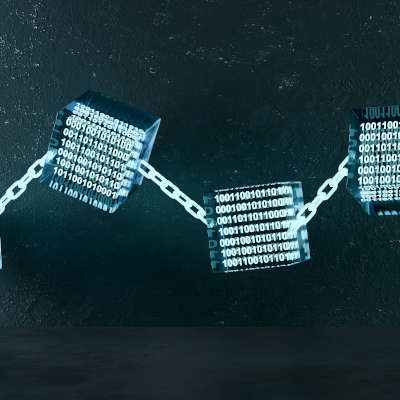
Blockchain, an immutable and encrypted ledger technology, is changing this trend. Since each block (node) in a blockchain is secure and bound to actions taken in previous blocks, it can have some serious benefits when used to secure ePHI. Some of the reasons developers are looking to integrate blockchain technology include:

  • Information is decentralized – The data on a blockchain is not owned by a healthcare organization, but is more of a ledger of an individual’s health profile. 
  • Data on the blockchain is encrypted – The data is secured and cannot be altered. If situations change with a patient, another node is created amending previous information, it isn’t changed.
  • The blockchain itself is reliable – Once information is entered as a part of blockchain, it is on the chain in perpetuity. This makes it easy to refer to if there are questions about care or transfer of ePHI.
  • The blockchain improves transparency – This provides patients the ability to track their own health information, rather than relying on insurers or providers to coordinate information if there are questions about it. 

By integrating blockchain into an EHR (electronic health record) system, it in effect provides a level of consistency that has never been seen before in the healthcare industry. A blockchain-run EHR would keep healthcare organizations, or worse yet insurers, from essentially owning a patient’s ePHI. This would revolutionize the entire industry as it would be the basis for a patient information sharing marketplace. It would incentivize the free sharing of relevant patient data to help healthcare organizations provide better care, and get people the care they need as they would have access to all the information tied to a single patient. Some additional benefits would include:

  • Blockchain nodes cannot be altered, and the chain is traceable. Patients will be able to send records to who they choose without the fear of corruption or mishandling. 
  • Blockchain’s encryption will keep all nodes (and information held within) secure until it is shared with the healthcare provider or insurer.
  • Blockchain can incentivize healthy behavior as insurers and providers can set up benchmarks that patients could meet.
  • Blockchain integration could lower healthcare and prescription costs as it would allow and incentivize the tracking of prescribed drugs, lowering supply chain costs.  

Those are only a few benefits that blockchain can bring to healthcare. If you would like to learn more about blockchain or if you run a healthcare practice and would like to talk to one of our experts about this emerging technology, give us a call at 810.230.9455 today.

331240148_pandemic_profitablity_400.jpeg

Keep the Pandemic from Plundering Your Profitability

331240148_pandemic_profitablity_400.jpeg

As the COVID-19 pandemic rages on, affecting hundreds of thousands of people, and keeping hundreds of millions at home, the beginnings of recessionary fear have begun to hit small businesses. Today, we will go through a few elements that will help you get your business through this (and many other) anxious times. 

The first thing that you need to consider is that this thing won’t last forever. Most businesses, if they had no contingencies in place, or if they were forced to close by mandate, probably have been burning through cash for the past month. Those that haven’t are fortunate. Small business owners need to stay proactive during this period, altering their company’s remote work strategies if need be, and searching for low-interest loans to get them through this difficult process. Let’s get into some of the most useful tips on how to get your business through this disaster.

#1: Know Where You Are

The first tip is probably the most important tip. This situation came upon all of us pretty suddenly, and to be frank, not a lot of business’ disaster recovery programs consider “supervirus” as a likely scenario. Floods, fires, electrical storms, the temp clicking on a spear phishing attack…these situations your business is ready for. Worldwide pandemic is a stretch. Forging ahead, you need to know that you aren’t alone, but how you react will largely determine how you come out the other side of this thing. 

If you are still in operation, you will need to cut as many redundant and unnecessary costs as you can. In times like this, your company needs the flexibility that comes with liquidity. That means eliminating a lot of the extra stuff that you pay for, such as travel (this one is obvious), team outings, company food, and non-essential marketing. This will ensure that you have the financial flexibility to at the very least have a business to reopen when the “all-clear” is given.

Additionally, don’t take on any new investments that don’t immediately relate to getting your business through this situation. There will be millions of businesses looking for additional capital, and there should be enough money and favorable interest rates that most businesses can get the capital they need without putting their whole business in jeopardy.

#2: Maintain Your Relationships

You have spent a long time cultivating and maintaining your business relationships. It is more important now than ever to do what you can to maintain those relationships. This includes your financial institutions, your vendors, and your clients. Regrettably, some businesses won’t make it through this, but the lion’s share will and making sure that your business is on solid footing and there to support your client base will be essential as things begin to normalize. 

#3: Proactively Budget

Chances are that the terms you agreed upon and the support from your clients will shift considerably. You will want to proactively budget for this. You can expect higher interest rates, a lower availability of massive available capital, and shorter terms in which to pay off the money you do borrow. 

As stated above, there should be a lot of available capital through government-sponsored programs, and these loans will carry with them lower interest rates, but if you take the proactive steps to ensure that you budget for the difficult times ahead, your business will undoubtedly be in a better position when we see our way through this mess.

#4: Trust Yourself to Weigh Variables

The COVID-19 outbreak has left the small business owner a lot to take in. One of the most important suggestions we can give is that you trust that the decisions you’ve made up to this point–and that you will make over the crucial next few months–are in the best interests of everyone that depends on your business. If you are forced into making cuts into your human resources, you will want to make sure that they are protected as not to put your business in additional peril from having a tarnished brand.

Making sacrifices is always hard, especially if you were really thriving before the pandemic hit. Take in as much information as you can weigh and have the confidence that you can make the right decisions. This will keep your business, and the people who depend on it, ready to properly adjust to the situations that are thrown at it.

COVID-19 has millions of businesses and hundreds of millions of people uneasy. To get through it you will need help. Contact the knowledgeable consultants at NuTech Services today at 810.230.9455 to let us help your business get through this unprecedented situation.

step_away_burnout_400.jpg

Step Away to Avoid Burnout

step_away_burnout_400.jpg

When someone tells you to recharge your battery, how do you interpret it? In today’s increasingly digital office, you might misinterpret this statement as charging your laptop or smartphone, but in reality, we’re talking about your internal battery. If you constantly find yourself exhausted from your work, perhaps you should take some time to reevaluate priorities and destress a little bit.

When Should You “Recharge?”
A good rule to follow for unplugging yourself from the daily grind is whenever you find yourself to be either overwhelmed or exhausted from working too much or too hard. After all, no business professional can work as hard as possible for an extended period of time without taking a break. If you ever find yourself struggling to answer the question, “What is it all for?”, perhaps it’s time to take a break and unplug from the workplace for a little bit.

Here are three ways you can recharge your mental battery during a busy workday.

Get Out of the Office
Sometimes a breath of fresh air can go a long way. Some employees might skip lunch because they feel they are too busy to get all of their work done otherwise, but this can be a mistake. If you’re not taking a break every now and then, your ability to focus can be impaired. We recommend taking your lunch and using it to grab something to eat or get out of the office, whether it’s taking a walk down the road or going for a short drive. Try to separate yourself from the office during your breaks, even if it’s a little.

Exercise a Bit
If you think you are working a bit too hard, you can use something as basic as even a minor amount of exercise to get your blood pumping. Exercising can help improve focus and improve your health, so if it’s done regularly, you will be more comfortable in the workplace. Furthermore, you may find that you achieve better rest at the end of the day, sleeping more soundly while feeling stronger and more energetic as a whole.

Read More
There’s something inherently relaxing about reading a good book. Even if you’re not into reading, you might find that taking some time out of your day to read a story or learn something new can refresh your outlook on a new project or idea you have. That being said, not everything has to be about work 24/7; that’s not how you “recharge the battery,” so to speak. Even if it’s just something you enjoy, try reading a little bit here and there. You might be surprised by the results.

Be sure to prioritize your mental and physical health to ensure that you are prepared to meet your workplace responsibilities.

medical_device_hacks_400.jpg

From Heart Attack to Hack Attack: Hackers Can Now Control Pacemakers

medical_device_hacks_400.jpg

Medical technology has allowed for vast improvements in the way that conditions are treated. For example, the pacemaker allows some people with heart conditions to live longer and more comfortably. However, a European research team has concluded that even pacemakers are susceptible to being hacked, with deadly results.

The researchers made a note to describe the dangers of using implantable cardioverter defibrillators, from a hacking standpoint. Many modern pacemakers have the ability to communicate with other devices. While this capability is designed as a benefit to the patient, allowing the devices to be examined without an invasive surgical procedure, it can have dire consequences if hacked. If the patient is away from the doctor’s office within two hours, the pacemaker can still receive signals from other devices, thus making it vulnerable to a cyber attack.

Hackers can send a signal to the pacemaker that keeps the device from returning to “sleep mode,” which is what makes it vulnerable to exploitation. By analyzing the signals sent to the tested devices, researchers could spot various ways that a hacker would use this exploit. The results varied from draining the battery’s life to stealing personal data that may be stored on it. In other words, the hacker can make the patient’s life rather difficult by either turning off the device, or stealing data and using it to steal their identity. Hackers could even activate the pacemaker’s resuscitation shock without need, jolting the heart and making things difficult for the victim.

There are at least 10 different types of lifesaving devices that are vulnerable to this simple exploit. In fact, the hacker doesn’t necessarily need to know anything about the device itself. The reason why these devices are so vulnerable is thanks to the manufacturers not believing that pacemakers are clear targets of cybercriminals. This led them to release the devices without the IT security necessary to prevent these targeted attacks. The lesson learned: “Nobody will consider pacemakers a target,” is no excuse to use lackluster security.

Keep in mind that this study was conducted by researchers, rather than hackers. Still, have you ever considered the fact that your organization could be at serious risk? Some SMBs are under the impression that their small size means that they aren’t a target. However, most hacking incidents aren’t targeted events, and are instead massive campaigns meant to infect anything and anyone who happens to click on the wrong link. Furthermore, all businesses have some data that’s worth stealing, like employee records and financial credentials, and it needs to be protected properly.

If you want to maximize your company’s security, give NuTech Services a call at 810.230.9455.

walk_with_vr_400.jpg

How Virtual Reality Could Help Paraplegics Walk Again

walk_with_vr_400.jpg

Virtual reality is a major contender for the next big technology to hit the business industry, and it’s been able to accomplish what modern neuroscience could not. In the medical sector, virtual reality has been tested on paraplegic patients in attempts to help them walk again using brain-controlled robotic limbs. However, these innovations have yielded unexpected, astounding results.

The project, called the Walk Again Project, was first introduced in 2013. Scientists from all over the world have gathered to help paraplegics walk again through the power of technology. The study examined eight patients who had been diagnosed as being entirely paraplegic; as in, they can’t move or feel their legs at all. The project involved several simulations that featured the use of a haptic feedback device, which issued sensory feedback to the patient when their thoughts translated to movement.

The first experiment they performed consisted of using a brain-machine interface therapy combined with virtual reality. The patient wore a device that sent brain signals directly to an Oculus Rift (a commercial VR headset). On the device, the patient would see themselves walking. The other type of therapy used involved a robotic walker to assist with walking therapy. The patient was suspended over a treadmill while their legs were controlled by the robot. This activity was sent to a computer where the data could be analyzed.

The most interesting method of therapy involved the use of robotic legs to send brain signals directly back to the patient. The legs utilized electronic sensors that were placed at key locations along the leg. These sensors sent signals to the patient and offered stimulation to the user whenever their legs were supposed to be moving.

Thanks to the ongoing brain machine interface therapy, the patients found that they could sometimes feel–or even move–their paralyzed limbs. In particular, the treatment improved bladder and bowel function, which is a significant first step toward providing some semblance of autonomy back to those who suffer from paraplegia. The treatments were so successful that in many cases the doctors changed their diagnoses to only partial paralysis.

Though scientists still aren’t sure what has caused this development, it’s thought that it could be the first step toward discovering a way to completely restore mobility to those who suffer from paraplegia. Technology has given these victims a second chance, and it’s one that can (hopefully) improve their lives.

What do you think about this development? Let us know in the comments, and be sure to subscribe to our blog.

ergonomic_setup_400.jpg

Tip of the Week: 4 Easy Changes to Make Your Workspace More Comfortable

ergonomic_setup_400.jpg

Sitting at a desk all day is probably the worst thing you can do for your health. The average office worker sits for 9.7 hours each day and after one hour of sitting the production of enzymes that burn fat declines by as much as 90 percent, significantly slowing metabolism. Then there’s ongoing back pain and eye strain. What’s the modern office worker to do?

If you have to sit at a desk all day, you might as well do so properly. Here are four ways to optimally set up your workspace. In addition to this being a good move for your health, you’ll be setting yourself up for increased comfort and productivity.

Getting Your Chair Just Right
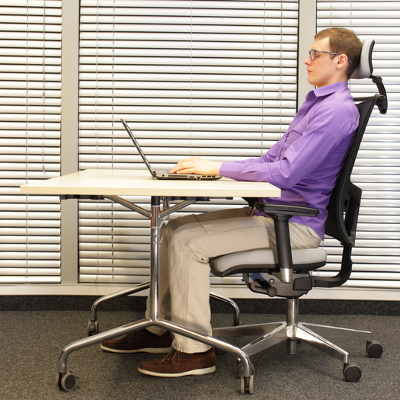
First off, if your chair is uncomfortable, then you need a different chair. Now, we’re not suggesting you go out and get a La-Z-Boy for your desk (as cool as that would be), but you should at least sit in some kind of chair with enough padding that your back isn’t hurting at the end of the day. Ideally, you’ll want a chair with armrests bent at a 90 degree angle. Also, look for a chair that has lumbar support and adjustable settings for the backrest, height, and angle. Remember, the goal here is to have a chair that provides you with an upright posture throughout the workday–not a bed that will put you to sleep.

Desktop Hardware Placement is Key
It should feel natural for you to use your computer. The best way to achieve this is by lining up your keyboard’s “B” keys and mouse with your navel, and your keyboard should be as close to your body as comfortably possible. Heightwise, position your keyboard so that you’re bending your elbows, not your wrist. For your monitor, make sure that the top edge is two or three inches above your eyeline, and make sure that it’s reflecting as little glare as possible. To give you a picture of what we’re talking about, check out this chart.

Be Deliberate About Good Posture
Even if you have an ergonomic chair and desk and your computer equipment is positioned perfectly, all of this won’t matter if you’re not intentional about having good posture. If you’re used to slouching, this bad habit may take some help from your coworkers to break. For example, asking them to remind you to sit up straight if they catch you slouching may seem annoying at first, but it will help cement a good habit that will have far-reaching benefits for your health.

Be Sure to Take Breaks
Even though it feels counterproductive, taking breaks actually improves productivity and it’s good for your health. You’ll want to avoid being so locked into your task that you never look away from your screen, and you’ll want to get up from your desk from time to time and take a walk around the room or stretch. There are actually several useful apps that will help you achieve this. One good app is StretchClock, designed to remind you when to take a break by providing a short tutorial video of different stretches that you can do.

At the end of the day, these are all fairly minor actions you can take that will yield major results in terms of increased comfort, productivity, and improved health. Try these tips out for yourself and let us know in the comments if you feel any different.

wireless_retina_implants_400.jpg

Can Technology Cure Blindness? We’ll See!

wireless_retina_implants_400.jpg

Wireless technology is a staple in the office, but it’s making leaps and bounds in the medical industry, too. With innovations like wireless sensors, pumps, and other Internet of Things devices that can communicate with each other, medical care can be provided in unprecedented ways. But what would you say if we told you that wireless technology can give the blind back their sight?

Well, these patients may not have perfect sight, but they can regain their ability to see to a certain degree. While there are several retinal implants that help victims of degenerative eye diseases, the Argus device by Second Sight is mostly used to help patients suffering from retinitis pigmentosa– a hereditary condition in which the light-sensitive cells in the retina depreciate. In other words, the disease gradually erodes the vision of the victim until they’re unable to see anything but the brightest of lights. The Argus can give victims of this crippling condition another chance at living a normal life.

The Argus is a small device that is designed to take the place of some functions of the retina, aiding in sight. It sits on the patient’s retina and receives images wirelessly from a camera mounted on a special pair of glasses. The Argus then converts the images received into electromagnetic pulses, which communicate with the brain via the optic nerve much like a normal retina does. Though the images seen by patients aren’t necessarily full-color, perfect visions of the outside world; patients describe seeing rough black and white renditions, which certainly beats seeing nothing but darkness.

Of course, the inside of the human body isn’t a very hospitable environment for technology, even under the best conditions. Considering the body is full of salt, electronics can corrode and deteriorate over time. The main challenge is creating a device that is capable of withstanding the conditions inside the human body, while making it small enough to not be obtrusive to the human eye.

At first, the Argus only had 16 electrodes, which offered a limited amount of vision for the patient. The modern versions of Argus use 60 electrodes, which allow patients to “see” much better. As time goes on, Second Sight hopes that Argus can provide even better vision for its patients, as well as color vision. If there’s any question of whether the Argus is effective, watch this video.

In the future, these types of eye implants could be used to treat many different kinds of blindness, including optic nerve damage, diabetic retinopathies, glaucoma, and more. However, this might not be for quite some time, considering how the technology would have to imitate the function of the optic nerve, which demands a direct connection to the brain.

With so many great new technologies coming into existence, it’s only a matter of time before technology can be used to help even more people eliminate their physical handicaps. What are your thoughts on using bionic technology to help those in need? Do you think that someday science will have the power to restore vision completely? Let us know in the comments, and be sure to subscribe to our blog for more great tech news.

b2ap3_thumbnail_call_the_remote_doctor_400.jpg

What If You Never Had to Go to the Doctor’s Office Again?

b2ap3_thumbnail_call_the_remote_doctor_400.jpgRemote technology is so efficient and popular that it’s infiltrating many industries that you’d be surprised to hear about. One such sector is the healthcare department. Some doctors are taking advantage of the leaps and bounds made by technology to help their patients get back on their feet as easily as possible.

As managed service providers, our primary goal is to use remote technology to help users solve their IT crises. Similarly, doctors can use remote technology to diagnose and treat patients, much like how we do with our own systems. UnitedHealthcare, one of the largest health insurance providers in the United States, supports what WIRED magazine calls “telemedicine;” a video visit from a doctor who offers consultation services rather than an in-person appointment. As reported by WIRED:

United says it will cover virtual doctor visits offered through NowClinic, Doctor on Demand, and American Well. These platforms connect patients with thousands of doctors—albeit not the patient’s usual doctor—via video chat. These consultations typically cost $40 to $50 a pop, but now that United is covering these visits, members will only have to pay their usual co-pay, making virtual medicine much more affordable for more people. For now, these virtual visits will be available only to UnitedHealth’s self-funded customers, but the feature will expand to most members by next year.

So, remote technology is helping more people stay healthy simply by allowing them to access a doctor’s consultation whenever they need to. This makes it more convenient for not only the patient, but the doctor, as well. They don’t have to arrange for an on-site diagnosis, and they can avoid any contagious sickness easily enough. It’s simply a much more efficient way of doing things, and allows for more affordable healthcare in general.

In fact, remote technology is such a great tool that any industry can take advantage of it. We at NuTech Services perform most of our maintenance remotely. Managed IT companies use remote technology to ensure that a business’s operations continue to run smoothly. With the assistance of remote technology, NuTech Services can monitor your business’s systems for critical security flaws and administer patches accordingly. This helps us prevent damage that cannot be undone, like a loss of business data or personal information.

The primary reason remote technology is so useful for managed IT service providers is that your business avoids most on-site visits, eliminating the costs associated with them. This frees up a significant amount from your budget, and allows for more effective use of your IT expenses. Every time you opt for remote management and maintenance, you’re saving your business money. In fact, most issues can be resolved without an on-site visit. Granted, some hardware problems cannot be resolved remotely, so you can’t completely eliminate the costs of on-site visits; still, being able to mitigate them is often more than enough to make a difference.

For more information about how we can remotely monitor and maintain your infrastructure to optimize your system’s health, give NuTech Services a call at 810.230.9455.