132147555_pull_hair_frustration_400.jpg

Don’t Pull Your Hair Out Over Human Resources

132147555_pull_hair_frustration_400.jpg

Businesses go about their human resources in all different ways, but in today’s small and medium-sized business, it may not be looked on as crucially as it once was. The HR department may have a lot of responsibilities, but today there are tools that are available that can keep organizations from investing large amounts of capital into HR. Let’s take a look at the way HR is being approached today.

Recruiting

For the job seeker, the Internet has become the place to go. As a result, the recruiter has followed suit. For many years this was a major function of the HR personnel, but today, online recruitment is taking this responsibility off of their shoulders. These services can find applicants that match a business’ availability better than any manual search could. 

Communication

One of HR’s core responsibilities is to coordinate internal business issues. Today, there are cutting-edge communication and collaboration tools designed to help HR teams coordinate the vast array of things they need to coordinate. 

Data Security

The security of personal information has always been in the HR purview, but nowadays there are regulations in place (and more on the way) that makes protecting personal information an absolute point of emphasis for businesses. HR professionals can now use technology to control access to personal and company information, securing it and staying compliant. 

Policy Creation

Policies and procedures are a big part of every business’ culture. In many cases, the way things get done defines the company. Innovative HR technology can ensure that people are up to date with their knowledge of the way administrators want a business to function. By working alongside the IT department, today’s HR department can ensure that a business’ policies and procedures are documented and complied with.

Employee Performance Reviews

HR professionals typically are asked to spearhead the employee performance reviews. In the past it had been difficult to track all the good (and potentially bad) actions of employees, but with technology that’s available to HR representatives today, they can easily make assessments about an individual’s workplace performance to help them determine the future of an employee with their company.

HR is changing and technology is filling in the gaps. Call NuTech Services today at 810.230.9455 if you would like to talk about innovating your human resources department.
hr_payroll_cloud_400.jpg

SMB Human Resources and Payroll Find a Home in the Cloud

hr_payroll_cloud_400.jpg

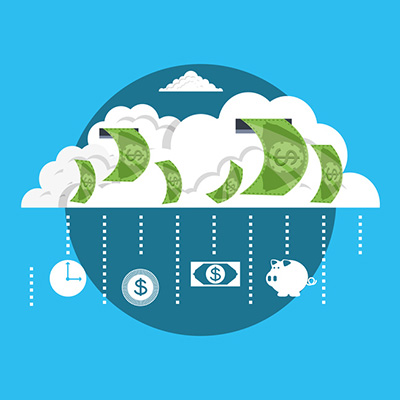
It’s no secret that cloud computing has become a major part of what most small businesses’ operations. One aspect of business administration that many businesses keep in-house is their HR department. Today, we’ll take a look at HR and payroll software, and how moving your business’ human resources department to the cloud is a good solution.

Human Resources may not be the meat and potatoes of any business, but it is exceedingly important. With all the mandates a business has to stay in compliance of, having people whose job it is to deal directly with the staff on behalf of the company makes a lot of sense. Since some SMBs don’t have a dedicated HR department, there are now platforms available that provide those services. But, let’s first start by outlining what kinds of tasks the average small business has to deal with, with a list.

The top six issues a HR department would have to deal with are:

  • Employee retention
  • Health and safety
  • Personnel
  • Payroll
  • Training and compliance
  • Employee management

Software developers have been creating dynamic human resources software, aiming to take the hassle out of a crucial part of your business. Some are pretty advanced, providing human resources directors useful automations that help them control many of the vast responsibilities placed on them. Some useful HR-related software you’ll see includes:

  • Human Resource Information System (HRIS)
  • Applicant Tracking System (ATS)
  • Onboarding
  • Benefits Administration
  • Time and Compensation Management
  • Training Management Performance, and Recognition Management
  • HR Analytics
  • Wellness Management

It seems overwhelming, but most of today’s most popular and utilized tools check most of the boxes as far as including a useful cache of tools that will allow them to manage any small or medium-sized human resources department competently.

While it once was popular to host all the applications a HR department would use on a single computer or on a very small network, today there are a few HR software vendors that provide a completely hosted solution. This means the software is hosted on secure servers that are managed by a provider, and accessible from anywhere there is an Internet connection.

Human Resources as a Service
Some small businesses have begun to completely outsource their human resources, with some success. HR as a service (HRaaS) basically eliminates the need to hire human resources staff, as the service provides resources that allow for a holistic approach to all the important tasks a human resources director would accomplish without the resounding costs associated with traditional human resources strategies.

Not only does a HRaaS platform eliminate a large section of the costs associated with human resources, it standardizes the approach to HR, eliminating the hiccups that often happen with the traditional method. A business will have their HRaaS platform customized for them and would be assigned a HR professional to help keep everything working properly.

Ultimately, it will be up to you to determine how to do human resources right. If your business is searching for a consultant to help you through hard business and technology decisions, reach out to the professional IT technicians at NuTech Services. Call 810.230.9455 to get started building a more efficient business.

cloud_applications_use_400.jpg

What Cloud Applications Are You Using?

cloud_applications_use_400.jpg

Does your business use any cloud-based applications to go about its daily duties? Chances are that with today’s increasingly online business environment, it’s not out of the question for many organizations to have not just parts of their infrastructure in the cloud, but entirely online infrastructures at that. If you’re still considering the cloud as a tool for your business, we’ll provide a primer of sorts to help you make an informed decision.

Applications
Applications, or “apps,” are pieces of software that can be used for specific purposes in the workplace–but you probably already knew that. If used properly, they can streamline specific processes within your organization. Some apps don’t use connectivity, but there are countless others that utilize it to connect all kinds of workers from the professional spectrum together. These kinds of connected apps are generally found in the cloud, and their wide range of use is one of the defining things about them.

The Cloud
You can think of the cloud like a big data center that gives you access to all sorts of software, processing, and storage options through your Internet connection. Computing resources tend to be made available to users through an “as a service” model, in which users secure access to it by paying a monthly fee rather than purchasing a license outright. Apps deployed through the cloud are slightly more expensive as a result, but the flexibility offered by being able to cancel at any time or add new users makes it a valuable opportunity to save money in the long run. Basically, it creates a situation where you transfer your capital costs of purchasing licenses to an operational cost.

Public, Private, Hybrid
There are several different ways that a cloud solution can be constructed. For example, most of the Software as a Service (SaaS) apps are offered as a public cloud solution, which means that the application and any processing or storage associated with it is on shared hardware. It’s made available through the browser or dedicated app, and for this purpose, its costs are generally lower than more private solutions.

In comparison, a private cloud that’s hosted in-house on a network or server unit is much more secure and customizable, as you’re controlling all of the maintenance and management of the system. For this specific reason, however, we recommend private cloud systems only for businesses that have the assets to take care of them; this includes those who outsource IT maintenance or those who have an in-house IT department who can provide the necessary management and oversight of the system.

For the best of both worlds, a hybrid approach can work. After all, some data is more sensitive than other data is, so anytime-anywhere access to it might not be in your business’ best interests. By combining the cost-effective public cloud model with the security of the private cloud, you can maintain adequate accessibility and data security.

Cloud Services
Just like there are many different types of clouds, there are many different cloud services, all for both businesses and individual users. There are generally three major categories that these cloud services are split into:

  • Software as a Service: Software delivery is the name of the game here, including communications (like telephone and email), productivity (Office 365), and even security.
  • Platform as a Service: Development is the main reason to go this route. This lets users create applications, collaborate on projects, and test new software without purchasing or paying for hardware.
  • Infrastructure as a Service: Virtualized environments that can be used for processing, storage, software, and so much more, are what a user gets from Infrastructure as a Service.

To learn more about how the cloud can help your business, reach out to NuTech Services at 810.230.9455.