Free Call Center Customer Service vector and picture

7 Customer-Facing Technologies to Give You an Advantage

Customers look for convenience. In today’s world that means technology that makes their life easier. From webforms to POS systems, you need to keep the customer experience in mind in all you do.

When people aren’t happy with their experience interacting with a company, they leave. And their experience might not have anything to do with your products or services. Maybe they found it hard to navigate your website. They may have a question, but no one was around to answer it.

Customers expect you to make it easy for them to do business with you. Companies that do that, reap the benefits. Customer-centric companies are 60% more profitable than those that aren’t.

Technology is key to converting website visitors into clients. It’s also key for keeping customers happy and returning to buy again.

Where should you focus? Below are several ideas for all business budgets.

Cloud Forms

Are you still emailing forms in Microsoft Word to your customers? Using cloud-based forms makes the experience much better. Your customer doesn’t need to save a form to their computer and remember to email it back. Instead, they can follow a link and fill out the info online from any device.

Moving your forms to the cloud makes it easier for you as well. The form data comes in automatically. These systems also collate forms and provide analytics.

If you use Microsoft 365, then you already have a cloud form tool. Look for Microsoft Forms in your available applications or visit Microsoft’s site.

Digital Signatures

Experts expect the use of eSignatures to grow by 69% by 2024. The ability to digitally sign documents means more contracts get signed. People don’t have to print out a form, sign it, then scan it back in. Any of those activities could mean a bump in the road.

Printers run out of ink. People have trouble with a scanner they rarely use. The list goes on. Any problem can mean a customer rethinks signing a document that you need.

Using digital signatures streamlines the process. You can handle the transaction online. You also ensure you have a legally binding signature.

Smart Chatbot

When someone makes a buying decision, they often have a question. If they don’t have a quick and easy way to get an answer, they may go elsewhere.

Chatbots are really smart these days. If you program them right, they can answer a large percentage of repeat questions. They’re there 24/7 on your website ready to help in a moment of need.

Many customers actually like them. About 68% of consumers are happy using helpful chatbots. They say they like that they get a fast answer from a bot. This isn’t always the case when customers send an email.

SMS Notifications

SMS notifications are another type of technology that can improve customer experience. Emails have become flooded with junk mail. When someone needs to know about a shipment or purchase, they often prefer it by text. This way the message isn’t missed.

Think about implementing SMS notifications for important customer alerts. Make sure you have an opt-in and opt-out method. It’s also a best practice to let the customer choose which alerts they want to receive. Such as payment notifications, sales, or shipping details.

Business Mobile App

People have been in a transition from websites to apps for a while. Of course, the internet isn’t going away, but apps are gaining ground. A big reason for this is the rise of smartphone use.

Smartphone searches are overtaking web searches. And when people are on a mobile device they prefer apps over websites. Studies show that mobile users spend 90% of their time using apps, and just 10% using an internet browser.

Think about implementing a mobile app for your business. This can make it easier for customers to do business with you. It also gives you more marketing and service capabilities, such as push notifications.

If you’re on a tight budget, you could start with a “wrapper” app. These are solutions that take your existing website and transform it into an app.

FAQ Kiosk

For retail stores, having an FAQ kiosk available can provide a positive experience. It can allow customers to get questions answered quickly. It could also help them look up sales and coupons.

Service businesses can also benefit by using this digital tool. They can use it for commonly asked questions. They can also use it to direct clients to staff offices.

VoIP Phone System

You might think of your phone system as an internal piece of IT. But it’s also one of your most customer-facing technologies. The experience people get when they call is a vital part of how they view your business.

VoIP phone systems give staff the flexibility to help customers anywhere. This is true even when away from their desks. They also enable things like group ring, auto-attendant, and voicemail to email. All these features make for better caller interaction with your business.

Get Help Planning Your Technology Roadmap

Which technology upgrades will benefit your bottom line the most? How should new systems integrate into existing solutions? These are some of the things we look at when helping you look ahead to the future. Give us a call today to schedule a chat.


Featured Image Credit

This Article has been Republished with Permission from The Technology Press.
Free Cyber Security Information Security illustration and picture

6 Things You Should Do to Handle Data Privacy Updates

Once data began going digital, authorities realized a need to protect it. Thus, the creation of data privacy rules and regulations to address cyber threats. Many organizations have one or more data privacy policies they need to meet.

Those in the U.S. healthcare industry and their service partners need to comply with HIPAA. Anyone collecting payment card data must worry about PCI-DSS. GDPR is a wide-reaching data protection regulation. It impacts anyone selling to EU citizens.

Industry and international data privacy regulations are just the tip of the iceberg. Many state and local jurisdictions also have their own data privacy laws. Organizations must be aware of these compliance requirements. But they also need to know about updates to these rules.

By the end of 2024, about 75% of the population will have its data protected by one or more privacy regulations.

Authorities enact new data privacy regulations all the time. For example, in 2023, four states will have new rules. Colorado, Utah, Connecticut, and Virginia will begin enforcing new data privacy statutes.

Businesses must stay on top of their data privacy compliance requirements. Otherwise, they can suffer. Many standards carry stiff penalties for a data breach. And if security was lacking, fines can be even higher.

The Health Insurance Portability and Accountability Act (HIPAA) uses a sliding scale. Violators can be fined between $100 to $50,000 per breached record. The more negligent the company is, the higher the fine.

Does all that sound scary?

Don’t worry, we have some tips below for you. These can help you keep up with data privacy updates coming your way.

Steps for Staying On Top of Data Privacy Compliance

1. Identify the Regulations You Need to Follow

Does your organization have a list of the different data privacy rules it falls under? There could be regulations for:

  • Industry
  • Where you sell (e.g., if you sell to the EU)
  • Statewide
  • City or county
  • Federal (e.g., for government contractors)

Identify all the various data privacy regulations that you may be subject to. This helps ensure you’re not caught off guard by one you didn’t know about.

2. Stay Aware of Data Privacy Regulation Updates

Don’t get blindsided by a data privacy rule change. You can stay on top of any changes by signing up for updates on the appropriate website. Look for the official website for the compliance authority.

For example, if you are in the healthcare field you can sign up for HIPAA updates at HIPAA.gov. You should do this for each of the regulations your business falls under.

You should have updates sent to more than one person. Typically, your Security Officer or equal, and another responsible party. This ensures they don’t get missed if someone is on vacation.

3. Do an Annual Review of Your Data Security Standards

Companies are always evolving their technology. This doesn’t always mean a big enterprise transition. Sometimes you may add a new server or a new computer to the mix.

Any changes to your IT environment can mean falling out of compliance. A new employee mobile device added, but not properly protected is a problem. One new cloud tool an employee decides to use can also cause a compliance issue.

It’s important to do at least an annual review of your data security. Match that with your data privacy compliance requirements to make sure you’re still good.

4. Audit Your Security Policies and Procedures

Something else you should audit at least annually is your policies and procedures. These written documents that tell employees what’s expected from them. They also give direction when it comes to data privacy and how to handle a breach.

Audit your security policies annually. Additionally, audit them whenever there is a data privacy regulation update. You want to ensure that you’re encompassing any new changes to your requirements.

5. Update Your Technical, Physical & Administrative Safeguards As Needed

When you receive a notification that a data privacy update is coming, plan ahead. It’s best to comply before the rule kicks in, if possible.

Look at three areas of your IT security:

  • Technical safeguards – Systems, devices, software, etc.
  • Administrative safeguards – Policies, manuals, training, etc.
  • Physical safeguards – Doors, keypads, building security, etc.

6. Keep Employees Trained on Compliance and Data Privacy Policies

Employees should be aware of any changes to data privacy policies that impact them. When you receive news about an upcoming update, add this to your ongoing training.

Good cybersecurity practice is to conduct ongoing cybersecurity training for staff. This keeps their anti-breach skills sharp and reminds them of what’s expected.
Include updates they need to know about so they can be properly prepared.

Remember to always log your training activities. It’s a good idea to log the date, the employees educated, and the topic. This way, you have this documentation if you do suffer a breach at some point.

Get Help Ensuring Your Systems Meet Compliance Needs

Data privacy compliance can be complex. But you don’t have to figure it all out yourself. Our team is well-versed in compliance needs. Give us a call today to schedule a chat.


Featured Image Credit

This Article has been Republished with Permission from The Technology Press.

Free Microsoft Notebook photo and picture

Windows 8.1 Just Lost All Support. Here’s What You Need to Know

Companies both large and small share this one cybersecurity problem. They have computers that are still running older operating systems. Staff might use these devices only occasionally. Or the company may be running customized software that won’t run on newer OS versions.

The problem is that when the OS becomes outdated, the system is open to cyberattacks. When Microsoft or another developer retires an OS, it means that it is no longer supported. No more feature updates and no more security patches for newly found vulnerabilities.

The latest operating system to lose all support is Windows 8.1. Microsoft released the OS in 2013, and it was officially retired on January 10, 2023. Microsoft issued the following warning for companies:

“Continuing to use Windows 8.1 after January 10, 2023 may increase an organization’s exposure to security risks or impact its ability to meet compliance obligations.”

Here are a few facts you should know about what this retirement of Windows 8.1 means.

The OS Will Still Technically Work

When an operating system reaches its end of life, it doesn’t just stop working. Thus, many companies go on using it without realizing the security risk. Technically, the OS will work as it did the day before retirement. But it’s a lot less safe due to the loss of support.

Your System Will No Longer Receive Security Patches

Software and OS vulnerabilities are sought out and exploited all the time. This is what hackers do for a living. The vulnerability cycle usually begins with hackers finding a software “loophole.” They then write code to exploit it that allows them some type of system access.

The software developer learns of this, usually once hackers start breaching systems. They write code to fix that vulnerability. Developers then send the fix to users via an update that they install. This protects the device from one or more hacker exploits.

When an OS reaches its end of life, these fixes are no longer made. The developer has moved on to focus on its newer products. So, the vulnerability remains. It leaves a device vulnerable to hacks for days, months, or years afterward.

Approximately 61% of security vulnerabilities in corporate networks are over five years old.

Options for Upgrading

If you have a computer that is still running Windows 8.1, you have two options for upgrading. You can opt for Windows 10 or Windows 11. If the computer is running such an old OS, there is a chance your system may not meet the requirements for one or both. In this case, you may need to buy a new device altogether.

Microsoft states that there is no free option to upgrade from 8.1 to Windows 10 or 11. Some of the advantages you gain when upgrading include:

  • Better built-in security
  • Faster processing
  • Capability for more modern features (like facial recognition)
  • Improved accessibility features
  • Updated productivity tools (like snap layouts in Windows 11)

What Happens If I Don’t Upgrade?

Security & Compliance Issues

Your data security is at risk if you stay on Windows 8.1. Without any security updates, any vulnerabilities will stay unpatched. This leaves your system highly vulnerable to a breach. One hacked system on a network can also cause the breach or malware infection to spread to newer devices.

If you have to comply with a data privacy regulation, like HIPAA, you’ll also run into issues. Data privacy rules dictate making reasonable efforts to protect data. Using a device with an outdated OS jeopardizes meeting compliance.

Slowed Productivity

The older systems get, the slower they get. Staff that must work on outdated software often complain that it hurts productivity. 77% of surveyed employees were frustrated with outdated tech. Employees dealing with outmoded systems may also quit. They are 450% more likely to want to leave and work elsewhere.

An outdated operating system can hold your staff back. They miss out on modern time-saving features. They can also run into problems with bugs that will no longer get fixed.

Incompatibility With Newer Tools

Software and hardware developers aren’t looking back. Once Microsoft retires an OS, they aren’t prioritizing its compatibility. In fact, some may not want their product to be compatible with it because of the liability.

When you have issues using modern software and hardware it hurts your business. You become less competitive and begin to fall behind. Staying on an outmoded OS keeps you stuck in the past.

Get Help With Your Windows Upgrades

We can help you upgrade smoothly from an older Windows OS to a new one. If you need a new system, we can point you in the right direction for the best value. Give us a call today to schedule a chat about upgrades and where your security stands.


Featured Image Credit

This Article has been Republished with Permission from The Technology Press.

Free Iphone Smartphone photo and picture

Why You Need to Think Twice Before Using Lensa AI & Other Self-Portrait Apps

It’s a common theme. You begin seeing these amazing CGI images of your friends on Facebook or Instagram. You think, “How can I make one?”

Filters and self-portrait apps have come a long way. You can now make yourself look like Hollywood’s version of a character in the next hit animated film. It still kind of looks like you, only a dream version with “perfect” hair, skin, and facial features.

The latest of these modern vanity marvels to make the rounds is Lensa AI. You upload about 10 photos so the app can feed that data into its AI algorithm. Then, once it maps your facial features, it generates several fantasy selfies of you.

These magical avatars don’t come for free though. While you can download the app for free and use it in a limited fashion, you need to pay to do more. To get unlimited access for one week, it’s $2.99. There are several pricing tiers for its avatar packs and membership access. These range from $3.99 for Avatars Pack 1 to $35.99 for full membership.

It sounds like a little harmless digital fun, right? That’s what many companies making apps like this like you to think. Vanity is an easy sell, and who doesn’t want to have a fabulous profile pic?

But for Lensa AI and several similar self-portrait apps, you’re paying more than you know. The cost comes from the data privacy rights you’re giving up. And these can go far beyond the app itself.

Why Worry About Data Privacy with Lensa AI & Similar Apps?

Thanks to laws like GDPR, software and app developers need to tell you what they do with your data. Looking at the app at the Mac App Store, a few alarming things jump out.

Data Used to Track You

Once you download the Lensa AI app, it can track your phone activity. The app store states that the app may use purchases and unique identifiers to track you. And this doesn’t mean only tracking you while in Lensa AI. It can track you across websites and apps owned by other companies.

Data Collected

Lensa AI scours your device for a lot of different data points. By downloading it, you permit it to do this. Some of the tracking links to you personally (such as linked to your name, IP address, or phone number). It collects a lot of other data, but not with your name or another identifier on it.

Data collected and linked to you:

  • User content (such as the images you upload)

Data collected, but not linked to you:

  • Purchases you make on websites or apps
  • Usage data for apps, etc.
  • Identifiers (this isn’t specified, but could mean things like city or gender)
  • Diagnostics from your device

Loss of Rights to Your Uploaded Images

What apps like Lensa AI do with your data is a grey area. Many tech companies, such as Facebook, have been known to act irresponsibly with user data. Many are purposely vague in their terms and conditions, leaving the door open.

One section from the Lensa AI Terms that users agree to states the following:

“…solely for the purposes of operating or improving Lensa, you grant us a time-limited, revocable, non-exclusive, royalty-free, worldwide, fully-paid, transferable, sub-licensable license to use, reproduce, modify, distribute, create derivative works of your User Content, without any additional compensation to you…”

For the sole purpose of “operating” Lensa, could mean anything. It could mean that to make more money to operate the business, the company needs to use your images. Note that it also states it can modify, distribute, etc. YOUR user content.

Things You Can Do to Protect Your Data Privacy

Don’t Immediately Jump on Every Fad

This one may be hard when you see all your friends using a new app. It’s natural to want to be a part of that. But try waiting a week. Most likely those avatar images from the latest selfie app won’t be blowing up your feed anymore.

Read App Terms & Conditions

Take the time to read an app’s terms. You are often giving up more data privacy rights than you realize. This includes giving an app the ability to track just about everything you do on your device. Be aware of what’s at risk before you download a new app.

Restrict Data Collection

If you can’t resist an app’s charms, at least make it as secure as possible. This includes taking the time to restrict its data collection features, where possible.

Use your phone’s privacy and security settings to turn off data sharing. For the Lensa AI app, you can also contact the company to request that it delete your data from its servers. Its privacy policy states to email privacy@lensa-ai.com for questions and concerns.

Get a Device Privacy Checkup

The more apps you use, the more complicated data privacy can get. Don’t leave it to chance. We’ll be happy to help. Give us a call today to schedule a device privacy checkup.


Featured Image Credit

This Article has been Republished with Permission from The Technology Press.
black laptop computer beside black wireless mouse

Microsoft Forms: One of the Handiest Freebies in Microsoft 365

Microsoft 365 is one of the most popular cloud platforms in the world, with about 345 million paid seats. Microsoft cloud tools numbers were up 32% in Q3 2022 compared to the previous year.

One of the reasons for its continued growth is the suite of cloud tools offered in the service. Users get a stable of over 20 different apps, including the core MS Office suite.

With so many different apps, it’s not uncommon for some to go unused. Companies may not even be aware they have access to these other helpful tools. One of the handiest apps you get with a Microsoft 365 subscription is Microsoft Forms.

From sending year-end customer surveys to assessing change readiness, Forms makes it easy. This online survey and form-building tool has a lot to offer organizations. And if you have a subscription to Microsoft 365, then you already get Forms included for free.

What Is Microsoft Forms?

Microsoft Forms is a drag-and-drop form, quiz, and survey creator. It’s simple to use and allows you to send out surveys via a link. Recipients can fill out your form online from any device.

Once recipients fill out the survey, the results come into the software instantly. You can see the collated results charted in the software. You can also export the results to Excel.

How to Get Started in Forms:

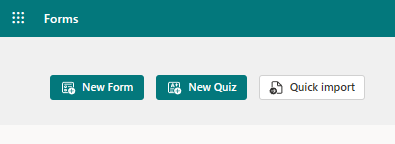
  1. Visit Forms.office.com and log into your Microsoft account.
  2. Choose “New Form” or “New Quiz: from the top menu
Forms
  1. OR you can choose to explore the built-in templates.
Templates-1
Templates-2
  1. Click “Add New” to add a new form field. You can choose from field types:
    • Choice (i.e., multiple-choice question)
    • Text
    • Rating
    • Date
    • Ranking
    • Likert (a scale that records attitudes/opinions about a topic)
    • Net Promoter Score® (a scale from “not likely” to “extremely likely”)
    • Section (separator that can include a title and image)
  2. Enter your questions.
  3. Once finished, click “Send” at the top. You can distribute the survey using the following options:
    • Link to a web form
    • Email
    • QR code
    • Embed in a web page
    • Via Facebook or Twitter
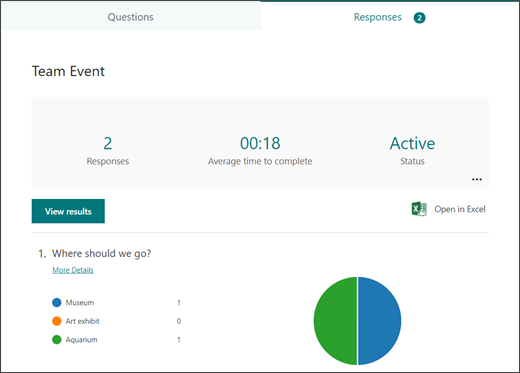
  4. View responses on the “Responses” tab
Responses tab

Advantages of Using Microsoft Forms

It’s Included in Microsoft 365 Subscriptions

If you already subscribe to Microsoft 365, then it makes sense to use Forms. It can save you money if you’re using a separate survey tool, like Survey Monkey. It’s easily accessible by signing in with your Microsoft account.

It Saves Time

Sending a survey by email is time-consuming. You have to worry about emails bouncing due to an attachment. You also need to spend time collating all the results as they come in.

Using MS Forms can save you a lot of time. People don’t need to download anything or open an email file attachment. They simply follow your link and fill out the form online. As soon as they fill the survey out, you get the result. Forms also collates all the answers for you.

Get Charted Results Automatically

You can quickly see the results of the survey in meaningful graphs. Forms makes it simple to export to Excel if you want to upload the survey results into another platform.

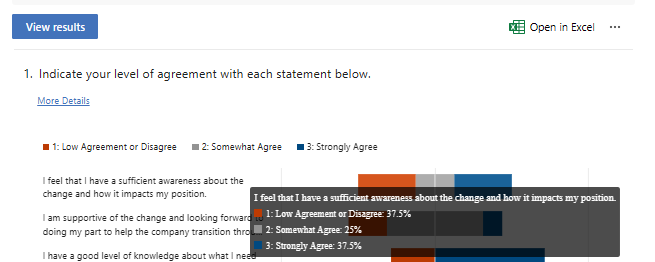
On the “Responses” tab, you can hover over the result graphs to see the details.

Charted Results
Image from ocmsolution.com

It’s Easy to Use

There’s a very low learning curve with Microsoft Forms. The interface is intuitive and simple, so just about everyone can jump in and start using it.

What Are Some Ways You Can Leverage Microsoft Forms?

Annual Customer Satisfaction Survey

Using a web-based survey can increase your response rate from customers. They can fill out your satisfaction survey from any device, making it quick and easy for them.

You can see results instantly. Then, chart them to gain insights into what your business is doing right, and what you can improve upon.

Employee Security Awareness Quiz

Send a security awareness quiz to your employees using Forms. It can be easily integrated into your cybersecurity awareness training. The platform also tells you the average response time per person.

Change Readiness Survey

Change management is a growing focus of many organizations. This is due to the speed of technology-driven transitions. You can use Forms to improve user readiness for change adoption. Create and send out a change readiness survey to affected groups.

Event Registrations

Are you hosting an event? You can easily gather registration details. Send out a Forms link via QR code, social media, text, or email.

Volunteer Registration Form

Embed an MS Forms registration form on your web page to sign up volunteers. The platform will automatically collate different talents or other volunteer information. This helps you better match people’s talents to your needs.

And More

You’ll find more ideas from the Forms templates. Such as:

  • Competitive analysis study
  • Post-event feedback survey
  • Office facility request form
  • Employee satisfaction survey
  • Product pricing survey
  • Food catering request form
  • Save the date form
  • Course enrollment form

Would You Like to Get More Out of Microsoft 365?

There is a good chance that your company may be leaving some value on the table with M365. Give us a call today to learn more about our Microsoft 365 support services.


Featured Image Credit

This Article has been Republished with Permission from The Technology Press.
Free Security Computer Science photo and picture

Data Backup Is Not Enough, You Also Need Data Protection

The need to back up data has been around since floppy disks. Data loss happens due to viruses, hard drive crashes, and other mishaps. Most people using any type of technology have experienced data loss at least once.

There are about 140,000 hard drive crashes in the US weekly. Every five years, 20% of SMBs suffer data loss due to a major disaster. This has helped to drive a robust cloud backup market that continues to grow.

But one thing that’s changed with data backup in the last few years is security. Simply backing up data so you don’t lose it, isn’t enough anymore. Backing up has morphed into data protection.

What does this mean?

It means that backups need more cybersecurity protection. They face threats such as sleeper ransomware and supply chain attacks. Cloud-based backup has the benefit of being convenient, accessible, and effective. But there is also a need for certain security considerations with an online service.

Companies need to consider data protection when planning a backup and recovery strategy. The tools used need to protect against the growing number of threats.

Some of the modern threats to data backups include:

  • Data Center Outage: The “cloud” basically means data on a server. That server is internet accessible. Those servers can crash. Data centers holding the servers can also have outages.
  • Sleeper Ransomware: This type of ransomware stays silent after infecting a device. The goal is to have it infect all backups. Then, when it’s activated, the victim doesn’t have a clean backup to restore.
  • Supply Chain Attacks: Supply chain attacks have been growing. They include attacks on cloud vendors that companies use. Those vendors suffer a cyberattack that then spreads throughout their clients.
  • Misconfiguration: Misconfiguration of security settings can be a problem. It can allow attackers to gain access to cloud storage. Those attackers can then download and delete files as they like.

What to Look for in a Data Protection Backup System

Just backing up data isn’t enough. You need to make sure the application you use provides adequate data protection. Here are some of the things to look for when reviewing a backup solution.

Ransomware Prevention

Ransomware can spread throughout a network to infect any data that exists. This includes data on computers, servers, and mobile devices. It also includes data in cloud platforms syncing with those devices.

95% of ransomware attacks also try to infect data backup systems.

It’s important that any data backup solution you use have protection from ransomware. This type of feature restricts automated file changes that can happen to documents.

Continuous Data Protection

Continuous data protection is a feature that will back up files as users make changes. This differs from systems that back up on a schedule, such as once per day.

Continuous data protection ensures that the system captures the latest file changes. This mitigates data loss that can occur if a system crashes before the next backup. With the speed of data generation these days, losing a day’s worth of data can be very costly.

Threat Identification

Data protection incorporates proactive measures to protect files. Look for threat identification functions in a backup service. Threat identification is a type of malware and virus prevention tool.

It looks for malware in new and existing backups. This helps stop sleeper ransomware and similar malware from infecting all backups.

Zero-Trust Tactics

Cybersecurity professionals around the world promote zero-trust security measures. This includes measures such as multi-factor authentication and application safelisting.

A zero-trust approach holds that all users and applications need ongoing authentication. So, just because a user is logged into the system today, doesn’t mean they are completely trusted.

Some of the zero-trust features to look for include:

  • Multi-factor authentication
  • Distinct file and folder permissions
  • Contextual authentication
  • Verification of permissions for file changes

Backup Redundancy

If you back up to a USB drive or CD, you have one copy of those files. If something happens to that copy, you could experience data loss.

Cloud backup providers should have backup redundancy in place. This means that the server holding your data mirrors that data to another server. This prevents data loss in the case of a server crash, natural disaster, or cyberattack.

Air Gapping for More Sensitive Data

Air gapping is a system that keeps a copy of your data offline or separated in another way. This would entail making a second backup copy of your data. Then, putting it on another server. A server disconnected from external sources.

This is a feature that you may want to seek out if you deal with highly sensitive data. It helps to ensure that you have at least one other copy of your backup. A copy walled off from common internet-based attacks.

Need Help With Secure Backup & Data Protection Solutions?

Have you updated your backup process for today’s threats? Give us a call today to schedule a chat about data backup and protection.


Featured Image Credit

This Article has been Republished with Permission from The Technology Press.

person using MacBook Pro

8 Reasons Every Company Is Now a Technology Company

Whether you sell shoes or run an accounting firm, you need some type of technology to operate. Today’s companies aren’t just in the business of selling their own goods and services anymore. They also must master various types of digital tools.

These include software, payment systems, computers, Wi-Fi networks, mobile devices, and more. Companies also need to protect their devices and network.. If that technology isn’t working, it can impact a business significantly.

98% of surveyed organizations say that just one hour of IT downtime costs more than $100,000. The reliance on technology means that every company is now a technology company.

This is the case no matter what products you sell or services you provide. Let’s discuss exactly why this is the case in today’s world.

What Makes Technology a Backbone of Any Business?

1. Technology Is a Critical Part of Business

Even farmers use tech to check commodity prices, sell livestock, and keep their books. Most companies couldn’t operate without their software. Or without databases filled with important information.

IT downtime is so devastating for this very reason. Remember the breaches impacting global meat producer JBS and Colonial pipeline? Those companies had to halt operations because of ransomware attacks.

They both paid the ransom to their attackers so they could begin operating again. Without the technology that’s become a normal part of our day, a lot of companies would close.

2. Customers Expect an Excellent Digital Experience

Customer experience came in first in a survey of top business priorities for the next 5 years. Nearly 46% of respondents said it was at the top of their list.

If a customer has just one bad experience with your company, they will likely go elsewhere. In a digital world, those experiences are often:

  • Navigating your website
  • Checkout experience
  • Appointment scheduling ease
  • Shipping notifications
  • Helpfulness of online chat
  • Response time from customer support
  • Ability to contact your company via social media

To keep up with consumer expectations in 2023 and beyond, means you need to use technology. From your website to your payment experience, people expect a smooth digital flow.

3. Employees Need Devices to Drive Productivity

How do employees work productivity without the use of a computer, tablet, or mobile device? These devices keep staff connected to each other and your customer data. Devices enable communication and are how much of the work in offices gets done. If they don’t run well, business productivity suffers.

4. AI & Automation Help Companies Stay Competitive

AI and automation help organizations move faster. AI can personalize a consumer shopping experience. Automation can help sales teams close 30% more deals and improve conversions by over 200%.

To stay competitive, companies must integrate technology tools with AI and automation capabilities. This means they need to know the best ways to use these tools. Plus, integrate them well with existing solutions.

5. Information Is Being Generated at a Rapid Pace

Companies generate information digitally at a dizzying pace. Can you imagine what it would be like if you had to go back to all the paper files? You’d need a separate building just for all the filing cabinets.

Files, documents, and customer records are largely digital now. Keeping track of all that information and making it searchable requires technology skills.

6. Vendors/Suppliers Are Leaving Legacy Systems Behind

Think of the vendors you use to run your business. Could you interact with any of them offline only? No email, no digital documents? In most cases, the answer is, “No.”

The companies that you rely on for your business are also “technology companies” in the same way. Most will be leaving behind legacy systems like fax machines and paper documents. Thus, you need to use digital means to interact with them.

7. It’s Difficult to Grow Without Tech Innovation

People are limited by what they can mentally and physically do in a day. Computers and technology have exponentially increased that. They do a lot of the processing and manual work.

The cloud is often touted as leveling the playing field for small businesses. It allows smaller companies to leverage technology to do more affordably.

It’s hard to continue growing your business without the smart use of digital tools. This includes reviewing your technology infrastructure and looking at innovations on the horizon.

8. Business Continuity Needs

Business continuity is about keeping your company running despite any crisis events. One natural disaster could severely impact a building and everything in it. But, if you are storing your data in the cloud and using cloud software, your business can still operate.

Companies that aren’t employing backup systems are at significant risk. Tech solutions create the ability to continue operating from anywhere, increasing business resiliency.

What Does Your Innovation Roadmap Look Like?

Using technology securely and to its fullest can be a full-time job. Give us a call today, we can help take that burden off your shoulders.


Featured Image Credit

This Article has been Republished with Permission from The Technology Press.

red padlock on black computer keyboard

6 Steps to Effective Vulnerability Management for Your Technology

Technology vulnerabilities are an unfortunate side effect of innovation. When software companies push new updates, there are often weaknesses in the code. Hackers exploit these. Software makers then address the vulnerabilities with a security patch. The cycle continues with each new software or hardware update.

It’s estimated that about 93% of corporate networks are susceptible to hacker penetration. Assessing and managing these network weaknesses isn’t always a priority for organizations. Many suffer breaches because of poor vulnerability management.

61% of security vulnerabilities in corporate networks are over 5 years old.

Many types of attacks take advantage of unpatched vulnerabilities in software code. This includes ransomware attacks, account takeover, and other common cyberattacks.

Whenever you see the term “exploit” when reading about a data breach, that’s an exploit of a vulnerability. Hackers write malicious code to take advantage of these “loopholes.” That code can allow them to elevate privileges. Or to run system commands or perform other dangerous network intrusions.

Putting together an effective vulnerability management process can reduce your risk. It doesn’t have to be complicated. Just follow the steps we’ve outlined below to get started.

Vulnerability Management Process

Step 1. Identify Your Assets

First, you need to identify all the devices and software that you will need to assess. You’ll want to include all devices that connect to your network, including:

  • Computers
  • Smartphones
  • Tablets
  • IoT devices
  • Servers
  • Cloud services

Vulnerabilities can appear in many places. Such as the code for an operating system, a cloud platform, software, or firmware. So, you’ll want a full inventory of all systems and endpoints in your network.

This is an important first step, so you will know what you need to include in the scope of your assessment.

Step 2: Perform a Vulnerability Assessment

Next will be performing a vulnerability assessment. This is usually done by an IT professional using assessment software. This could also include penetration testing.

During the assessment, the professional scans your systems for any known vulnerabilities. The assessment tool matches found software versions against vulnerability databases.

For example, a database may note that a version of Microsoft Exchange has a vulnerability. If it detects that you have a server running that same version, it will note it as a found weakness in your security.

Step 3: Prioritize Vulnerabilities by Threat Level

The assessment results provide a roadmap for mitigating network vulnerabilities. There will usually be several, and not all are as severe as others. You will next need to rank which ones to address first.

At the top of the list should be those experts consider severe. Many vulnerability assessment tools will use the Common Vulnerability Scoring System (CVSS). This categorizes vulnerabilities with a rating score from low to critical severity.

You’ll also want to rank vulnerabilities by your own business needs. If a software is only used occasionally on one device, you may consider it a lower priority to address. While a vulnerability in software used on all employee devices, you may rank as a high priority.

Step 4: Remediate Vulnerabilities

Remediate vulnerabilities according to the prioritized list. Remediation often means applying an issued update or security patch. But it may also mean upgrading hardware that may be too old for you to update.

Another form of remediation may be ringfencing. This is when you “wall off” an application or device from others in the network. A company may do this if a scan turns up a vulnerability for which a patch does not yet exist.

Increasing advanced threat protection settings in your network can also help. Once you’ve remediated the weaknesses, you should confirm the fixes.

Step 5: Document Activities

It’s important to document the vulnerability assessment and management process. This is vital both for cybersecurity needs and compliance.

You’ll want to document when you performed the last vulnerability assessment. Then document all the steps taken to remediate each vulnerability. Keeping these logs will be vital in the case of a future breach. They also can inform the next vulnerability assessment.

Step 6. Schedule Your Next Vulnerability Assessment Scan

Once you go through a round of vulnerability assessment and mitigation, you’re not done. Vulnerability management is an ongoing process.

In 2022, there were over 22,500 new vulnerabilities documented. Developers continue to update their software continuously. Each of those updates can introduce new vulnerabilities into your network.

It’s a best practice to have a schedule for regular vulnerability assessments. The cycle of assessment, prioritization, mitigation, and documentation should be ongoing. This fortifies your network against cyberattacks. It removes one of the main enablers of hackers.

Get Started with a Vulnerability Assessment

Take the first step towards effective vulnerability management. We can help you fortify your network against attacks. Give us a call today to schedule a vulnerability assessment to get started.


Featured Image Credit

This Article has been Republished with Permission from The Technology Press.
Free Shinjuku Ward Building photo and picture

Is That Really a Text from Your CEO… or Is It a Scam?

Imagine you’re going about your day when suddenly you receive a text from the CEO. The head of the company is asking for your help. They’re out doing customer visits and someone else dropped the ball in providing gift cards. The CEO needs you to buy six $200 gift cards and text the information right away.

The message sender promises to reimburse you before the end of the day. Oh, and by the way, you won’t be able to reach them by phone for the next two hours because they’ll be in meetings. One last thing, this is a high priority. They need those gift cards urgently.

Would this kind of request make you pause and wonder? Or would you quickly pull out your credit card to do as the message asked?

A surprising number of employees fall for this gift card scam. There are also many variations. Such as your boss being stuck without gas or some other dire situation that only you can help with.

This scam can come by text message or via email. What happens is that the unsuspecting employee buys the gift cards. They then send the numbers back. They find out later that the real company CEO wasn’t the one that contacted them. It was a phishing scammer.

The employee is out the cash.

Without proper training, 32.4% of employees are prone to fall for a phishing scam.

Why Do Employees Fall for Phishing Scams?

Though the circumstances may be odd, many employees fall for this gift card scam. Hackers use social engineering tactics. They manipulate emotions to get the employee to follow through on the request.

Some of these social engineering tactics illicit the following:

  • The employee is afraid of not doing as asked by a superior
  • The employee jumps at the chance to save the day
  • The employee doesn’t want to let their company down
  • The employee may feel they can advance in their career by helping

The scam’s message is also crafted in a way to get the employee to act without thinking or checking. It includes a sense of urgency. The CEO needs the gift card details right away. Also, the message notes that the CEO will be out of touch for the next few hours. This decreases the chance the employee will try to contact the real CEO to check the validity of the text.

Illinois Woman Scammed Out of More Than $6,000 from a Fake CEO Email

Variations of this scam are prevalent and can lead to significant financial losses. A company isn’t responsible if an employee falls for a scam and purchases gift cards with their own money.

In one example, a woman from Palos Hills, Illinois lost over $6,000. This was after getting an email request from who she thought was her company’s CEO.

The woman received an email purporting to be from her boss and company CEO. It stated that her boss wanted to send gift cards to some selected staff that had gone above and beyond.

The email ended with “Can you help me purchase some gift cards today?” The boss had a reputation for being great to employees, so the email did not seem out of character.

The woman bought the requested gift cards from Target and Best Buy. Then she got another request asking to send a photo of the cards. Again, the wording in the message was very believable and non-threatening. It simply stated, “Can you take a picture, I’m putting this all on a spreadsheet.”

The woman ended up purchasing over $6,500 in gift cards that the scammer then stole. When she saw her boss a little while later, her boss knew nothing about the gift card request. The woman realized she was the victim of a scam.

Tips for Avoiding Costly Phishing Scams

Always Double Check Unusual Requests

Despite what a message might say about being unreachable, check in person or by phone anyhow. If you receive any unusual requests or one relating to money, verify it. Contact the person through other means to make sure it’s legitimate.

Don’t React Emotionally

Scammers often try to get victims to act before they have time to think. Just a few minutes of sitting back and looking at a message objectively is often all that’s needed to realize it’s a scam. Don’t react emotionally, instead ask if this seems real or is it out of the ordinary.

Get a Second Opinion

Ask a colleague, or better yet, your company’s IT service provider, to take look at the message. Getting a second opinion keeps you from reacting right away. It can save you from making a costly judgment error.

Need Help with Employee Phishing Awareness Training?

Phishing keeps getting more sophisticated all the time. Make sure your employee awareness training is up to date. Give us a call today to schedule a training session to shore up your team’s defenses.


Featured Image Credit

This Article has been Republished with Permission from The Technology Press.
Free Lock Padlock illustration and picture

6 Ways to Prevent Misconfiguration (the Main Cause of Cloud Breaches)

Misconfiguration of cloud solutions is often overlooked when companies plan cybersecurity strategies. Cloud apps are typically quick and easy to sign up for. The user often assumes that they don’t need to worry about security because it’s handled.

This is an incorrect assumption because cloud security is a shared model. The provider of the solution handles securing the backend infrastructure. But the user is responsible for configuring security settings in their account properly.

The problem with misconfiguration is huge. It’s the number one cause of cloud data breaches. It’s also an unforced error. Misconfiguration means that a company has made a mistake. It hasn’t adequately secured its cloud application.

Perhaps they gave too many employees administrative privileges. Or, they may have neglected to turn on a security function. One that prevented the downloading of cloud files by an unauthorized user.

Misconfiguration covers a wide range of negligent behavior. It all has to do with cloud security settings and practices. A finding in The State of Cloud Security 2021 report shed light on how common this issue is. 45% of organizations experience between 1 and 50 cloud misconfigurations per day.

Some of the main causes of misconfiguration are:

  • Lack of adequate oversight and controls
  • A team lacking security awareness
  • Too many cloud APIs to manage
  • No adequate cloud environment monitoring
  • Negligent insider behavior
  • Not enough expertise in cloud security

Use the tips below to reduce your risk of a cloud data breach and improve cloud security.

Enable Visibility into Your Cloud Infrastructure

Do you know all the different cloud apps employees are using at your business? If not, you’re not alone. It’s estimated that shadow IT use is approximately 10x the size of known cloud use.

When an employee uses a cloud app without authorization, it’s considered “shadow IT.” This is because the app is in the shadows so to speak, outside the purview of the company’s IT team.

How can you protect something you don’t know about? This is why shadow cloud applications are so dangerous. And why they often result in breaches due to misconfiguration.

Gain visibility into your entire cloud environment, so you know what you need to protect. One way you can do this is through a cloud access security application.

Restrict Privileged Accounts

The more privileged accounts you have, the higher the risk of a misconfiguration. There should be very few users that can change security configurations. You don’t want someone that doesn’t know better to accidentally open a vulnerability. Such as removing a cloud storage sharing restriction. It could leave your entire environment a sitting duck for hackers.

Audit privileged accounts in all cloud tools. Then, reduce the number of administrative accounts to a least needed to operate.

Put in Place Automated Security Policies

Automation helps mitigate human error. Automating as many security policies as possible helps prevent cloud security breaches.

For example, if you use a feature like sensitivity labels in Microsoft 365, you can set a “do not copy” policy. It will follow the file through each supported cloud application. Users don’t need to do anything to enable it once you put the policy in place.

Use a Cloud Security Audit Tool (Like Microsoft Secure Score)

How secure is your cloud environment? How many misconfigurations might there be right now? It’s important to know this information so you can correct issues to reduce risk.

Use an auditing tool, like Microsoft Secure Score. You want a tool that can scan your cloud environment and let you know where problems exist. It should also be able to provide recommended remediation steps.

Set Up Alerts for When Configurations Change

Once you get your cloud security settings right, they won’t necessarily stay that way. Several things can cause a change in a security setting without you realizing it. These include:

  • An employee with elevated permissions accidentally changes them
  • A change caused by an integrated 3rd party plug-in
  • Software updates
  • A hacker that has compromised a privileged user credential

Be proactive by setting up alerts. You should have an alert for any significant change in your cloud environment. For example, when the setting to force multi-factor authentication gets turned off.

If an alert is set up, then your team knows right away when a change occurs to an important security setting. This allows them to take immediate steps to research and rectify the situation.

Have a Cloud Specialist Check Your Cloud Settings

Business owners, executives, and office managers aren’t cybersecurity experts. No one should expect them to know how to configure the best security for your organization’s needs.

It’s best to have a cloud security specialist from a trusted IT company check your settings. We can help ensure that they’re set up to keep your data protected without restricting your team.

Improve Cloud Security & Lower Your Chances for a Data Breach

Most work is now done in the cloud, and companies store data in these online environments. Don’t leave your company at risk by neglecting misconfiguration. Give us a call today to set up a cloud security assessment.


Featured Image Credit

This Article has been Republished with Permission from The Technology Press.
Free Man Wearing Brown Suit Jacket Stock Photo

The Pros & Cons of Tracking Your Employees’ Every Digital Movement

Since the pandemic, employers around the world have needed to change. They’ve had to shift how their employees operate. Remote work is very much here to stay. Organizations and employees can both benefit from the work-from-home and hybrid work revolution.

Cost savings is a driver for supporting remote work. Employee morale and productivity also can be higher when employers grant this flexibility.

A majority of organizations support some type of remote work. Statistics show that:

  • 16% of companies are completely remote
  • 40% support hybrid office/remote working
  • 44% don’t allow employees to work remotely

While there are benefits, there are also challenges to this new environment. Employers worry about the cybersecurity risks of remote teams. Managers can find it more challenging to make sure employees are doing what they should do.

The remote and hybrid work environment has led to the rise of employee monitoring tools. These tools have mixed reviews from employees.

What Is Employee Monitoring Software?

Employee monitoring software tracks digital movements. This can include everything from general clock-in clock-out tracking to taking screenshots of an employee’s computer several times per hour.

Tracking tools like Hubstaff and BambooHR track many activities on a person’s computer. The information is then sent in a daily or weekly report to the company.

Items that these tools can track are:

  • Time clock
  • Keyboard activity
  • Keystrokes
  • Mouse activity
  • Websites visited
  • Screenshots of the desktop
  • Apps used and how long in use

The most invasive of tools can even track the sounds and video of the employee. Tracking can be visible, so the employee knows about it or hidden from the employee. It depends on the tool used and the ethical considerations of the employer.

This type of monitoring can benefit an organization worried about “productivity theft.” But it can also alienate good employees and torpedo morale and trust. We’ll go through the pros and cons to weigh before you set up this type of system.

Pros of Activity Monitoring Tools

Helps Managers Understand How Employees Spend Their Day

One feature of many tracking tools is the ability to track time by project. This helps managers understand where employees are prioritizing their time. Knowing how much time employees spend on a project helps with ROI projections.

Reduces Non-Work Activities During Working Hours

One thing that employers worry about with remote employees is that they will waste time. A manager doesn’t want to pay someone only to find out the employee spent half their time on Facebook.

About half of monitored employees spend 3+ hours per day on non-work activities. When employees know that their boss is monitoring their app usage, they’re less likely to goof off.

Can Be an Easy Way to Track Time for Remote Workers

Smaller companies that work with fully remote teams may find tracking tools convenient. Employees or freelancers can track their time at the click of a button. Employers can put an hour-per-week cap on time. They can also manage payments automatically through the app.

Cons of Activity Monitoring Tools

Hurts Employees’ Morale & Productivity

Many employees feel they are put in a cage when monitoring is introduced. Morale can plummet, which takes productivity along with it.

Instead of focusing on work completely, various thoughts go through employees’ minds. Such as, “If I think about this problem too long, is the tracking going to give me a low productivity score?” Or “What happens when I’m on the phone with a customer and not moving my mouse around? Will the tracking make it look like I’m not working?”

Some of the feelings that employees can have when monitored are:

  • Betrayed
  • No longer trusted
  • Loss of company loyalty
  • Hurt
  • Treated like a number instead of a person

“Activity Monitoring” Doesn’t Mean Productivity

Many of these tracking tools send employees and employers “activity reports.” These reports simply look at keyboard and mouse activity during a specific time.

But what if the employee must solve a workflow issue and needs to use their brain, not the mouse? What if a salesperson is on the phone with a customer, not using their keyboard? Zoom calls bring a similar quandary. If you’re in a Zoom call, your mouse and keyboard aren’t being actively used as they would if you are typing.

Yet, the activity report doesn’t include this information. It will simply give a score of x% based on keyboard and mouse activity. This could make an employer think a worker was goofing off when they were actually working hard.

Costs Organizations Good Employees

Nearly half (47%) of surveyed tech employees stated they would quit if their boss tracked them. Employers implementing monitoring can alienate good employees and make them feel untrusted. They can also feel unappreciated.

When you relegate everyone to a number of keyboard strokes, you constrain creativity. Good employees often stay with companies where they feel appreciated and can grow. Once that’s gone, they’re likely to leave.

Finding a Balance

A few things to think about when finding the right balance between tracking too much or too little are:

  • What do you really need to track?
  • Should you treat all employees the same?
  • What do your employees think about monitoring?
  • Are you trying to solve a problem that doesn’t exist?
  • What features are unnecessary that you can turn off?
  • Is the tool giving you accurate data related to productivity?

Get Expert Advice on the Best Tools for Your Business

Cloud tools are an important part of your business. You should deploy them thoughtfully. Give us a call today to schedule a chat and get valuable advice.


Featured Image Credit

This Article has been Republished with Permission from The Technology Press.

Free Online Banking Banking Operations illustration and picture

Smart Tips to Stop Money From Being Stolen Through Online Banking

There are a lot of things that have changed since the invention of the internet. One of these is how we bank and access our accounts. You used to have to go into a local bank branch to make deposits and withdrawals. Now, you can take a picture of a check and deposit it from your phone.

Approximately 73% of people around the world use some form of online banking at least once a month. People have never had such convenient account access. But that convenience can come at a cost.

In 2021, account takeover fraud increased by 90%. New account fraud jumped a whopping 109%. As the ease of online banking has increased, so has banking-related cybercrime.

If someone breaches your Facebook account, it can be a real pain. But, if a hacker breaches your bank account, it can be devastating. It can mean significant losses. Losses that you may not be able to recoup from your financial institution.

In this article, we’ll take a look at the mistakes people make that leave their accounts at risk. Then, we’ll go over some important tips on how to keep your bank account better protected.

Mistakes That Allow Criminals to Access Your Account

Not Enabling Two-factor Authentication

Two-factor authentication (2FA) is a simple process that packs a big punch. When you enable this setting in an online account, it requires an extra step to gain access. That step usually consists of receiving a one-time passcode (OTP) by SMS and entering that at login.

Many people make the mistake of leaving this disabled. They either don’t know it’s there or they think it’s too inconvenient. But leaving this setting off makes it much easier for a bad actor to breach your account.

Falling for a Phishing Scam

There are several types of phishing scams that target online banking. Cyber criminals send emails that look like they come from your bank. They’ll even promise incredibly low rates on credit cards.

Other scams can involve warning you of unauthorized account activity. But when you click the link to log in, you’re actually on a fake page. One designed to look just like your normal bank website.

These are just a few ways that scammers can get your online banking login details. Once they have them, they’ll act immediately to get whatever they can.

Using Easy-to-Guess Passwords

If your account password is easy to remember, it’s also often easy to guess. Using weak passwords is a common mistake that enables many cyber criminals.

Some best practices for passwords include:

  • Make them at least 10 characters long
  • Include at least one number
  • Include at least one symbol
  • Include at least one upper-case letter
  • Don’t make them personal (e.g., don’t use your birthdate, etc.)

Downloading Unsafe Mobile Apps

Banking trojans are often hidden in malicious mobile apps. These apps can look like something as innocent as a task manager. But, once installed, banking trojans seek out any details they can find. They are looking for banking and wallet apps.

Logging Into Online Banking While on Public Wi-Fi

One surefire way to give away your online banking password is to log in while on public Wi-Fi. Hackers hang out on public hot spots and spy on the activity of others. You should never type in a password or other sensitive details when connected to public Wi-Fi.

Tips for Improving Online Banking Security

Turn On Two-Factor Authentication

Enable two-factor authentication in your online banking account. This is also known as multi-factor authentication or two-step verification. According to Microsoft, it can block 99.9% of fraudulent account login attempts.

Set Up Banking Alerts

Time is of the essence when an intruder breaches your account. The faster you can notify your bank of the breach, the better. You could reduce the impact on you by having your account locked down immediately.

Set up banking alerts through your online banking. These can include things like low-balance alerts and login alerts.

Install an Antivirus & DNS Filtering On Your PC & Mobile Device

It’s important to have reliable antivirus software on your PC and mobile device. Many people don’t think about protecting their phones in this way. Yet, they shop online and bank via mobile devices.

It’s also good to use a DNS filter. This is a filter that protects you from going to dangerous phishing sites by blocking them.

Take Phishing Training Classes

Do you know how to identify phishing? Are you up on all the newest scams? You can make yourself less vulnerable by taking some phishing awareness classes. There are many of these for free online. You can also contact us for more personalized training options.

Knowing how to spot phishing via text, email, and phone can help you avoid becoming a scam victim.

Get Help Protecting Your Family from Scams

There are some key digital solutions we can put in place to keep your family safer from online threats. Give us a call today to schedule a chat about online security.


Featured Image Credit

This Article has been Republished with Permission from The Technology Press.

flat screen computer monitor turned on

Cool Windows 11 Features That May Make You Love This OS

Microsoft released the Windows 11 operating system (OS) over a year ago. It was largely well-received as stable and user-friendly. The OS is not a large departure from the Windows 10 experience. But it does offer a lot of enhancements over the older environment.

Yet with several improvements and a free upgrade for Windows 10 users, it still lags in adoption. As of November 2022, Windows 10 still owns the lion’s share of Windows PCs. It has a 69.75 percent usage share as compared to 16.13 percent for Windows 11.

People are slowly upgrading to the newer OS. But it’s natural for some to take a wait-and-see stance. They want to make sure it’s worth the time to upgrade. Additionally, no one wants to have to relearn their computer desktop.

The good news is that Windows 11 has a similar workspace feel to its predecessor. But it packs a lot of great productivity and security benefits that Windows 10 lacks.

Here are some of the coolest features in this current Windows OS. After taking a look, you may choose to go ahead and take the plunge into the Windows 11 universe.

Snap Layouts

Most people are working with more than one app open at a time. It’s not unusual to need to reference two different windows while doing side-by-side work. Switching back and forth between apps can be tedious. It’s also time-consuming.

Approximately 68% of app users say that switching between apps costs them at least 30 minutes per day. Trying to size two windows next to each other can also be frustrating. You lose the scroll bar or can’t get to the menu items unless you resize.

Snap Layouts

Enter snap layouts. This nifty feature in Windows 11 solves the multi-app problem. Simply hover over the maximize icon at the top of any window to get access to a snap layout.

Choose the area you want for the active app, and it will snap into place and allow you to choose apps for the other slots.

Master Search

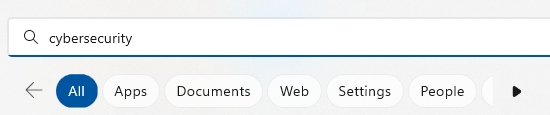
Need to find a document, website, image, or app quickly? Use the Windows 11 master search. Just click the search icon on your desktop. You’ll get a search bar that will populate results from the entered keyword.

As an added touch, Microsoft populates fun topics into the search bar daily. Learn more about James Webb Space Telescope, Coffee Day, or other fun subjects.

Master Search

Once you enter your keyword, you can further refine your search. Refine it according to the type of search result you want. (apps, documents, web, etc.).

Keyword

Clipchamp Video Editor

In the latest Windows 11 update, Microsoft gifted users with a free video editor. The new Clipchamp app makes it easy to edit videos. You don’t need to download any extra software.

Clipchamp has a lot of the features you’d expect to have to pay for. These include templates, effects, video resizing, green screen, and more.

MS Teams Video, Audio & Text Messaging

Video calls have become the norm since the pandemic. But not all video software is easy to use. Most of us have had to wait on someone late to a call because they were struggling with the app.

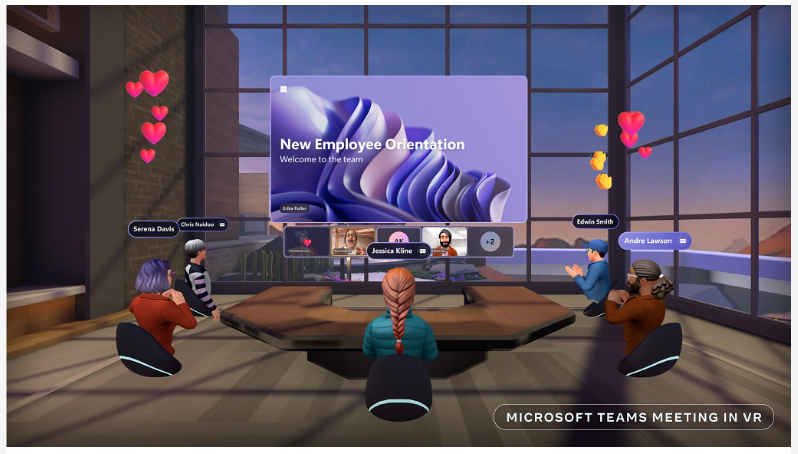
Windows 11 comes with Microsoft Teams preinstalled. This gives you a simple click-to-call experience. You can easily invite someone to a video or audio call. The person does not need to have a Microsoft account to connect with you. This makes things easy on both sides.

Another great feature of the Teams app in this OS is the fact that you can use it for SMS messaging. Instead of having to drag out your phone, just text someone from your desktop.

Accessibility Features

Windows 11 has some great accessibility features. They’re designed to help ensure everyone can use their computer as they want. Those with disabilities can enjoy these features. As well as those that like the extra flexibility they offer.

Four of the newest accessibility features in the OS include:

  • System-wide live captions
  • Focus sessions
  • Voice access
  • More natural voices for Narrator, Windows’ built-in screen reader

Collections in Microsoft Edge

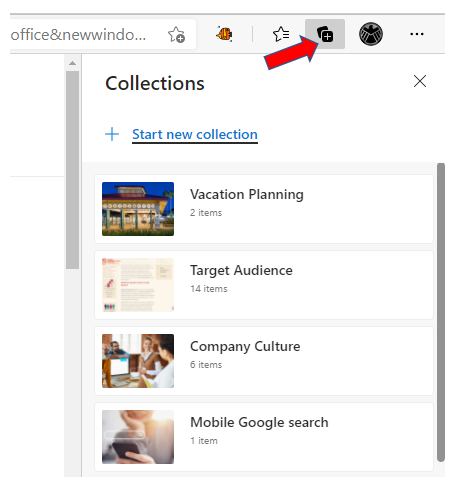
Microsoft Edge is the default browser for Windows. It’s worth checking out if you haven’t yet. Especially because of a feature called “collections.”

If your bookmarked favorites are becoming a mess, you’ll love this Edge capability. If you click the “plus” icon at the top of an Edge browser window, you’ll get the collections panel. Add a collection subject and click to add webpages.

You can see a preview of what you’ve added, and everything is nicely organized. Collections are easy to access and easy to delete when you’re finished with them.

Collections in Microsoft Edge

Microsoft Defender SmartScreen

Phishing remains the biggest online security threat. It’s used to enable many forms of cyberattacks, from ransomware to credential theft. A significant number of phishing messages send users to malicious websites. You often don’t know until it’s too late that you’ve landed on a malware-laden site.

Windows 11 includes Microsoft Defender SmartScreen. This app helps protect you from those dangerous phishing sites. The app checks URLs in real-time against a dynamic list of reported phishing sites. It will warn you if a site is potentially dangerous.

Want an Expert to Help with Your Windows 11 Upgrade?

It can be intimidating to upgrade your system’s operating system. Why not get a pro to help? Give us a call today to schedule a chat about a Windows upgrade.


Featured Image Credit

This Article has been Republished with Permission from The Technology Press.

Free Crop man paying with American dollars Stock Photo

4 Proven Ways to Mitigate the Costs of a Data Breach

No business wants to suffer a data breach. But unfortunately, in today’s environment, it’s difficult to completely avoid them. Approximately 83% of organizations have experienced more than one data breach. (IBM Security 2022 Cost of a Data Breach Report)

These breaches hurt businesses in many ways. First, there is the immediate cost of remediating the breach. Then, there are the lost productivity costs. You can add lost business on top of that, and lost customer trust. A business could also have extensive legal costs associated with a breach.

According to IBM Security’s report, the cost of a data breach climbed again in 2022. The global cost of one breach is now $4.35 million, up 2.6% from last year. If your business is in the U.S., the cost rises to $9.44 million. In Canada, the average data breach costs companies $5.64 million.

Costs for smaller companies tend to be a little lower. But breaches are often more devastating to SMBs. They don’t have the same resources that larger companies do to offset all those costs.

It’s estimated that 60% of small companies go out of business within six months of a cybersecurity breach.

Companies don’t need to resign themselves to the impending doom of a data breach. There are some proven tactics they can take to mitigate the costs. These cybersecurity practices can limit the damage of a cyberattack.

All these findings come from the IBM Security report. They include hard facts on the benefits of bolstering your cybersecurity strategy.

Cybersecurity Tactics to Reduce the Impact of a Breach

Use a Hybrid Cloud Approach

Most organizations use the cloud for data storage and business processes. Researchers found that 45% of all data breaches happen in the cloud. But all cloud strategies are not created equally.

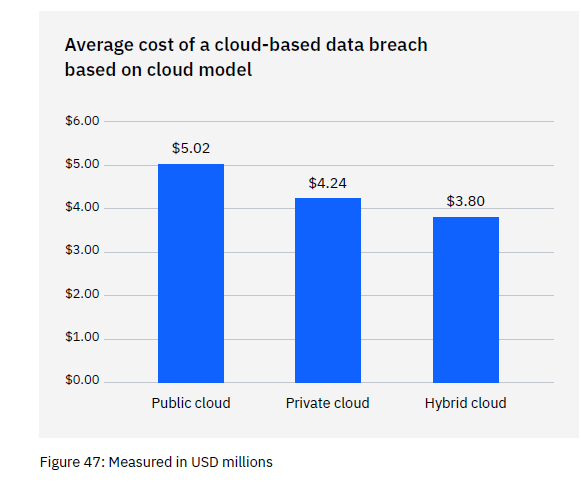
Breaches in the public cloud cost significantly more than those in a hybrid cloud. What is a hybrid cloud? It means that some data and processes are in a public cloud, and some are in a private cloud environment.

What some may find surprising is that using a hybrid cloud approach was also better than a private cloud.

Cost of a Data Breach Report
Graph from: IBM Security/Ponemon Institute 2022 Cost of a Data Breach Report

Put in Place an Incident Response Plan & Practice It

You don’t need to be a large enterprise to create an incident response (IR) plan. The IR plan is simply a set of instructions. It’s for employees to follow should any number of cybersecurity incidents occur.

Here is an example. In the case of ransomware, the first step should be disconnecting the infected device. IR plans improve the speed and effectiveness of a response in the face of a security crisis.

Having a practiced incident response plan reduces the cost of a data breach. It lowers it by an average of $2.66 million per incident.

Adopt a Zero Trust Security Approach

Zero trust is a collection of security protocols that work together to fortify a network. An example of a few of these are:

  • Multi-factor authentication
  • Application safelisting
  • Contextual user authentication

Approximately 79% of critical infrastructure organizations haven’t adopted zero trust. Doing so can significantly reduce data breach costs. Organizations that don’t deploy zero trust tactics pay about $1 million more per data breach.

Use Tools with Security AI & Automation

Using the right security tools can make a big difference in the cost incurred during a data breach. Using tools that deploy security AI and automation brought the biggest cost savings.

Data breach expense lowered by 65.2% thanks to security AI and automation solutions. These types of solutions include tools like advanced threat protection (ATP). They can also include applications that hunt out threats and automate the response.

How to Get Started Improving Your Cyber Resilience

Many of these ways to lower data breach costs are simply best practices. You can get started by taking them one at a time and rolling out upgrades to your cybersecurity strategy.

Working with a trusted IT provider, put together a roadmap. Address the “low-hanging fruit” first. Then, move on to longer-term projects.

As an example, “low-hanging fruit” would be putting multi-factor authentication in place. It’s low-cost and easy to put in place. It also significantly reduces the risk of a cloud breach.

A longer-term project might be creating an incident response plan. Then, you would set up a schedule to have your team drill on the plan regularly. During those drills, you could work out any kinks.

Need Help Improving Your Security & Reducing Risk?

Working with a trusted IT partner takes a lot of the security burden off your shoulders. Give us a call today to schedule a chat about a cybersecurity roadmap.


Featured Image Credit

This Article has been Republished with Permission from The Technology Press.
Free Unrecognizable hacker with smartphone typing on laptop at desk Stock Photo

Mobile Malware Has Increased 500% – What Should You Do?

Cybersecurity researchers uncovered an alarming mobile statistic. During the first few months of 2022, mobile malware attacks surged by 500%. This is alarming both in scale and because many people aren’t yet protecting smartphones.

For years, mobile phones have become more powerful. They now do many of the same functions as a computer – just with a much smaller screen. Yet, people tend to secure their computers better than they do their smartphones.

This is a behavior that needs to change. Over 60% of digital fraud now occurs through mobile devices. That makes them highly risky if proper safeguards aren’t followed.

Many of these are the same types of protections you have on your computer. It’s time to start thinking about your smartphone as a mini-computer and keeping it just as secure.

Tips to Improve the Security of Your Smartphone

Use Mobile Anti-malware

Yes, your mobile phone needs antivirus/anti-malware too! Malware can and does infect smartphones and tablets. You need to ensure you have a reliable mobile anti-malware app installed.

And beware of those freebies. Freebies are great when you’re talking about food, but not security apps. Malware is often hidden inside free apps. These apps are ironically supposed to make you more secure.

Don’t Download Apps from Unknown Sources

Only download mobile apps from trusted sources. Do not download outside a main app store. Trusted app stores include places like:

  • Apple App Store
  • Google Play
  • The Microsoft Store
  • Amazon Appstore

You also should research the app developer online. Make sure they have a good reputation. Once you download a dangerous app to your phone, it can infect it with malware. That malware can remain behind even if you delete the app later.

Don’t Assume Email is Safe

Many people prefer checking email on their phone rather than PC because it’s so handy. But they have a false sense of security about the safety of emails when viewed on a mobile device.

You can’t assume an email is safe just because you’re not on your computer. Be just as wary about unexpected emails and scam emails masquerading as legitimate.

It’s difficult to hover over a link without clicking when on a smartphone. If you see something questionable and want to check the link, open the email on your PC where you can do that.

Beware of SMS Phishing (aka “Smishing”)

In March of 2022, text spam outpaced robocalls. Unwanted text messages rose by 30%, ten percent higher than robocalls. Many of those spam texts are smishing.

Smishing is the text version of phishing. These texts usually contain malicious links. A hacker can potentially breach your device if you click them. The message may also ask you to text back personal information.

Be on the lookout for text messages that don’t quite make sense. For example, getting a shipping notification when you haven’t ordered anything. Also, beware of texts from unknown sources.

Phishing via text message is a growing concern. It’s also one that most people aren’t aware of yet, so they often get caught in its trap.

Remove Old Apps You No Longer User

Approximately 2.6 million apps haven’t had an update in a year or more. Apps are often abandoned by the developer. This can leave security vulnerabilities on your device. Hackers seek out these types of vulnerabilities to exploit. If they aren’t addressed, then they remain a danger.

Go through your device and remove old applications that you are no longer using. There is no reason to keep them around, potentially leaving your device at risk.

Additionally, look at the time of the last update. If it’s over a year, then you may want to consider replacing that app with something more current. App updates often include security-related items. It’s not good when a year or more goes by without the developer making any type of update to the app.

Keep Your Device Updated

Speaking of updates, you also need to keep your device’s operating system updated. Are you using the current version of Android or iOS? Not installing updates can mean your phone has vulnerabilities. These vulnerabilities allow hackers to breach your data.

Automate updates as possible. If you have a company with several devices, then it’s a good idea to include your phones on a managed IT services plan.

Use a VPN When on Public Wi-Fi

Public Wi-Fi is dangerous. Most people understand that, but many connect to it out of necessity anyhow. You may worry about going over your data plan allotment. Or your mobile carrier reception may be slow. Both cases are reasons people opt to connect to unsecured public hot spots.

You can connect to public Wi-fi with less risk if you use a VPN application. VPNs stand between your device and the internet. They route your data through a secure server. This keeps it away from prying eyes that may be lurking on that public Wi-Fi.

Mobile Security Solutions to Prevent a Data Breach

Don’t wait until your phone is infected with malware to secure it properly. We can help you with automated solutions that protect your device, accounts, and data. Contact us to schedule a consultation.


Featured Image Credit

This Article has been Republished with Permission from The Technology Press.

Free illustrations of Metaverse

How Is the Metaverse Going to Change Business?

The new buzzword around town is “metaverse.” But what does that actually mean for businesses? Is it just something that social media companies need to be concerned about?

According to people like Apple’s CEO Tim Cook, the metaverse is coming. He stated that “Life without AR will soon be unthinkable.” Whether that’s a short-term or long-off prediction, companies need to be ready.

First comes the understanding of what the metaverse is. Metaverse is a general term – hence why it’s not capitalized like a proper name. The metaverse refers to a collective upgrade of the internet to a 3D virtual environment. This would be a world interconnected between various sites. These sites would reflect the immersive games that you see today.

Did Facebook/Meta invent the metaverse? No.

The idea of connected 3D immersive worlds has been around for decades. Several online gaming companies have staked a territory in the metaverse. But their applications are less interconnected.

What’s one of the best representations of the early metaverse? It’s a short-lived software called Adobe Atmosphere. This 3D immersive experience included interconnected online worlds. It also gave people the ability to chat with others. It was a bit before its time but shows how the concept of the metaverse has been around for a while.

The metaverse is getting attention now because technology has advanced. It has begun to catch up to the needs of such a world. This includes fast internet connections and immense processing power. It also includes a delivery method for 3D that works on most PCs.

Are we there yet? Not quite. But the metaverse is picking up steam. Recently, Microsoft announced a partnership with Meta. This partnership is to bring Microsoft 365 apps into the metaverse. This means collaboration in an entirely new way. Microsoft notes that 50% of Gen Z and millennials expect to do some of their work in the metaverse in the next two years.

Microsoft Teams Meeting in VR
Image source: Microsoft

How Does the Metaverse Impact Your Company?

With companies like Microsoft looking at the future of AR/VR, it could be a reality soon. You can expect the metaverse to touch your own company in some way in the next few years. Here’s a preview of what it may impact.

Where to Advertise

When the internet was first introduced, companies didn’t immediately realize its potential. Now, most companies wouldn’t consider operating without a website. It’s a necessity for driving leads and converting sales.

If the metaverse takes off as a new 3D iteration of the internet, it could be just as important. This means exploring metaverse-type advertising in virtual worlds. Also, potentially creating your own VR site or showroom.

How to Service Customers

As the popularity of social media took off, companies realized customers used it to reach out. Seventy-nine percent of consumers expect companies to respond to a social media message. And they expect that response within a day.

To address that need, many businesses have a social media presence. They use this for marketing and to answer questions and inquiries from customers.

The metaverse may be the next step. If people begin hanging out there, they will expect to interact with businesses in that space. Just like they do now with social networks.

This means companies need to be aware of how customers may be using the metaverse as it grows. Adding a question about metaverse use to a year-end customer survey could be a way to be proactive on this topic.

Employee Training

One of the touted benefits of the metaverse is its ability to enable more immersive training. This could greatly increase training capabilities for everyone from doctors to forklift operators.

Imagine being able to replicate a task more closely in a virtual world. A person could safely make mistakes there. Then they could grow proficient before doing that thing in real life.

Start thinking about the types of training that your employees need. Then, look at ways that a VR world may make the training safer or more efficient. The metaverse may not have what you’re looking for now. But with the pace of technological advancement, it could in a year or two.

More Immersive Remote Team Collaboration

Virtual meetings skyrocketed out of necessity during the pandemic. Now, meeting by Teams or Zoom is commonplace. The next generation of online team meetings may end up being in a virtual world.

As we noted earlier, Microsoft is already working on bringing its apps into a virtual space. Add a few avatars and an immersive setting. Suddenly, you have a completely different meeting experience.

What’s one more way to enhance remote team collaboration in the metaverse? It has to do with building design and maintenance. Imagine being able to walk through a 3D recreation of a space before it’s built. Then fine-tuning the construction while inside that space.

Is Your Business Ready for the Next Digital Transformation?

What are your digital transformation plans for the next 12 months? The next three years? If you’re not sure where to begin, we can help. Contact us today to schedule a technology brainstorming session.


Featured Image Credit

This Article has been Republished with Permission from The Technology Press.
Have You Had Data Exposed in One of These Recent Data Breaches

There’s a reason that browsers like Edge have added breached password notifications. Data breaches are an unfortunate part of life. And can have costly consequences for individuals. Hackers can steal identities and compromise bank accounts, just to name a couple.

Cybercriminals breach about 4,800 websites every month with form jacking code. It has become all too common to hear of a large hotel chain or social media company exposing customer data.

Hackers can breach your personal information and passwords without you knowing it. And the time from breach to notification of the breach can be lengthy. One example is the data breach of CafePress. This is a popular online retailer that prints personalized items.

CafePress suffered a data breach in February 2019. That breach exposed millions of names and addresses, security questions, and more. Hackers also breached social security numbers that weren’t encrypted.

As mentioned, the breach happened in February. But many consumers weren’t notified until late summer. The FTC recently took action against the company. This was due to its careless security practices.

The point is that months or years can go by without you knowing about compromised data. Unless you happen to look at the right website, you may not even realize it. Those breached password features in browsers are helpful. But what if you have other information beyond a password compromised?

It’s best to protect yourself with some knowledge. We’ll help by listing several recent breaches. If you’ve interacted with any of these companies, you’ll want to take steps to protect yourself from the fallout.

Recent Breaches of Personal Information That May Impact You

Microsoft Customer Data Breach

On October 19, 2022, Microsoft announced a breach that exposed customer data. A misconfigured server was to blame. The breach exposed certain business transaction data. It’s thought that this breach could have affected more than 65,000 entities worldwide.

2.5 Million Records Exposed in a Student Loan Breach

Did you get a student loan from EdFinancial and the Oklahoma Student Loan Authority (OSLA)? If so, you could be in trouble. The organizations notified impacted individuals by letter in July 2022.

The personal information at risk included:

  • Social security numbers
  • Email addresses
  • Home addresses
  • Phone numbers.

The breach compromised the data of over 2.5 million loan recipients.

U-Haul Data Breach of 2.2 Million Individuals’ Data

Large rental firm U-Haul is a household name. It also just had a major data breach. It notified clients in August of 2022 of a compromise of some rental contracts. The contacts in question were between November 5, 2021, and April 5, 2022.

The breach exposed names, driver’s license numbers, and state identification numbers. It affected over 2.2 million individuals that rented vehicles from the company.

Neopets Breach May Have Compromised 69 Million Accounts

You wouldn’t suspect a cute site like Neopets to be a cybersecurity risk. But users of the platform got a rude awakening due to a breach of the service. An estimated 69 million accounts may have had emails and passwords leaked.

The full stolen Neopet database and copy of the source code were being offered for sale for about $94,500.

One Employee Computer Causes a Marriott Breach

Hotel giant Marriott suffered another breach in July 2022. It blamed a single unsecured employee computer. About 300-400 individuals had data leaked. This data included credit card numbers and other confidential information.

Unfortunately, the company shows a pattern of poor cybersecurity. Within the last four years, it has suffered three separate breaches. That’s enough to want to pay in cash or use a pre-paid card if you stay there.

Shield Health Care Group Exposes Up to 2 Million Records

In March of 2022, Shield Health Care Group detected a breach. This Massachusetts-based company found that hackers breached up to 2 million customer records. This includes medical records, social security numbers, and other sensitive personal data.

Flagstar Bank Takes 6 Months to Identify Individuals Affected in a Breach

In December of 2021, Flagstar Bank suffered a breach. It wasn’t until 6 months later that it identified the individuals affected. And the impact was large. It included exposed social security numbers. The hack impacted about 1.5 million customers.

8.2 million Current and Former Customers of Block Compromised

Block was formerly known as Square, a popular payment processing platform. It announced in April of 2022 that it was breached the previous December. A former employee accessed customer names and brokerage account numbers. Some accounts also had other stock trading information accessed.

About 8.2 million current and former customers had their data exposed.

Crypto.com Breach Nets Hackers Over $30 Million

Cryptocurrency may be hot at the moment, but it’s very susceptible to cyberattacks. In January 2022, over 483 users had their Crypto.com wallets breached.

The criminals made it past two-factor authentication, which is usually quite effective. They stole about $18 million in bitcoin and $15 million in Ethereum and other cryptocurrencies.

How Secure Are Your Passwords?

There are many solutions that can help you better manage and secure your passwords. Give us a call to learn more about protecting your personal data from a breach.


Featured Image Credit

This Article has been Republished with Permission from The Technology Press.
Free illustrations of Security

2023 Trends in Data Privacy That Could Impact Your Compliance

Data privacy has been a growing requirement ever since the internet age began. So much personal information is flying around through computer networks. Protecting it has become a mandate.

Most companies must follow HIPAA, GDPR, or another industry or locality-based privacy rule. By the end of 2024, 75% of the world’s population will have their personal data protected. It will fall under one or more privacy regulations.

You don’t need to be a large enterprise organization to have data privacy compliance at the top of your mind. It goes hand in hand with cybersecurity. Additionally, privacy requirements hit all sized companies.

Between July 2020 and July 2021, GDPR violations rose by 113.5%. The number of associated fines also jumped, by 124.92%. When it comes to HIPAA violations, each incident can carry a penalty between $100 to $25,000.

It’s important to make data privacy a priority and factor it into all your data collection processes. When companies collect, send, or store personally identifiable information (PII) it needs protection. This means putting adequate safeguards in place.

To stay on top of your privacy compliance obligations, you should also keep up with trends in this area. Next up, we’ve documented the biggest data privacy trends happening in 2023 that you should be aware of.

What’s Happening in Data Privacy Compliance?

AI Governance

Approximately 40% of privacy compliance technology needs artificial intelligence (AI) to operate. AI has certainly made its way into many of the applications we use on a daily basis.

When you’re typing in MS Word and text just springs up as a suggestion, that’s AI predicting what you’ll type next. When working on a photograph in Photoshop, you can now click a button to give a frowning face a smile. This is also the work of AI.

So, it’s no surprise that AI is running many of the algorithms responsible for keeping data protected. But what happens when there is a problem with the AI?

This is the question that AI governance is working to address. This is a new trend in data privacy because AI has never been so prevalent throughout the data journey as it is now.

Whenever AI is used in the data protection area, organizations need to govern it properly. This helps ensure that automated processes aren’t accidentally exposing sensitive data.

Consumer Privacy UX

A trend that we’ve seen over the last several months is putting more privacy power into the consumer’s hands. Many privacy regulations require that apps and websites provide data transparency. They need to tell people what data they’re collecting, how they’re collecting it, and what they do with it. People also need an “out” to get their data back.

These needs have led to consumer privacy UX becoming a “thing.” You can think of this as a centralized privacy portal. A place people can access privacy-related settings in various apps. This gives better visibility into how their data is being used.

Increased Scrutiny of Remote Employee Monitoring

The pandemic has forever changed the global workforce. Many organizations are now running completely remote offices. Or may be using a mix of remote and in-office staff. The dramatic increase in people working from home has led to data collection changes. Companies are ramping up their monitoring of those employees working off-site.

But this type of monitoring opens a can of worms when it comes to data privacy. Organizations need to ensure that they aren’t encroaching on the rights of their staff. This is most pertinent when putting monitoring in place on employee devices.

For example, approximately 49% of remote employees use their personal computers for work. Companies often put endpoint device monitoring in place for security reasons. They need to ensure they are not gathering or backing up any personal data. That would be data owned by the employee and not the company.

Data Localization

One of the concerns when the social app TikTok became popular relates to location. With the firm being a China-based company, people worried about the privacy of their data. The data was originally stored on servers governed by the Chinese government. A country with very different data privacy rules than the US and other countries.

Data localization is going to become more prevalent. Increasingly organizations look at where their cloud data is being stored. Where a server resides governs the privacy rules and regulations that it may fall under. Thus, companies and governments are now asking a question of cloud providers. This is, “Where is my data stored?” Many want their data to be as close to home as possible.

Privacy-Enhancing Computation (PEC)

Data privacy by design is a fairly new term. Using privacy-enhancing computation is a way that AI is helping cybersecurity. By using PEC as a built-in component of software and apps, developers provide value to clients. They address privacy concerns by making data protection more automated.

Look for PEC components in data analytics when shopping for business tools.

When Is the Last Time You Had a Compliance Check?

How are your data privacy protections? Are you risking a penalty due to lax controls? Give us a call! We can help with a compliance checkup.


Featured Image Credit

This Article has been Republished with Permission from The Technology Press.

MacBook Pro, white ceramic mug,and black smartphone on table

8 Tech Checks to Make Before You Travel

Our technology inevitably comes with us when we travel. Most of us won’t even travel to the end of the block without our smartphones. When you go on a trip, not having your technology there when you need it can ruin your day.

Travel smarter and more securely by doing several checks before you go. Use our handy tech travel checklist. It can save you from suffering from lost devices, missing chargers, or a data breach.

1. Check Your Apps

Have you ever sat at an airport gate wondering why it looked so empty? You then found out that your gate had changed, and you had no idea. You go rushing to the other end of the concourse, hoping you’re not too late.

How did everyone else know about the gate change? They most likely had the app for the airline and received a notification.

Before you leave for a trip, make sure to download any apps you may need. It’s better to download them when you’re at home on your own Wi-Fi. If you wait until you’re at the airport, reception may be an issue.

Some of the apps you may want to grab or update before your trip are:

  • Airline app
  • Train app
  • Hotel app
  • Theme park app
  • Camping ground app
  • Weather app
  • City tourism app

2. Check Your Cords & Adapters

People leave behind countless chargers and adapters every day. They litter airports, restaurants, and train stations around the world. Make sure to bring a backup charger for your laptop, tablet, or phone. Otherwise, you may find yourself paying a premium for a new charger in a gift shop. Your device could also go black if you lose its charger and can’t quickly get a new one.

3. Check Your Power

A great way to ensure you have the power you need is to buy a small charging battery. You can find these in most major retailers or online. They are small “blocks” that hold a charge and can power up a cell phone in a pinch.

Having this extra backup also helps you avoid potential juice-jacking ports. These are fake or compromised public USB charging ports. Hackers use them to steal your data when you plug in.

4. Check Your Mobile Plan

If you’re traveling out of the country, you’ll want to check your mobile plan. If you don’t have the ability to call internationally, then you may not be able to text or call home.

Carriers can add an international capability to your plan, but ask about pricing. It can get expensive if you’re on long calls or using mobile data. An alternative is to set up a VoIP app you can use with your office, friends, or family while you’re traveling. These enable both calls and SMS, but you do need an internet connection.

5. Check or Add a VPN

Free Wi-Fi may be a welcome site when you’re on the road, but it can also be dangerous. You don’t know who else is using that Wi-Fi. A hacker hanging out on the connection can easily steal your data if you’re not protected.

It’s better to use either your mobile carrier connection or a virtual private network (VPN) app. VPN plans are inexpensive and will keep your data encrypted, even if you’re on public Wi-Fi.

6. Check Your Backup

Unfortunately, mishaps occur when traveling. You may leave your phone behind on a boat, have your luggage lost, or get your device stolen while in a crowded area.

10% of all laptop thefts happen in airports.

Don’t lose all your data with the device! Back up your devices to the cloud or local storage before you travel. This ensures that you won’t lose the valuable information on your device. You also won’t need to think twice about enacting a remote “wipe my device” command if necessary.

7. Check Your Device Security

Make your devices as secure as possible before you hit the road. When we’re traveling, our minds are occupied by other things. So, you may not think to check your antivirus or avoid suspicious phishing links.

Protect your devices before you go using:

  • Antivirus/anti-malware
  • DNS filtering
  • Screen lock with passcode
  • Sharing features turned off
  • VPN application
  • Find-My-Device feature turned on

8. Check Your Double-Checks

What do we mean by checking your double-checks? Use the buddy system as a backup. When the family is getting off a plane, each should check with the other that they have all their devices.

If you’re traveling alone, have a friend or family member check up by text. Did you grab your charger? Is your VPN turned on?

Those little reminders can go a long way toward avoiding digital travel nightmares.

Improve the Security of Your Devices Now

Don’t leave your devices unprotected. This could mean a breach of your banking app or personal data. Contact us for device security solutions to reduce your risk.


Featured Image Credit

This Article has been Republished with Permission from The Technology Press.

white smartphone near laptop

7 Most Exciting App Announcements at Microsoft Ignite 2022

If you follow Microsoft products, then you may know about Microsoft Ignite. Held annually, it generates many exciting updates and announcements in the Microsoft world.

Microsoft held its most recent conference last October. In the rush of the recent holidays, you may have missed some of the highlights. So, we’re bringing them to you now.

One thing you’ll notice is that Microsoft Teams got a lot of love at the event. Microsoft is now describing Teams as “the app at the center of Microsoft 365.” We can see why the company keeps enhancing this virtual workspace. Teams now has over 280 million users. It’s not surprising seeing that Microsoft has introduced over 450 new Teams features. And that’s just in the last year.

We’ll go over some Teams features below, along with other Microsoft App announcements from Ignite. These may give you some ideas for your next digital workflow upgrade.

Teams Premium

There is a new Teams Premium offering from Microsoft that adds a whole new AI component to the platform. This service includes several AI-powered features. They make it seem like you have your own meeting assistant.

Some of the cool features include automatically generating chapters from a Teams meeting. The app also generates personalized highlights for you. This saves you from having to rewatch the meeting later.

If you’re meeting internationally, you can enjoy real-time translations for captions. Meeting guides is another new feature. It sets up your meeting options according to your needs.

360-Degree Intelligent Camera for Teams Meetings

SmartVision 60 is the first 360-degree, center-of-room intelligent camera. It has the ability to track the speaker as they’re moving. The camera is also due to have a people recognition feature coming soon.

Virtual meetings can feel much more like real meetings using SmartVision 60. Instead of just seeing a small video feed of one person, the movement of the camera can capture a whole team.

Cisco is Now a Certified Devices Partner for Teams Rooms

Those that are fans of Cisco meeting products will be pleased to know they now have more options. Microsoft announced that Cisco is now a Teams Room Certified Devices partner. You can now start Teams meetings across all certified Cisco meeting devices.

Microsoft Places

One of the virtual workspace apps to support the new hybrid movement is Microsoft Places. This is a team management app that integrates with the rest of the Microsoft 365 ecosystem.

The office is still around, but for how long? Much of the world had to do things virtually during the pandemic. Many companies and employees found they like it better that way. Seventy-four percent of US companies have or plan to put in place a permanent hybrid work model.

Microsoft Places is one more way Microsoft is leading the hybrid office revolution. Some of the app’s features include:

  • Manage and track where employees are working (at home or in the office)
  • Track whether coworkers are away or available
  • Track physical room use to make strategic decisions

Hours & Location Feature in Outlook & Teams

Another feature announcement related to the hybrid working world is hours and location. This is a new capability added to Teams and Outlook to make it easier to schedule in-person meetings.

It can get tricky to plan in-person meetings when you don’t know who is working at the office and who is remote. If you plan without checking, you’re bound to alienate someone. They won’t be happy if they were planning to work from home that day.

The new hours and location feature allows people to specify where they are working. They can adjust this from hour to hour. It takes the guesswork out of scheduling.

Loop App Private Preview

Another exciting app announcement that Microsoft made was about its Loop app. It stated that Loop entered private preview. This gives some organizations a chance to check it out.

Loop is a collaborative workspace app that helps teams ideate in a virtual space. All data pulled in from Microsoft 365 apps syncs automatically to stay up to date.

Microsoft Clipchamp Video Editor

You may have noticed an unfamiliar app popping up on Windows. Microsoft Clipchamp was formally announced at the Ignite event. It’s a quick and easy video editor for Windows PCs.

Have you ever felt frustrated trying to fix a video and not having the right tool to do it? Then you may want to take a closer look at what Clipchamp has to offer. It looks to have a fairly low learning curve.

Get Help Navigating the Microsoft 365 Universe

Microsoft 365 has come a long way in a short period. There are many different app integrations you can use to power your workflow. But it can get a bit complicated without an expert to help. Give us a call today to schedule a Microsoft consultation.


Featured Image Credit

This Article has been Republished with Permission from The Technology Press.