

ChainyBlockees_179612975_400.jpg

3 Practical Uses for Blockchain Technology

ChainyBlockees_179612975_400.jpg

Blockchain has been one of the most talked-about new technologies for several years now. When we first heard about it, it had the potential to solve hundreds of problems, but there weren’t any real-world applications available. Today, we’ll take a look at three applications for blockchain that are available today.

What Is Blockchain?

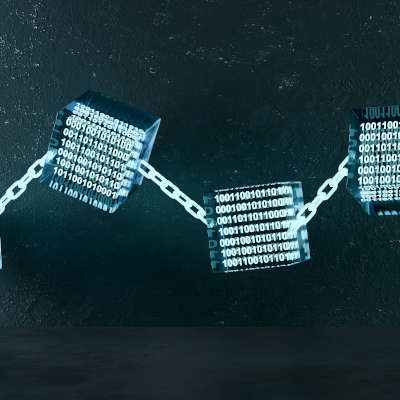
For those who aren’t familiar with blockchain, it can be defined as a distributed database that stores data. Most data storage is centralized, but with blockchain each piece of information is stored on a “block” or what is known as a node. Each node is created when data is added to the chain (all the nodes are connected to other nodes). This chain of data isn’t controlled by one person, rather it is spread out and duplicated so that every entity that is represented on the blockchain has access to the complete record of it. Each node is encrypted and can’t be edited, so if some part of the information needs to be altered a new node is created.

Of course, the first technology that spawned from this was the cryptocurrency Bitcoin, but today it is being developed for many more applications. Let’s take a look at three:

Improving Banking

Blockchain technology is perfect for tracking financial transactions. Everyone that uses a checking account knows that they have a ledger that they need to update once they deposit or withdraw money from that account. Blockchain is set up to do this by nature. Each transaction gets its own node. Furthermore, since it’s a distributed system, it can work for multiple users at once, creating what are called smart contracts. Essentially, when two entities enter an agreement with stipulations, blockchain can trigger payment when the conditions are met, effectively automating the flow of capital. 

Improving Supply Chains

The past couple of years have wreaked havoc on supply chains, but blockchain technology is literally the perfect technology to help keep them running effectively. The distributed nature of a blockchain can work over multiple points on the supply chain, making it a great tool for both procurement and distribution. If companies can know the status, condition, and source of each product or component they receive, each member of a blockchain-linked supply chain can enjoy better transparency, improving the whole process.

Improving Healthcare

One of the first thoughts when blockchain was being considered a solution to data problems was how it would work in the healthcare system. Today, companies are creating applications that not only improve patient, care provider, insurance communication and give patients better control over their medical information, they are also creating solutions to better manage outpatient care. Security is a prime consideration when it comes to health records and the naturally secure blockchain technology appears to be a great solution to keep those records secure. 

Blockchain is exciting, but also taking quite a bit of time to move into the mainstream. What do you think about blockchain technology? Do you think that it can be the answer to a lot of society’s digital problems down the road? Let us know your thoughts in the comments section below and check back soon for more great technology content.
280230675_blockchain_400.jpeg

How Blockchain is Changing Health Technology

280230675_blockchain_400.jpeg

You’d think that the healthcare industry would be at the very cutting-edge when it comes to information technology implementation. That isn’t always the case. One technology that developers are really looking to take advantage of in the healthcare space is blockchain. The technology behind cryptocurrency is being used to help patients better control their care. Let’s take a brief look now. 

Decentralizing Health Data

The importance of health data cannot be understated. Known technically as electronic protected health information (ePHI), it covers patient data, insurance information, and other data that makes up an individual’s health care profile. Unfortunately, the rate at which technology is implemented is extremely slow. In fact, hospitals basically function the same way they have for decades. This is a combination of a lack of innovation and a reluctance to invest by health maintenance organizations that already have extremely high overhead. 

Blockchain, an immutable and encrypted ledger technology, is changing this trend. Since each block (node) in a blockchain is secure and bound to actions taken in previous blocks, it can have some serious benefits when used to secure ePHI. Some of the reasons developers are looking to integrate blockchain technology include:

  • Information is decentralized – The data on a blockchain is not owned by a healthcare organization, but is more of a ledger of an individual’s health profile. 
  • Data on the blockchain is encrypted – The data is secured and cannot be altered. If situations change with a patient, another node is created amending previous information, it isn’t changed.
  • The blockchain itself is reliable – Once information is entered as a part of blockchain, it is on the chain in perpetuity. This makes it easy to refer to if there are questions about care or transfer of ePHI.
  • The blockchain improves transparency – This provides patients the ability to track their own health information, rather than relying on insurers or providers to coordinate information if there are questions about it. 

By integrating blockchain into an EHR (electronic health record) system, it in effect provides a level of consistency that has never been seen before in the healthcare industry. A blockchain-run EHR would keep healthcare organizations, or worse yet insurers, from essentially owning a patient’s ePHI. This would revolutionize the entire industry as it would be the basis for a patient information sharing marketplace. It would incentivize the free sharing of relevant patient data to help healthcare organizations provide better care, and get people the care they need as they would have access to all the information tied to a single patient. Some additional benefits would include:

  • Blockchain nodes cannot be altered, and the chain is traceable. Patients will be able to send records to who they choose without the fear of corruption or mishandling. 
  • Blockchain’s encryption will keep all nodes (and information held within) secure until it is shared with the healthcare provider or insurer.
  • Blockchain can incentivize healthy behavior as insurers and providers can set up benchmarks that patients could meet.
  • Blockchain integration could lower healthcare and prescription costs as it would allow and incentivize the tracking of prescribed drugs, lowering supply chain costs.  

Those are only a few benefits that blockchain can bring to healthcare. If you would like to learn more about blockchain or if you run a healthcare practice and would like to talk to one of our experts about this emerging technology, give us a call at 810.230.9455 today.

306977000_blockchain_400.jpg

More Industries are Seeing Accountability and Security with Blockchain

306977000_blockchain_400.jpg

Blockchain is one of the most dynamic new technologies, but up until recently, there hasn’t been a lot accomplished in the way of creating viable distributed software titles. In fact, the most recognized technology created with blockchain is cryptocurrency. This says quite a bit. Today, we’ll look at blockchain-enhanced software and how it’s only a matter of time until it is a commonplace addition to most businesses.

What is “Blockchain” Anyway?

Blockchain is defined as a distributed ledger system that creates a single encrypted and unalterable file whenever any transaction is made to help preserve its continuity. As every device involved in the blockchain helps to store it, the blockchain itself is unprecedentedly transparent. This allows business systems to be both more accountable, and secure.

Accountability

Let’s return for a moment to how the blockchain works—each time a transaction of any kind is made, be it adding new data or revising some that already existed, a new “node” (think of it as another link in the chain) is created to document the transaction and encrypt it. As a result, you wind up with a running record of reliable data. As you might imagine, this offers itself quite well to many industries.

Banking and Financial Services

With the importance of the record-keeping that these organizations maintain being so apparent, it only makes sense that blockchain is used to automatically keep track of where funds are being moved.

Real Estate

Real estate processes are notoriously intricate and confusing. Blockchain provides an option that could make the entire experience of buying and selling real estate much more transparent.

Wills and Inheritances

Tragically, wills and inheritances can be very hotly contested, and their veracity may be called into question. The transparent and immutable logs of the blockchain could eventually lead to many fights being averted in the future.

Voting

Elections now face more scrutiny than ever before, as votes are counted, recounted, contested, and recounted again. Using the blockchain could help to eliminate most challenges and issues that call the integrity of an election into question.

Supply Chain Management and Logistics

Managing all the moving pieces of a supply chain could be made much simpler by integrating blockchain technology. Goods and resources could be easily tracked and directed where they need to go, with confirmation when they arrive at their destination.

Security

Communications have gone digital, with unprecedented numbers sent and received each day. As more people than ever rely on these communications for a variety of reasons, data sharing needs to be more reliably secure. The blockchain is well suited for this task, as each transfer of data remains fully transparent, while the data contained in the nodes remains undisclosed. This technology can even be safely used to hold parties to their shared agreements by facilitating proper compensation once certain requirements are met. These capabilities will likely lead to advancements in:

Education

Consider how many files any educational institution needs to maintain and verify, and the amount of personal information shared in these records. Blockchain makes it so that these paper files are no longer necessary, while also making it easier to verify registration, management, and financial aid-related data.

Healthcare

Any patient who needs to see multiple physicians knows the frustration of working with providers who operate in different healthcare networks. However, healthcare has a good track record with embracing innovative technology solutions. Introducing blockchain could ultimately lead to self-managed healthcare records.

Stock Trading

There are many ways that stock exchange processes could be made better with the assistance of blockchain technologies. Two clear improvements: convenience, and of course security.

Public Records

Many states are still overly reliant on paper documents, which are very easy to alter and otherwise manipulate (never mind steal). Shifting to digital documents that are supported by blockchain could do a lot to reduce fraud, ensure accountability, and generally improve security.

The Internet of Things

IoT devices are overwhelmingly insecure, but if they were decentralized through the blockchain, some of this insecurity could be resolved.

To learn more about blockchain technology, feel free to call NuTech Services to discuss it, as well as the options you currently have to leverage for your business. Reach out at 810.230.9455 today!

blockchain_177188095_400.jpg

Your Business Could Benefit from Blockchain

blockchain_177188095_400.jpg

Blockchain is typically associated with Bitcoin. This shouldn’t come as a shocker because primarily that IS what it’s used for. However, blockchain isn’t a program, it’s not a product — it’s a technology. Blockchain technology has endless possibilities when it comes to real world implementation. In the near future it will likely be utilized in many business transactions due to its versatility.

Blockchain technology has virtually changed the internet. The action of creating and distributing digital information, but not allowing the information to be copied or altered, has created a backbone to this new type of network.

What Is Blockchain?

When looking at the word blockchain, it’s clear to see that it is derived from two words: block and chain.

Simply put, a block records recent transactions that have not been started in any prior blocks. This avoids duplicates or falsely initiated transactions. This block has the unique characteristic that it cannot be deleted, and it cannot be altered.

A chain is a sequence of items of the same type, forming a line. Blockchain technology has created an indestructible chain of blocks. Without being “chained” together, it would just be unorganized, unreadable, scattered information. Because of the methodical, organized and unalterable record keeping – it’s ideal for numerous applications.

Where Blockchain is Headed

Blockchains are where digital relationships are being not only formed but secured. Here are just some of the implementations where this technology has been, or could be used for in the future:

Payment processing and money transfers – The first thing that it could be used for is what it’s already being used for. Payment processing and money transfers. After all, this is what the technology was developed for, but what other forms can this take?

Retail loyalty reward programs – We’ve all been asked if we have a rewards card. Blockchain could soon revolutionize rewards programs by replacing standard points with tokens. All transactions at a certain store or company would result in earning tokens, which would be stored in a blockchain. The characteristics of blockchain would stop individuals from fraudulently earning reward points, which is common amongst paper and card-based loyalty programs.

Digital Voting – Have you ever heard rumors or accusations that someone fraudulently won a vote? With the implementation of blockchain, this would be an issue of the past. Blockchain cannot be altered or destroyed. This means if there was some sort of fraudulent activity, it could easily be detected. This brings us to our next use of blockchain.

Audit Trailing – Blockchain can be implemented anywhere an audit trail is required.

There are endless possibilities where this technology can be implemented. Medical recordkeeping, tax regulation and compliance, immutable data backup, even real estate or auto title transfers. Blockchain truly is revolutionizing operations across the globe.

At NuTech Services, we are eager to see where this technology will take us in the near future. How do you think blockchain technology will be used? Leave a comment below.

cryptomining_crime_400.jpg

Cryptomining is Inspiring Cybercrime

cryptomining_crime_400.jpg

Blockchain technology is mainly known for its use with cryptocurrencies. Even though the values of cryptocurrencies have leveled off after the incredible growth it has sustained over the past few months, users are still attempting to use cryptocurrencies to make a little bit of extra cash on the side. Of course, if there is money involved, you can bet that there will also be criminals and shady activity surrounding it.

Criminals love to take advantage of cryptocurrencies due to how much they value anonymity. Unfortunately for hackers, mining cryptocurrency legitimately can be expensive and take a long time. You even need dedicated computer hardware in order to do it, which creates substantial costs, like an increase in your power bill.

Due to how difficult it can be to mine cryptocurrency, a new threat called crypto-jacking has popped up. This type of malware hides on a user’s device and steals its resources for the purposes of mining cryptocurrency. This can lead to devastating results–a higher electric bill, lower device performance as a whole, and more wear and tear on your device’s components. This type of malware only works if the device accesses a compromised website. In the past, this threat would only work if the device remained on the website during the duration of the attack, but hackers have since found ways around this. Some infected websites have gotten so crafty that they can hide a pop-up behind the computer’s task bar, where it can remain for as long as the hacker needs it to.

Crypto-miners are also known for spreading this hidden code to all kinds of websites themselves, as well as through malicious browser extensions. This type of malware is has been found on a broad variety of different websites, like the United States Courts, the United Kingdom’s National Health Service, and the Australian state governments of Victoria and Queensland. It was found in a text-to-speech translation plugin used on these sites. Consequently, the developer of this plugin removed it from all sites as soon as it was discovered.

It’s incredibly important that your business pays attention to these kinds of events and trends, as they could create considerable issues for your organization’s operations. If you’re paying a lot of money for your business’ Internet solution, then hackers are taking advantage of all your bandwidth to pull a fast one on you. Cryptocurrency mining is one of those tasks that takes its toll on even the most powerful hardware, making it likely to shorten your technology’s lifespan. This ultimately costs your business in more ways than one.

Thankfully, there are ways that you can combat these attacks. Some browsers are incorporating anti-cryptocurrency measures, and some antivirus programs are making strides toward straight-up blocking crypto-jacking attempts in the first place. Furthermore, there are some extensions that also block crypto-mining and crypto-jacking scripts entirely.

NuTech Services can help you make sure that your IT solutions are running optimally, as well as securing your organization’s network from potential attacks. To learn more, reach out to us at 810.230.9455.

block_chain_400.jpg

Blockchain is for More Than Cryptocurrency

block_chain_400.jpg

If you’ve heard of blockchain recently, there’s a pretty good chance it was in reference to cryptocurrency. With Bitcoin reaching record levels in December, the idea of using blockchain technology to develop digital currency was on a lot of people’s minds. However, the blockchain has a variety of other practical uses.

Content Management
In a world with an increasingly global economy that relies more and more on digital communications, it can be difficult for a content creator of any kind to ensure that their ownership is being respected. After all, there is little that is easier than copying something that is found online and reproducing it without recognizing its creator, let alone reimbursing them.

Blockchain technology can soon help to change that. Many companies have been developing blockchain tools to help protect content creators and their copyrights. From ensuring that proper attribution is preserved in content, to simplifying payments, all the way to proving who created content in the first place, the blockchain will likely soon be a common way of protecting content creators’ intellectual property while allowing them to share out their content.

Healthcare
With so much sensitive, personally identifiable information being necessary in the healthcare field, the privacy afforded by blockchain technology is a natural fit. This is especially true by merit of blockchain’s utility as a concrete record.

As a result, patients may soon find that their personal medical history is more protected than ever, with the risk of any document being lost eliminated once it is incorporated into the blockchain. Any physician that was granted access could update a patient’s complete medical history, whether or not the patient was in-network, allowing for improved record-keeping and thereby better-informed care.

Audit Trails
The blockchain itself can be considered a database, albeit one that keeps a complete record of any changes made to its contents. As a result, it can serve as an excellent means of tracking audit trails.

Through the blockchain, the progress of work (or even the shipment of materials) can be mapped out and monitored. This way, if there is ever an issue or error made, it is easier to identify where and why things went wrong. In turn, it is then easier to resolve these issues. Furthermore, the data within the documents stored in the blockchain gives details on when, and by whom, the documents were added.

This is useful when an organization needs to keep a concrete record of their documentation and the actions they have taken.

Secure Voting
Regardless of your views on the prevalence of voter fraud and other such concerns, the idea of making the voting process more secure only makes sense. As you’ve probably guessed, the blockchain has the potential to do so. By preserving voting results in the blockchain, they are safe from any tampering, which means that the results can be trusted as reliable.

While cryptocurrency may be the most exciting part of blockchain technology, there are many more practical uses. What do you think? Let us know in the comments.