
How_Does_the_AI_400.jpg

How Does the A.I. in Reality Measure Up to Hollywood’s?

How_Does_the_AI_400.jpg

Figuring out how to utilize platforms that depend on machine learning to boost an organization’s bottom line is one of the biggest puzzles for every modern business owner. After all, seemingly every new technology concept can be leveraged into enhanced profitability if it is rolled out right. In this case, many organizations have found ways to use human-created machines to learn how to do tasks that would be deemed too expensive if humans were to do them.

Over the years, A.I. has been a frequent topic of discussion, and one that fiction authors (especially those in science-fiction) have used for all types of stories. In Hollywood, the artificially intelligent character has been around for a long time, a lot longer than the A.I. businesses are using to enhance their profitability. Today, we are going to look at how A.I. is portrayed in media and how it differs from the reality of modern A.I.

The Start of A.I. in Reality
In 1956, 30-some scientists met at the Hanover Inn on the campus of Dartmouth College in New Hampshire to discuss a “strange new discipline”. The talks were about how to build a machine that could think and went on for weeks. What came to be known as the “Dartmouth workshop” founded a quest for A.I. The discipline almost died off several times, but if you look at the world we live in today, it’d be hard to consider that. These days it seems like every business is using some sort of software platform that features what those at Dartmouth a half-a-century ago could only dream about. Machine learning has seen major innovations in many different industries, and we are closer than ever to deep learning–the innovation needed in machine learning to create machines that think like we do.

The Start of A.I. in Hollywood
In Hollywood, however, deep learning is a thing of the past. Machine sentience is commonplace and stories of A.I. are typically approached as commentary about the tyranny and hubris of human beings. A.I. works for so many different types of story arcs as setting an A.I. up as the hero works, setting them up as the victim works, and setting them up as a villain works. In fact, since humans haven’t mastered the technology, writers do what they do best: use creative license to create A.I. characters that are more like humans than machines. The first robot A.I. was Robby the Robot in 1956’s Forbidden Planet, but 1931’s Frankenstein was the first time an artificial being was brought to life on the big screen. A.I. is often used as a plot device for entertainment’s sake, or as commentary, but media hasn’t been able to completely represent where we are at with the technology today because, thus far, A.I has been created to help humans solve problems, not to actually have artificial consciousness. Here are a few movies that represent different uses of A.I. and how they stack up against modern A.I.:

2001: A Space Odyssey (1968)
Directed by: Stanley Kubrick.
Written by: Stanley Kubrick and Arthur C. Clarke.
Starring: Keir Dullea, Gary Lockwood, Williams Sylvester.
Summary: The sudden appearance of a giant black monolith acts as a portal through time, transporting the view from prehistoric Earth to a future where space exploration is commonplace. On a manned trip to Jupiter, two astronauts are tricked by a crafty mission computer, a HAL 9000 series that claims to be “foolproof and incapable of error.” One of the astronauts is killed by HAL, while the other one risks everything to inflict retribution.
How the A.I. stacks up to modern A.I.: The HAL 9000 is a pretty decent representation of what a future A.I. system is going to be used for. The decision to kill the crew, and its subsequent pleading toward the end of the film show situations in which HAL was more like a malevolent human than as a sentient machine. Today’s A.I. is all about using data to solve organizational problems, but “feelings” is not in the equation at this time.

Blade Runner (1982)
Directed by: Ridley Scott.
Written by: Hampton Fancher and David Webb Peoples from a novel “Do Androids Dream of Electric Sheep?” by Philip K. Dick.
Starring: Harrison Ford, Rutger Hauer, Sean Young, Edward James Olmos, Daryl Hannah.
Summary: Blade Runner is set in 2019 Los Angeles and features former police officer, Rick Deckard (Ford) who works as a Blade Runner, someone who hunts down and retires replicants–artificial beings who seem as human as the humans themselves. In the course of action, it’s hard to determine who is in the right, as the lines are completely blurred between replicants and the people tasked with killing them.

How the A.I. stacks up to modern A.I.: The replicants in Blade Runner were man-made men (and women). From their appearance to the fact that they implanted human-esque memories in the machines told a story about how dangerous it can be when people try to play God. So, while it makes for great cinema, the replicants being indistinguishable from their human counterparts is questionable. There hasn’t been any technology developed to make machines more human, they have to be told to try to do things the way humans do in order to learn as humans do, making the whole premise impossible to implement with today’s limited A.I. technology. However, Google’s most recent new development, called Google Duplex, will allow Google Assistant to make phone calls for you. For example, if you ask Google Assistant to make a haircut appointment for you, it will call your salon, as if it were a person, and negotiate a time to fit your schedule. The results are both really cool, and a little creepy, but in the end, if Duplex can save you a few minutes here or there and not make business think they are getting fake auto calls, we’re all for it.

WarGames (1983)
Directed by: John Badham.
Written by: Lawrence Lasker, Walter F. Parkes.
Starring: Matthew Broderick, Ally Sheedy, John Wood, Dabney Coleman.
Summary: David, a hacker a decade before hacking became commonplace, breaks into NORAD and programs the WOPR, a military strategy computer, to play out war games until it has launch codes and launches hydrogen-bomb-tipped missiles at the Soviet Union. After finding the key to disarm the missiles, David and his friend Jennifer (Sheedy) track down the system’s creator to help keep the U.S. from launching Global Thermonuclear war.
How the A.I. stacks up to modern A.I.: WarGames examines the nature of a machine learning computer and how its role could be critical for the sustainability of the human race. The answer, as hokey as it is, to keeping the WOPR (also called Joshua after the developer’s dead son) from launching missiles is Tic-Tac-Toe. The WOPR learns that nuclear war and tic-tac-toe are pointless. That is the kind of fundamental application that modern A.I. could work out, and while we don’t suppose the U.S. military is looking to integrate A.I. to our national missile defense, the A.I. of WarGames was a pretty good representation of how A.I. could learn what are typically very human lessons.

Her (2013)
Directed by: Spike Jonze.
Written by: Spike Jonze.
Starring: Joaquin Phoenix, Amy Adams, Scarlett Johansson, Rooney Mara, Olivia Wilde.
Summary: Set in the very near future, recently divorced writer, Theodore Twombly (Phoenix) purchases a companion bot named Samantha (Johansson). She is an A.I. assistant but is exactly what Twombly needs and ends up falling in love with it. As their relationship develops, he becomes happier, then stagnates and is forced to break it off when Samantha describes how she can be in love with thousands of people simultaneously. How the A.I. stacks up to modern A.I.: The movie Her provides a fair amount of foresight to where the virtual assistant program is going. If you spend any time thinking about the future of technology it becomes evident that the more engaged you can get with your virtual assistant, the better it will work for you. Samantha has a superior understanding of language, fluidity to “her” voice, reasoning, planning, and most importantly for our purposes, obvious learning capabilities. The fluctuations in its emotional state don’t do the representation of the A.I. justice, but all-in-all Her is an interesting character study about how artificial intelligence could be designed to treat humans down the road.

Ex Machina (2014)
Directed by: Alex Garland.
Written by: Alex Garland.
Starring: Domhnall Gleeson, Oscar Isaac, Alicia Vikander.
Summary: A billionaire, Nathan Bateman (Isaac), fixes a contest to get one of his employees, Caleb (Gleeson) to come to his remote laboratory to take part in a Turing test of a new A.I. that he’s developed. The A.I. is kept in a humanoid android named Ava (Vikander). When she convinces Caleb she is being tortured, and he finds out Bateman’s dirty little secret, he tries to help Ava bust out, only to be duped and left for dead after Ava kills Nathan. She escapes alone on a helicopter.
How the A.I. stacks up to modern A.I.: First, I’ll say that this is one of the coolest of the A.I.-based movies because there is a sense of mystery, much like that inherent with A.I. The solitary genius theory is one of the most used when it comes to A.I. movies (or monster movies) and while the A.I. itself showed well, there is no way that a single person, even one with unlimited resources, could create a functioning A.I. automaton. As far as the deep learning capabilities, the Ava android is what we both aspire to and hope to avoid–which is kind of a good metaphor for the discipline as a whole.

There are dozens of movies with artificially intelligent characters. With people building new A.I.’s every day, the way they are used in reality remains to be seen. In movies, however, they will continue to astound and thrill. Here are some other titles that feature A.I.:

  • Star Wars
  • Short Circuit
  • Alien
  • Terminator 2: Judgement Day
  • The Matrix
  • Bicentennial Man
  • I, Robot
  • Iron Man
  • Transcendence

Do you have a favorite A.I.-fueled film or television show? Are you of the opinion that the A.I. systems we can interact with are close? Are they necessary? Leave your thoughts in the comments below.

meeting_leadership_present_400.jpg

What Star Wars can Teach About Mentorship

meeting_leadership_present_400.jpg

The Star Wars saga has many recurring themes – the struggle between desire and destiny, good and evil, impulse and discipline. However, a theme that particularly stands out throughout the series is the examination of the relationship between student and teacher. This theme is similar to the relationship that an IT provider should strive to have with their clients.

For today’s Star Wars Day blog, we’ll review some of the lessons that a professional can learn from the Star Wars films, as well as what the insights that the relationships shared by the characters can reveal about being a mentor, as well as the mentored. To do so, we’ll examine some moments and characters from the complete series thus far – Episodes I through VIII – and the stand-alone Rogue One.

WARNING: this article may spoil a few key moments from the series, so continue at your own caution.

How to Be a Mentor, According to Star Wars
There is no shortage of those who could be considered mentors throughout the series. From Qui-Gon Jinn and Obi-Wan/Old Ben Kenobi, Luke Skywalker and Leia Organa, and finally, Yoda, many characters accept the mantle of mentor… albeit begrudgingly, at times.

In order to be a mentor, there are two requirements that each of these characters present during the series. Likewise, many characters also exhibit just one or the other characteristic. Yet, as they do not exemplify both qualities, they don’t quite qualify as a true mentor. We will explore these characters in more detail later.

These two requirements are to be a committed educator, as well as an equally committed leader. Each of the mentors listed above have had the opportunity to be both, and rose to the occasion. Qui-Gon took the initiative to take a young slave into his care, campaigning to the Jedi Council for the ability to teach him. When Qui-Gon was dispatched by Darth Maul, Obi-Wan rose to the occasion and took up Anakin Skywalker as his padawan learner.

Years after Anakin succumbed to his fear and hubris to be reborn as Darth Vader, Obi-Wan continued to be a mentor under the name Ben Kenobi, teaching the Skywalker of the next generation how to embody the principles of the Jedi. Once this Skywalker, Luke, had learned to be a leader, he teamed up with his long lost sister, Princess Leia Organa, to defeat the Empire. While Leia continued to lead an underground organization committed to fighting the Empire’s last remnants, Luke retreated to a sanctuary to ensure he was able to train the next worthy Jedi.

Finally, we would be amiss if we neglected to mention Yoda’s involvement as a leader throughout the saga. From the very beginning of the story, Yoda was a respected leader of the Jedi Order, proving his worth on the battlefield and in the Senate. When the Empire rose, he retreated to his home planet in wait of the next generation of Jedi to train. He then passed on, but returned as a Force ghost to impart his wisdom again, later in the series’ timeline.

Lining Up Star Wars Mentorship with Our Own (and with The Odyssey)
As one might imagine, the concept of mentorship has been around for much longer than Star Wars has been. In fact, we get the word “mentor” from a character in Homer’s epic poem, The Odyssey. Mentor was entrusted by the protagonist, Odysseus, to care for his son in his absence, and later assisted the young prince Telemachus in reuniting with his long-lost father by serving as his guide and, well, mentor.

In this way, Mentor serves a very similar purpose as many of the characters from Star Wars. By teaching another character and acting as a leader, he allows the protagonists to succeed in their quest – or, in the terminology more likely to be used in Star Wars, their mission. Furthermore, like the mentors to be found in Star Wars, Mentor shares a few characteristics with the mentors we see in the business world.

What Makes a Mentor, a Mentor
We’ve already established that a mentor should be a sort of amalgamation of a teacher, and a leader. This is admittedly a tricky balance to find, until you describe what kind of leader and teacher makes a mentor.

First, as a leader, you have to be able to be supportive as you take charge. As you work with a mentee, commit the time that the mentee needs to grow and devote your full attention to them. Just as Ben Kenobi understood Luke’s rage and bitterness after his aunt and uncle were slaughtered by the Empire’s stormtroopers, you need to be able to emphasize with your acolyte and guide them towards the higher purpose you can see them achieving.

As a teacher, it is important to also challenge those who you mentor. Not only should you assign tasks for your student to complete, these tasks should test the limits of their ability and set a standard that you expect them to meet. As Yoda challenged Luke to lift his X-wing fighter out of the swamps of Dagobah, he wasn’t coddling his student. Neither should you.

It is also important that, as their teacher, you review the lessons that have been imparted. These discussions will not only help ensure the information is retained, it will also encourage your mentee to draw their own conclusions. Remember, teachable moments happen all the time – it’s up to you to embrace them.

Finding Poor Examples in Rogue One
Alternatively, Rogue One offers a few examples of how to very much not be a positive leader. At the very beginning of the film, protagonist Jyn Urso’s father, Galen, is pressured into returning into the Empire’s service and designing the ultimate superweapon: the planet-destroying Death Star. In addition to being forced to work on a project he detests, he is stuck in a thoroughly unpleasant work environment. Oh, and did we mention that his wife was murdered and his daughter lost to him during the attack?

It should be no wonder, then, that instead of being loyal to his ‘employers,’ Galen instead decides to sabotage their operation from the inside. Hiding a critical weakness in the Death Star and sending word of it to the Rebel Alliance, Galen embodies the corporate espionage that a disgruntled employee could leverage against your business. A good leader sees the value in keeping an employee happy in two ways – first, it helps to keep that employee engaged and productive, and secondly, it reduces, if not eliminates, any ill will toward the organization.

In another example of the Empire’s failings in Rogue One, the antagonists of the film also leverage shady office politics to get a leg up on their superiors. For instance, Director Krennic elects to go over his commander’s head and out of the traditional chain of command, reporting directly to Darth Vader. As a commanding officer himself, Krennic serves as an example of what happens when office politics supersede the typical chain of command – and winds up being Force-choked into oblivion for his troubles. While it is highly unlikely that deviating from the chain of command will get you strangled like Krennic, it certainly doesn’t reflect well on you and shows a distinct lack of leadership and respect for the chain of command.

All this only goes to show that lessons in leadership can be found anywhere you look – even in a galaxy far, far away. Do you have any Jedi masters or mentors in your life? What have you learned from them? Share your thoughts in the comments, and may the Fourth be with you!

keyboard_gavel_400.jpg

Perpetrators of Three Major Cyber Crimes Have Pled Guilty

keyboard_gavel_400.jpg

Every so often, it’s nice to hear about when the good guys win and cybercriminals get their comeuppance. Three such cybercriminals have entered guilty pleas to charges related to major cybersecurity events.

Mirai
Mirai was a malware strain that creates a botnet out of enslaved Internet of Things devices. By leveraging the resources of these IoT devices, Mirai took down networks and websites. 20 and 21-year-olds Josiah White and Paras Jha have pled guilty for developing and leveraging Mirai.

The duo were co-founders of Protraf Solutions LLC, a company that would mitigate DDoS attacks. Their business model was to sell their solutions to their DDoS victims, or use the DDoS attack the old-fashioned way: as a means of collecting ill-gotten monies from those desperate enough to pay them to stop the attack. Along with 21-year-old Dalton Norman, White and Jha also used Mirai to power a click fraud scheme that net them about 200 Bitcoin, Norman alone netting 30.

Mirai ultimately went on to power one of the biggest attacks the world has ever seen, using IoT devices to take down Dyn, causing many major websites to go down.

Ultimately, the three young malware developers were each charged with click fraud conspiracy, earning each a $250,000 fine and a stay of up to five years in prison. Jha and White plead guilty to conspiracy charges for writing and using Mirai and were each sentenced to an additional 5 years in prison and $250,000 fine, as well as three years of supervised release.

NSA Data
An employee of the National Security Agency, Nghia Hoang Pho, pled guilty on December 17, 2017, to a charge of “willful retention of national defense information.” According to the United States Justice Department, Pho was hired in 2006 as a developer for the Tailored Access Operations unit. The Tailored Access Operations unit, or TAO unit, creates specialized hacking tools that are used to collect data from the information systems used by overseas targets.

Between 2010 and March of 2015, Pho removed classified data and stored it on his home computer, which utilized antivirus software from Kaspersky Lab. Kaspersky Lab is suspected of having been exploited by Russian hackers to steal documents, perhaps including the ones Pho removed and saved at home.

The United States Department of Homeland Security has since issued a directive that bans the use of Kaspersky software in federal agencies. Pho could face up to 10 years in prison and is scheduled for sentencing on April 6.

Yahoo
One of four men who faced indictment in March of 2017 has pled guilty to hacking into Yahoo and exposing the usernames, passwords, and account information for essentially every Yahoo user, with the number of victims counting to about one billion.

22-year-old Karim Baratov, a Canadian, has been charged with working for two members of the Federal Security Service of the Russian Federation. In his work for the FSB, Baratov hacked into 80 accounts, as well as a total of over 11,000 webmail accounts since 2010. Baratov also provided hacking services that enabled access to accounts with Google, Yahoo, and Yandex, via the use of spear-phishing through custom content and a malicious link.

For his activities, Baratov has pled guilty to a total of nine counts. One count, for aggravated identity theft, has a mandatory sentence of two years, while each of the other eight counts could net him 10 years in jail and a fine of $250,000. However, the federal sentencing guidelines established in the United States could reduce the final sentence considerably.

While it is nice to see those responsible for cybercrime paying their dues, it is even better for certain cybercrimes to be prevented in the first place. NuTech Services can help your business with that. Call us at 810.230.9455.

computer_graveyard_ewaste_400.jpg

Upgrading Your Technology? Be Careful of What You Do with the Old

computer_graveyard_ewaste_400.jpg

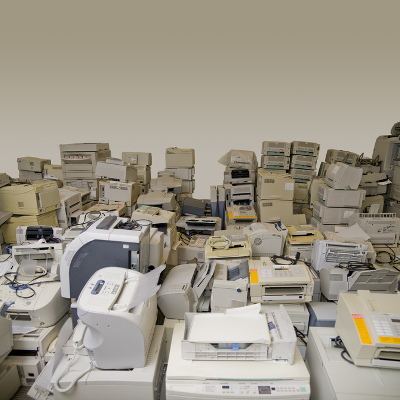
Take a moment to look around you and take in the amount of technology surrounding you. How often do you think this technology is replaced, and what do you think happens to the old tech? There needs to be more thought and effort put into its disposal than just throwing out a hard drive that no longer seems to function. Unfortunately, the amount of e-waste shows that may be the preferred method of disposal.

A discarded device follows the same path as the rest of the contents of your trash bin. Either your discarded piece of technology will find itself in a landfill, or left somewhere in a third-world country. Whichever option, the device is now a complete waste, as the materials used to construct it are now little more than bits of precious metals, glass that has almost certainly been broken by this point, and other bits and pieces.

The statistics surrounding e-waste can be pretty staggering. For example:

  • 2016 alone saw 45 million tons of electronics thrown away.
  • Only 20 percent of e-waste makes it to be documented and recycled.
  • The raw materials in devices that are thrown away value in at about $55 billion, smartphones contributing $9 billion to that total.
  • 76 percent of all e-waste goes unaccounted for.

Of course, as technology advances, there is going to be more and more e-waste produced. However, there is another issue regarding e-waste that your business could be especially affected by if your e-waste isn’t handled properly, and that’s your business’ data security.

Security Concerns
If your devices are discarded with information still on them, that data is at severe risk of being compromised, especially since the devices are no longer in your possession.

What if you got a new smartphone, and just toss out the new one? Sure, it’s dead now, but all it would take for any data it held to be compromised is someone with a charger cable and a basic knowledge of how to break into a phone. Now, any accounts that you used on the device, both business and personal, are at the mercy of your phone’s new owner. They could access your company’s data in the cloud with a discarded external hard drive.

To avoid this, not only do you need to dispose of your old technology properly, you need to also make sure that any information on them is properly wiped and/or destroyed before you do so. While you could destroy the device yourself, the better option is to reach out to the professionals at NuTech Services. We know how to properly see that your devices are destroyed without the risk of leftover data causing your company grief. We’ll even help you to recycle your device, so there’s less of a chance of it landing in a dump somewhere.

To learn more about proper device disposal, give us a call at 810.230.9455.

cortana_additions_400.jpg

Using Cortana Gets Better with Customization

cortana_additions_400.jpg

As Cortana has more and more added to its functionality, it gradually becomes more of a utility to all. Those who prefer to use Google’s applications are now able to use Cortana to augment their use of Gmail, Google Contacts, and Google Calendar. Today, we’ll go through how you can set these programs up to play nice with Cortana.

For Cortana to work with Google apps, these apps must first be identified as a service. Access Cortana and click Notebook, and once the panel appears, access Connected Services and from there, Add service.

At this point, you will only be given an option for Gmail, but that includes Contacts and Calendar as well, in addition to Google Drive. After you next sign on to your Google account, your Connected Services menu will include Gmail as an option.

Privacy and Usage Disclaimers
Be warned, when you give Cortana access to your email and other services, you are opening your personal data to the assistant, and therefore, to Microsoft as well. You should definitely review the disclaimer that appears before connecting these accounts, as it will explain how your data is going to be used. If you have second thoughts after reading this disclaimer, you can be directed to where these integrations can be deactivated.

Since there isn’t any indication, as of yet, as to which of Cortana’s commands will work with these Google services, we are given the opportunity to speculate freely. What functions do you think Cortana will have in regard to Google’s apps? Give us your ideal list in the comments!

netflix_downloads_400.jpg

Tip of the Week: Netflix Now Lets You Download Videos for Offline Viewing

netflix_downloads_400.jpg

The development of Netflix was revolutionary for its time, allowing users to stream a plethora of great television shows and movies on a whim. Nowadays, Netflix continues to innovate and create ways for users to take their services to places where they never thought possible. One example is taking Netflix on a flight, where the Wi-Fi is either completely unavailable, or too slow or expensive to be worth using. Netflix now allows users to download videos for offline viewing via its mobile app.

Keep in mind that this will only work if you have the official Netflix mobile app installed on your device. You can’t just download videos through the web browser on your smartphone or tablet. Also, keep in mind that not every video is immediately available for download, but the library is likely so large that you might not even notice. First, you’ll need to download the app.

If you want to filter the videos you see by availability to download, just tap or click the button in the top-left side of the screen. Next, select Available for Download. For the videos that are available for doing so, you’ll see the word Download.

If you just want to view the videos that you’ve downloaded in the Netflix app, click the menu and select My Downloads. Selecting this option will give you all of the details about the files, including how much space they take up on your device. This is important to know, especially since you’ll have limited storage space and you never know what you might run into while out of the office.

Deleting a video from your downloads is also quite simple. All you have to do is select the show and click the Downloaded button. This will present to you a window that lets you Delete Downloads. Once you’ve found it, you select the videos that you no longer want by checking the boxes in their corners. To finish the process, click on the trash can and delete your selected videos.

Where will you take advantage of Netflix’s download feature? Where else could you use this feature to save yourself from boredom? Let us know in the comments, and be sure to subcribe to our blog.

vizio_smart_tv_spying_400.jpg

How Vizio Got Busted for Spying on Its Customers

vizio_smart_tv_spying_400.jpg

What have you watched on TV lately? Actually, never mind; if you don’t want to tell us, we can just ask Vizio. Relax–we’re not actually going through with this, but the fact remains that 11 million owners of Vizio televisions had their viewing habits tracked by the manufacturer. Were you one of them?

A fine by the Federal Trade Commission, totalling $2.2 million, was issued to Vizio following its actions of collecting data on users. This data included what the televisions were displaying, regardless of what the input was; whether it was smart TV apps, DVD players, air broadcasts, the TV’s IP addresses, or cable boxes. Whatever the TV had on it, Vizio could gather the data and do with it as it pleased. A federal court ordered Vizio to delete any data that they collected before March 2016 because their customers were not told of the company’s data sharing practices.

To remedy this, Vizio now makes its data collection practices available through the TV’s settings. Also part of their settlement, Vizio now sends notifications directly to the user’s screen. Jerry Huang, Vizio’s General Counsel, issued a statement regarding the incident: “Instead, as the complaint notes, the practices challenged by the government related only to the use of viewing data in the ‘aggregate’ to create summary reports measuring viewing audiences or behaviors. Today, the FTC has made clear that all smart TV makers should get people’s consent before collecting and sharing television viewing information and Vizio now is leading the way.”

Of course, the question of what Vizio did with all of that data needs to be asked. Perhaps the company used the data to understand how customers were using its hardware, such as how frequently it was used and what kinds of devices were used in conjunction with it. This way, Vizio could use the data to better their products and make them more useful. Of course, that’s an optimistic view.

Another way that Vizio could have used this data is by collecting it to distribute to paying partners for marketing purposes. This type of data collection would be very lucrative for Vizio, a practice that could be difficult to ignore.

Was this collection of data a clear violation of generally-accepted ethics? That’s debatable, but the truth of the matter is that Vizio would have had a better time of it if they gave their customers the choice of being involved these data collection practices. If anything, it should make you consider how you’re using your own Internet-connected devices. You never know if and how they might be spying on you.

What are your thoughts on this development? Let us know in the comments, and be sure to subscribe to our blog.

ethics_of_hackers_400.jpg

Hack a Hospital and Get Blacklisted By Other Hackers

ethics_of_hackers_400.jpg

Hackers are notorious for committing cybercrimes and exploiting what seems like everybody and anybody. Yet, just as there exists honor among thieves, there’s an unwritten rule within the hacking community: leave hospitals alone.

Of course, if you’re familiar with the activity of hackers, then you’ve perhaps heard of stories of hospitals and healthcare institutions getting hacked. To be sure, any organization handling healthcare records makes for a tempting target to a hacker. These records contain very personal and sensitive information that can be sold for big bucks on the black market (this is one reason why protection laws such as HIPAA are put into place). However, if a hacker chooses to act on this impulse, they do so at the risk of being shunned by their own.

While it’s one thing to stealthily steal files from a hospital server unit, it’s even more of a dastardly deed for a hacker to unleash a ransomware attack on a hospital network. This is due to the fact that attacks like ransomware will disable a computer until a ransom is paid to the hackers. As you can imagine, if a hospital were to have any of its equipment taken offline, then patients in critical condition would be unable to receive the care they need until the system is back online. Potentially, a move like this could result in death.

What could motivate a hacker to attempt a hack where human life is on the line? For the hacker attempting such a hack, it’s perhaps because the crisis it creates makes for a higher chance of a payout. Compared to hacking a business that’s prepared for a ransomware attack and can afford to brush it off and lose a few hours or a few days-worth of data (depending on when the last backup was made), hospitals must act as quickly as possible to get their system back online, which very well could mean paying the hacker.

What’s worse, even if a hospital pays a hacker’s ransom, there’s still no guarantee that they will regain control of their system, which could translate to a significant loss of life. Given the possibility of such a sad situation, it’s easy to see why hackers will blacklist any of their peers known for going after hospitals. After all, where do the hackers go when they get sick? That’s right, the hospital.

To give you a hacker’s perspective on the matter, ZDNet references a forum where hackers discuss, get this, the ethics of hacking. “Yes, this is pretty sad and a new low. These ransom attacks are bad enough, but if someone were to die or be injured because of this it is just plain wrong.”

While these words may be somewhat comforting for a hospital administrator to hear, keep in mind that there are some hackers who disregard any form of ethics altogether, so the risk is still there. Also, for the average SMB not associated with healthcare, there’s likely no “hacker’s code” protecting your organization from being targeted. In fact, regarding the typical SMB, hackers can build a pretty solid case on why they should pull the trigger on a hack attack.

Therefore, whether your business is in the crosshairs of hackers or not, every organization needs to be prepared and have a security solution in place that can withstand such attacks. This defense plan must include a way to defend against even ransomware, which means backing up your data with BDR and having a means to restore your backed up copy as quickly as possible so that downtime is at a minimum.

To make sure that your business is prepared for anything that a hacker throws at you, call NuTech Services today at 810.230.9455.

introducing_cloud_computing_400.jpg

3 Compelling Reasons Why Your Business Should Move to the Cloud

introducing_cloud_computing_400.jpg

Businesses are turning to the cloud because it’s designed to make operations easier and save them money. In light of these benefits, organizations that have yet to move to the cloud may be missing out on some serious advantages by continuing to do IT the hard way. If you’re still unsure about the cloud, then consider how these three features of cloud computing can change how you do business.

The Cloud Takes the Burden Off of Running an In-House Network
A business that hosts their data and IT infrastructure in-house is in charge of overseeing every aspect of maintaining their network. This includes everything from putting out fires when things go wrong to procuring new equipment. For many SMBs, what makes this responsibility challenging is the obvious fact that they’re not an IT company. However, by owning all of this equipment an SMB essentially has to take on some very technical responsibilities requiring professional knowledge.

The advantage of hosting your data and applications in the cloud is that you’re essentially outsourcing this responsibility to a cloud provider whose sole job is to oversee and protect your data. This frees up resources to better invest in your business goals, and gives you peace of mind that your data is being handled by professionals so that nothing is being overlooked.

Cloud Offers Flexibility
Today’s business environment makes accessing your work while on the go practically a necessity, and hosting your data can prove to be a complex endeavor when sharing files and information internationally. ITProPortal explains, “Global expansion has increased the need for international data centers, especially as security and privacy concerns lead to strict regulations that vary from country to country… Cloud computing with an established cloud partner with physical data centers across multiple geographies means your data can ‘live’ in just about any jurisdiction, and mitigates this problem.”

Plus, providing your workforce with anytime, anywhere access to their important files along with the ability to collaborate on projects in real-time is a huge bonus that will boost the productivity efforts of your business.

The Cloud is Secure
In the early years of cloud computing, one of the loudest arguments against the cloud was that it couldn’t be trusted because you’re essentially handing over sensitive data to a third party provider with unproven security protocols. However, with the rise of cloud computing in recent years, the public cloud option has undergone security upgrades by leaps and bounds and the data centers hosting your data have vast resources to commit to the security of your data–resources that SMBs lack. Therefore, today’s cloud options give users the security they need without having to sacrifice flexibility.

When all three of these features are considered, going with the cloud allows businesses to do much more for less. This allows SMBs to better distribute their resources toward profit-making initiates, while enjoying the benefits of a professionally maintained IT infrastructure, without having to pay for an in-house IT staff. To get started with cloud computing for your business, call NuTech Services at 810.230.9455.

san_francisco_transportation_hack_400.jpg

This Hacker Messed With the Wrong Transportation Agency

san_francisco_transportation_hack_400.jpg

While San Francisco residents might not be happy that they’ll again have to pay fares to ride the city’s rail system, the reason they again have to do so is understandable. Plus, it provides an excellent example of the importance of maintaining a backup and using complex passwords.

A hacker or group of hackers, operating under the moniker Andy Saolis, managed to halt the collection of fares by the San Francisco Municipal Transportation Agency (or Muni) by hacking their station computer system and introducing a strain of ransomware into it. As a result, Muni employees were unable to access their workstations and some of the agency’s systems were disabled.

However, the hacker claimed to have accomplished more, as ticketing kiosks across the city would only display “you hacked. ALL data encrypted.” The ransom demand for the decryption key was approximately $73,000 in Bitcoin. Despite the hacker’s apparent confidence in their accomplishment, Muni elected to not pay the ransom, deciding instead to restore their systems from a backup and allowing cybersecurity experts to strike back against the hacker, not just once, but twice.

Two independent vigilante hackers managed to access the email account of “Andy Saolis” to collect information that helped to stop the attack, both by correctly guessing the answer to the account’s security question. It would seem that the hacker(s) known as Andy Saolis had been active for a while, but had never before targeted anything other than private companies, which very well may have led to their downfall.

Once the attack was thwarted it came to light that seemingly no data, including that from Muni’s customer payment systems, had been accessed, despite the attack affecting 25 percent of Muni’s network. Saolis, unsurprisingly, gave a considerably different account online.

Claiming to have stolen data from the payment kiosks, as well as 30 gigabytes of data from Muni’s system on their employees, customers, and technical matters, Saolis wasn’t shy about casting himself (or themselves) in the light of the vigilante against an unjust system.

According to an email sent through Russian service Yandex.com, “They give Your Money and everyday Rich more! But they don’t Pay for IT Security and using very old system’s !”

Shortly after the attack ended, security experts were also able to establish that the emailer was based in Iran, and had gained access to the hacker’s servers.

Though Muni never had to pay a ransom for their data, this attack wasn’t cheap, costing them the combined total of the free rides they granted to commuters as their systems were compromised. However, this total would certainly be less than the actual cost of the Bitcoin ransom, and so a good general rule to follow is to never give in to a hacker’s possibly insincere demands.

On the topic of the hacker, whose password was guessed by two separate strangers, how weak must this password have been? While nobody should ever complain about a hacker being foiled, it goes to show how a complete stranger could find their way into your accounts if you aren’t being careful..

This case is far from over, as the Federal Bureau of Investigation and the U.S. Department of Homeland Security are still investigating the matter, which provides proof that public systems are still unable to be fully trusted.

There is a lot for SMBs to learn from this story. How confident are you in your IT security? If you feel it’s time for a security audit in order to determine how protected your business is from all kinds of threats, reach out to NuTech Services at 810.230.9455.


ten_thousand_hour_rule_400.jpg

Does 10,000 Hours of Practice Automatically Make Someone an Expert?

ten_thousand_hour_rule_400.jpg

You’re already a business owner, but let’s say that you want to pick up some new skills. You want to be known as an expert in a new field, and you’re pretty dedicated to doing so. Perhaps you’re familiar with the 10,000 hours rule, which attempts to explain how someone becomes a master of a particular craft. Well, we hate to burst your bubble, but this rule might not be as simple as it sounds.

What the 10,000 Hour Rule Is

The 10,000 hour rule claims that in order to learn a craft and develop world-class skill, one has to have at least 10,000 hours of experience working with the skill. The original report, published in 1993, found that the most accomplished students at a music academy in Berlin had put in an average of 10,000 hours of practice by the time they turned 20 years old. It seems simple enough, right? You put in plenty of practice and you can possess a world-class skill.

Why it Might Be Wrong
In his new book, Anders Ericsson (who worked on the original report), along with his co-author Robert Pool, attempt to further understand and isolate the science behind the 10,000 hour rule. They came to a number of conclusions concerning the nature of the initial study:

  • There’s nothing special about 10,000 hours: The number 10,000 was chosen specifically because it was a nice, rounded number. Plus, regardless of how skilled they were, the musicians tested were nowhere near their peak, or “world class,” by the time they reached 20 years old. It’s been proven that pianists tend to reach their peak at around 30 years old, so the 10,000 rule isn’t quite true.
  • 10,000 was only the average: By proxy, if you put in 10,000 hours of effort, you’ll only be meeting the average skill level of those who are working toward the same goal. Thus, you can’t be considered “world class” at all. Other studies have shown that it can take as many as ten years to reach a goal.
  • Practice isn’t enough: It was found that investing time and practice into a task doesn’t necessarily make you better at it; rather, it’s the quality of the practice that yields results. This “deliberate practice” pushes the practitioner beyond their comfort zone and forces them to up their game.

The Lesson: Practice Makes Perfect, Not Necessarily Time
There are a few lessons that can be learned from the 10,000 hour rule, but none of them actually have anything to do with 10,000 hours of practice specifically. They can still, nonetheless, be very helpful when learning a new skill and applying it to your life.

  • Train the right way: You can dramatically improve your own skills if you’re diligent about it, but only if you approach it in a productive way. For example, a writer who’s trying to develop their skills can’t improve if they write while the television is turned on.
  • Practice, practice, practice: Regardless if you spend 500 hours or 10,000 hours honing a craft, you’ll be improving your skills. After all, practice is the only real way to improve, and regardless of how much time you invest into it, you’ll see results.
  • There’re no limitations: Regardless of where you stand professionally, there’s always room for self-improvement. You can always reach for loftier goals, and once you start working on a skill, keep working at it. You’ll likely see your hard work pay off.

We think it’s safe to say that you can’t become an expert in a craft overnight, and that even successful business owners have skills that they can dramatically improve by focusing on the right things.

entertainment_hacked_400.jpg

Hollywood is Captivated By Fictional Hackers, But Real Hackers aren’t Entertaining

entertainment_hacked_400.jpg

It’s not an understatement to suggest that hackers are a hindrance to business. They take what doesn’t belong to them, and worse than that, they use that stolen information to make off with money, misrepresent individual actions, and ultimately, just cause a degree of added entropy that any business simply doesn’t need. Recently, with the hacker group Anonymous consistently in the news and dozens of corporate hacks resulting in millions of people’s personal information being compromised, hackers have been an increased part of the public consciousness.

On January 10, 2016, television producer Sam Esmail stood on the stage at The Beverly Hilton and accepted the award for Best Dramatic Television Series for the show he serves as showrunner on, “Mr. Robot”. The Hollywood foreign press had chosen the series for this award, despite the show’s non-traditional plot, which centers on an anti-social (and hopelessly schizophrenic) network administrator that spends his nights as a seemingly benevolent hacker. Earlier in the evening the show’s co-star, veteran actor Christian Slater, took home the award for Best Supporting Actor in a Drama Series.

With the success of “Mr. Robot”, and other high-profile films and shows that tell the stories of hackers, there has been a suggestion that the entertainment industry unwillingly romanticizes hacker culture (not that sitting alone in a dark room, having a bad haircut, and wearing giant black army boots are actions that people would normally emulate). Take 2015’s Blackhat, a drama directed by Michael Mann. The movie stars one of the more bankable stars in the world at present, Chris Hemsworth, as a federal inmate (convicted of hacking) that is given a furlough to help his college roommate (and Chinese cyber warfare officer) solve a series of high-profile hacking attacks that cause destruction and chaos. In the movie, Hemsworth plays the role of anti-hero; a character that would be a villain in society, and makes good by doing the very thing he has been incarcerated for.

The representation of hackers as the good guys, or the popular anti-hero, is something that Hollywood has embraced for some time. Hackers are most prominent in movies about hacking, obviously, but they also show up in heist movies, and any other movie in which the story has a computer system standing in the way of resolving their goals. If the villain of the story is a hacker or computer, rest assured that the man or woman coming to save the day is a hacker; one of the only types of characters that can overcome a rogue hacker or computing system.

In reality, however, hackers aren’t as interesting or benevolent. Many of them will break down the barriers guarding your client’s and employee’s most sensitive information if they think they can squeeze a buck out of it. That kind of dedicated opportunism, and, to a lesser extent, schadenfreude, make hackers a deplorable result of computer systems’ prevalence throughout the culture. In Hollywood’s defense, hacking makes for a pretty boring movie, but human oppression or destruction, themes that you’ll find in nearly every good hacker movie, aren’t.

There have been dozens of movies about hackers that have been produced over 30 years. Some of them, like “Tron” and “The Matrix,” are science-fiction films that as a design, play with the concept of reality, while movies like “War Games” and “Hackers” present hackers as cognizant wrong-doers, but again present the act of hacking as a means to a heroic end.

Some of the most noteworthy “hacker” movies include:

  • Tron (1982)
  • War Games (1983)
  • Sneakers (1992)
  • The Net (1995)
  • Hackers (1995)
  • The Matrix (1999)
  • Swordfish (2001)
  • Live Free or Die Hard (2007)
  • The Girl with the Dragon Tattoo (2009)
  • BlackHat (2015)

How many of these titles have you seen? Do you think that hackers have been fairly represented in film, or do you think Hollywood has glorified hacking? Please feel free to leave your thoughts in the comments section beneath the blog.

At NuTech Services, we don’t glorify hackers. We fight them with proactive monitoring and management to ensure that, if someone that doesn’t belong there does try to get into your network, we are there to ensure your network remains safe. For more information about the steps we can take to keep hackers out of your network, call us today at 810.230.9455.

internet_meme_400.jpg

Do Memes Have a Place in the Professional Business Environment?

internet_meme_400.jpg

Whether we like it or not, memes have had a profound effect on how the world’s population views current events and popular culture. In part, this is thanks to the prevalence of the Internet, which has fostered these absurd images and provided them an outlet to flourish. Due to how viral they are, it would be foolish to dismiss them as inconsequential; in fact, when leveraged properly, memes can make a statement about your business and its specific brand.

The term “meme” is actually much different from what we’ve come to know over the past few years. Richard Dawkins, a British evolutionary biologist, coined the term in his 1976 book The Selfish Gene. Its official definition is “an idea, behavior, or style that spreads from person to person within a culture.” It was originally meant to discuss the way that ideas and values are passed on and adopted by people within a society. The evolutionary idea of a meme is based on sporadic and random change, but the Internet meme spreads in a much different way. Basically, what happens is that an Internet meme “hijacks” the original intended purpose of an image or video, and changes it to mean something else.

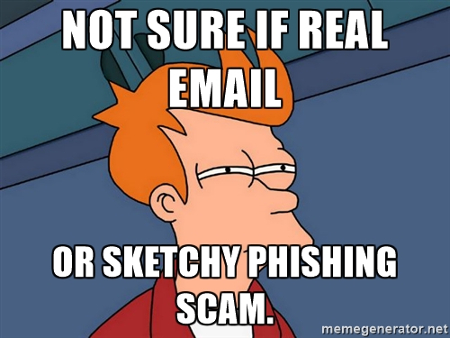
In other words, the Internet meme takes something popular that was originally used somewhere else, and transforms it. Many memes use images from popular culture. Take, for example, the “Futurama Fry” meme. It uses a funny picture of the show’s protagonist in deep thought, and uses it to explain a situation filled with confusion or indecision.

ib meme 1

Another classic example is the “Matrix Morpheus” meme, which places text over an image of Morpheus from The Matrix to describe a revelation. According to KnowYourMeme, this meme often “belittles futile or petty behavior.”

ib meme 2

Some memes are often funny simply because they aren’t funny. For example, the “Anti-Joke Chicken” explicitly aims to find humor out of something that’s honestly not all that funny. The beginning text often tells the beginning of a joke, but instead of a hilarious punchline, it regresses into an obvious statement–usually something that makes logical sense, or something unexpected.

ib meme 3

It’s funny because it’s not funny. Or, maybe it’s not funny at all. We’ll let you decide.

Making memes that you can use for your business is easy and free. In fact, it can even be fun, if you’re doing it right. There are plenty of meme generators online that you can use to make silly pictures. However, you should take these thoughts into consideration when making memes to either share on social media, or to send to your coworkers.

Stay Relevant to Your Goods or Services
If you want to use memes for your business, you need to first figure out what theme you want it to follow. It should be aligned with the services that you offer.


Use the Right Image
Once you’ve figured out the theme for your meme, you can proceed to find the right image for it. We recommend doing some research and looking at examples of previously existing memes, but be warned; the Internet has many memes, many of which may be offensive.

Keep the Audience in Mind
Your memes should appeal to your target audience, especially if that audience consists of young people that frequent the Internet.

Be Funny
At their very core, memes are meant to be funny and humorous. If they aren’t, you’re not doing it right.

Share it on Social Media
The point of a meme is to bring light-hearted attention to your brand and to be shared. You can do both by exposing it to many followers on social media.

For an example of how you might apply a meme to the real world, we’ve made this one using the “Disaster Girl” meme character:

ib meme 4

Two notes: 1) Get your point across by finding a meme character that’s relevant to your goods and services, and 2) Use a combination of humor and a call to action to inspire action from the viewer. If you found this on your social media news feed, would you laugh at it? We hope so.

So, have we managed to pique your interest in Internet memes? Let us know in the comments, and be sure to subscribe to our blog. Also, leave your favorite memes; we like a good laugh.

education_smartphones_400.jpg

How One Major Government Department is Revamping Its IT Infrastructure

education_smartphones_400.jpg

After implementing their current infrastructure for almost a decade, the U.S. Department of Education have plans to upgrade, directing their attention toward ensuring that the new initiative keeps mobile capabilities as a high priority.

The current infrastructure, EDUCATE (Education Department Utility for Communications, Applications, and Technology Environment) was the first to move away from an IT environment owned by the government and operated by contractors, to one that’s owned and operated as a service by the contractor–in this case, Perot Systems.

Perot won the contract bid in 2007 for $400 million, and has since provided comprehensive managed service solutions to the Department of Education. Now, however, the Department is ready for a change.

Jason Gray, Chief Information Officer for the Education Department, cited the numerous changes made to IT technologies and capabilities since EDUCATE was implemented in 2007 (when he announced that there was interest for new proposals), as well as changes to goals shared the Department of Education.

The objectives of the new infrastructure, dubbed PIVOT, or the Portfolio of Integrated Value-Oriented Technology, were described in a request for information (RFI) distributed to potential providers. The new infrastructure should, according to the RFI, encourage innovation, optimize the cost to benefit ratio, and show flexibility to make integrating changes in requirements simple. As part of the new initiative, each aspect of the infrastructure (like oversight, hosting data, printing, network services, technical management and integration, and mobile services) will have its own contract written up.

Most of all, however, the Department of Education wants to focus on the mobile capabilities of their solutions. The RFI predicts a shift from a permanently established office space to an increased utilization of teleworking and hoteling (where workers gather temporarily in a shared space) as a result of the National Strategy for Reducing the Federal Government’s Real Estate Footprint. This would cause a shift of over 6,200 users away from an office environment, certainly achieving the objective of the National Strategy.

Migrating technology into a new workspace or implementing mobile and teleworking solutions clearly takes considerable planning, and in such cases, it’s best to consult with an expert in the field. NuTech Services has the experience necessary to ensure that your IT initiative goes off without a hitch, and that your solutions are optimized for maximum performance. Give NuTech Services a call today to see what we can do for your solutions for a lot less than $400 million.

is_there_good_stress_400.jpg

4 Reasons Why You Should Quit Stressing Out About Stress

is_there_good_stress_400.jpg

Stress is a natural part of the workplace. It’s almost impossible to make it through the workday without getting stressed out about at least one thing or another, especially when you’re a business owner. In these stress-filled circumstances, it’s important to remember that stress isn’t always a bad thing; it has some redeeming factors that are often lost amongst the cacophony of shuffling papers and constant phone calls.

However, this needs to be mentioned before anything else; stress created for the sole purpose of being stressed cannot possibly become a good motivator. Inc states that “stress that comes from not having enough information or that’s based on an irrational fear is a poor motivator.” Therefore, it makes the most sense to keep stress to a minimum whenever possible, as there’s no good reason to be stressed out all of the time. Remember, stress without control can be dangerous, and you can’t let it take over your life.

That being said, there are some benefits to be gained from the occasional bout of stress. Here are four of them.

Stress Provides a Much-Needed Energy Boost
We often think of stress as a draining factor that can sap energy right out of you, but it’s hard to argue that a sense of urgency comes from being in conflict with something or another. You’ll notice that you’re more aware of your surroundings, and you actually have the energy required to complete your work.

Stress Proves that You Do, In Fact, Care About the Project
If you’re stressed out about a certain project, at first you might hate yourself for it. You might fool yourself into thinking that you don’t care how it turns out, and that you just want to get it done. This is actually the opposite of what’s really happening. If you’re stressing about the project, you care about its outcome. Otherwise, why would you be stressed? Make this connection yourself and you can harness the frustration and channel it into energy.

Stress Teaches You to Enjoy the Times You’re Not Stressed
Imagine working outside in absurdly hot weather, under incredible physical duress and on an empty stomach. You then walk into an air-conditioned home with a delicious meal waiting for you on the dinner table. Working with stress can be absolutely awful, but it will teach you to enjoy the little things in life that much more.

Stress Inspires Quick Action
Stress is something that literally nobody wants to deal with, so naturally, people will move toward a solution in order to absolve themselves of the pain it brings. This doesn’t mean that you should make stress to create that sense of urgency; rather, you should think of the stress as an unfortunate advantage, like falling out of an airplane and into a giant pit of pillows.

Despite its advantages, stress is still something that must be properly managed if you want your team to succeed in their endeavors. One of the main reasons why employees might be stressed in the workplace is thanks to using outdated or dysfunctional hardware and software solutions. Think about it; if you weren’t able to work in multiple browser tabs at once, or open your mission-critical apps, you would probably be in a tight spot, and may actually begin to feel stress.

NuTech Services’s managed IT services can make it so that you never have to feel stressed about your technology or IT budget ever again. To learn more, reach out to us at 810.230.9455.

irs_scam_400.jpg

Couple Jailed for Scamming More Than a Couple Dollars From the IRS

irs_scam_400.jpg

It all goes to show: don’t mess with the IRS. The prison system has two new residents, after Anthony Alika, 42, and his wife Sonia, 27, were sentenced for filing fraudulent tax returns through the often-exploited “Get Transcript” site maintained by the Internal Revenue Service. In addition to their incarceration, the Alikas will each be responsible to pay restitution to the IRS.

Ultimately, Anthony is to serve 80 months in prison followed by three years of supervision upon release, in addition to paying $1,963,251.75 in restitution for conspiracy to commit money laundering. Sonia was handed down a sentence of 21 months of jail time, also followed by three years of supervision, and an IRS restitution totalling $245,790.08 for structuring cash withdrawals to avoid the required bank reporting. Each pled guilty to their charges.

These sentences were passed after the Alikas were found guilty of laundering $1 million in money stolen from the US Treasury by filing fraudulent forms, specifically income tax returns populated with data stolen from the Get Transcript vulnerability. The Get Transcript function, meant to allow taxpayers to review their past returns with clearly spelled-out information, also allowed the Alikas to obtain the data they needed to make off with their ill-gotten funds.

The Alikas, along with co-conspirators, would purchase prepaid debit cards and registered them to the identities they had stolen, before filing false returns for those identities and receiving the refunds on the prepaid cards. They would then use these cards to purchase money orders, deposit that money into bank accounts, and withdraw their loot in multiple small increments to avoid the bank reporting of the transactions.

This isn’t the first time hackers have used the Get Transcript portal, either. In May of 2015, 100,000 tax accounts were stolen and used to take almost $50 million from the IRS. This is all because the authentication requirements to access the necessary information are flimsy.

Reacting to this case, the United State Department of Justice put out a press release outlining some best practices to keep personal information and accounts as safe and secure as possible.

File Early
A tax refund criminal can’t file a false return if the return has already been filed by the actual individual who should be doing the filing. The longer a return goes without filing, the more opportunity a criminal has to file one fraudulently.

Use Strong Usernames and Passwords
This one goes for any and all online accounts, but especially for those containing information as sensitive as a tax return does. If a close family member could get pretty close to the credentials with a guess, those credentials are nowhere near strong enough.

BONUS TIP: Randomized strings of upper and lower-case letters, numbers, and (if permitted) symbols are the most secure option when selecting a password.

For more tech security information to help keep your data–and yourself–safe, keep coming back to the NuTech Services blog.

ancient_greek_computer_400.jpg

Ancient Greek Computer in Serious Need of Firmware Update

ancient_greek_computer_400.jpg

When you picture an old computer, do you see a giant machine that takes up an entire room? These days, people might consider even something like a CRT monitor and a device running Windows XP to be ancient. Yet, the oldest “computer” in the world may actually be a bronze contraption found off the coast of Greece; the Antikythera mechanism, which was used to predict and track astronomical events, like the movement of the planets and occurrence of eclipses.

The Antikythera mechanism was supposedly discovered around the turn of the 20th century. Sponge divers off the coast of Antikythera, a Greek island, found it submerged in 45 meters of water, buried with other treasures, including pottery, statues, and coins. The antique device was originally dated at around 60 BC to 200 BC, but recent studies suggest a more specific timeline that places the device closer to 125 BC.

At first, the device seemed to be nothing but an old pile of bronze and wood. A closer inspection revealed that the mechanism was something quite extraordinary for its time. The Antikythera mechanism consists of bronze gears, and was designed to predict astronomical cycles. While the device was originally discovered in one heap, it was later split into three sections for study. Those who have tried to recreate it believe that, in its prime, the Antikythera mechanism consisted of up to 30 bronze gears that functioned like clockwork.

Click here to view a photo gallery of the Antikythera mechanism on display.

Today, the Antikythera mechanism is in 82 different pieces, each of which are being studied. In particular, the text carved into them is of interest, but highly unreadable. There are inscriptions on the gears that are so small, the human eye can’t make out what it says. Thousands of years have eaten away at it, so researchers had to use x-ray and visualization technologies in order to decipher the meaning.

At first, the Antikythera mechanism was thought to be purely scientific, but recent findings have found that it may have had a more astrological use. It’s been found that the Ancient Greeks would try to predict the colors of eclipses, which had an existential meaning for how the Greeks viewed the world around them. We can consider the Antikythera mechanism as an object that they designed to understand how the world around them worked. The device is currently on display in the National Archaeological Museum of Athens, where it continues to be studied.

Who knew that something so advanced existed some two-thousand years ago? It makes you wonder what other civilizations came up with. We may be credited as the most technologically advanced civilization known to man, but take a moment to consider the fact that the Antikythera mechanism was advanced and high-tech for its time. In fact, this type of astronomical clock was hundreds of years ahead of its time, and the knowledge of how to build such a machine would eventually be lost until the 14th century. So, what other lost technologies are out there, waiting for us to discover them?

This may not have much to do with business, but we thought we’d share this interesting development with you. After all, as tech geeks ourselves, we love learning about old technologies that have come and gone. Did you like this article? If so, subscribe to our blog for more technology news, tips, and tricks.

publishing_and_new_tech_400.jpg

The Internet Dramatically Changed the Publishing Industry. What About Your Field of Expertise?

publishing_and_new_tech_400.jpg

It’s well-known that publishers are a major component of an author sharing their work with the world, but recent innovations threaten to disrupt the status quo of the industry. Like many industries, the publishing industry has been changed significantly by the introduction of new technologies that afford writers more liberty when producing their work. What can the business owner learn from these changes?

Traditionally, and still today, the publishing industry relies on manuscripts that are submitted by authors for publication. Once a manuscript has been accepted, the publishing house will provide the personnel and services necessary to polish the work and turn it into something that can make them money. This typically includes editing for quality, designing the book, and marketing it to potential readers.

Unfortunately, the problem that many budding authors run into is the fact that it can take publishing houses several weeks, to several months, to read and accept (or reject) a manuscript. Plus, after waiting so long for an acquisition editor to read a manuscript, it might not even get approved. If it does get approved, the author still has to wait several months to hold their new publication in their hands.

Today’s authors can potentially avoid the headaches that stem from dealing with traditional publishing houses. Thanks to technology like the Internet, authors can now share their work through many different outlets. Social media websites, personal web hosting, online product review sites, and so much more, all allow people to share their work with like-minded individuals.

In particular, self-publishing has taken the brunt of abuse from traditional publishing houses. At first, it might seem to be because they perceive it as a threat, but more often than not, they are just bent out of shape by how “unprofessional” self-publishing looks. When an author goes through the self-publishing process, they’re in charge of editing the manuscript and preparing it for publication, rather than taking advantage of established professionals in the industry. The end result could vary from a polished masterpiece to a mistake-ridden manuscript that becomes a commercial failure.

This brings up an excellent point; if you can use a service to make your job easier, save time, and conserve capital, should you do so? It depends on the level of quality that you can expect. If you’d rather have the work done professionally, outsourcing the service is always an option. For example, in the case of the self-published author, they might hire a freelance editor or editing firm to review their work and make edits, check for usage inconsistencies, and review the narrative. Basically, the concept is that onboarding a professional dedicated to the specific craft can be a great asset.

It’s not much of a stretch to compare this concept to the modern business environment. Outsourcing is a major trend that is more acceptable than ever, especially for technical positions like IT maintenance and technology procurement. Small and medium-sized businesses often don’t have the luxury of having an in-house IT department that they can depend on for their support and maintenance. Therefore, they look to other organizations, like NuTech Services, who can assist them without breaking their budget or looking for new hires.

If you’re having a hard time managing your business’s technology, we’re here to help. With our managed services, we can take care of your hardware, remotely administer patches and security updates, back up your systems, protect your infrastructure from threats, and so much more. Let us help you write the next chapter of your business’s journey to success. For more information, give us a call at 810.230.9455.

history_of_it_in_finance_400.jpg

In the Midst of Chaotic Financial Markets, Technology Remains a Constant

history_of_it_in_finance_400.jpg

Not that long ago, the trading floor of the New York Stock Exchange was filled with business-tie clad gladiators, climbing over each other in what looked like a capitalism-induced mosh pit. The Open outcry pit had its language, its own weather, its own smell. Nowadays, these pits are more subdued. They still are populated with people, and some are gesturing to buy and sell, but most of the transactions are done digitally. It is this role where the computer has changed the way financial markets work; from the ground up.

The Street Before the Internet
The first thing you should know is that computation of some sort has been utilized by traders and brokers for decades. With that truth out of the way, today’s Wall Street doesn’t resemble the Wall Street of old at all. Long gone are the days where traders would make trades out the window, stand in the street during a snowstorm to buy and sell securities, and even later, sit in their offices and read stock prices off a ticker tape, or later, a teleregister (or quotation board).

These technologies all supercede the technologies of today, and go a long way toward paving the way for the instantaneous trading you see in hedge funds and brokerage houses today. In fact, once the personal ticker was invented during the second half of the twentieth century, and traders could get nearly instantaneous updates at their home or office, the stage was set for dynamic investor growth. In the 1980s the Quotron used more modern computing tactics to produce the same effect: providing individuals with up-to-the-minute trading information. These technologies, while all cutting-edge for their times, don’t have the enormous effect that today’s technologies have for investors.

The Street and the Internet
In order to monetize, commercialize, and totally legitimize the new Internet, there first needed to be capital in place to build the necessary infrastructure required in order to process and send all the data that people send via the Internet. Many people take this infrastructure for granted today, but there was a time, in the infancy of the Internet where Wall Street was trying to get a hold on all of the available new technologies. After all, brokerages had been using something called Electronic Communications Networks (ECNs) to create efficiencies for brokerages since the early 1970s. Like most of western society, brokers were wholly unprepared for the speed in which these new networking technologies would change the market.

The big shift began in 1994 when two economists, William Christie and Paul Schultz, published a paper titled, “Why do NASDAQ Market Makers Avoid Odd-Eighth Quotes?” where they outlined a deliberate anomaly where these market makers were manipulating the spread (the difference between the buy and sell prices of NASDAQ securities) to secure these individuals a higher profit margin. This led to a full scale investigation and, eventually, rule changes by the Security and Exchange Commission (SEC) to protect smaller investors. The demand fueled by more attractive (and fair) investment tools led to online brokerages such as ETrade and Ameritrade being created. These organizations offered flexibility to any individual investor and led to traditional brokerages, such as Charles Schwab and TD Waterhouse, moving much of their trading to the web.

A few years later with more and more retail outlets popping up, Wall Street seemed to be in a spending frenzy over the next big Internet sensation. This led to what is known as the dot com bubble. Its explosion 1999 and 2000 paved the way for recession in many major western nations. As the economies in the EU and US rebounded, the improvement was largely driven by consumer and investor confidence that the Internet was here to stay, and that companies that had a viable business plan could find success by using the Internet as their sales base.

The Street at High Speed
After the housing market collapsed in 2008, the global economy hit the skids quickly. As a result, many of the strategies that were implemented to keep the world from sinking into a terrible depression were to add stimulus capital, without any real regulations about where the money was going to go. This has produced a wilder, less transparent, and overall fast stock market. With the use of today’s most dynamic Internet speeds, traders are now able to execute trades in incredibly short intervals; millions of times faster than the human mind can make a decision. Quantitative trading uses complex algorithms to do trades so fast that a half a cent here and a half a cent there can lead to millions of dollars changing hands over millions of trades.

This technology-driven trend is difficult for Wall Street regulators. Despite having state of the art solutions for monitoring these transactions, so many are made each day that it is practically impossible for people to keep their finger on the pulse of the market any longer. Regulators now rely heavily on automated systems that look for fraudulent activity in what seems to be a futile effort to keep investors, traders, brokers, and anyone else involved in this system, honest.

Nowadays, any major volatility of the market is largely the result of these micro-traders. Take the “Flash Crash” of May 6, 2010. The DOW, which had been losing ground all morning suddenly dropped 600 points, with Procter & Gamble losing 25 percent off its starting stock price. There was true frenzy on Wall Street, with the fear that we were looking into the abyss prevalent throughout the pundits and money managers all throughout the financial industry. In a matter of moments almost $1 trillion in shareholder value was erased.

The silver lining is that the market rebounded almost as fast as it fell and the DOW only finished down three points, but it took regulators over four months to determine what made the “Flash Crash” happen. It turned out that the problem stemmed from one of these algorithms being triggered by a very large sale of stock, along with the same-day announcement that Greece was bankrupt. When millions of trades can be made every minute, and are made every minute, there just isn’t the infrastructure there to provide entities the proper oversight the markets need to be thought of as “controlled”.

What do you think about the role of technology in the stock market? Do we need better oversight to ensure that fortunes are not lost in a blink of an eye, or that automation can’t take down the world economy? Or, do you believe that the market itself will dictate the end-game for technology in the financial sector?

To relate all of this back to your business, how has technology changed you? Has it made you faster, more automated, and more effective?

Leave your thoughts below in the comments.

automation_driving_business_400.jpg

Prepare for a Future of More Jobs Being Automated

automation_driving_business_400.jpg

Eliminating unnecessary costs is a natural part of doing business. By “trimming the fat,” so to speak, organizations can optimize operations and profits. Automation technology is instrumental to this plight, but as these systems grow more advanced and capable, even professional employees are finding themselves at risk of losing their jobs to cheaper, more efficient automated systems.

You can see this in many forms throughout the manufacturing and retail industries. For example, the self-checkout systems at major retail stores allow for shoppers to get their wares and get out. Manufacturing plants use automated assembly machines to aid in some mundane tasks. The goal is to eliminate payroll and optimize operations, but let’s face it; these trends put people out of work. Yet, despite the various advantages of automation, their performance is often variable, and they require a certain amount of oversight in order to be effective. Shopping centers will often have a staff member on-hand for times when the self-checkout machines don’t work, and someone has to fix malfunctioning technology when it’s not assembling parts correctly. Thus, humans still have a vital role in ensuring the success of automated systems.

In light of this fact, rather than replacing workers, a solution could be to use automated technology to augment the capabilities of human workers. For example, there are programs that write articles for news aggregates. These systems are capable of writing much faster than a human ever could, but they also lack the emotion required to appeal to readers in a way a human author can. There are still plenty of jobs that automation systems can’t touch, but how long will this remain the case?

While we’re not necessarily declaring that technological advancement is bad, we want to raise awareness of how technology advancement affects the economy and job market. If a technology is putting skilled people out of work, can it really be called “advancement?” This is a question that you have to answer for yourself.

Even if automated solutions are taking jobs, they can still be somewhat useful. Take, for example, your business’s IT infrastructure. You can now outsource your business’s IT needs to a managed service provider, allowing for an “automated” process of managing and maintaining your business’s technology solutions. In a way, you would be augmenting your business by bringing valuable technical expertise into the fold, allowing for more efficient management and maintenance of your systems.

The beauty of working with NuTech Services is that we aren’t like other automated solutions, like those that want to replace your workers. Instead, we want to work with your internal IT department (if you have one) to help your business reach its greatest potential. If your team is having trouble keeping up with critical updates, we can handle this responsibility for them. Or, if you want to implement new solutions and innovate for a better future, we can recommend and implement solutions based on your team’s unique needs. Regardless of whether your team has the training and expertise to handle your IT solutions, our team can offer a way to improve your business’ operations.

Our professional IT staff will prove more valuable than any automated solution ever could be. To learn more, give us a call at 810.230.9455.